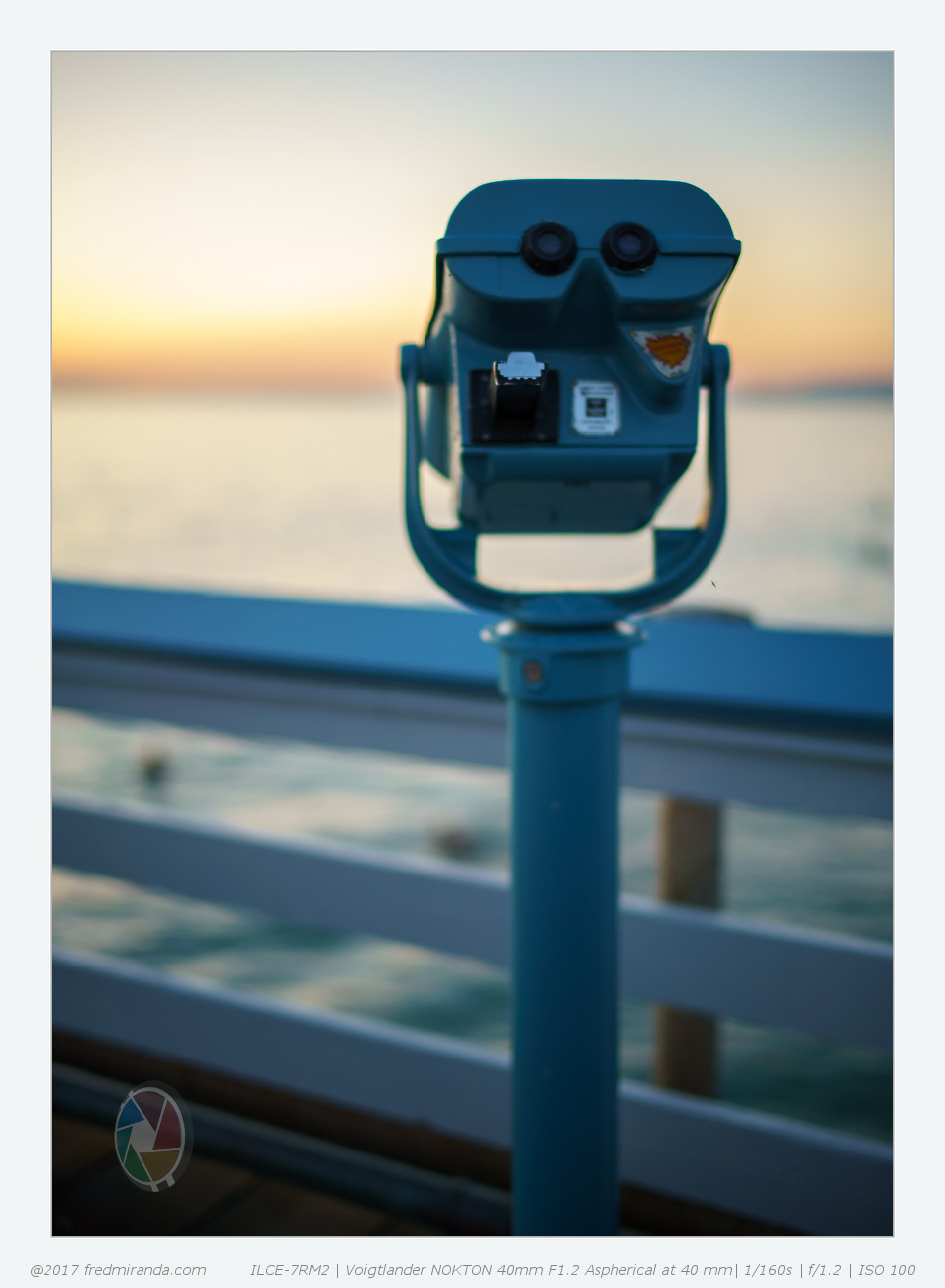
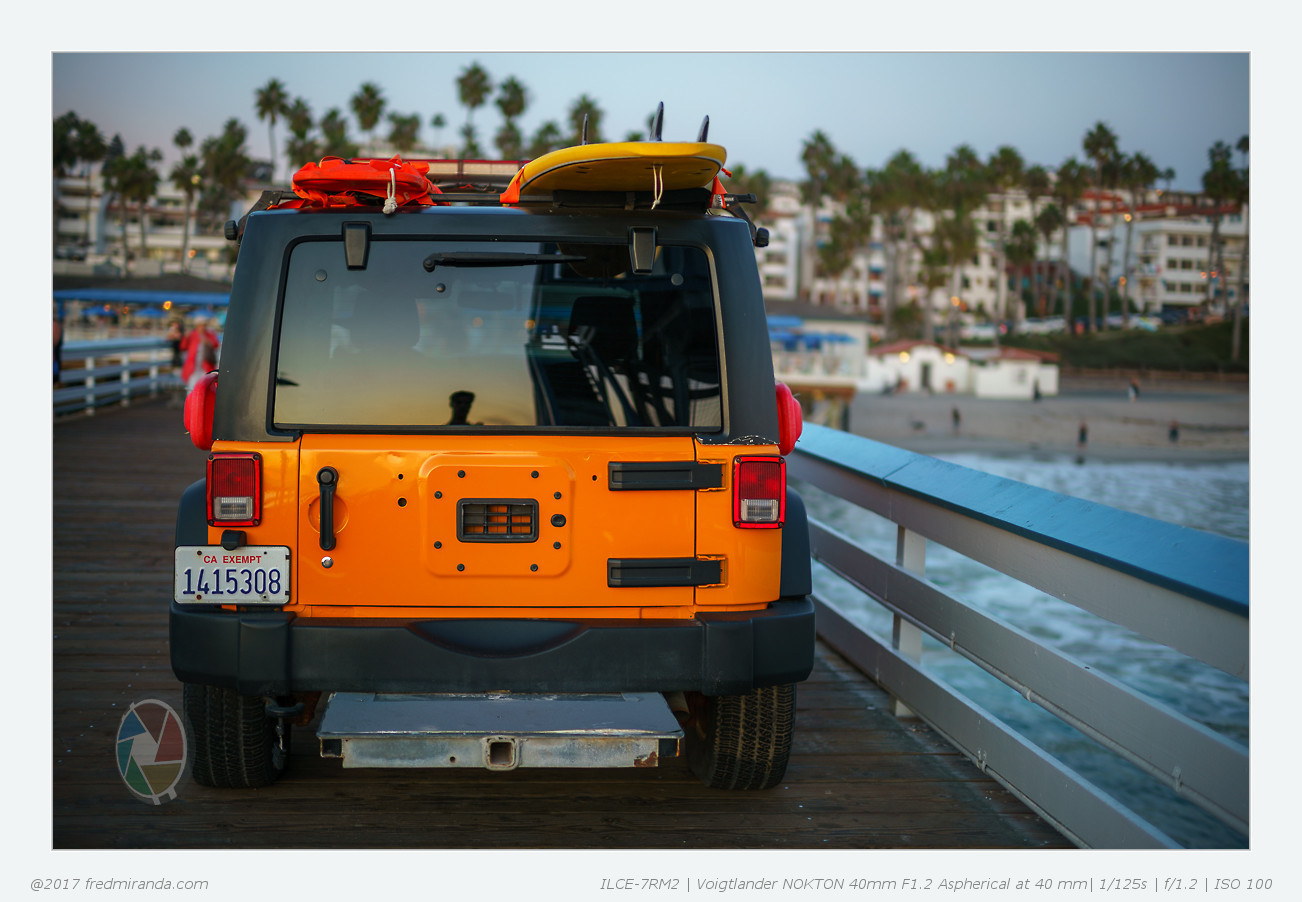
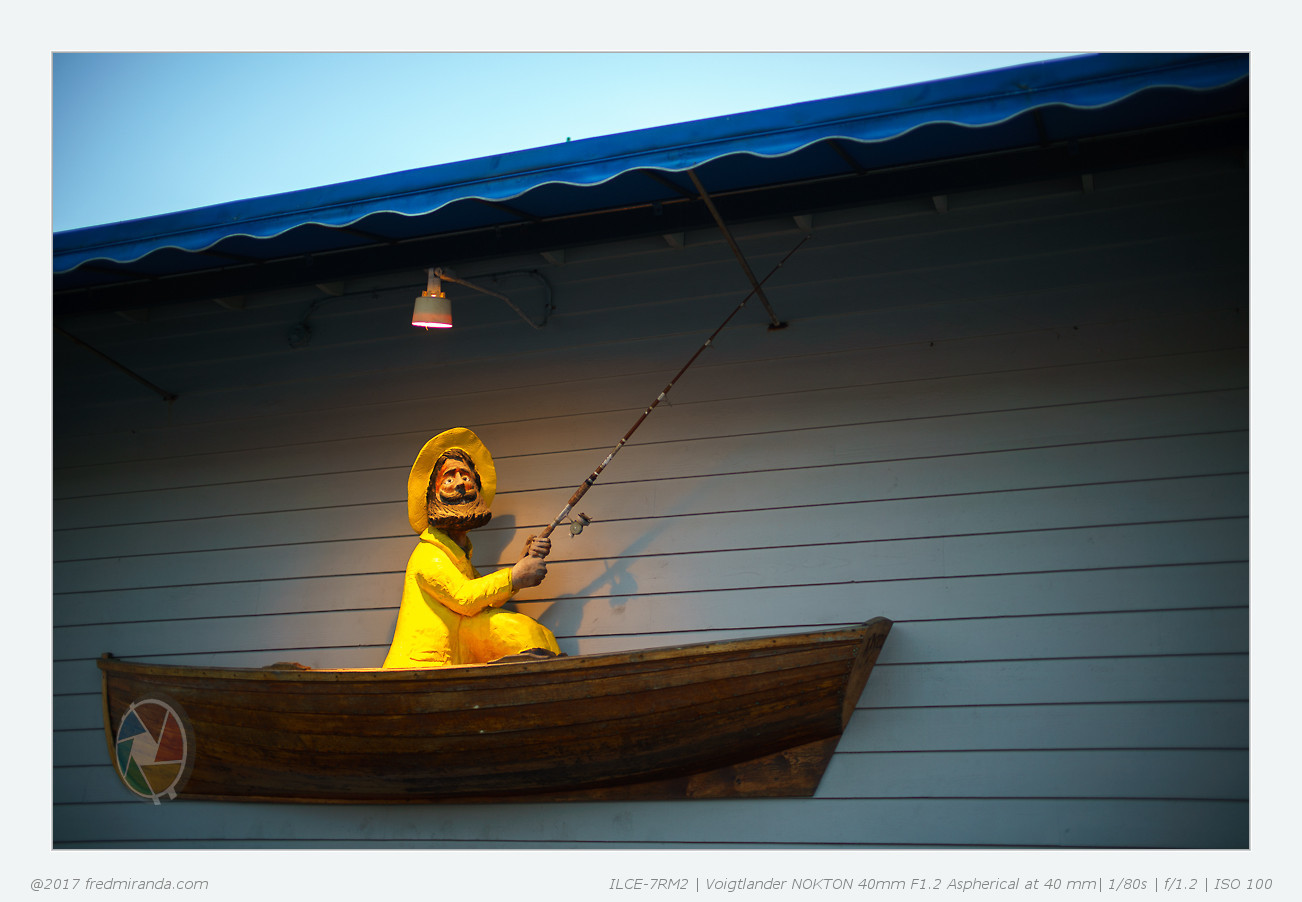
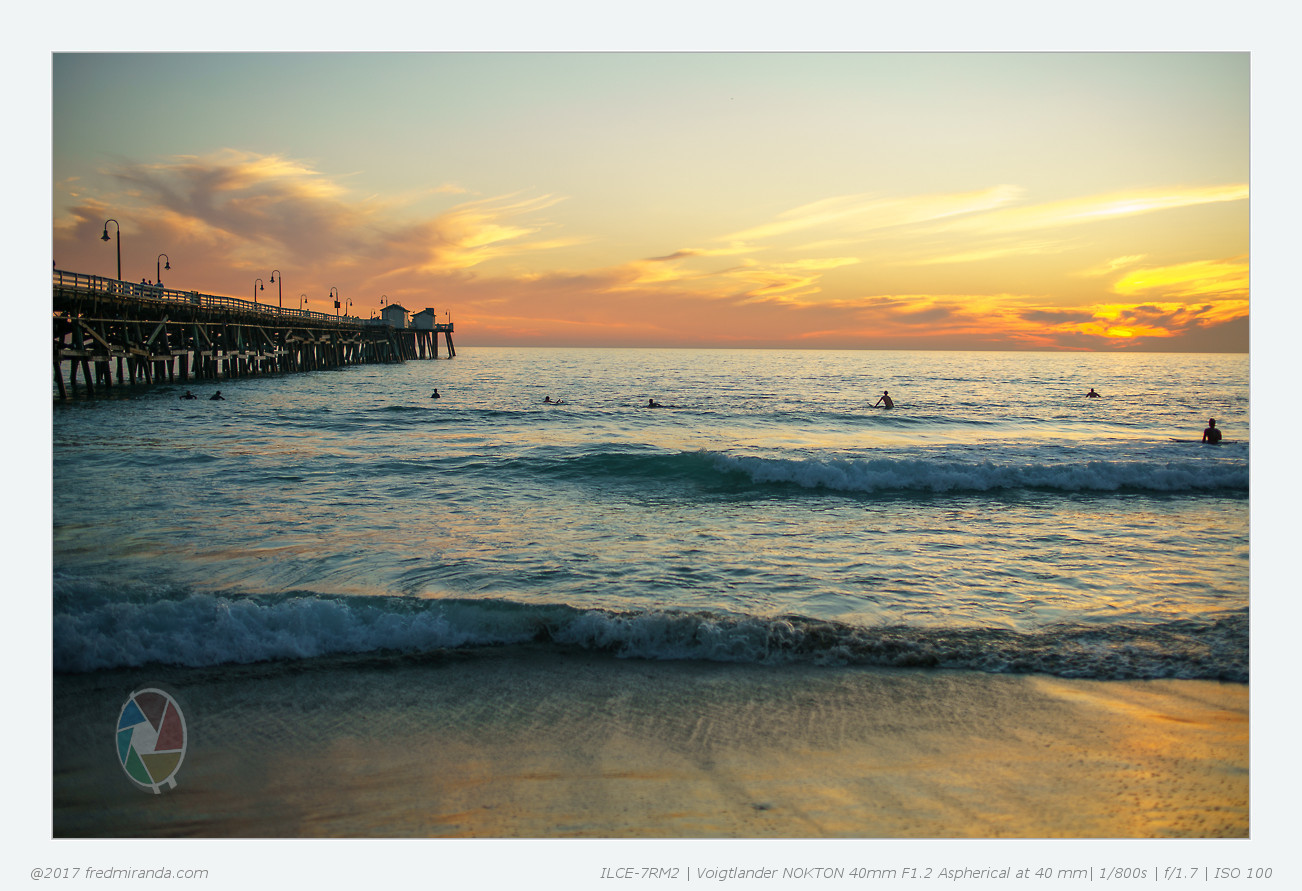
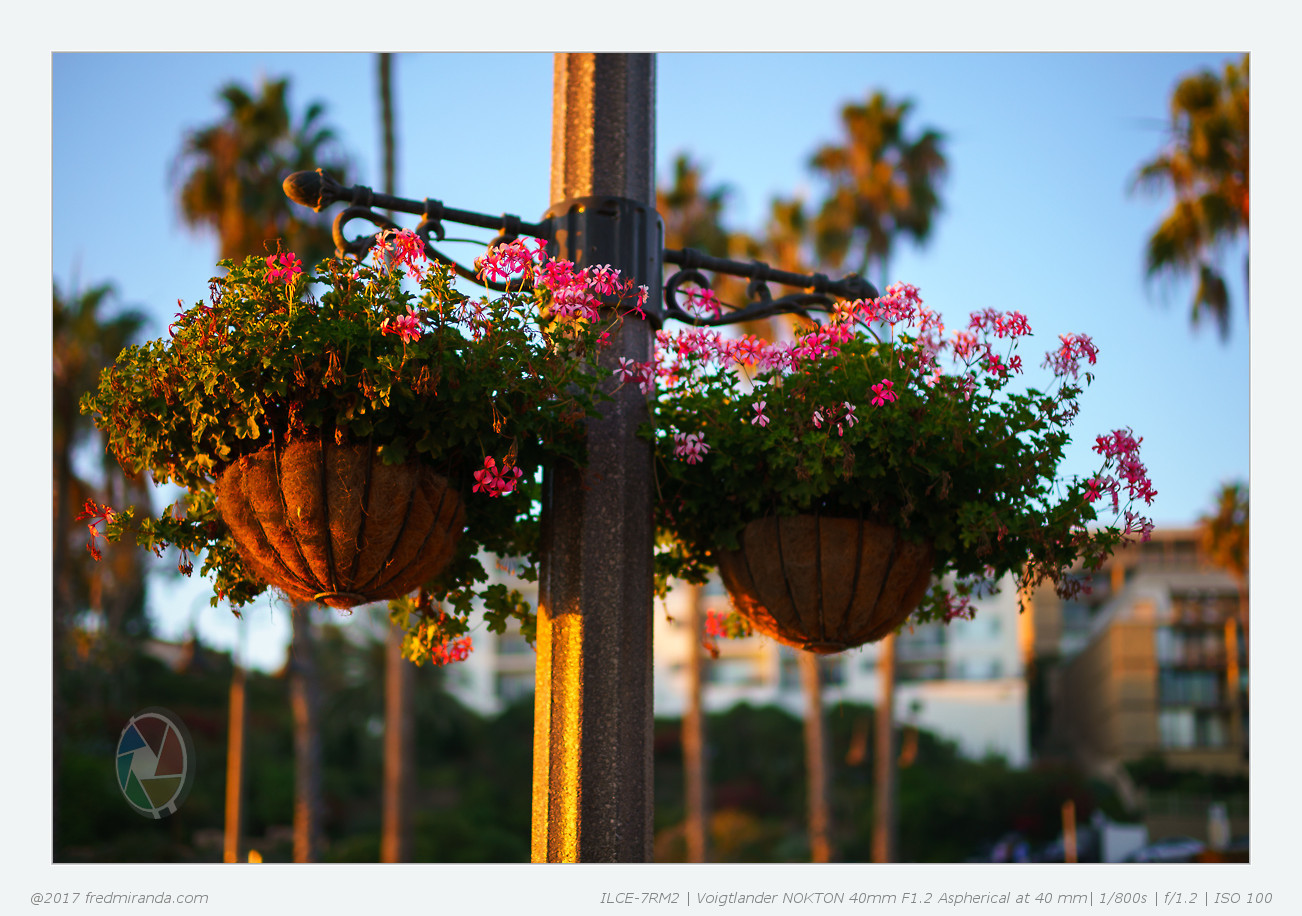
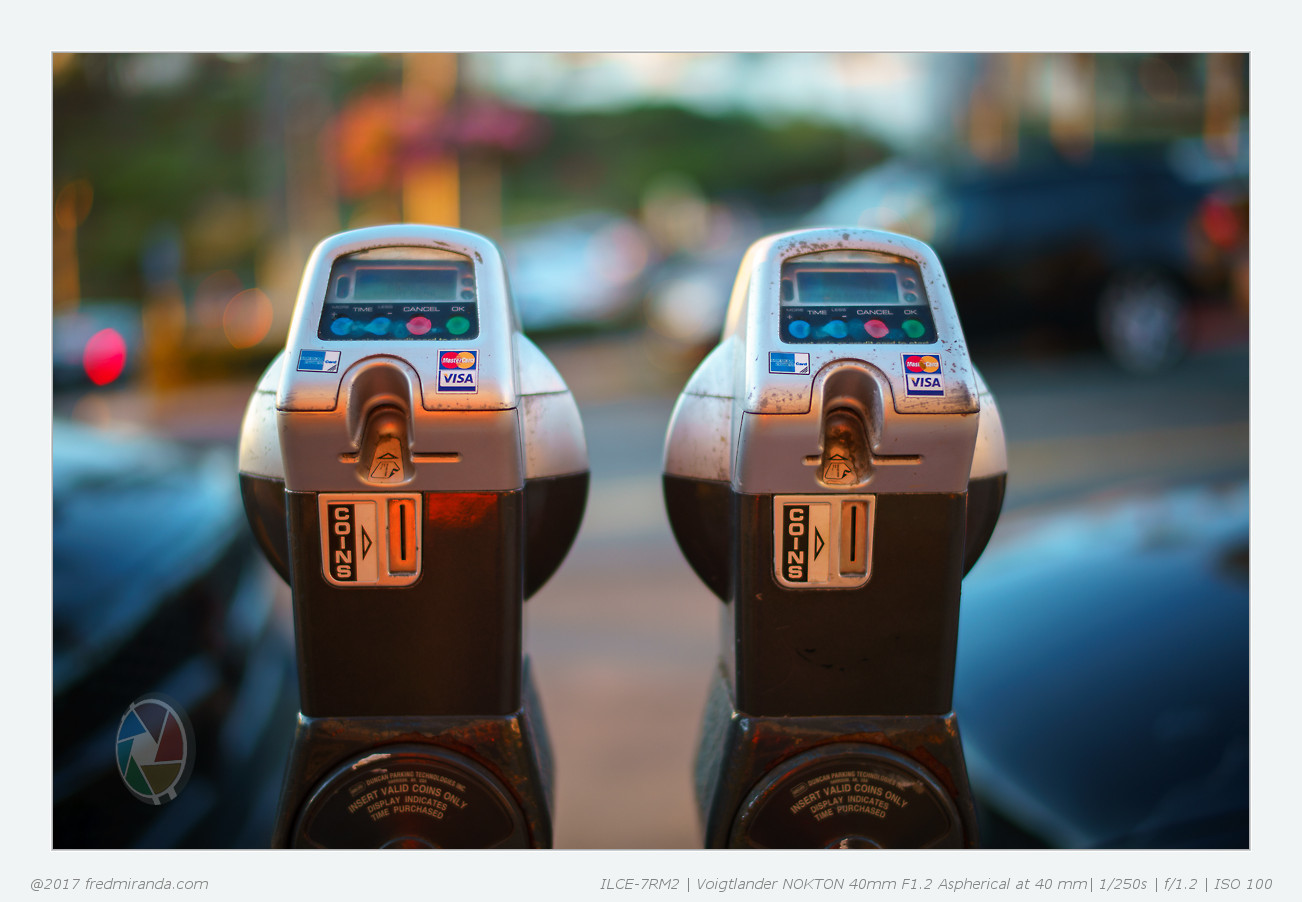
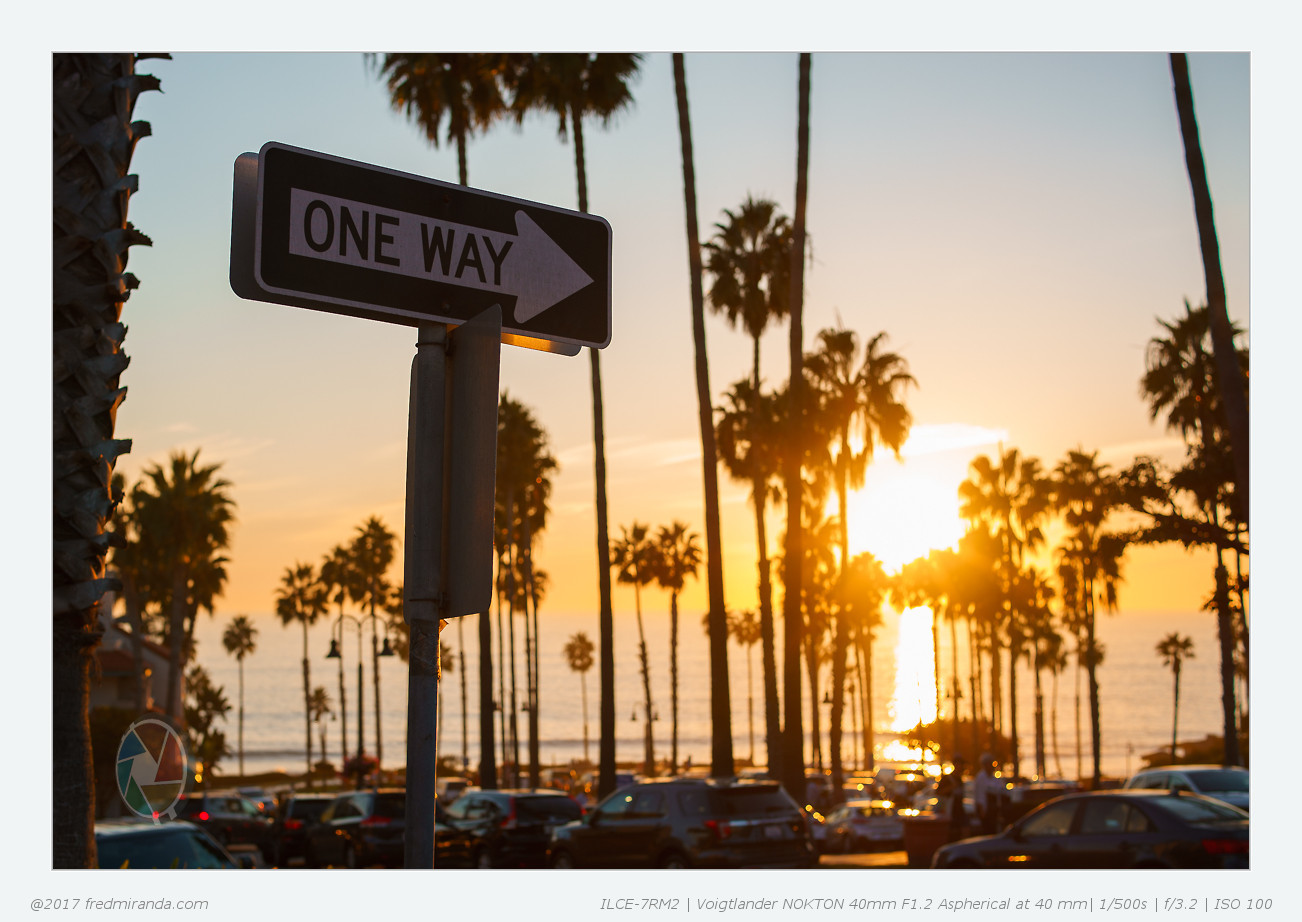
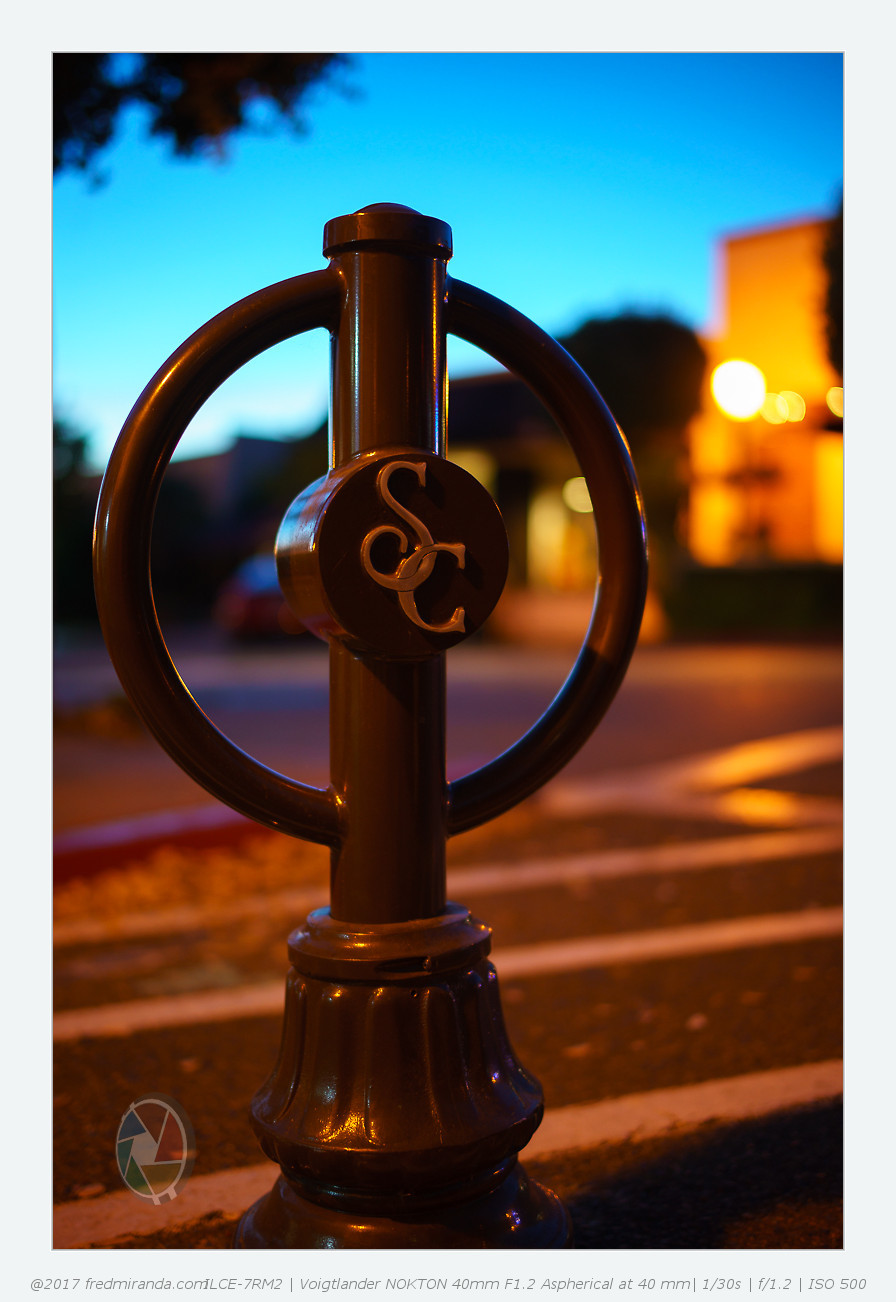
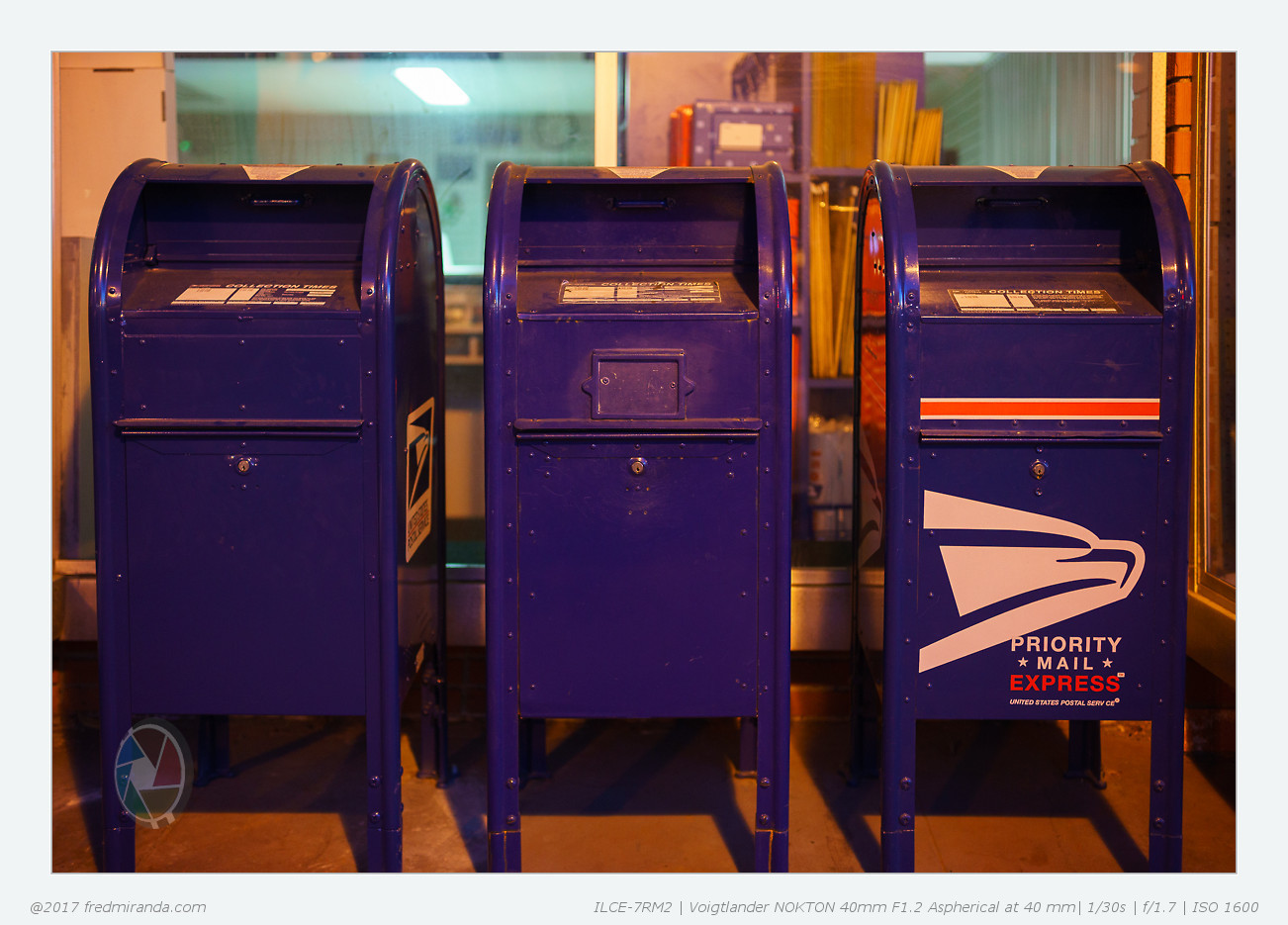
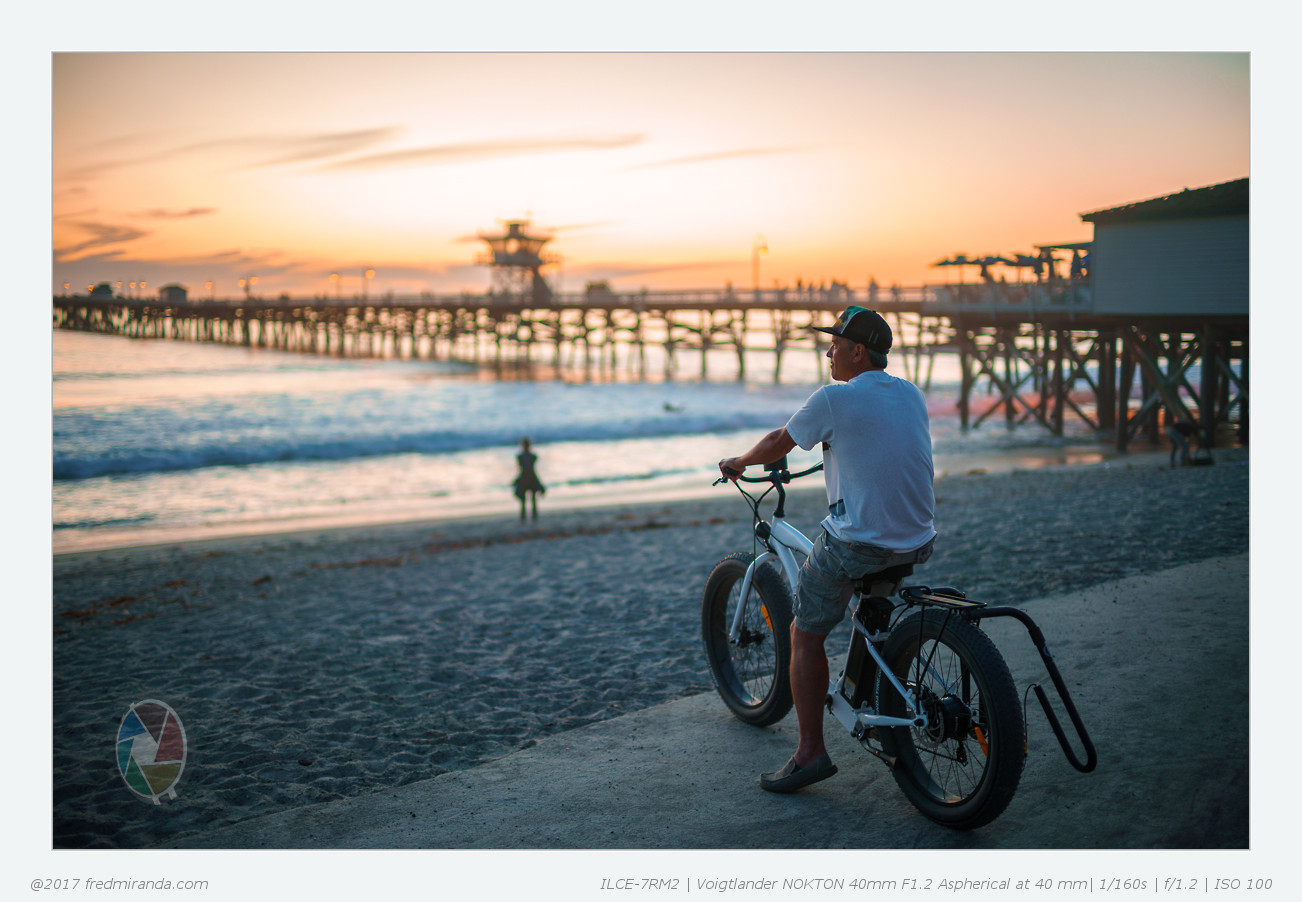
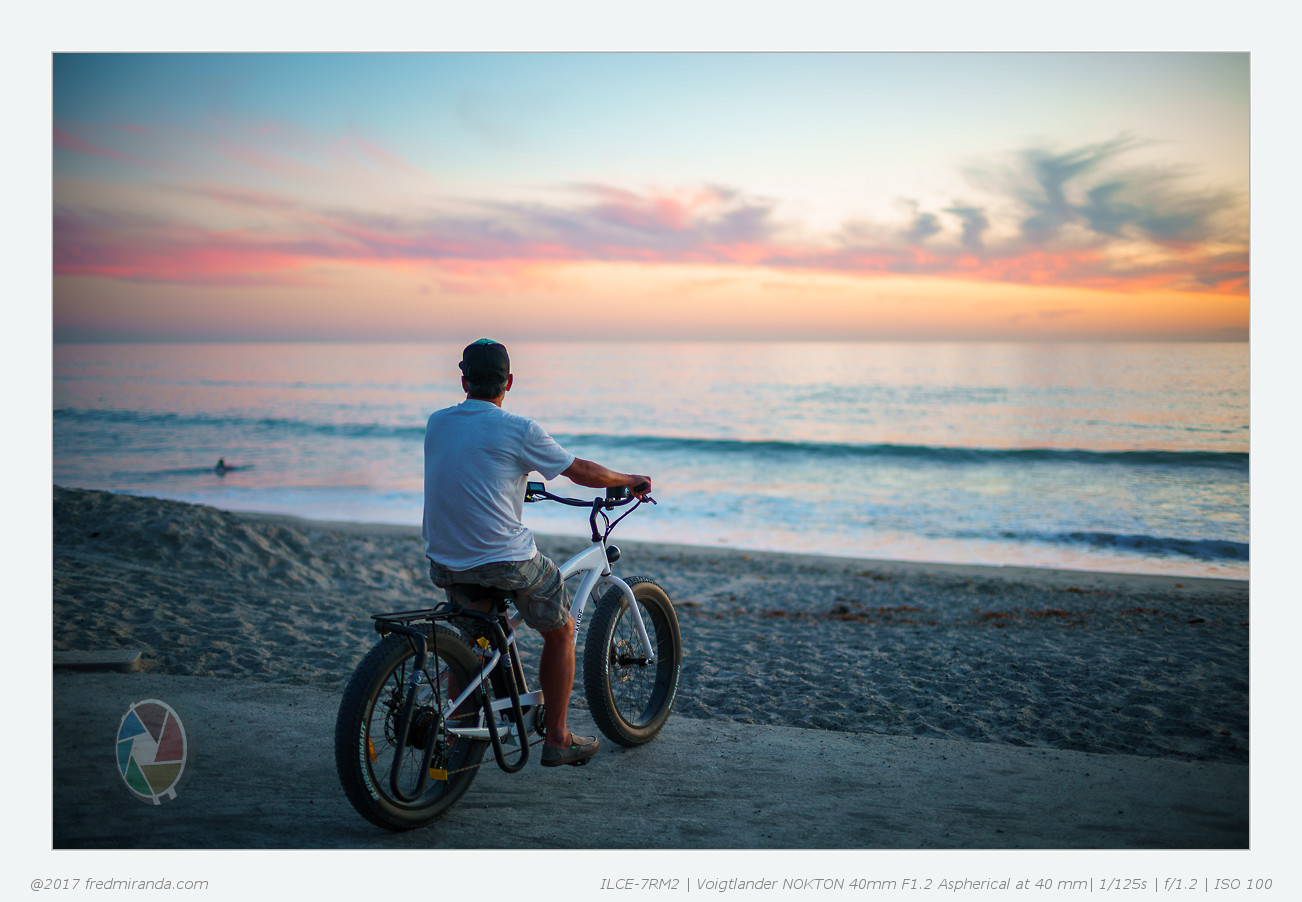
He has a certain enthusiasm but it seems genuine and he does usually like lenses just like this one I feel the same about this lens on my A9 so I can relate easily!
I really like this lens but it’s not for everyone.
The CV 40/1.2 is a lens with distinctive character at wider apertures. There is residual spherical aberration and below average color correction for both lateral and axial CA. There is some field curvature and focus shift is definitely an issue if not shooting at working aperture. At mid distance, it's sharp even wide open at center with a noticeable fall-off towards the mid-field and corners until about f/1.7. Out of focus transition zone is not very smooth and double-lining is bothersome.
Coma is not well controlled at wider apertures but that's expected. It's great at f/2.5 and outstanding at f/2.8 though.
Specular highlights show some outlining and onion pattern and cat-eyes are present from mid-field to edges until about f/2. There is very slight pincushion distortion.
As I see it, Voigtlander designed two lenses in one: It's a character lens with under-corrected color and spherical aberrations from f/1.2 until about one stop down. Its optical design gives us a compact f/1.2 lens capable of very pleasant out of focus rendering. At f/2.8 and smaller apertures, it acts as a modern lens, capable of high resolution, contrast and color correction.
By f/4, it's as good as it gets across the field and stepping down further does not significantly improve resolution except for the very corners which still benefit slightly from f/5.6. (optimum). I would not hesitate using this lens for landscapes starting at f/5.6.
On the positive side, it's capable of smooth rendering even at mid-distances and that's rare for a small fast lens. It also focuses very close and that combined with the f/1.2 aperture, it just melts the background away. The CV 40/1.2 is capable of high contrast images even at wide apertures. That's when you know you are shooting with a modern lens.
The 40mm focal length may seem odd at first but in fact it's very practical. Basically, it acts as a normal lens that allows the environment to interact a bit more with the subject, just like when you’re shooting with a 35mm lens. It's a great one-lens solution.
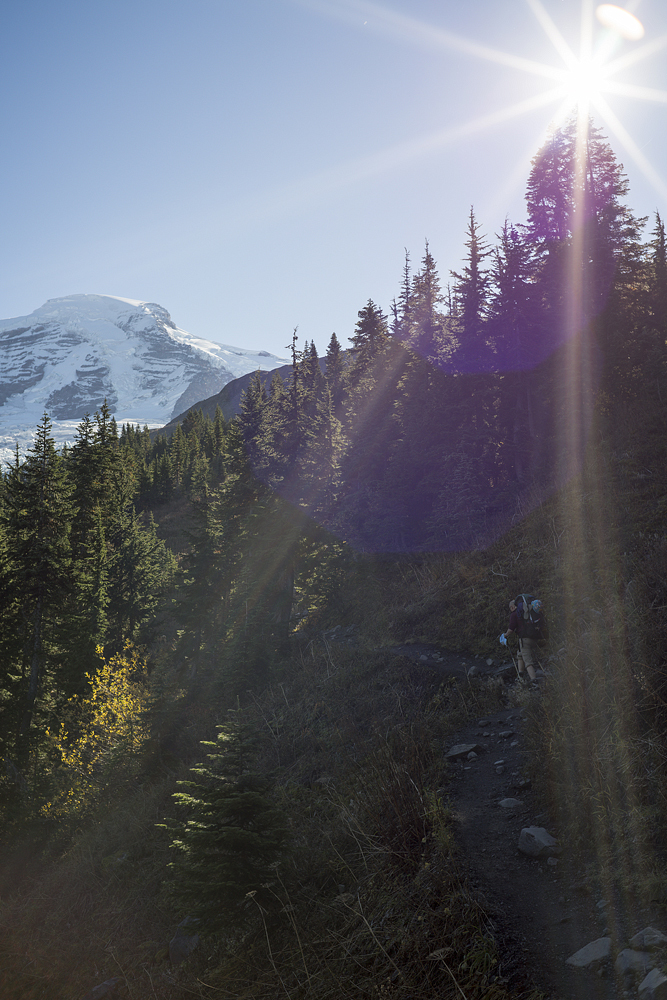
Just like with other Voigtlander lenses, the 10-straight aperture blades yield beautiful sunstar rendering. It’s possible to get defined 10-point sunstars starting at f/2.8!
Flare is also well-controlled even though I still see minor ghosting and veiling in some of my images. I’d say flare resistance is very good on this Nokton.
Finally, the biggest plus: Size. There were optical compromises to develop a small and light f/1.2 lens but Voigtlander succeeded creating a lens capable of lovely rendering. It's also an E-mount native, so expect to see all the bells and whistles like EXIF transmission, focus auto-magnification, auto-IBIS as well as aperture de-clicking for video work.
Voigtlander knows it has something unique with the CV 40/1.2 and priced it accordingly. It renders a special look being moderately wide while capable of high amount of blur.
One can get a lens capable of similar or higher blur but it won't match its combination of IQ, wide focal length and size. On top of that one gets full Sony E-mount native electronics.
Fred Miranda wrote:
I like this lens but it’s not for everyone
From what I've seen so far, the CV 40/1.2 is a lens with distinctive character at wider apertures. There is residual spherical aberration and below average color correction for both lateral and axial CA. There is some field curvature and focus shift is definitely an issue if not shooting at working aperture.
It's sharp enough in the center at f/1.4 but not as much towards the mid-field until about f/2.8. This was a disappointment to me as I expected better mid-zone resolution when shooting wide-open or at least at one step down. This means that subjects placed off-axis won't be very sharp when shooting at wide apertures.
Coma is not well controlled at wider apertures but that's expected. It's great at f/2.5 and outstanding at f/2.8 though.
Specular highlights are not super clean and I see noticeable onion patterns in some images but not all. As expected, cat-eyes will be present from mid-field to edges until about f/2.
Voigtlander designed two lenses in one. The CV 40/1.2 Nokton is a character lens with distinctive flaws from f/1.2 until about f/2 and a modern lens when shooting at f/2.8 or smaller apertures. By f/4, it's as good as it's going to get across the field. Stepping down further does not significantly improve resolution except for the very corners which still benefit for f/5.6. (optimum). The very corners are never super sharp because lateral CA is still present but it's capable of high frequency resolution. I would not hesitate using this lens for landscapes starting at f/5.6.
On the positive side, it is capable of smooth rendering even at mid-distances and that's rare for a small fast lens. It also focuses very close and that combined with f/1.2 aperture just melts the background away.
The 40mm is a very practical focal length. Basically, it’s a normal lens that allows the environment to interact a bit more with the subject, just like when you’re shooting with a 35mm lens. Which makes this a great one-lens solution.
Just like with other Voigtlander lenses, the 10-straight aperture blades yield beautiful sunstar rendering. It’s possible to get defined 10-point sunstars starting at f/2.8!
Flare is also well-controlled even though I still see minor ghosting and veiling in some of my images. I’d say flare resistance is actually quite good on this Nokton.
Finally, the biggest plus: Size. There were optical compromises to develop a small and light f/1.2 lens. Voigtlander succeeded. It's also an E-mount native lens so expect to see all the bells and whistles like EXIF transmission, focusing auto-magnification, auto-IBIS as well as aperture de-clicking for video work....Show more →
Fred this is a great summary and David has provided a great review at Philip Reeve's site. I am a big fan of lenses that have character wide open that I like, but have few aberrations and good sharpness when stopped down. When evaluating those lenses, however, I think you have to ask two questions: 1) Do you like the character wide open? I think this lens will get mixed reviews on that. I has some real strengths, but also some weaknesses. My own reaction is mixed. I really like the bokeh and that matters to me, but I hate the purple fringing as I shoot a lot of backlit scenes wide open and I hate fixing purple fringing in post. So, although I can see why some will like it, the purple fringing and other color aberration are just too much for me. 2) How good is it stopped down? For me this lens fails in that regard. It does have good flare resistance as you would expect with a lens with modern coatings and his has great sunstars with the 10-bladed aperture, but to me there are several gotchas that prevent it from functioning well as a stopped down lens. First, it has significant focus shift and this means that you have to focus at taking aperture which does hurt focus accuracy for me quite a bit. Second, the outer zones never really sharpen up very well. Third, it has quite a bit of lateral CA and lateral CA unlike almost every other aberration does not improve as you stop down. Fourth, it has significant enough field curvature that focussing is going to be a bit of a pain as you have to move off center and find the optimal zone to balance focussing between the centre and the corners.
So, for me in the end I am not interested. I don't like the character enough wide open and I just don't think it is all that good stopped down. I do thank you and David for providing excellent reviews. It has been very useful in understanding this lens.
Fred Miranda wrote:
I like this lens but it’s not for everyone
From what I've seen so far, the CV 40/1.2 is a lens with distinctive character at wider apertures. There is residual spherical aberration and below average color correction for both lateral and axial CA. There is some field curvature and focus shift is definitely an issue if not shooting at working aperture.
It's sharp enough in the center at f/1.4 but not as much towards the mid-field until about f/2.8. This was a disappointment to me as I expected better mid-zone resolution when shooting wide-open or at least at one step down. This means that subjects placed off-axis won't be very sharp when shooting at wide apertures.
Coma is not well controlled at wider apertures but that's expected. It's great at f/2.5 and outstanding at f/2.8 though.
Specular highlights are not super clean and I see noticeable onion patterns in some images but not all. As expected, cat-eyes will be present from mid-field to edges until about f/2.
Voigtlander designed two lenses in one. The CV 40/1.2 Nokton is a character lens with distinctive flaws from f/1.2 until about f/2 and a modern lens when shooting at f/2.8 or smaller apertures. By f/4, it's as good as it's going to get across the field. Stepping down further does not significantly improve resolution except for the very corners which still benefit for f/5.6. (optimum). The very corners are never super sharp because lateral CA is still present but it's capable of high frequency resolution. I would not hesitate using this lens for landscapes starting at f/5.6.
On the positive side, it is capable of smooth rendering even at mid-distances and that's rare for a small fast lens. It also focuses very close and that combined with f/1.2 aperture just melts the background away.
The 40mm is a very practical focal length. Basically, it’s a normal lens that allows the environment to interact a bit more with the subject, just like when you’re shooting with a 35mm lens. Which makes this a great one-lens solution.
Just like with other Voigtlander lenses, the 10-straight aperture blades yield beautiful sunstar rendering. It’s possible to get defined 10-point sunstars starting at f/2.8!
Flare is also well-controlled even though I still see minor ghosting and veiling in some of my images. I’d say flare resistance is actually quite good on this Nokton.
Finally, the biggest plus: Size. There were optical compromises to develop a small and light f/1.2 lens. Voigtlander succeeded. It's also an E-mount native lens so expect to see all the bells and whistles like EXIF transmission, focusing auto-magnification, auto-IBIS as well as aperture de-clicking for video work. ...Show more →
Great summary Fred, and pretty much my take on this too. You may have a slightly better copy than me, though, as mine takes f5.6 to get close to its best in the corners, and improves slightly around f6.7-8 (that's focussing in the outer midfield for overall resolution - f4 or so is about peak for corners focussed on corners, and centre focussed on centre)
DavidBM wrote:
Great summary Fred, and pretty much my take on this too. You may have a slightly better copy than me, though, as mine takes f5.6 to get close to it's best in the corners, and improves slightly around f6.7-8 (that's focussing in the outer midfield for overall resolution - f4 or so is about peak for corners focussed on corners, and centre focussed on centre)
It could also be the effect of focus shift David. Did you shoot at working aperture? I tested this carefully and found that for best results at infinity, focusing and aperture should be as synced as possible.
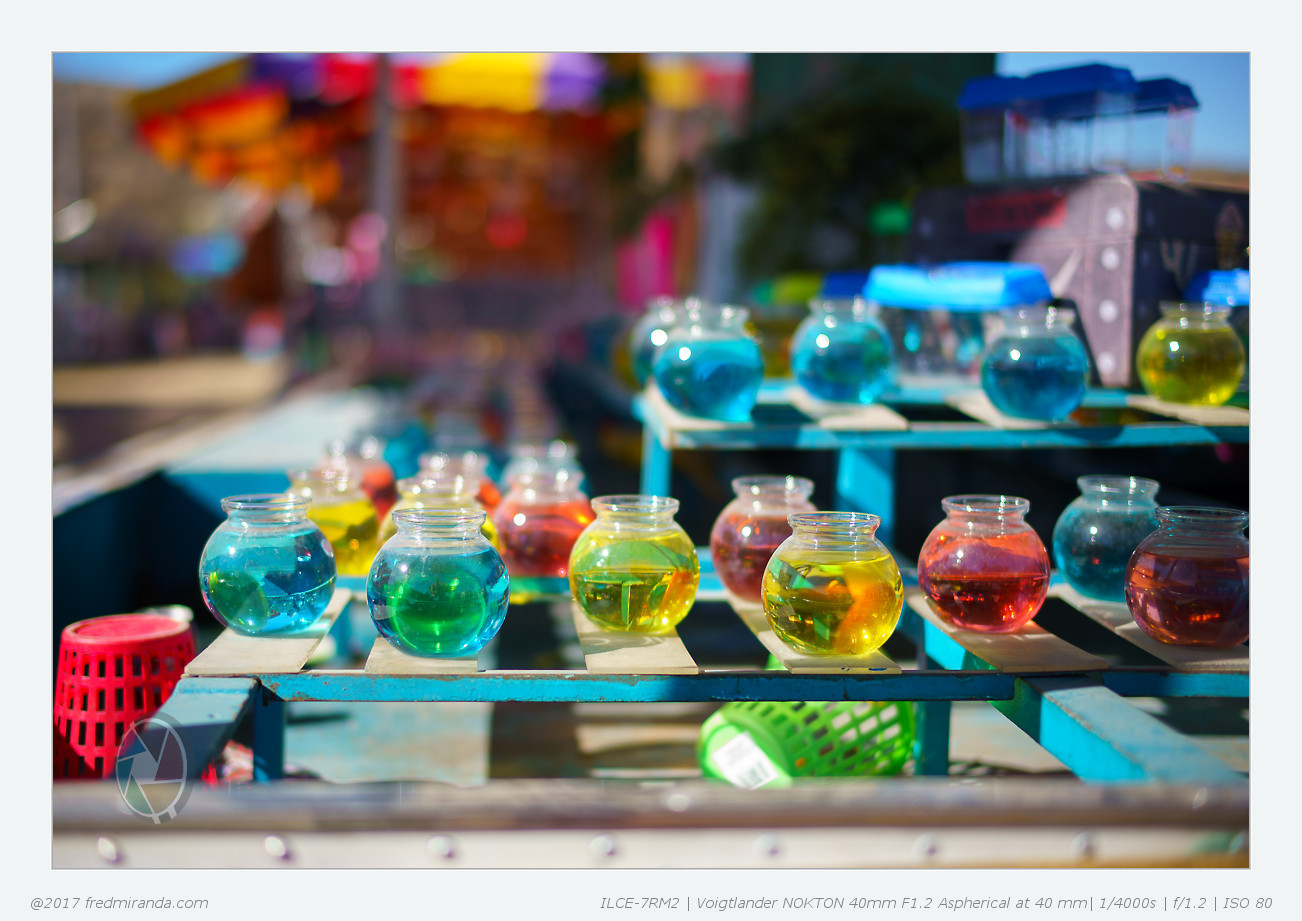
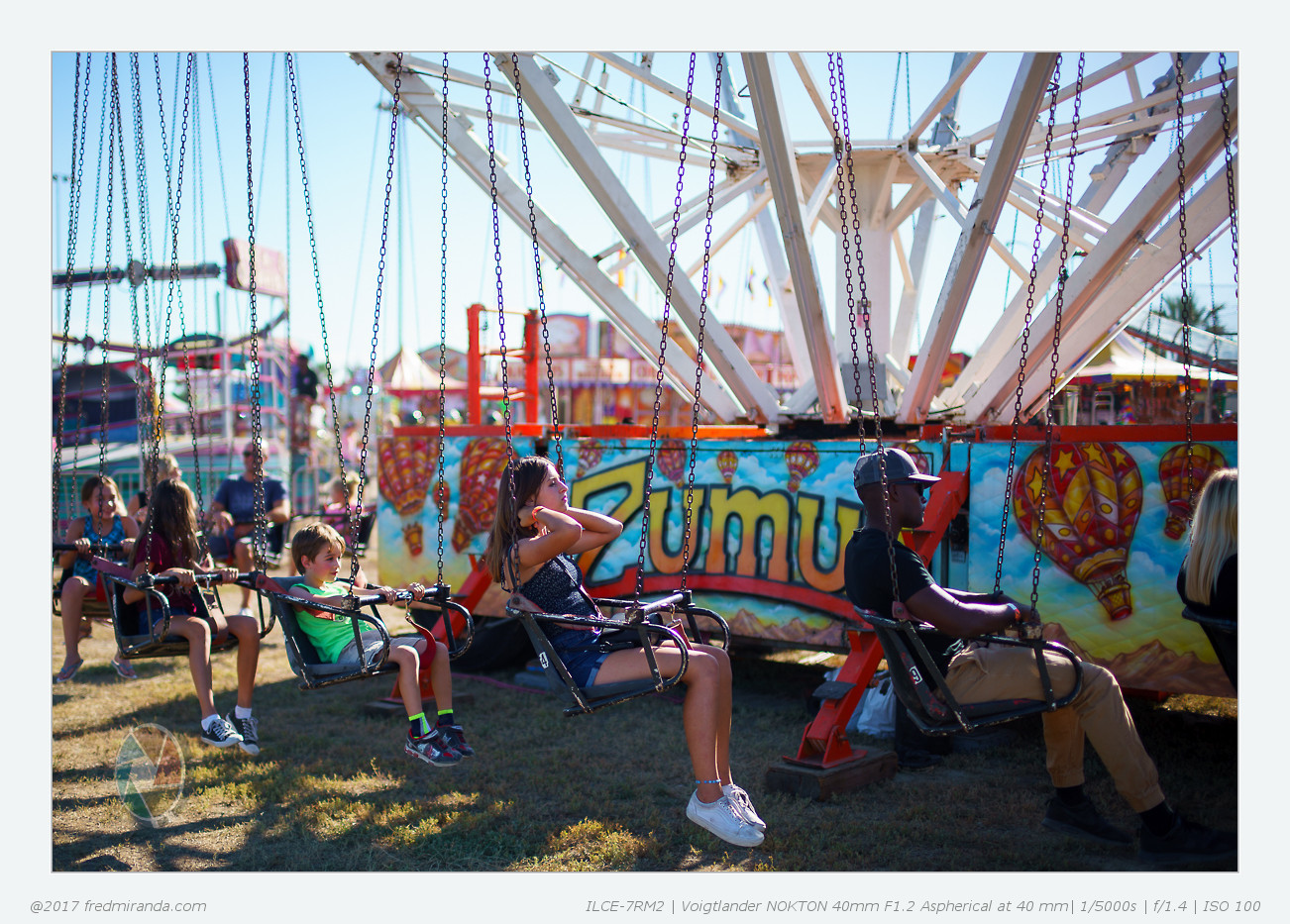
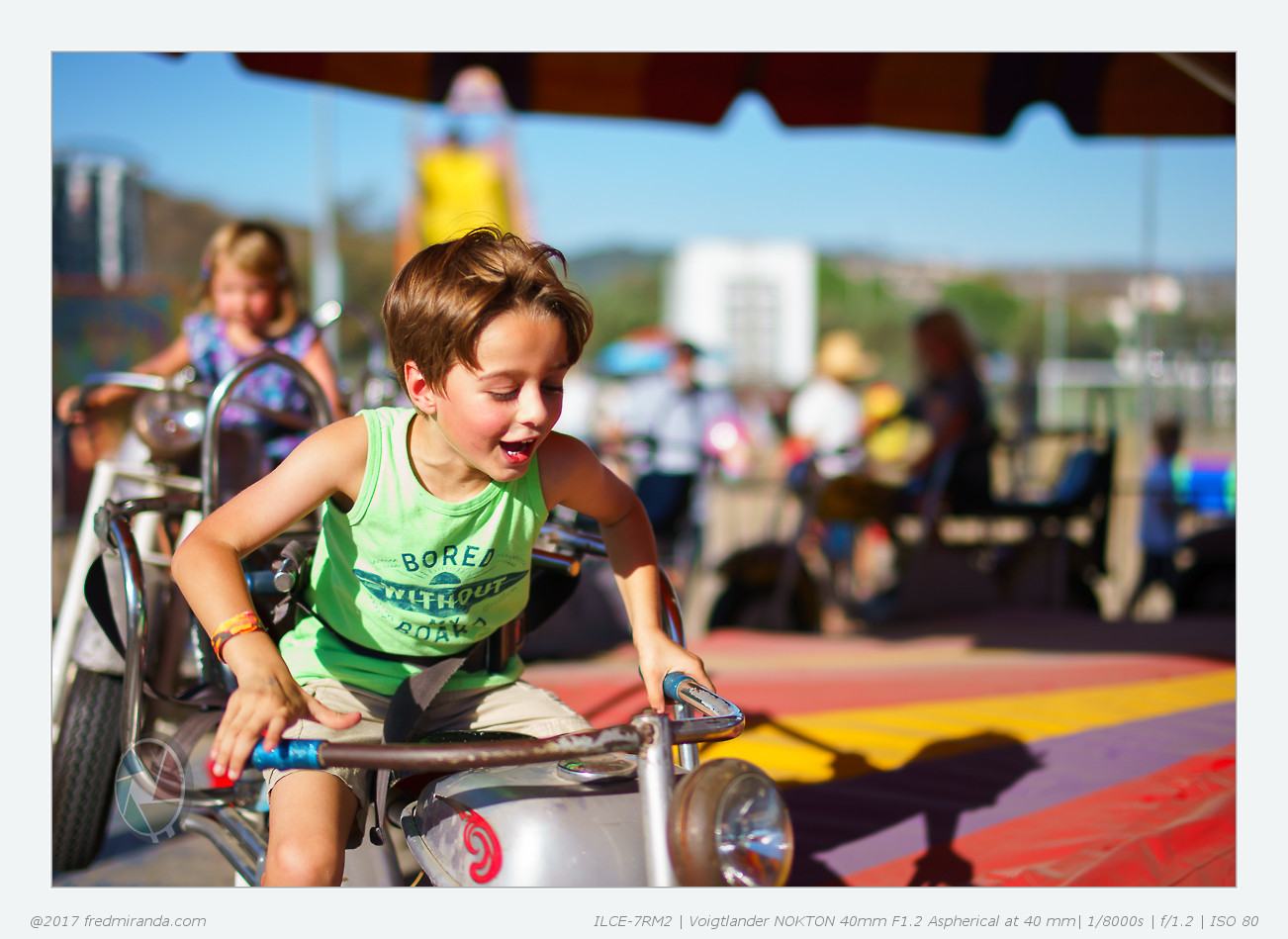
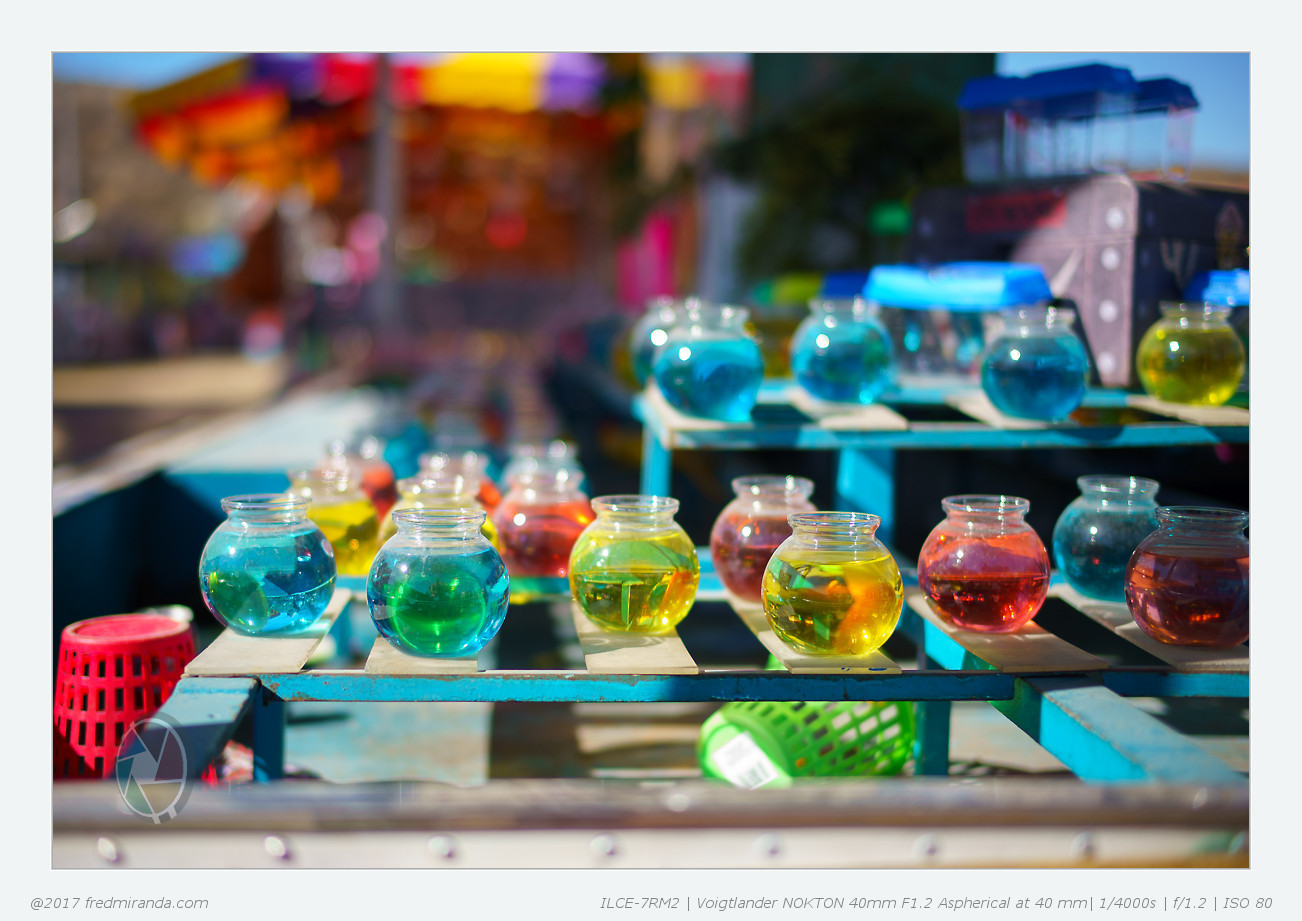
I took the lens to a local Carnival today with the kids and it was a lot of fun shooting wide open at very harsh lighting.
Later on, I will some more "harsh" lighting and low lighting samples. All high shutter speed samples had EFCS turned off. Loving the color rendering.
Fred Miranda wrote:
It could also be the effect of focus shift David. Did you shoot at working aperture? I tested this carefully and found that for best results at infinity, focusing and aperture should be as synced as possible.
I took the lens to a local Carnival today with the kids and it was a lot of fun shooting wide open at very harsh lighting.
Later on, I will some more "harsh" lighting and low lighting samples. All high shutter speed samples had EFCS turned off. Loving the color rendering.
Yes I thought of that (focus shift would mean that it'd get worse as you stop down a bit, then DOF would kick in to reverse it by f8 or so)
But my infinity stuff was all shot at working aperture because there was plenty of light
(I only noticed the focus shift when I started to shoot MFD stuff, because I was doing it in dimmer light and I started by focussing wide open and just leaving it, and got much worse results than I expected...)
GMPhotography wrote:
I’m curious has anyone compared this to the classic Voigtlander Nokton Classic 40mm f/1.4 MC Lens
Not directly, Guy, but I did try it once. It's a shocker on Sony unless you take "classic" very seriously. There is a tiny spot of semi usable sharpness in the middle at wide apertures, and that spot takes a long while to get bigger as you stop down and it never gets sharp across the field. And it doesn't really have other things to recommend it either.
It's very small though. It makes the new one look like a super corrected modern lens (which is an achievement, coz it's not).
Of course there are uses for the old one if you like a certain look, but it is definitely not for me...
GMPhotography wrote:
I need to stop looking at these images. Lol
Yep some of those fairground images of Fred's are one of the things that this lens does very distinctively: you get a sense of the environment from it being a fair bit wider than a 50-55 class lens, but you get the blur levels of a fairly fast 50. It's a great niche to fill.
Then the other issue is the size quality tradeoff. The lens would have to be bigger than Otus to be Otus grade at this speed. I don't want that. How much better would it be if the designers gave themselves, say, the form factor of the 65 to play with? If the answer is a tiny bit better, maybe what we've got is the best tradeoff. If the answer is a lot better, but not Otus better, maybe that would be my preference/
DavidBM wrote:
Not directly, Guy, but I did try it once. It's a shocker on Sony unless you take "classic" very seriously. There is a tiny spot of semi usable sharpness in the middle at wide apertures, and that spot takes a long while to get bigger as you stop down and it never gets sharp across the field. And it doesn't really have other things to recommend it either.
It's very small though. It makes the new one look like a super corrected modern lens (which is an achievement, coz it's not).
Of course there are uses for the old one if you like a certain look, but it is definitely not for me......Show more →
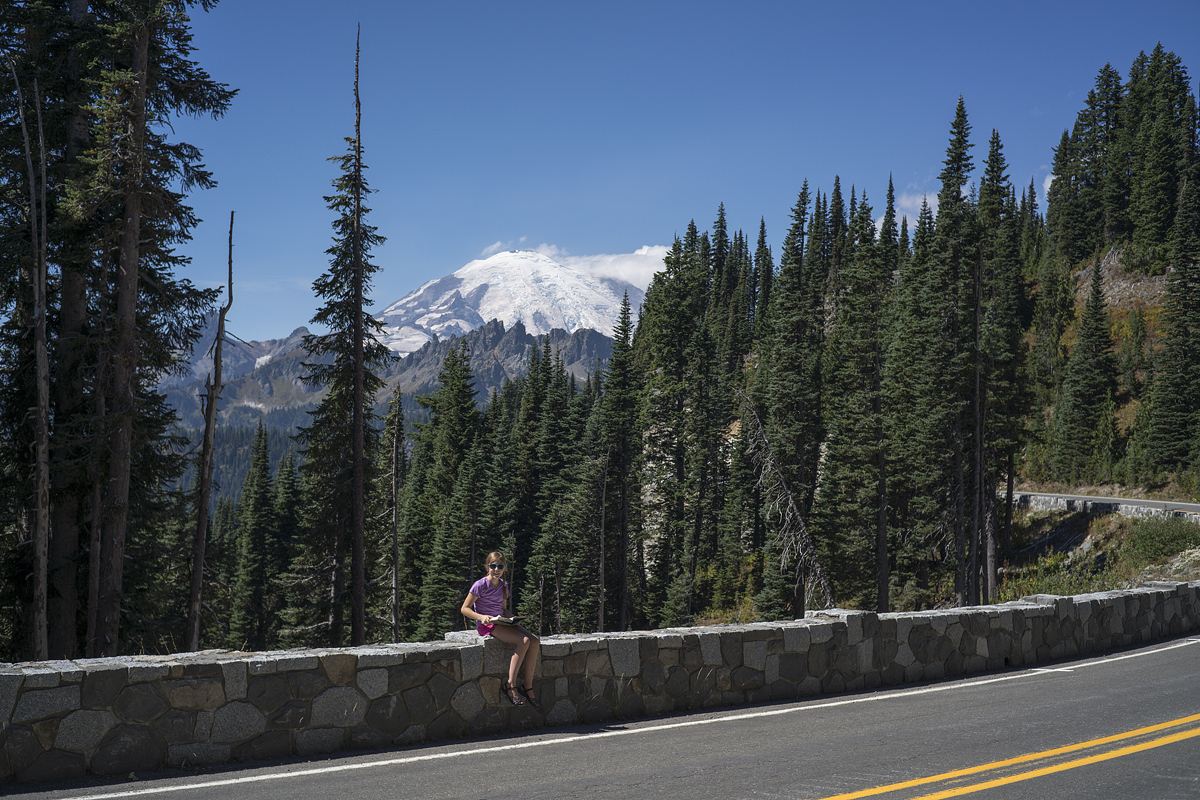
I agree with David - nice and small, but not terribly sharp until way stopped down and then never quite gets there off in the borders. Also has flare/ghosting issues - see first image.
Also has some funky field curvature issues that don't go away when stopped down. If you follow the rock wall my daughter is sitting on (she's in perfect focus), it goes in and out of focus - so the FC is very interesting in a bad way.
I also could never find the stupid focusing tab when I wanted to without taking the camera away from my face. Usual great mechanics though.