JadedWriter wrote:
Sadly I have no control over anything regarding feeder placement since these are in a public park. I would think Central Park has people in it that take care of the feeders better, but this sounds like they're doing a subpar job of it (not surprising). Also sad this isn't a good sign since these birds are beautiful, I guess it's future hawk food.
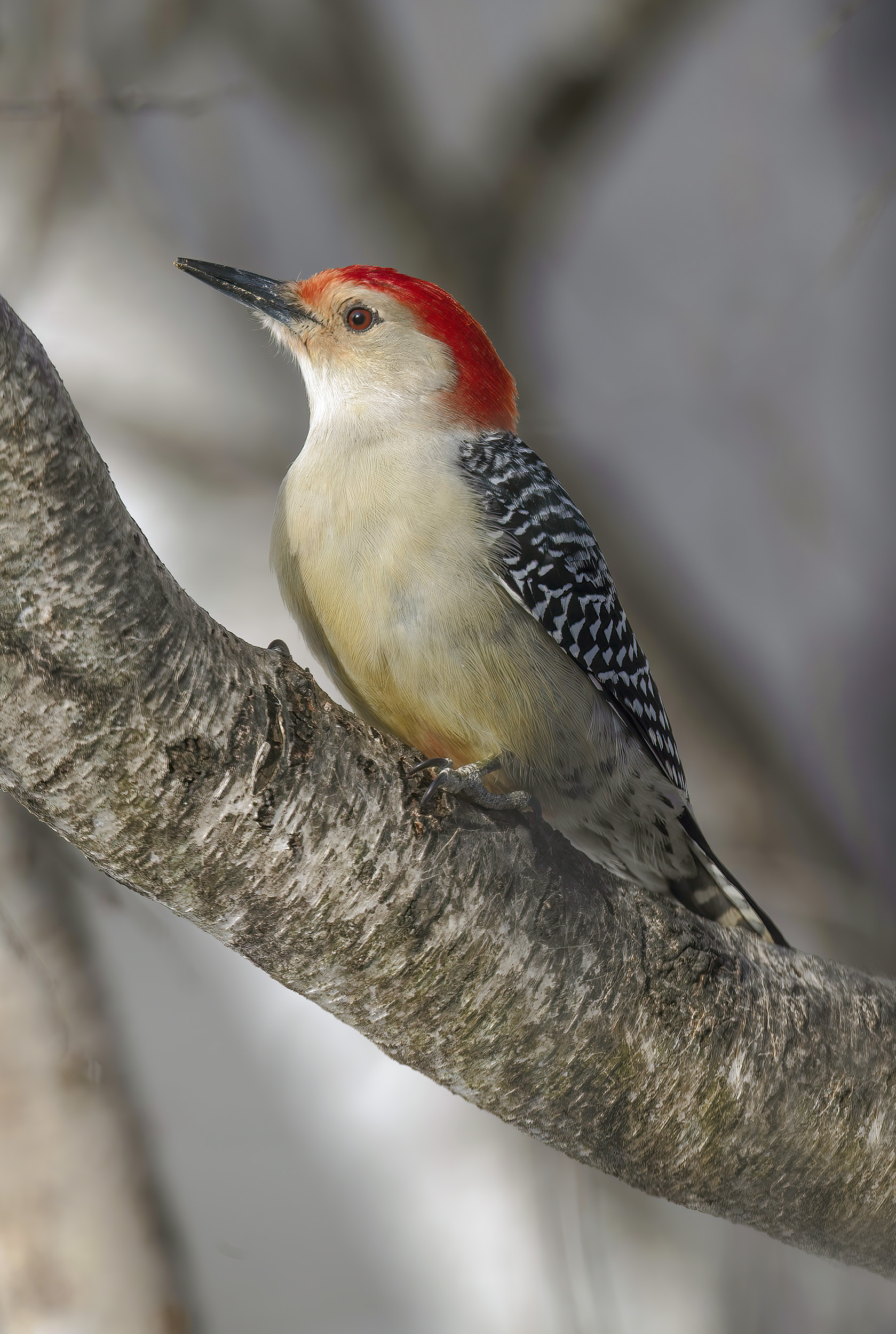
This is a Red-bellied Woodpecker that has been showing at my feeders for about 5 years, as a resident bird.
Countless times it has shown, always on the suet cage. And it's always been uneasy, closely watching my window.
For the first several years it would quickly fly, just at the sight of a piece of me, back away from the window. Gradually I was able to show my entire body as long as I was well back from the window.
That changed today .
Today was the first time it landed on the main stem of the Gray Birch. And to my delight, it was still there when I returned from scurrying for the camera.
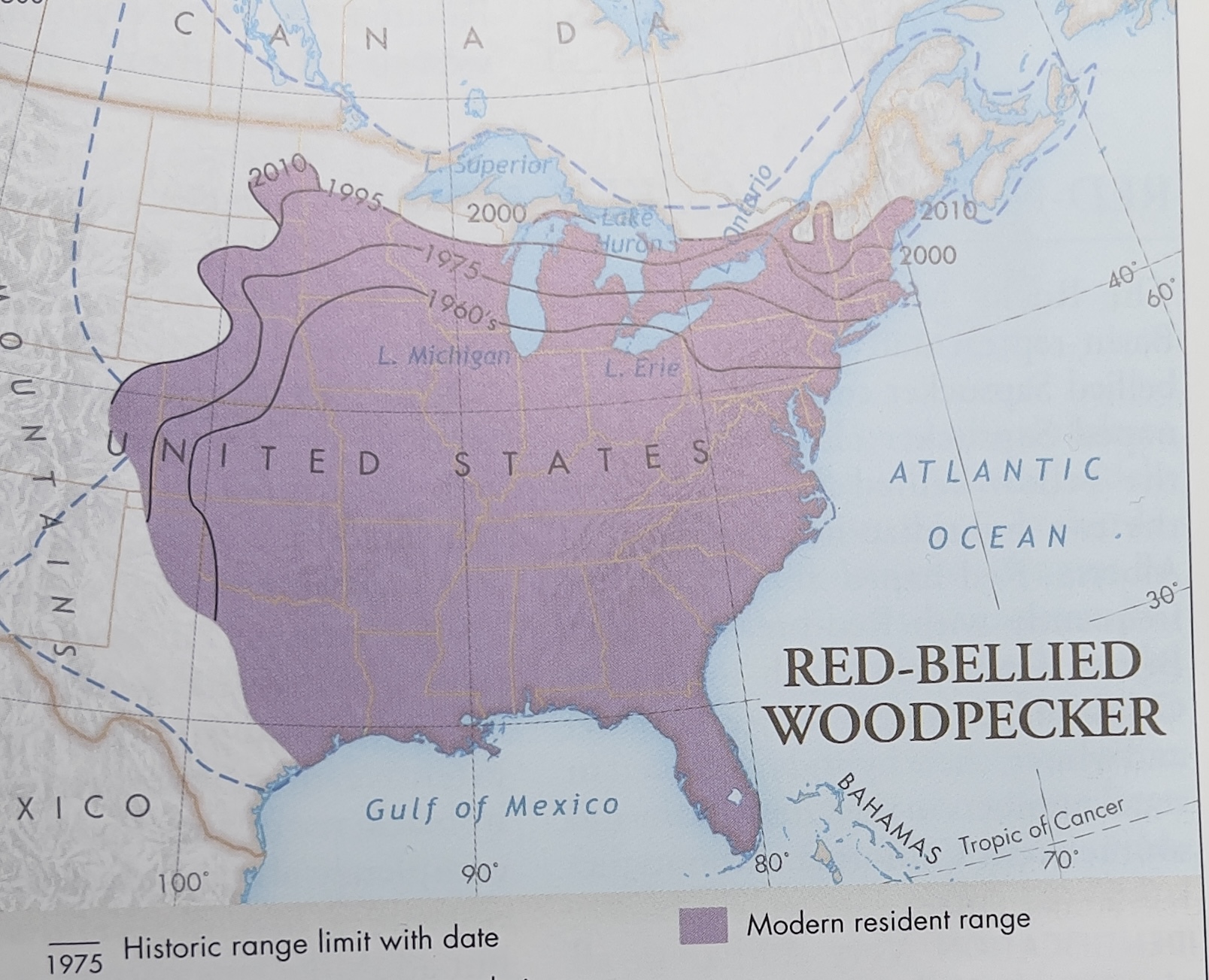
For these years, this bird has been living (apparently alone) year-round at the *northeastern most point* of the Red-bellied Woodpecker's range. I cannot recall ever seeing a RBWP here.
Individuals along these northern edges of a species range are pushing their physical limits against environmental factors.
Thick evergreen hedges are vital winter shelter. In this region, Eastern Hemlock is ideal for well-drained sites.
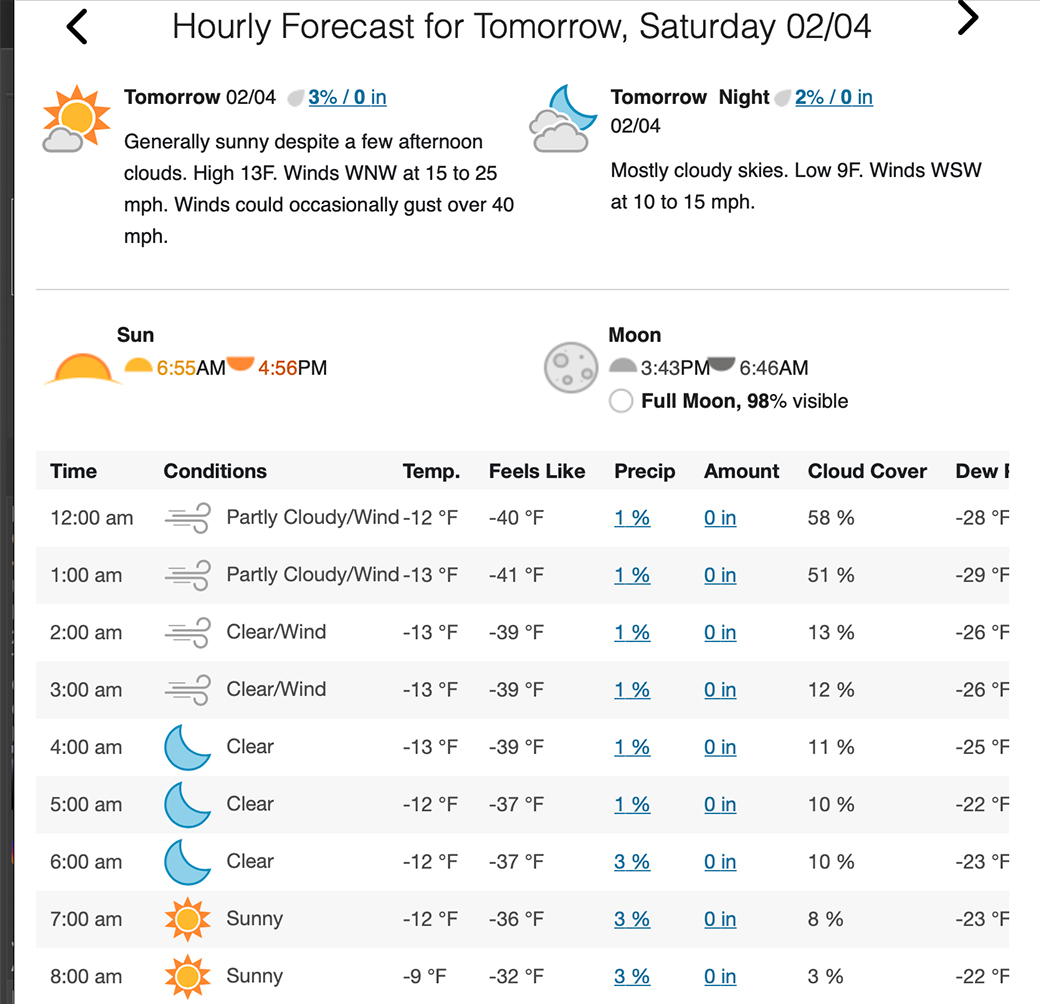
2/4/23 temps will be -11F or colder, 20mph winds. WCFactor -35F or colder. Worried many of these small birds won't survive.
bs kite wrote:
This is a Red-bellied Woodpecker that has been showing at my feeders for about 5 years, as a resident bird.
Countless times it has shown, always on the suet cage. And it's always been uneasy, closely watching my window.
For the first several years it would quickly fly, just at the sight of a piece of me, back away from the window. Gradually I was able to show my entire body as long as I was well back from the window.
That changed today .
Today was the first time it landed on the main stem of the Gray Birch. And to my delight, it was still there when I returned from scurrying for the camera.
For these years, this bird has been living (apparently alone) year-round at the northernmost point of the Red-bellied Woodpecker's range. ...Show more →
Gorgeous bird and a beautiful capture! I’m glad he finally let you 😁
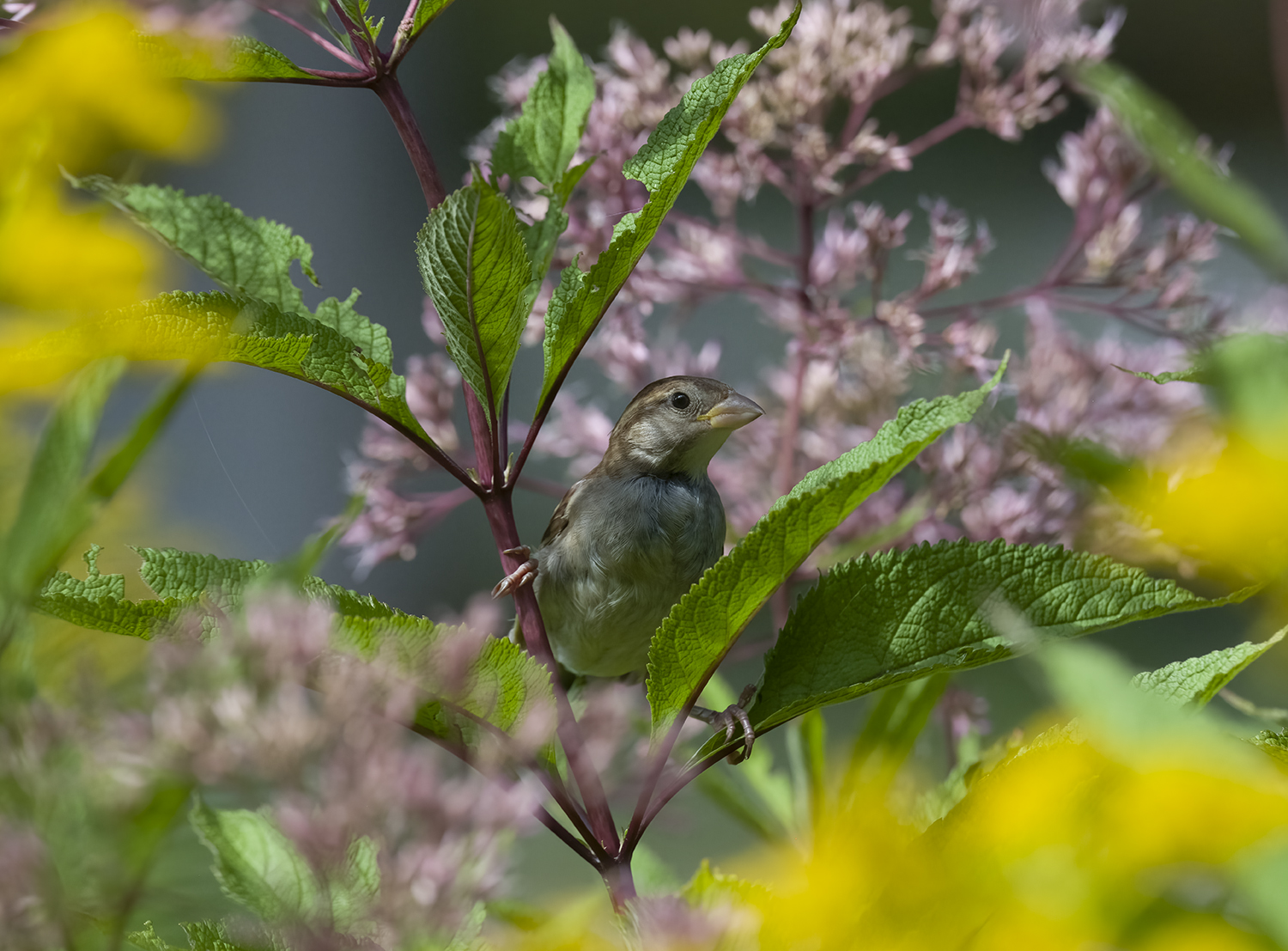
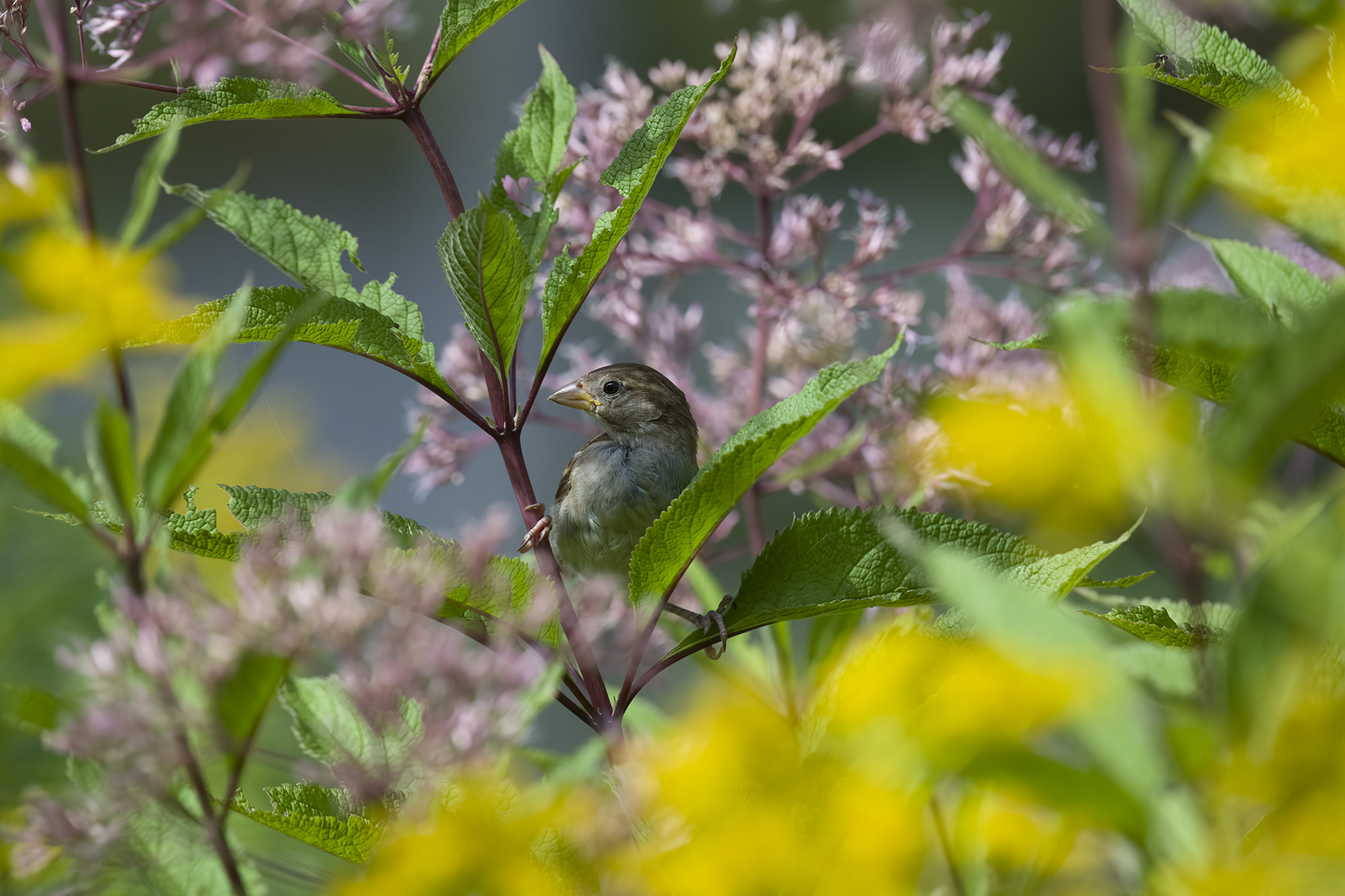
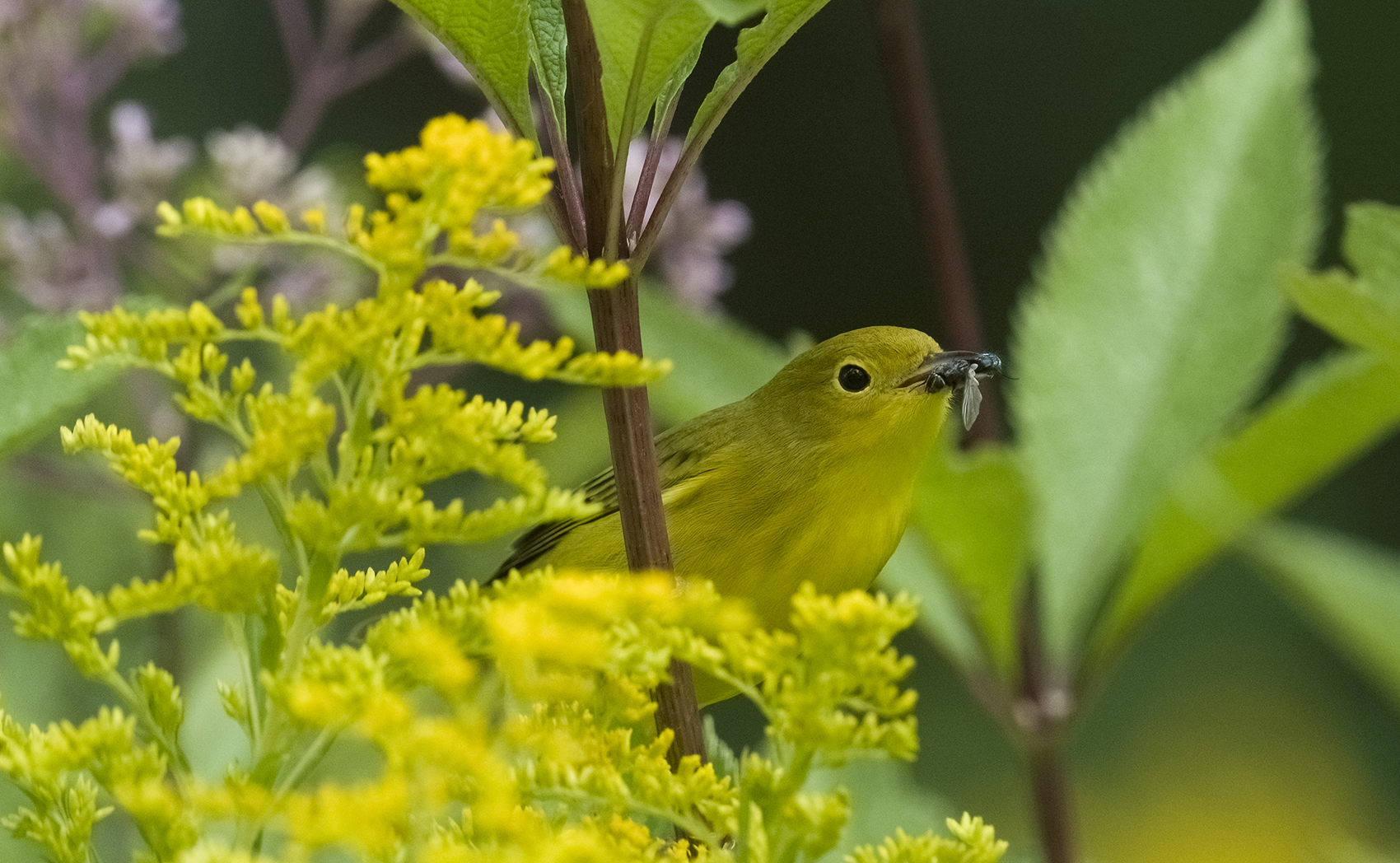
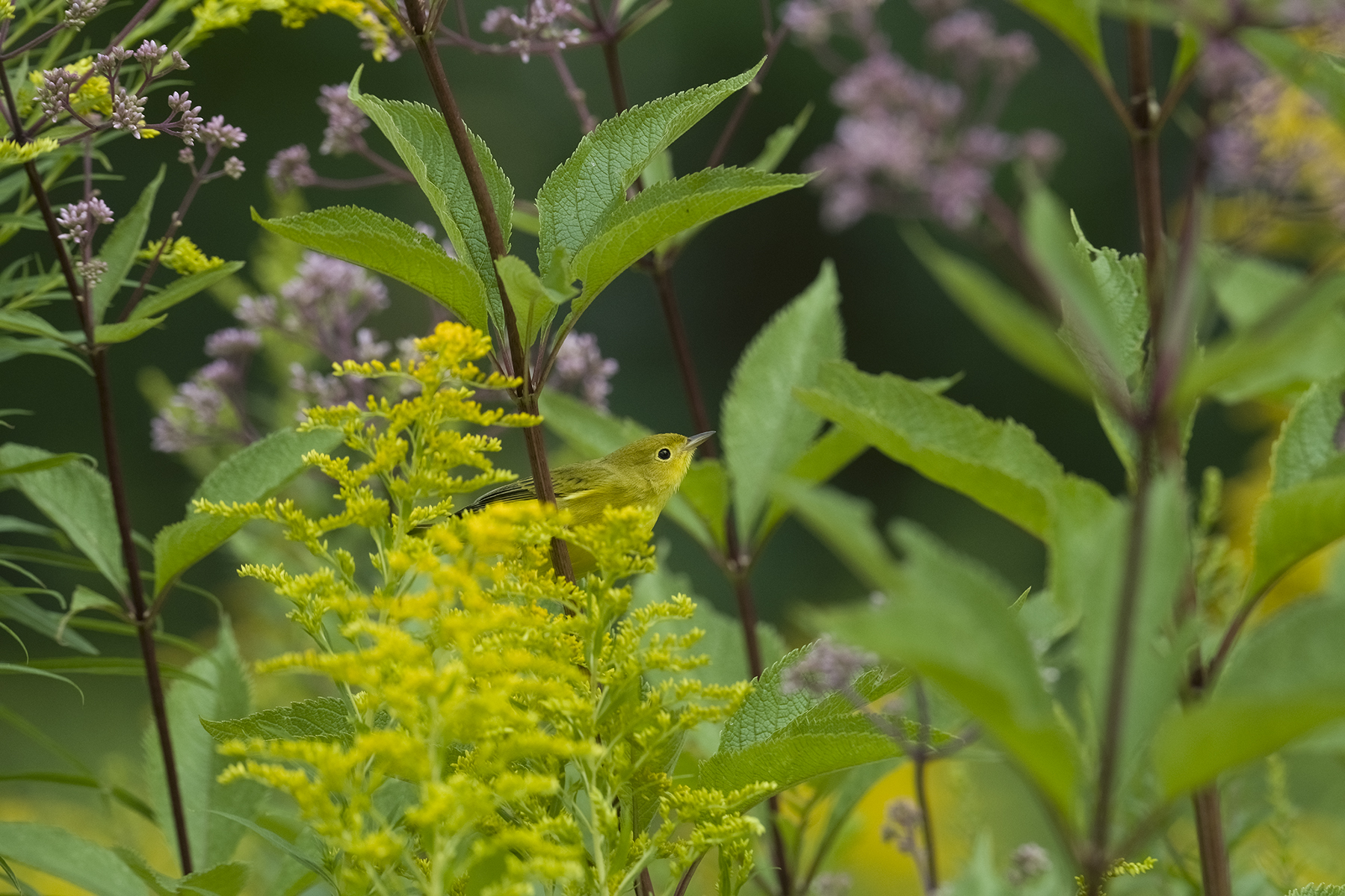
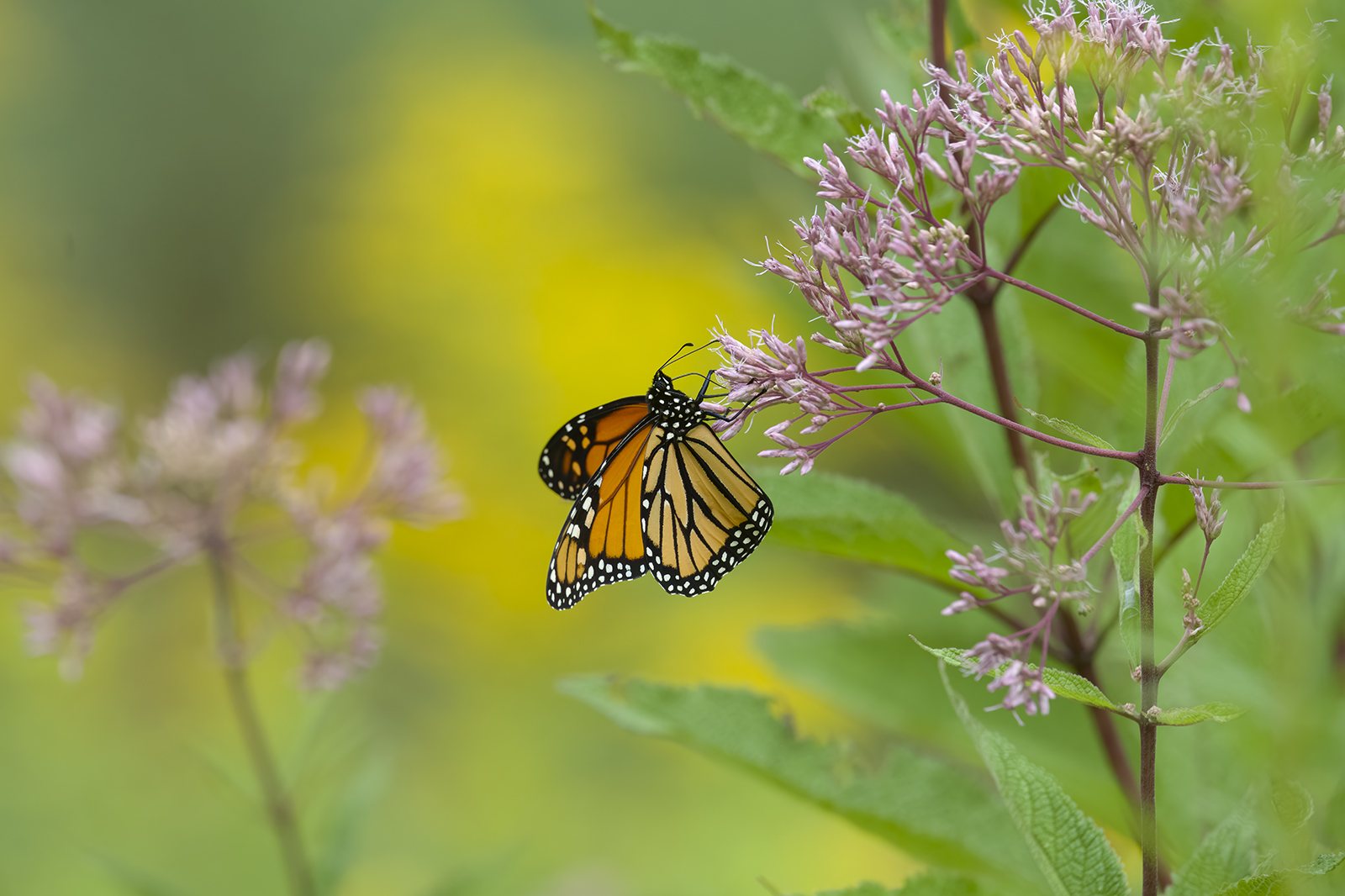
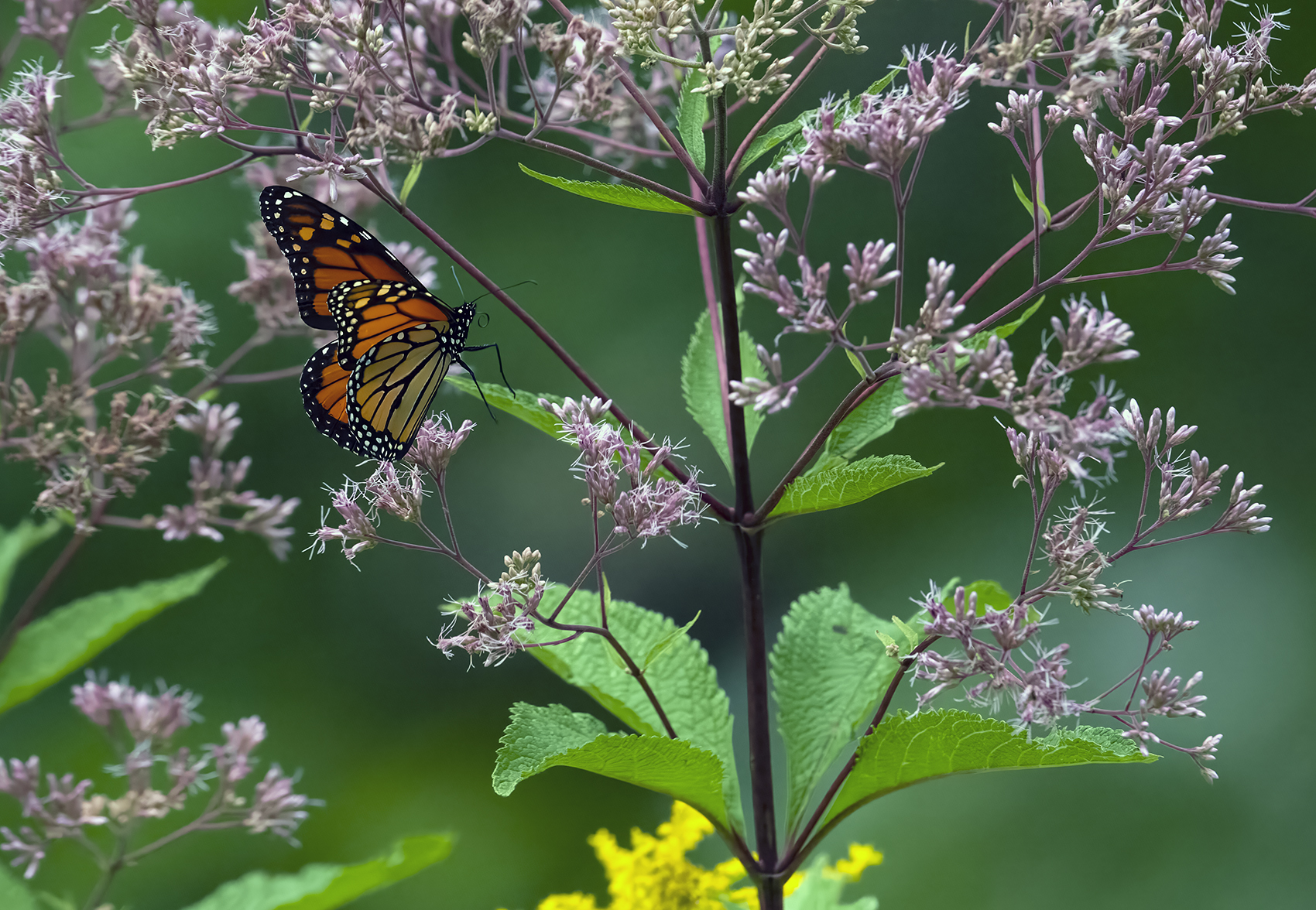
These are from last summer, in my wildflower garden converted from lawn. That's Joe-Pye-Weed (native to eastern NA continent) and Goldenrod.
Toward summer's end, after all the flowers have been pumping out nectar, and all the insects have become established..... the birds show up......hunting the insects.
I'm ok with that. You can have the flies Mr. Bird, but leave my Monarch's alone
I wondered how easy it would be for the birds to pick off the Monarchs here. Last summer I witnessed it. A flying bird attempted to pick off one of the Monarchs flying over the garden. Nope. It happened in an instant. The butterfly made a super-fast, evasive move just before the bird would have intercepted it.
What a contrast. It is -12F here now (-40 with windchill) and I'm worried some of the birds aren't going to make it. A Black Hawk from South America showed here in August in a local park several years ago. It got addicted to the gray squirrels and stayed too long. One January morning it was found on the snow, unable to stand. Frostbite damaged its legs to the extent that the wildlife rehabilitator euthanized it.
I will be happy if that Red-bellied Woodpecker makes a healthy appearance here tomorrow or the day after.
bs kite wrote:
These are from last summer, in my wildflower garden converted from lawn. That's Joe-Pye-Weed (native to eastern NA continent) and Goldenrod.
Toward summer's end, after all the flowers have been pumping out nectar, and all the insects have become established..... the birds show up......hunting the insects.
I'm ok with that. You can have the flies Mr. Bird, but leave my Monarch's alone
I wondered how easy it would be for the birds to pick off the Monarchs here. Last summer I witnessed it. A flying bird attempted to pick off one of the Monarchs flying over the garden. Nope. It happened in an instant. The butterfly made a super-fast, evasive move just before the bird would have intercepted it.
What a contrast. It is -12F here now (-40 with windchill) and I'm worried some of the birds aren't going to make it. A Black Hawk from South America showed here in August in a local park several years ago. It got addicted to the gray squirrels and stayed too long. One January morning it was found on the snow, unable to stand. Frostbite damaged its legs to the extent that the wildlife rehabilitator euthanized it.
I will be happy if that Red-bellied Woodpecker makes a healthy appearance here tomorrow or the day after.
You have some nice shots here Robert. I especially like the yellow warbler in the goldenrod. It is often helpful to reflect on the summer's efforts when the deep chill hits. MN has been brutal this summer. Alternating periods of heavy snow, cold, warm-up and frigid conditions have left us with an icy mess. The birds flock to feeders because the snowpack is deep and covered with a layer of ice. Furthermore, as the years pass by, my body does not tolerate the sub-zero temperatures like it once did.
As for your monarch and its predator, there are only a few bird species that can tolerate the cardioglycosides that build up in the exoskeleton. Black-backed orioles and black-headed grosbeaks can consume monarchs without being poisoned. Chances are, if you saw another species take on a monarch, it was a young naive bird that has not experienced the toxic reaction of consuming a monarch butterflies. Most birds learn fast and teach their offspring to avoid monarchs by never bringing one to the nest.
OwlsEyes wrote:
You have some nice shots here Robert. I especially like the yellow warbler in the goldenrod. It is often helpful to reflect on the summer's efforts when the deep chill hits. MN has been brutal this summer. Alternating periods of heavy snow, cold, warm-up and frigid conditions have left us with an icy mess. The birds flock to feeders because the snowpack is deep and covered with a layer of ice. Furthermore, as the years pass by, my body does not tolerate the sub-zero temperatures like it once did.
As for your monarch and its predator, there are only a few bird species that can tolerate the cardioglycosides that build up in the exoskeleton. Black-backed orioles and black-headed grosbeaks can consume monarchs without being poisoned. Chances are, if you saw another species take on a monarch, it was a young naive bird that has not experienced the toxic reaction of consuming a monarch butterflies. Most birds learn fast and teach their offspring to avoid monarchs by never bringing one to the nest.
I looked on weather maps and am surprised you did not get even colder temps than we did in northern New England. Then I looked at the jet stream. I also find that I am not tolerating these brutal winter temps as I did when a young man. But it beats sitting at a Florida traffic light with hundreds of people around me, who do not seem to care about the loss of Florida’s nature. And that’s why I left.
On the taste of Monarchs: Yes, of course, Monarchs are poisonous. I know/knew that, but in my haste to mention that quick evasive maneuver by the Monarch, I forgot it. There is much evidence on this toxicity. A link, a little technical but short……
The poison comes from the sap of the Milkweed. My wildflower garden is loaded with Common Milkweed (and some Swamp). Common spreads via laterally growing rhizomes (Swamp does not). Common MW is a bit of a nuisance, but Solidago outcompetes it, at least on my piece. And on my piece, I’ve found it difficult to establish Swamp MW. But I’ll keep experimenting.
If you have not already done so, please consider inviting Doug Tallamy to do a virtual presentation for you and your students. I mention him in my next posting, along with a link referencing his work.
1. On the Energy Pyramid and Trophic Levels: The following is the reason I posted the two bird species inside the wildflowers:
The Yellow Warbler and English Sparrow document (verb) two species of Secondary Consumers (a Trophic level) attempting to find energy in the next lower Trophic Level (Primary Consumers (or plant-eaters); i.e., this demonstrates the beginnings of a working ecosystem! And this started from me tilling a piece of my lawn and planting native wildflowers! And the results came in the very first season (2014) when I got at least one Monarch caterpillar.
For that, I am very happy with myself, although nobody else seems to care or notice. Or it is more likely that they just don't understand its significance. You can drop down to "Tallamy's Hub" below, to better understand.
My brother has twice told me that I could increase the value of my hose by mowing “that weedy area”. Yet I have told him that I have Monarchs reproducing in there. Monarchs are Endangered. If you establish a wildflower garden, you will immediately begin to draw all insects whose food is nectar. Monarchs are in this group. When those insects visit the flowers for the nectar, their bodies come in contact with pollen, which becomes stuck to the bodies, and they inadvertently transfer it between plants.
There are 40 million acres of lawn in U.S. alone (not counting the entire continent…Canada too). If each of us reclaims a piece of our lawn, reverting it back into the native wildflowers that were once there, the results will be monumental. Nature will be near us once again!
We who photograph nature should be contributing in our own ways to the good stewardship of nature.
For anyone interested, here are a couple of links related to Trophic Levels and the Energy Pyramid. The first link is geared to K12. Trophic levels and the Energy Pyramid are simple to understand. But I guess one can say that about anything … once you understand it. I’ve yet to find a simple terrestrial energy pyramid that clearly conveys all that is happening. These are the best I could do.
2. Factors limiting species geographical range.
In the Kingdom of Animalia (insects, fish, herps, birds, mammals) the taxon with the most mobility is the Class Aves, the birds.
I’ve been in nature professionally for a long time and have come to believe this: Birds migrate because they can. It is that simple. You would too if you could. Birds seem to be able to go wherever they want. Two bird species come to mind. I believe the Peregrine and Osprey are residents around the world, excepting the poles of course (and that surely is due to brutal winter temps).
There are limitations for most species.
“Range” refers to the entire geographical area that a species covers. “Home range” refers to the geographical area an individual covers.
Because they fly, bird species can change their ranges from year to year, and they do.
The boundaries of species ranges are determined by the species’ reproductive potential and its physiological abilities to overcome environmental factors. I think that is a fair statement.
Since last night’s deadly temperatures, it is now 7F and full midday sunshine. And now I have seen (at my feeding station) a few American Goldfinches (AGF) (not the usual clan of up to 20 AGF’s), one Hairy Woodpecker, a RB Nuthatch, a WB Nuthatch, several Tufted Titmice with Chickadees, two Bluebirds and a male Cardinal. There has been no Red-bellied Woodpecker. I will continue to hope, and I will post to this thread if/when I see the RBW.
My point regarding ranges and these deadly temps we just had is that the RBW went where it wanted to go, because it could. It came to reside ("year round") in the most northeastern point of its species' current range.
Did it survive the night?
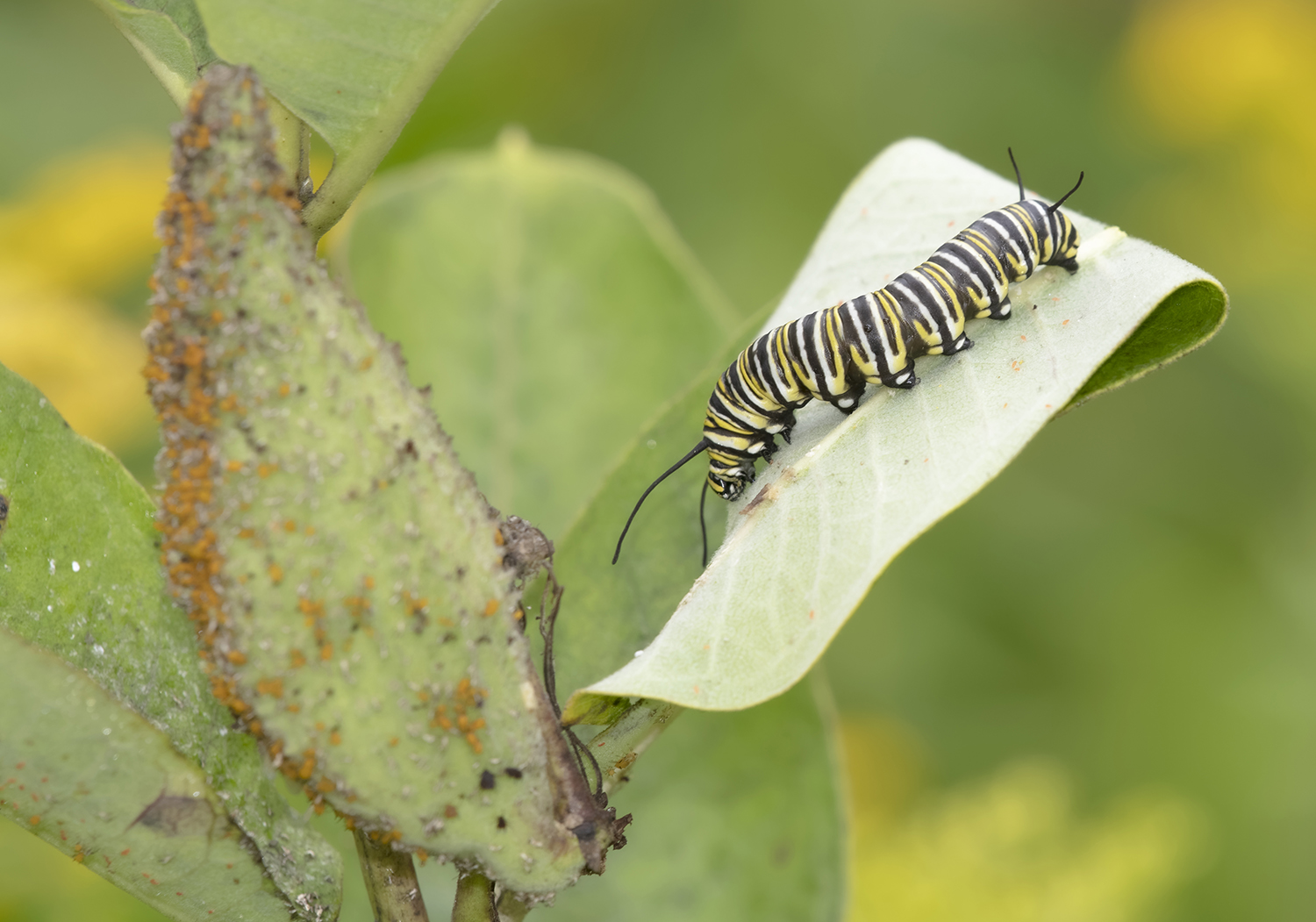
This Monarch caterpillar discovered the first year I converted lawn to wildflowers
bs kite wrote:
Thank you for complimenting the images.
I looked on weather maps and am surprised you did not get even colder temps than we did in northern New England. Then I looked at the jet stream. I also find that I am not tolerating these brutal winter temps as I did when a young man. But it beats sitting at a Florida traffic light with hundreds of people around me, who do not seem to care about the loss of Florida’s nature. And that’s why I left.
On the taste of Monarchs: Yes, of course, Monarchs are poisonous. I know/knew that, but in my haste to mention that quick evasive maneuver by the Monarch, I forgot it. There is much evidence on this toxicity. A link, a little technical but short……
The poison comes from the sap of the Milkweed. My wildflower garden is loaded with Common Milkweed (and some Swamp). Common spreads via laterally growing rhizomes (Swamp does not). Common MW is a bit of a nuisance, but Solidago outcompetes it, at least on my piece. And on my piece, I’ve found it difficult to establish Swamp MW. But I’ll keep experimenting.
If you have not already done so, please consider inviting Doug Tallamy to do a virtual presentation for you and your students. I mention him in my next posting, along with a link referencing his work.
I thought I had shared this with you previously, but I did my Masters Thesis in EEB with monarchs. My work focused on differential fitness based on the species of Asclepias (milkweed) consumed. Common MW (A. syriaca) has a relatively low concentration of cardioglycosides. Tropical MW (A. curassavica) has one of the highest concentrations. Under controlled conditions, monarchs will selectively oviposit on A. curassavica over A. syriaca... this comes at the cost of a slower larval maturation rate.
I spent about 5 years researching Monarchs, their parasitoids, as well as the environmental factors that have led to a precipitous decline. One of my colleagues at the UofMN Monarch Lab was ahead of her time, as she was using satellite weather data to see if the changing climate was partially responsible for shifts in their migratory behavior.
OwlsEyes wrote:
I thought I had shared this with you previously, but I did my Masters Thesis in EEB with monarchs. My work focused on differential fitness based on the species of Asclepias (milkweed) consumed. Common MW (A. syriaca) has a relatively low concentration of cardioglycosides. Tropical MW (A. curassavica) has one of the highest concentrations. Under controlled conditions, monarchs will selectively oviposit on A. curassavica over A. syriaca... this comes at the cost of a slower larval maturation rate.
I spent about 5 years researching Monarchs, their parasitoids, as well as the environmental factors that have led to a precipitous decline. One of my colleagues at the UofMN Monarch Lab was ahead of her time, as she was using satellite weather data to see if the changing climate was partially responsible for shifts in their migratory behavior.
Congratulations on all of your work with Monarchs.
1. I believe the overwhelming reason for their decline is habitat loss.
2. I would like to know a habitat management technique for allowing Swamp MW to be more competitive. In my garden it appears to me that Goldenrod is outcompeting it. I just do not yet see how to get it established. I'll keep working on it. Each new season is a learning adventure.
3. What parasite(s) did you study? And regarding the parasites, might you have any advice on what I should be aware of in my wildflower garden?
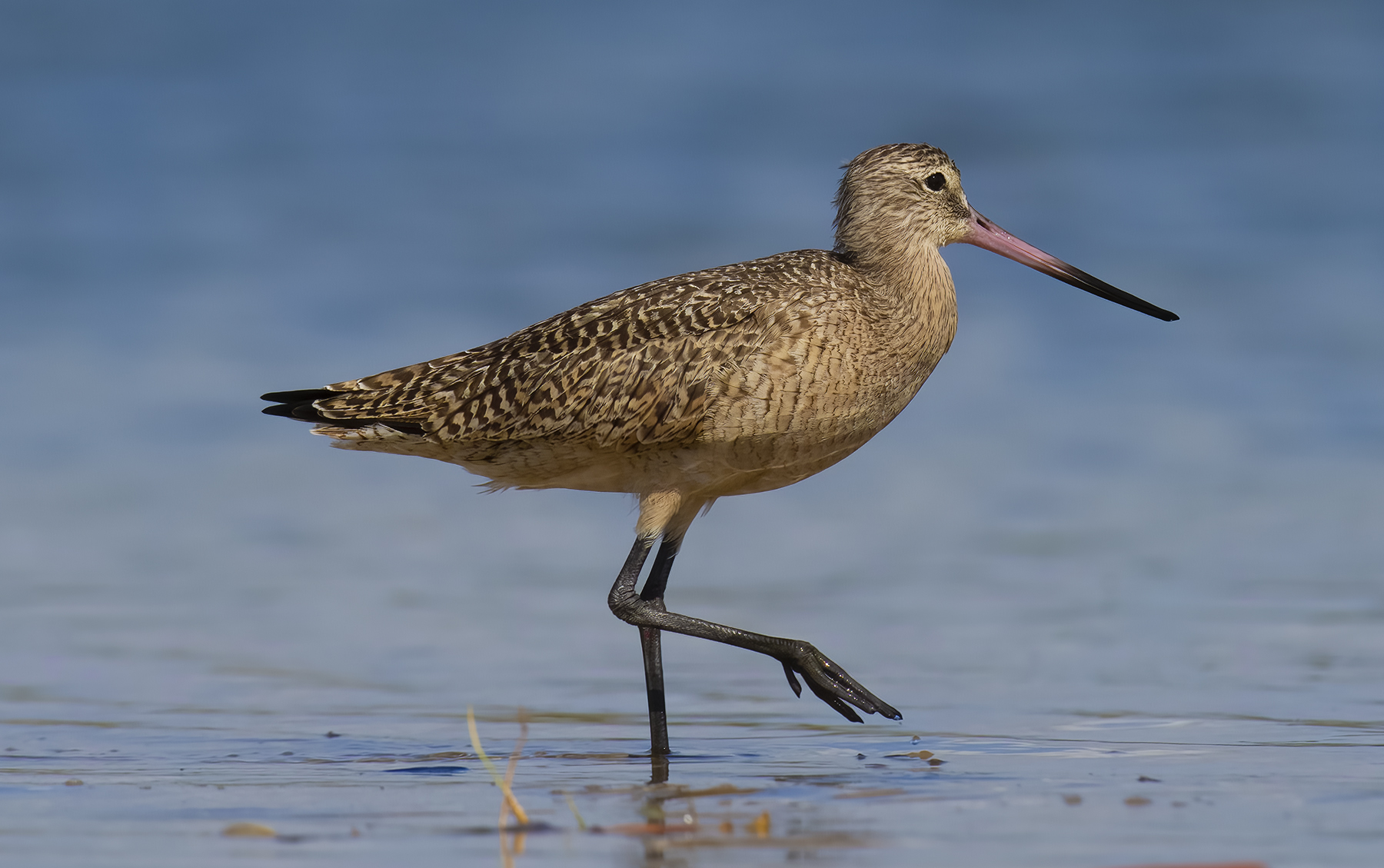
a Black-tailed Godwit (BTG) "vagrant". It normally winters from Southern Europe to Australia (reference NatGeo, Complete Birds of North America). I photographed this BTG along the Gulf of Mexico coastline, November 2022
A reference to the word "vagrant", as it pertains to the birding world........
bs kite wrote:
Congratulations on all of your work with Monarchs.
1. I believe the overwhelming reason for their decline is habitat loss.
2. I would like to know a habitat management technique for allowing Swamp MW to be more competitive. In my garden it appears to me that Goldenrod is outcompeting it. I just do not yet see how to get it established. I'll keep working on it. Each new season is a learning adventure.
3. What parasite(s) did you study? And regarding the parasites, might you have any advice on what I should be aware of in my wildflower garden?
Hello Robert,
The decline in the monarch population is due to three factors...
1. Logging in the Oyamel Mountains has disrupted the microclimate that have allowed the monarchs to overwinter. The Oyamel fir trees exist in an area that allows temperatures to maintain a temperature of about 40 deg F. This allows the butterflies to go into torpor. Torpor allows the butterflies to enter diapause. This extends their life and allows them to reproduce after winter. Logging now causes wild temperature changes which leads to mass die-offs.
2. Climate change has altered the structure of the jet stream and altered the migratory patterns. Large number of butterflies die during the migration. Environmental changes have the potential to increase the number of deaths that occur during the migration.
3. Round-up... The use of round-up in farm fields has led to monocultures throughout the US. Round-up selectively kills weeds and the milkweed population has crashed. Without milkweed, there is no larval food. The reduction of milkweed means that fewer larva can survive.
As for the monarch parasite I studied, it was a tachinid fly. Flies belonging to the family tachinidae are more like predators than parasites. They are called parasitoids because they kill their host. The flies lay eggs on the body of 2nd and 3rd install larvae. Maggots develop in the larva and burrow out of their body.
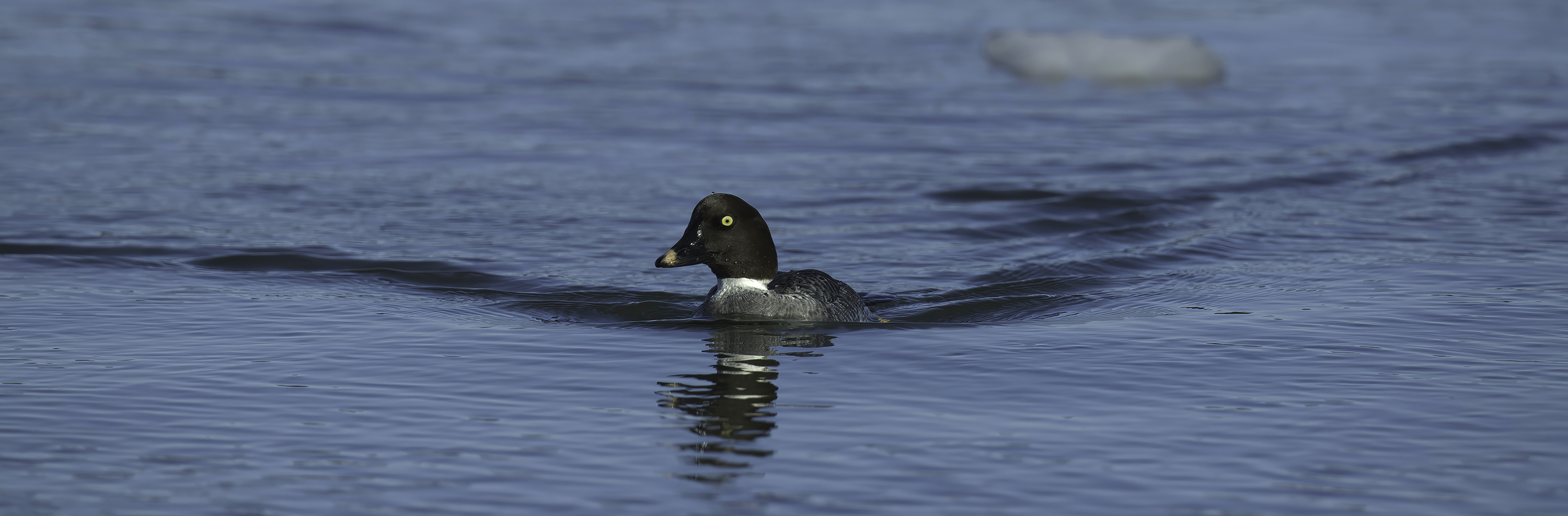
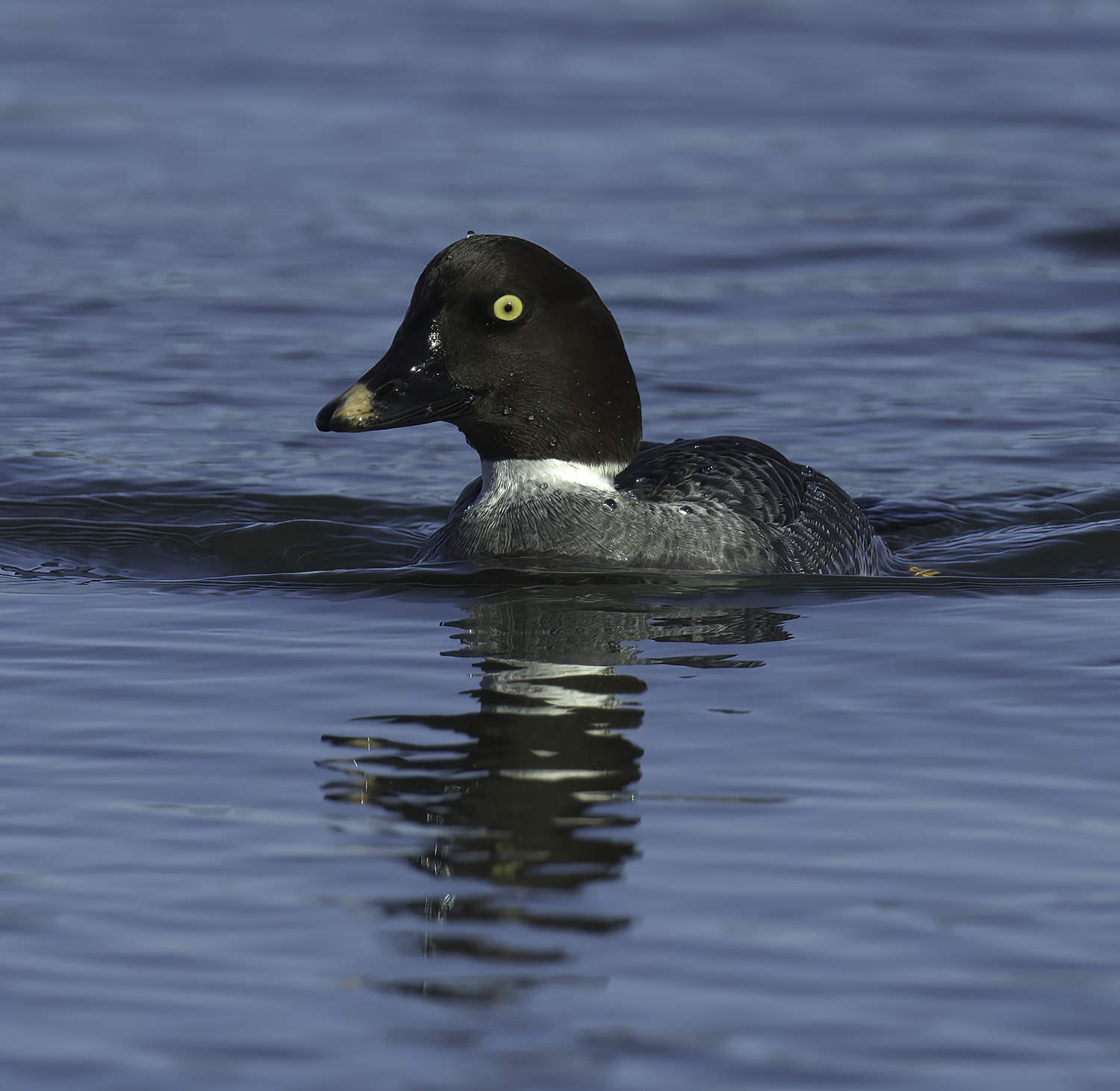
The Goldeneye is curiously moving in to check me out.
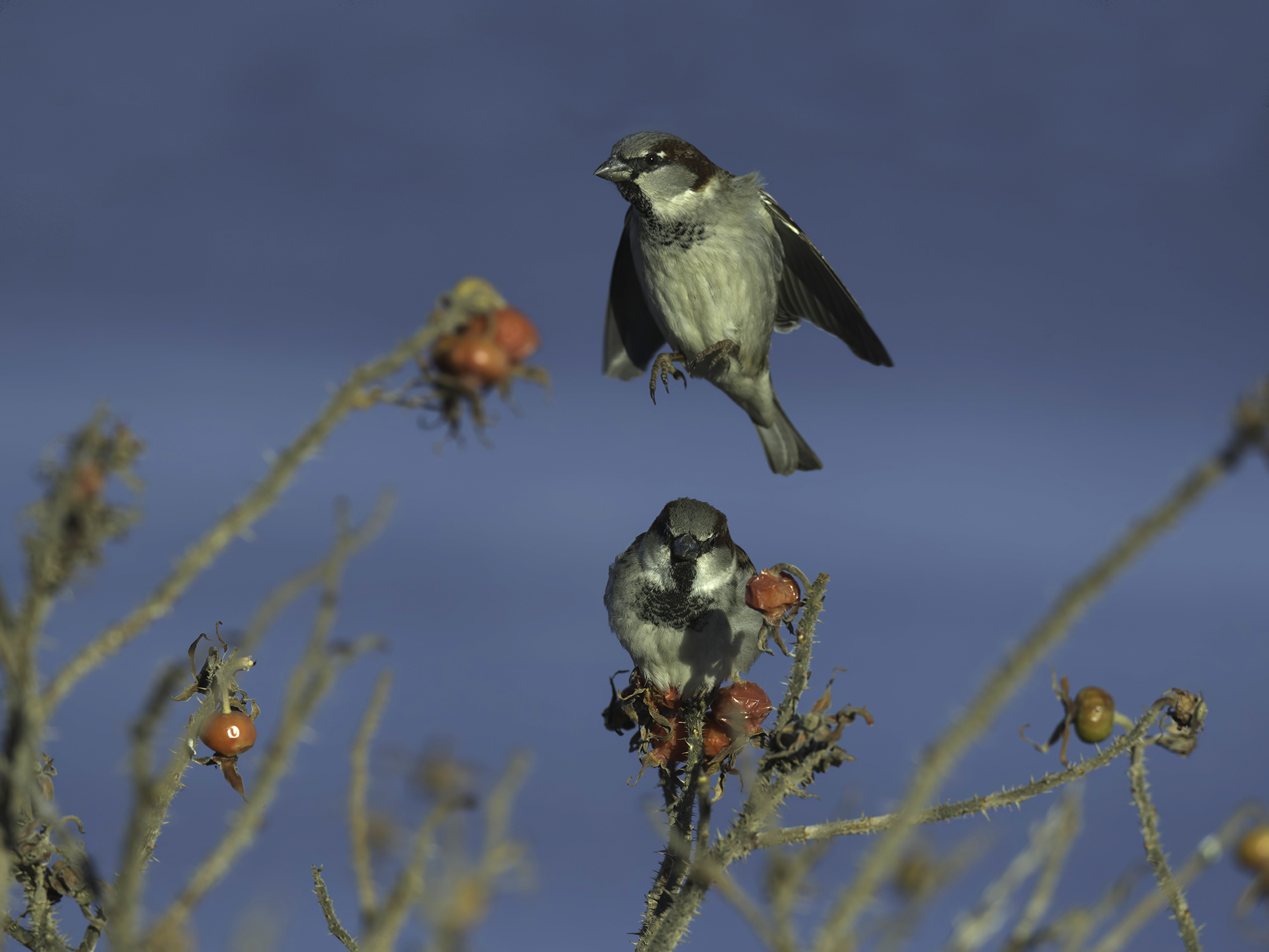
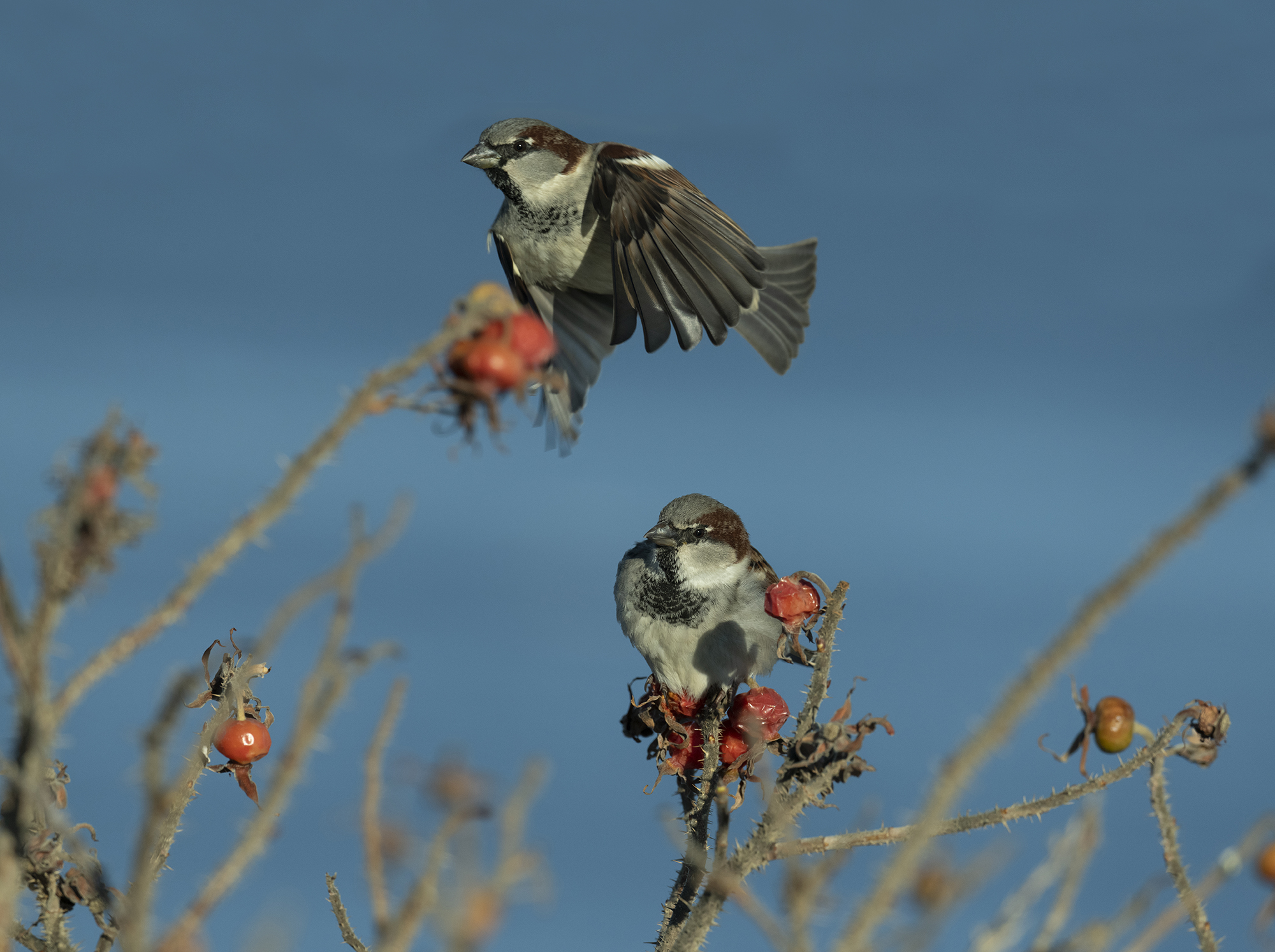
The English Sparrows in the Rose bush are on the edge of a parking lot. People park and look out over the estuary and many of them feed the birds. So the sparrows are there for the food.
I do not know how they survive the cold. That Rose bush is less than 100 feet from the high tide mark with no windbreaker in between. It is right in the open all winter, every winter. They must roost nearby, not in that bush.
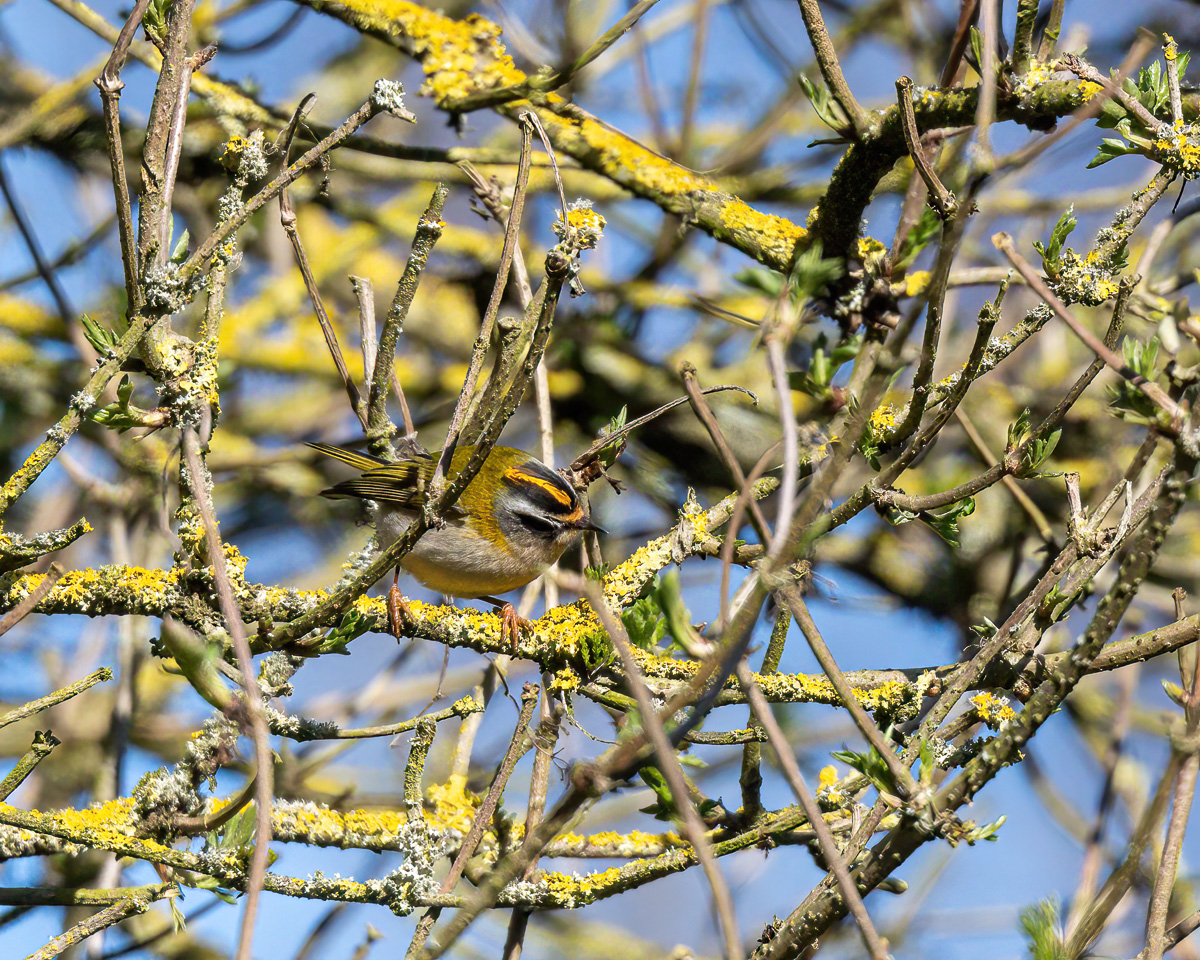
This is the first time I've seen a Firecrest. What a difficult bird to photograph, it sits still for only a second or so.
Forgot to dial down shutter speed after some BIF shots.
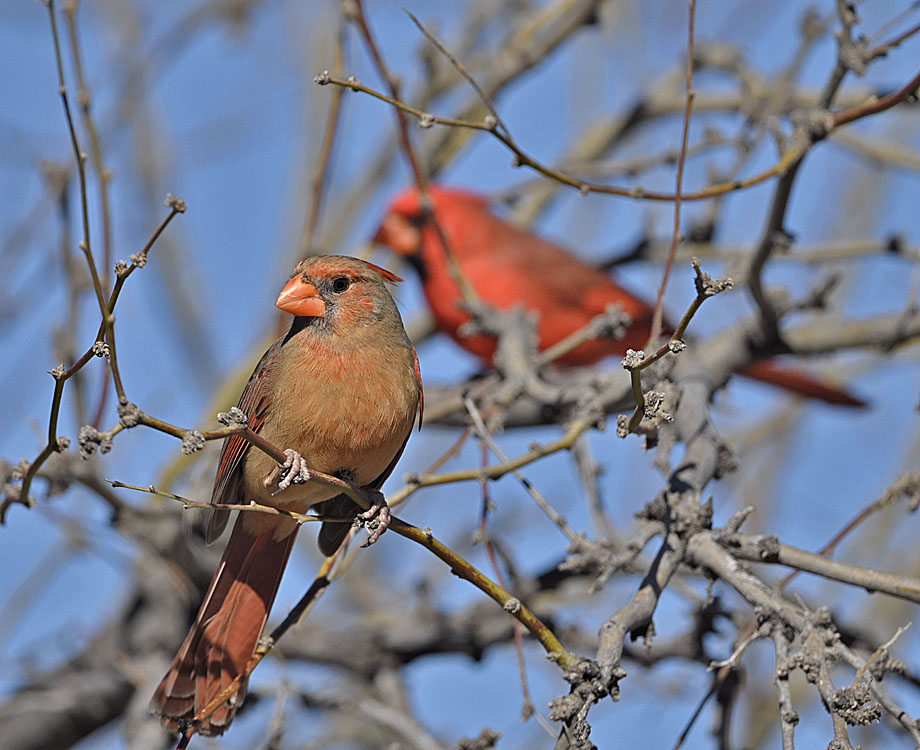
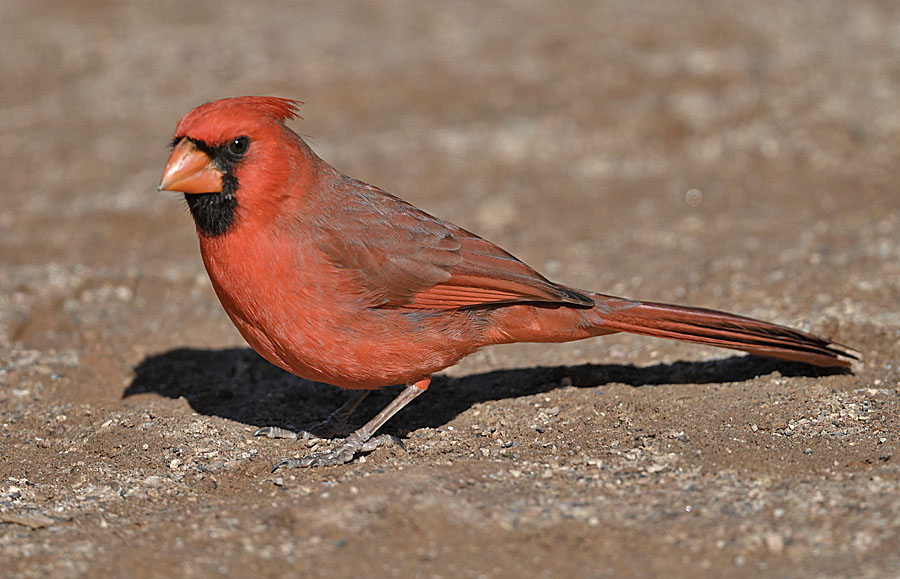
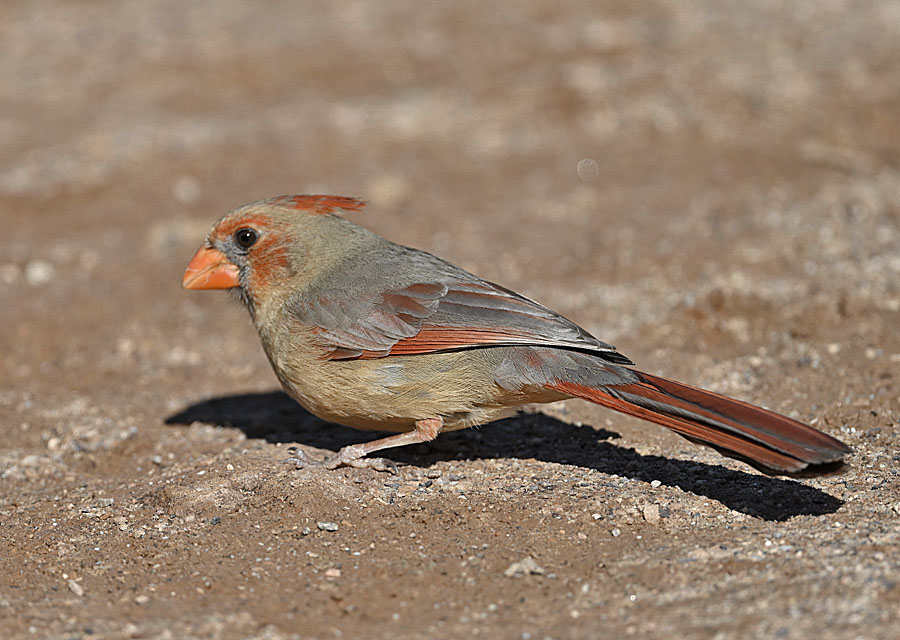
Several Cardinals at the Boyce Thompson Arboretum in Superior Arizona, 2/27/2023. Normally i use a tripod due to my age-90, however these were handheld.
Harry Palmer


 .
.