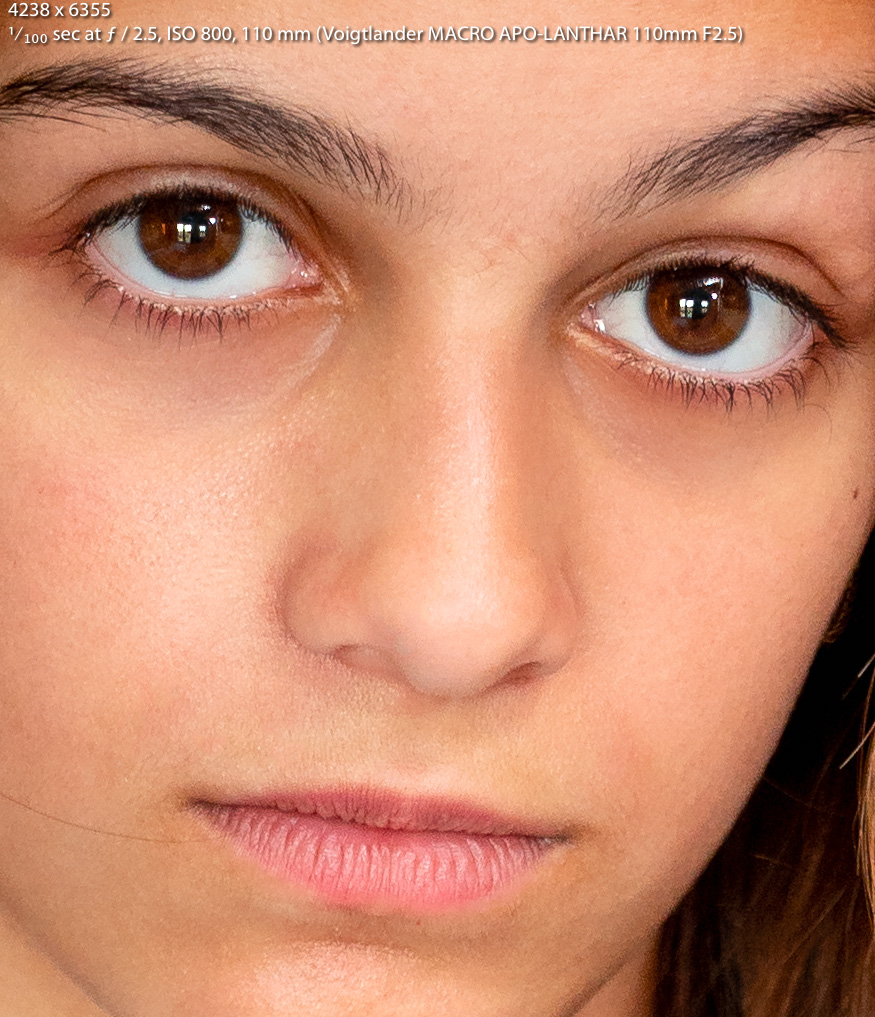
Was able to do some lens borrowing. Here is a CA torture test at 1:1, both at f/2.8
Can't really provoke too much from the CV. So I applaud CV for living up to the APO claim.
elimoss wrote:
Was able to do some lens borrowing. Here is a CA torture test at 1:1, both at f/2.8
Can't really provoke too much from the CV. So I applaud CV for living up to the APO claim.
Fred Miranda wrote:
Awesome but the CV 110mm is slightly stepped down. Perhaps the Sony would improve at f/3.2
Yeah, my test is not comprehensive. Just looking for potential evidence that the CV is better corrected than the Sony.
How much it matters in actual macro use? I'm not sure. Certainly you have to ask yourself if you shoot a lot of contrasty macro wide open, or nearly so.
elimoss wrote:
Yeah, my test is not comprehensive. Just looking for potential evidence that the CV is better corrected than the Sony.
How much it matters in actual macro use? I'm not sure. Certainly you have to ask yourself if you shoot a lot of contrasty macro wide open, or nearly so.
I have shot white flowers in summer sunlight without trouble using the Sony 90/2.8 G. I think that photography of jewelry may benefit from an apochromatic lens like the CV 110/2.5.
An aperture series f/2.8 - f/4 - f/5.6 - f/8 - f/11 comparing the Sony 90/2.8 G and the CV 110/2.5 would be interesting. A macro LoCa stresstest, a bokeh testand a landscape test would be interesting.
I think that photography of jewelry may benefit from an apochromatic lens like the CV 110/2.5.
Totally agree!
The FE 90/2.8 G can be purchased used for about $750 but it's a lottery getting a good copy.
If one has to purchase a new one (without the current holiday rebates), the price is the same as the CV 110/2.5 APO. For serious 1: 1 macro, I would go with the 110/2.5 just for the improved working distance and LoCA performance alone even if the aperture blades are not rounded at small apertures.
elimoss wrote:
Yeah, my test is not comprehensive. Just looking for potential evidence that the CV is better corrected than the Sony.
How much it matters in actual macro use? I'm not sure. Certainly you have to ask yourself if you shoot a lot of contrasty macro wide open, or nearly so.
That's a good point. Unless shooting at high magnifications wide open, LoCA performance should not be too much of an issue when stopping either lens down, which is pretty common for macro work.
If conditions are good, I like shooting flowers wide open and focus stacking. At least that has been a technique I have used with the CV 65/2. I have not yet had time (nor the flowers available) to try it with the 110, but it is nice to be able to maintain the maximum amount of blur of the background while selectively having the subject in focus. This use case may be uncommon, however, reflective surfaces in macro photography are common--whether it be metal or water droplets, or what have you. The CV 65 and 110's excellent correction for CA makes them, to me, the most desirable macro lenses for Sony thus far. I can see where others' use cases might argue for the convenience of Autofocus or the rounder OOF highlights stopped down of the Sony 90, however.
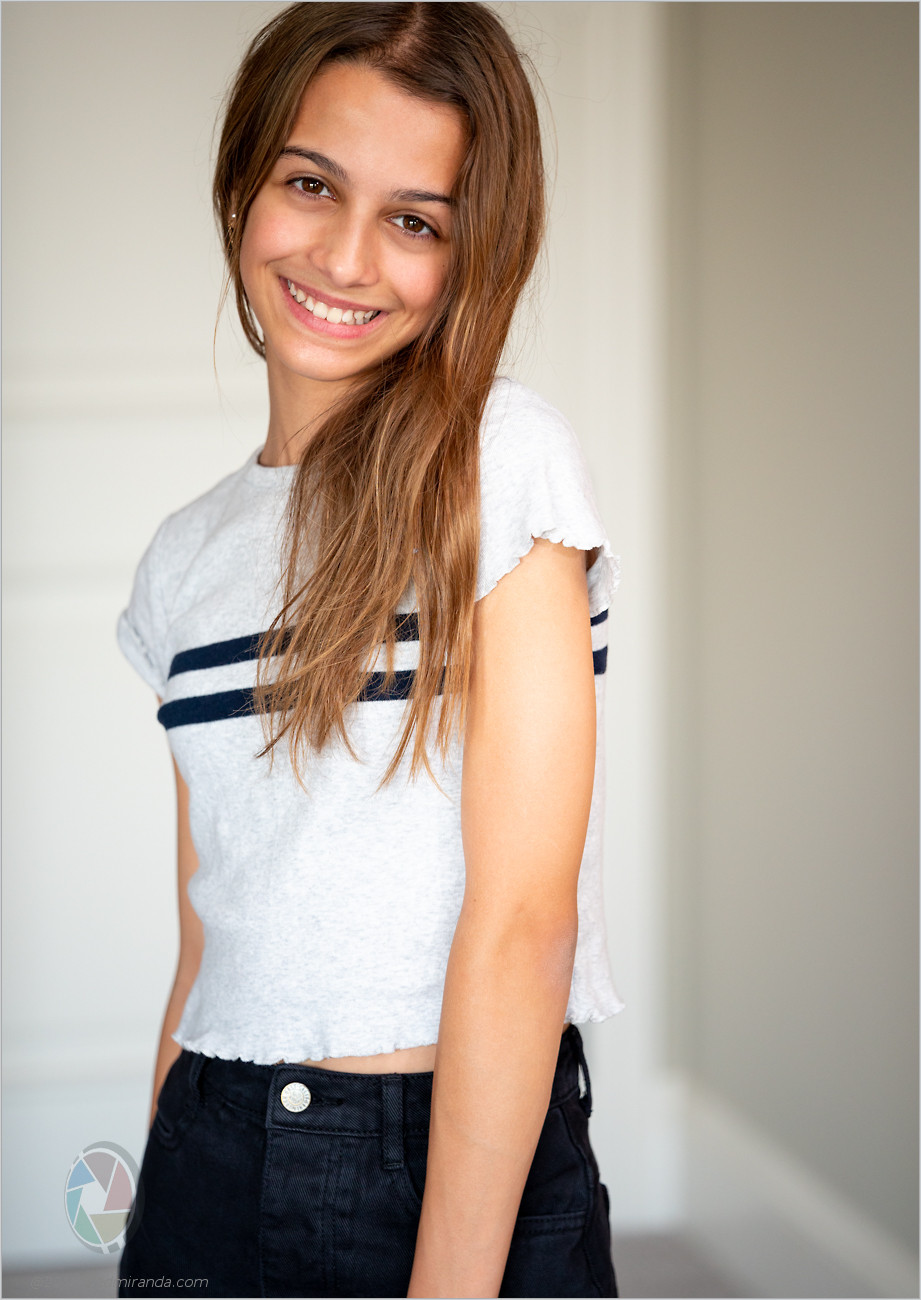
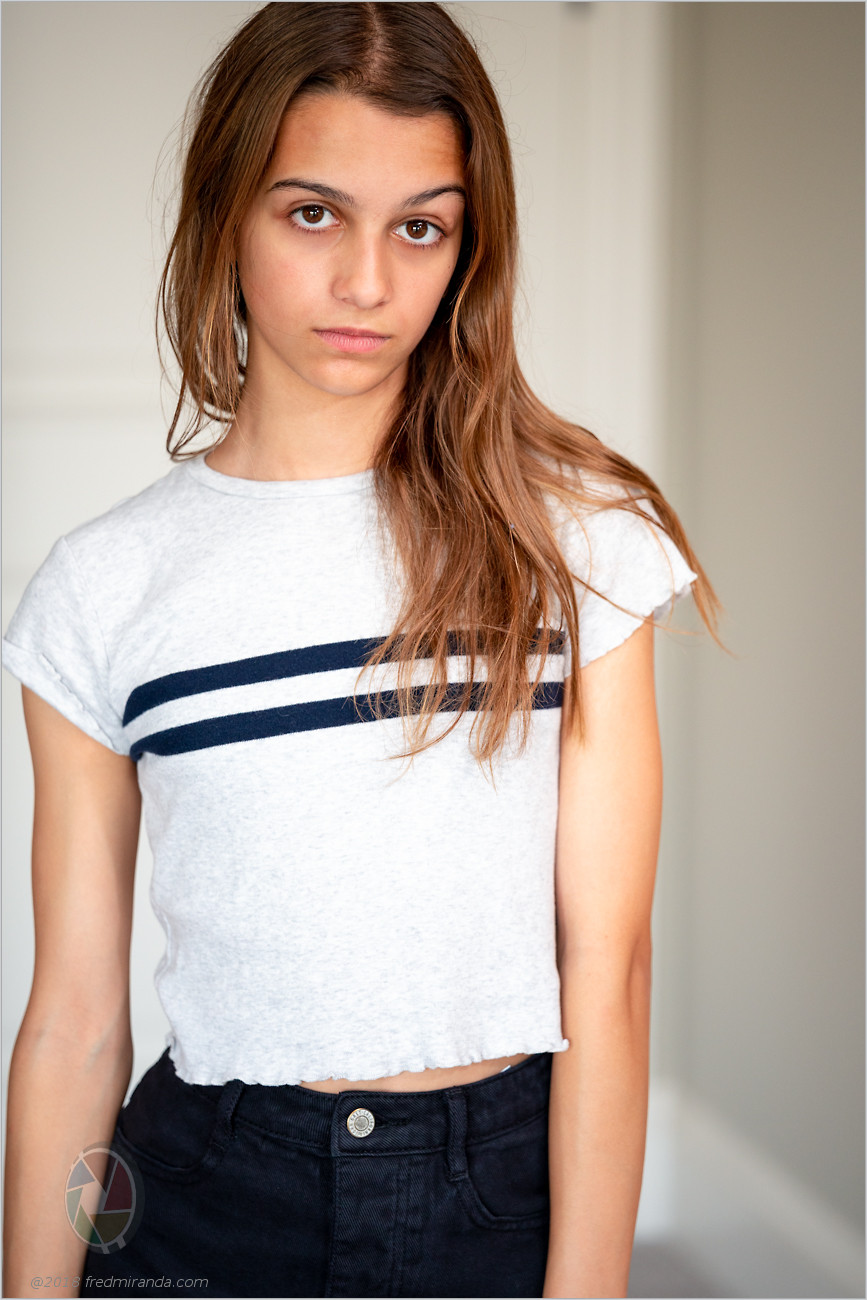
A couple portraits with a wireless flash.
No processing except for my standard portrait sharpening and pimple cleaning.
This lens is sharp wide open at portrait distance.
For portraits I would prefer shooting with the FE 85/1.4 GM or Batis 135/2.8 just because of Eye AF but if your subject holds still, the CV 110/2.5 is pretty amazing portrait lens.
The FE 90/2.8 G can be purchased used for about $750 but it's a lottery getting a good copy.
If one has to purchase a new one (without the current holiday rebates), the price is the same as the CV 110/2.5 APO. For serious 1: 1 macro, I would go with the 110/2.5 just for the improved working distance and LoCA performance alone even if the aperture blades are not rounded at small apertures.
It's true the Apo Lanthars have even better LoCA performance than the G90; but the G90 also has awesome LoCA performance, way better than great lenses of the past like the Macro Plan 100 andI think as good at least as the legendary App Lanthar 125. Better than any other recent long medium tele macros too.
So yeah if having the very best LoCA correction matters sure it's a reason. But it would be a rare macro image where it was an issue for the G90.
I think the two main reasons someone might prefer the CV110 are (1) the effective focal length at life size is a lot longer than the G90 (the 110 is I think around 90, whereas the 90 is around 70) and (2) many will prefer the haptics of the real helicoid, despite the excellence of the 90 by FBW standards, You might also like to have a state of the art slightly longer landscape tele with lovely sunstars thrown in for free and (3) As Fred and I mentioned before, getting a great copy of the G90 is a lottery!
I say all of this without having tested it: not until a bit before Xmas they say here..
It's true the Apo Lanthars have even better LoCA performance than the G90; but the G90 also has awesome LoCA performance, way better than great lenses of the past like the Macro Plan 100 andI think as good at least as the legendary App Lanthar 125. Better than any other recent long medium tele macros too.
So yeah if having the very best LoCA correction matters sure it's a reason. But it would be a rare macro image where it was an issue for the G90.
I think the two main reasons someone might prefer the CV110 are (1) the effective focal length at life size is a lot longer than the G90 (the 110 is I think around 90, whereas the 90 is around 70) and (2) many will prefer the haptics of the real helicoid, despite the excellence of the 90 by FBW standards, You might also like to have a state of the art slightly longer landscape tele with lovely sunstars thrown in for free and (3) As Fred and I mentioned before, getting a great copy of the G90 is a lottery!
I say all of this without having tested it: not until a bit before Xmas they say here.. ...Show more →
Definitely agree. Longer working distance and real helicoid are big ones.
Is the FE 90/2.8 G sharp wide open to the very edges at 1:1 macro without any sign of lateral CA? If not, you can add another advantage for the CV 110 lens.
Fred Miranda wrote:
Definitely agree. Longer working distance and real helicoid are big ones.
Is the FE 90/2.8 G sharp wide open to the very edges at 1:1 macro without any sign of lateral CA? If not, you can add another advantage for the CV 110 lens.
To be honest I don't know; but there's no sign of LaCA with the auto profile applied I seem to recall at least (and given the way LaCA correction usually works, that should be lossless.) and it might be fine without it.
I also don't know if it's crisp to the edges at 1:1; maybe I'll test that when I compare it. But I don't care much. It's super sharp for a big chunk of the frame (I often focus stack at f2.8 and it's plenty sharp; better than my Canon L was) and I can't imagine a use case for corners at 1:1 unless you are using it for photographing stamps or suchlike. Still I'll be interested to find out! One thing about G90 is that it gets better as you focus closer; it's good at infinity, great at portrait, and the best I've encountered at 1:1 barring weak high end microscope objectives (not having used the 110 yet, which I'm quite prepared to believe may be even better still).
Use cases for lifesize magnification could be photography of stamps, specimens, objects of art, reproduction.
I've not tested corner to corner sharpness of my Sony 90 G either, but it's phenomenal with facet eyes of insects, a case where AF-C will net you more keepers. This goes with a 24mp APS-C sensor as well, so I expect the Sony 90 G to exploit future 54mp or 60mp full frame sensors as well.
DavidBM wrote:
To be honest I don't know; but there's no sign of LaCA with the auto profile applied I seem to recall at least (and given the way LaCA correction usually works, that should be lossless.) and it might be fine without it.
I also don't know if it's crisp to the edges at 1:1; maybe I'll test that when I compare it. But I don't care much. It's super sharp for a big chunk of the frame (I often focus stack at f2.8 and it's plenty sharp; better than my Canon L was) and I can't imagine a use case for corners at 1:1 unless you are using it for photographing stamps or suchlike. Still I'll be interested to find out! One thing about G90 is that it gets better as you focus closer; it's good at infinity, great at portrait, and the best I've encountered at 1:1 barring weak high end microscope objectives (not having used the 110 yet, which I'm quite prepared to believe may be even better still).
Not saying it's the case but I have been surprised when comparing lenses side by side, thinking the lens I thought was already amazing could not get any better!
bjornthun wrote:
Use cases for lifesize magnification could be photography of stamps, specimens, objects of art, reproduction.
I've not tested corner to corner sharpness of my Sony 90 G either, but it's phenomenal with facet eyes of insects, a case where AF-C will net you more keepers.
I just mentioned the corners because I tested the CV 65/2 with the Marumi 5+ achromat (Gets the lens to 1:1.1 which is very close to 1:1).
At center, it's superb starting at f/4 but needs f/8-11 for decent corners and never gets close to the CV 110 off-axis. The latter at 1:1 is crispy to the very corners and that could be noticeable when shooting flatter subjects.
Fred Miranda wrote:
I just mentioned the corners because I tested the CV 65/2 with the Marumi 5+ achromat (Gets the lens to 1:1.1 which is very close to 1:1).
At center, it's superb starting at f/4 but needs f/8-11 for decent corners and never gets close to the CV 110 off-axis. The latter at 1:1 is crispy to the very corners and that could be noticeable when shooting flatter subjects.
The difference shown in your samples was very clear. How is the CV 65/2 at 1:2 magnification without any filters? Is it flat field?
Fred Miranda wrote:
Is the FE 90/2.8 G sharp wide open to the very edges at 1:1 macro without any sign of lateral CA? If not, you can add another advantage for the CV 110 lens.
IMO, the Sony has pretty good corners at macro distances.
OTOH, at infinity it is a very average lens compared to its contemporaries. The regular FE 85mm at f/1.8 has about the same (or perhaps better) lensrentals MTF at f/1.8 as the 90mm at f/2.8.
elimoss wrote:
IMO, the Sony has pretty good corners at macro distances.
OTOH, at infinity it is a very average lens compared to its contemporaries. The regular FE 85mm at f/1.8 has about the same (or perhaps better) lensrentals MTF at f/1.8 as the 90mm at f/2.8.
At infinity the Sony 90/2.8 G has field curvature that must be taken into account when focusing, so it's a bit tricky at infinty if you want the best results.