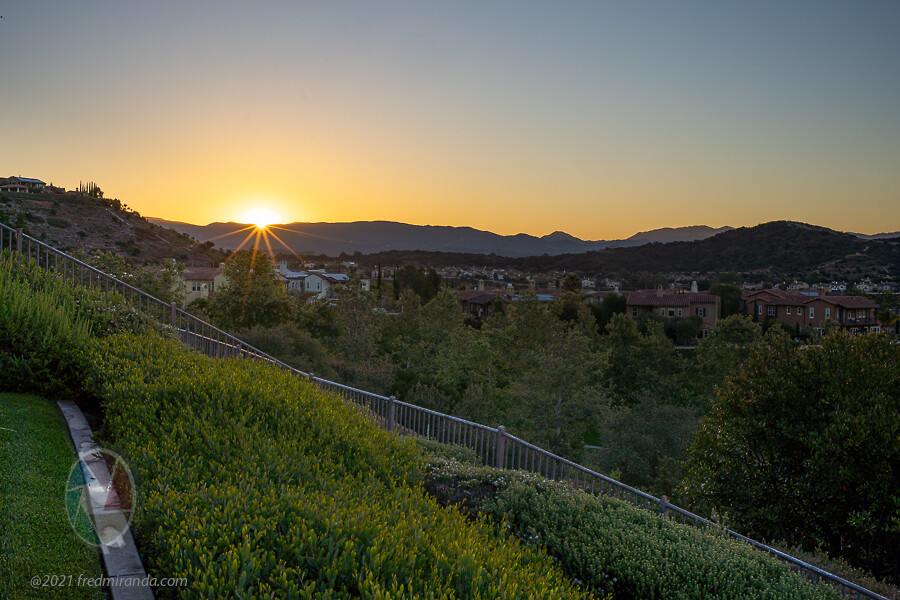
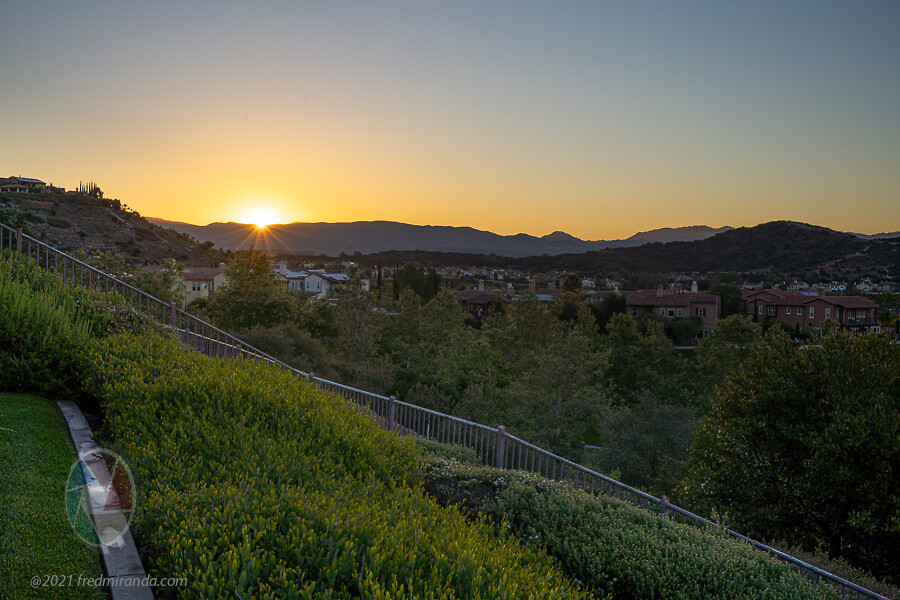
This went as expected. Sony have done something special here, with cross frame excellence that will be the envy of competitors. These two have set the 35mm bar to a new level. I like seeing that white chimney edge stay clean. And it's almost 'why stop down' time. Very few will have complaints about these f2 corner zones.
Yes, the Sony is really impressive and is at a pretty reasonable price point. It would be interesting to see how these compare against the Leica SL 35/2 APO.
The Sony does really well at f/2. Reminds me of the RF 50 f/1.2 stopped down to f/2 where it's at near Otus-level performance.
Might be the new thing these days for lens design – excellent character wide open at f/1.2-1.4 and razor sharp to the edge with high contrast at f/2. Makes me wonder why bother with an f/2 "APO" at all. I suppose for the CV APOs the advantage would be smaller/lighter and having a true hard stop at infinity, at least on the M version. But it seems to make larger f/2 APO lenses like the Leica L-mount offerings less attractive – well, less attractive than they already are since they are L-mount, and I don't own an L-mount camera
highdesertmesa wrote:
The Sony does really well at f/2. Reminds me of the RF 50 f/1.2 stopped down to f/2 where it's at near Otus-level performance.
Might be the new thing these days for lens design – excellent character wide open at f/1.2-1.4 and razor sharp to the edge with high contrast at f/2. Makes me wonder why bother with an f/2 "APO" at all. I suppose for the CV APOs the advantage would be smaller/lighter and having a true hard stop at infinity, at least on the M version. But it seems to make larger f/2 APO lenses like the Leica L-mount offerings less attractive – well, less attractive than they already are since they are L-mount, and I don't own an L-mount camera ...Show more →
Finally! I've been waiting for this for so long. Fred, if compared to CV50 APO (E-mount), does the CV35 APO perform better in terms of resolution at infinity? What about axial CA?
Fred Miranda wrote:
I have not tested these lenses for coma yet but aside from size and weight, another advantage of the CV 35/2 APO compared to the Sony GM is flare resistance: https://www.fredmiranda.com/forum/topic/1695782/15#15579932
I somehow missed those samples, thanks. The CV looks pretty resistant while the Sony and Sigma look not only less resistant, but the flare quality is almost cringeworthy, at least to me. When I do want lens flare, I like it to have more flare:
Comparing the two CV-E lenses, the MTF data indicate the 35/2 APO has around 4% higher lens contrast than the 50/2 APO, measured at infinity - assuming good copies. You pick up very little going from f2 to f4 though, as shown above. The performance target for the 35/2 APO was the 50/2, along with size/weight/cost of that lens.
For fun/info: combined 50mm/35mm weight/cost comparison (B&H data):
Leica M APOs: 555g - $17,200
Sony ZA/GM: 1305g - $2,900
Cosina-E APOs: 715g - $2,200
moyang_mm wrote:
Finally! I've been waiting for this for so long. Fred, if compared to CV50 APO (E-mount), does the CV35 APO perform better in terms of resolution at infinity? What about axial CA?
Thank you!
To my eyes, they are very comparable from center to corners. I believe that any small difference would be masked by copy variation.
I don't own the CV 50/2 APO E-mount anymore but could compare both CV 35/2 APO and CV 50/2 APO in M-mount on the Leica M10P. Is that good?
Its just a pity that the GM is priced so very high here in Germany. It‘s double the price of the new Sigma 1.4, and still 600€ more expensive compared to the CV APO.
It might be the best of the trio, but I will go for the 35mm Apo. I can trade in my Lox 35 further reducing the layout.
As always great work Fred!
Fred Miranda wrote:
To my eyes, they are very comparable from center to corners. I believe that any small difference would be masked by copy variation.
I don't own the CV 50/2 APO E-mount anymore but could compare both CV 35/2 APO and CV 50/2 APO in M-mount on the Leica M10P. Is that good?
In terms of my APO50 and APO35 (both are E-Mount), at INF the all performances are same level, close distance (about 1m),the contrast of APO50 is higher than APO35, but behind the focal plane, very close to the focal plane (about 1~2cm), the LoCA (green stripes), APO35 is better than APO50, and the performance of LoCA at other distances is the same level
Thanks Fred. The main difference I see here is not sharpness, but colour contrast: the Voigt is better at delineating the subtle colour differences in the vegetation - important for a landscape lens. The difference is subtle, and most won't notice or care; overall: wow for both!
Frankly I am only interested in VE35/2 APO in 35mm market after using 50/2 APO.
No better lens I find yet.
14-24 and 50-600 range, zoom is more practical in most case.
But 24-50 range is special. Each focal length, people want to get prime, 24-25 and 28, 35, and 40, 50.
24-70 is good enough most case in AF.
but people want more MF in this range to enjoy photograph to maximize character, tone and etc.
In this point of view, MF is more attractive. OLD vintage show less element show more advantage micro-contrast,
but modern MF more resolution and contrast. So APO is dominated in Sony world.
Leica's SL-APO will be competitive soon in the market with Panasonic's more natural color than Sony.
Fred Miranda wrote:
To my eyes, they are very comparable from center to corners. I believe that any small difference would be masked by copy variation.
I don't own the CV 50/2 APO E-mount anymore but could compare both CV 35/2 APO and CV 50/2 APO in M-mount on the Leica M10P. Is that good?
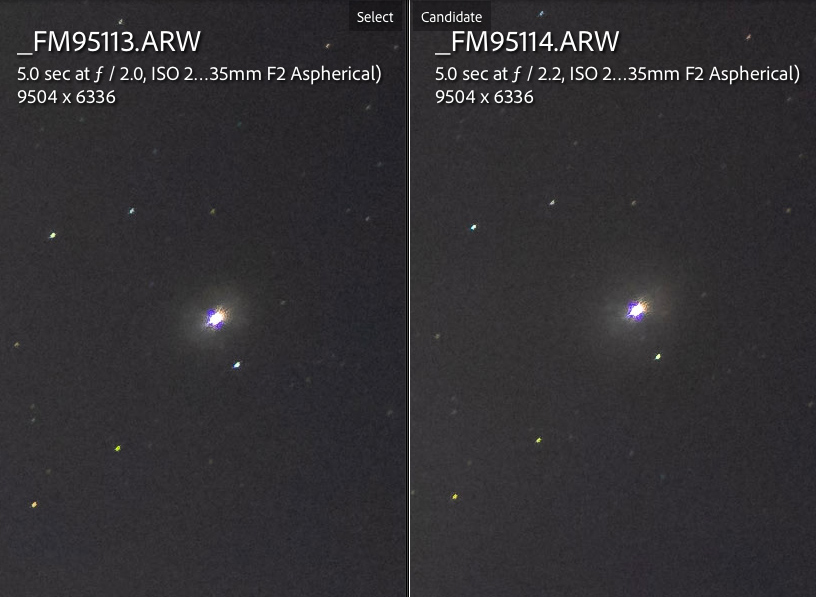
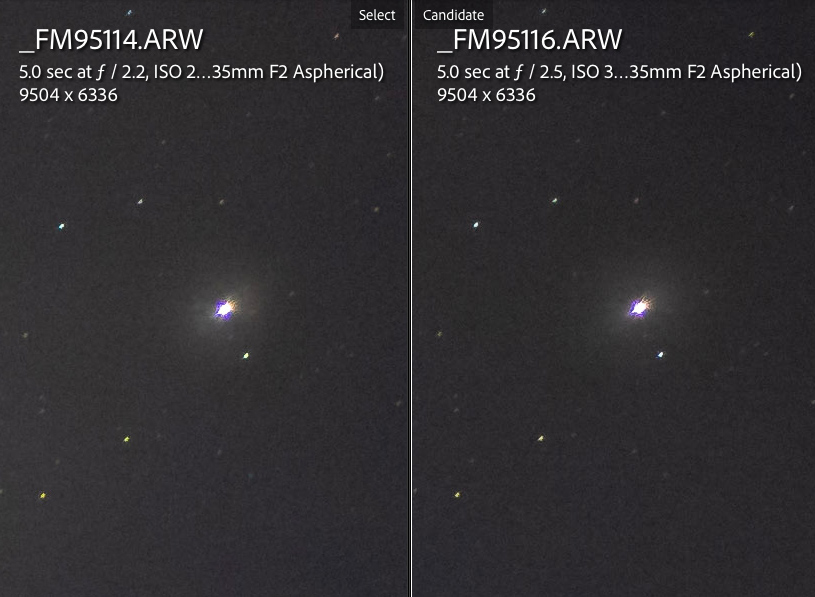
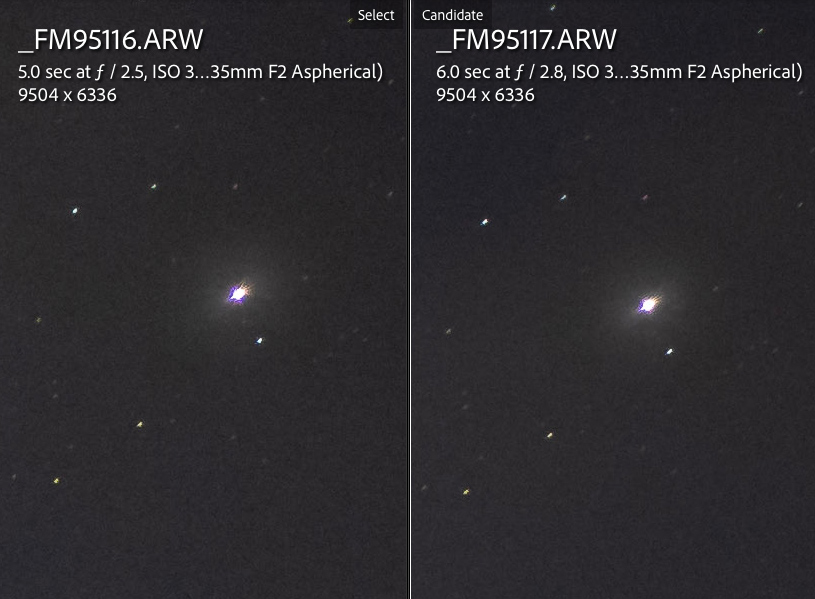
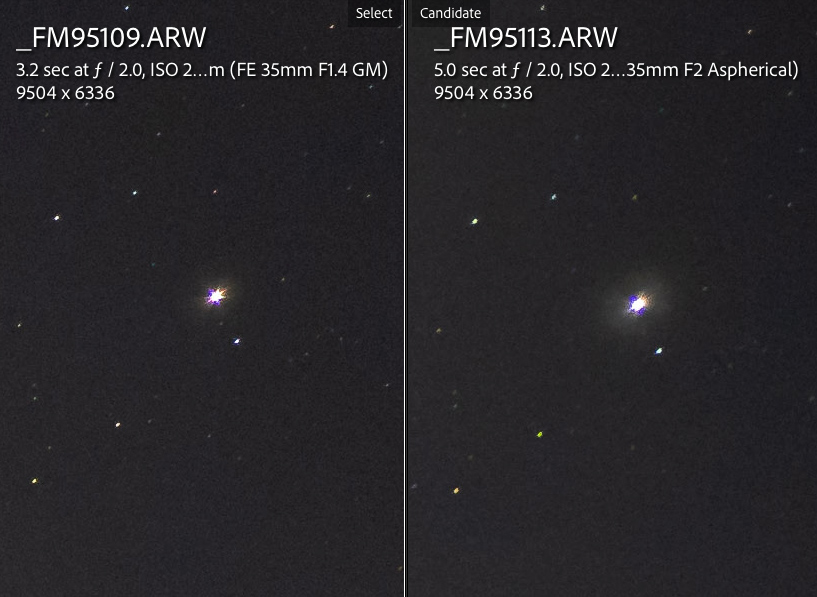
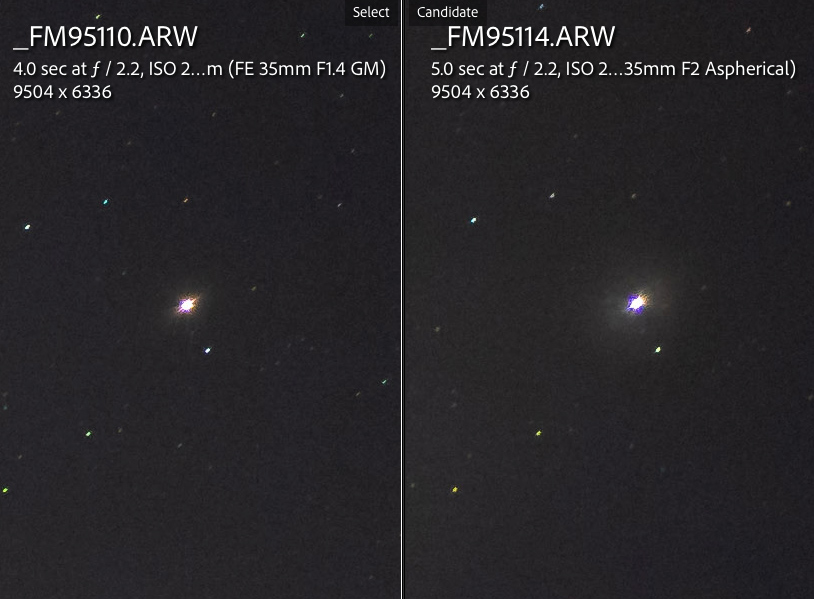
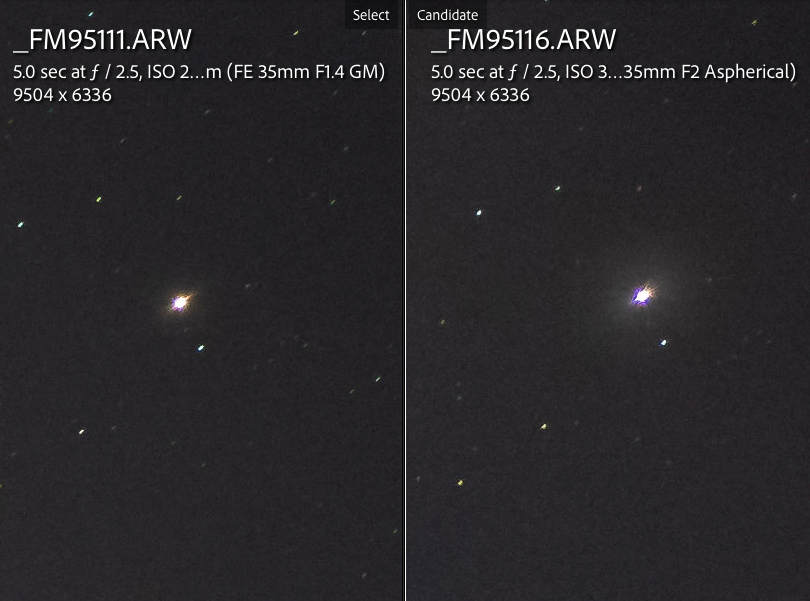
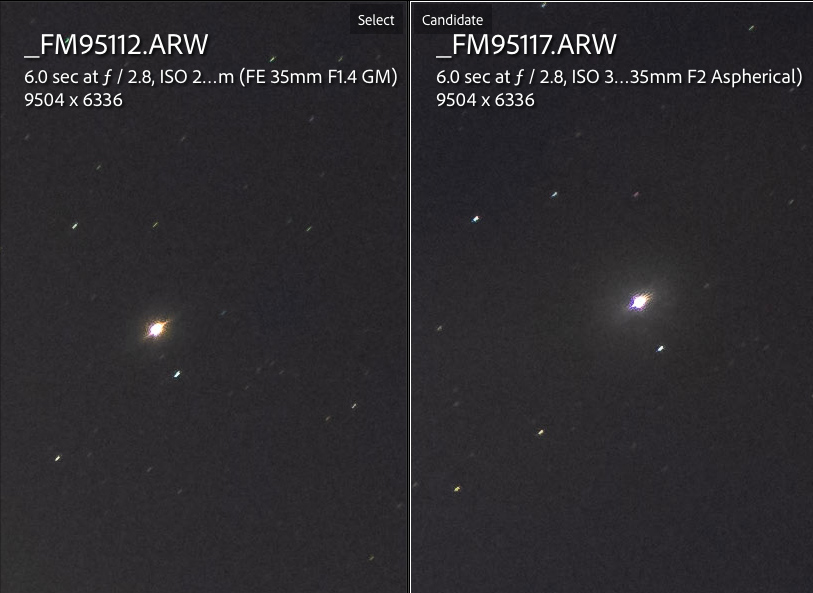
The Voigtlander 35mm f/2 APO has outstanding coma control straight from wide open. Stopping down diminishes vignetting but does not improve coma any further.
Here are 100% crops showing a bright star at the very edge of the frame. (From f/2 until f/2.8 in third increments)
'Voigt is better at delineating the subtle colour differences in the vegetation'
It's a major attraction for many of their lenses, possibly a legacy of the very large number of Zeiss lenses they have produced over many years - Otus and Milvus included. If you cannot detect subtle shades of green, you quickly lose depth perception. It can look artistic (in a Velvia kind of way) but it's not the real world.
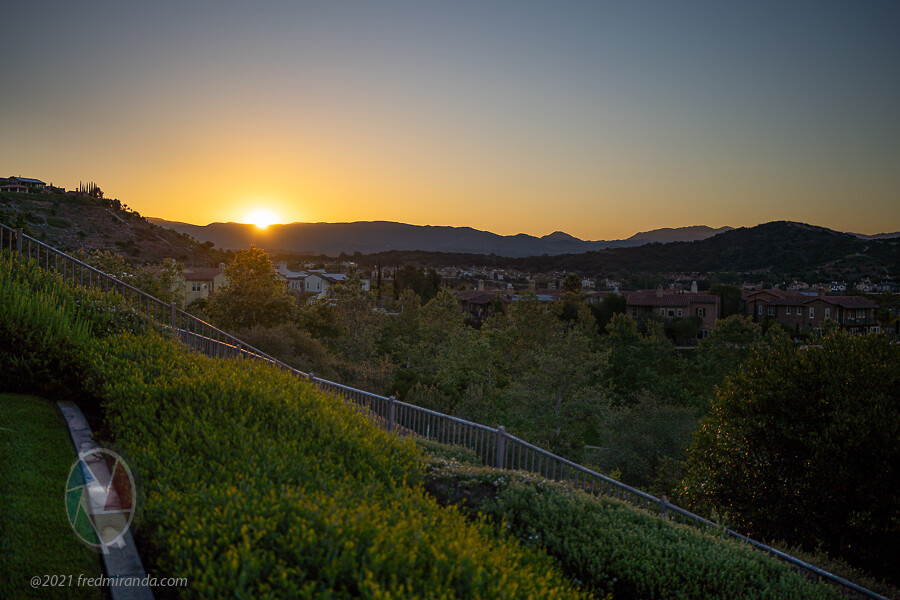
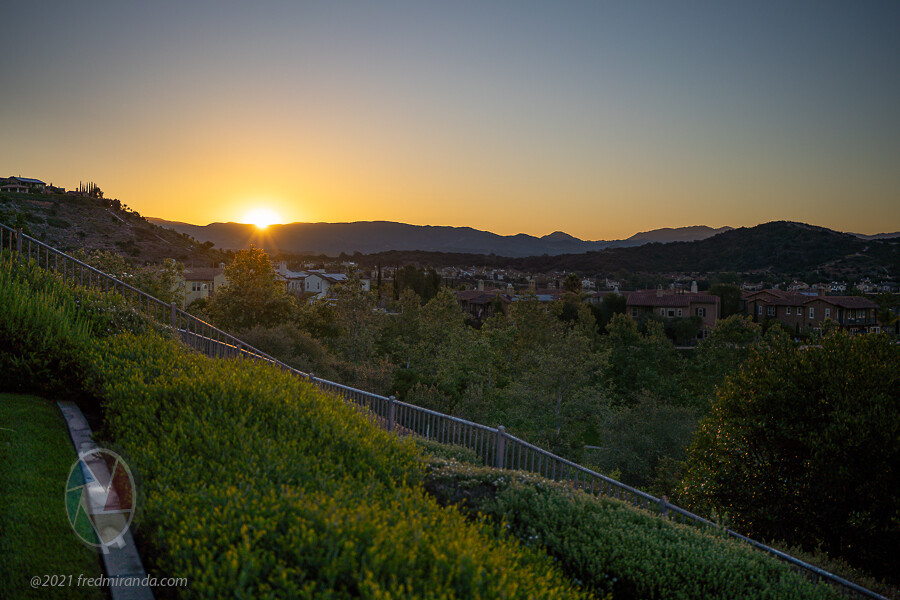
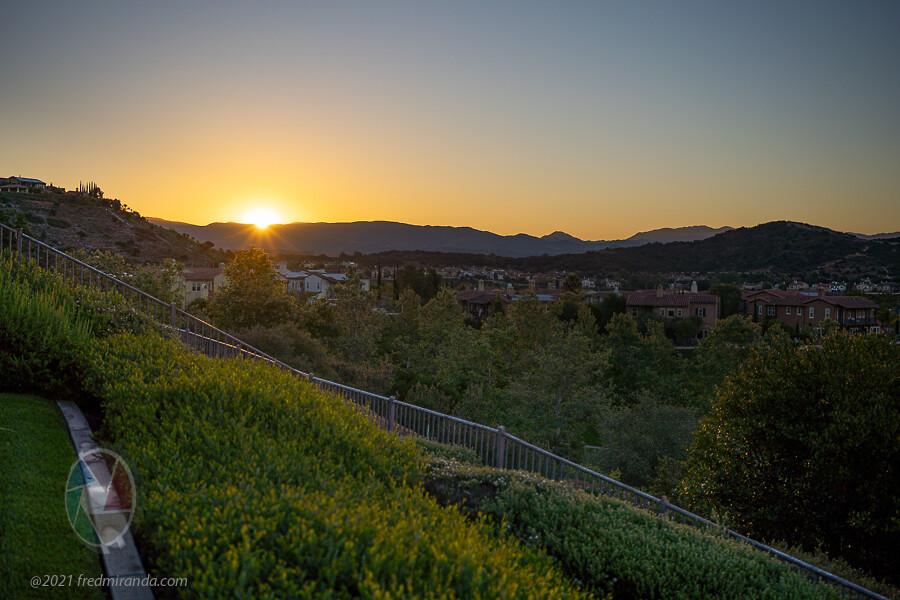
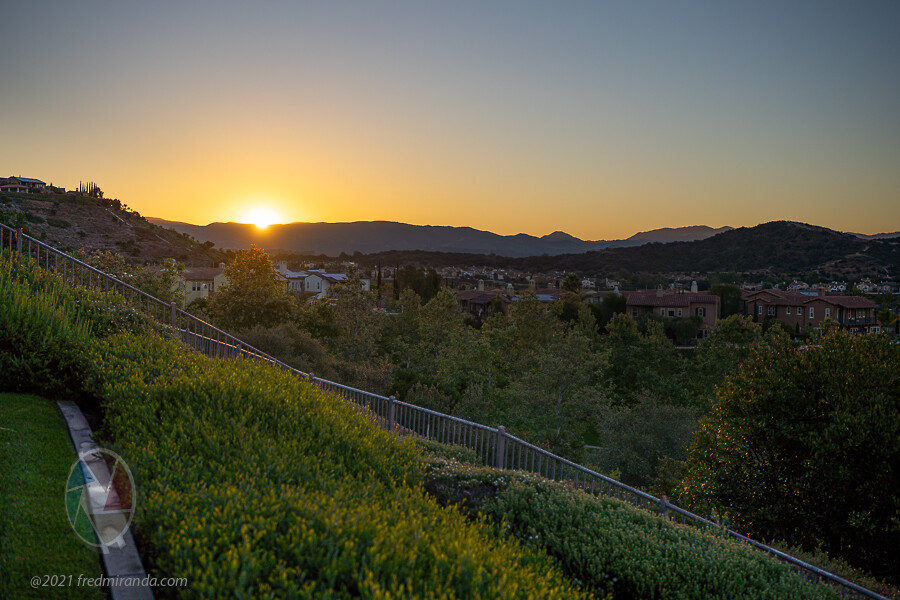
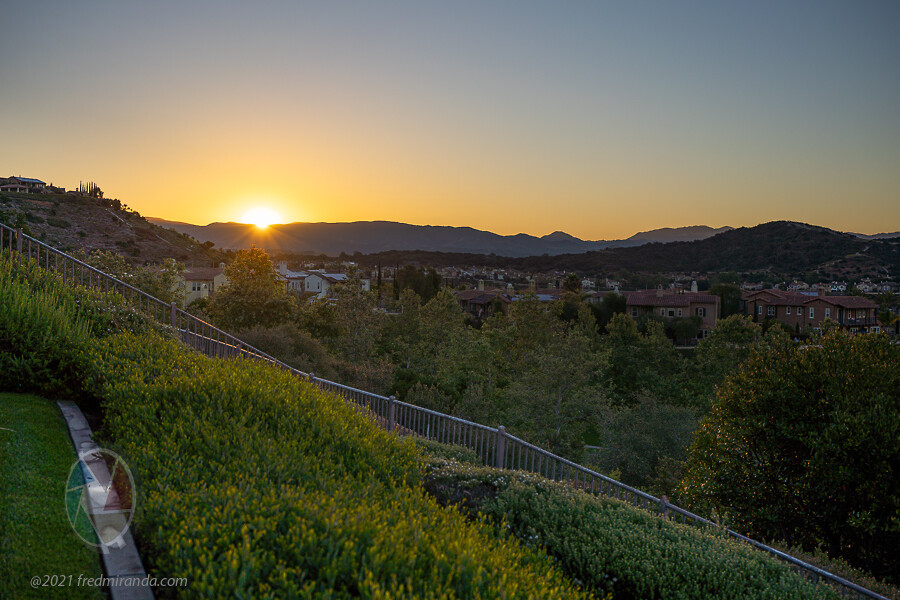
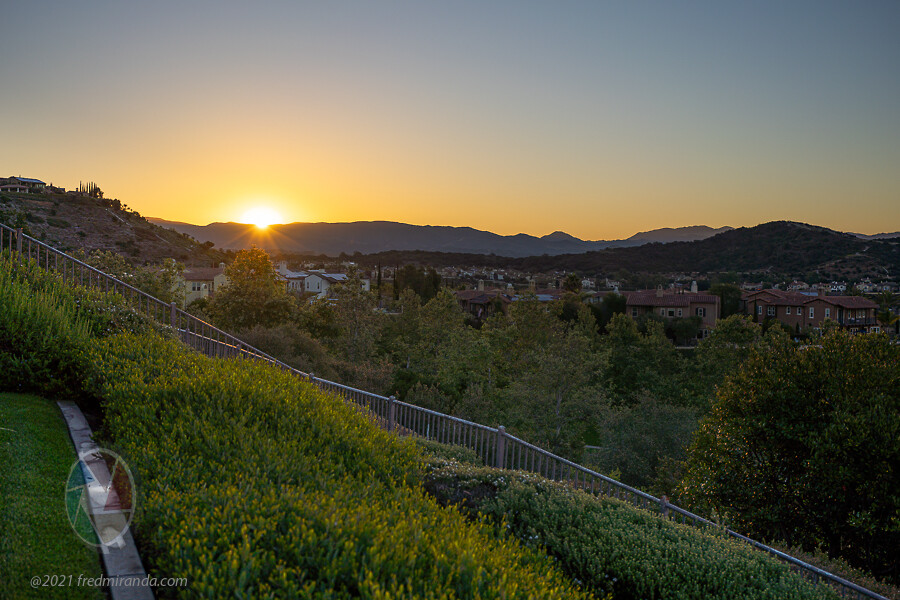
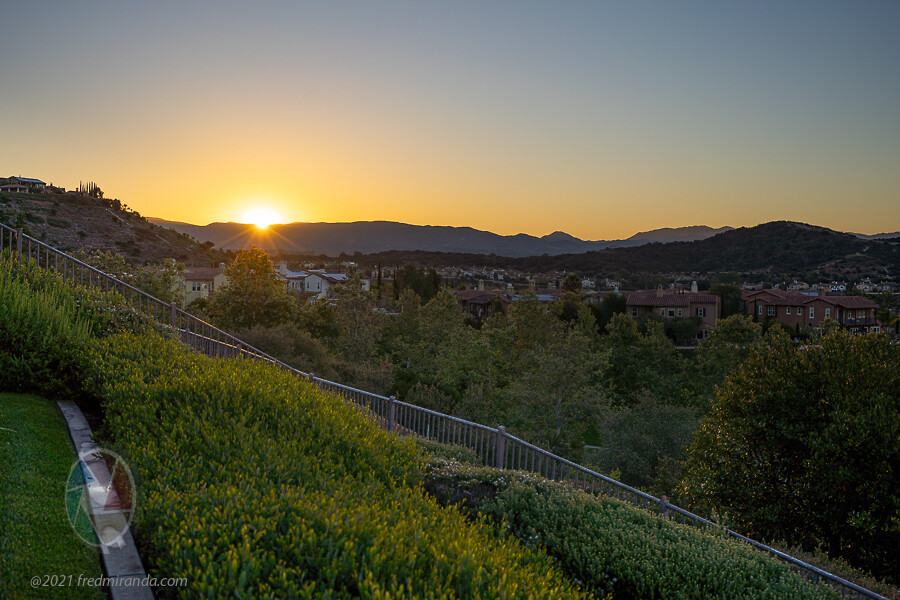
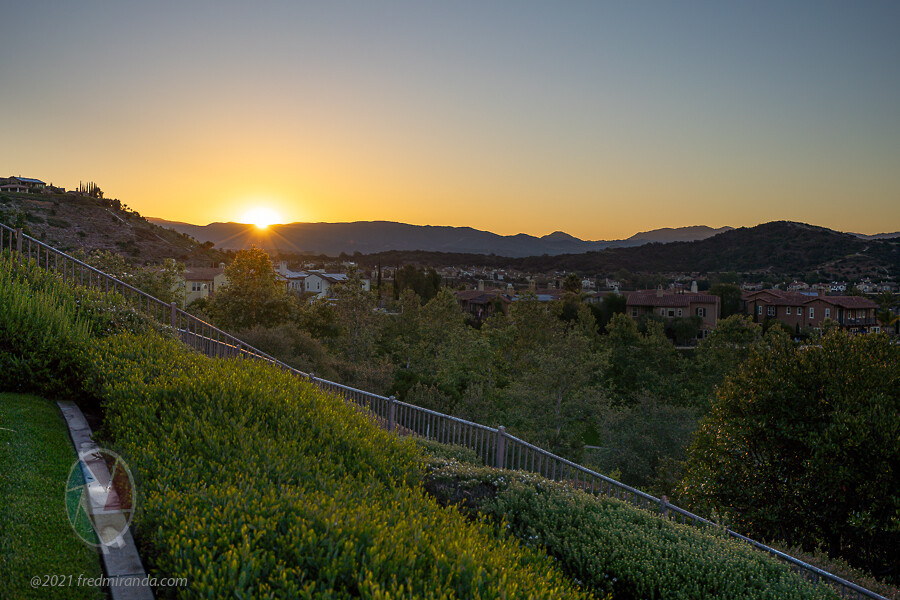
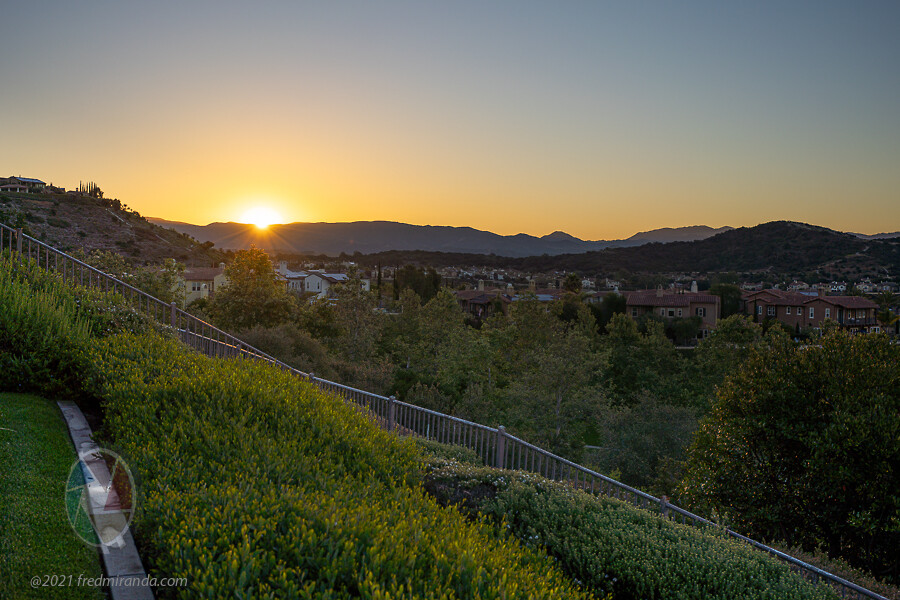
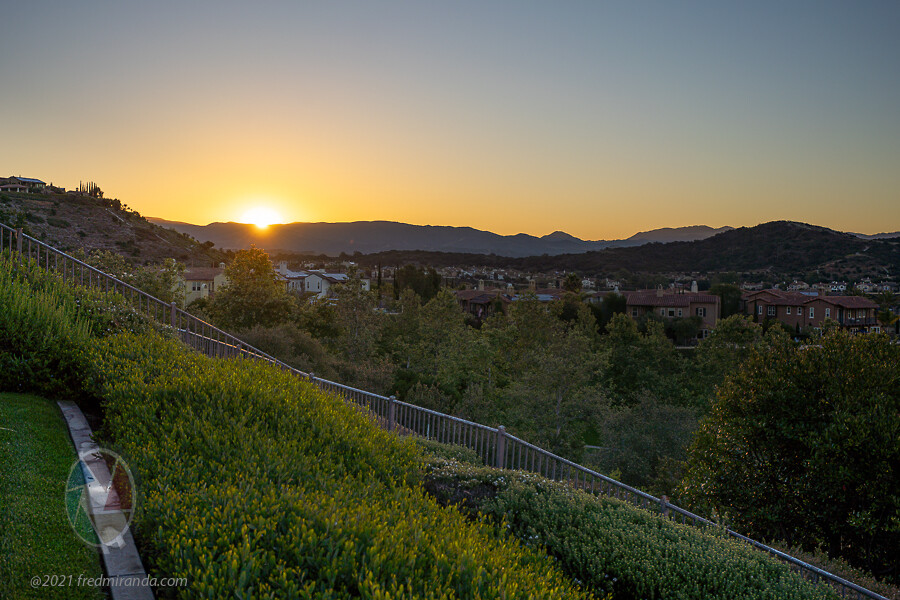
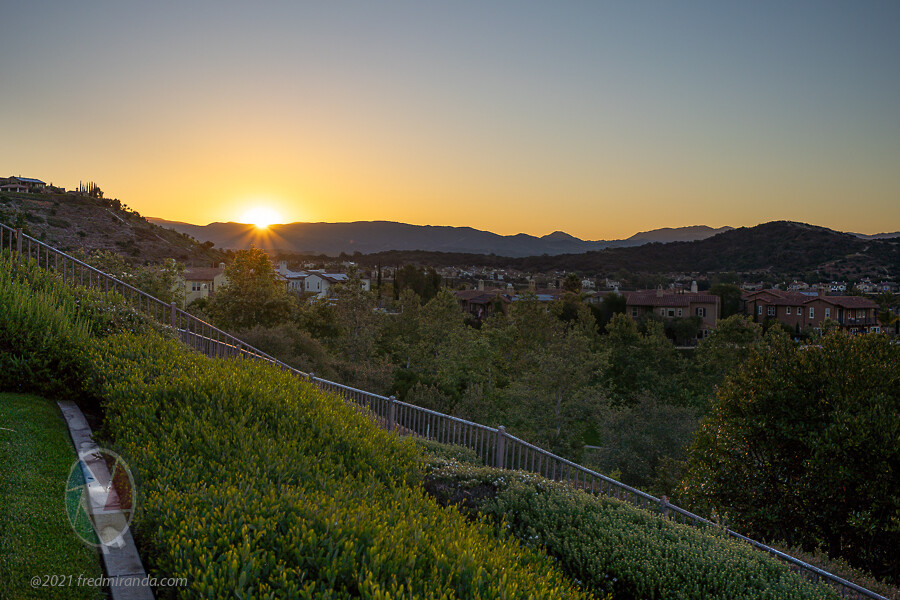
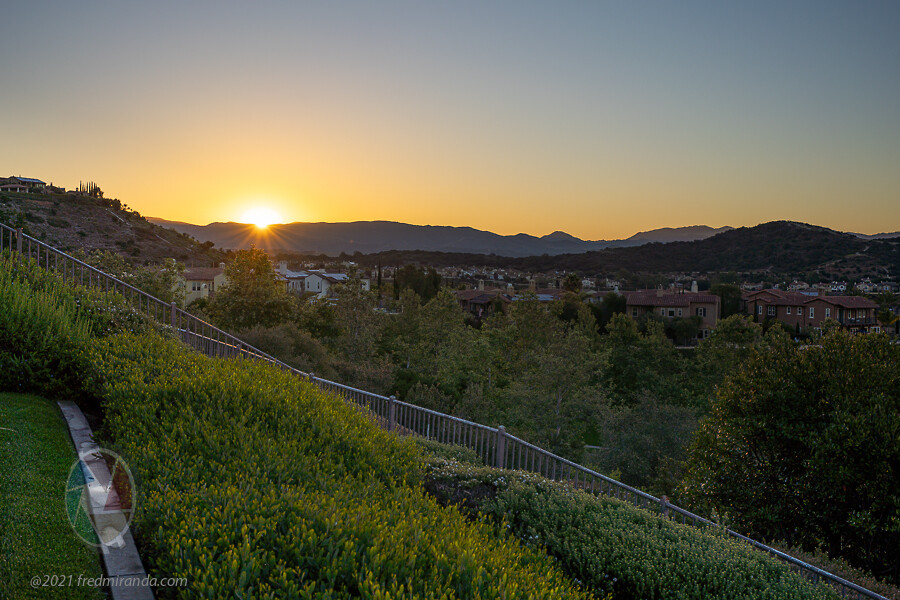
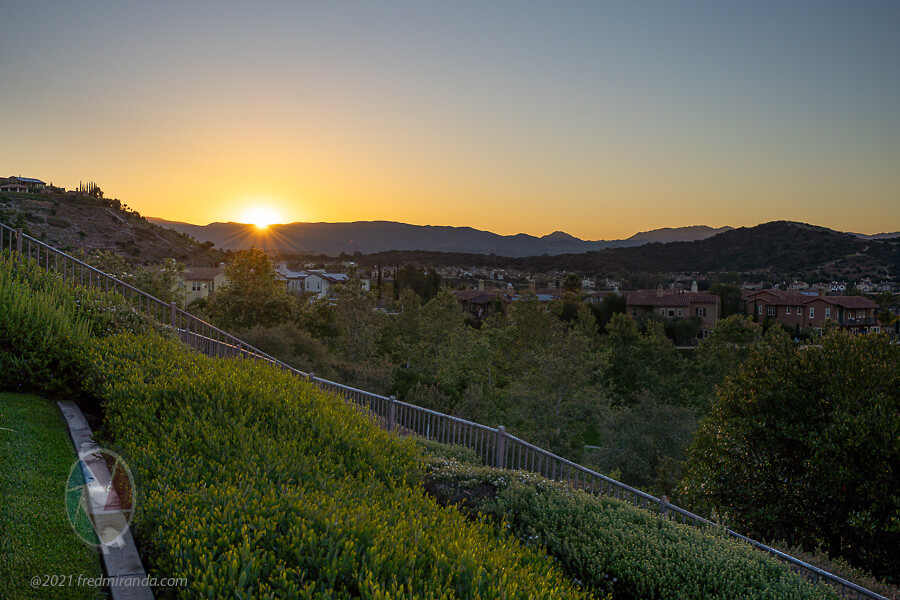
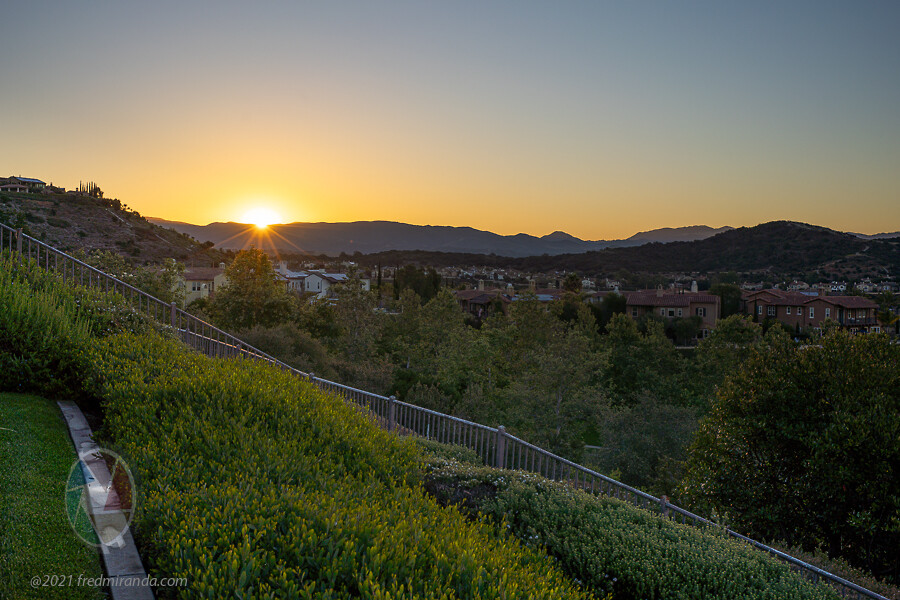
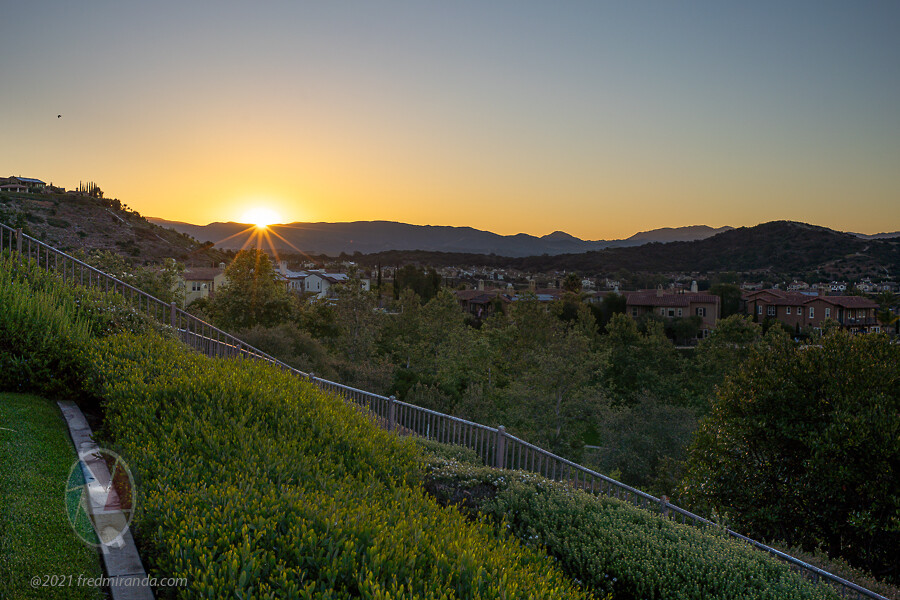
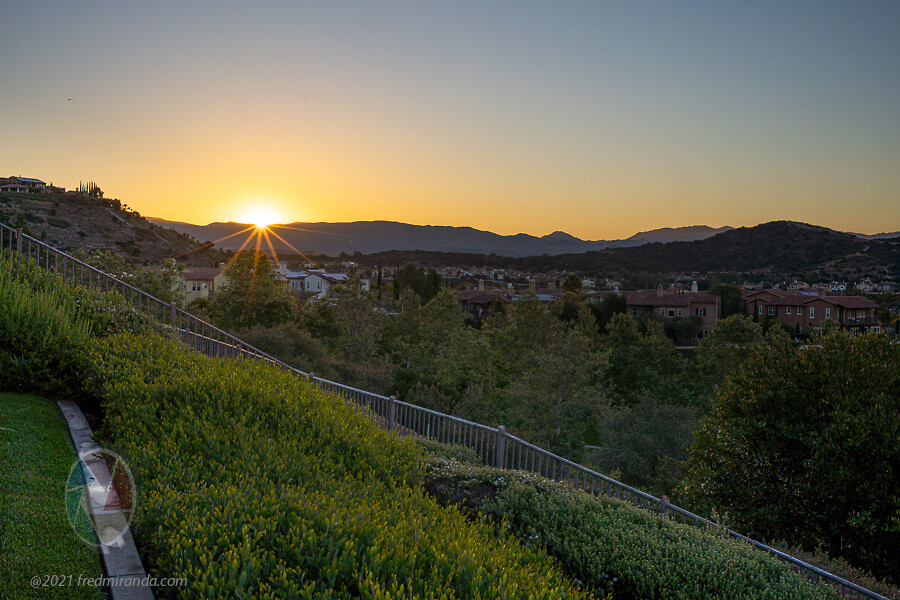
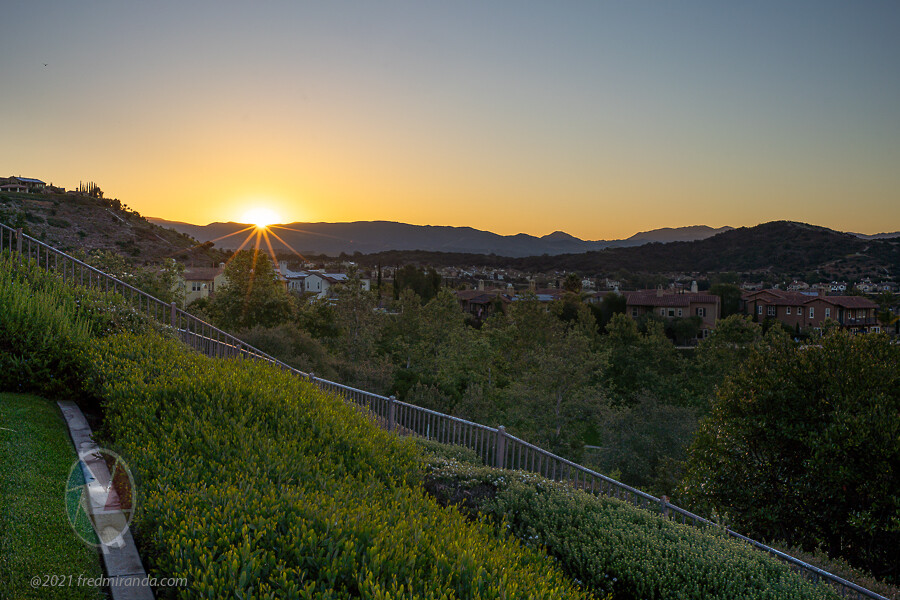
At sunrise, I took a sequence of sunstar images ranging from f/2 until f/16 aperture. (third increments)
The Voigtlander 35mm f/2 APO has straight aperture blades and 12-point strokes. it's capable of nice sunstars starting at f/10 and best at f/11, f/13 and f/14.
This lens is equipped with Cosina's new aperture diaphragm, capable of rendering "completely round specular highlights" at f/2, f/2.8, f/5.6 and f/16. This is great news for round bokeh but not so much for sunstar aficionados.
Still, as you can see from this sequence, defined sunstars are still possible at smaller apertures. (except for f/16)
Flare behaved well on this test. (no ghosting)
The Voigtlander 35mm f/2 APO-Lanthar is one of the best 35mm lenses ever produced!
The highly anticipated Voigtlander 35mm f/2 APO-Lanthar borrows the goods from its successful 50mm APO sibling and scores another win for Sony E-mount and Leica shooters.
After putting this 35mm apochromatic lens under great scrutiny, I can only say that it delivers outstanding resolution, contrast, flare resistance and coma control. At infinity and wide open, it is already excellent across the entire image field and basically achieves perfection one stop down at f/2.8. It matches and in some cases even exceeds the resolution from our best lenses like the Voigtlander 50mm f/2 APO-Lanthar and Sony 35mm f/1.4 GM, making it a perfect wide companion to Sony's A7R IV 61MP sensor.
From the many samples posted by FM members and myself, you may noticed that the Voigtlander 35mm f/2 APO's draw is more structured (some would say harsher) compared to the CV 50 APO's but in exchange it offers completely round specular highlights at f/2, f/2.8, f/5.6 and f/16. At minimal focus distance, it's impeccable from wide open, thanks to the floating element (FLE) system
The lack of color aberration, high resolution/contrast and wide angle of view, makes it a solid option as a walk-around lens. If you are a Sony shooter and enjoy shooting with MF lenses, I highly recommend this lens, especially for those shooting landscapes, architecture and street photography.
Pros:
Superb resolution from wide open across the field. The lens is optimal at f/2.8-4 showing only a slight improvement in resolution and contrast compared to wide open.
New 12-blade mechanism provides round bokeh balls with clean inner structure at f/2, f/2.8, f/5.6 and f/16. (Unnoticeable onion ring pattern)
Outstanding Minimal Focus Distance performance: The floating group design delivers stunning images at all distances from MFD to infinity.
Very well corrected for axial CA. The best I've seen for a 35mm lens. However, there are still traces of green/magenta color error under extreme conditions. Negligible lateral CA.
Compact and light (355g, measured).
Very easy and convenient aperture de-clicking for video.
Great build quality with tight tolerance construction.
Distance encoder provides 5-axis IBIS.
Well corrected for distortion (negligible).
Negligible focus shift.
Neglegible Field Curvature. It's a flat-field lens.
Well defined 12-pointed sunstars starting at f/10-11.
Precise manual focus and well damped focusing rotation.
Flare resistance is well above average for a 35mm FL lens.
Cons:
Optical vignetting renders "cats'eye" bokeh balls towards the corners.
Traces of onion ring pattern in specular highlights.
Structured rendering wide open. (Improves at f/2.8)
Thanks to remarkably well studied about VE 35/2 which is one of the best 35mm lens.
I have pursued to get this since its announcement. Concerning AF, Rokinon 35/1.8 that I have is good enough for me. Thanks to your wonderful and detail analysis and time.


 And it's almost 'why stop down' time. Very few will have complaints about these f2 corner zones.