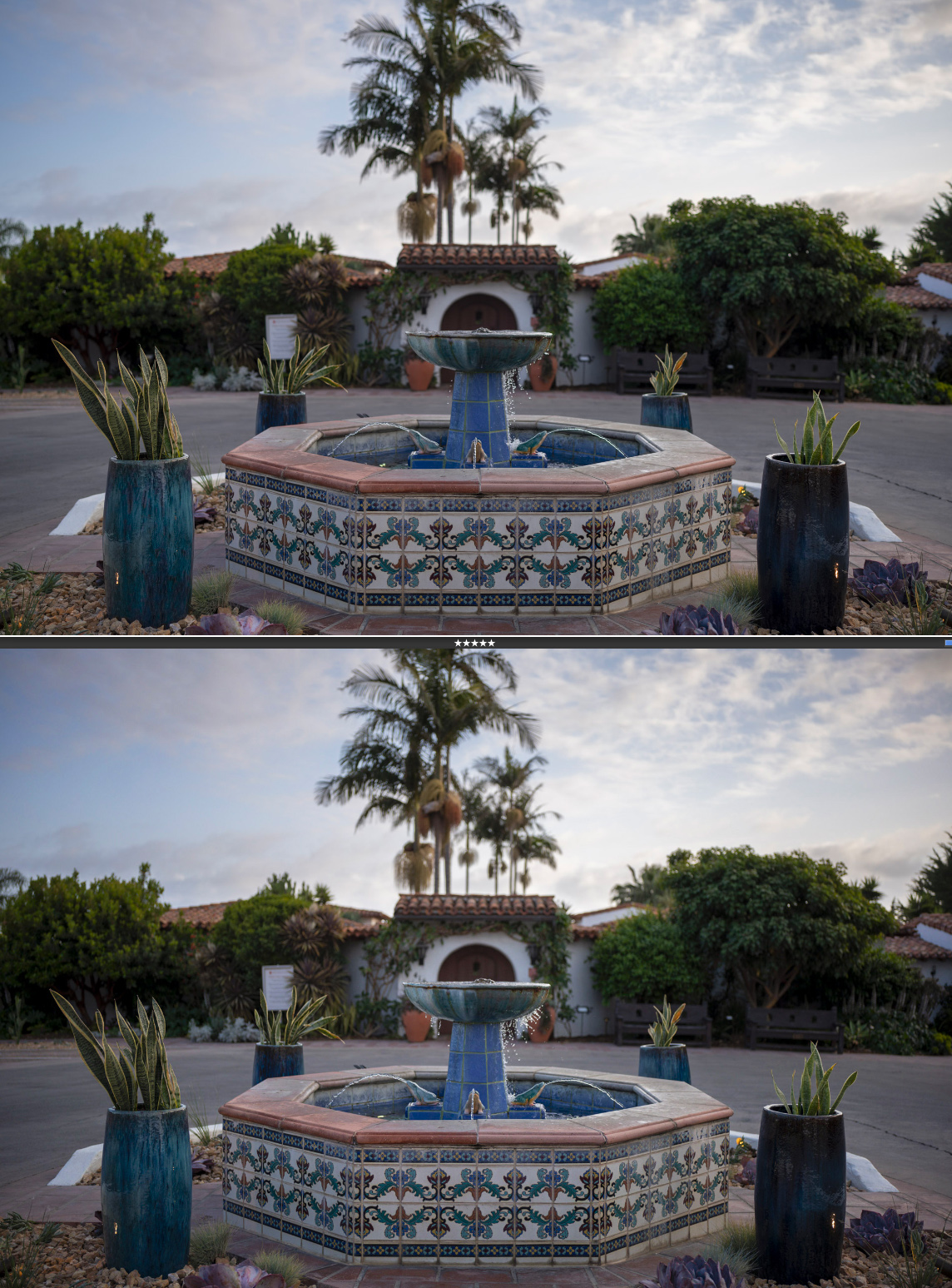
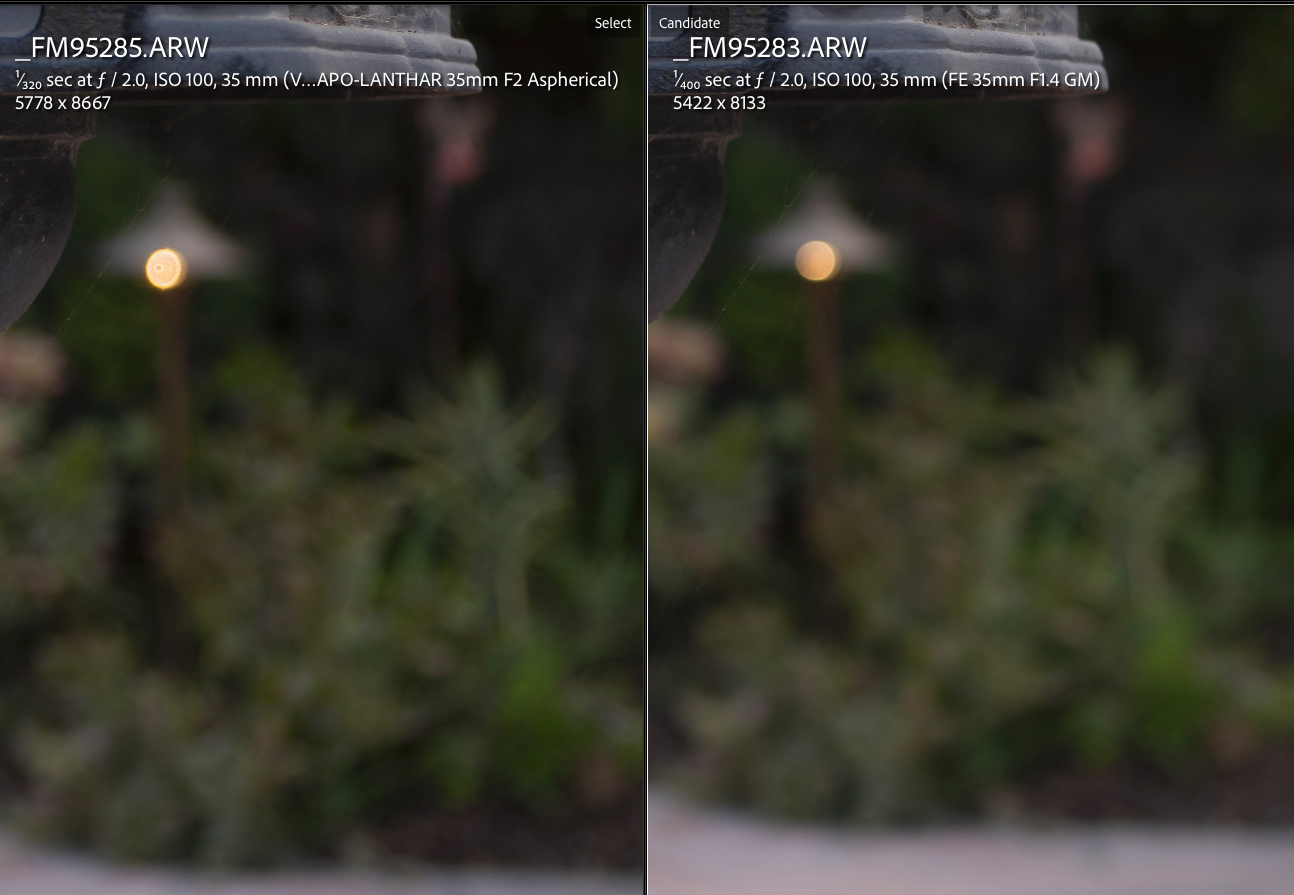
Could someone please point me to a site from which I can download some Voigtlander 35mm APO raw files? I'd like to play with at least one or two to see how I might work with them as I cogitate regarding my next purchase.
I just sold the ZM 35/1.4 that I've used routinely for the past two years. I enjoyed that lens despite it's much-discussed issues with the Sony filter stack. I hope that the new Voigtlander will give me some of that Zeiss goodness while avoiding the problems.
DaveFP wrote:
I am not a hard stop expert but I can share that my Zeiss lens manuals all say they don't provide an infinity hard stop to allow for the effects of temperature change.
realVivek wrote:
That gives a plausible explanation as to why the newly designed Loxias never made it to the M mount. Temperature affects the behavior of ED/APD elements. The archaic RF focusing aid will not work well with the state of the art lenses with many APD elements.
I feel you're grasping for reasons to disparage the M, even if you own some of it. Zeiss has ignored the still image ILC market for some time. What was their last release? The 100/1.4 Otus? TBH I couldn't care given how Cosina has aptly filled the void. I enjoyed using Zeiss's ZM lenses on the M system, but have moved on...
Fred Miranda wrote:
Yes, it does not quite reach infinity. I think the 50R crop is sharper.
One more, this time without the midday heat distortions. It was easier to see focus on the 50R in these conditions.
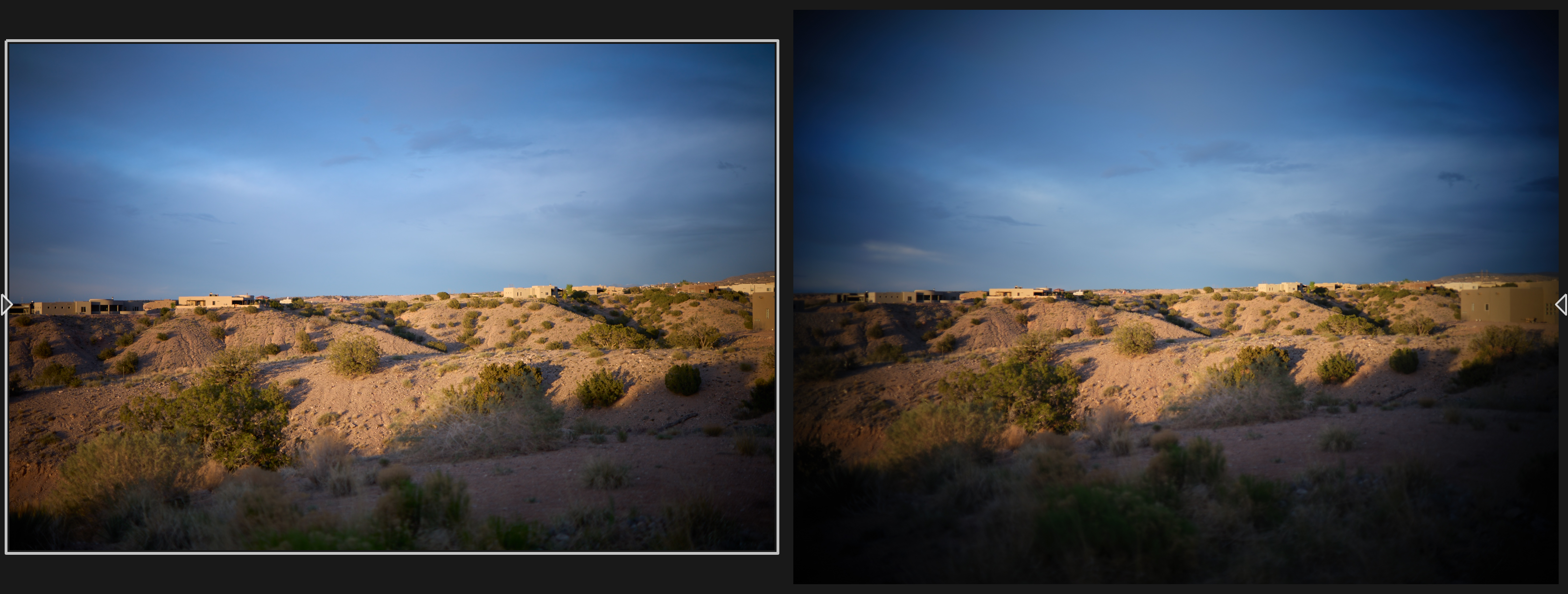
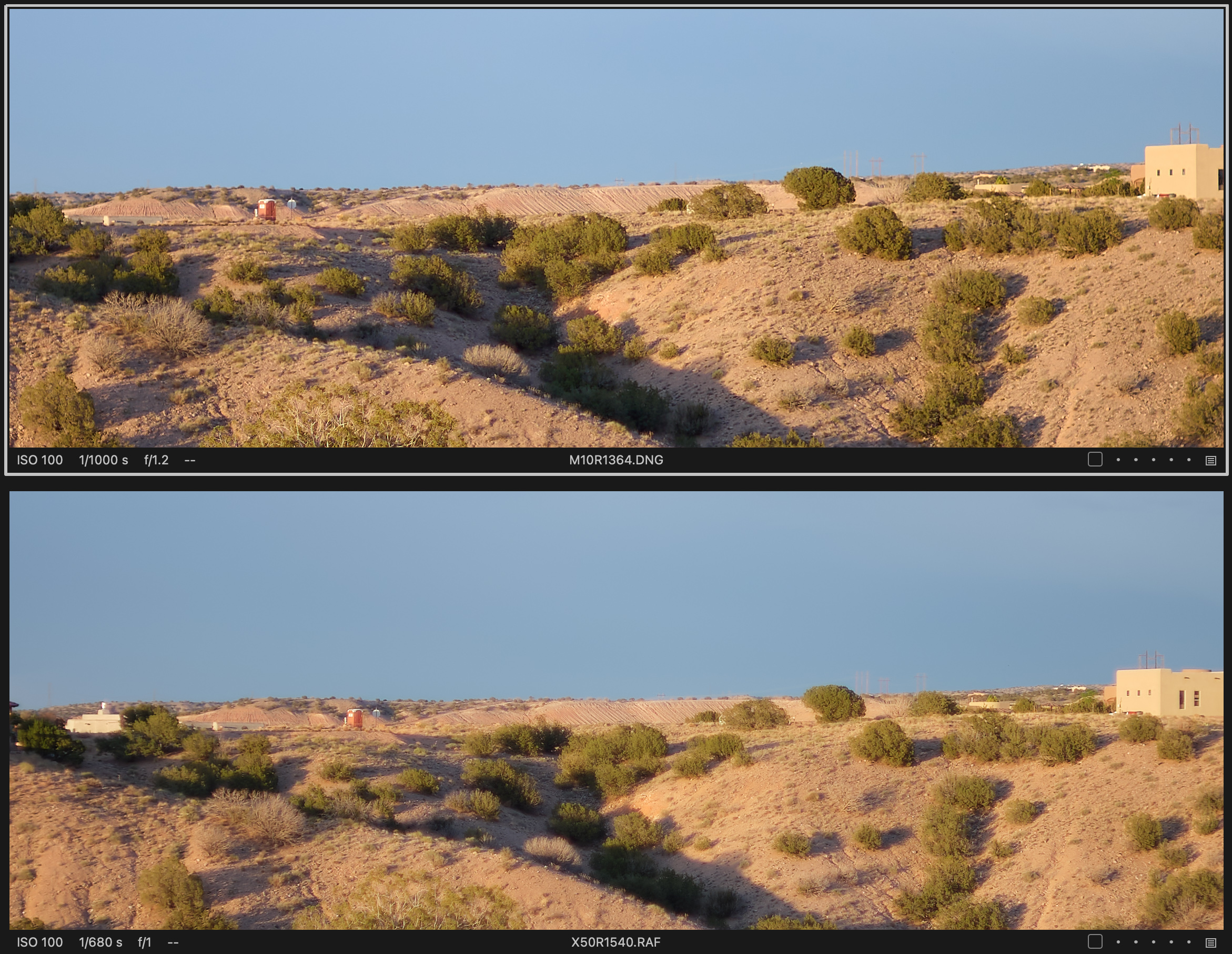
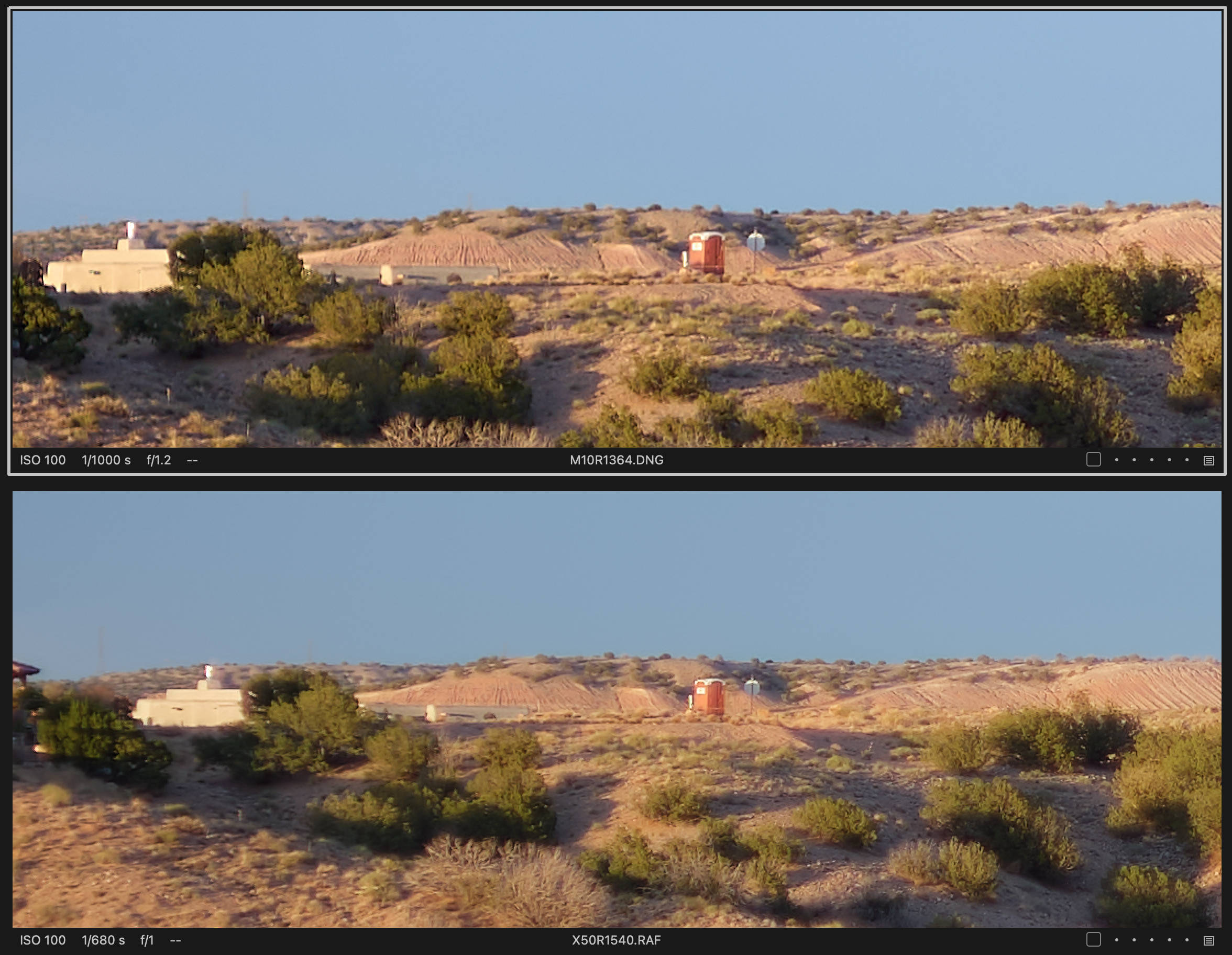
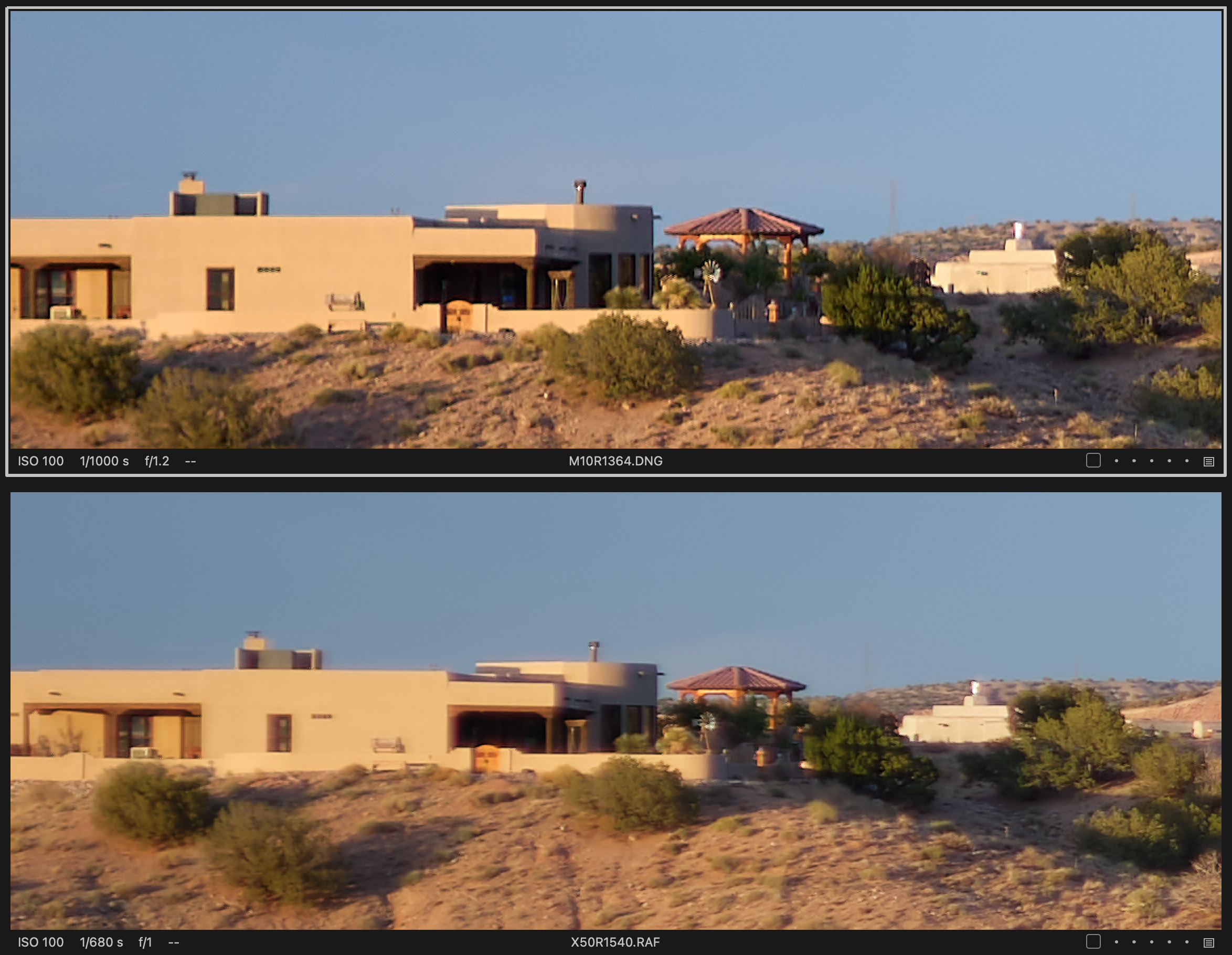
35 1.2 III shot at f/1.2 on M10-R and GFX 50R. Hard stop on M10-R / high-magnification EVF focusing on the 50R. Both 1/1000 sec., both mechanical shutter (M only has mechanical) – Not sure why the EXIF for the GFX shots is reporting 1/680 sec. since I had the physical dial set to 1/1000. Both cameras were braced on the top of a fence.
In post, I did these differently than the last set. This time, each was post-processed for sharpness the way I normally do any landscape file: as much as possible without looking over sharpened. This is really the only way to have a fair comparison between these cameras since 1) the GFX is 10 more megapixels, 2) GFX has smaller microlenses, which greatly increase apparent sharpness, and 3) GFX 50S/R are known for higher native RAW file sharpness than most cameras.
What I did here too, was not just provide a 200% crop from near-center, but also 200% off-center, but still within a 35mm frame and still not close to the edge of a 35mm frame. In that crop, the GFX sharpness falls off like crazy, which I assume is due to the thicker sensor stack of the GFX compared to the M, and the CV lens being optimized for the M sensor.
rscheffler wrote:
M10R looks better to me. I'd be surprised if sensor cover glass thickness doesn't negatively affect off-axis performance on the Fuji.
I'm mainly trying to show Fred that I think my copy of the 35 1.2 III is hitting infinity focus at the hard stop. Evidently that lens is known for not reaching infinity on an M body.
But yeah, I do think the thicker sensor stack is affecting the GFX even in the center as I see a sort of "glow" everywhere. I see the same thing on the R5 when adapting the CV lenses.
Coming from someone who is on the record of being a Sony hater, thank you!
Your latest Leica M gear is a Chinese knock off of a historic Summicron? How is that helping the M?
rscheffler wrote:
I feel you're grasping for reasons to disparage the M, even if you own some of it. Zeiss has ignored the still image ILC market for some time. What was their last release? The 100/1.4 Otus? TBH I couldn't care given how Cosina has aptly filled the void. I enjoyed using Zeiss's ZM lenses on the M system, but have moved on...
We've spoke about it and I'm not seeing it with my copy at MFD, 2m and infinity.
I've tested for focus shift analyzing the center focused area for changes in apertures from f/2 until f/4. I do not see any difference focusing at f/2 and taking exposures at f/2.8 and f/4 compared to focusing at f/2.8 and f/4 at any distance.
Can someone explain the problem with focus shift for manual focus lenses like this? Isn't the aperture is always stopped down to the setting you have it set to on the ring? If doing an aperture series so you can pick your preferred shot, wouldn't you refocus each time you changed the aperture? I'm sure I'm missing something obvious here.
That said, I can't see why I would ever move this lens off f/2 unless I want more DOF for landscape.
I do not think you are missing anything. With an EVF, we can easily (usually) focus at shooting aperture. But in older, optical view finder days, we often focused wide open (in order to have enough light to see), then changed aperture for the exposure. If a person still does that, then focus shift would be an issue for them.
And in a range finder camera, of course, focus shift is a problem because the range finder mechanism is not adjusted for any change change in aperture.
For my purposes using this lens on a Sony mirrorless, I would not worry about focus shift at all. I enjoy using my Sonnar ZM 50mm on my Sony. And that lens has notorious focus shift. It causes me no issues on my Sony.
I just received my copy of this lens. It seems a bit softer at wider apertures than the 50 APO I previously had. That's not to be determined by these samples, but I have done a few quick tests. Still, it's sharp at wider apertures and perfect stopped down.
I sold the 50 to buy this, as I prefer 35mm. I will have to do some more testing another time when it doesn't rain half of the day.
Here are some quick sample images at wider apertures. The first two were taken at f/2, and the last two at f/2.8. The first image is at minimum focus distance. All are unedited and were taken with a a7R IV.
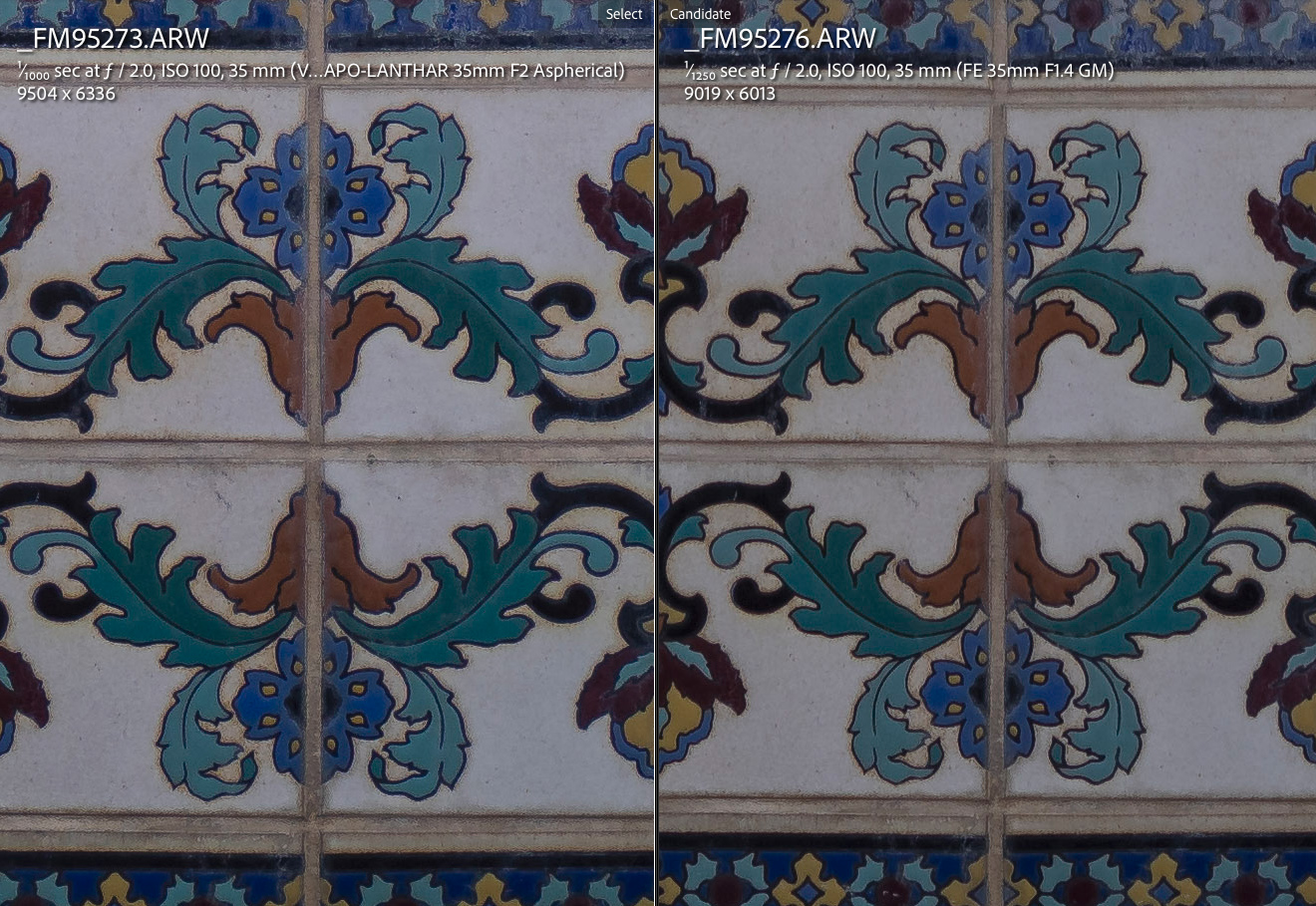
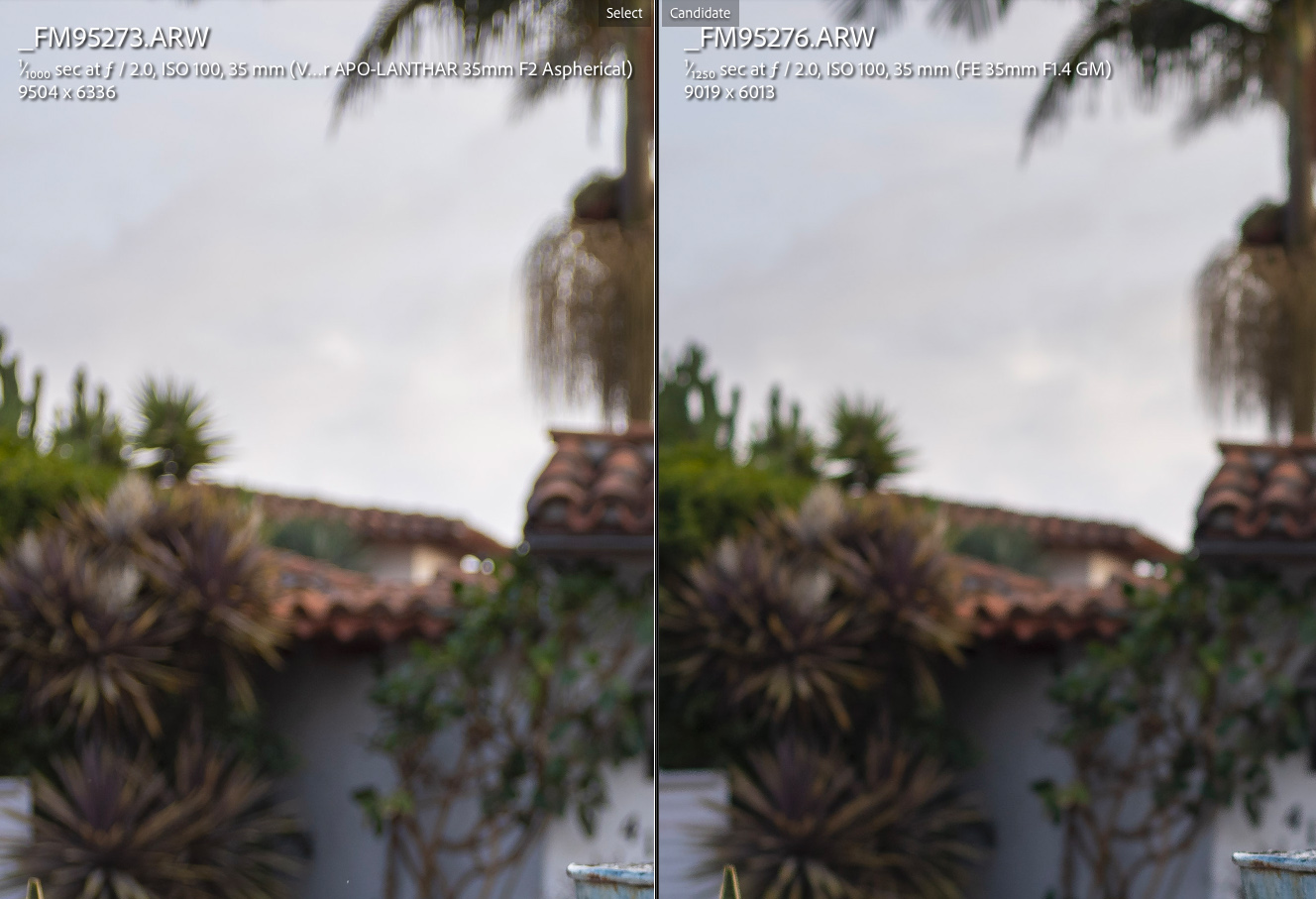
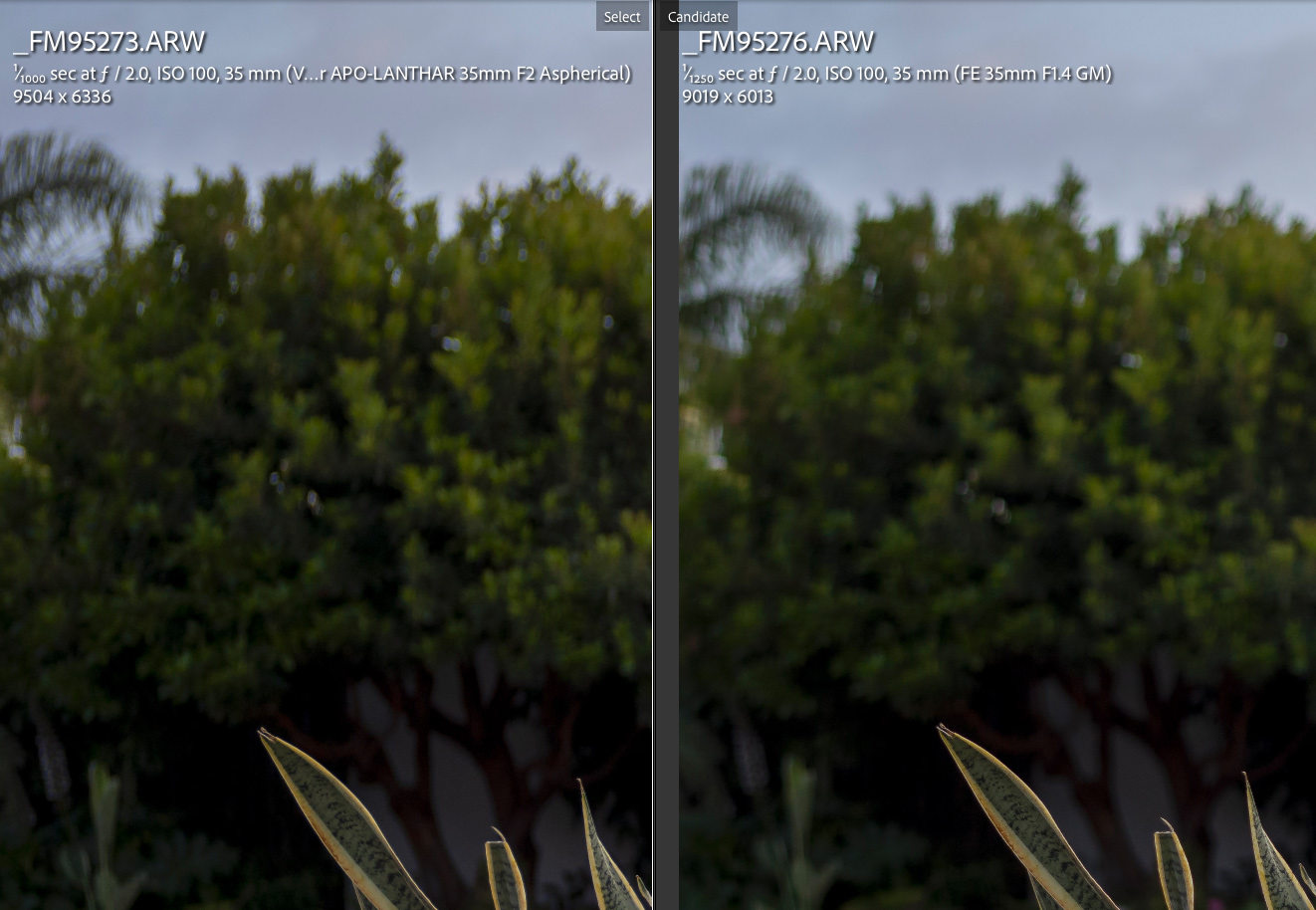
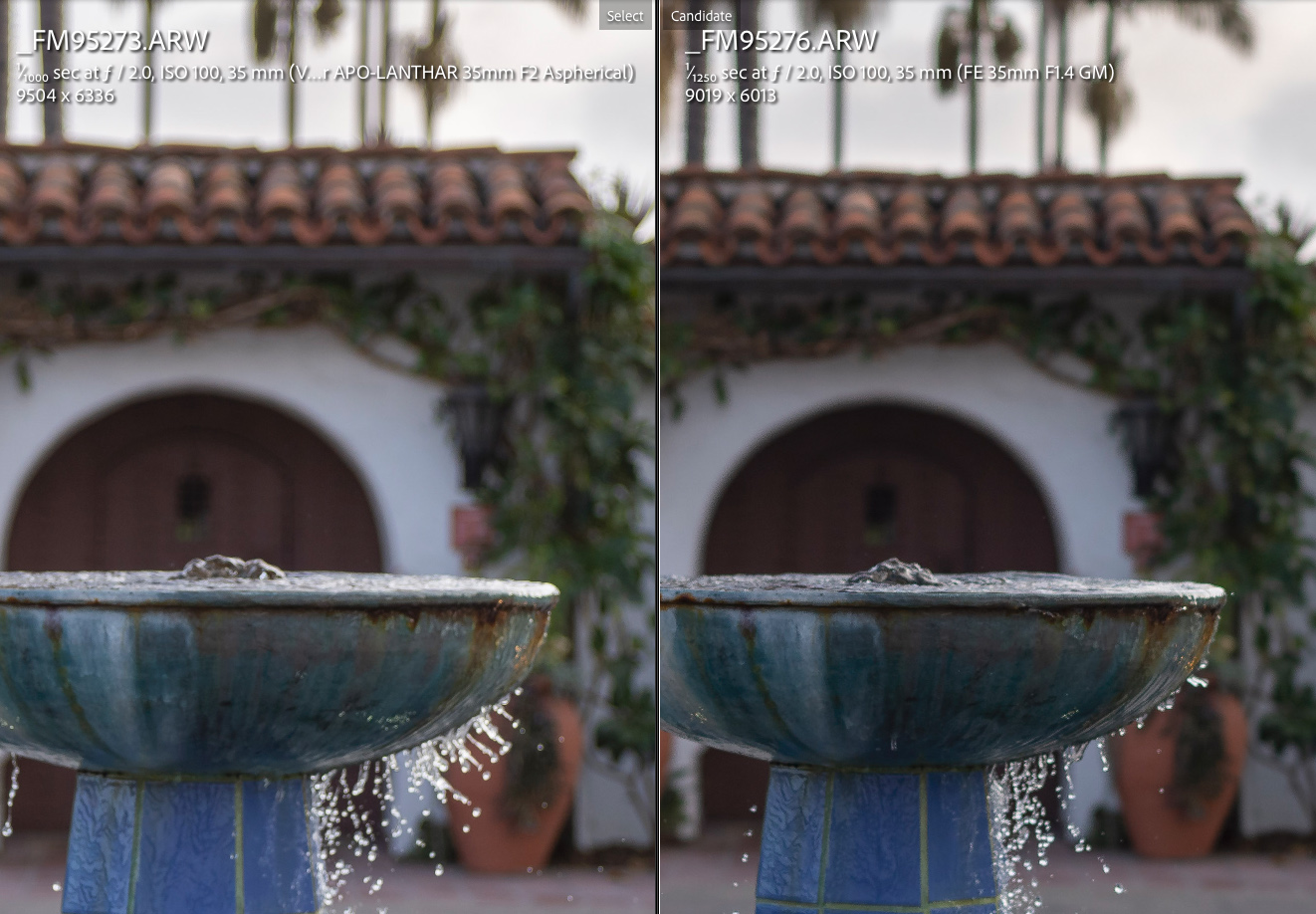
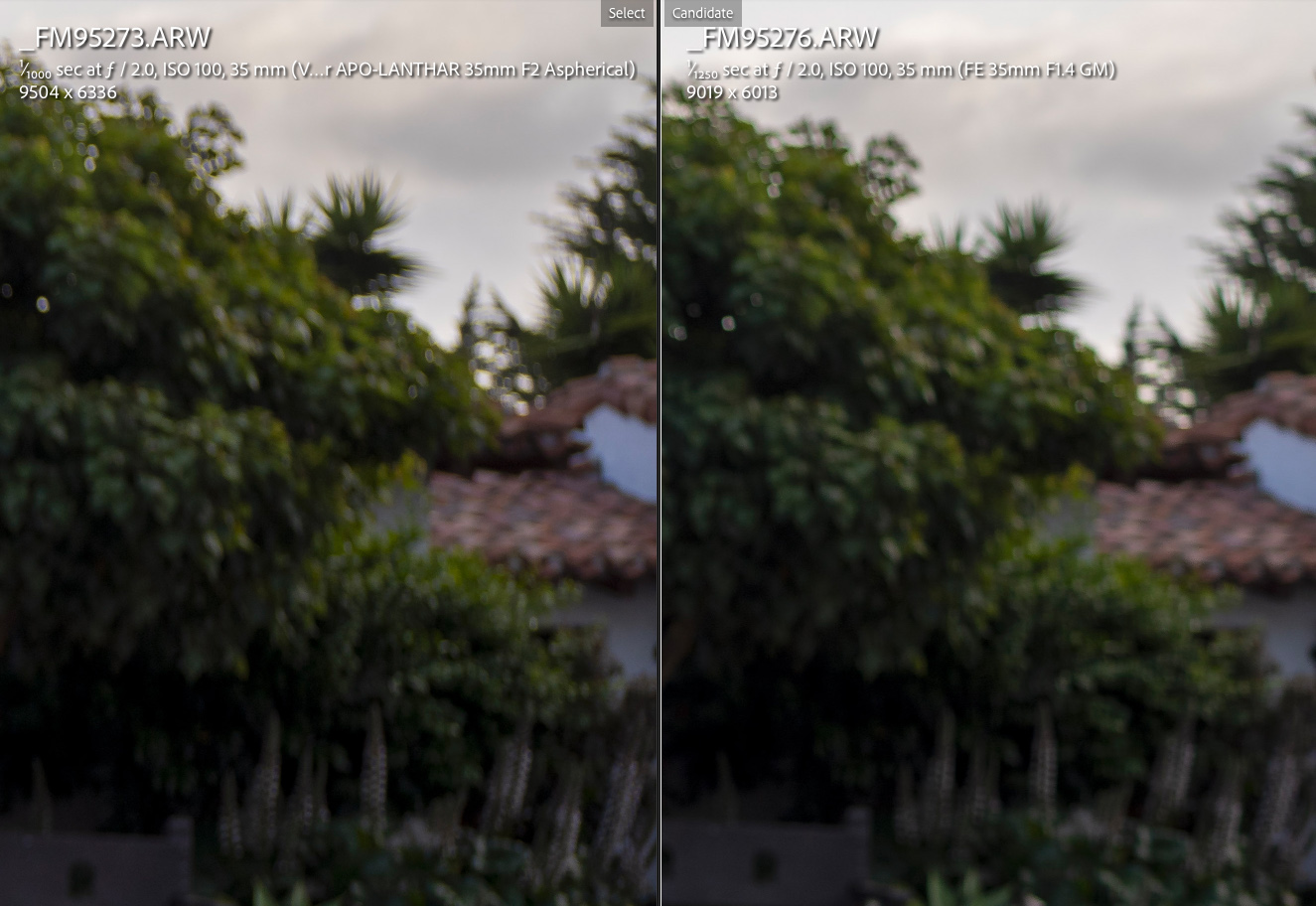
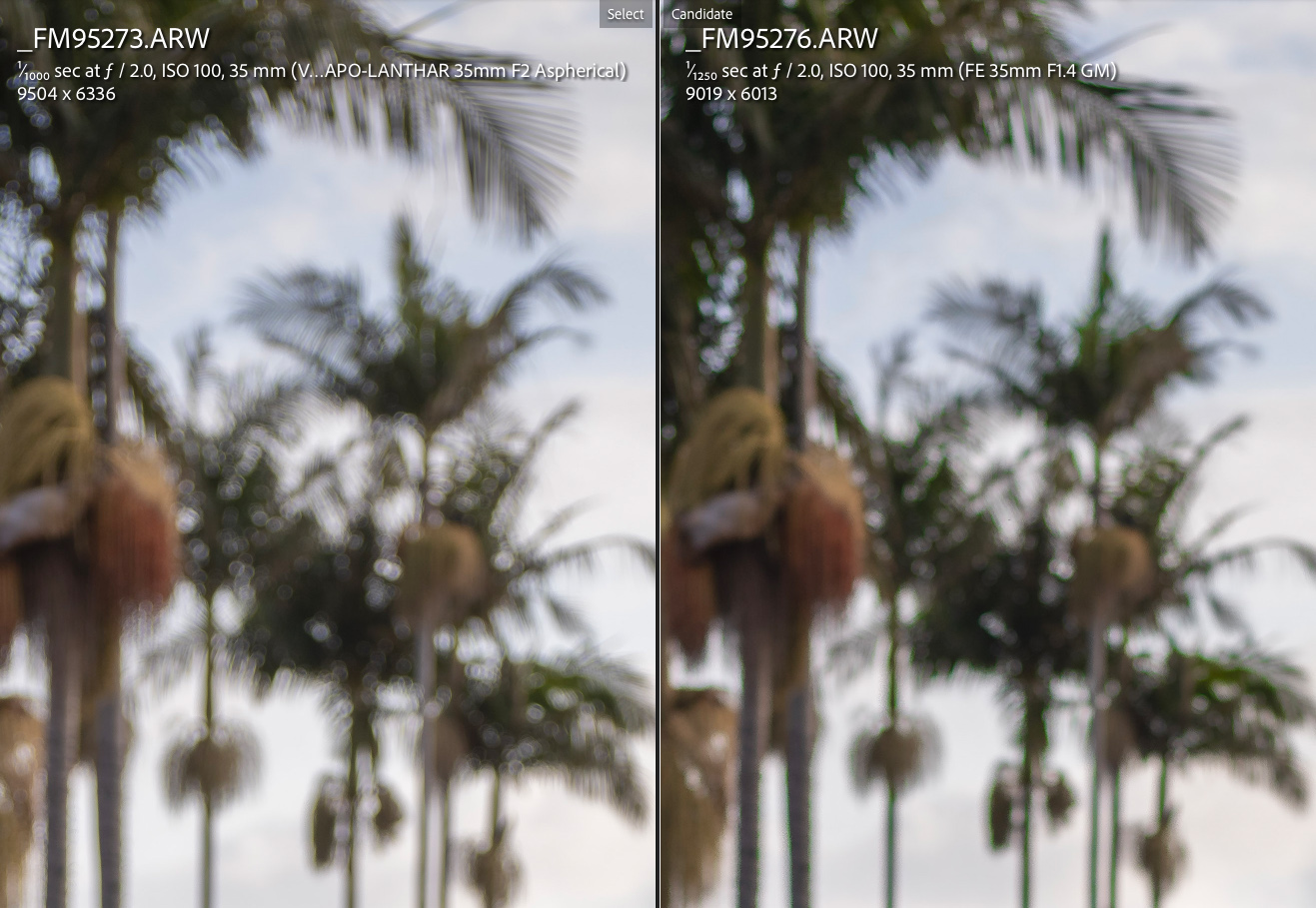
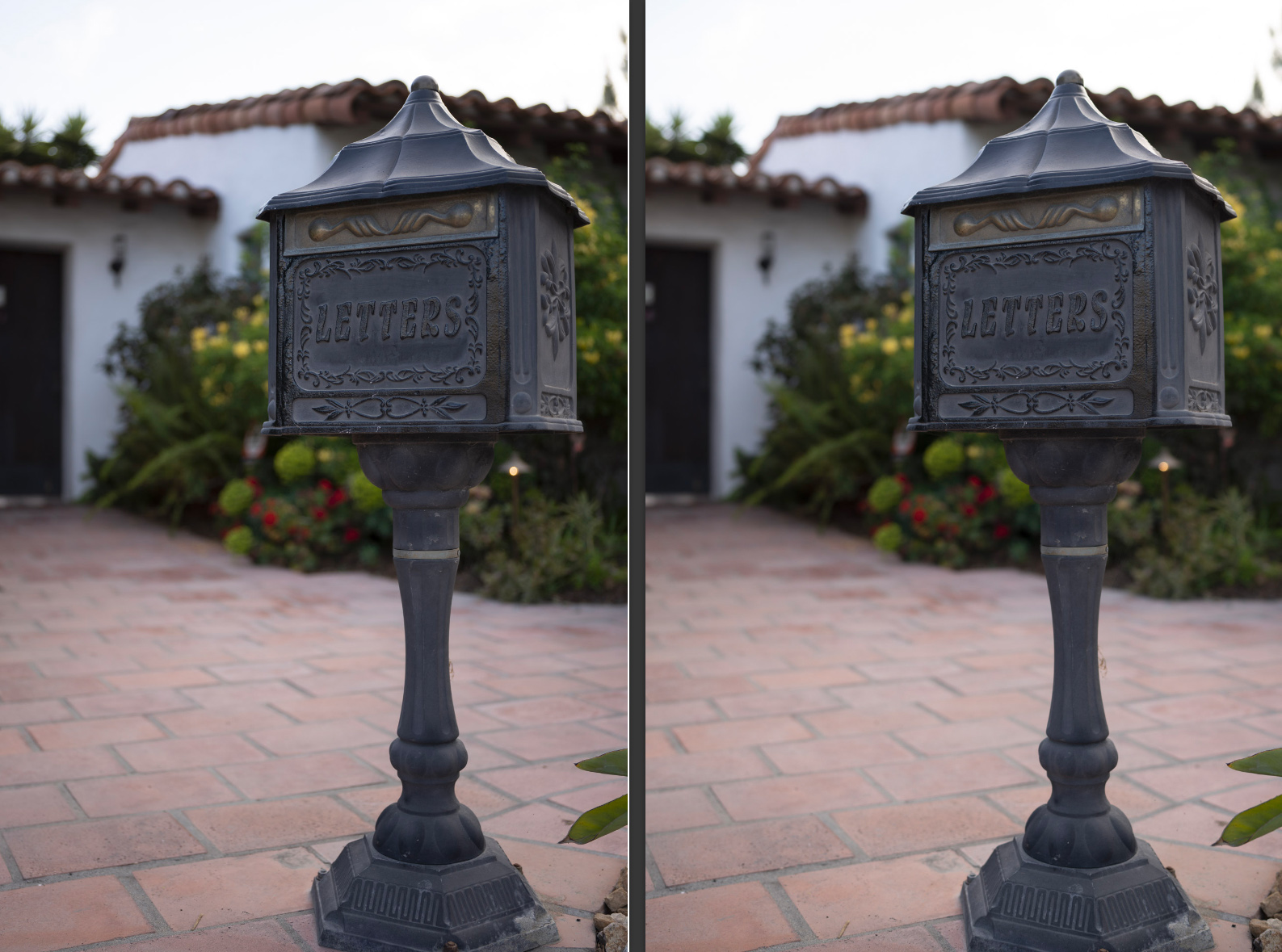
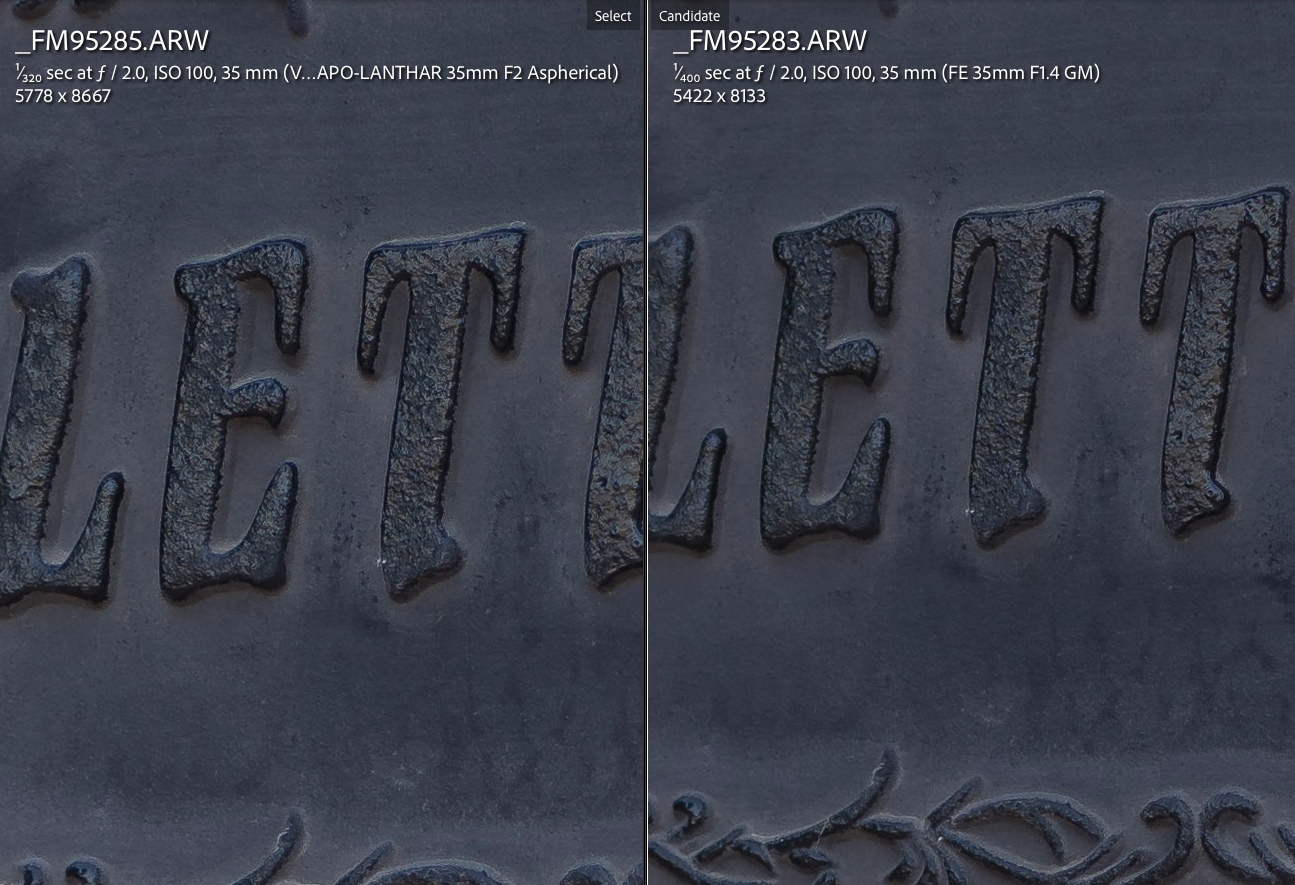
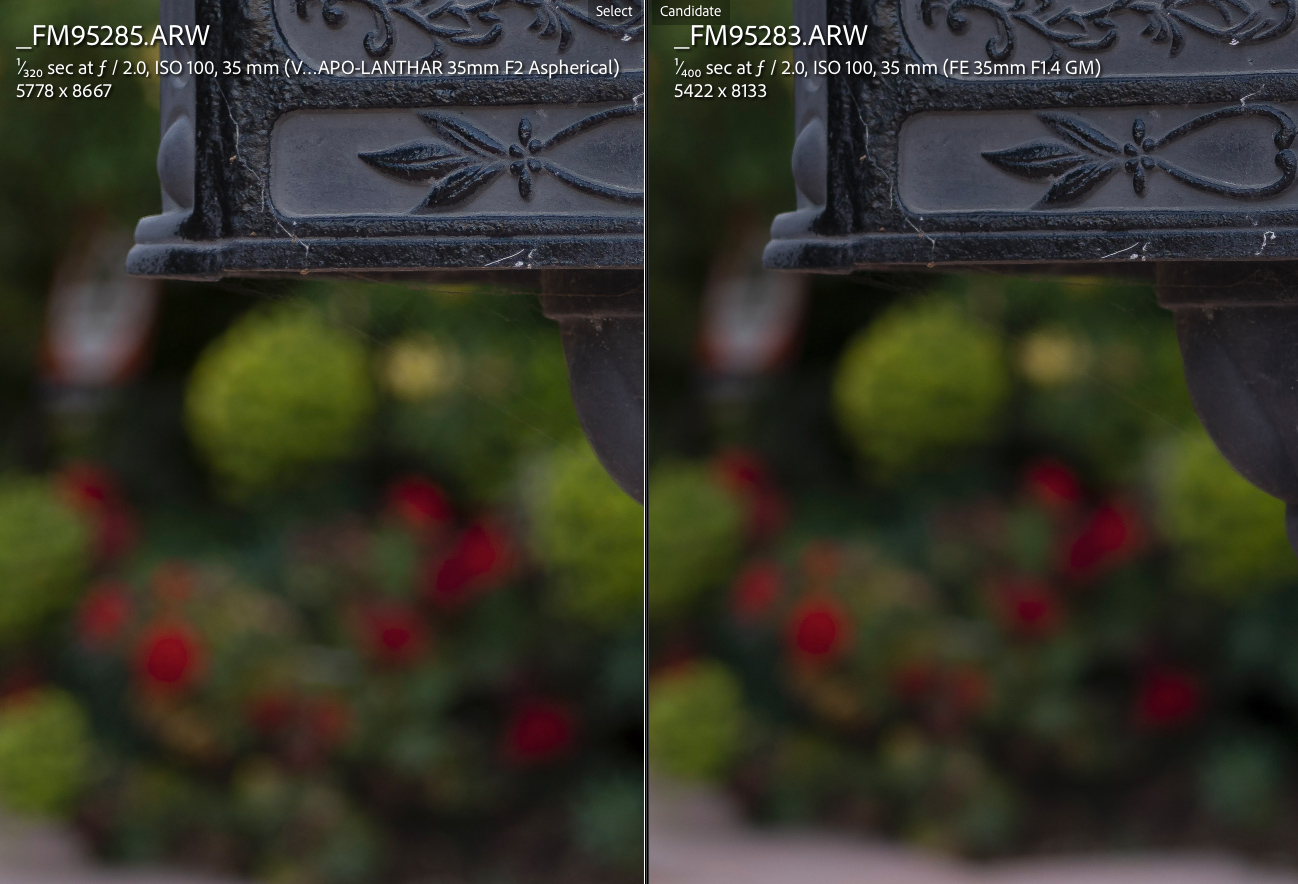
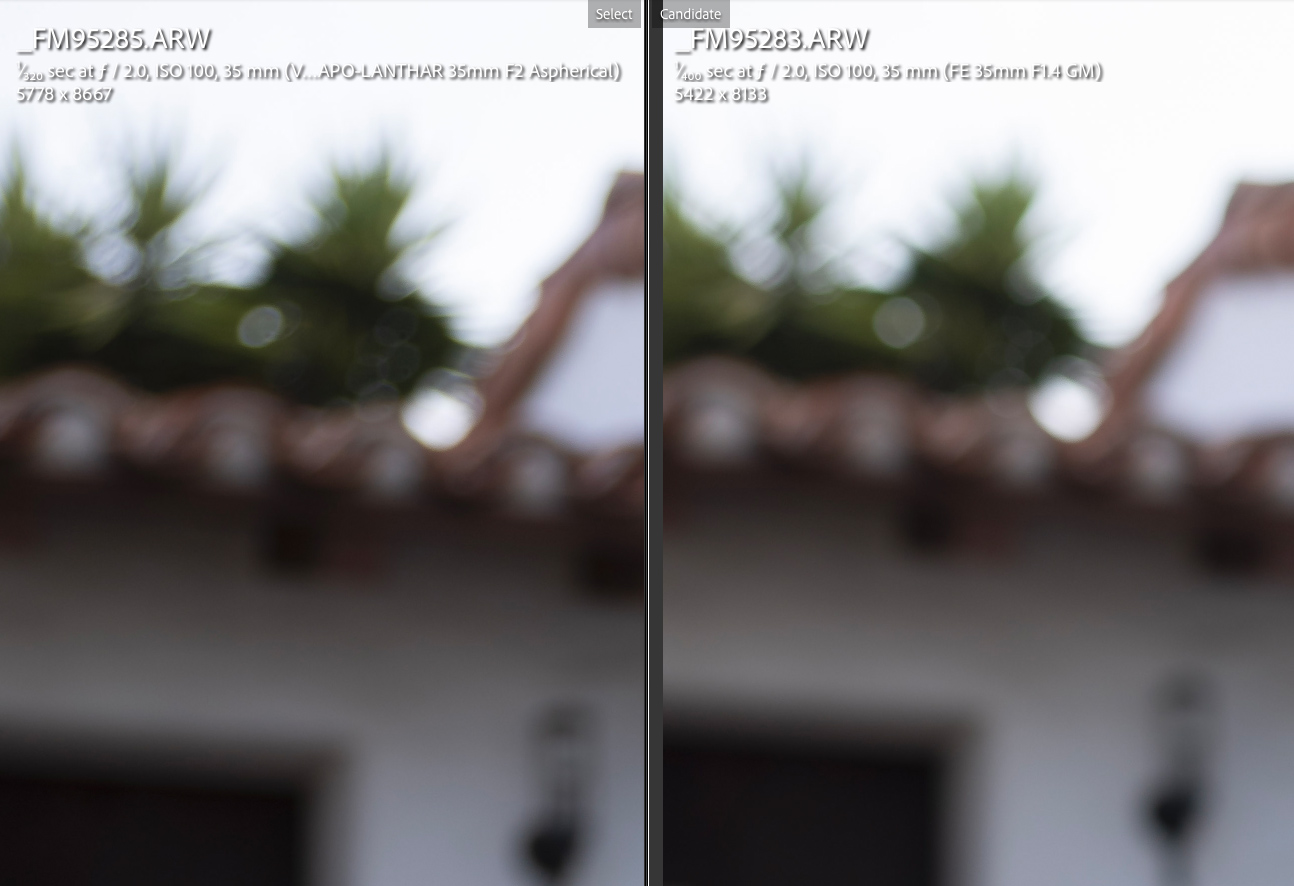
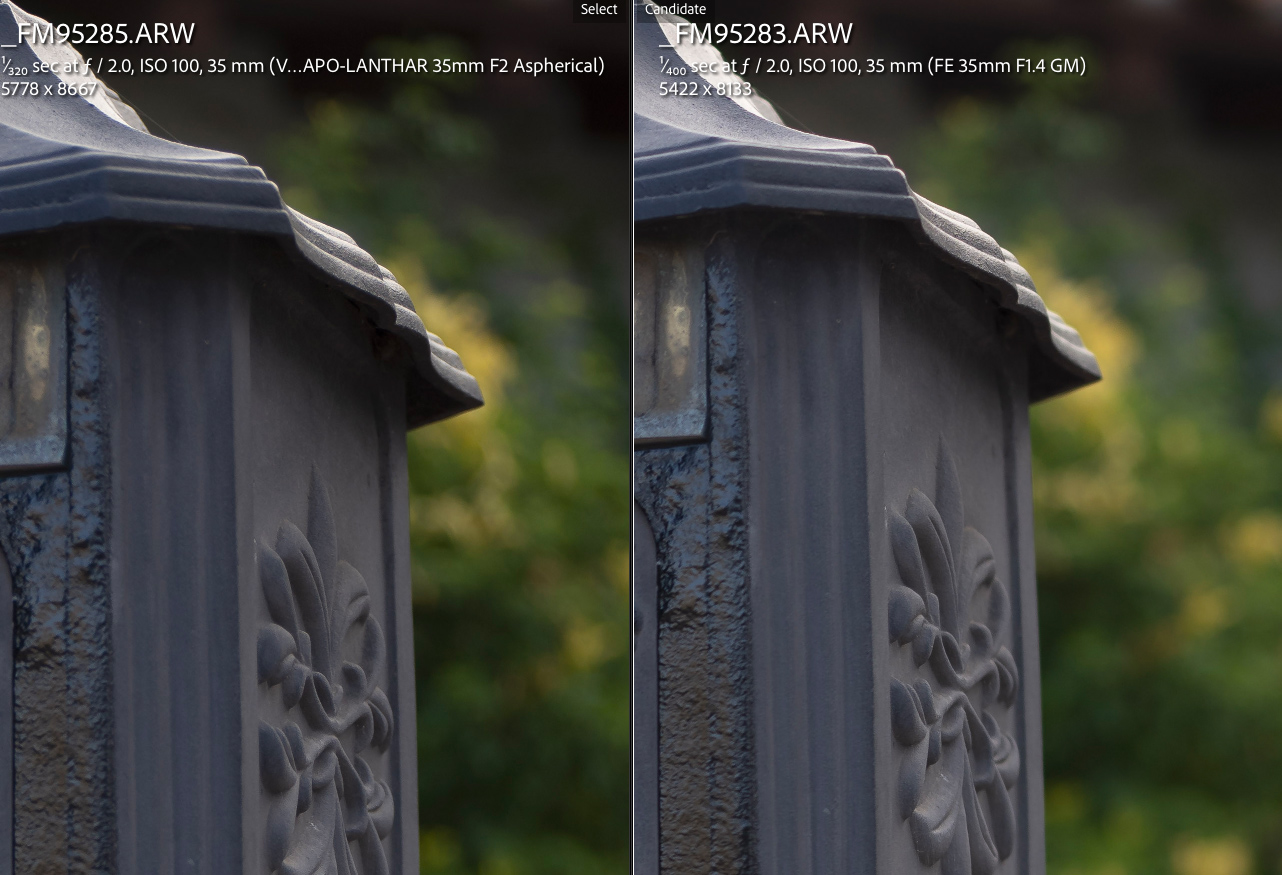
Rendering compared to the Sony FE 35mm f/1.4 GM @f/2
Subject focused at 5.5m distance
The Voigtlander 35mm f/2 APO-Lanthar is a better corrected lens and therefore rendering is more structured with visible outlining when shooting wide open.
Personally, I prefer the GM's rendering although the oustanding axial CA control from the Voigtlander is impressive considering the Sony is stopped down.
Sony 35mm f/1.4 GM (TOP) | Voigtlander 35mm f/2 APO (BOTTOM) -- Both at f/2
Frederik0711 wrote:
I just received my copy of this lens. It seems a bit softer at wider apertures than the 50 APO I previously had. That's not to be determined by these samples, but I have done a few quick tests. Still, it's sharp at wider apertures and perfect stopped down.
I sold the 50 to buy this, as I prefer 35mm. I will have to do some more testing on another time when it doesn't rain half of the day.
Here are some quick sample images at wider apertures. The first two were taken at f/2, and the last two at f/2.8. The first image is at minimum focus distance. All are unedited and were taken with a a7R IV.
Anyone else feeling like the aperture ring is quite tight in comparison to the 50 APO? Perhaps it's just my copy. I find both the 50 APO and 21 Nokton's aperture rings to be about perfect, while the 65 APO and 110 APO's feel a bit loose if you ask me. A bit of inconsistency here.
I'm getting several PMs asking about which lens is best:
Voigtlander 35mm f/2 APO vs Sony 35mm f/1.4 GM vs Sigma 35mm f/2 DG DN.
Here are my personal thoughts on this after almost of month testing and shooting with all three lenses:
---
In general, for those who really like the 35mm focal length, I would recommend picking up both Sony 35mm f/1.4 GM + Voigtlander 35mm f/2 APO lenses.
The GM is a jack of all trades, master of ALL.
It does everything well including landscapes and nightscapes. It also matches the rendering of the Sigma 35mm f/2 DG DN at f/2. The Voigtlander competes neck and neck with the GM in resolution/contrast, but has better flare resistance, sunstars (subjective) and axial CA correction. So, for landscapes, I would take the Voigtlander for its compactness and better performance against the light. Fir everything else I would choose the Sony 35mm f/1.4 GM, although I do like the Voigtlander for many other applications as well.
The Sigma 35mm f/2 DG DN is also a great contender, especially for the price. It does everything well but can't quite match the other two in regards to off-axis resolution at wide apertures, distortion and flare resistance. Although it's compact and well-built, if I had to chose only one AF lens, it would be the GM.