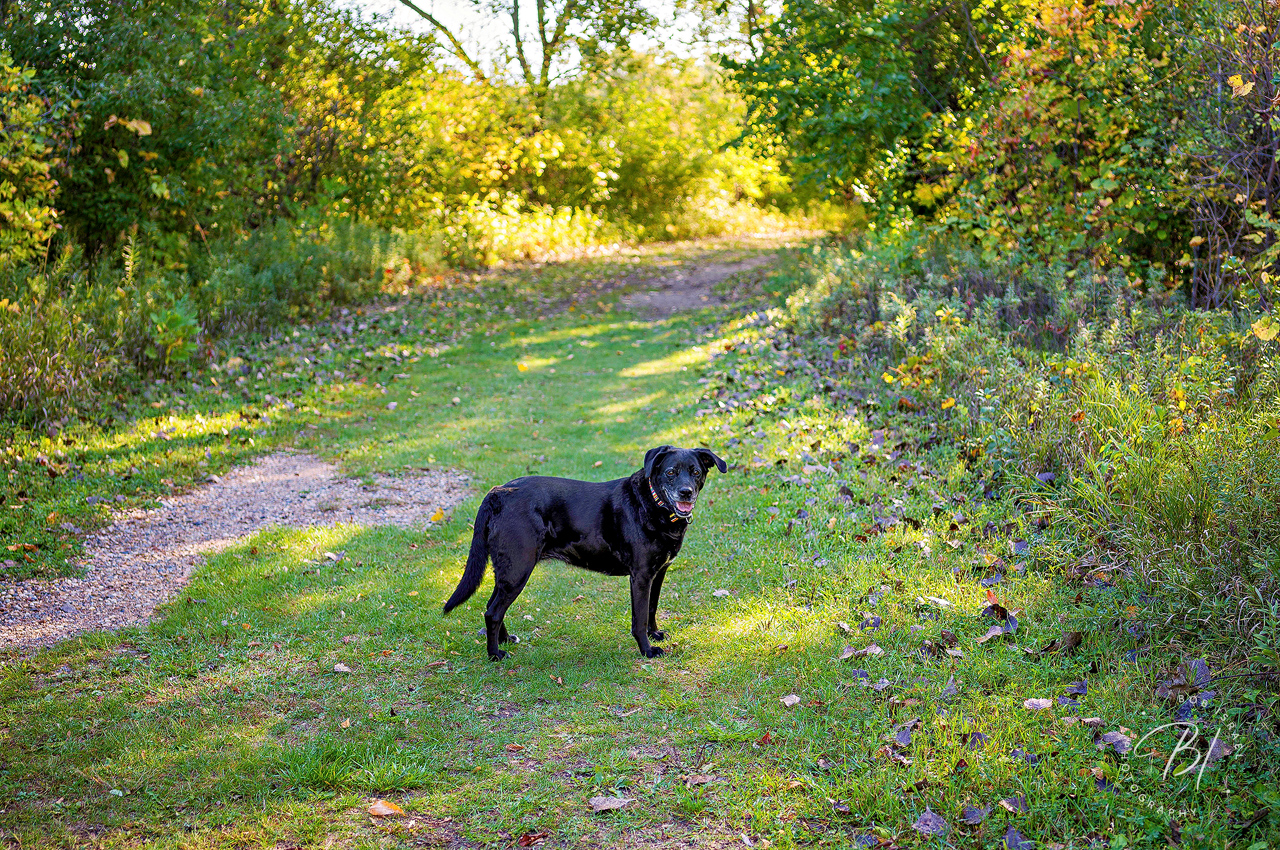
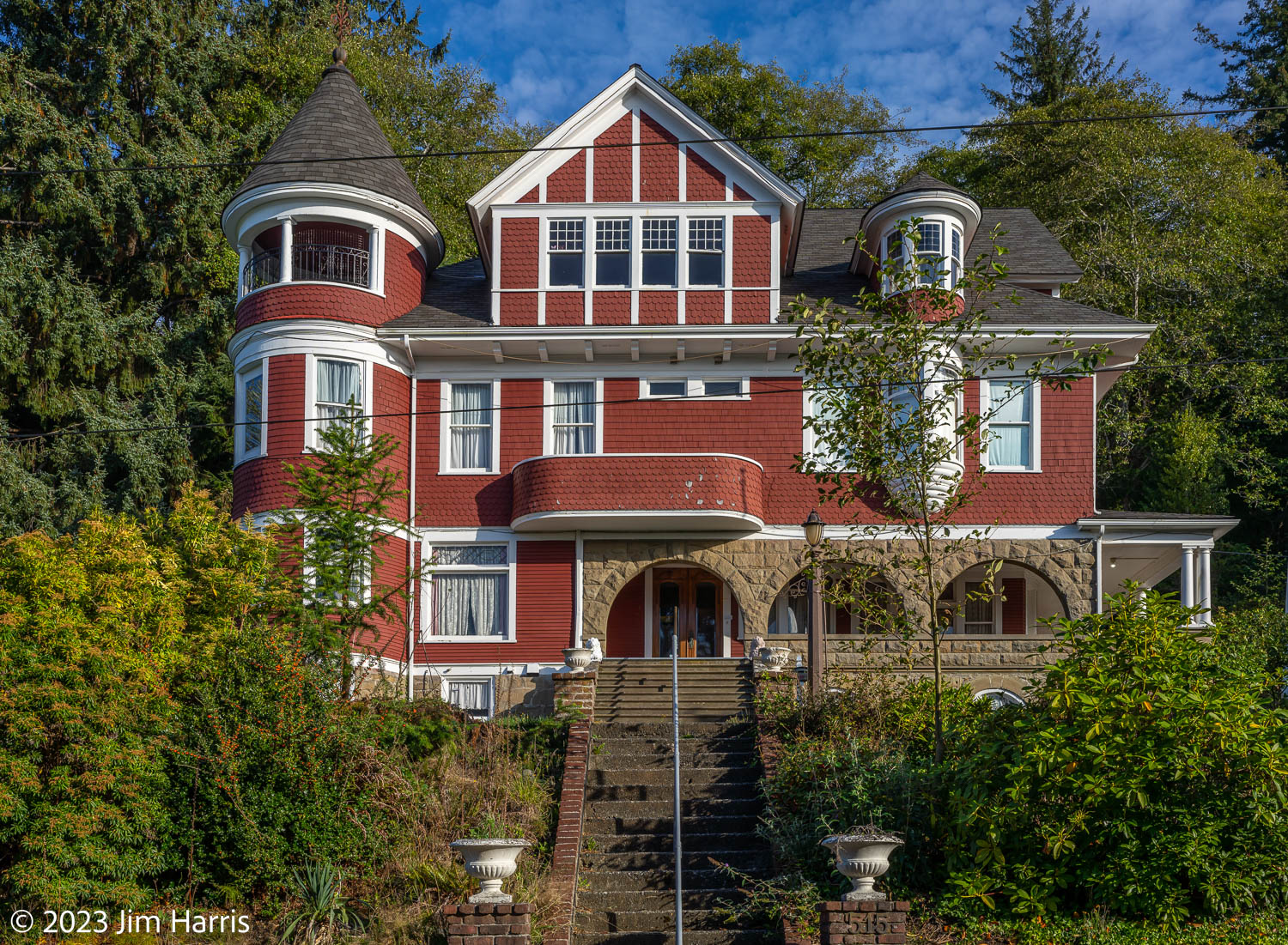
On the Z8 (native Z mount): This lens is phenomenal. Also great that it's on sale for Z mount right now at Camera Quest, so I paid just $749 for it brand new. That's a steal for an optic of this quality.
Ulff wrote:
What I really like about the sunstars of the 35 APO is that I can make a deliberate choice whether I want to have sunstars in an image or not and what quality the sunstars should have. I'm not the biggest fan of sunstars per se, because they sould catch too much attention, which is not always intended. Sometimes they work, and sometimes not.
Here's a test-series with sunstars from f2.0 to f11 in a night scene.
Very highly corrected optics are larger. To make them both highly corrected and extremely small takes serious $$$. This Voigtlander is relatively close to the Leica 35/2 APO Summicron optically. Yes, the Summicron is quite a bit smaller, but it's also 8 times the price. And while this lens is 'large' for a 35mm f/2 rangefinder lens, I can hardly consider it 'large'. It's 2mm larger in diameter, 1.8cm longer and weighs less than the Leica.
We see the two rather different versions of this fine lens and user comments reflect the very different user groups (EVF camera and M cameras) and the priorities they hold.
In the EVF camera world, a 35/2 APO with 49mm filter threads and weighing just 350 grams is very small. The nearest native competing lens is Sony's 35/1.4 (67mm filters and 524 grams). The only other one that compares is the Milvus 35/1.4, at 1130 grams and needs a heavy adapter.
People are very happy to get the extra performance for the extra 50 grams and slightly smaller lens barrel for this significant gain - which also makes the lens more versatile for much finer f2 images - at which the Sony/Nikon version excels:
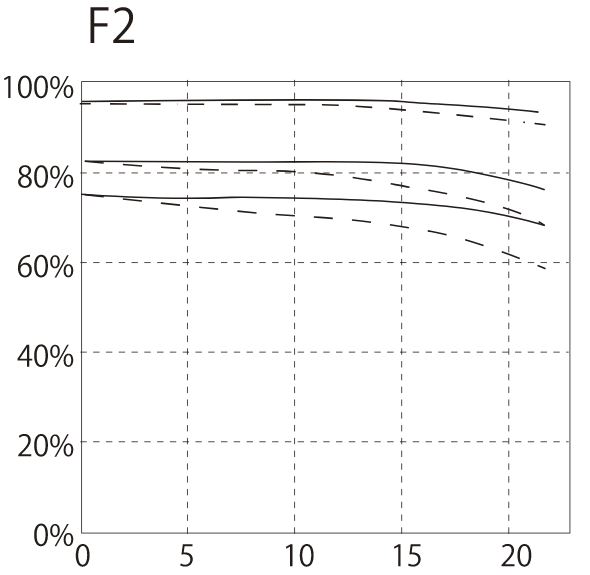
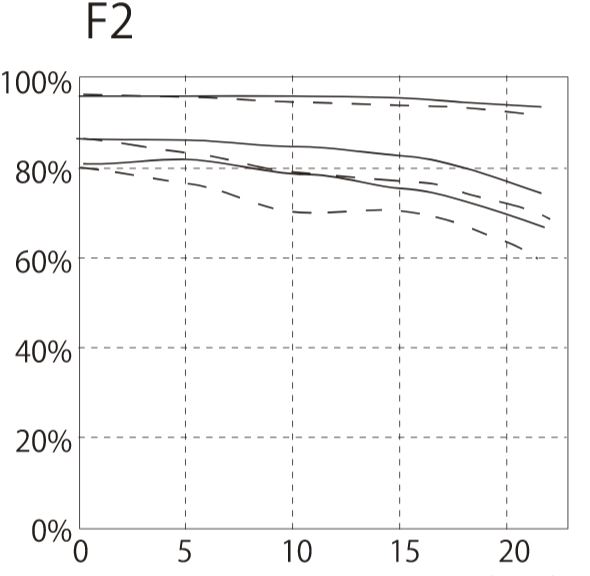
Often, images work better than words, for technical subjects. To put this in perspective, many fine older lens achieved 70% lens contrast on axis, at best aperture for the lower line pairs shown here. Today's best lenses achieve around 80% in the same measure. These below are verifiable performance charts at f2 - wide open. So the made-for-Leica VM lens gives you only around half the gains from legacy lenses to the best of modern lenses. The E/Z version shown below signifies raw power, for wide open usage.
You can imagine what this extra image quality gives you - landscapes at f2 with fine focus fade, ultra IQ for close-ups (closer MFD too). Many creative opportunities present themselves, that are not so much available in the VM version. We saw this first with the E-mount 50/2 APO, where similar performance gaps are also seen between the E/Z and VM editions.
philip_pj wrote:
Often, images work better than words, for technical subjects. To put this in perspective, many fine older lens achieved 70% lens contrast on axis, at best aperture for the lower line pairs shown here. Today's best lenses achieve around 80% in the same measure. These below are verifiable performance charts at f2 - wide open. So the made-for-Leica VM lens gives you only around half the gains from legacy lenses to the best of modern lenses. The E/Z version shown below signifies raw power, for wide open usage.
You can imagine what this extra image quality gives you - landscapes at f2 with fine focus fade, ultra IQ for close-ups (closer MFD too). Many creative opportunities present themselves, that are not so much available in the VM version. We saw this first with the E-mount 50/2 APO, where similar performance gaps are also seen between the E/Z and VM editions. ...Show more →
Wow, that's interesting that the mirrorless versions are better.
Jman13 wrote:
Very highly corrected optics are larger. To make them both highly corrected and extremely small takes serious $$$. This Voigtlander is relatively close to the Leica 35/2 APO Summicron optically. Yes, the Summicron is quite a bit smaller, but it's also 8 times the price. And while this lens is 'large' for a 35mm f/2 rangefinder lens, I can hardly consider it 'large'. It's 2mm larger in diameter, 1.8cm longer and weighs less than the Leica.
The APO summicron is way over priced. Doesn’t matter anyway since I would never get one. Even if I had $10,000 waiting to be dumped in the toilet. Just out of principle.
I had the 50 APO. I sold it primarily because of It’s size and weight. They’re too big. All that optical perfection counts for nothing if I don’t want to use the lens. I know what it is and what it feels like. Not only is it big but it is packed with glass from the top to the bottom edge to edge tip to tip.
At least they have the Ultron on the 35 side, but refuse to make a 50f2 Ultron.
philip_pj wrote:
Often, images work better than words, for technical subjects. To put this in perspective, many fine older lens achieved 70% lens contrast on axis, at best aperture for the lower line pairs shown here. Today's best lenses achieve around 80% in the same measure. These below are verifiable performance charts at f2 - wide open. So the made-for-Leica VM lens gives you only around half the gains from legacy lenses to the best of modern lenses. The E/Z version shown below signifies raw power, for wide open usage.
You can imagine what this extra image quality gives you - landscapes at f2 with fine focus fade, ultra IQ for close-ups (closer MFD too). Many creative opportunities present themselves, that are not so much available in the VM version. We saw this first with the E-mount 50/2 APO, where similar performance gaps are also seen between the E/Z and VM editions. ...Show more →
Without any real details of the tests these charts mean 0. Where did you get this from? Sony website?
mahimihi wrote:
Without any real details of the tests these charts mean 0.
They are acquired at infinity focus and show MTF at 10, 30 and 40 lp/mm spatial frequencies for both sagital direction (continuous line) and tangential direction (dotted line).
mahimihi wrote:
Where did you get this from? Sony website?
The MTF plots are published in the manufacturer (Cosina Voigtlander) website, https://www.cosina.co.jp/voigtlander/
Ripolini wrote:
They are acquired at infinity focus and show MTF at 10, 30 and 40 lp/mm spatial frequencies for both sagital direction (continuous line) and tangential direction (dotted line).
No what I’m saying is one chart is for a lens optimized for Leica sensors and another for Sony sensors. I don’t think one can really tell the whole story by comparing these 2 charts for lenses that are meant to be used in 2 different sensors from 2 different manufacturers.
It’s not like we are comparing the MTF chart for the Nokton 35f1.4 I vm vs the Nokton 35f1.4 II vm.
mahimihi wrote:
No what I’m saying is one chart is for a lens optimized for Leica sensors and another for Sony sensors. I don’t think one can really tell the whole story by comparing these 2 charts for lenses that are meant to be used in 2 different sensors from 2 different manufacturers.
It’s not like we are comparing the MTF chart for the Nokton 35f1.4 I vm vs the Nokton 35f1.4 II vm.
The charts for the VM version of the APO-Lanthar are also available. The VM version is slightly behind the Sony version, but still far ahead of the ZM. But as you say, comparing manufacturer MTF charts is a dubious practice. We don't know how MTF is measured/calculated by Cosina.
We know how Zeiss measures, for sure. And we know that Leica just uses calculated MTF.
mahimihi wrote:
Couldn’t you get these same results with the Nikon 35 z mount?
I briefly owned the Nikon 35/1.8S and returned it after a couple of days.
In comparison with the Nikon, the Voigtlander is:
1) Sharper, especially at wide apertures at the edges of the frame. The Nikon is good here, but not at APO-Lanthar levels.
2) Has MASSIVELY better control of longitudinal CA. This is what made me return the Nikon - it fringes absolutely horribly, with bright green background fringing and bright magenta foreground in a lot of situations. It also can show magenta/purple fringing at the focus point on normal levels of contrast.
Also, the Nikon 35/1.8S and the Z-mount Voigtlander 35/2 APO-Lanthar are roughly the same price, at least when I bought my CV (and right now) - $749 for the Voigtlander, and the Nikon is $700 on sale (and like $800+ when not on sale). Considering the Voigtlander is a better optic, I went for that. If I need AF, I have the Nikon 40/2, which also has pretty strong longitudinal CA, but it's not as bad as the 35, and it also only cost $200, so I can forgive it a little. With the Voigtlander's manual focus confirmation on Nikon cameras, it is ridiculously easy to focus, though, so the lack of AF is really not an issue for the vast majority of things.
'No what I’m saying is one chart is for a lens optimized for Leica sensors and another for Sony sensors..'
The image starts life with the lens, not the sensor which is the downstream receiver of lens data.
A little explanation: MTF (or modulation transfer function) is the industry standard measure of lens quality - par excellence. It is, to paraphrase Erwin Puts, the best description of our photographic lenses' performance. Believe it or not, most lens producers muddy the waters considerably by using 'calculated MTF' in their promotional literature. No company wants their buyers to know they have paid good money for aberration-afflicted lenses that may not measure up to the opposition's offerings.
True optical bench (OB) MTF is close to unimpeachable in its validity. In a world of lies, accurate OB MTF is trustworthy. It is, of course, important to know what lens MTF can show and what it cannot show, and that is a complex subject. MTF has been used by the industry for around 75 years, Zeiss used to plot data charts by hand in the 1950s.
It was pioneered by Carl Zeiss, and it had an immediate impact on lens design. Up to that point, designers strived for more resolution; from that time they realised that lens contrast (the % measure of contrast 'transferred' to the film/sensor) was the best measure of performance. Zeiss's MTF devices are the K8 and K9.
For the average lens buyer, the 'MTF' you may encounter that uses 10lpmm and 30lpmm are usually bogus computer-generated numbers. These makers almost certainly all use an optical bench in-house but they don't release that data. The OB standard used for data sheets is 10/20/40 lpmm with a couple of variations: Cosina use 10/30/40 lpmm and Leica use 5/10/20/40 lpmm.
Lens MTF has *nothing* to do with the sensor for which the lens can be used; it is entirely independent of all else, it is just the lens. You can therefore compare properly recorded OB MTF between different complying brands, these are mentioned above. As a Zeiss partner, Cosina manufactured pretty much all the Zeiss lenses made this century, with CZ staff on site. Leica MTF is also very honest, they will publish even poor lens MTF results.
MTF from other methods (like Imatest) should never be compared with OB MTF data because they measure the lens and camera sensor as a system - they require you to take a photo of a chart. Some review sites (like cameralabs) also still use PR MTF (as I call it), unfortunately, but we are all learning as we go along. To provide some links to more in-depth material on the subject, see below URLs.
'It is not just the Cine lenses that pass through adjustment on the K8: Dr. Hubert Nasse, Senior Scientist (and man of infinite knowledge of optics, responsible for the Otus line amongst other things) says there are over a hundred K8s at Zeiss *and partners* – all used to inspect and adjust lenses on the production line. The difference between say a Master Prime and a Batis or Touit is one of QC..'
I came across an August 2022 review of the Z vsn of the Voigtlander 35/2 APO at Cameralabs (a notoriously anti-manual focus site, they actually see it as a deficiency):
Well worth a read. They tested the APO against Nikon's vaunted 35/1.8, Sony's 35/1.8, Zeiss Batis 40/2 and Sigma 35/1.2. Some key findings that might be of interest to a more appreciative FM audience:
'As an apochromatic design the Voigtländer indeed shows very little loCA. This is (much) better than from the Zeiss Batis, Z-Nikkor, Sony FE or Sigma Art.'
'take a good look at..the fountain backlit by the sun: It’s a really tough stress-test and many lenses show colorful artifacts in the air bubbles – but the Voigtländer does not show any. Very good!'
'The Voigtländer 35mm f2 APO-Lanthar shows very little coma at f2 and f2.8. From f4.0 onwards the lens produces more diffraction spikes than coma.'
'comparing the lenses with focal ratios of f1.8 or f2.0 it becomes clear that the Voigtländer offers the softest Bokeh with a smooth and laCO-free transition zone in the middle-ground and the least nervous background.
Looking at another crop (now at 100%) from the same images showing the ruler the Voigtländer shows the least tendency for double contours of all the lenses – even the Sigma 35mm f1.2 Art.'
'I’ve added the respective crops from the Sigma 35mm f1.2 Art shot at f2.0. Differences between the Sigma and the Voigtländer are now minimal with the Sigma rendering a smoother foreground and the Voigtländer having a slight advantage in the transition zone.'