rdcny wrote:
My wife and I have been doing a self-drive through Namibia and northern Botswana (Chobe). We have spent much time on the coast, and went north through Etosha and the Caprivi Strip (the strip of land the Germans retained between Angola and Botswana so a route to the Atlantic via the Zambezi River might be possible...except Victoria Falls got in the way). Vehicle is a 4x4 Toyota and is about $75/day with full insurance.
Anyway, for those with more time than money, renting a 4x4 and driving to national parks, staying in campsites (about $40/night) or nice hotels in/near parks (about $125/night) might be a viable/interesting option for many here who want to experience southern Africa - the way Africans experience it.
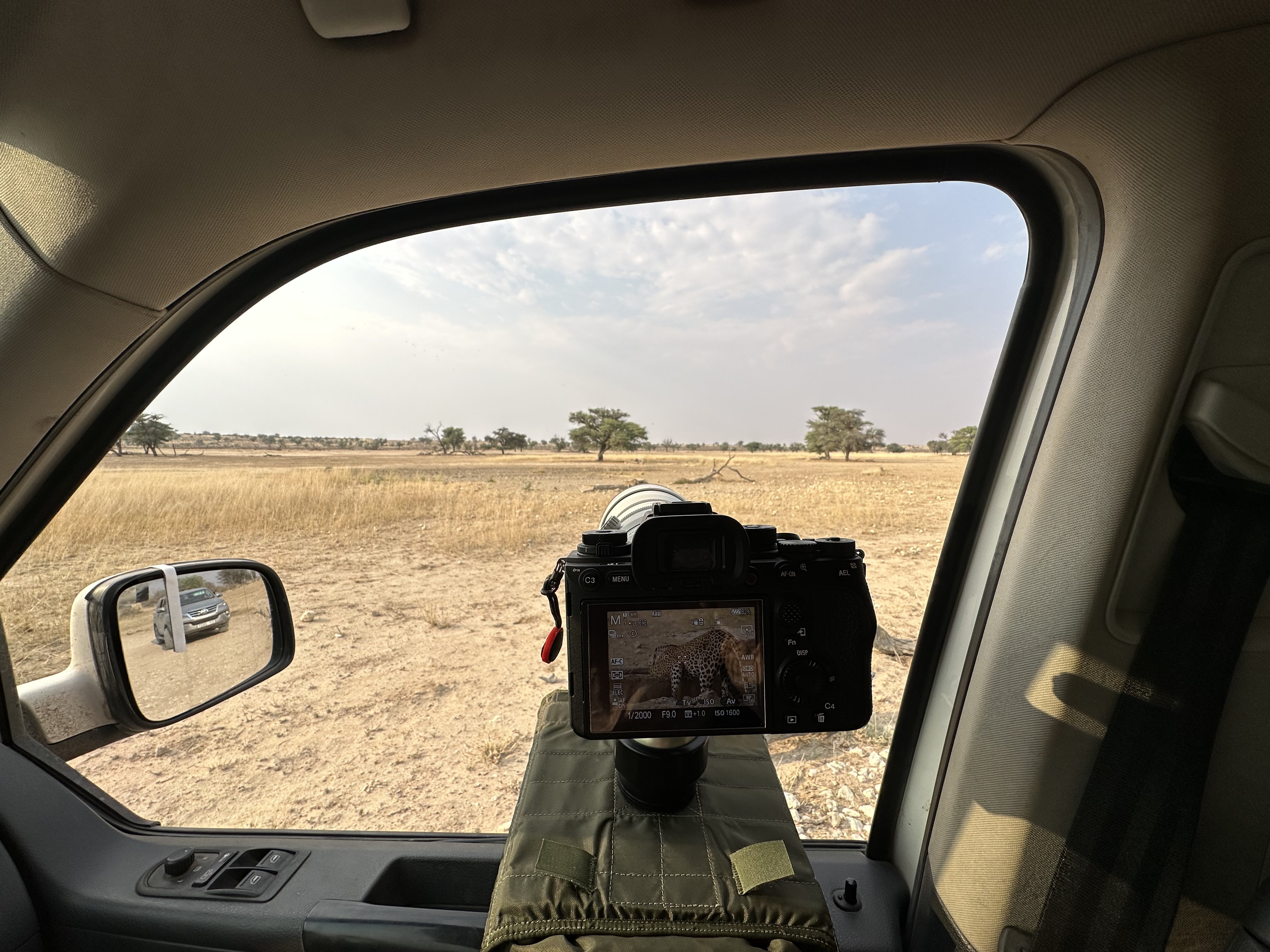
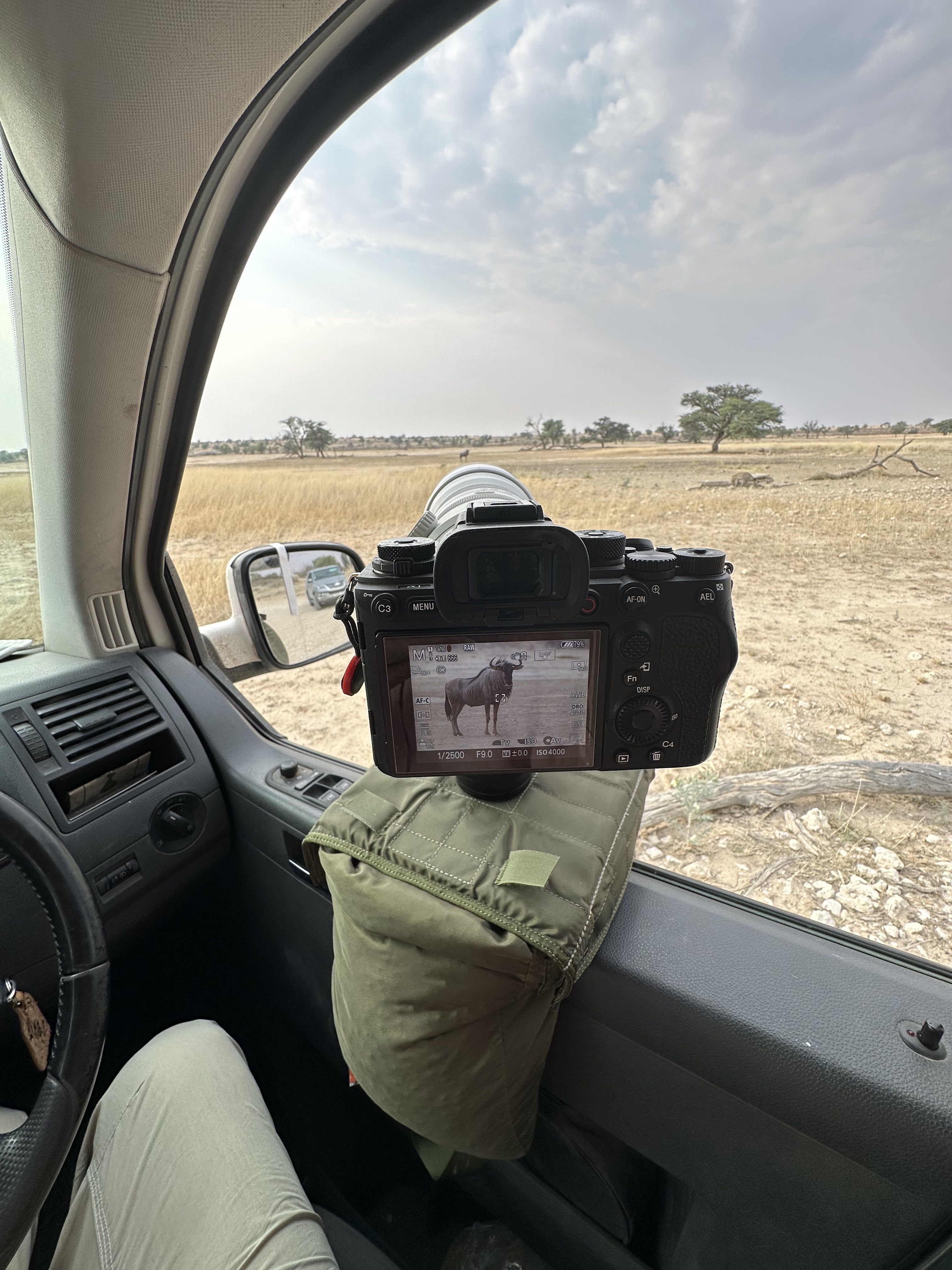
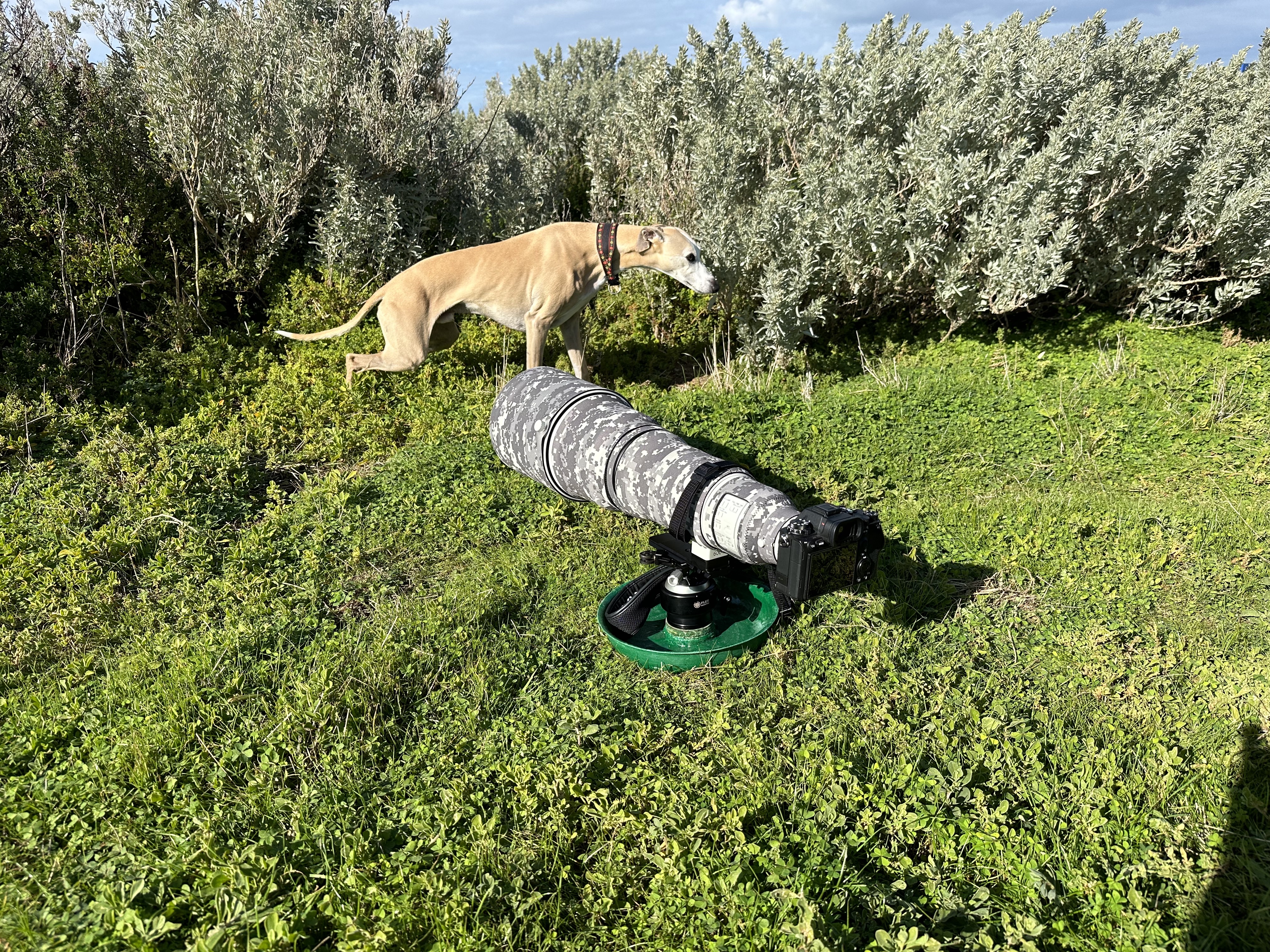
We are birders so the attached represent some of what we've found ourselves since early November. (We've done South Africa twice in the last year, and this was our first trip to Namibia/Botswana. It is a bit less developed but nothing we could not deal with...and we are in our early 60s. Lots of people do these drives..."try it, you'll like it."). Roads in both countries are fine...
Photos with A1 and Canon R5. Lenses: Sony 200-600 and Canon 100-500
If it is your first Safari, a monopod and "gimbal" setup like a Promediagear GT2 would be a good idea. The 60-600 has a suitable Arca Swiss foot, but the big Sony's need a plate!
I guess, a bean bag might do, but with the roof lifting about 500mm, I at 1M85, I just about managed to fit and use a view finder, Also not sure about panning, while the big cat is moving through the grass, working with a bean bag.
I got that set up for my safari trip, but the GT2 came from BnH, as no UK stock.
Slalom wrote:
If it is your first Safari, a monopod and "gimbal" setup like a Promediagear GT2 would be a good idea. The 60-600 has a suitable Arca Swiss foot, but the big Sony's need a plate!
I guess, a bean bag might do, but with the roof lifting about 500mm, I at 1M85, I just about managed to fit and use a view finder, Also not sure about panning, while the big cat is moving through the grass, working with a bean bag.
I got that set up for my safari trip, but the GT2 came from BnH, as no UK stock. ...Show more →
Thanks. Yes I was looking at the Sirui 326 Carbon which seems to fit the bill - small but easily able to handle a 400/2.8. I used to be able to hand hold a 500 and Nikon D3s all day long when birding - but those days are history ! I also love the look of this :
The advantage of a monopod is that you can stick it outside the car to get a low angle (assuming you have a way to operate the camera remotely). I am looking into something like that.
Primus wrote:
One other thing I realized just now.
You could pair the a6400 with the 200-600 and get an equivalent range of 280-840mm with the combo. Then you can use the a9 with the Tamron lens. Putting a TC on the big zoom will also bring down your aperture making it harder in low light to get good shots. So this could be one way to avoid using a TC and still getting a very long zoom range. Of course the a9 has much better AF and such so if you felt you needed that capability, you could swap lenses between the cameras in the field. Probably not much worse than putting a TC on or off.
Note of course that the 6400 is an APSC camera so effectively x1.5 of the A9 (300-900mm) and an A9+ x1.4 TC = effectively x1.4 (280-840mm). I'd use the A9 + TC as the AF will be far better.
action99 wrote:
Filmed with a Canon R5c, DJI RS3 Pro, RF 70-200 2.8, RF 100-500, RF 400 2.8, EF 24-70 2.8. All shoot 8K RAW 50fps other than the Cheetahs running that are at 4k 100fps.
Wonderful ! Definitely an inspiration to take more video when I'm there
rafster wrote:
Try Lion King Adventures in Tanzania. We got a premium honeymoon safari and was amazed how much less it was than going through a UK agency plus we ended up with private safari, better accommodation etc.
Thank you for the recommendation. I checked them out and their prices definitely seem a lot more reasonable than the others I was looking it before.
Alan Kefauver wrote:
Quick question. Going to Kenya and SA for 2 weeks in September, Taking the RF 100-500 and extenders, and the RF 70-200 f/2.8. Due to weight issues I am leaving the 24-70 f/2.8 at home and want to get a prime for WA shots. Past experience says that I don't take a lot WA shots. I did do some, but not much, video at 24mm from a hide,
The question is 16mm, 24mm, or 28mm. I am counting on Canon releasing the 24 and 28 f/1.4 before I go. The 16mm is a STM non L, and the upcoming 24 and 28 should be USM L lenses.
Personally I'd take the 24mm. I shoot a lot of WA (and landscapes) and unless you are including a lot of foreground then 12-18mm is too wide (IMO YMMV) with far too much distortion. 24mm is also a good astro lens too.
Do some testing locally and you'll get a feel for what suits you.
Cduff406 wrote:
I keep thinking I want to take a small tripod with me. Seems like it would be handy for a lot of things, but I hate to give up the weight in my luggage. I'd like to do some Landscapes and maybe some astrophotography around camp, and I think it would be nice to set up on lunch breaks on drives. but not sure if it's worth the hassle. I do plan to use some private cars or some of the days I'm there, so it would be easy to set up if we parked on some good game. I'll ask the lodge is what they think when we finally settle on them but just curious if anybody had taken one....Show more →
I'll be taking one, not only for the reasons you mentioned but for video too. Without the video aspect it may not be worth it.
SillyPosition wrote:
Sort of related-
Africa/Safari - Would you recommend the tamron 50-400?
Maybe take a look at this lens (reviewed by a tour safari photographer) and note that the E-mount version is much newer and it seems much better (sharper and claimed 6 stops OSS not 4 stops on the Canon/Nikon version).
As a long time bird tog all over Asia IMHO nothing beats length however on safari it seems versatility is king. I'm still torn between this lens and the Sony 400/2.8 + TCs for our September trip to SA.
Slalom wrote:
If it is your first Safari, a monopod and "gimbal" setup like a Promediagear GT2 would be a good idea.
It appears that the GT2 attaches to a ball head, and (based on some review comments) the lens/camera is off-axis. Given that, is there any advantage to the GT2 over something like Wimberley MonoGimbal Head or the Leofoto (clone) MPG-01? They are also off-axis, but they attach directly to the monopod, eliminating the weight of the ball head and any stability issue it might introduce.
Personally I see a tripod / monopod not useful on a vehicle it just hinders the possibility to quickly react. Maybe the action starts on your side and then move on the other side, on a beanbag you just lift the camera and handhold, on a tripod by the time you take it off is all over. Also you would like to be as low as possible (animal eye level) depending on the vehicle you can put the bean bag on the lowest point and shoot from there with the lcd tilted... placing a monopod or tripod is just too cramped. Even for video I tend to prefer a bean bag (for photo is a must), with a stabilized lens you can get very stable video assuming people on the jeep don't dance like crazy (but a tripod or monopod does not help neither). Trying to follow a cheetah or other hunters run with a monopod or even worst a tripod you risk to lose your only 1 or 2 chances that may present.
For video I did have a manfrotto super clamp with a lefoto leveling base and a manfratto fluid head but at the end even with 400 2.8 I preferred filming from a bean bag. In my case most of the moving sequences I have done it by handholding a gimbal outside of the vehicle while moving. Panning for a fix point looks old right now...
I think you are partially correct. Bean bag may offer something.
We were in specialised Land cruisers, a roof panel lifted 50cm 1.5' giving a slightly elevated view. So dropping a bean bag on the roof may have worked, I did not measure it but I think the gap was 4.5 - 6 feet off the floor. I am 6 foot, but by the time I have braced myself my eye level is probably around 5.75 feet.
I found the monopod could be set up to use the viewfinder.
Also once you were at the tele end of your work, the monopod still held the weight and gave a bit of height over the Serengeti grass.
Depending on the vehicle type you have, you'll find that the beanbag is your friend, I just can't be bothered to take tripod at all, just no point for me. I spend most of the time on the floor of the vehicle as I don't want to be shooting over top of animals, I want as low as possible.
This is the kind of vehicle we have when we go out, I feel it makes a huge difference to be able to move about and get yourself into a position. Basically lay flat on the floor, gear on the beanbag and ready to shoot, have the guide move you to the position that works for you, and best for the animal and you're able to adjust as needed.
Less stuff you don't need to bring means more room to roam.
Frogfish wrote:
Thanks. Yes I was looking at the Sirui 326 Carbon which seems to fit the bill - small but easily able to handle a 400/2.8. I used to be able to hand hold a 500 and Nikon D3s all day long when birding - but those days are history ! I also love the look of this :
Seems tailor-made for safaris.
I didn't watch the video all through, but I find something like this very useful with a beanbag, especially with a zoom lens. Note there may be some restrictions on vertical movement with the particular bean bag/ vehicle you have though. If you're not happy going to handholding (when necessary) then a riser will help a bit. Personally use a light gimbal but that's too much for some.
A monopod is a very good idea if you have difficulty spending a lot of time on the floor or sitting stooped over. Also, if you don't always have a row to yourself, it'll be awkward (and potentially slow) to get your beanbag set for shooting something on the other side. Thornybush seem to have completely open vehicles with quite a low armrest (more for holding on than resting camera gear). Personally I'd go with handholding or a monopod for this type of vehicle (if they are all that style) or wear knee pads for using a beanbag (which may need securing) ... but depends how much strain your back and neck can take.
As already mentioned above in this thread, every stop is another 15-30 minutes shooting and iideally you want to be f4 or faster for low light action - but it's all about your tolerances and preferences. If you are sharing a row you will likely appreciate the flexibility of a 60-600. If you are sharing with a friend/spouse though, juggling two bodies and lenses is easy enough. There's advice a few pages back about what to do with the other body/lens in transit. Note if you have lost some core body strength/ balance it may be difficult to handle offroad driving with one in lap/ one on seat, especially if it is a completely open vehicle.
PaulMaewpa2 wrote:
I didn't watch the video all through, but I find something like this very useful with a beanbag, especially with a zoom lens. Note there may be some restrictions on vertical movement with the particular bean bag/ vehicle you have though. If you're not happy going to handholding (when necessary) then a riser will help a bit. Personally use a light gimbal but that's too much for some.
A monopod is a very good idea if you have difficulty spending a lot of time on the floor or sitting stooped over. Also, if you don't always have a row to yourself, it'll be awkward (and potentially slow) to get your beanbag set for shooting something on the other side. Thornybush seem to have completely open vehicles with quite a low armrest (more for holding on than resting camera gear). Personally I'd go with handholding or a monopod for this type of vehicle (if they are all that style) or wear knee pads for using a beanbag (which may need securing) ... but depends how much strain your back and neck can take.
As already mentioned above in this thread, every stop is another 15-30 minutes shooting and iideally you want to be f4 or faster for low light action - but it's all about your tolerances and preferences. If you are sharing a row you will likely appreciate the flexibility of a 60-600. If you are sharing with a friend/spouse though, juggling two bodies and lenses is easy enough. There's advice a few pages back about what to do with the other body/lens in transit. Note if you have lost some core body strength/ balance it may be difficult to handle offroad driving with one in lap/ one on seat, especially if it is a completely open vehicle.
Thanks - yes a LW mono will definitely be on the plane. I don't know if Thornybush have camera fittings / bean bags for their vehicles (I'll bring my own empty BB anyway and that Visual too). My daughter says that we'll just be the 4 of us in a private vehicle with passenger 3 rows - so I may get a row to myself but can't confirm that yet.
The 60-600 is f6.3 at 600mm but I've watched a number of reviews that show it (on the Sony A1) had no issues at all in low light. I'll have it (or the 400/2.8) on an A7r5 though (and I think my 70-180/2.8 and 16-35/PZ sharing the A9).
Off road I can't imagine having any camera/lens on the floor of the vehicle ! Probably hood down on a camera bag with the camera in my hands ready to bring it up at the first sign of action. As an experienced birder I'm used to that (and hanging lenses out of car windows)! Though I love the idea, I read a few pages back, of hanging out to get lower angled shots !
I've traveled on multiple African safaris and the vehicles were open, with a tarp covering the roof railing at times. Generally, three rows of bench type seats behind the driver and guide.
I usually had two cameras with me with a 70-200mm zoom and a 500mm f/4 lens respectively. I never changed lenses in the vehicle given the dust concerns. Usually I was in a row by myself or shared a bench seat with my wife. I kept the cameras on the bench seat to minimize the vibration associated with riding over bumpy terrain. It was easy to keep control of the cameras by grasping them on the seat, or my lap, when the vehicle was moving and also allowed easy access when we stopped.
I would strongly recommend a pillowcase or dry sack to cover the camera and lens (with hood) to keep dust off the lens. It permitted resting the camera across my lap, protected it from excess dust, and easy to remove/replace. Much quicker than removing/placing a lens cap and better protection for the camera.