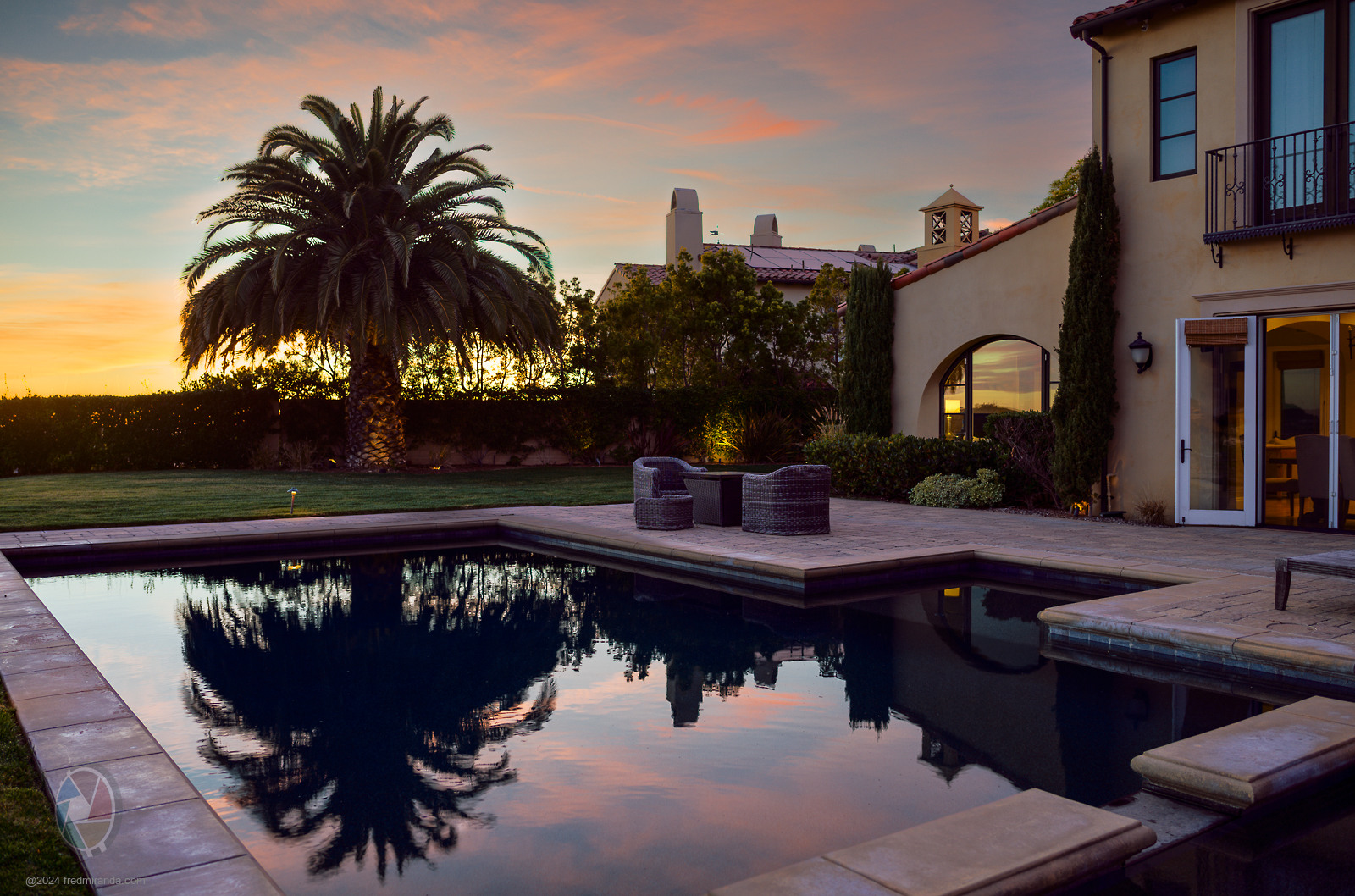
Yesterday, in the backyard with the kids, I captured three bracketed shots handheld using the Voigtlander 28mm f/1.5 Nokton lens. I aligned and mixed them in Lightroom.
rscheffler wrote:
Did you set an in-camera lens code at time of exposure, or did you leave it off? If off, Lightroom will only apply distortion correction with the relevant M lens profile you selected for those images. It does not apply vignetting and edge color shift correction because that's what the in-camera correction, based on whatever lens code you would have selected, would have done. The assumption is that most will use the camera's auto profile selection via the 6-bit reader or set a lens code manually. Those profile corrections are baked into the DNG files, but only for vignetting and edge color shift corrections. Not distortion correction.
The assumption is that most will use the camera's auto profile...Show more →
That begs the question of whether the two (et al) sample comps of the Lux vs. Nokton were auto profiled / corrected or not. Have we seen the actual lens vignetting projections (unprofiled / uncorrected)? Gathering from the datasheet that the Summilux drops to nearly 10% at 21mm for f/1.4 ... I'm assuming these are autoprofiled / corrected?
lifeandmylens wrote:
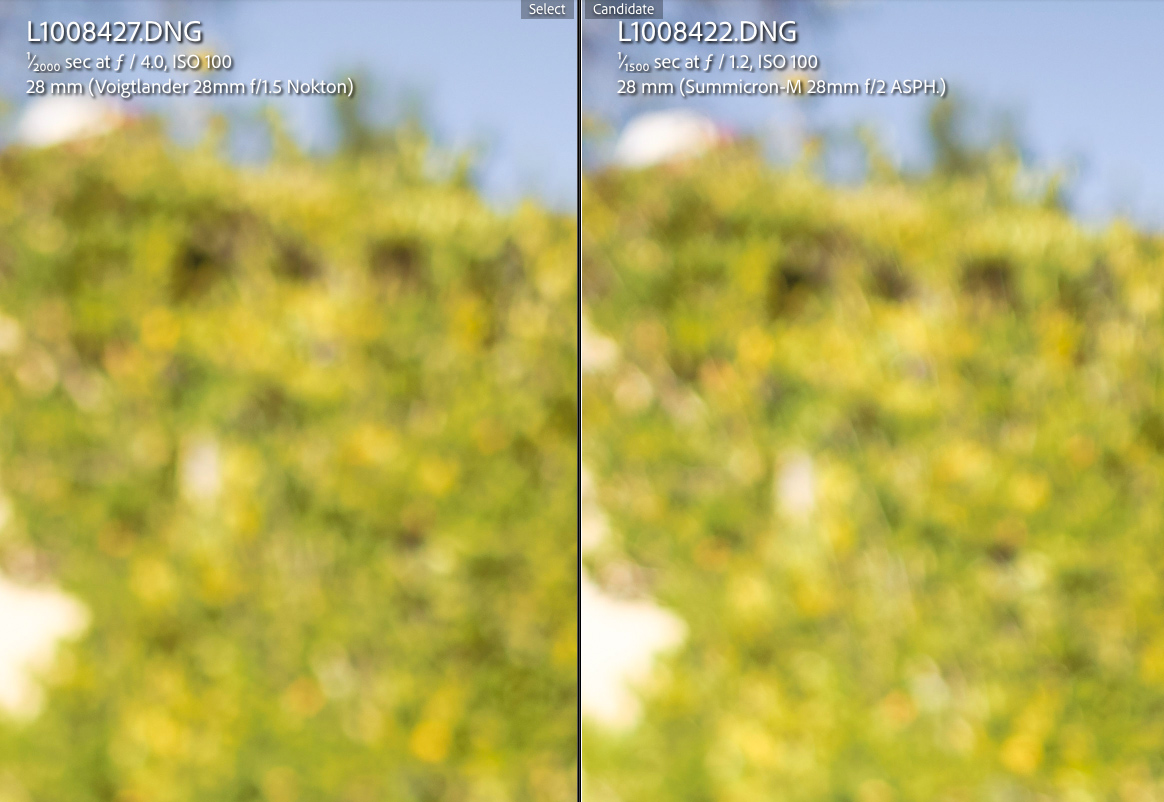
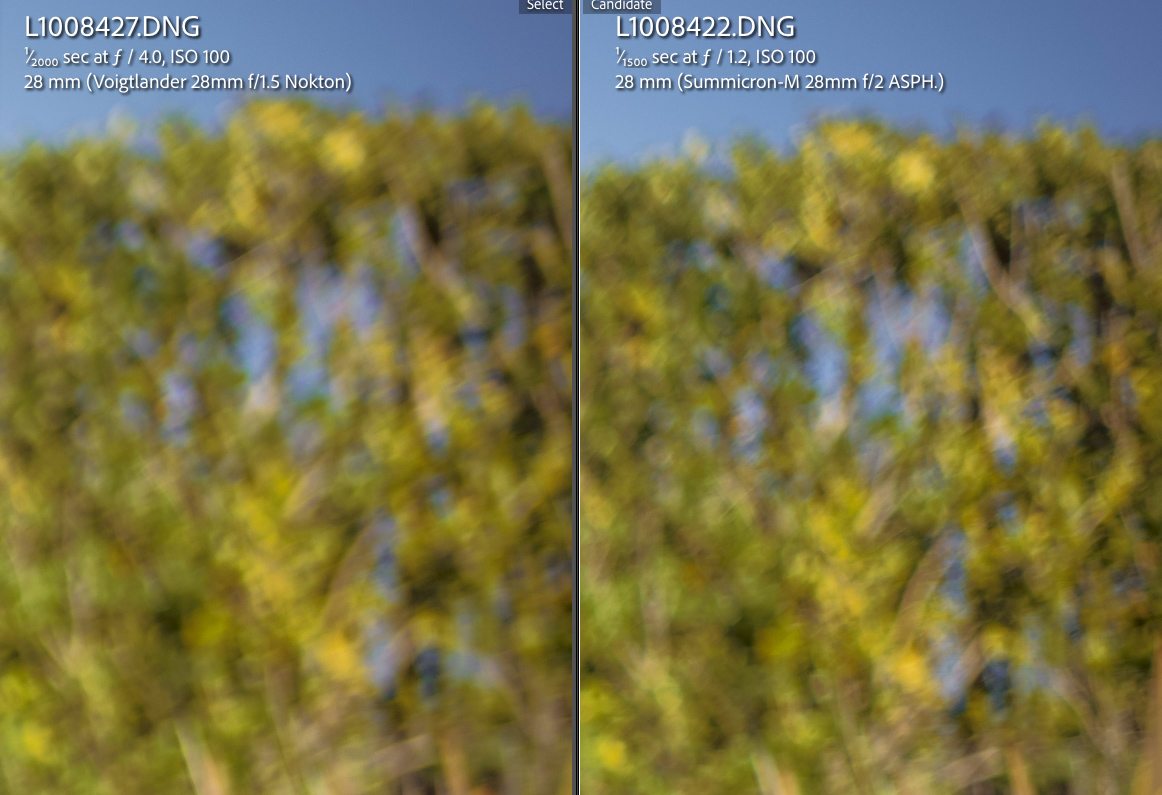
28 Lux @ 1.4 vs CV 28/1.5 @ 1.5. Same ISO and shutter speed. Light transmission is very similar.
Rendering compared to Leica 28mm f/2 Summicron and Voigtlander 28mm f/2.8
Here's a quick rendering test comparing the Voigtlander 28mm f/1.5 Nokton to the Leica 28mm f/2 Summicron and Voigtlander 28/2.8 Color-Skopar. (at 1 meter only)
The aperture of the Voigtlander 28mm f/1.5 was adjusted to match the maximum aperture of the other lenses. Vignetting and chromatic aberration (CA) were not corrected in post-processing, and the lens profiles were turned off in-camera.
The rendering of the Voigtlander 28mm f/1.5 Nokton at f/2 is comparable to the Leica 28mm f/2 Summicron wide open, except that the Summicron's specular highlights exhibit a bit more outlining towards the corners. When compared with the Voigtlander 28mm f/2.8 Color-Skopar, the Nokton shows significantly less vignetting since it's stopped down to f/2.8. However, you can see the pronounced optical vignetting (cat's-eye) shape in the Color-Skopar in comparison.
Rendering comparison at 1m
Verify the lens name when comparing cropped images.
PS: You can see me there!
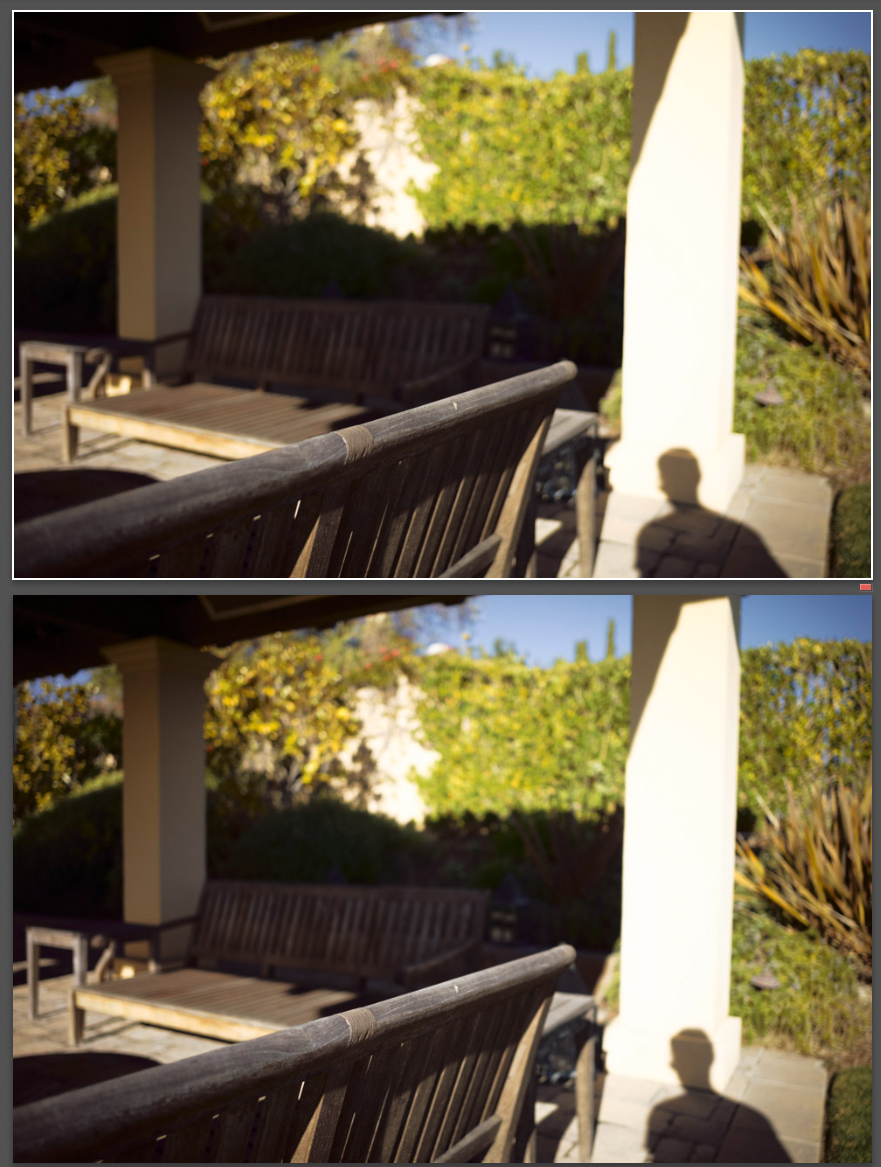
Voigtlander 28mm f/1.5 Nokton (TOP) | Leica 28mm f/2 Summicron (BOTTOM): Both lenses set to f/2
I shot mine, but I am not overly impressed. I wonder if I have a bad copy. It's a bit hazy WO off center, and very finicky to focus. Anyone else having this issue? I also have a 28/2 ASPH I will compare it with.
nehemiahphoto wrote:
I shot mine, but I am not overly impressed. I wonder if I have a bad copy. It's a bit hazy WO off center, and very finicky to focus. Anyone else having this issue? I also have a 28/2 ASPH I will compare it with.
That's unexpected. Which camera are you currently using it with?
My modded a7r2–same body I use with all my RF glass with great results. See the photo above? Look at the top left-ish blue door. Has a hazy-ness to it.
My files need a lot of contrast dialed in. Much more than CV 35/2 Ultron. I was flipping the two lenses out trying understand what was up with my 28/1.5. Stopped down it’s fine.
Another below WO. I feel like it almost has a slight BPM in the oof areas.
^ How severe is the color fringing in the tree branches if processed in color?
rscheffler wrote:
The M9 appreciates good exposure but at the same time, there is no benefit to using in-camera ISO settings higher than 640.
jeffersoncasey wrote:
Until the new non corrosive sensor came out. It's better to shoot at intended ISO for best results for new sensor. The old one indeed work well with ISO 640 method.
I had both and that was my experience.
Interesting. I wasn't aware that the actual sensor hardware (and/or perhaps software too?) was different with the replacement sensors. Indeed, my M9 received the most recent sensor replacement, but I had already long since transitioned to the M240. I only did a cursory check to confirm it worked and haven't used it much since.
rscheffler wrote:
^ How severe is the color fringing in the tree branches if processed in color?
Interesting. I wasn't aware that the actual sensor hardware (and/or perhaps software too?) was different with the replacement sensors. Indeed, my M9 received the most recent sensor replacement, but I had already long since transitioned to the M240. I only did a cursory check to confirm it worked and haven't used it much since.
I believe the processing software was different, shooting with new sensor at ISO 640 and boost later seems to show more artifacts than the old one, while shooting at intended ISO yield cleaner images than original sensor shooting at high ISO.
nehemiahphoto wrote:
I shot mine, but I am not overly impressed. I wonder if I have a bad copy. It's a bit hazy WO off center, and very finicky to focus. Anyone else having this issue? I also have a 28/2 ASPH I will compare it with.
I just took a few shots on my A7rV and M11 with the 28 1.5-
I saw some differences for sure but want to redo with a tripod-
You are welcome to grab my lens anytime you want if you want to compare-
I would expect good results at wide open across the frame from this lens- At least that is what I am seeing. I think you have a much better eye for testing a lens than I do so intrested in what you find here man.
This shot at infinity wide open- I can't find any flaws here-
Leica M11 Voigtlander 28 1.5 F/1.5 SS 160 ISO 5000
nehemiahphoto wrote:
My modded a7r2–same body I use with all my RF glass with great results. See the photo above? Look at the top left-ish blue door. Has a hazy-ness to it.
Wouldn't call it haziness, but I can confirm that at portrait distances ( ~ 1.0 m) with the subject off center this lens is not a great performer in the f/1.5 to f/2.0 range - the price to be paid for the compactness due to the absence of floating elements.
It is no worse than the VM 35mm 1.2 III though.
BastianK wrote:
Wouldn't call it haziness, but I can confirm that at portrait distances ( ~ 1.0 m) with the subject off center this lens is not a great performer in the f/1.5 to f/2.0 range - the price to be paid for the compactness due to the absence of floating elements.
It is no worse than the VM 35mm 1.2 III though.
Would like to see the Lux, Cron or Q in the mix here, too.
Interesting also to see how much image degradation difference there is in the optical path of the M vs. Sony. That, and the color variance. On axis, moire gives indication of just how good the resolving capability is, though.
I understand the difference in FLE vs. non-FLE, but is there also a difference in field curvature between the lenses, that is less desirable at such close distances (e.g. vs. 2M - infinity)
Fred Miranda wrote:
Yesterday, in the backyard with the kids, I captured three bracketed shots handheld using the Voigtlander 28mm f/1.5 Nokton lens. I aligned and mixed them in Lightroom.
Jan 30, 2024 at 07:37 AM
Steve Spencer Offline • • • • • • • Upload & Sell: On
RustyBug wrote:
Would like to see the Lux, Cron or Q in the mix here, too.
Interesting also to see how much image degradation difference there is in the optical path of the M vs. Sony. That, and the color variance. On axis, moire gives indication of just how good the resolving capability is, though.
I understand the difference in FLE vs. non-FLE, but is there also a difference in field curvature between the lenses, that is less desirable at such close distances (e.g. vs. 2M - infinity)
Fred shows the field curvature pattern of the Nokton 28 f/1.5 earlier in the thread. The plain curves away from the camera at close distances as you move to the corners. That curvature might partly explain Bastian's results, but I agree that the lack of an FLE is likely part of the cause as well.
RustyBug wrote:
I understand the difference in FLE vs. non-FLE, but is there also a difference in field curvature between the lenses, that is less desirable at such close distances (e.g. vs. 2M - infinity)
Maybe I gave the wrong impression: not every lens with floating elements is great at every distance, but it is actually possible to get a more even performance across the distance range - if desired/designed like that.
The Leica 50mm 1.4 Asph also has a floating elements design, yet I found it to be a bit lackluster in the outer midframe at portrait distances, too (similar performance to this Voigtländer without floating elements actually).
Field curvature is taken out of the equation in my tests, this is best possible focus for every part in the frame.
BastianK wrote:
Wouldn't call it haziness, but I can confirm that at portrait distances ( ~ 1.0 m) with the subject off center this lens is not a great performer in the f/1.5 to f/2.0 range - the price to be paid for the compactness due to the absence of floating elements.
It is no worse than the VM 35mm 1.2 III though.
HI Bastian,
I didn't notice much difference that when testing both the 28/1.5 Nokton and 28/1.4 Lux side by side with subjects focused at 0.8m, 1m, and 1.3m. I posted many real-world samples showing the focused area at 100% magnification, and the resolution/contrast was on par with the Leica, which is a lens with FLE (Floating Lens Element).
BastianK wrote:
Maybe I gave the wrong impression: not every lens with floating elements is great at every distance, but it is actually possible to get a more even performance across the distance range - if desired/designed like that.
The Leica 50mm 1.4 Asph also has a floating elements design, yet I found it to be a bit lackluster in the outer midframe at portrait distances, too (similar performance to this Voigtländer without floating elements actually).
Field curvature is taken out of the equation in my tests, this is best possible focus for every part in the frame.
Refocused to reduce variable ... gotcha, at three different frames.
This vs. Fred's single frame results.
are Fred's crops on the same plane as plane of focus.
Fred Miranda wrote:
HI Bastian,
I didn't notice much difference that when testing both the 28/1.5 Nokton and 28/1.4 Lux side by side with subjects focused at 0.8m, 1m, and 1.3m. I posted many real-world samples showing the focused area at 100% magnification, and the resolution/contrast was on par with the Leica, which is a lens with FLE (Floating Lens Element).
The TTartisan 50mm 1.4 was also sharper off center than the Leica 50mm 1.4 Asph FLE.
What I am saying is: that something is on par with the Leica lens does not equal it being great.
Don't get me wrong: I do think the VM 28mm 1.5 is a great lens, but maybe not the best choice for everyone, depending on what the lens should be used for.
BastianK wrote:
That is the difference between us: you expect the Leica to be the benchmark, I don't.
The TTartisan 50mm 1.4 was also sharper off center than the Leica 50mm 1.4 Asph FLE.
What I am saying is: that something is on par with the Leica lens does not equal it being great.
Don't get me wrong: I do think the VM 28mm 1.5 is a great lens, but maybe not the best choice for everyone.
The million dollar question is: "Great ... at what?"
So much of optics are tradeoffs of quid pro quo attributes. Great athletes may be specialized, or they may be exceptional in multiple areas. Generally speaking, the peak of a singular attribute will come at the expense of a different attribute. Putting together many exceptional attributes that are well balanced will inevitably mean something will be less than peak of something with a greater range variance.
So, "Great ... at what?" is something that has to be defined ... and different folks will have different aspects of how they define that.



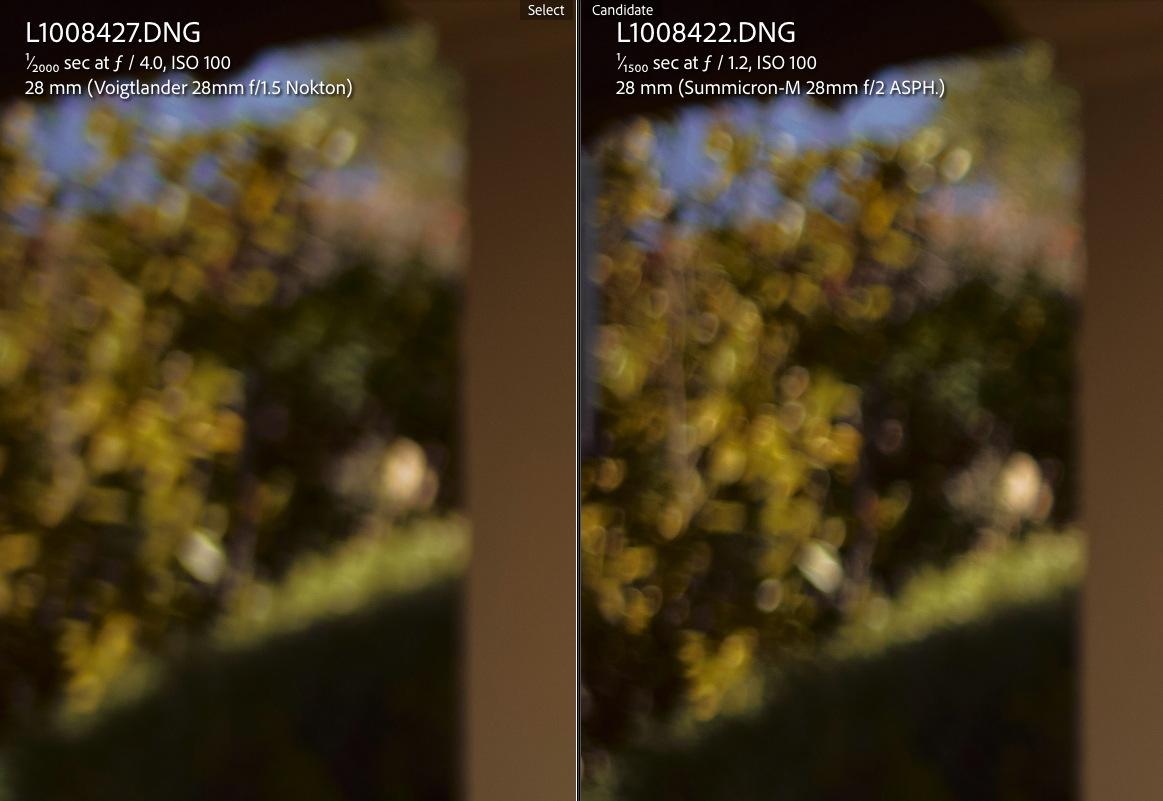
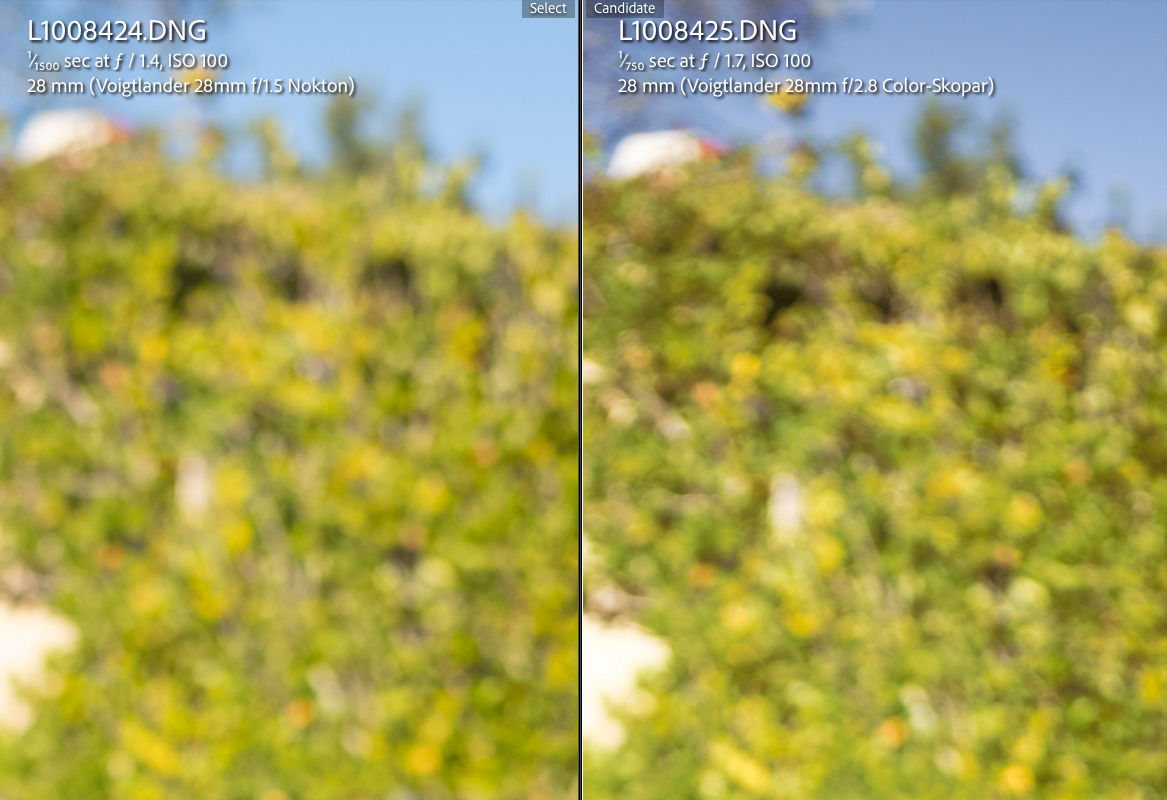
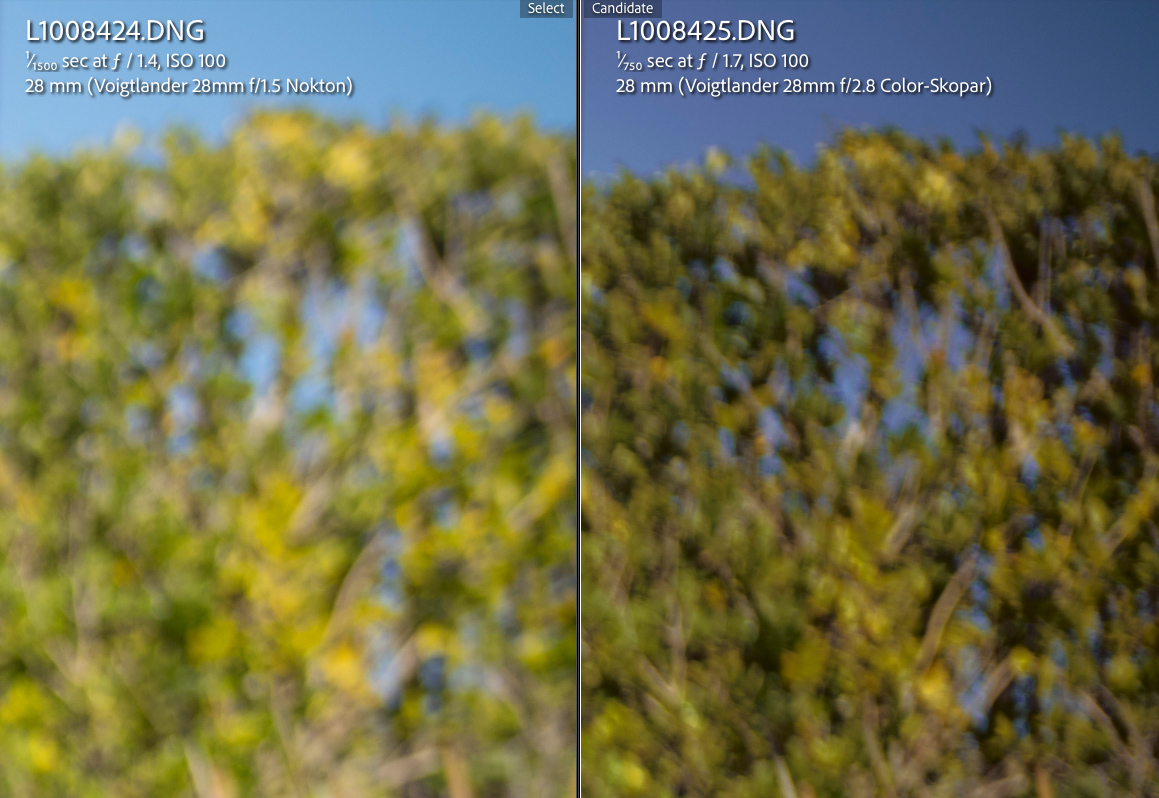
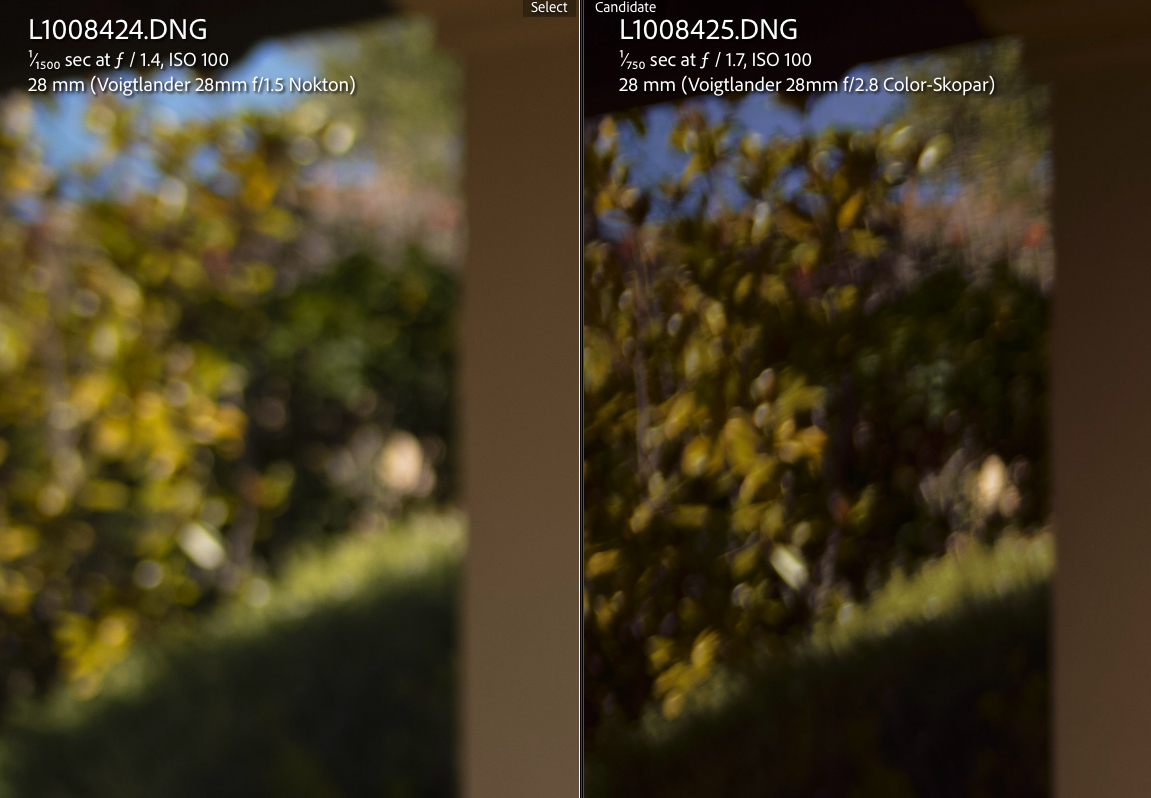


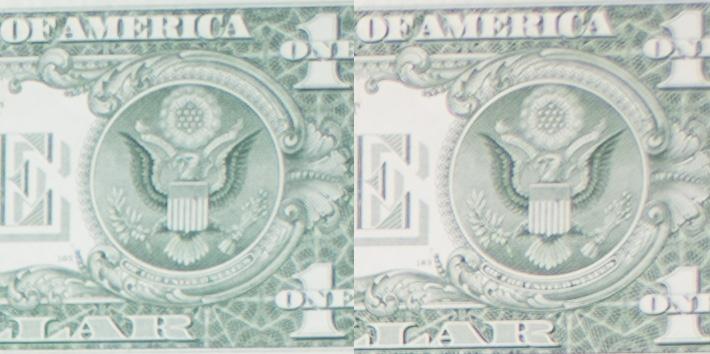
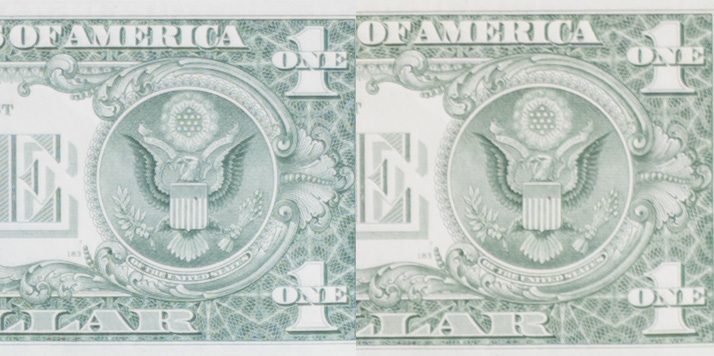
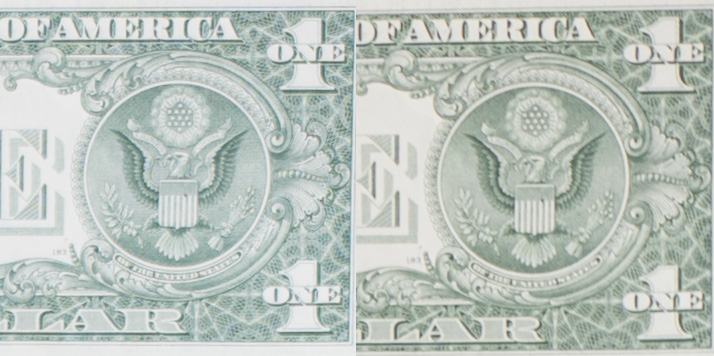
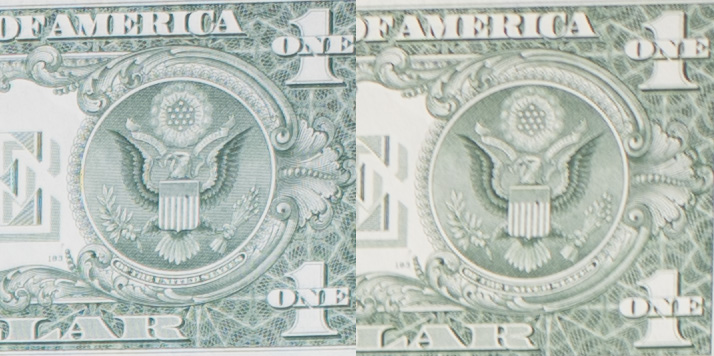
 are Fred's crops on the same plane as plane of focus.