I‘m still confused why Voigtländer clamed that there might be some image degradation when adapted on other mounts than m-mount.
For infinity focus Fred has clearly shown that this is not the case.
The 3.5/50 Apo is exceptionally good at close focus (on m-mount). I wonder if some of this close up performsnce is lost when adapting this lens to e-mount. Possibly the thicker sensor glas of Sony sensors induces some field curvation up close?
In any case it is an excellent landscape lens on e-mount.
Knut. wrote:
I‘m still confused why Voigtländer clamed that there might be some image degradation when adapted on other mounts than m-mount.
For infinity focus Fred has clearly shown that this is not the case.
The 3.5/50 Apo is exceptionally good at close focus (on m-mount). I wonder if some of this close up performsnce is lost when adapting this lens to e-mount. Possibly the thicker sensor glas of Sony sensors induces some field curvation up close?
In any case it is an excellent landscape lens on e-mount.
Probably just a CYA given past VM performance on E-mount and the fact that this is an APO lens.
Knut. wrote:
I‘m still confused why Voigtländer clamed that there might be some image degradation when adapted on other mounts than m-mount.
For infinity focus Fred has clearly shown that this is not the case.
The 3.5/50 Apo is exceptionally good at close focus (on m-mount). I wonder if some of this close up performsnce is lost when adapting this lens to e-mount. Possibly the thicker sensor glas of Sony sensors induces some field curvation up close?
In any case it is an excellent landscape lens on e-mount.
Maybe they didn’t fully test it on a mirrorless body. If I were Cosina, I’d be promoting this more, as it’s a significant advantage for the lens. Typically, their slower lenses perform nearly optimally on Sony bodies, like the CV 10mm, 12mm, 15mm, 21mm f/3.5, and the CV 50mm f/3.5 Heliar --- all with maximum apertures of f/3.5 or smaller.
That said, I don’t assume this applies to all slower lenses. For example, the Leica 18mm f/3.8 and 21mm f/3.4 SEM don’t perform optimally on Sony cameras, showing noticeable smearing due to astigmatism and also major changes in shape curvature. Optical design plays a major role here as well.
They were maybe stung by the problems people had with adapters and close scrutiny that showed a loss compared with M camera results, for some of their lenses. And it's a slow 50mm, not a troublesome wide angle known for issues on mirrorless (pushed ray angles, etc), nor is it a wide aperture lens.
The little Heliar works better for my intimate landscapes than the 50/2 APO (E) on Sonys, but I am looking for rates of fade, depth cues, DOF generally, colour and low element count as a means of gaining transparency, not an early peaking, asphy lens made for f2 use.
The H 50/3.5 featured in their design process of the 50/3.5 APO, clearly. They are the same size and weight region, aperture blade count, minimum f-stop. They got a great result from their APD glass (can't wait to see their next lenses) and so called it an APO-Lanthar, and rightly so because the term has priority over their other category names. It's a world away in all aspects from the 50/2 APO, other than the name.
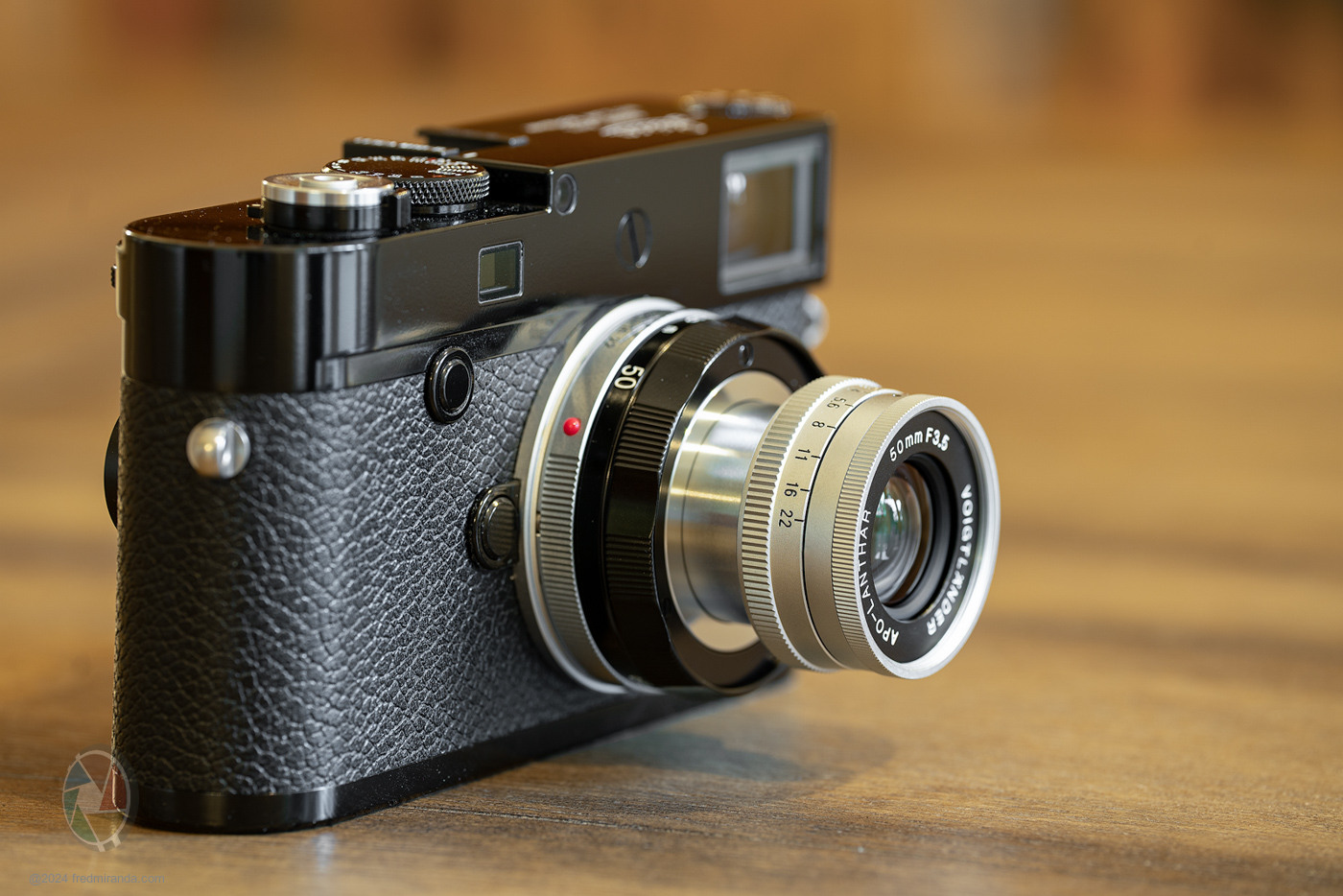
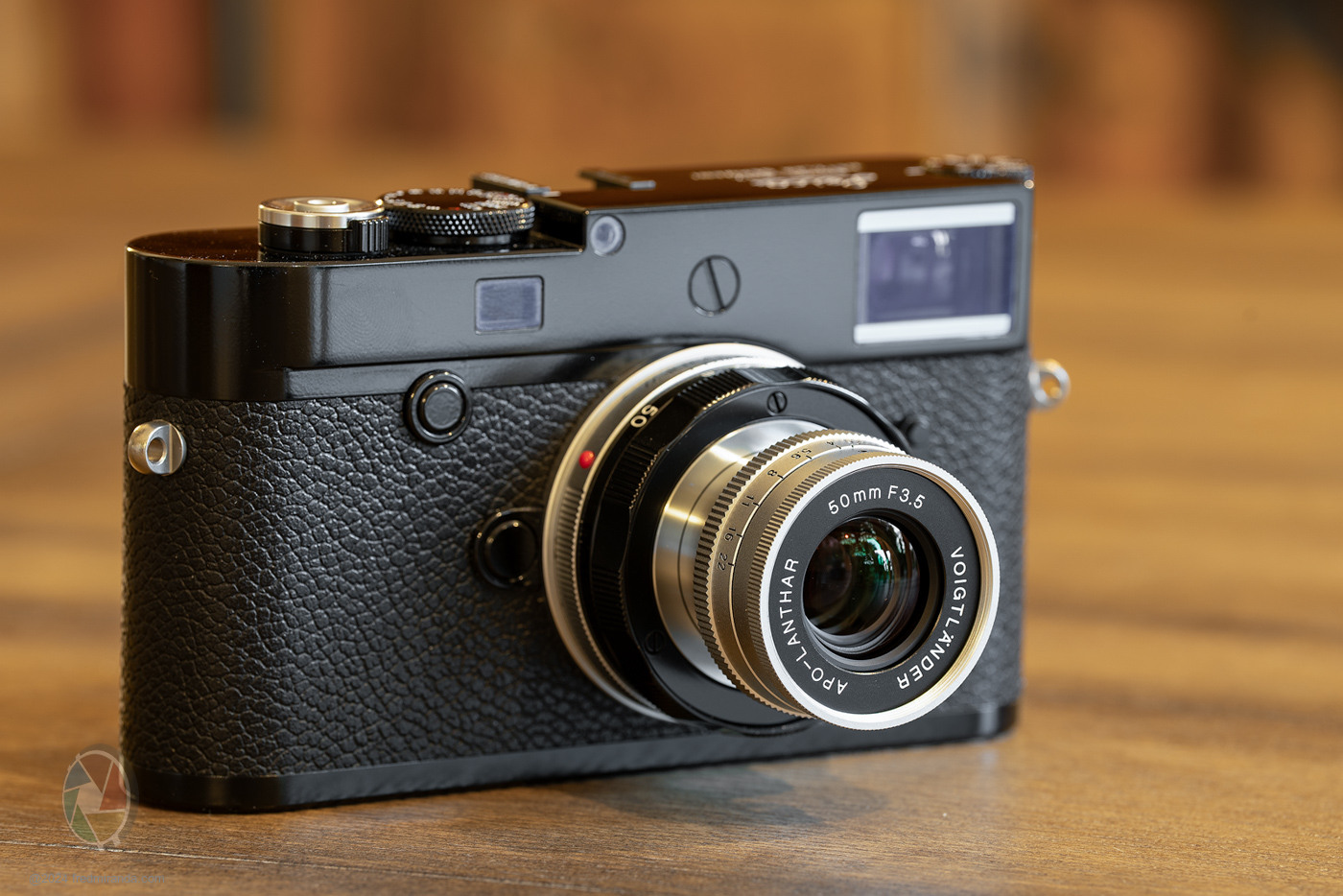
I just received the production models of both the Voigtlander 50mm f/3.5 APO-Lanthar Type I Two-Tone (brass, 245g) and Type II Black-Paint (aluminum and brass, 175g). While both are visually stunning, the Type I Two-Tone stands out with its striking design...even though it doesn’t feature a collapsible mechanism.
I tested all three copies for centering, and they passed with flying colors -- each one is well-centered. It's reassuring that they all perform identically, indicating no changes in production affecting performance.
I also weighed the lenses without hoods and caps using my reliable scale and found slight variations compared to the reported weights:
Type I Two-Tone: 229g (reported as 245g)
Type II Silver: 252g (reported as 250g)
Type II Black Paint: 178g (reported as 175g)
The most significant difference is with the Type I Two-Tone, which is 16 grams lighter than reported. Each lens hood adds an additional 7 grams.
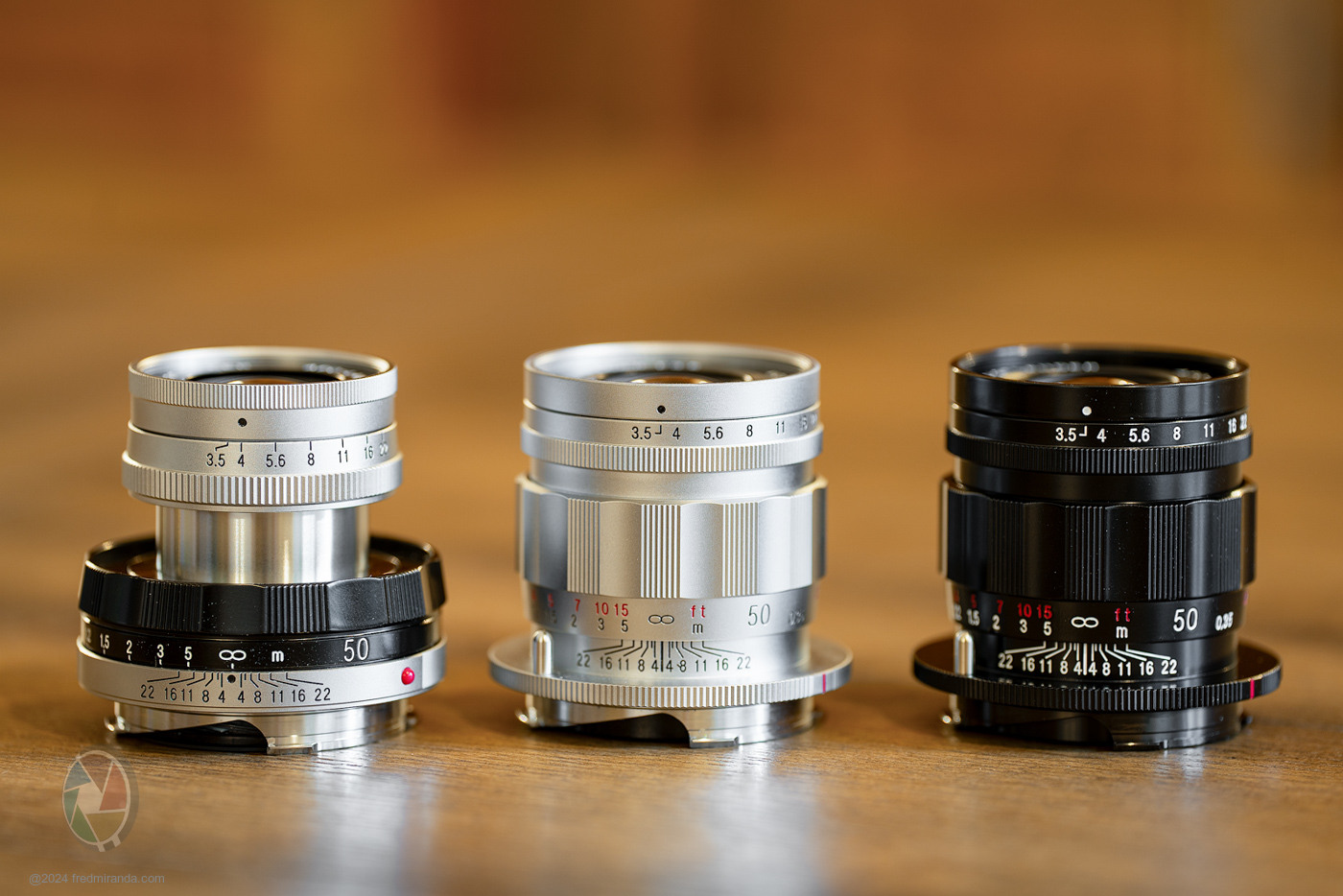
Type I Two-Tone | Type II Silver | Type II Black Paint
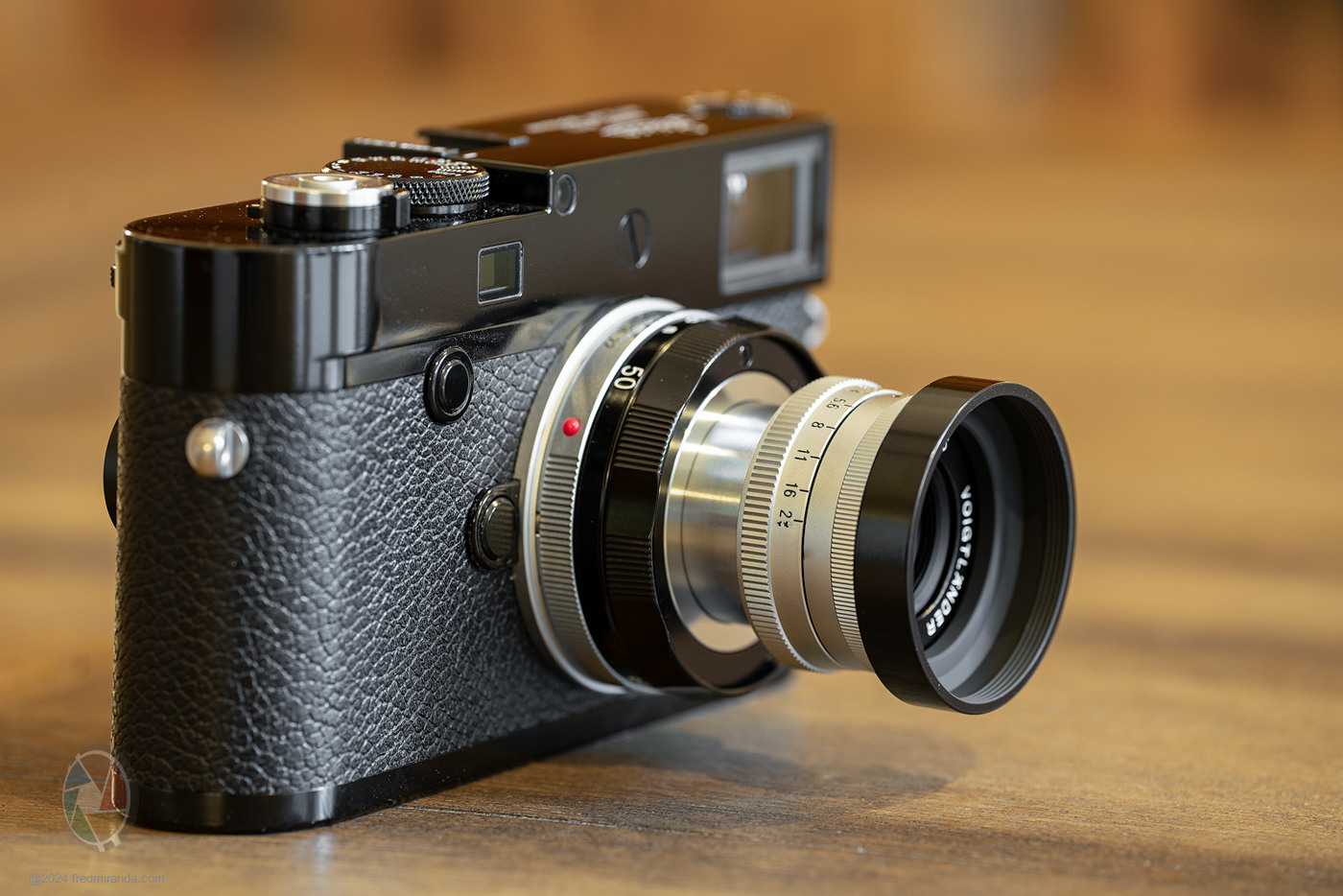
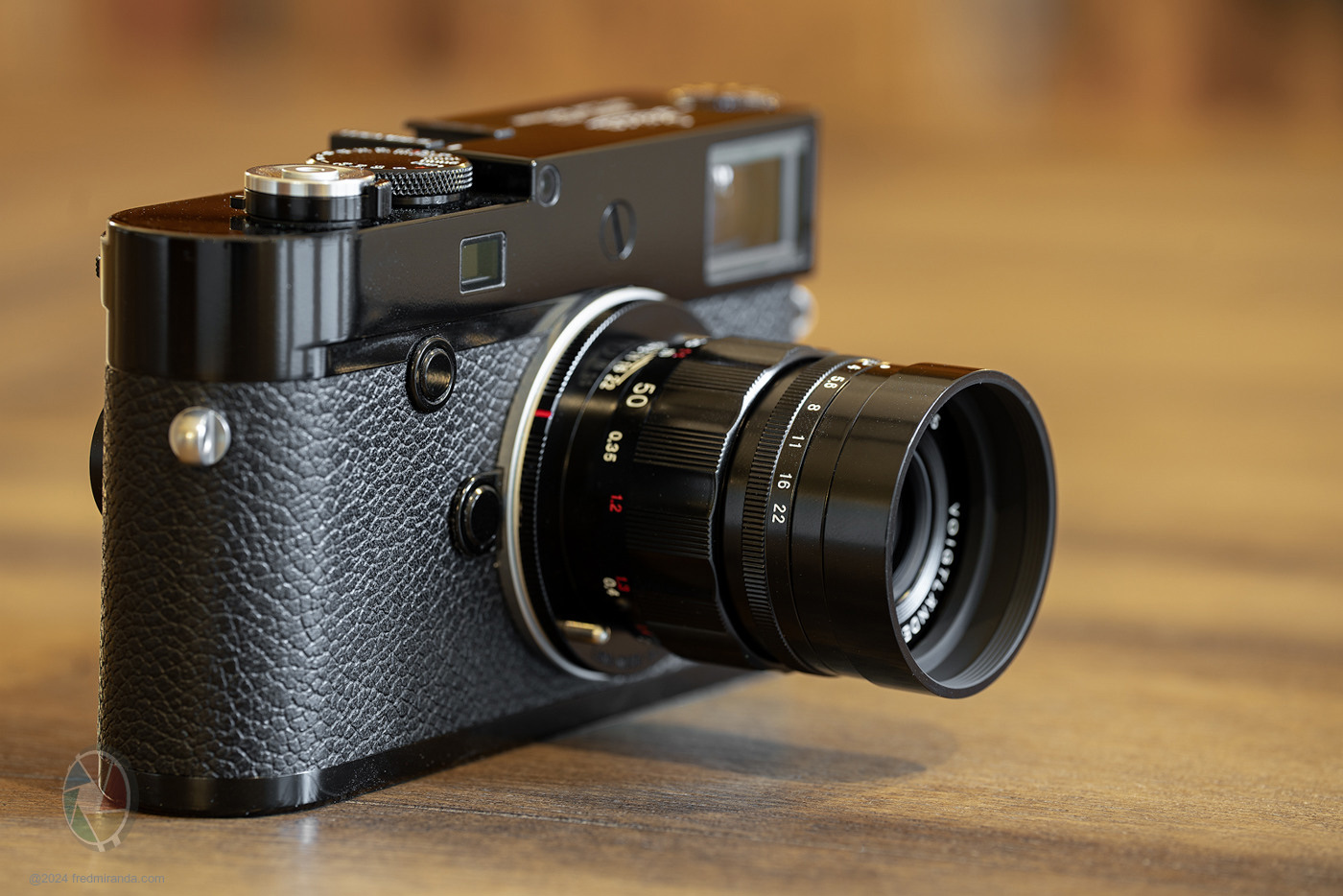
Today, I’m trying out the different versions of the Voigtlander 50mm f/3.5 APO-Lanthar. All of them have the same optical performance, so the only differences are in the look and the minimum focus distance. Type I can focus down to 0.45m, while Type II gets as close as 0.35m, which is pretty rare for M-mount lenses.
A few weeks ago, @Juha Kannisto tested all the versions in Japan and said he liked the Type I Two-Tone the most. I have to agree --- the online photos don’t really show how well-made the Type I is. It’s not collapsible, but it still has that classic vibe, and I can see why Cosina chose to make it 'rigid'. The build is flawless, with no vibration, and the focus ring is really smooth. This model also has a separate aperture ring, which some people will prefer. It also looks amazing on a Leica M body.
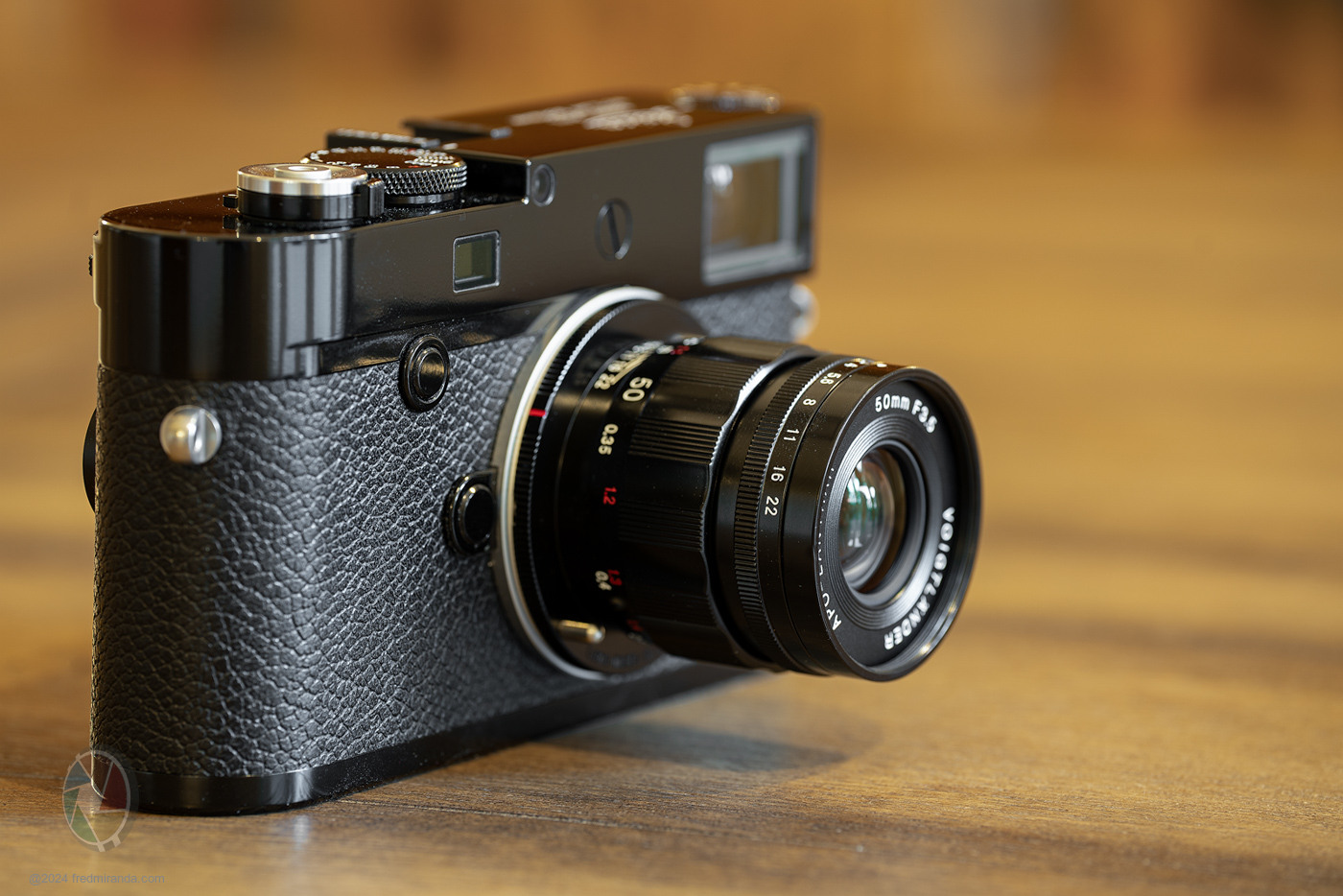
The Voigtlander 50mm f/3.5 APO-Lanthar Type II Black Paint is another beautiful option with its own advantages. As I mentioned, it focuses closer at 0.35m and is also about 50 grams lighter. You can definitely feel the difference in weight when handling these lenses. It's a great choice for anyone who prefers the Type II aesthetics and wants a lighter lens. The Type II silver brass version weighs 74 grams more (I measured it).
I didn’t get a chance to test the Type I Matte Black, but it operates the same as the Two-Tone. The main difference is that it's painted on aluminum instead of brass. It’s the lightest of the bunch, with a reported weight of only 150 grams. It should look great on Leica M bodies with the flat black paint.
Here’s an image of the Voigtlander 50mm f/3.5 Type II in Black Paint:
Thanks Fred for reviewing the lens on Sony A7CR Since it works very well on Sony too, I decided to buy it soon, but need to make some trade-ins since I'm currently out of lens budget.
Will try to pick one up this weekend as long as Map Camera still has Type I Duo-tone in stock. They have so far run out of stock on Type II black but other 3 are remaining in stock. They also received new stock of Black Color-Skopar 50/2.2 now.
Nice to see you also took to liking Type I Duo-tone a lot once you got it in hand And it's nice to know that it is actually slightly lighter than specified.
Nice! You may have answered this earlier in the thread, but does the black paint Type II still have a brass focusing ring? Hoping the paint would wear off to brass and not silver.
Juha Kannisto wrote:
Thanks Fred for reviewing the lens on Sony A7CR Since it works very well on Sony too, I decided to buy it soon, but need to make some trade-ins since I'm currently out of lens budget.
Will try to pick one up this weekend as long as Map Camera still has Type I Duo-tone in stock. They have so far run out of stock on Type II black but other 3 are remaining in stock. They also received new stock of Black Color-Skopar 50/2.2 now.
Nice to see you also took to liking Type I Duo-tone a lot once you got it in hand And it's nice to know that it is actually slightly lighter than specified....Show more →
Just like you, I find the Two-Tone beautifully crafted and it looks great in hand. The functionality is also superior with two separate rings. The downside is the longer MFD, but it requires much less rotation. I do think the design is not for everyone, which is why Cosina released so many styles to suit everyone's taste.
I would also go with the Type I duo-tone. IMO, it looks much nicer and I much prefer a non-rotating aperture/filter ring (if I've understood correctly).
For those using it on a mirrorless, you could offset the longer mfd by using an adapter with a helicoid built in. For Leica M users, you could use Leica's pricy Leica Macro-Adapter-M for the 90/4 macro that is an extension tube and also has a built-in helicoid for additional extension. Sure, the Type II would benefit similarly and with its shorter mfd would continue to outperform the Type I in this regard...
Actually I do have this adapter but trying to keep the pieces in the travel kit as minimal as possible.
rscheffler wrote:
I would also go with the Type I duo-tone. IMO, it looks much nicer and I much prefer a non-rotating aperture/filter ring (if I've understood correctly).
For those using it on a mirrorless, you could offset the longer mfd by using an adapter with a helicoid built in. For Leica M users, you could use Leica's pricy Leica Macro-Adapter-M for the 90/4 macro that is an extension tube and also has a built-in helicoid for additional extension. Sure, the Type II would benefit similarly and with its shorter mfd would continue to outperform the Type I in this regard...
rscheffler wrote:
I would also go with the Type I duo-tone. IMO, it looks much nicer and I much prefer a non-rotating aperture/filter ring (if I've understood correctly).
For those using it on a mirrorless, you could offset the longer mfd by using an adapter with a helicoid built in. For Leica M users, you could use Leica's pricy Leica Macro-Adapter-M for the 90/4 macro that is an extension tube and also has a built-in helicoid for additional extension. Sure, the Type II would benefit similarly and with its shorter mfd would continue to outperform the Type I in this regard...
mark1958 wrote:
Very impressive. Thanks for all that work. Which M to E adapter do you use or prefer?
I'm primarily using two adapters. The first is the TTArtisan 6-bit II adapter (40g). This adapter is very well made, with tight tolerances, an adjustable infinity hard stop, and a 6-bit reader. It's a joy to use. The second is the Techart LM-EA9 AF adapter (125g). This one allows me to focus much closer, as it's equipped with a 4.5mm extension, and it provides both AF and MF capabilities to the lens.
Seems a good place to leave this interesting observation from Jono Slack, commenting about the perception of images produced by APO -vs- non-APO lenses:
'It's important to make the distinction between 'sharpness' and 'detail'. Very often older lenses, when stopped down can appear extremely 'sharp' and even 'crunchy', this is because of very small amounts of longitudinal CA enhancing the edges of high contrast areas. Leica APO lenses might superficially look less 'sharp' but actually show more detail than their less sophisticated cousins.'
philip_pj wrote:
Seems a good place to leave this interesting observation from Jono Slack, commenting about the perception of images produced by APO -vs- non-APO lenses:
'It's important to make the distinction between 'sharpness' and 'detail'. Very often older lenses, when stopped down can appear extremely 'sharp' and even 'crunchy', this is because of very small amounts of longitudinal CA enhancing the edges of high contrast areas. Leica APO lenses might superficially look less 'sharp' but actually show more detail than their less sophisticated cousins.'
On the subject of APO and its qualities, I highly recommend this video featuring Peter Karbe, Leica lens designer. Pay special attention starting at the 26-minute mark.


 Since it works very well on Sony too, I decided to buy it soon, but need to make some trade-ins since I'm currently out of lens budget.