fredmiranda.com
Login

Moderated by: Fred Miranda
Username  

  New fredmiranda.com Mobile Site
  New Feature: SMS Notification alert
  New Feature: Buy & Sell Watchlist
  

FM Forums | Leica & Alternative Gear | Join Upload & Sell
1       2       3              5       6       7       end
  

Thypoch Simera 75mm f/1.4 ASPH. Review


Fred Miranda
Offline
Admin
Upload & Sell: On
p.4 #1 · Thypoch Simera 75mm f/1.4 ASPH. Review


nehemiahphoto wrote:
Even the CV 75/1.5 doesn’t have enough personality for me. So yeah, very meh on the lens from the samples.


I personally agree, but I think we're in the minority these days, as most photographers seem to prefer lenses with smooth, undistracting transitions. For example, Sony's GM lenses emphasize how their specular highlights have almost no outlining, with excellent correction for spherical and coma aberrations, which are often the most noticeable in rendering. Fuji and Nikon's recent lenses follow a similar approach, offering a very modern rendering style.

The Voigtlander 75 Nokton and, especially, the Simera 75/1.4 ASPH. aim for similar results: solid performance with minimal distinctive character. Their rendering is technically pleasing, featuring smooth transitions in the out-of-focus areas, which most reviewers consider a positive aspect.

If I'm after more personality, I'd reach for the Leica 75/1.4 Summilux, Sonnetar 73/1.5, or Voigtlander 75/1.8 Heliar in this range.


Mar 30, 2025 at 10:04 PM
Fred Miranda
Offline
Admin
Upload & Sell: On
p.4 #2 · Thypoch Simera 75mm f/1.4 ASPH. Review


Back to Quick Links

Samples 3

Mostly shot wide open at f/1.4, mostly at various distances and under different lighting conditions.

These images have minimal processing with added sharpening and either the Adobe Standard profile.


Mar 30, 2025 at 10:19 PM
nehemiahphoto
Offline
• • • • •
Upload & Sell: On
p.4 #3 · Thypoch Simera 75mm f/1.4 ASPH. Review


Fred Miranda wrote:
I personally agree, but I think we're in the minority these days, as most photographers seem to prefer lenses with smooth, undistracting transitions. For example, Sony's GM lenses emphasize how their specular highlights have almost no outlining, with excellent correction for spherical and coma aberrations, which are often the most noticeable in rendering. Fuji and Nikon's recent lenses follow a similar approach, offering a very modern rendering style.

The Voigtlander 75 Nokton and, especially, the Simera 75/1.4 ASPH. aim for similar results: solid performance with minimal distinctive character. Their rendering is technically pleasing, featuring smooth transitions in the out-of-focus areas,
...Show more

Yes—we are for sure in the minority. Having said that, our niche is being served with refreshes/copies from LLL and Leica such. At least for modern glass for me, if you’re going to be that smooth, you better have sensational colors and contrast (modern Leica, Zeiss, CV is getting really nice). Or, have stand out features like small size (RX1 Sonnar) or fantastic astro correction. AF helps too.

As you know, I love the 73/1.5 and 75/1.4 Lux. But I am actually really interested in the new LLL’s S21 50/1.5 remake and the 85/1.5 Summarex.

Thanks again for the reviews over the years—this one included.


Mar 31, 2025 at 07:39 PM
Fred Miranda
Offline
Admin
Upload & Sell: On
p.4 #4 · Thypoch Simera 75mm f/1.4 ASPH. Review


nehemiahphoto wrote:
As you know, I love the 73/1.5 and 75/1.4 Lux. But I am actually really interested in the new LLL’s S21 50/1.5 remake and the 85/1.5 Summarex.

Thanks again for the reviews over the years—this one included.


I'm a fan of those, but I tend to reach for the MS Optics 73/1.5 Sonnetar because of its 200-gram weight and beautiful rendering/glow. On the Leica M, the MFD is just over 1 meter (at least on my copy), which isn't ideal, but that's really the only downside.

The LLL 50/1.5 S21 definitely looks interesting though!

As for the Simera 75/1.4 ASPH. I'm reviewing here, many will appreciate its butter-smooth rendering, as it's incredibly un-distracting. It almost feels like it has an apodization element, giving the out-of-focus areas a soft, gaussian quality.


Mar 31, 2025 at 07:50 PM
nehemiahphoto
Offline
• • • • •
Upload & Sell: On
p.4 #5 · Thypoch Simera 75mm f/1.4 ASPH. Review


Fred Miranda wrote:
I'm a fan of those, but I tend to reach for the MS Optics 73/1.5 Sonnetar because of its 200-gram weight and beautiful rendering/glow. On the Leica M, the MFD is just over 1 meter (at least on my copy), which isn't ideal, but that's really the only downside.

The LLL 50/1.5 S21 definitely looks interesting though!

As for the Simera 75/1.4 ASPH. I'm reviewing here, many will appreciate its butter-smooth rendering, as it's incredibly un-distracting. It almost feels like it has an apodization element, giving the out-of-focus areas a soft, gaussian quality.


Yes indeed! That 200 g is almost impossible to argue with. I have a kit of three primes that are all fast that way under 750 g together. And they all have very nice rendering if you prefer vintage.

As for this Thypoch 75/1.4, the whole “modern vintage” thing feels like marketing to me. But, Simera is smart to make these lenses lower contrast if the ultimate goal is smooth bokeh. Between the optical formula, the many rounded aperture blades, the evenness across the field of the rendering and the lower contrast, it is just so smooth.


Mar 31, 2025 at 08:24 PM
Fred Miranda
Offline
Admin
Upload & Sell: On
p.4 #6 · Thypoch Simera 75mm f/1.4 ASPH. Review


nehemiahphoto wrote:
Yes indeed! That 200 g is almost impossible to argue with. I have a kit of three primes that are all fast that way under 750 g together. And they all have very nice rendering if you prefer vintage.

As for this Thypoch 75/1.4, the whole “modern vintage” thing feels like marketing to me. But, Simera is smart to make these lenses lower contrast if the ultimate goal is smooth bokeh. Between the optical formula, the many rounded aperture blades, the evenness across the field of the rendering and the lower contrast, it is just so smooth.


The defining feature of what could be considered modern vintage is the coating, which allows for some veiling flare when shooting against the light.


Mar 31, 2025 at 09:02 PM
Fred Miranda
Offline
Admin
Upload & Sell: On
p.4 #7 · Thypoch Simera 75mm f/1.4 ASPH. Review


Back to Quick Links

Rendering compared to Voigtlander 75mm f/1.5 Nokton


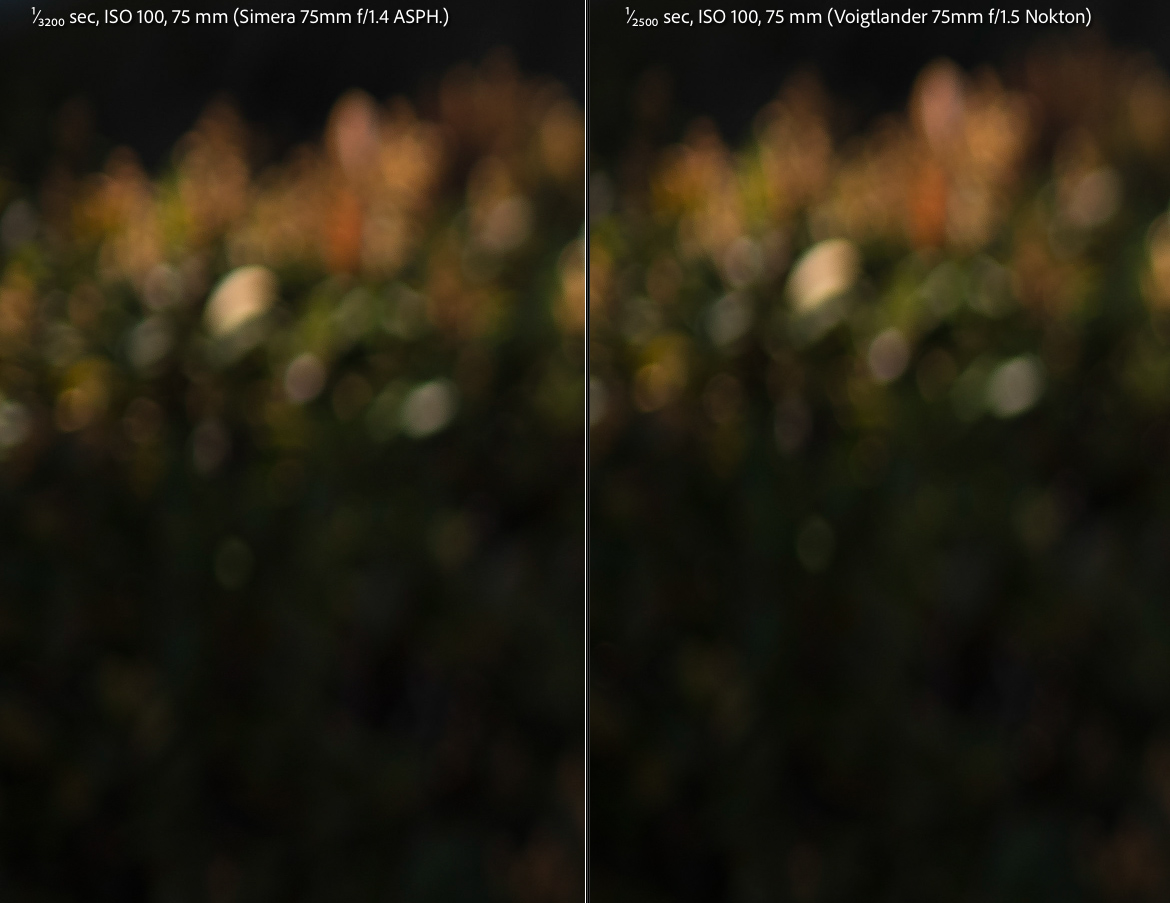
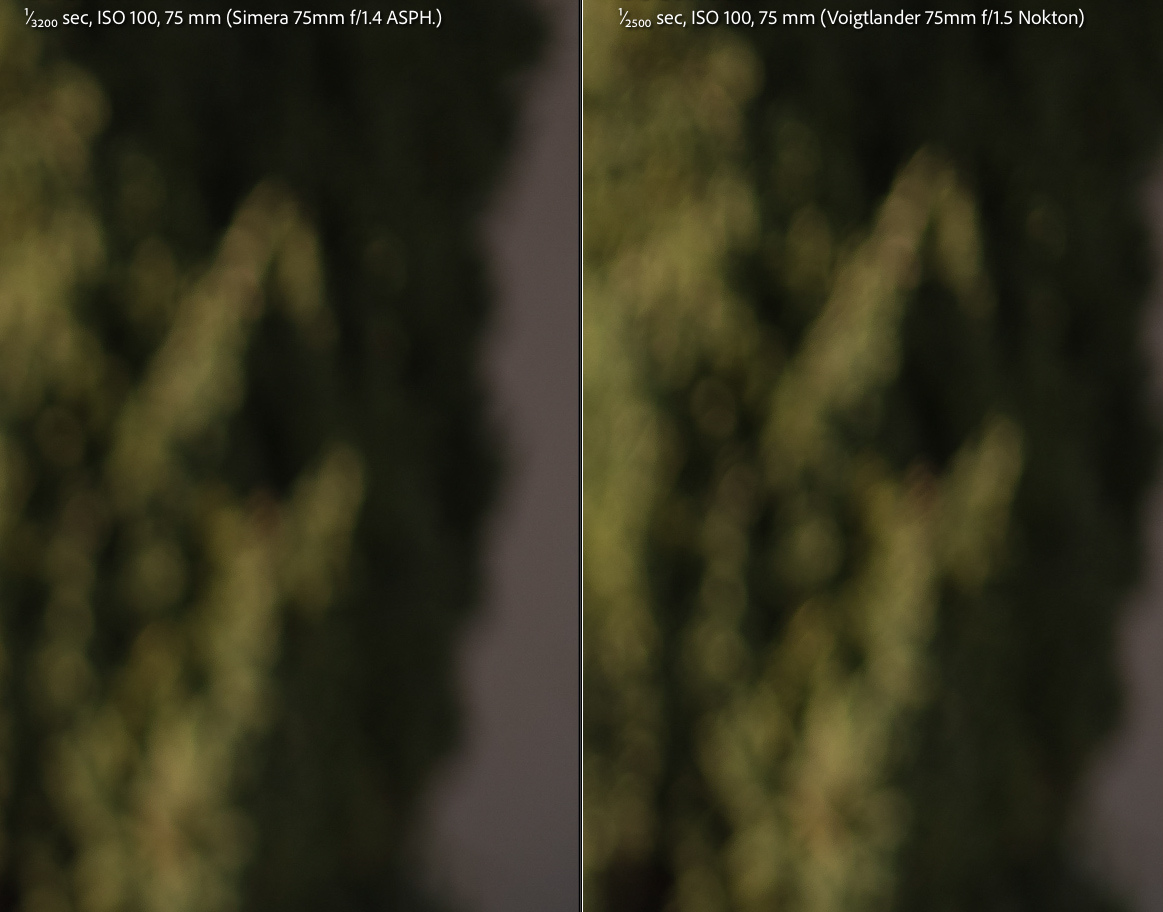
I’ve spent a good amount of time with the Simera 75mm f/1.4 ASPH. and have developed a solid understanding of how it renders subjects at various distances, from up close to far away. Side-by-side comparisons under consistent lighting are always useful, so in this section, I’ll be comparing it with the Voigtlander 75mm f/1.5 Nokton.

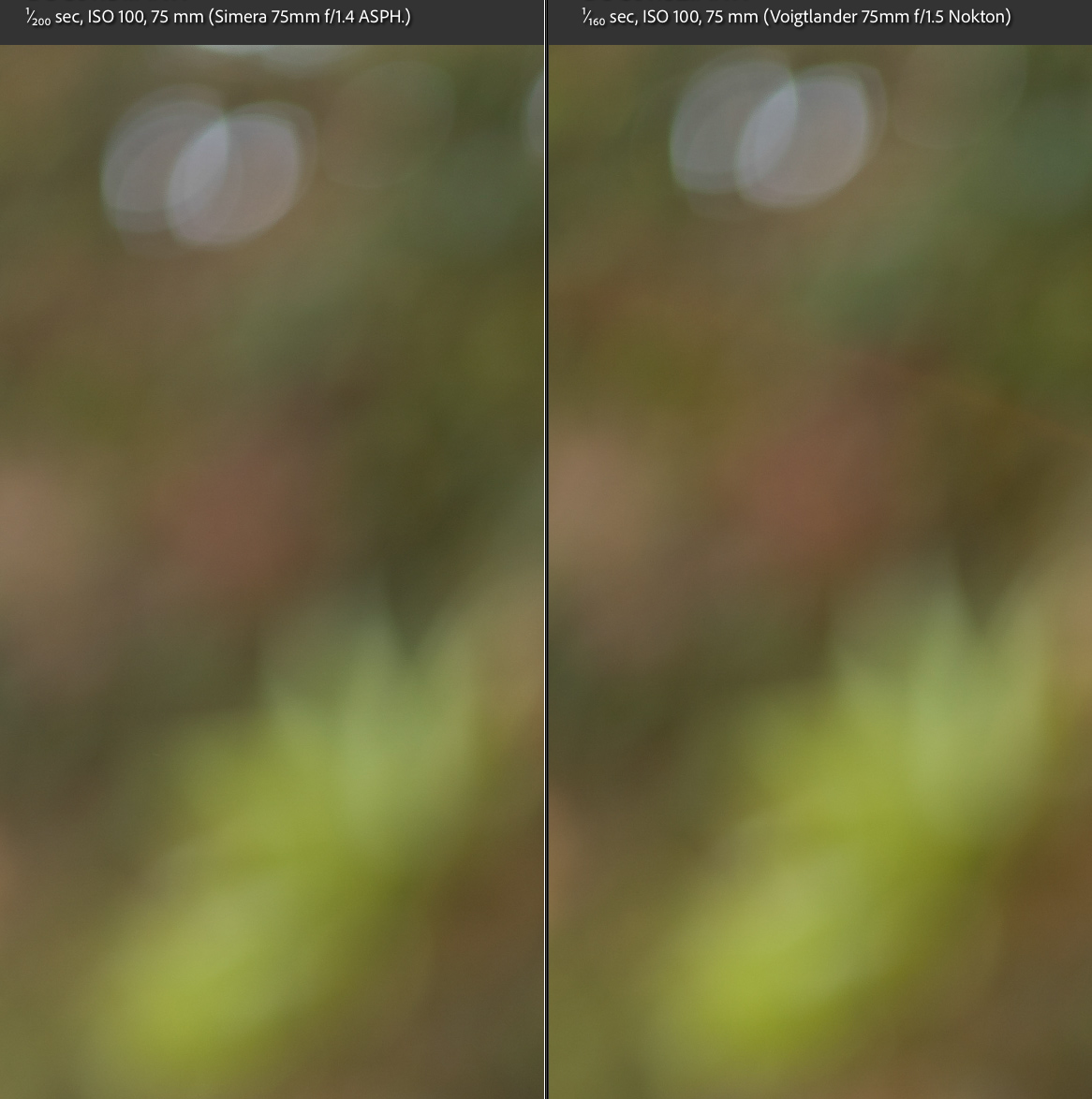
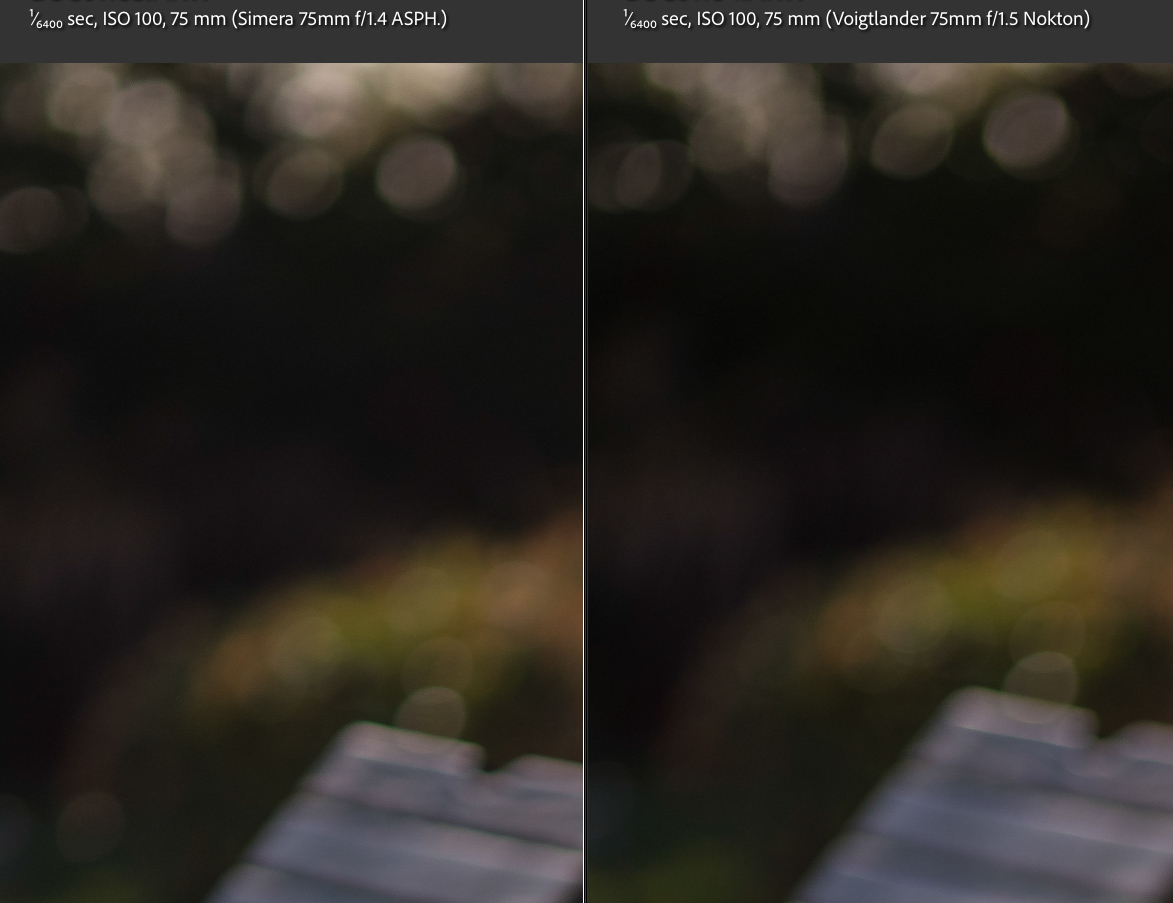
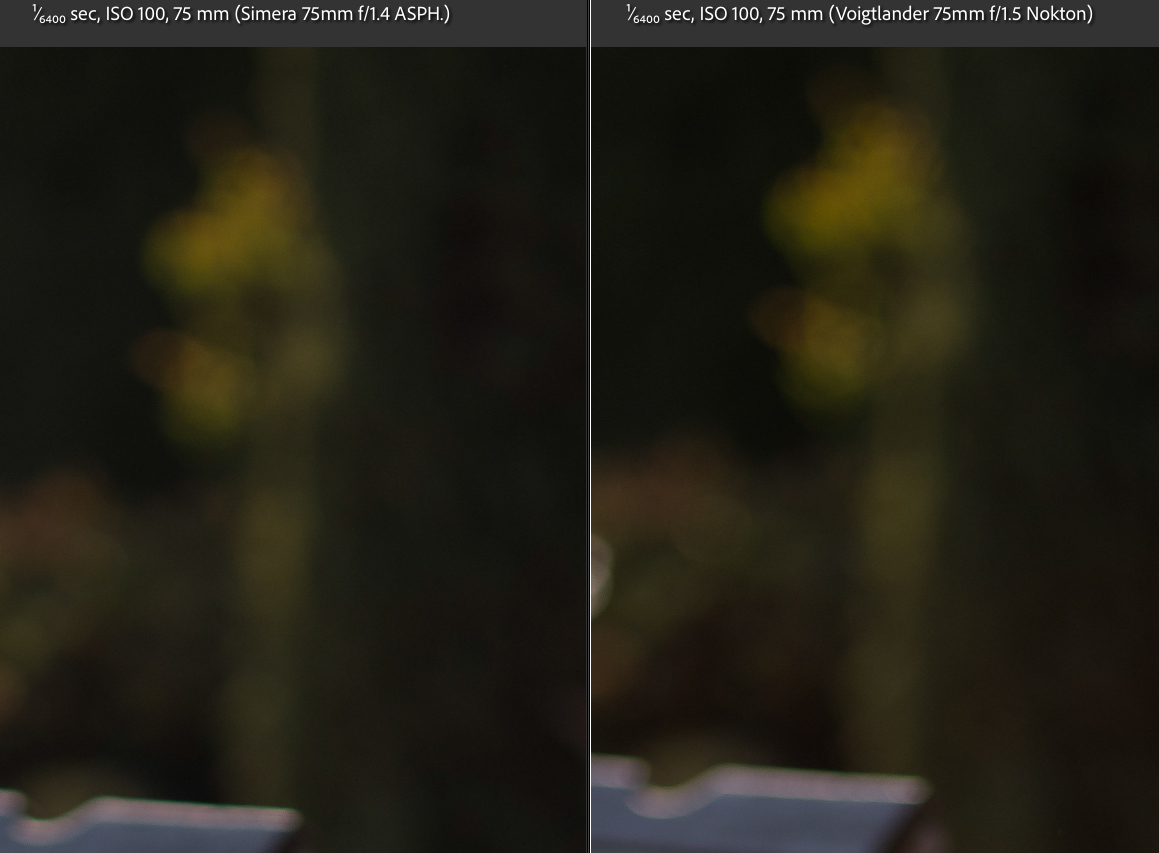
One of the first things I noticed is that the Simera 75mm f/1.4 ASPH. has a slightly wider angle of view than the Voigtlander, though the difference is subtle. When it comes to rendering, both lenses have a similar overall look, with smooth focus transitions that blend naturally and comparable optical vignetting. Out-of-focus areas are exceptionally soft and smooth on both, which many photographers find appealing for portraits, particularly in professional settings where a clean and un-distracting background helps keep attention on the subject.

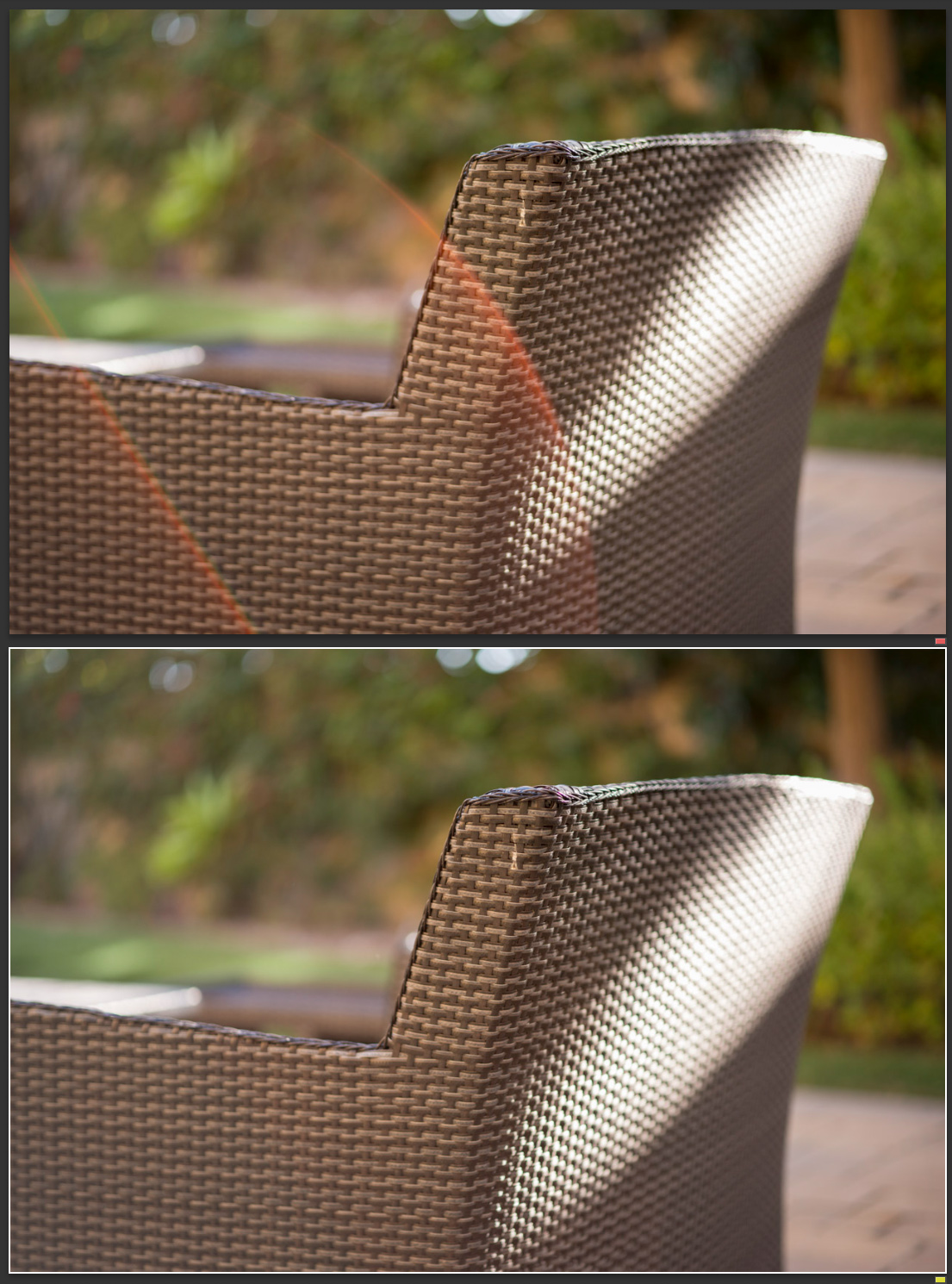
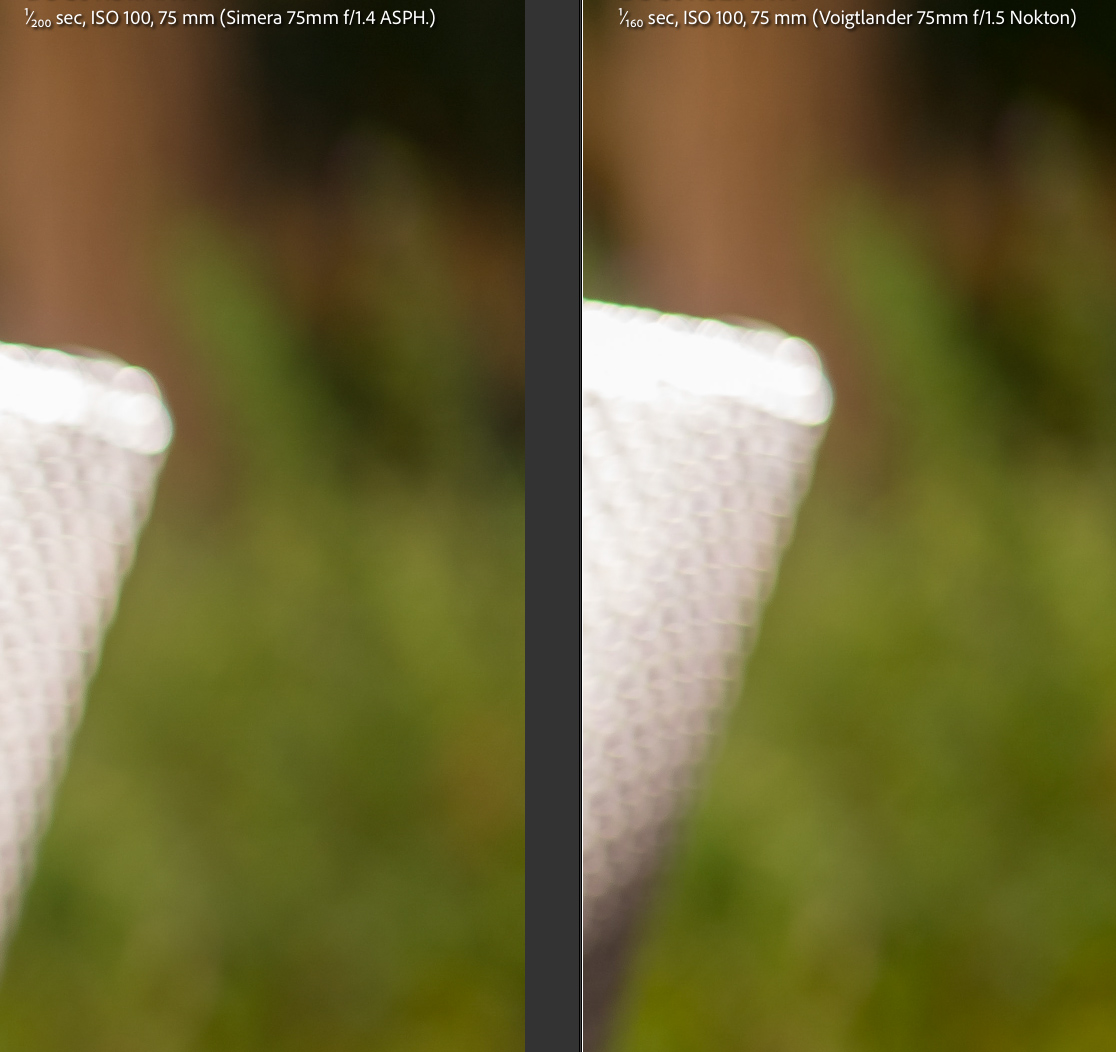
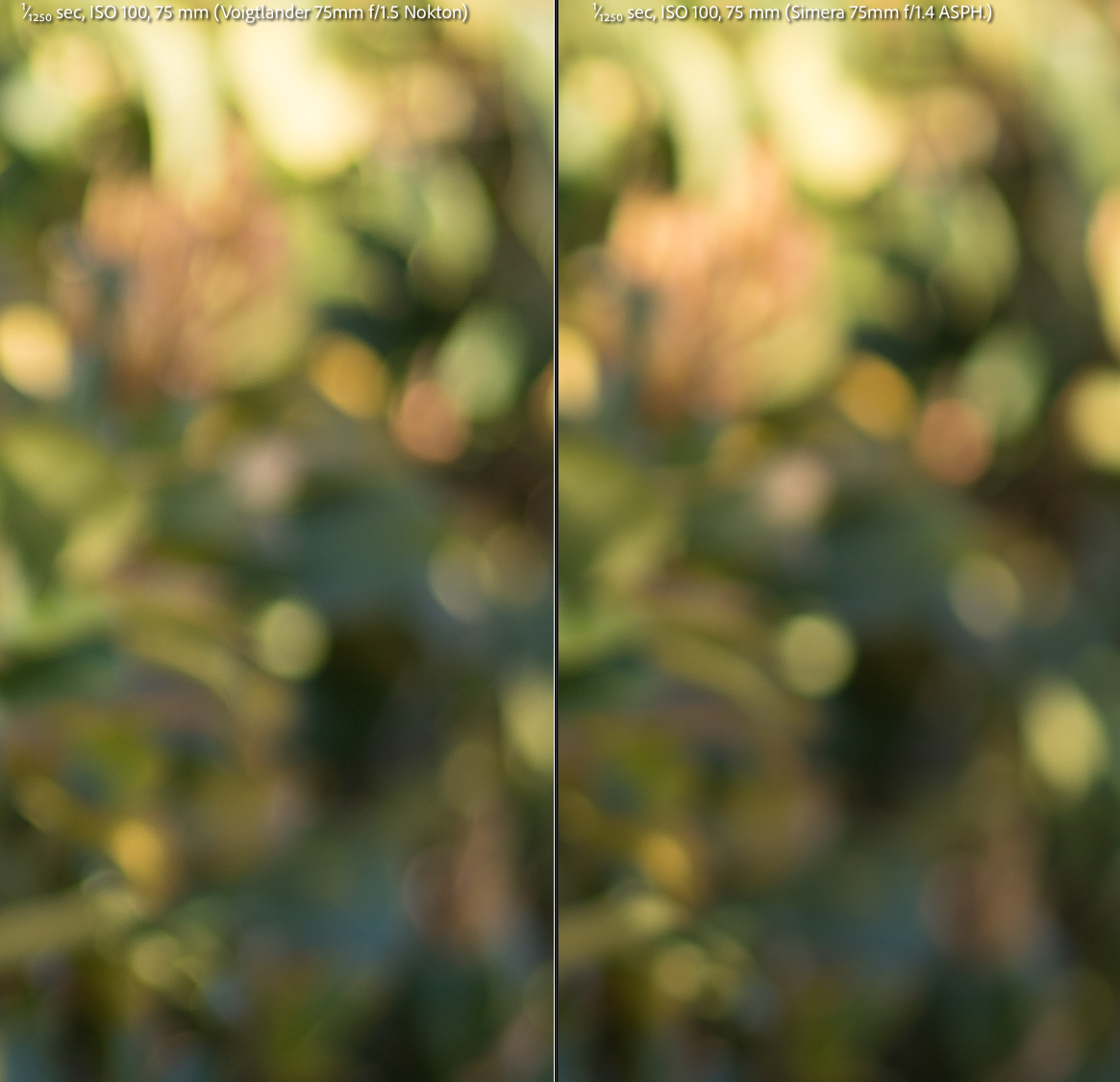
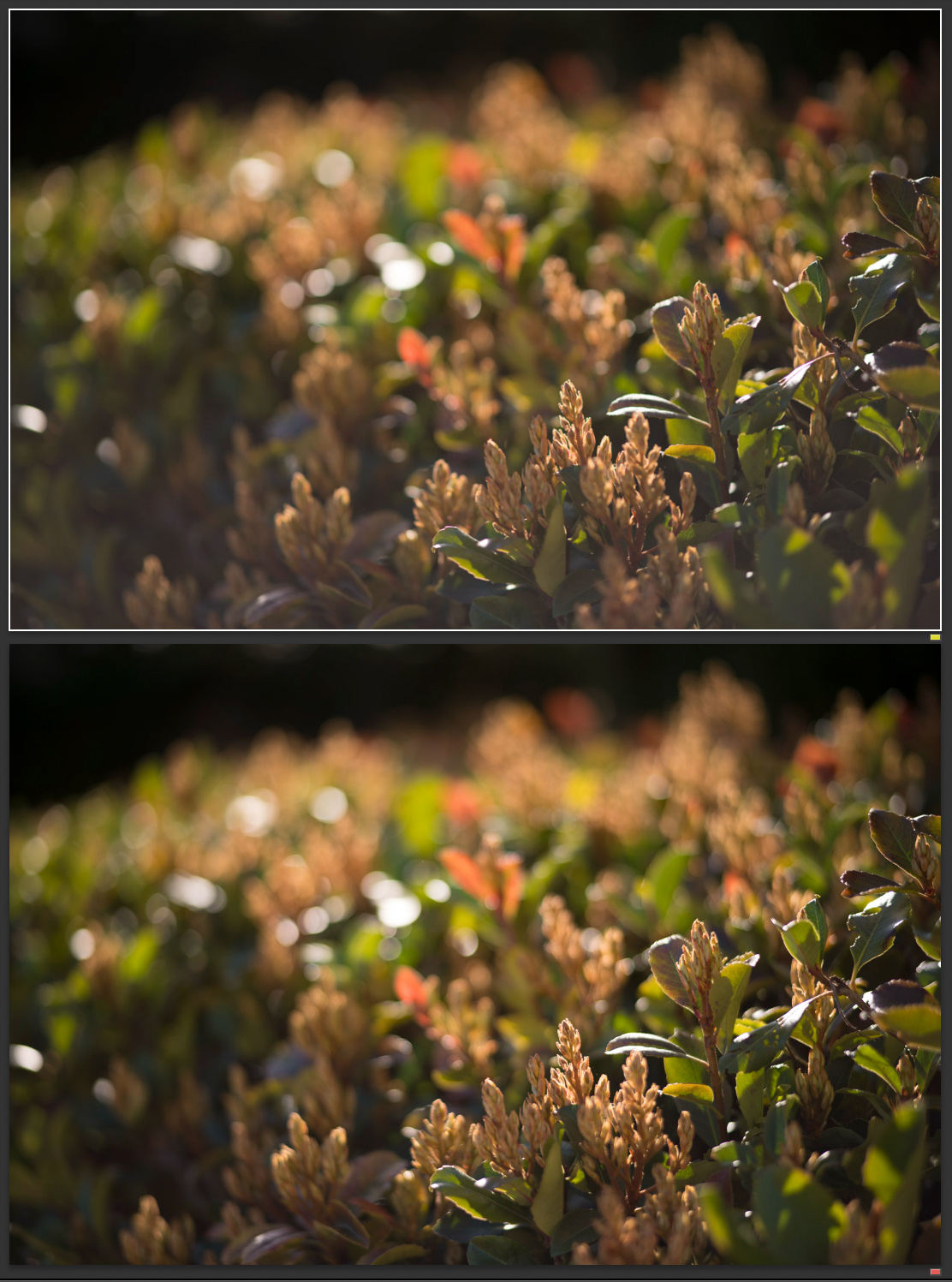
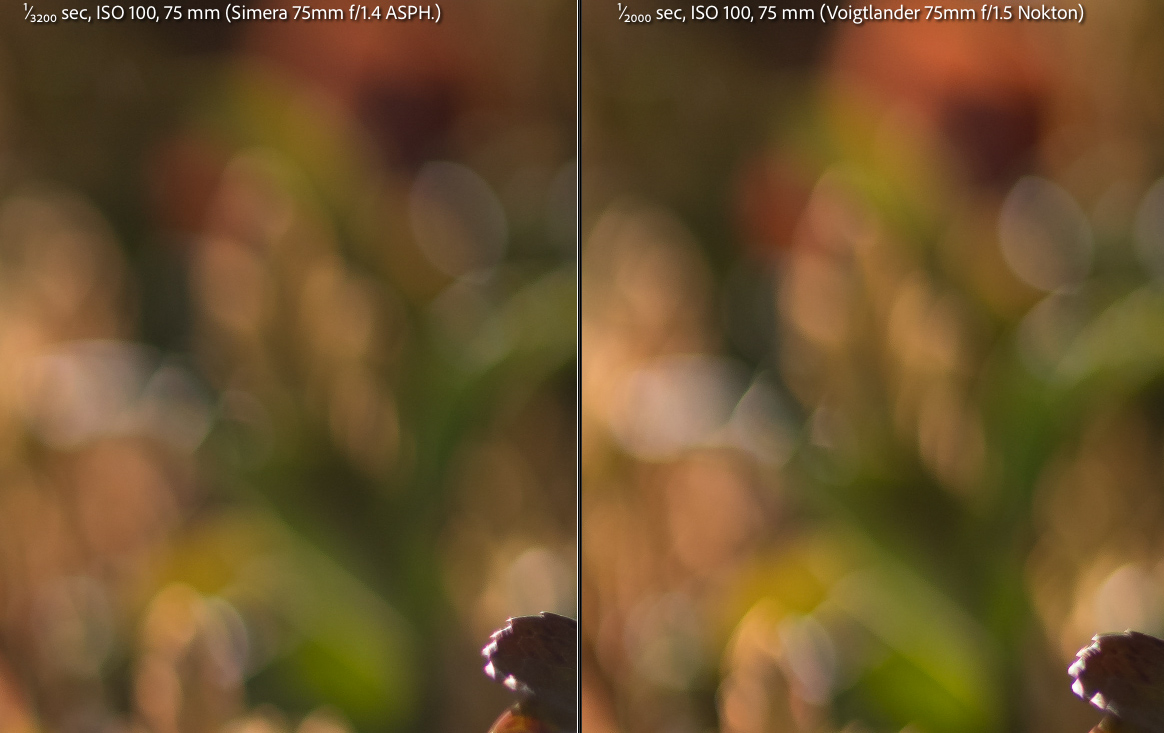
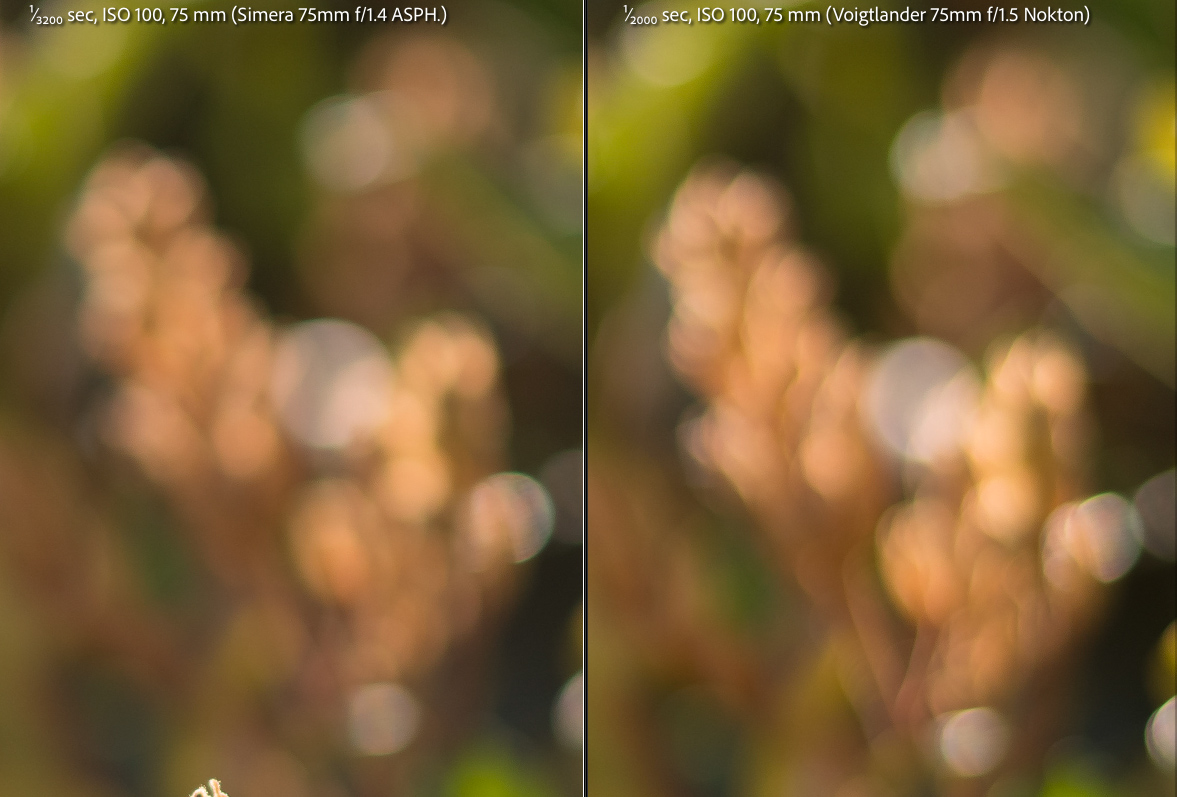
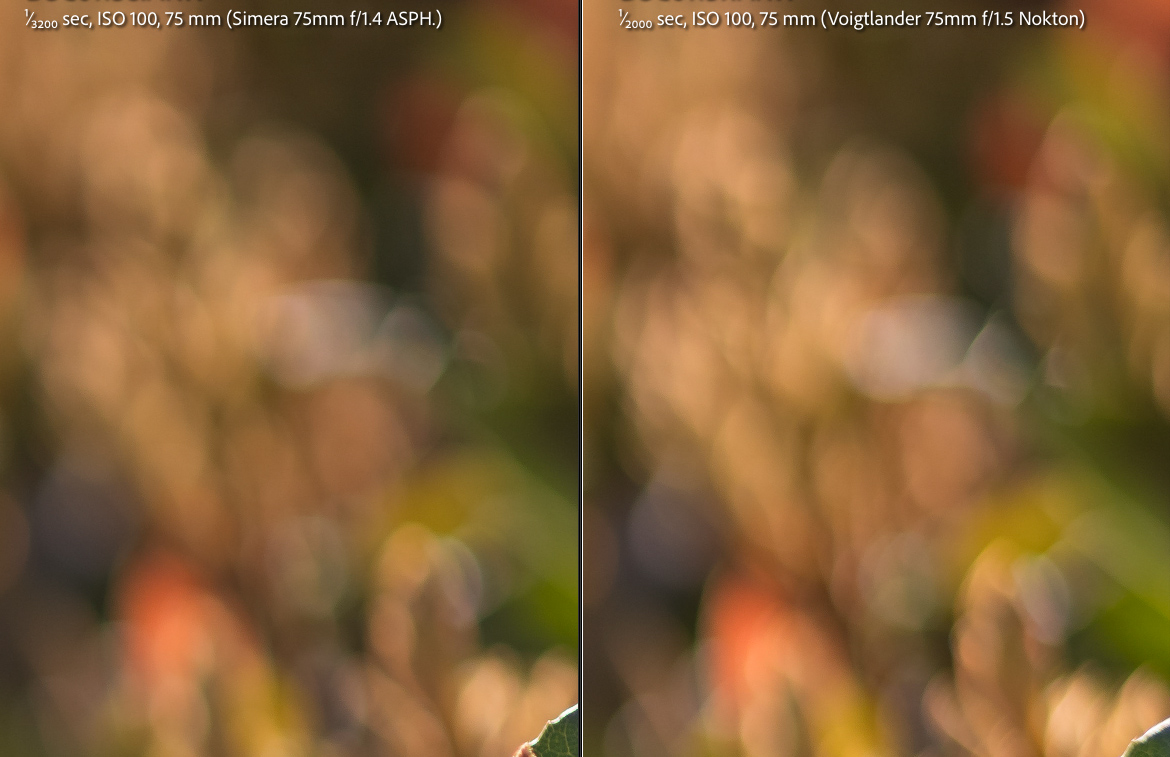
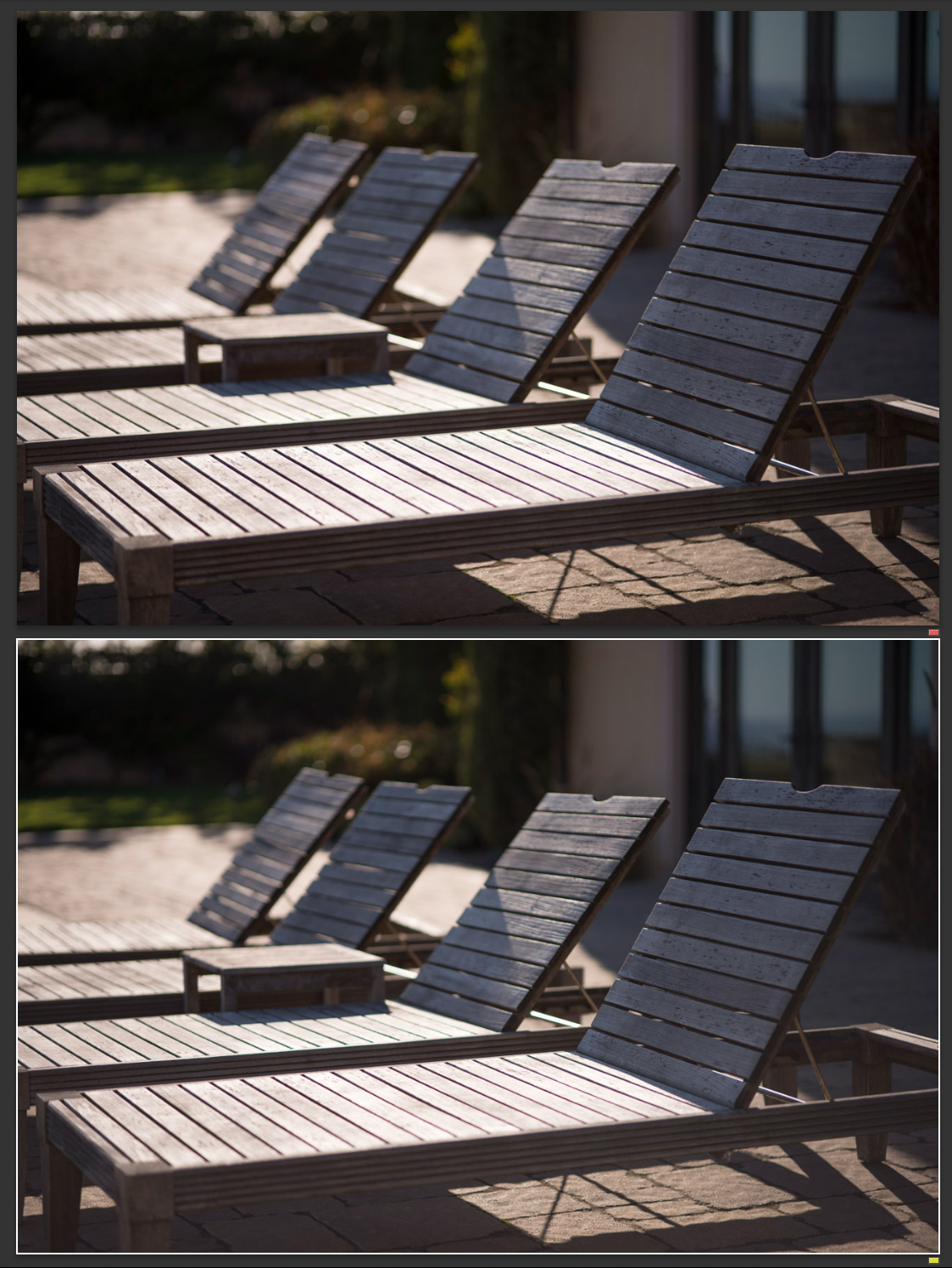
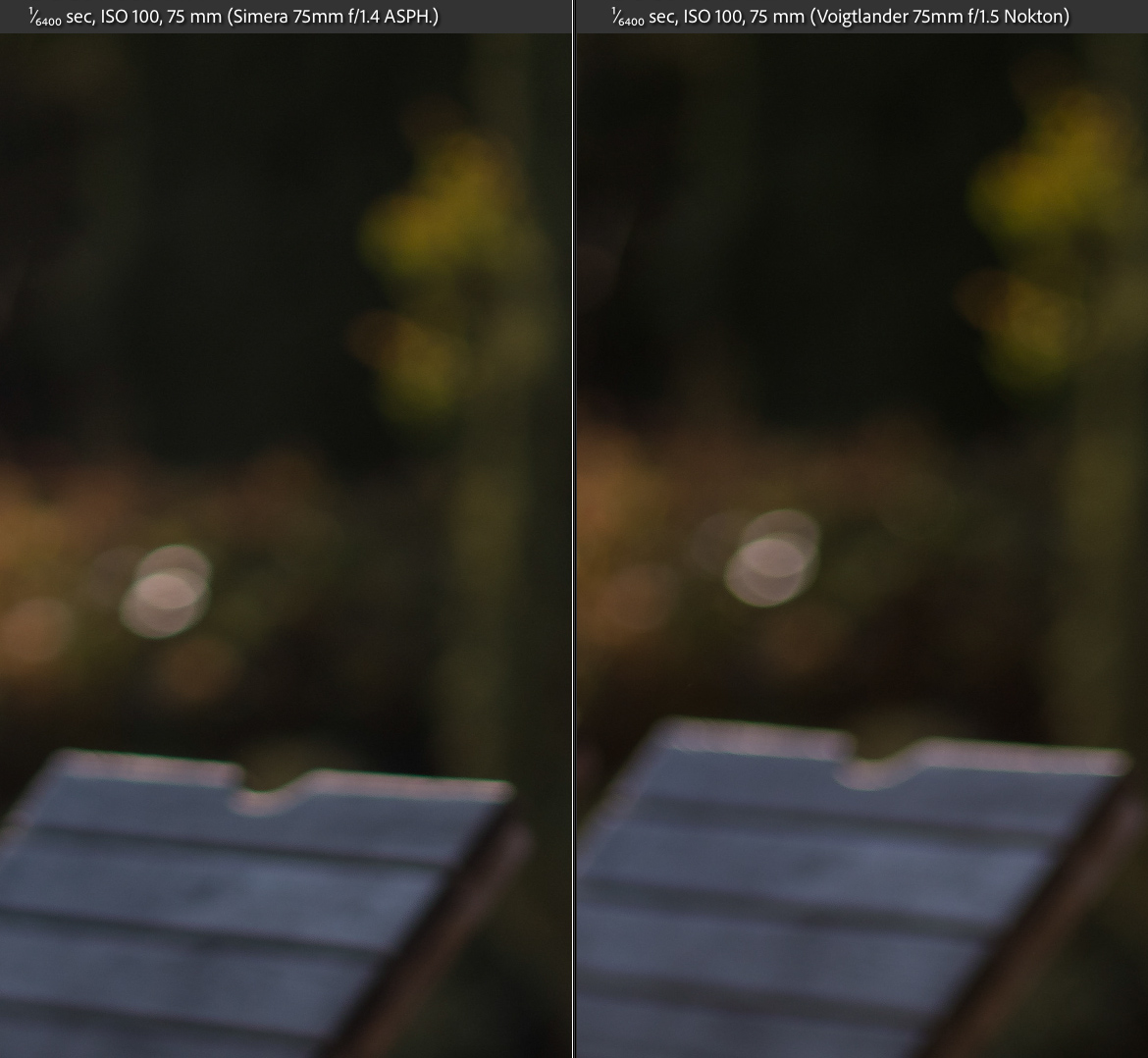
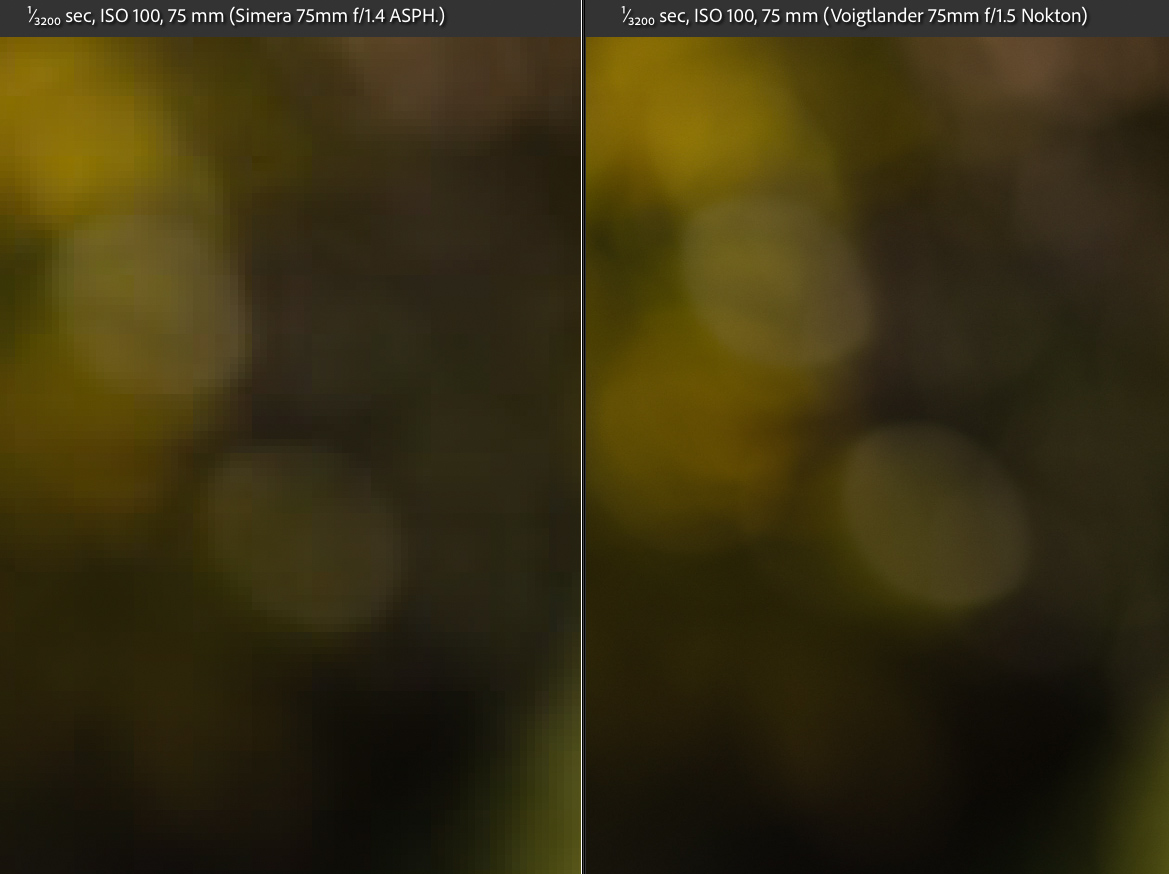
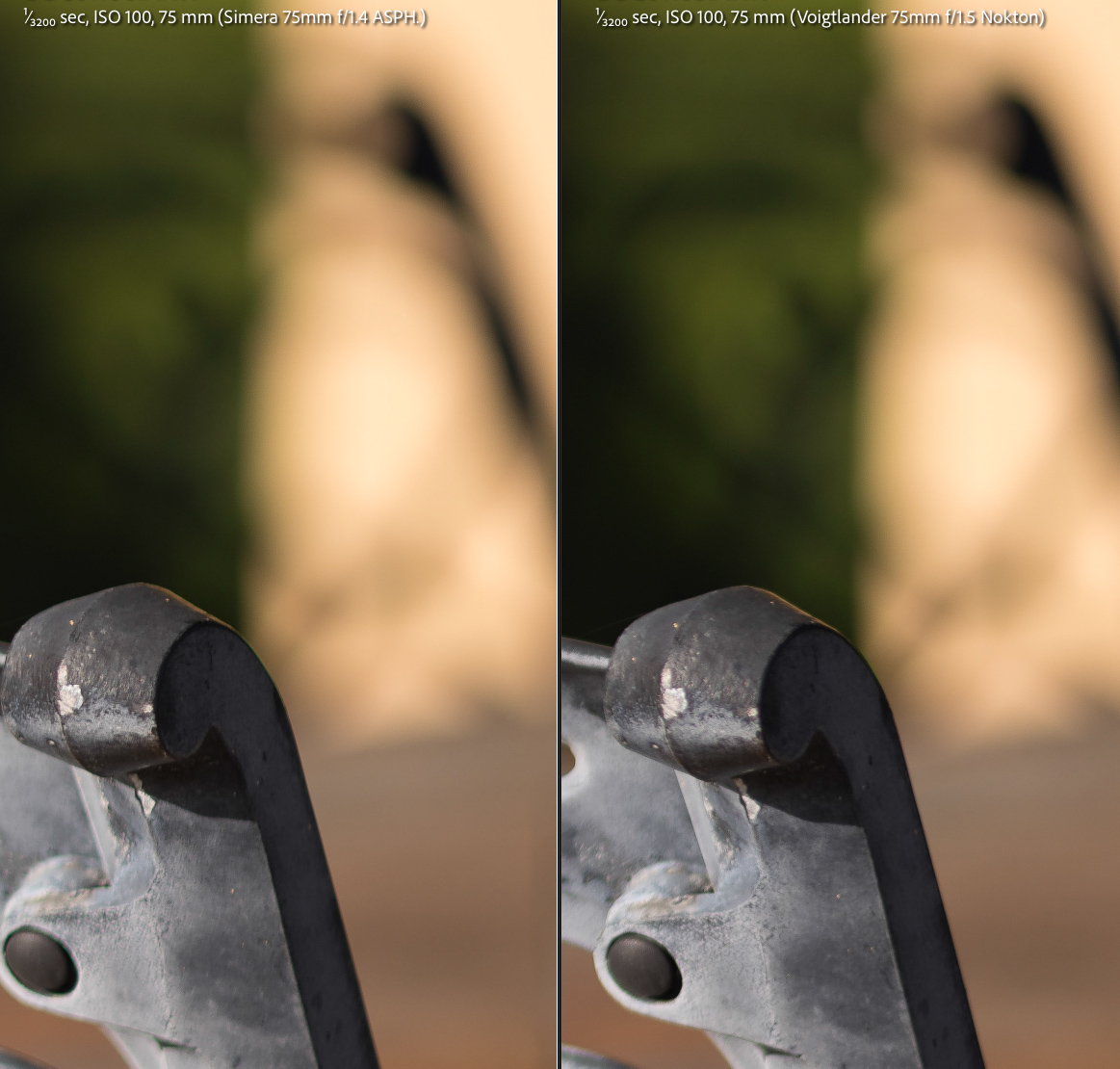
When looking at cropped sections, the Simera tends to produce slightly rounder specular highlights, though this is only noticeable at high magnifications. In full images, their rendering is nearly identical, with the Voigtlander showing slightly higher resolution and contrast and occasionally a ring flare, while the Simera is more prone to veiling flare when shooting against strong light sources.

While I typically gravitate toward lenses with more distinct character, I can see why many would appreciate the modern, refined rendering of both the Simera and Voigtlander. They offer a polished look that aligns with what most photographers seek in a modern portrait lens.


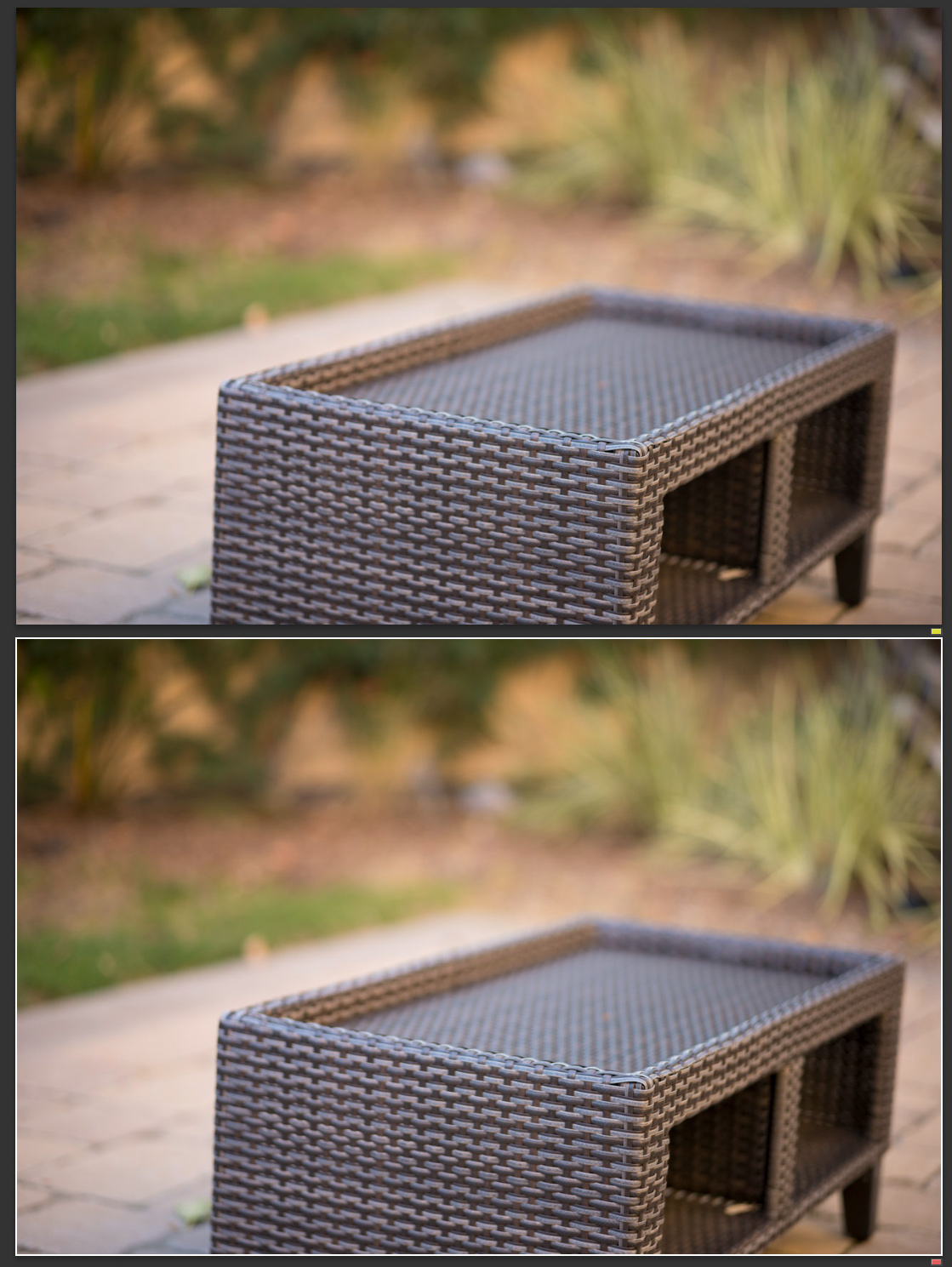
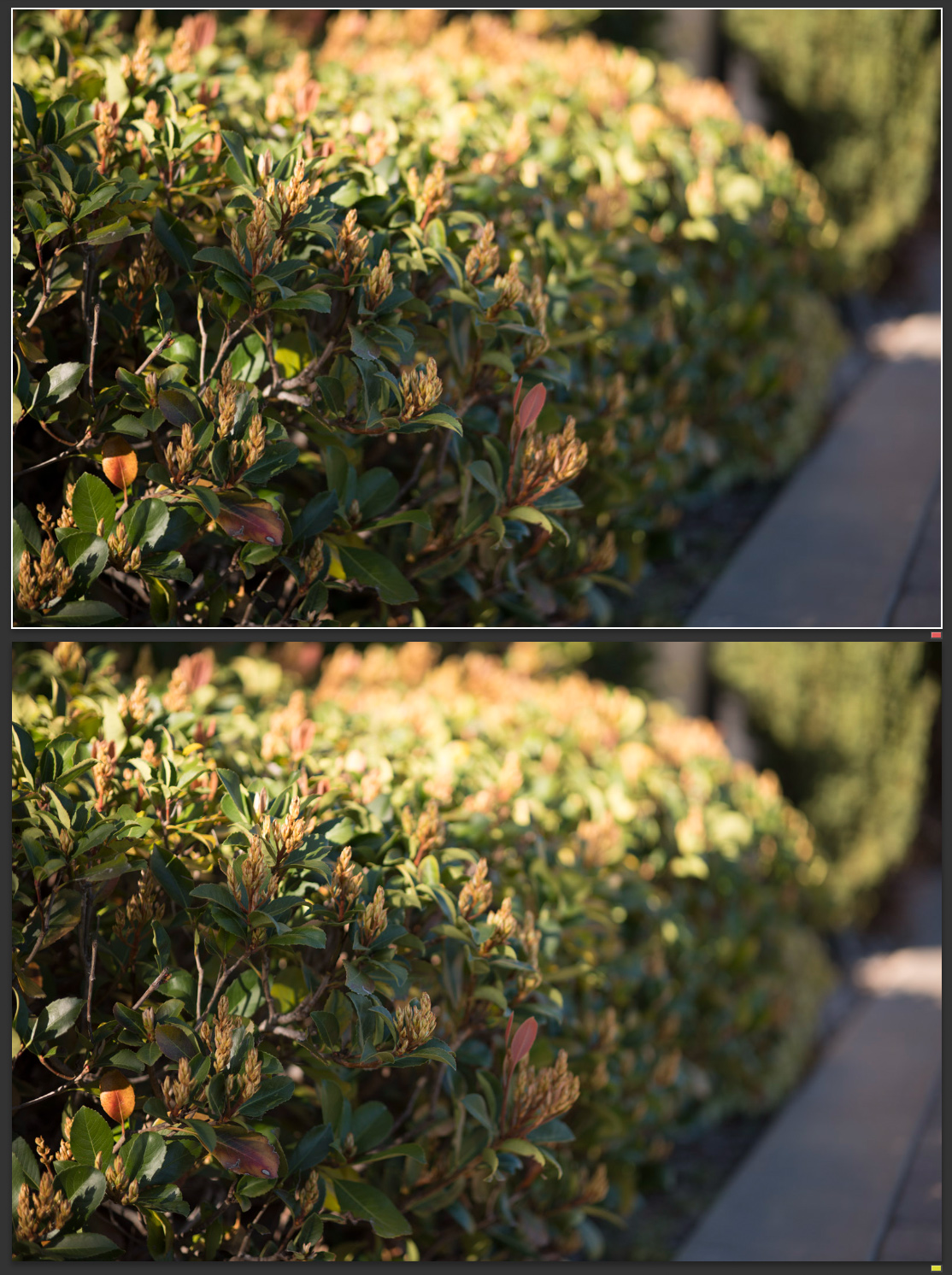
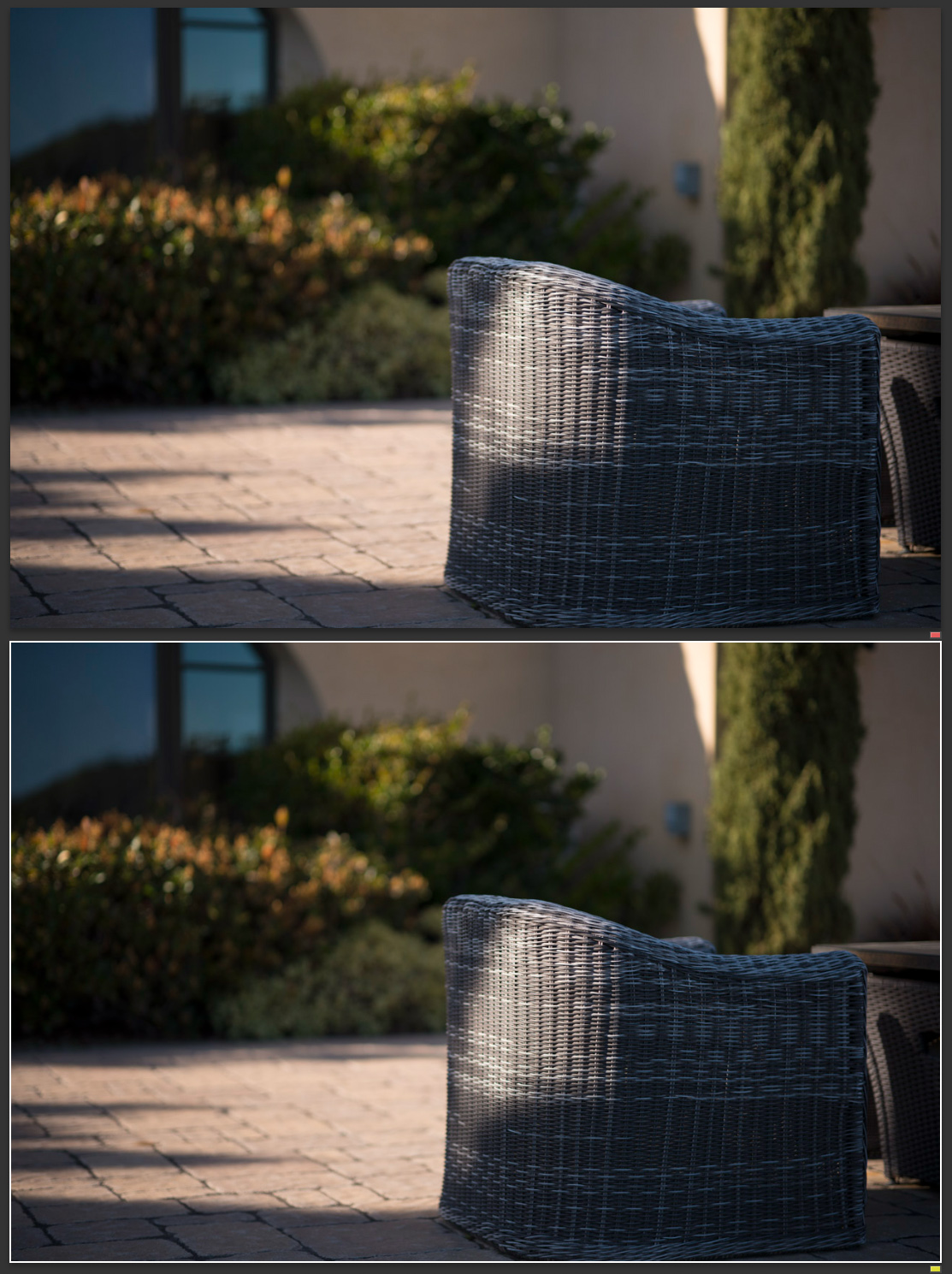
Sample 1:


TOP: Simera | BOTTOM: Voigtlander (Take note of the ring flare in the Voigtlander sample)


Similar optical vignetting and rendering structure


slight higher contrast for the Voigtlander but similar rendering


Mar 31, 2025 at 09:20 PM
Fred Miranda
Offline
Admin
Upload & Sell: On
p.4 #8 · Thypoch Simera 75mm f/1.4 ASPH. Review


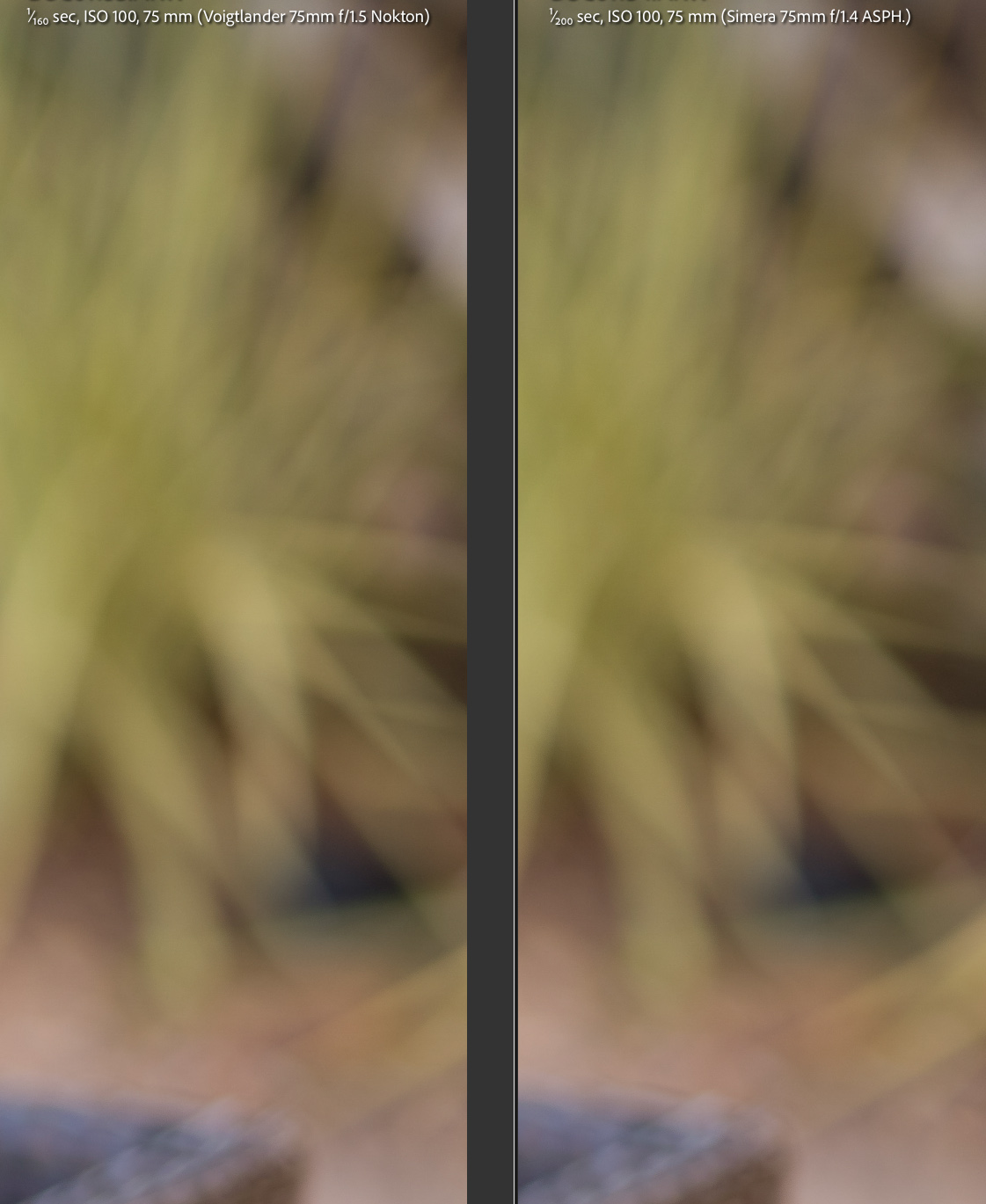
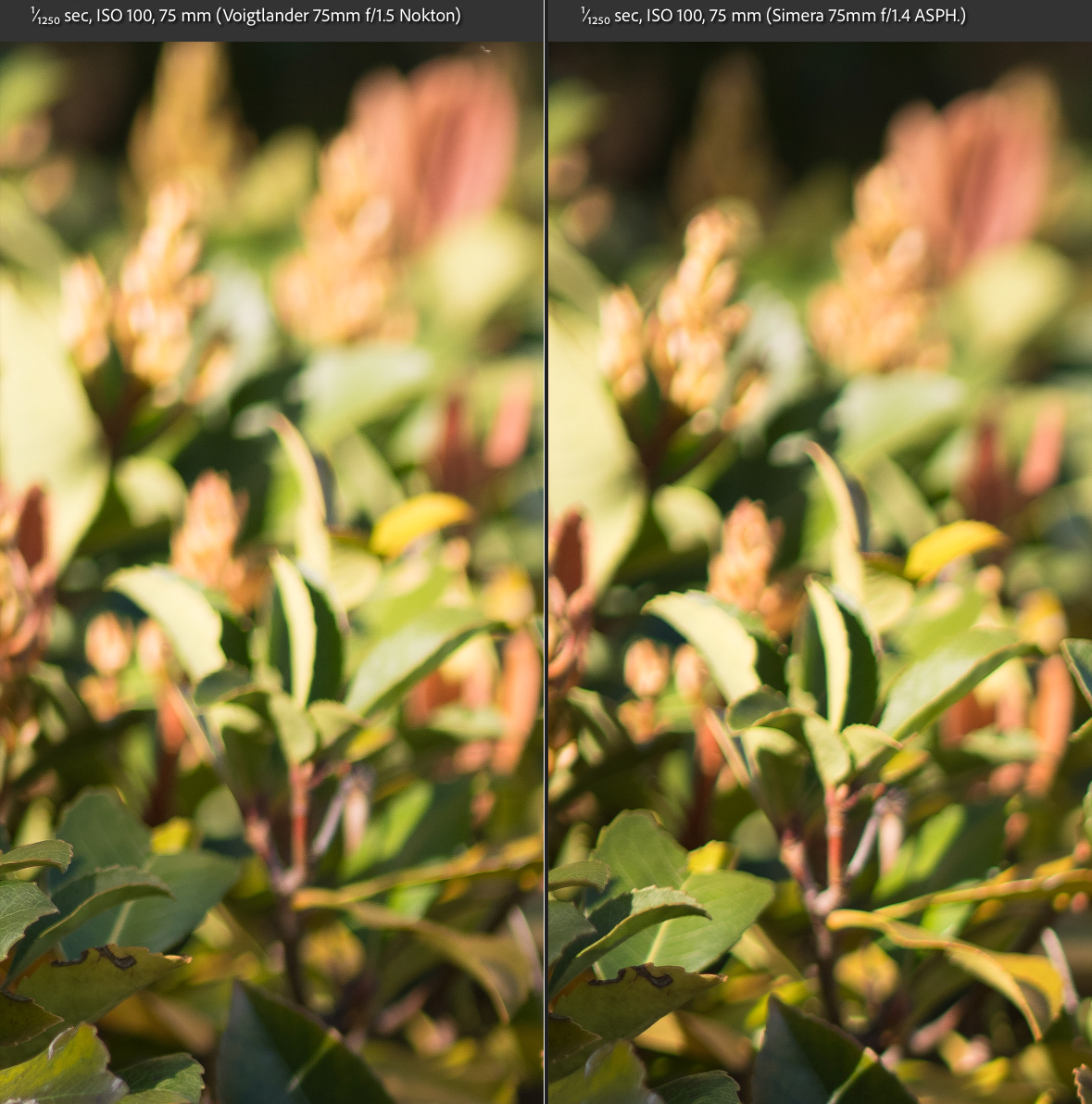
Sample 2:


TOP: Simera | BOTTOM: Voigtlander


Similar structure


Similar structure


Similar structure


Mar 31, 2025 at 09:21 PM
Fred Miranda
Offline
Admin
Upload & Sell: On
p.4 #9 · Thypoch Simera 75mm f/1.4 ASPH. Review


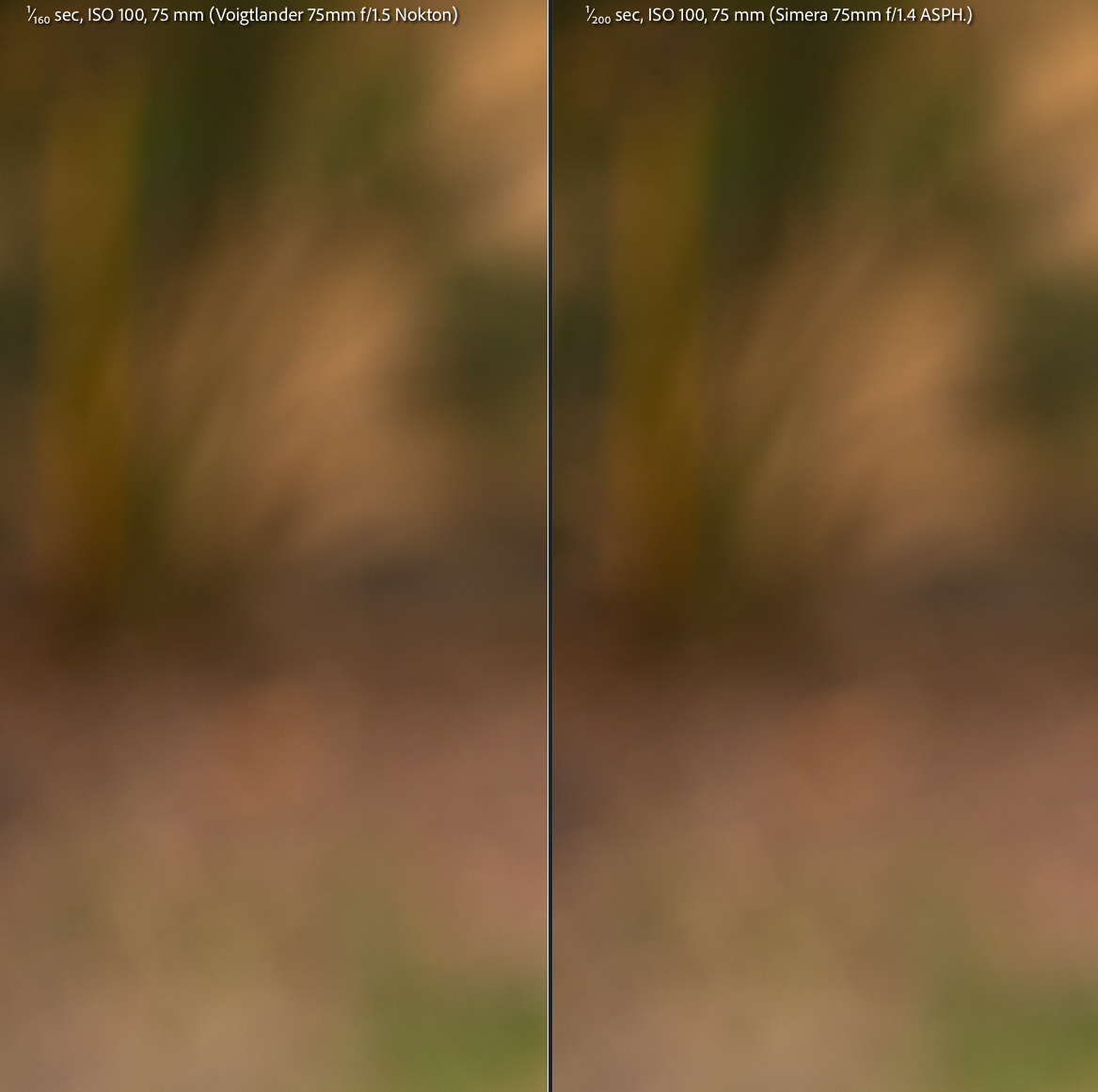
Sample 3:


Botton: Simera | Top: Voigtlander


Mar 31, 2025 at 09:23 PM
Fred Miranda
Offline
Admin
Upload & Sell: On
p.4 #10 · Thypoch Simera 75mm f/1.4 ASPH. Review


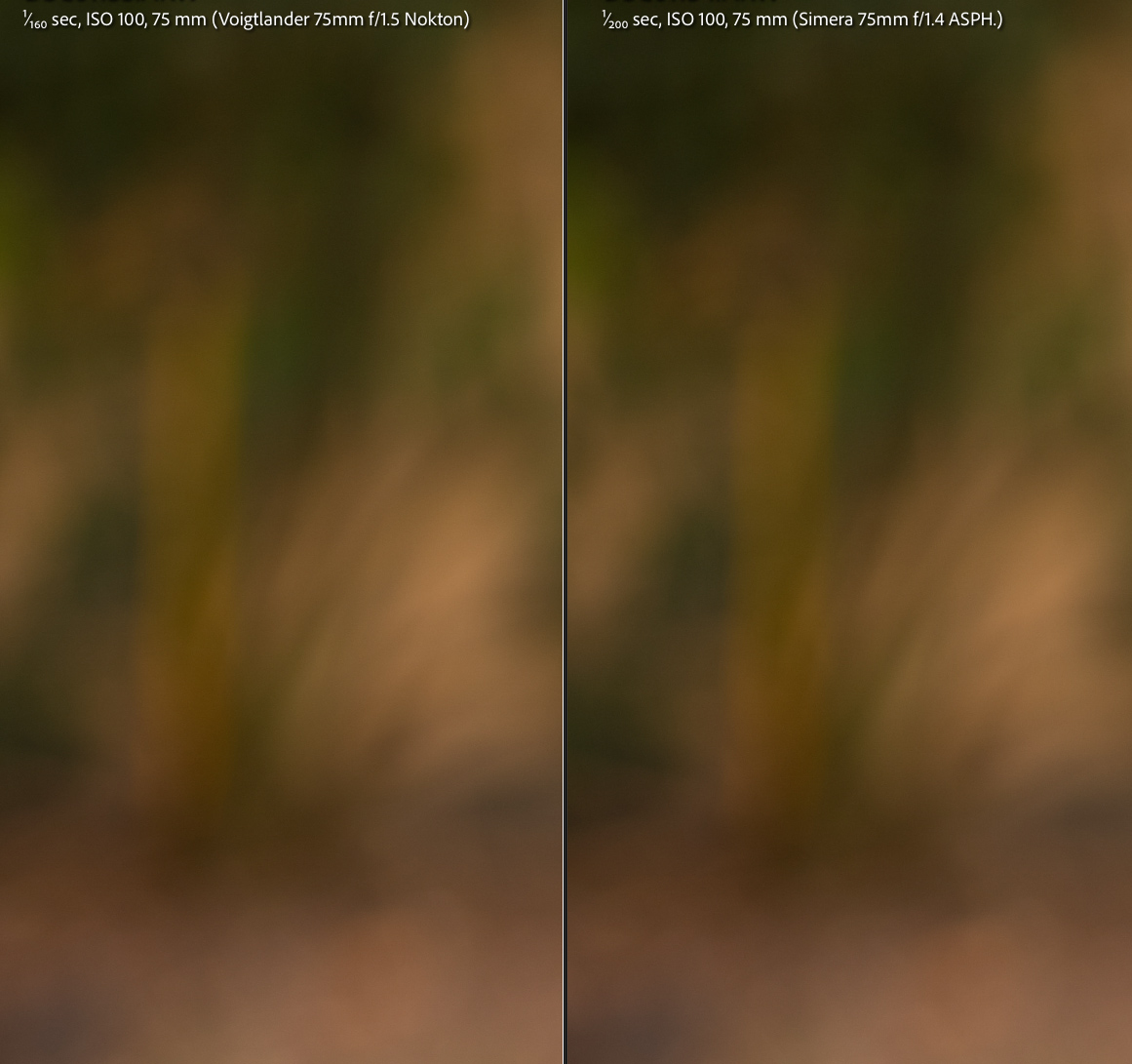
Sample 4:


TOP: Simera | BOTTOM: Voigtlander (The Simera shows more veiling, resulting in lower contrast)


Mar 31, 2025 at 09:24 PM


Search in Used Dept. 

Fred Miranda
Offline
Admin
Upload & Sell: On
p.4 #11 · Thypoch Simera 75mm f/1.4 ASPH. Review


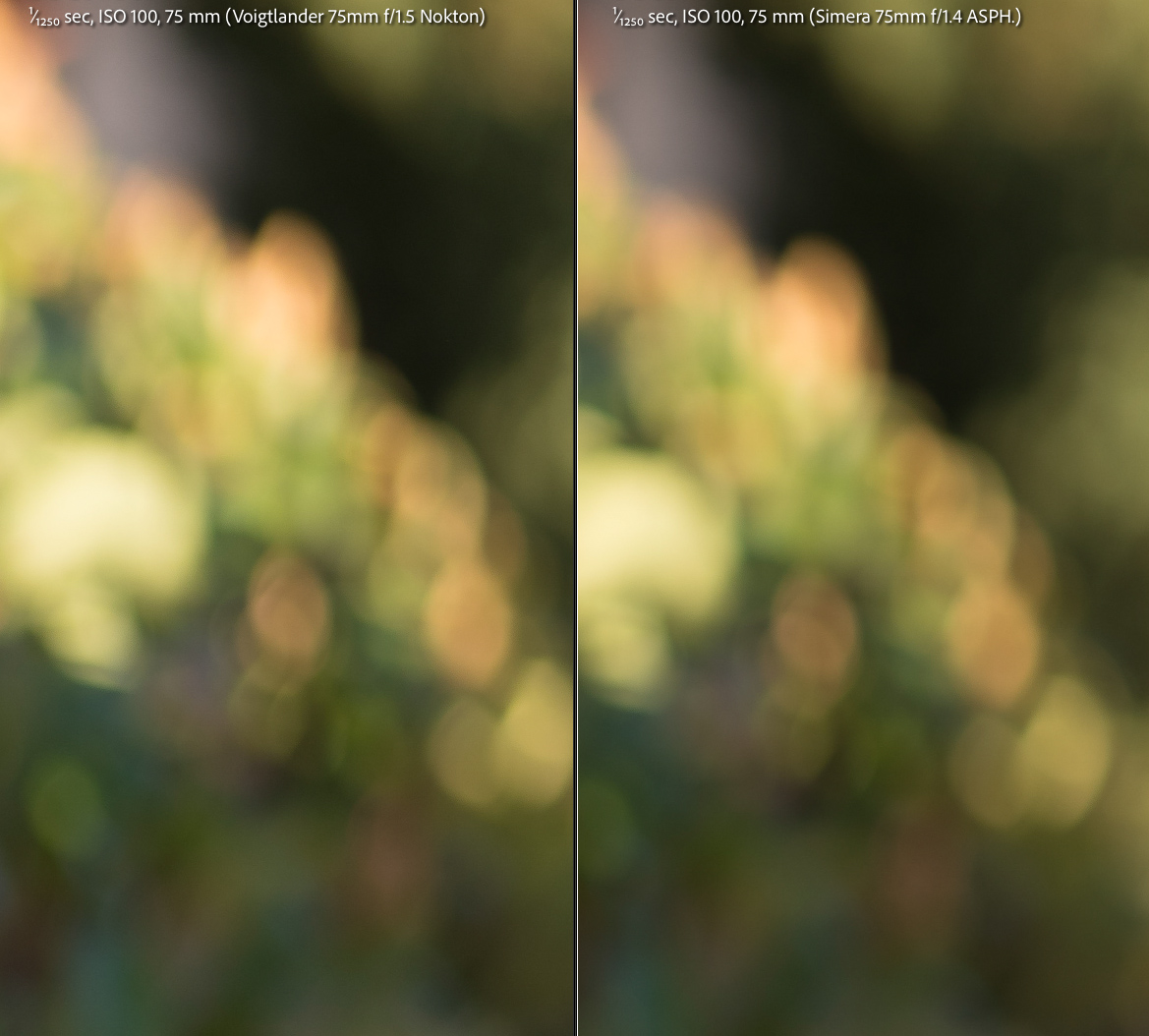
Sample 5:


BOTTOM: Simera | TOP: Voigtlander


Mar 31, 2025 at 09:25 PM
Fred Miranda
Offline
Admin
Upload & Sell: On
p.4 #12 · Thypoch Simera 75mm f/1.4 ASPH. Review


Sample 6:


BOTTOM: Simera | TOP: Voigtlander


Mar 31, 2025 at 09:26 PM
Fred Miranda
Offline
Admin
Upload & Sell: On
p.4 #13 · Thypoch Simera 75mm f/1.4 ASPH. Review


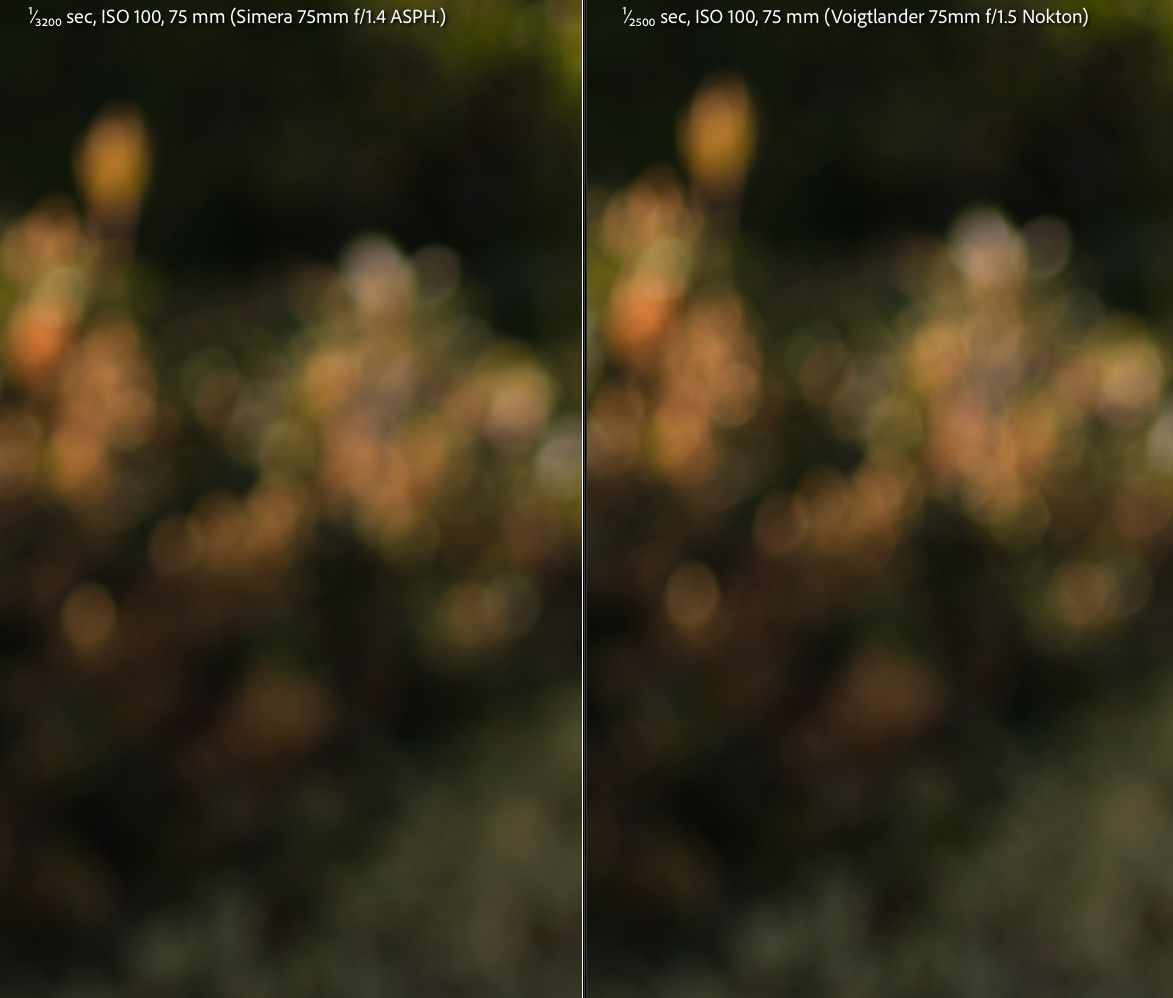
Sample 7:


The Simera produces slightly rounder specular highlights here.


Mar 31, 2025 at 09:28 PM
rsolti13
Offline
• • • •
Upload & Sell: On
p.4 #14 · Thypoch Simera 75mm f/1.4 ASPH. Review


Bravo to Thypoch if they were trying to copy the Voigtlander formula, unreal how close they are. Differences are so subtle you wouldn’t notice any difference outside of this testing. If you are thinking about one of these lenses, looks like it comes down to price/ergonomics


Apr 01, 2025 at 05:24 AM
Steve Spencer
Offline
• • • • • • •
Upload & Sell: On
p.4 #15 · Thypoch Simera 75mm f/1.4 ASPH. Review


rsolti13 wrote:
Bravo to Thypoch if they were trying to copy the Voigtlander formula, unreal how close they are. Differences are so subtle you wouldn’t notice any difference outside of this testing. If you are thinking about one of these lenses, looks like it comes down to price/ergonomics


it could be down to ergonomics and price, but these two similar lenses also have a couple, I think, notable differences that may matter to some people.
First, although similar in size the Voigtlander is slightly lighter. That may be enough to sway some people.
Second, the Voigtlander is more resistant to veiling flare. Now that might draw some people to the Voigtlander, but it might draw some people to the Thypoch as they like being able to introduce that veiling flare into some of their shots. Some people see that as adding character to the image.
Third, the Thypoch has a 16-bladed aperture, whereas the Voigtlander has a 12-bladed aperture. Some may prefer the Thypoch aperture for how round the bokeh balls are even stopped down. Whereas some might prefer the Voigtlander aperture as it will produce nice sunstars even at f/4--you need f/8 or f/11 it seems for nice sunstars with the Thypoch. Of course not everyone likes sunstars, so they are easier to avoid with the Thypoch.
Fourth, the Thypoch has a floating element design, whereas the Voigtlander does not. The Thypoch may do a little better at close up performance because of this feature, but the Voigtlander is has pretty good performance at its MFD as well.
Fifth, the Voigtlander seems to be a little sharper and contrastier wide open, than the Thypoch. Some may prefer the higher contrast of the Voigtlander, whereas others may prefer the lower contrast of the Thypoch.
Finally, the Thypoch has a really flat field of focus and it seems a bit flatter than the Voigtlander. The Voigtlander has a pretty flat field too, but the difference might matter to some folks.

Personally, I am torn. I would slightly prefer the Voigtlander for landscape, cityscape, architecture, and nature type shots, but I slightly prefer the Thypoch for people shots as it captures one of my favorite looks just a bit better. I think both lenses will do both tasks well, however, so I am not sure what I will pick in the end. Maybe it will come down to ergonomics and price. I have the Voigtlander now, so maybe it will just be that I don't want the hassle of switching. I think I know myself well enough, however, that at some point I will want to try out the Thypoch and will switch for at least awhile.

Thanks Fred for the very helpful review and comparisons. I always appreciate your very thorough reviews.


Apr 01, 2025 at 07:45 AM
Paul Z
Offline

Upload & Sell: Off
p.4 #16 · Thypoch Simera 75mm f/1.4 ASPH. Review


Thanks, Fred for the thorough review and Steve for your comments.

I think the slight lower contrast is favourable for people but both look like nice options.

From other people's examples, the E/Z/R-mount versions of the 75mm appear to show less optical vignetting compared to the M-mount, so there is some benefit there for the extra weight of the larger front element.

I just this moment saw Thypoch tease their 'Biggest Aperture Ever' 1: 0.7 / 50 ASPH. on their socials, which must be their joke for today


Apr 01, 2025 at 10:12 AM
Fred Miranda
Offline
Admin
Upload & Sell: On
p.4 #17 · Thypoch Simera 75mm f/1.4 ASPH. Review


Back to Quick Links

Optical Vignetting and Specular Highlights shape

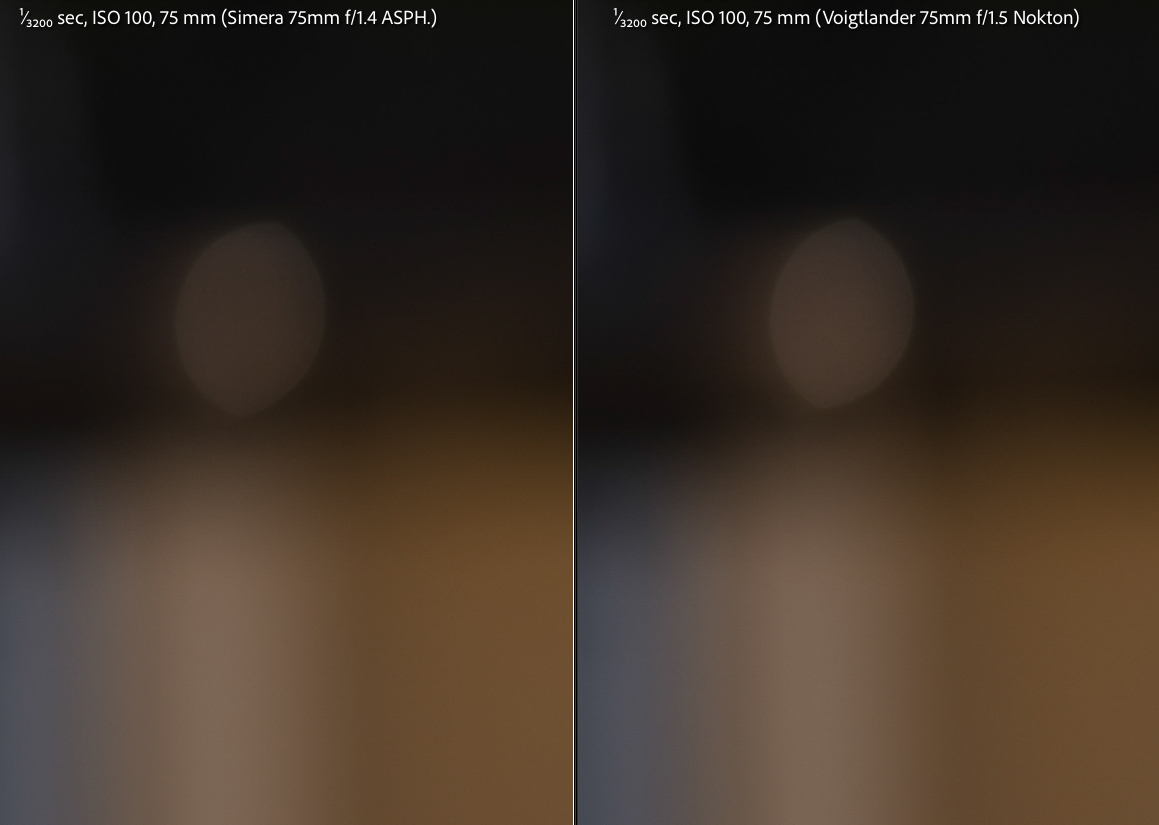
In terms of optical vignetting and the shape of specular highlights, the Simera performs similarly to the Voigtlander 75mm f/1.5 Nokton. Based on my observations, both lenses display a cat's-eye bokeh effect near the edges of out-of-focus regions, though the shape remains moderate and is notably rounder compared to many other fast 75mm lenses. Generally, neither lens presents issues during typical use; however, the cat-eye effect in specular highlights becomes more pronounced as the distance to the subject increases.

Despite the inclusion of aspherical elements in the Simera 75/1.4 ASPH., the onion ring pattern within the internal structure is minimal and barely discernible, thanks to the lens's smooth focus transition.

Below are some samples illustrating the cat-eye bokeh shape at varying distances:


Apr 02, 2025 at 05:19 PM
Fred Miranda
Offline
Admin
Upload & Sell: On
p.4 #18 · Thypoch Simera 75mm f/1.4 ASPH. Review


Back to Quick Links

Chromatic Aberration Control

Axial CA:

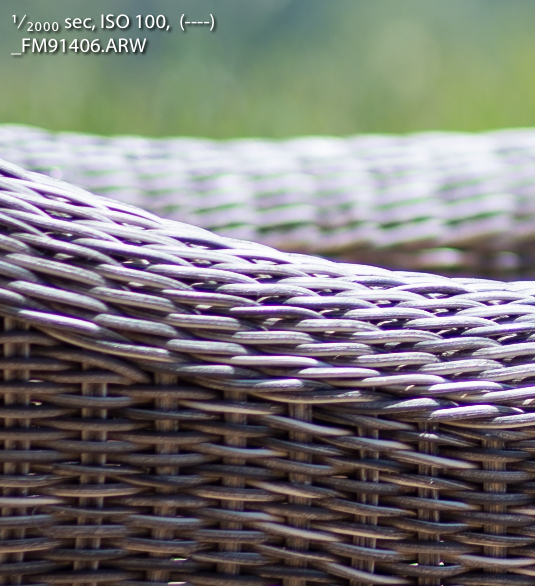
Typically, 75mm f/1.4 lenses show noticeable axial and lateral chromatic aberration, but the Simera 75/1.4 ASPH. stands out as an exception, with CA control being one of its strong points. By contrast, the Voigtlander 75mm f/1.5 Nokton shows significantly less correction for CA, as demonstrated in the samples below.

While the Simera 75mm f/1.4 ASPH. does display some fringing in high-contrast areas, which is unavoidable to some extent, it requires extreme conditions for this to become apparent. In everyday photography, color fringing is seldom an issue, and I've noticed no purple fringing in the focus plane.


Extreme contrast showing green fringing.


Green fringing on specular highlights under high contrast light..


No purple fringing in the focus plane.


Voigtlander 75mm f/1.5 Nokton axial CA is more noticeable.


Voitlander 75mm f/1.5 Nokton purple fringing is more noticeable.


Apr 02, 2025 at 05:41 PM
Fred Miranda
Offline
Admin
Upload & Sell: On
p.4 #19 · Thypoch Simera 75mm f/1.4 ASPH. Review


Lateral CA:

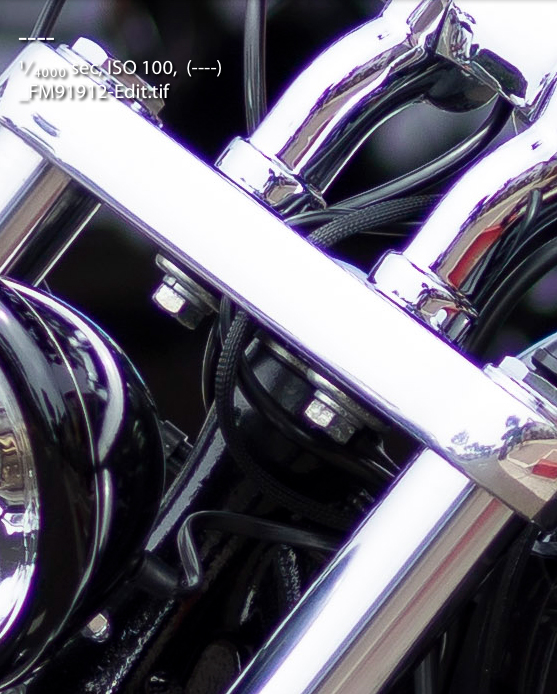
Regarding lateral chromatic aberration, which manifests toward the frame's corners at any aperture, the Simera delivers impressive performance, although not perfect but showing better correction than most fast telephoto lenses.

I've shared a comparison at 100% magnification to highlight the color error more clearly. When enabling Lightroom’s automatic CA correction, a slight adjustment is applied to the Simera crop, though the correction falls short of perfection.


Without Lightroom CA correction.


With Lightroom CA correction enabled.


Apr 02, 2025 at 05:46 PM
Fred Miranda
Offline
Admin
Upload & Sell: On
p.4 #20 · Thypoch Simera 75mm f/1.4 ASPH. Review


Thypoch Simera 75mm f/1.4 ASPH – Read the Full Review


Final Thoughts

The Simera 75mm f/1.4 ASPH. offers a well-balanced mix of smooth rendering and solid performance. At wider apertures, it provides good resolution but doesn't capture the finest details, showing noticeable improvement when stopped down. By f/2.8 in the center, f/4 in the mid-zone, and f/5.6 in the corners, the lens reaches optimal resolution and contrast. Compared to the Voigtlander 75mm f/1.5 Nokton, the Simera performs slightly better in the mid-field, while the Voigtlander has an edge in the extreme corners. At the center, both lenses perform similarly. Also, the Simera renders a slightly wider field of view and warmer tones.

Chromatic aberration control is one of the Simera's strongest points, outperforming the Voigtlander in this regard. The lens also produces minimal distortion, with only a slight pincushion effect. Its bokeh is smooth and natural, with round specular highlights even at small apertures, due to its 16-blade aperture design. Unlike the 50mm f/1.4 ASPH. counterpart, which produces well-defined sunstars starting at f/4, the 75mm requires much smaller apertures to achieve similar clarity in its sunstar rays. Despite minor focus shift, stopping down and refocusing ensure optimal sharpness. The Simera maintains excellent optical performance even when adapted to a Sony A7R II, showing no significant degradation despite the thicker sensor stack.

The Simera 75mm f/1.4 ASPH. is a strong option among fast 75mm lenses, offering a refined, modern rendering that suits professional portrait and landscape photography. However, some may find its look too smooth and abstract, lacking a distinctive character. Its flat field curvature ensures consistent sharpness across the frame, making it a solid choice for architectural work. While the Voigtlander 75mm f/1.5 Nokton performs similarly in rendering and resolution and remains a strong alternative, particularly for its better corner performance at wide apertures, the Simera stands out for its mid-field sharpness and superior chromatic aberration control, making it a compelling choice for those seeking a well-rounded 75mm lens.


Pros:

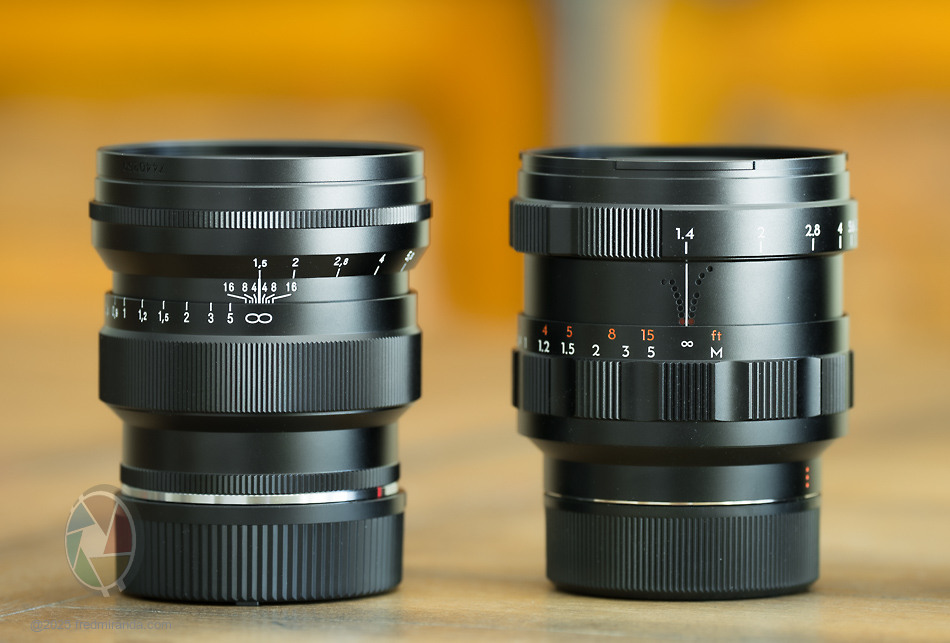
  1. Compact and lightweight for a fast 75mm lens.

  2. Floating design maintains high resolution and contrast even at MFD (0.60m).
  3. Low distortion.
  4. Flat field curvature ensures even sharpness across the frame
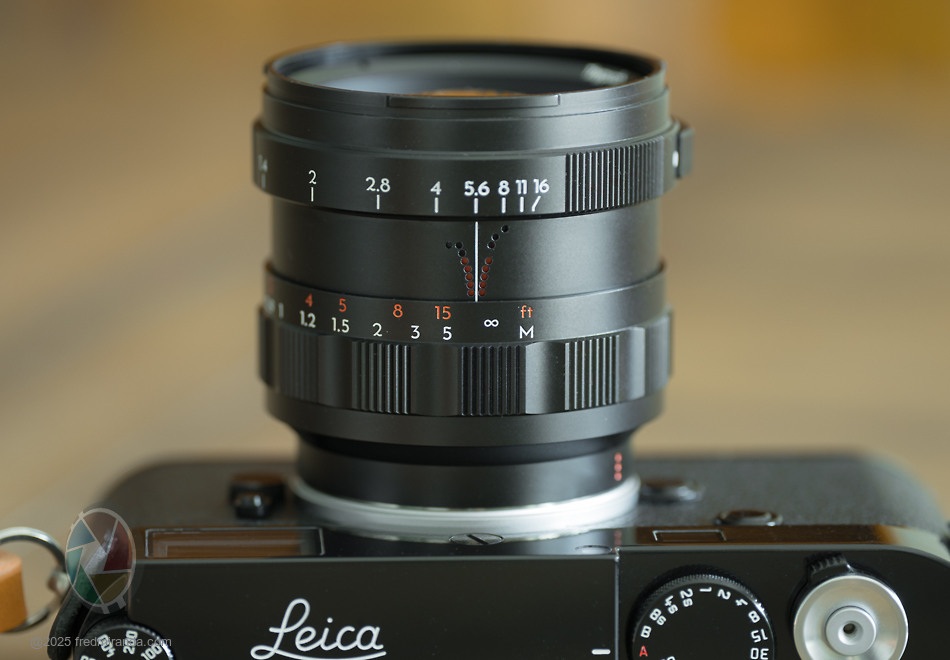
  5. Solid build with tight tolerances; my copy was well-centered and calibrated with the rangefinder.
  6. Aperture mechanism produces rounded specular highlights when stopped down.
  7. Smooth and modern rendering with seamless focus transitions.
  8. Unique "mechanical dots" depth of field scale replaces the classic scale.
  9. Great chromatic aberration control (both lateral and axial).


Cons:

  1. Inconsistent spacing between aperture markings.

  2. Varying stop increments, transitioning from 1/3 to 1/2 to 1 full stop on small apertures.

  3. Short focus throw requires precise focusing.
  4. Prone to veiling flare when shooting against the light, which can create a unique effect depending on the application.
  5. Sunstars become well-defined only at f/8 and smaller apertures.
  6. Corners aren't as sharp at wide apertures.


Apr 02, 2025 at 06:16 PM
1       2       3              5       6       7       end


FM Forums | Leica & Alternative Gear | Join Upload & Sell

1       2       3              5       6       7       end


You are not logged in. Login or Register