Hi All,
We're up in NH, ME, & Fundy camping for a month (first loons yesterday! ), and next week we'll be in Acadia on a whale watching trip. So...it's been a while for me and first time with a Z9. I'll have a 500PF, 70-200/f4, and if I want, 300f4AFS, 200-400VR, and tc's. I'd love to hear your collective thoughts on settings, CPL use, etc. I'm autoISO manual pretty much always in non-macro/landscape shooting. Take it from there.
I can also bring a D5 or D850 as a second body. I had a pretty successful outing about 5 years ago with a D500 and 200-500VR...don't have either with me this time. Very excited to play the Z9/whale game!
Thanks all in advance!
What type of boat are you going to be on? That would play a significant role for me if I were choosing lenses for myself. In Iceland, for example, we were on a rib boat for a whale watch which was extremely rough, exposed, and has much tighter angles that you can shoot from versus an open deck boat that you can walk around on (and less space to put your camera).
I’m not wildlife photographer, but have run across whales at sea. You can get surprisingly (very) close and I’m sure your experienced guides will. They can be spread out and breeching or slapping the water with fins (humpbacks), so a longer lens can be handy. You’ll start smelling them at a couple hundred yards and the crew should be able to get you within 50yds or closer. To prep, I’d ask the crew what to expect - their range at different locations during the trip.
Interested in some expert input as well, as I'll also be in Acadia this coming week and plan on going whale watching (small world!) Absolutely zero experience with it, but thinking about taking the R5II and 70-200.
jbear wrote:
I had a pretty successful outing about 5 years ago with a D500 and 200-500VR...don't have either with me this time. Very excited to play the Z9/whale game!
Thanks all in advance!
Yes, DX is very handy for this kind of pictures.
Many years ago (2008), in Boston, I had a lot of fun with D300 and 80-400 VR, a relatively lightweight gear
My most used focal lengths were in the 200-300 mm range.
We only have Bryde’s whales over here and they are relatively small and chance of seeing them breaching is about the same as winning lottery. Also there is a rule that the boat needs to keep 100m distance but in practice more like 50-75m. I use the longest lens available, usually 800pf. I do bring second body with 400/2.8s tc as sometimes if they are feeding, i can see 2 whales open its mouth on the surface side by side. Very rarely whale may surface near the boat that 400mm was a bit too long but that is quite rare. Never lucky enough that a whale surface right by the boat where people just grap their phone
But it happen regularly here with certain whales.
I would never again take just a prime lens, since you never know how close the whales might approach the boat; I would recommend a zoom lens, like a 100-400. If you have two camera bodies, a 24-120 and a 100-400/150-500/180-600 type zoom would be the ideal combo.
If you have ideal weather conditions, the longer lenses will be nice to have, but more often in summer heat haze will quickly spoil those longer shots.
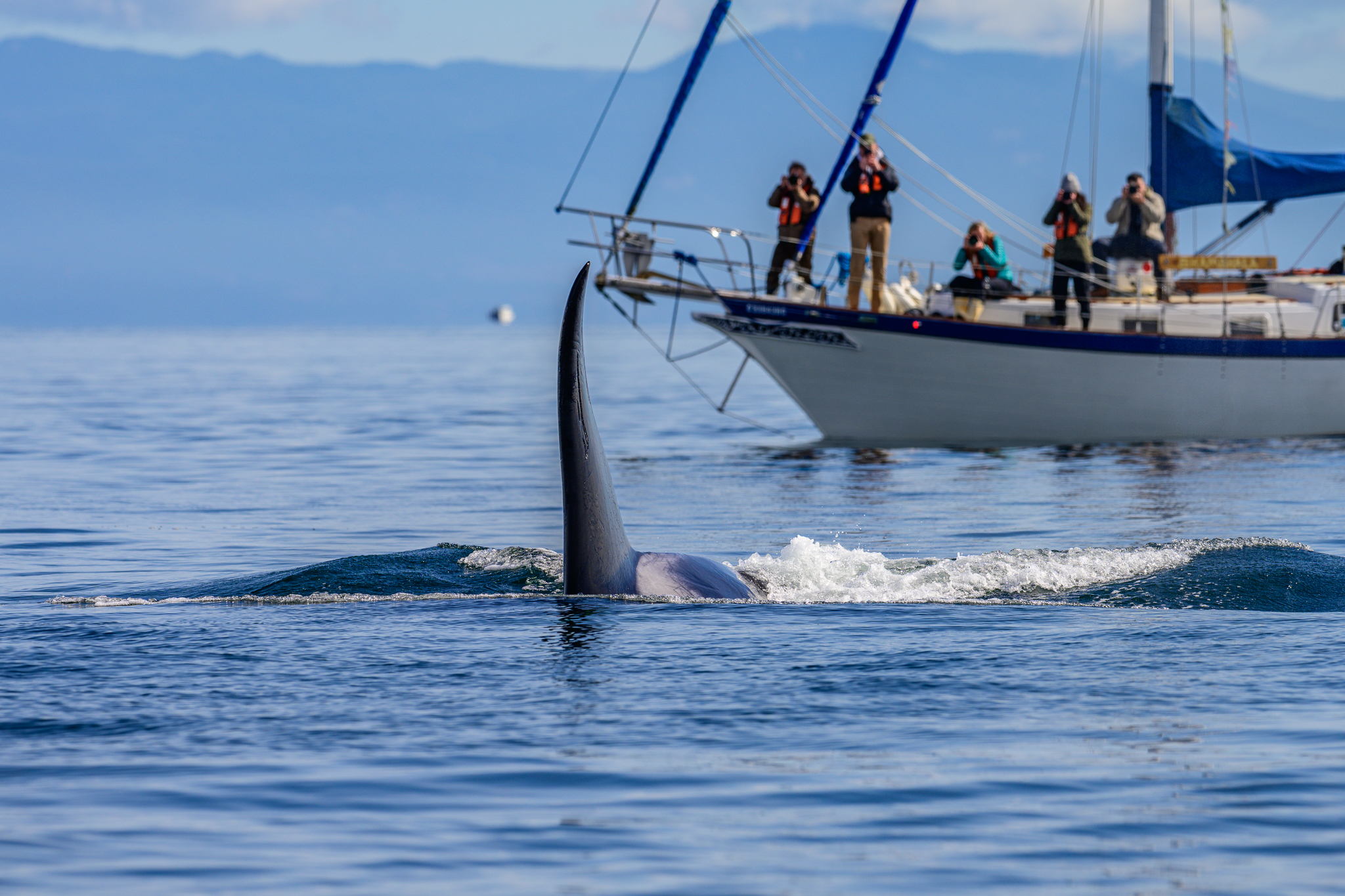
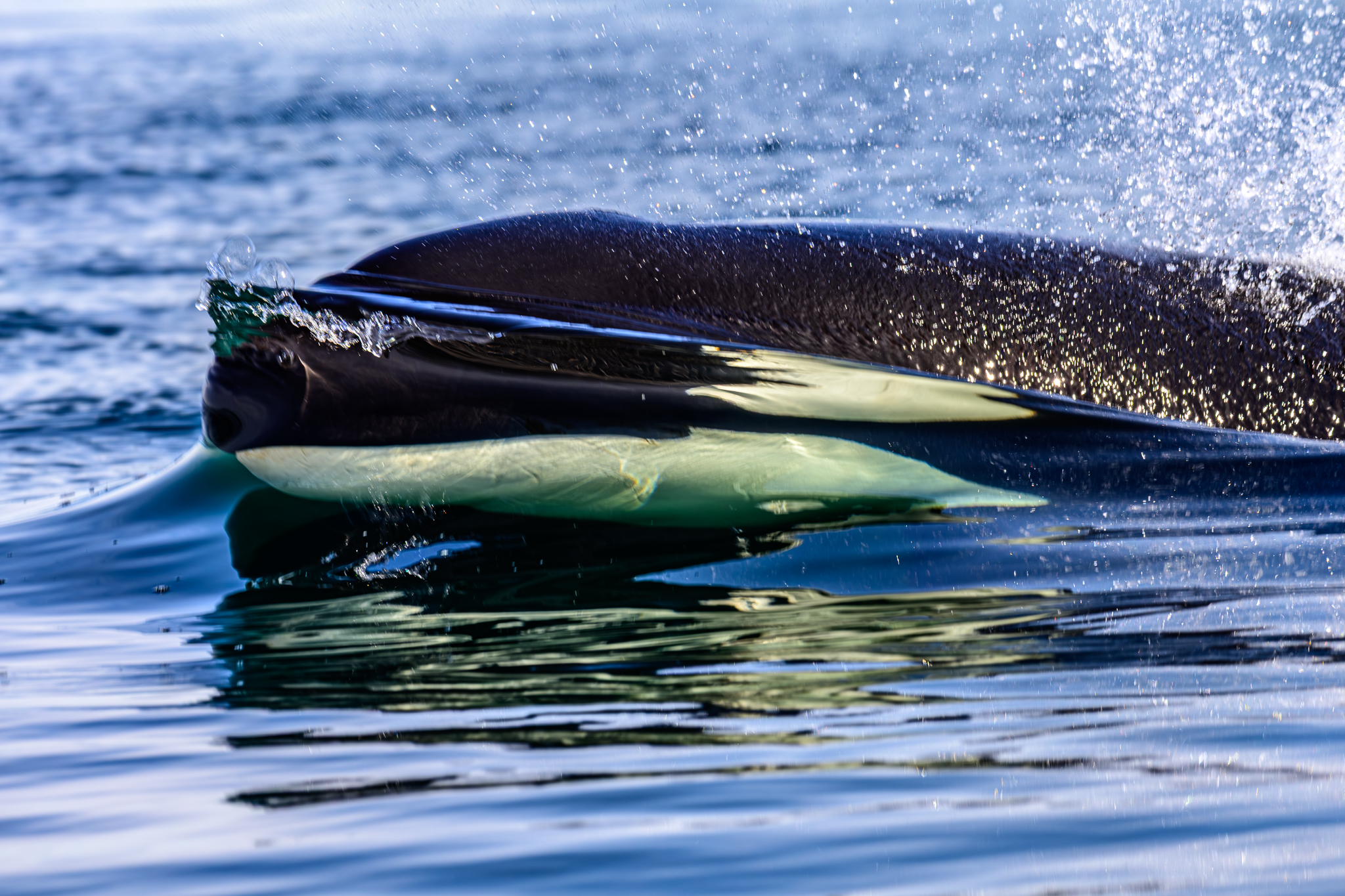
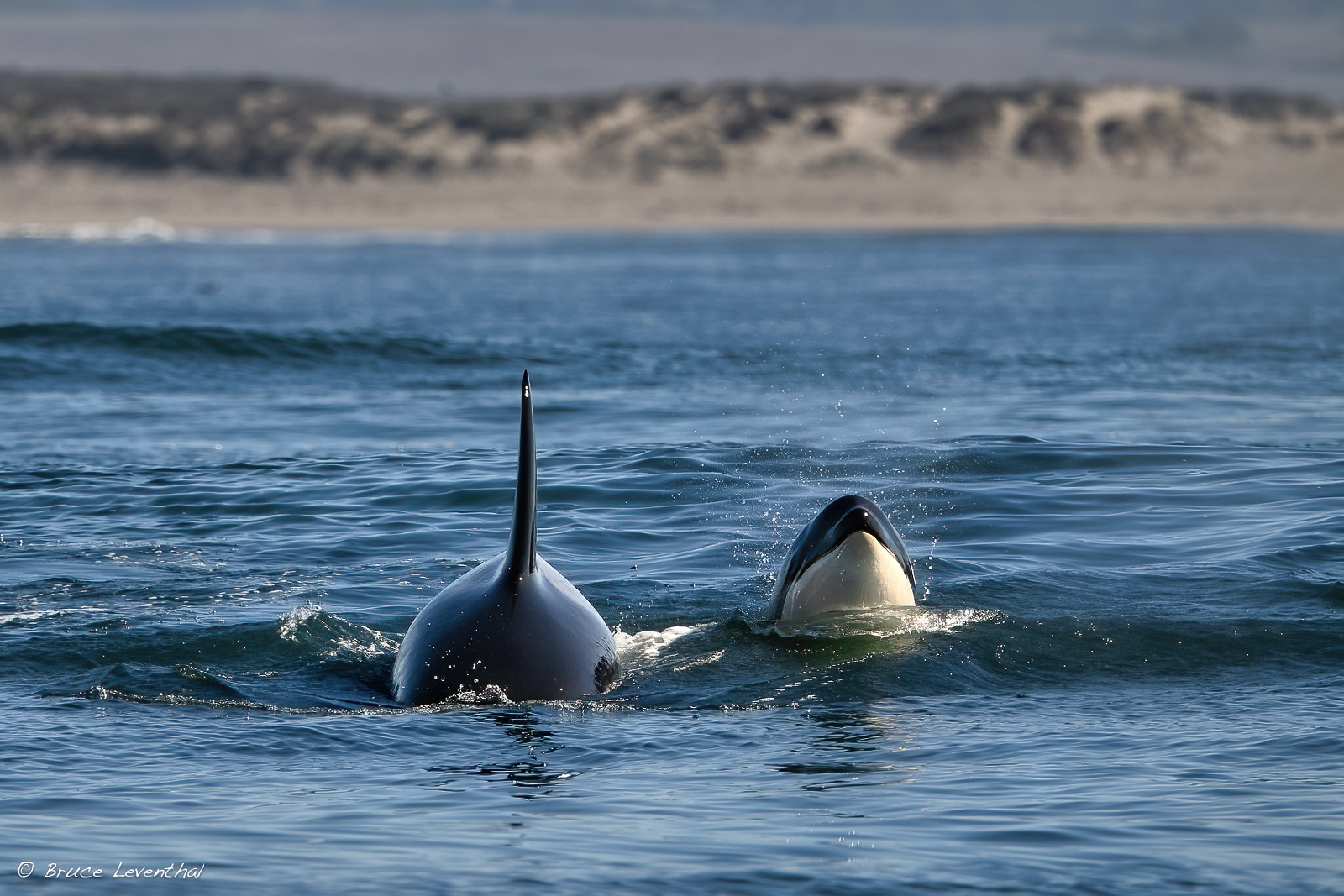
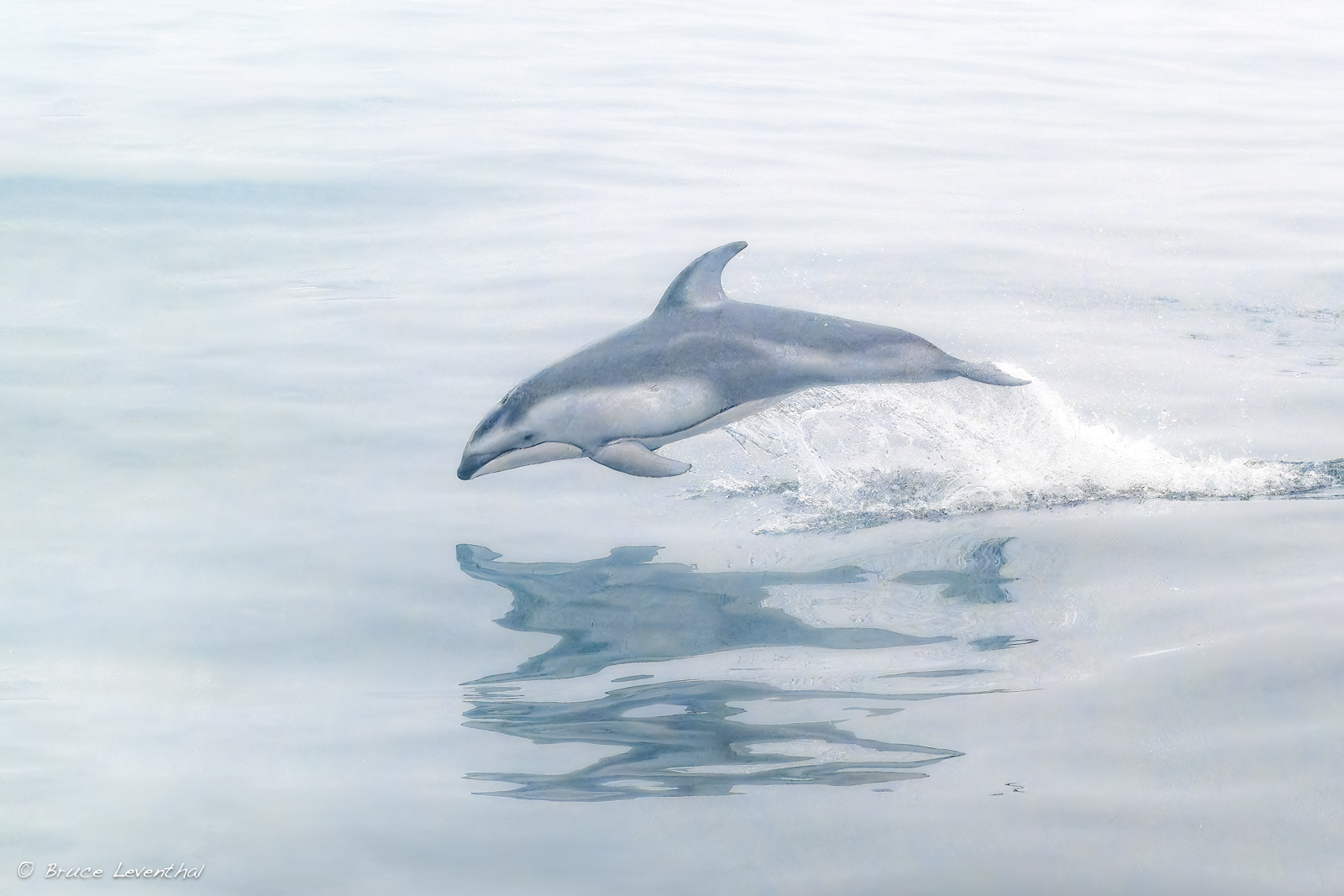
Biggs Orca (from the day I only took a 400mm lens...)
Some of you have beat me to it, but I'll offer my 2c's anyway.
First, I live on the Monterey Bay and photograph marine mammals more often than most. I've also spent weeks at sea for dedicated marine life photography and research.
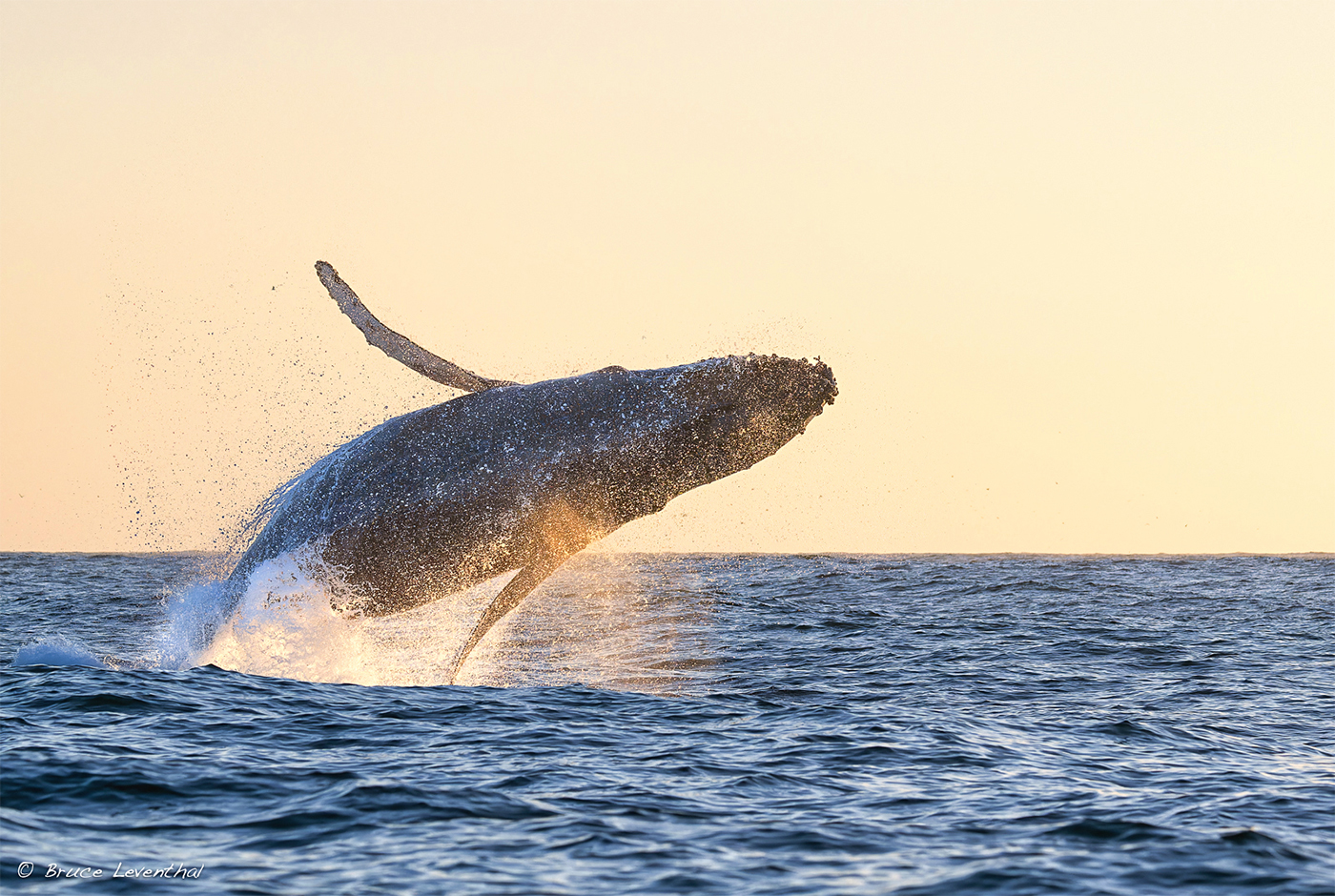
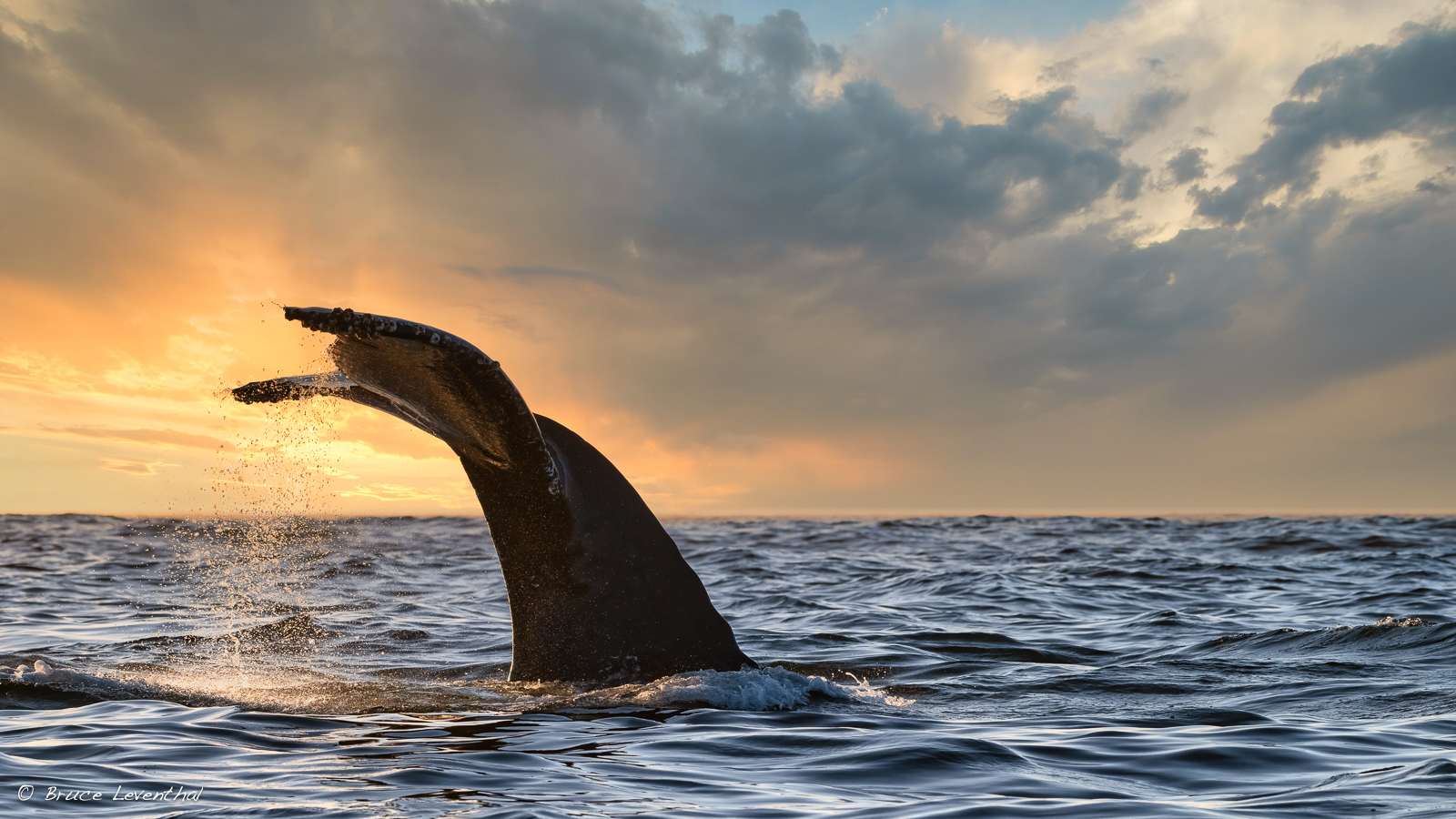
Your Z9 (or the Z8) is a great body for this. Whale photography is very unpredictable. The easy shots are capturing sounding with the fluke and surfacing. The challenging shots are breeching and getting exhalations in good light.
I'll begin with the camera... I typically set it to 20fps and expect to dump a lot of images. Be sure you have a full battery and lots of memory. Don't be hesitant about holding the shutter, as the splashes of water will be the difference between "got it's" and great shots. I set my camera to Aperture Priority w/ "easy exposure compensation, " and auto ISO set to a max of ISO 6400 and shutter max of 1/4000. The Monterey Bay is often overcast and light can be a problem. This is my setting for freezing action. In bank B, I set the max shutter to 1/400 for those times when I want to capture a bit of motion. For AF settings, I use the Custom Wide AF w/ animal detect. This is a wide box that covers the horizontal plane. I generally keep one edge of the box at the interface of the water and sky.
Now, for your lenses... I fear that your set is not ideal. My first thought is that you could use your 200-400, as a zoom is super helpful. However, having owned that lens for many years, I know how front heavy it is. I've shot this lens on a boat when photographing whales, but I had a tripod. If you are going to shoot hand held, you will be tired quickly. The 500PF is good for distant whales, but a good ship captain will bring you in close. If this occurs, you will be very frustrated. I, personally, use either the 100-400S or the 180-600. I like the 180-600 for more distant photography and dolphins, but have missed a lot of shots because I've been too close to whales. The 100-400 has been perfect at times, but missed shots when the whales are at a distance... I've gone with two bodies and two lenses 24-120 and 180-600, but if the boat is crowded, you will be bumping into people and it will be harder to access the right gear at the right time...
jbear wrote:
Appreciate all of this. I forgot...I so have 100-400 with me!
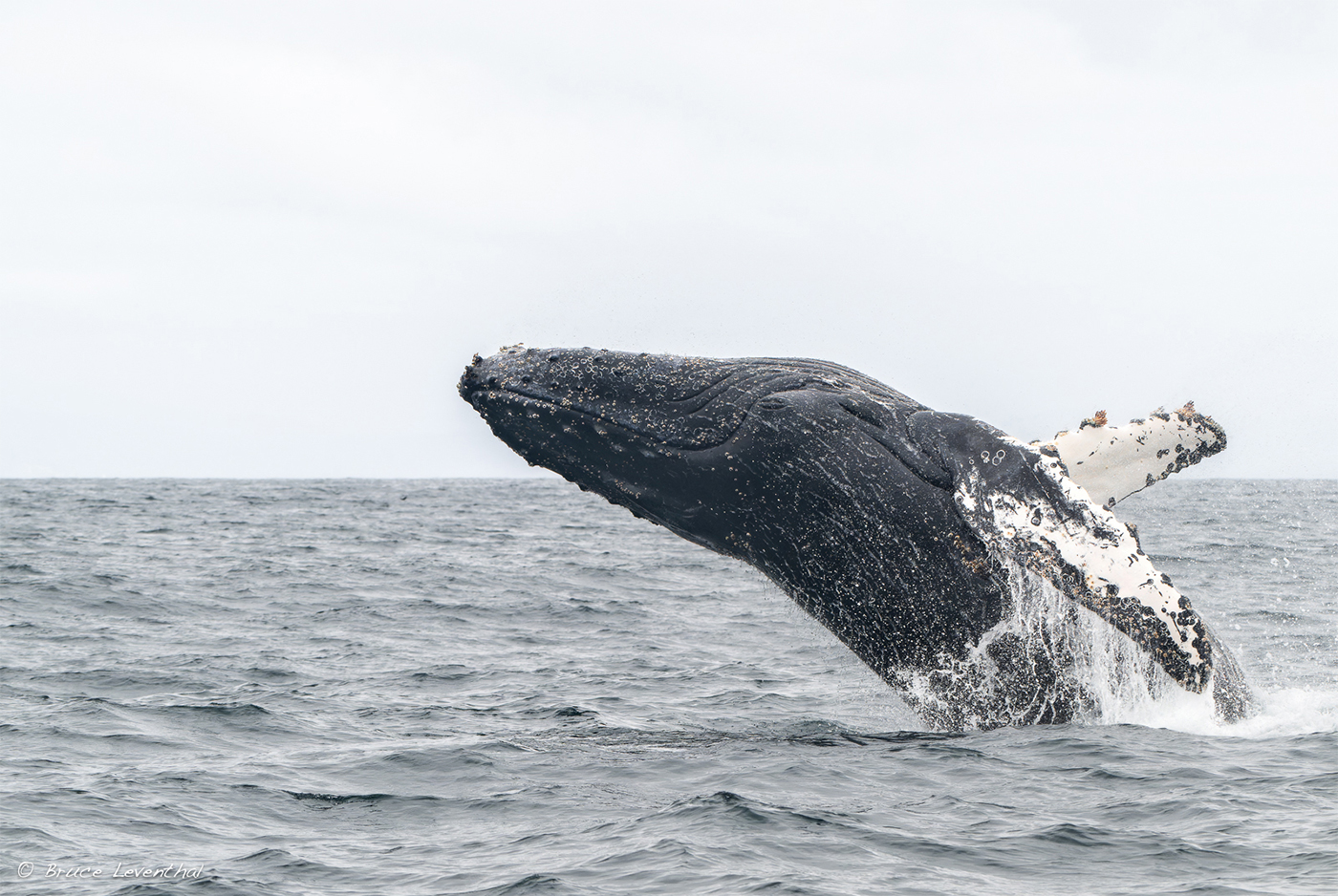
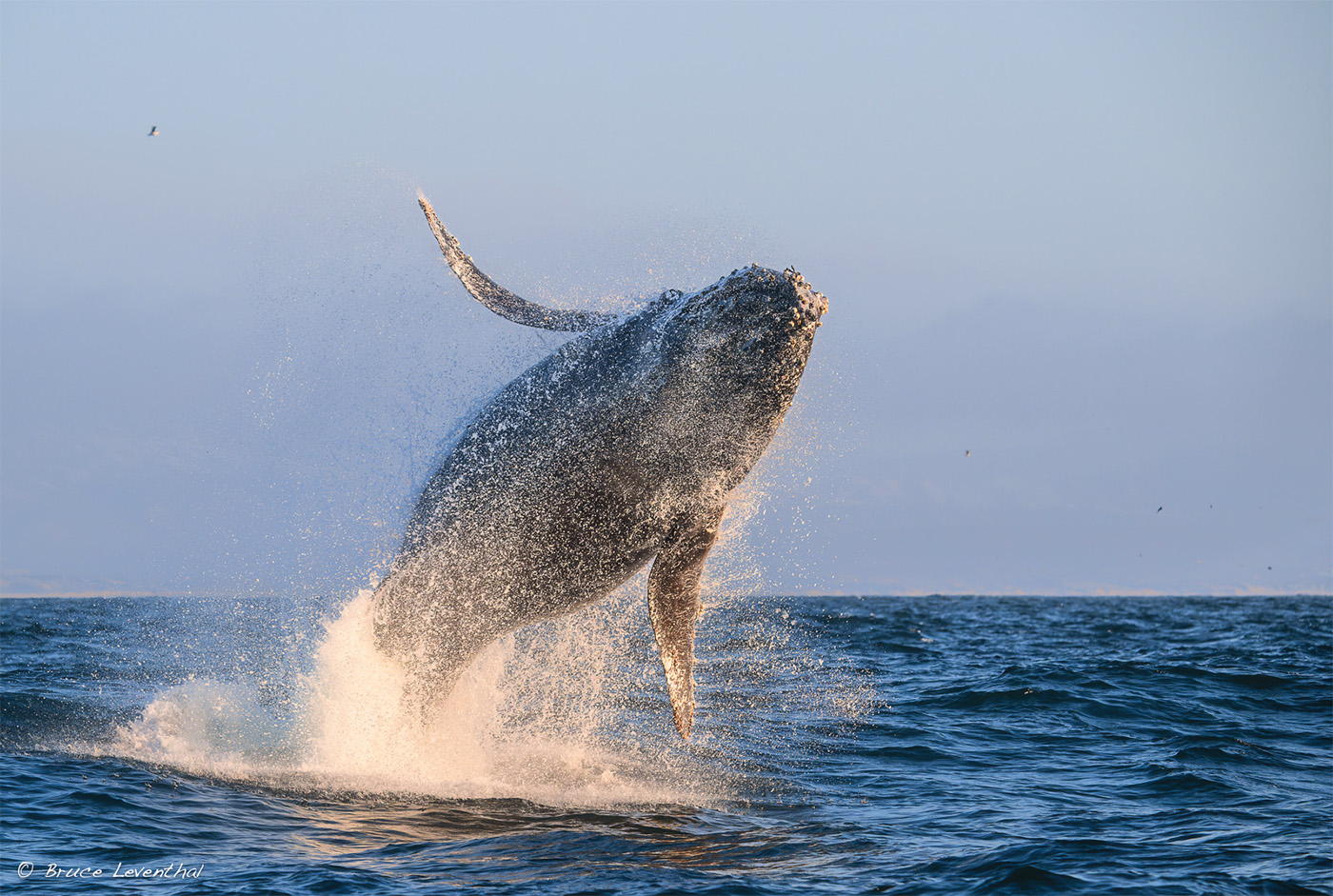
I posted the EXIF with my pictures... I wanted you to see the focal lengths I used.
I should have added the following... you are not going to be able to predict where a breach will occur. If you are lucky, you will have a whale that will do "serial" breaching... a so-called "happy whale" or "communicating whale." To catch a breach, it is best to zoom out to increase your field of view. The more often you shoot whales, the better you will be at reacting and will be able to compose with a tighter field. If, you are zoomed in too much, it is likely you will cut off part of the animal or oceanscape that offers a bit of context.
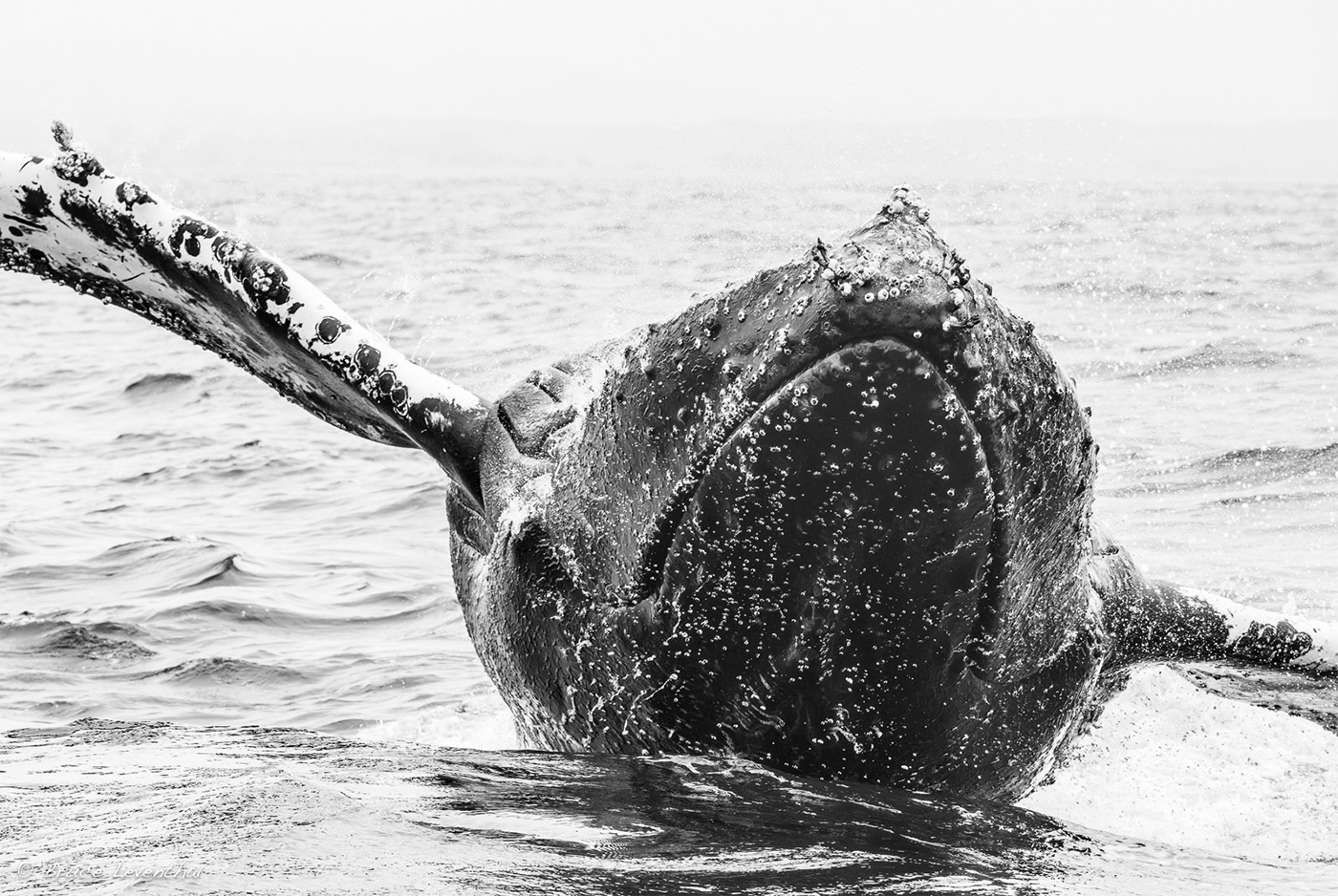
The black and white shot was a full-frame and uncropped image... I got soaked, but it was an amazing perspective. If you are shooting on a boat that is close to the water... like a Zodiac, bring absorbant towels. Finally, the gear can handle the salt spray as long as you clean it down after the day of shooting. Other than putting a protective filter on my lens, I do not use any waterproof protection on the camera.
Ok... last finally,... Everything is based on conditions, but if you are in a very good shoot and it is rainy/drizzly/foggy and the boat is moving a lot, check your front element. I blew my best ever dolphin shoot because I didn't check to see how much water was on my front element. The mist will make all of your images mush.
Thanks so much! I was an elasmobranch biologist in a past life...now I teach 7th grade bio. When I was on the water, I was shooting mf film cameras. I'm going to be on a ridiculously large vessel with a ridiculously large crowd, so I've attenuated my expectations. Last time I shot at sea, I had decent success with my D500 and 200-500VR. I totally understand the limitations of this trip, but...it is what it is. I'm just looking forward to being at sea! Thank you again everyone!
jbear wrote:
Thanks so much! I was an elasmobranch biologist in a past life...now I teach 7th grade bio. When I was on the water, I was shooting mf film cameras. I'm going to be on a ridiculously large vessel with a ridiculously large crowd, so I've attenuated my expectations. Last time I shot at sea, I had decent success with my D500 and 200-500VR. I totally understand the limitations of this trip, but...it is what it is. I'm just looking forward to being at sea! Thank you again everyone!
So cool that you studied cartelageous "fish"... I was a pelagic seabird ecologist and left the field to become a high school biology teacher... something I did for more than 30 years. When I decided to leave academia, the government was not supporting ecology and environmental research (George Bush v1)... sound familiar? I eventually did go back to grad school in the 2000's and did a masters degree in EEB... while I wanted to keep working with pelagic birds, a monarch butterfly professor took me under her wing (get it?)... so I spent my time in the midwest with butterflies. I did this degree while teaching full time... it was exhausting, but a great experience.
If you are looking for a productive outing with whales, the Monterey Peninsula is one of the best spot for them in the lower 48. We also have good sea otters and... believe it or not... a very large juvinile great white shark population in late spring and summer.
I just want to point out that when I went on a whale watching trip from Juneau, we were told that the closest they were allowed to get to a whale was 100 yards. I know that is also the case in Monterey Bay (https://montereybay.noaa.gov/visitor/whalewatching/). Getting closer to whales is no difference than getting too close to birds or mammals. It causes them stress, which can impact their ability to survive and reproduce. As wildlife photographers, we should all remember that it is a privilege to encounter wildlife, and we should treat them with respect, so future generations will have the same opportunities.
vbnut wrote:
I just want to point out that when I went on a whale watching trip from Juneau, we were told that the closest they were allowed to get to a whale was 100 yards. I know that is also the case in Monterey Bay (https://montereybay.noaa.gov/visitor/whalewatching/). Getting closer to whales is no difference than getting too close to birds or mammals. It causes them stress, which can impact their ability to survive and reproduce. As wildlife photographers, we should all remember that it is a privilege to encounter wildlife, and we should treat them with respect, so future generations will have the same opportunities....Show more →
The whales will often approach the boat closer than the proscribed limits.
Cliff L. wrote:
The whales will often approach the boat closer than the proscribed limits.
Exactly what I was going to write... The whales will do what the whales will do... this is the same as bobcats, coyotes, deer, and so on. I've worked with a number of tour providers in the bay, and they all stress the importance of providing a respectful viewing distance.
OwlsEyes wrote:
Exactly what I was going to write... The whales will do what the whales will do... this is the same as bobcats, coyotes, deer, and so on. I've worked with a number of tour providers in the bay, and they all stress the importance of providing a respectful viewing distance.
I wouldn't say often (although I admit my experience is limited), but it does happen. My recollection is that the boats are supposed to try to slowly move away in those situations. I have, unfortunately, seen several videos clearly showing that some tour operators in Monterey Bay don't always show the respect to whales that we would hope for. I've also seen drone videos where the drones were harassing whales, even though drones (and all aircraft) are required to fly above 1000 feet along the coast of Monterey Bay. In one case, it was a mother humpback with her calf. While that is obviously a compelling subject for photos or videos, it is a situation that is even more sensitive.