Fred Miranda
Offline
Admin
Upload & Sell: On
|
 p.6 #2 · Voigtlander 28mm f/2 APO-Lanthar Review p.6 #2 · Voigtlander 28mm f/2 APO-Lanthar Review | |
Back to Quick Links
Rendering comparison to Voigtlander 28mm f/2 Ultron
Both are 28mm f/2 lenses and offer a well-corrected modern rendering, so what sets them apart? While the differences in rendering may not be obvious at first glance, those who pay close attention to detail will notice a few distinctions between these two lenses.
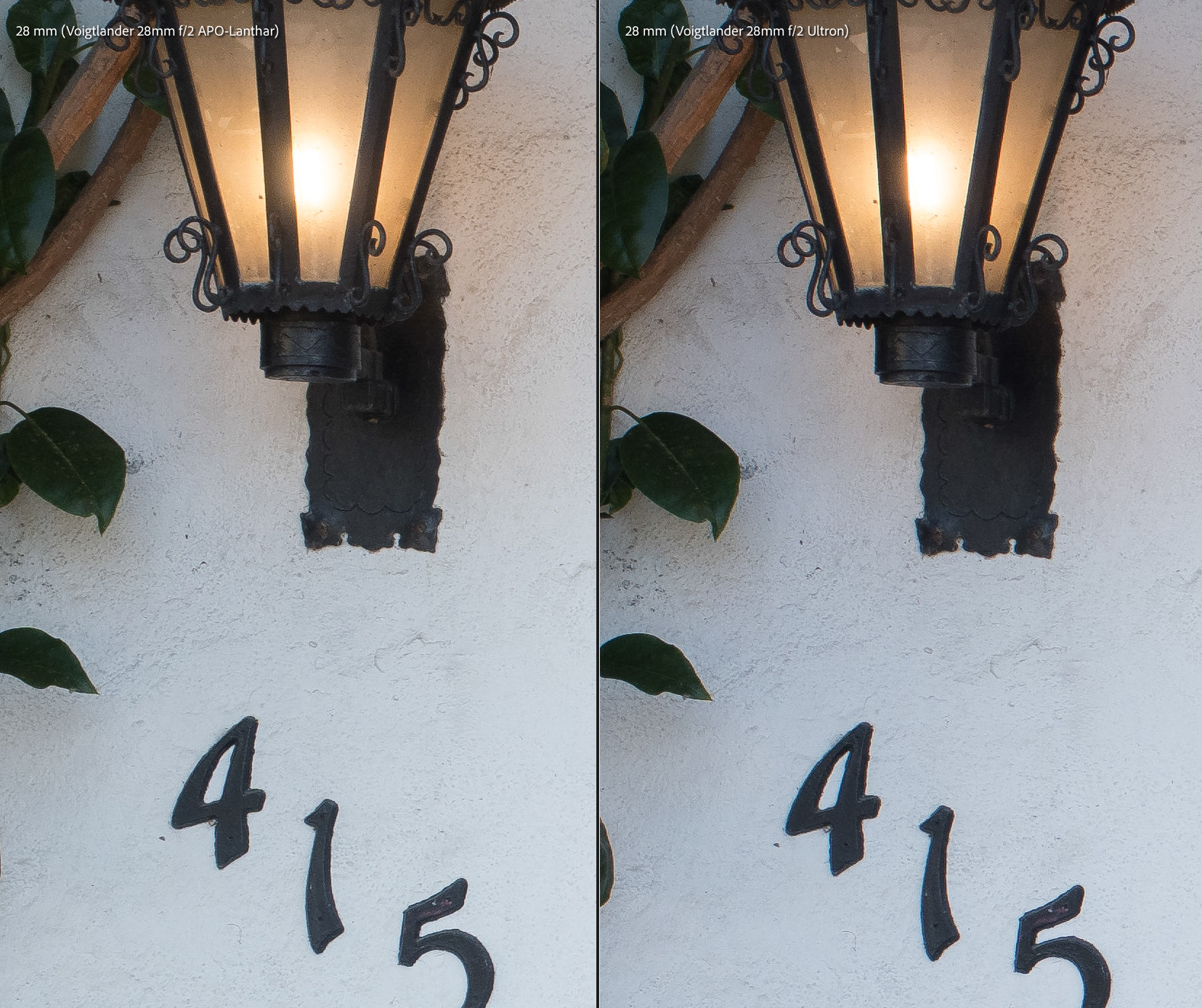
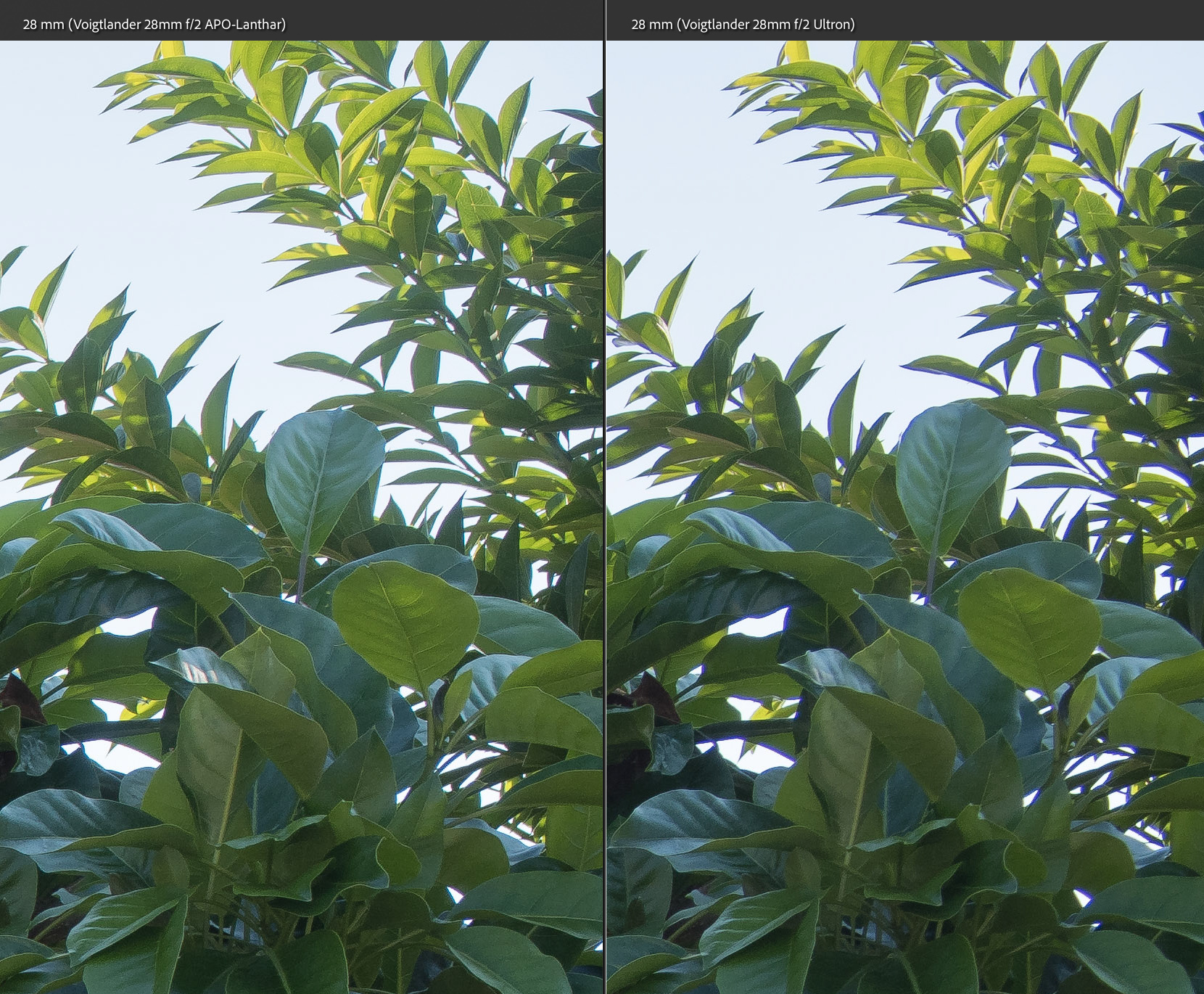
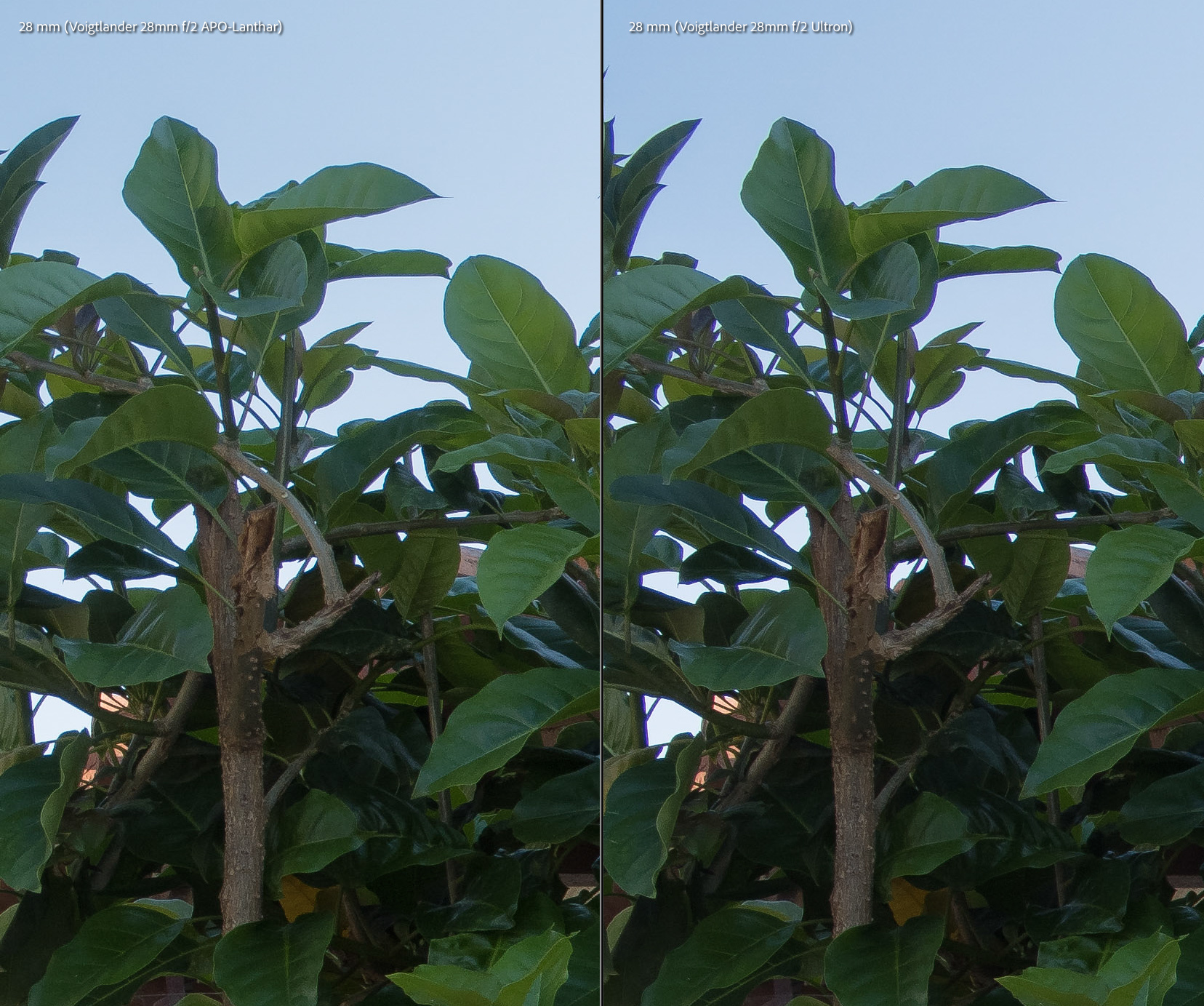
The Voigtlander 28mm f/2 APO-Lanthar delivers outstanding resolution and contrast across the entire frame, including mid-frame and extreme corners, with a smooth, gradual falloff rendering similar to other modern, well-corrected designs. The 28mm f/2 Ultron shares a similar rendering style but captures slightly less detail in the focused area when the subject is positioned off-axis. Its out-of-focus rendering near the edges isn’t as smooth as the APO's, partly due to some field curvature and stronger optical vignetting. This becomes clear in several of the comparisons shown below, and it's even more noticeable when the subject focused at mid to long distances.
As you may notice from the side-by-side images, the APO-Lanthar is also better corrected for distortion, which in my view is essentially perfect, while the Ultron shows slight barrel distortion.
Another area of difference is sunstar rendering. Both lenses produce well-defined sunstars even at wider apertures, but the APO has 12 aperture blades (instead of 10), and its 12-point sunrays look subjectively more attractive to me.
Because the APO-Lanthar has lower optical vignetting, specular highlights tend to stay more rounded toward the edges of the frame, which makes it easier to tell the two lenses apart. In this respect, the APO-Lanthar produces a similar amount of vignetting to the Leica 28mm f/2 Summicron, which was one of Leica's main advantages over the Ultron. That said, this comes down to taste, as many people actually prefer the "cat's-eye" bokeh effect and the swirling look it can create.
Finally, the APO-Lanthar shows no signs of color error, unlike the Ultron. With the latter, purple fringing and the more common axial chromatic aberration (seen as magenta and green fringing) are noticeable when shooting wide open. That said, the Ultron still handles it reasonably well.
All things considered, both lenses produce a similar overall rendering that some might call clinical, but to me, this level of near-perfection carries its own kind of character. 
Here are some rendering comparisons various at distances:
Scene 1:
In this scene, I included the sun in the frame. As expected, the Ultron showed more veiling flare, which noticeably reduced contrast. The APO handled it better, showing stronger flare resistance. In the 100% crops, the APO-Lanthar also rendered out-of-focus areas more smoothly toward the edges, with rounder specular highlights.
APO-Lanthar at bottom
|










 Smaller version, the Ultron scales down as a great bang / size, but that scaling does come with certain quid pro quo. We basically raved about the Ultron when it came on the scene ... so, it isn't like it was a weak lens. The APO is just that much more ... i.e. "Glass Rules".