I used the Canon TS-E 17mm f/4L for many years, first on Canon DSLRs and later adapted to Sony. It was easily my favorite Canon SLR lens.
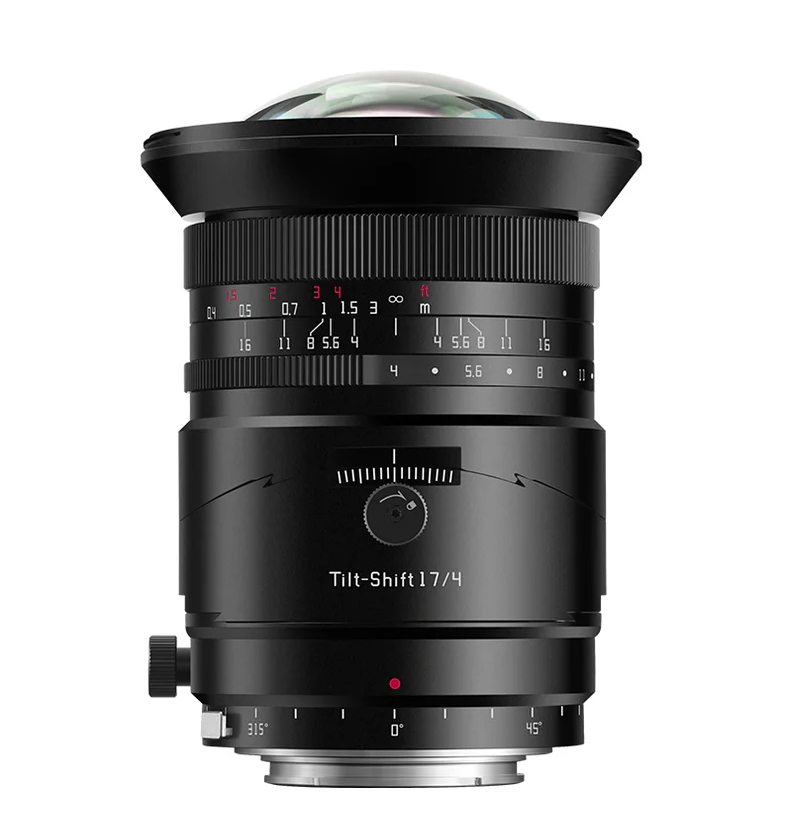
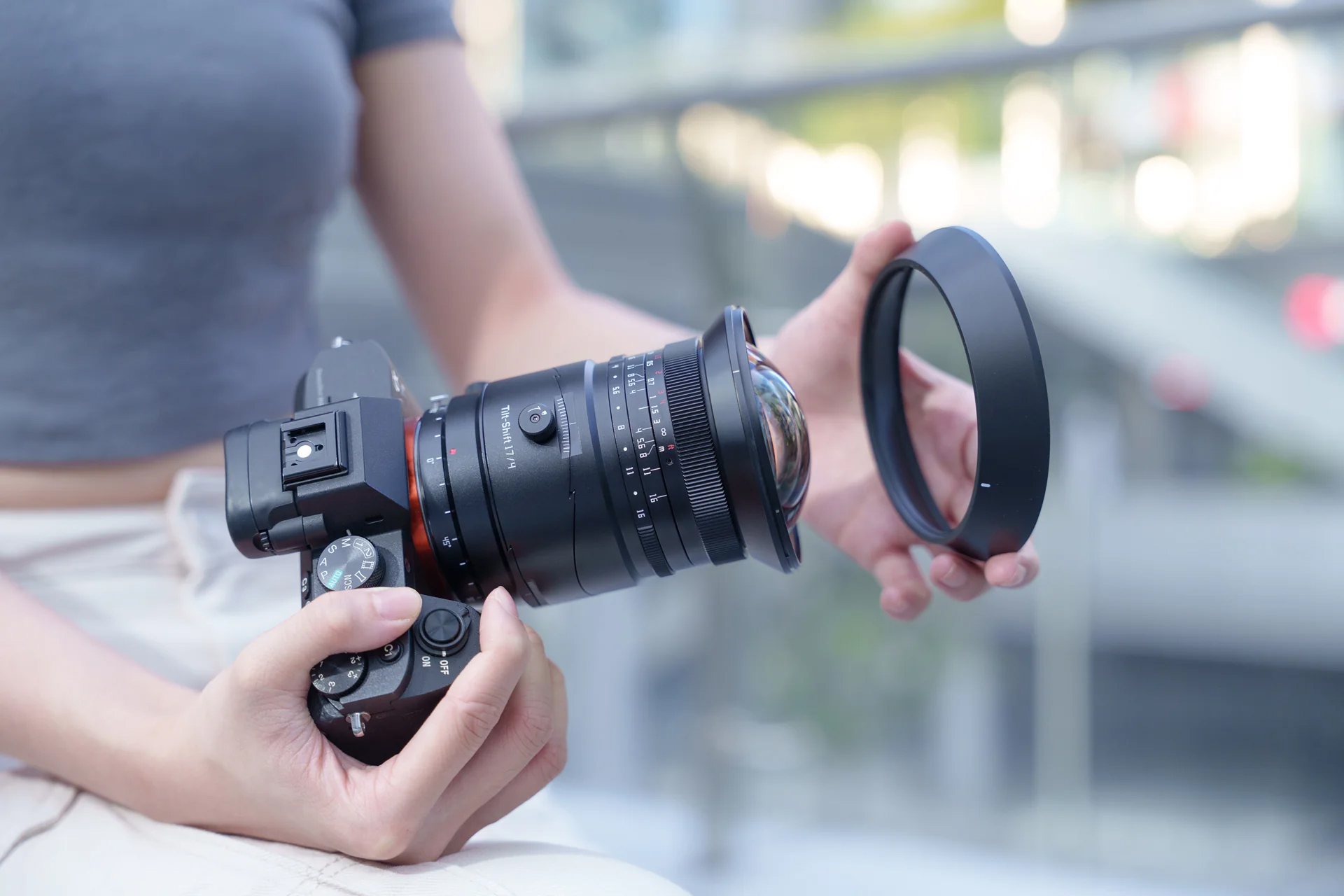
TTArtisan has just released its own Tilt-Shift 17mm f/4 ASPH, and the specs are impressive. It’s a hefty lens at about 1,055 grams, offers a slightly smaller shift range (8mm vs. 12mm on the Canon), but increases the tilt angle to ±8°. It also produces 10-point sunstars, has a solid all-metal build with an aperture ring, and is far more affordable at $500.
It's now available directly from TTArtisan (no affiliation):
Fred Miranda wrote:
I used the Canon TS-E 17mm f/4L for many years, first on Canon DSLRs and later adapted to Sony. It was easily my favorite Canon SLR lens.
TTArtisan has just released its own Tilt-Shift 17mm f/4 ASPH, and the specs are impressive. It’s a hefty lens at about 1,055 grams, offers a slightly smaller shift range (8mm vs. 12mm on the Canon), but increases the tilt angle to ±8°. It also produces 10-point sunstars, has a solid all-metal build with an aperture ring, and is far more affordable at $500.
It’s now available directly from TTArtisan (no affiliation):
I was excited at first since my Canon TS-E 17mm is one of my most useful lenses and I've been using it for 15 years, and I thought this could be an equally good or better lens, only without adapter - yes.
But then I read... 8mm shift
This is so, so stupid.
Maximilian wrote:
I was excited at first since my Canon TS-E 17mm is one of my most useful lenses and I've been using it for 15 years, and I thought this could be an equally good or better lens, only without adapter - yes.
But then I read... 8mm shift
This is so, so stupid.
It's likely due to image quality. Once you go beyond 8mm of shift on the Canon, sharpness drops off noticeably...even stopping down isn't enough to clean up the corners on high-resolution sensors. Still, I agree, it would be nice to have the option to push it further, even at the expense of some IQ.
Maximilian wrote:
I was excited at first since my Canon TS-E 17mm is one of my most useful lenses and I've been using it for 15 years, and I thought this could be an equally good or better lens, only without adapter - yes.
But then I read... 8mm shift
This is so, so stupid.
I used the Canon 24 TSE II (I owned the version I, but it was terrible (MAP Camera gave me waaaay more than I thought it was worth on a trade in.)) and used it a lot. It's a seriously sweet lens. Just as a generic 24mm lens, it was a great lens.
But it was just too much of a clunker (with an adapter) on the Sony, so I traded it in on something Nokton.
This lens, with it's relatively long barrel, is somewhat of a similar story: It's clearly designed for a longer flange-sensor distance and kludged onto the Sony. I.e., the adapter's built in.
I guess the question here is how much better image quality do you get with this lens shifted 8 mm than with, say, a 14mm lens cropped. And how much use is 17mm tilted? Again, shoot at 14mm, stop down to f/11 (for DOF) and crop, and can you do enough better with 17mm tilted (e.g. subject isolation) to make it worth it?
davidjl wrote:
I used the Canon 24 TSE II (I owned the version I, but it was terrible (MAP Camera gave me waaaay more than I thought it was worth on a trade in.)) and used it a lot. It's a seriously sweet lens. Just as a generic 24mm lens, it was a great lens.
But it was just too much of a clunker (with an adapter) on the Sony, so I traded it in on something Nokton.
This lens, with it's relatively long barrel, is somewhat of a similar story: It's clearly designed for a longer flange-sensor distance and kludged onto the Sony. I.e., the adapter's built in.
I guess the question here is how much better image quality do you get with this lens shifted 8 mm than with, say, a 14mm lens cropped. And how much use is 17mm tilted? Again, shoot at 14mm, stop down to f/11 (for DOF) and crop, and can you do enough better with 17mm tilted (e.g. subject isolation) to make it worth it?
I would be curious to learn if the lens was really designed for a DSLR or if there is an advantage to having a longer throw from the lens elements to the sensor for T/S lenses. It is certainly an easier path to having a larger image circle without having to push the light angle coming out of the rear elements. Looking at a couple other new T/S lenses, such as those from Laowa they also have longer bodies.
For critical architectural work, I shoot with wide angle lenses and correct perspective in post. I ordered this lens more for creative exploration than architecture.
I was looking at the Sony version, then couldn't believe my eyes when I noticed that it was also offered for GFX, with the larger image-circle that is required. I just ordered the GFX version. It might be a lot of fun and I'm not serious enough about TS to drop $4500 on the Fuji version, although I would prefer the 30mm FL.
InFocus2014 wrote:
I was looking at the Sony version, then couldn't believe my eyes when I noticed that it was also offered for GFX, with the larger image-circle that is required. I just ordered the GFX version. It might be a lot of fun and I'm not serious enough about TS to drop $4500 on the Fuji version, although I would prefer the 30mm FL.
I don't think that's accurate. It's the same optical design offered in different mounts, both sharing the same 64mm image circle. The only real advantage of the E-mount full-frame version is reduced vignetting when tilting or shifting.
For reference, the Canon TS-E 17mm f/4L has an even larger image circle at ~67mm.
Fred Miranda wrote:
I don't think that's accurate. It's the same optical design offered in different mounts, both sharing the same 64mm image circle. The only real advantage of the E-mount full-frame version is reduced vignetting when tilting or shifting.
For reference, the Canon TS-E 17mm f/4L has an even larger image circle at ~67mm.
I have been using the Laowa 20mm and 15mm shift lenses on the GFX in EF mount and like both, though the 15mm gets too soft at full shift. I ordered this to try. I’m not sure I understand the 8mm of shift correctly: would that degree of shift only be accurate for the full frame mounts? I do understand that the image circle is what it is and that you can’t get a “wider” perspective on full frame, but wondering if in actual use I’ll feel like I can’t shift much on the GFX before I see vignetting or I can’t turn the knob further.
It looks like the tilt and shift cannot be rotated with respect to each other. I watched the video and it's not mentioned or shown and I think it would (should) have been. I don't need it all the time but I like the versatility on all my Canon's (except for the 35mm FD).
Fred Miranda wrote:
I don't think that's accurate. It's the same optical design offered in different mounts, both sharing the same 64mm image circle. The only real advantage of the E-mount full-frame version is reduced vignetting when tilting or shifting.
For reference, the Canon TS-E 17mm f/4L has an even larger image circle at ~67mm.
To be fair, the TTArtisans lens is $1600 +/- cheaper than the Canon lens. Many of the comments comparing functionality seem to assume that this lens will have the same performance as lenses that cost two to four times as much.
I am curious about the optical performance of the lens. I have two other TTArtisans products, the 100mm Trioplan and the 75mm Biotar and have been pleasantly surprised about their performance. I haven't been given a shipping date yet, but based on prior transactions should have it in a couple weeks.
I wonder how it compares to the Laowa 15mm f/4.5 Zero-D Shift in terms of image quality?
Laowa is 2mm wider (which is an important advantage for a wide angle lens, IMO) and offers -/+11mm of shift but lacks a tilt function. The TTArtisan's advantage is its tilt function.
I'd rather have more shift in a super-wide. You don't normally need so much tilt at 17mm. I suppose 8° would be good for some kind of miniature effect.
raminolta wrote:
I wonder how it compares to the Laowa 15mm f/4.5 Zero-D Shift in terms of image quality?
Laowa is 2mm wider (which is an important advantage for a wide angle lens, IMO) and offers -/+11mm of shift but lacks a tilt function. The TTArtisan's advantage is its tilt function.
I really like the Laowa 15mm just because it's so wide and has nice sunstars. That said, I don't think it would take much to beat its IQ in the shifted corners. They aren't super sharp on FF and get quite soft on the GFX. I've had to use generative AI on fully shifted images to counteract the vignetting and softness. Would be nice to do less of that on this 17mm, assuming I can take a step back.
ketang wrote:
I really like the Laowa 15mm just because it's so wide and has nice sunstars. That said, I don't think it would take much to beat its IQ in the shifted corners. They aren't super sharp on FF and get quite soft on the GFX. I've had to use generative AI on fully shifted images to counteract the vignetting and softness. Would be nice to do less of that on this 17mm, assuming I can take a step back.
I'm curious how the Laowa 15 unshifted vs the new TTArtisan 17 unshifted is vs the Laowa 17 f/4, on GFX. I'd want to know how the first 2 compare shifted as well, but I'm curious how they would be unshifted vs the 17.
The ability to adapt the Canon 17mm TS is one of the main reasons I jumped into Sony.
Hopefully, this finally fills the void of good TS lenses for E mount. The few times I looked into the Laowa shift lenses, the IQ seemed to be worse than the Canon 17mm TS. 12mm of shift would have been nice, but I can live with 8mm of shift if the IQ is better than the Canon.