Hopefully with a native GFX mount. I tried a sigma wide angle using an EF to GFX adapter but it slowed it down and vignetted more than I wanted. What's out there I don't know about. Anything like a 17mm f2.0?
The absolute best lens I’ve seen for astro to date is the Sigma 14/1.4 ART. It is however only available in a handful of mirrorless Fx mounts, so not adaptable to the GFX. However it is so good that if one is serious about astro, I would recommend they buy a dedicated body just to be able to use that lens. The images I saw from it were through the 60mp Leica, and it held up stunningly on that sensor wide open.
Jack Flesher wrote:
The absolute best lens I’ve seen for astro to date is the Sigma 14/1.4 ART. It is however only available in a handful of mirrorless Fx mounts, so not adaptable to the GFX. However it is so good that if one is serious about astro, I would recommend they buy a dedicated body just to be able to use that lens. The images I saw from it were through the 60mp Leica, and it held up stunningly on that sensor wide open.
Thanks Jack. I have that lens for my Sony bodies. I'll be traveling on a particular trip only with GFX, but now I may bring the Sony body and that lens along just for the astro. Cheers!
Jeffrey wrote:
Thanks Jack. I have that lens for my Sony bodies. I'll be traveling on a particular trip only with GFX, but now I may bring the Sony body and that lens along just for the astro. Cheers!
Honestly then, you are set for astro. It is the best darn wide lens I have ever seen, and remains impressive in the corners wide open at f1.4. Remarkable really.
A photographer on one of my workshops was using the Sigma 14-24mm f/2.8 DG HSM Art lens in the EF mount on his GFX 100S via the Fringer adapter. Sigma had modified the lens by removing the lens hood to reduce the mechanical vignetting caused by the hood. They also created a new lens cap for the modified lens. The lens works well on the GFX bodies, but it's important to know that it begins to exhibit vignetting at 17 mm in the full 4:3 aspect ratio. As you go wider, the vignetting becomes worse.
After seeing the work my workshop client had created, I purchased a copy of the lens directly from Sigma for my GFX system, and they modified it before shipping it to me. I thought I was going to shoot more astro, but in reality, the lens has sat on the shelf most of the time because I don't shoot much astro.
Adam Schallau wrote:
A photographer on one of my workshops was using the Sigma 14-24mm f/2.8 DG HSM Art lens in the EF mount on his GFX 100S via the Fringer adapter. Sigma had modified the lens by removing the lens hood to reduce the mechanical vignetting caused by the hood. They also created a new lens cap for the modified lens. The lens works well on the GFX bodies, but it's important to know that it begins to exhibit vignetting at 17 mm in the full 4:3 aspect ratio. As you go wider, the vignetting becomes worse.
After seeing the work my workshop client had created, I purchased a copy of the lens directly from Sigma for my GFX system, and they modified it before shipping it to me. I thought I was going to shoot more astro, but in reality, the lens has sat on the shelf most of the time because I don't shoot much astro....Show more →
Thank you Adam for the realtime field experience. My GFX 20-35 (16-28) is close but being f4, it is too slow. I have the Sigma 14 1.8 EF mount but have not tried it with a EF-GFX adapter.
Jeffrey wrote:
Thank you Adam for the realtime field experience. My GFX 20-35 (16-28) is close but being f4, it is too slow. I have the Sigma 14 1.8 EF mount but have not tried it with a EF-GFX adapter.
For what it is worth I have shot this combo (gfx-fringer-ef 14-24 2.8 sigma art) without the hood modification when the northern lights dipped down to Portland. 19mm is fine from a vignette standpoint at 2.8. The nature of the shots told me nothing about smearing or corner sharpness, but color was excellent across the frame. It was actually pretty decent to focus, though it was heavy enough that I would bring a rail to balance it better on the tripod head next time. Hope this helps.
I've been following this thread with interest as I'm curious about astro but more motivated by aurora during the long, dark winters in Alaska.
I have the GF 23mm f/4 which is wide enough, but not particularly fast, and 30mm f/3.5, which is not particularly wide nor fast. For MF lenses, I've seen a used Leica 24mm f/3.5 Super-Elmar-S ASPH. (with a Leica S->Fuji GF adapter), and am curious if anyone has experience with this on GFX, especially compared to the slightly slower GF 23mm f/4? I don't think I would pursue this new, but B&H has it new in stock (maybe they never sell them!). Thanks for any insight!
Jeffrey wrote:
Thank you Adam for the realtime field experience. My GFX 20-35 (16-28) is close but being f4, it is too slow. I have the Sigma 14 1.8 EF mount but have not tried it with a EF-GFX adapter.
I found the same with the GF 20-35/4 for astro. I considered the Sigma 14/1.8 in the EF mount as well, but I decided it was too wide for my tastes.
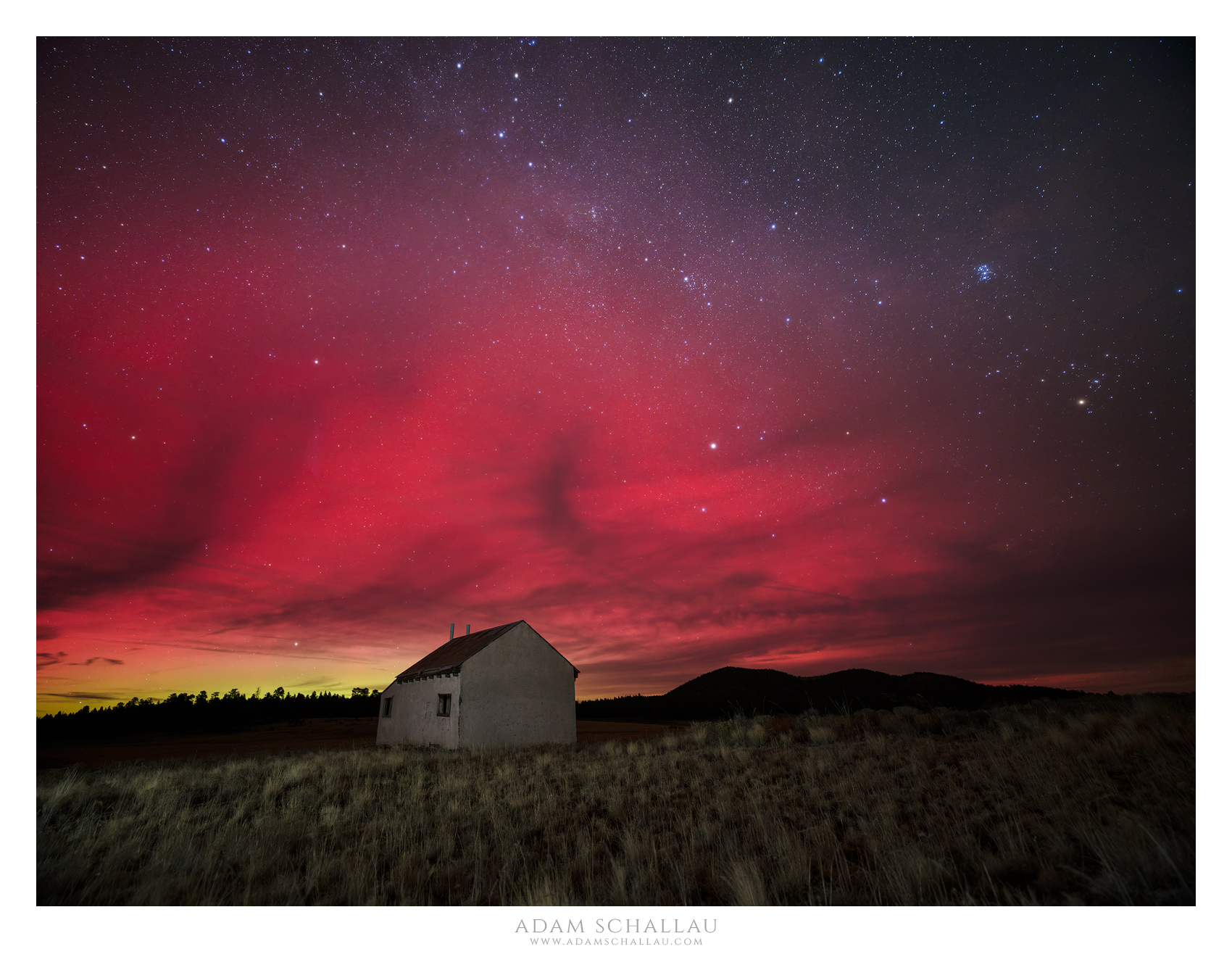
For anyone interested, here's a recent photograph made with the Sigma 14-24mm f/2.8 DG HSM Art lens in the EF mount on a GFX 100S via the Fringer adapter. This was shot at 18mm, with an exposure of 13 seconds, f/2.8, and ISO 6400. I ran the image through PureRaw 5 and then processed it in Lightroom Classic. I've left the image uncropped so you can see the vignetting, especially in the upper right corner.
I did a bit of light painting for the foreground and the home. I couldn't find my "LLL" LED light panels that I typically use (that's the problem with having too many camera bags), so I resorted to using a small LED flashlight, aiming it at my puffy jacket, which worked great as a diffuser/reflector while walking around to diffuse the light further.
P.S. This old homestead has been the canvas for some graffiti artists, but I elected to remove the graffiti and present the scene as it would have looked many years ago.