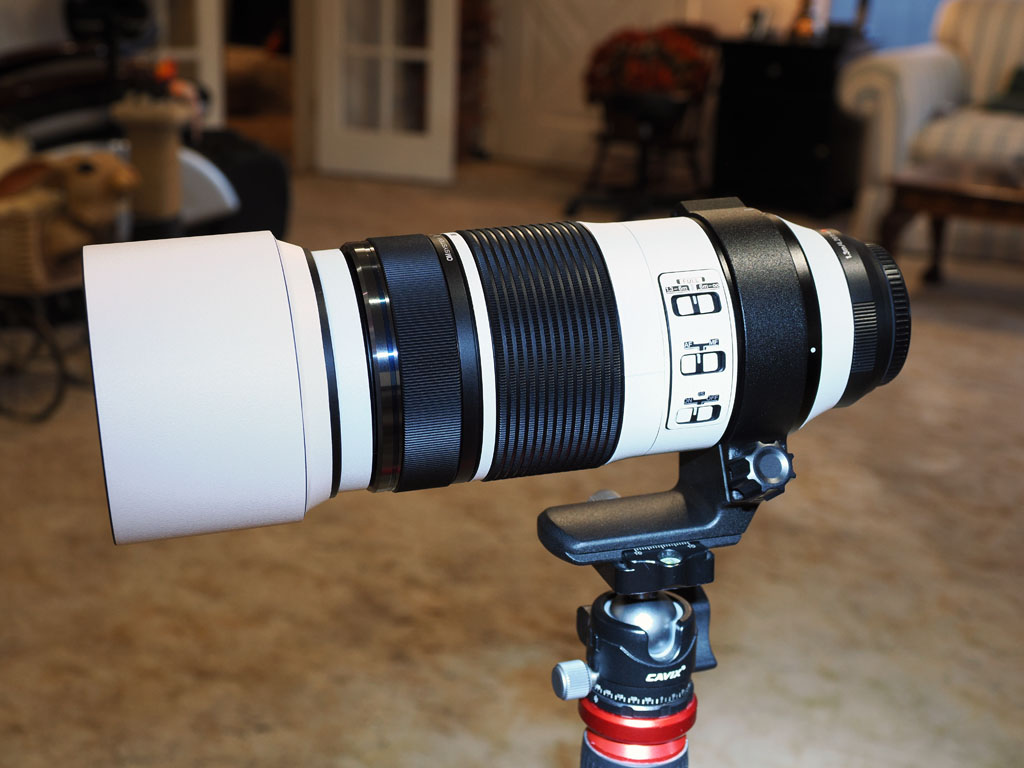
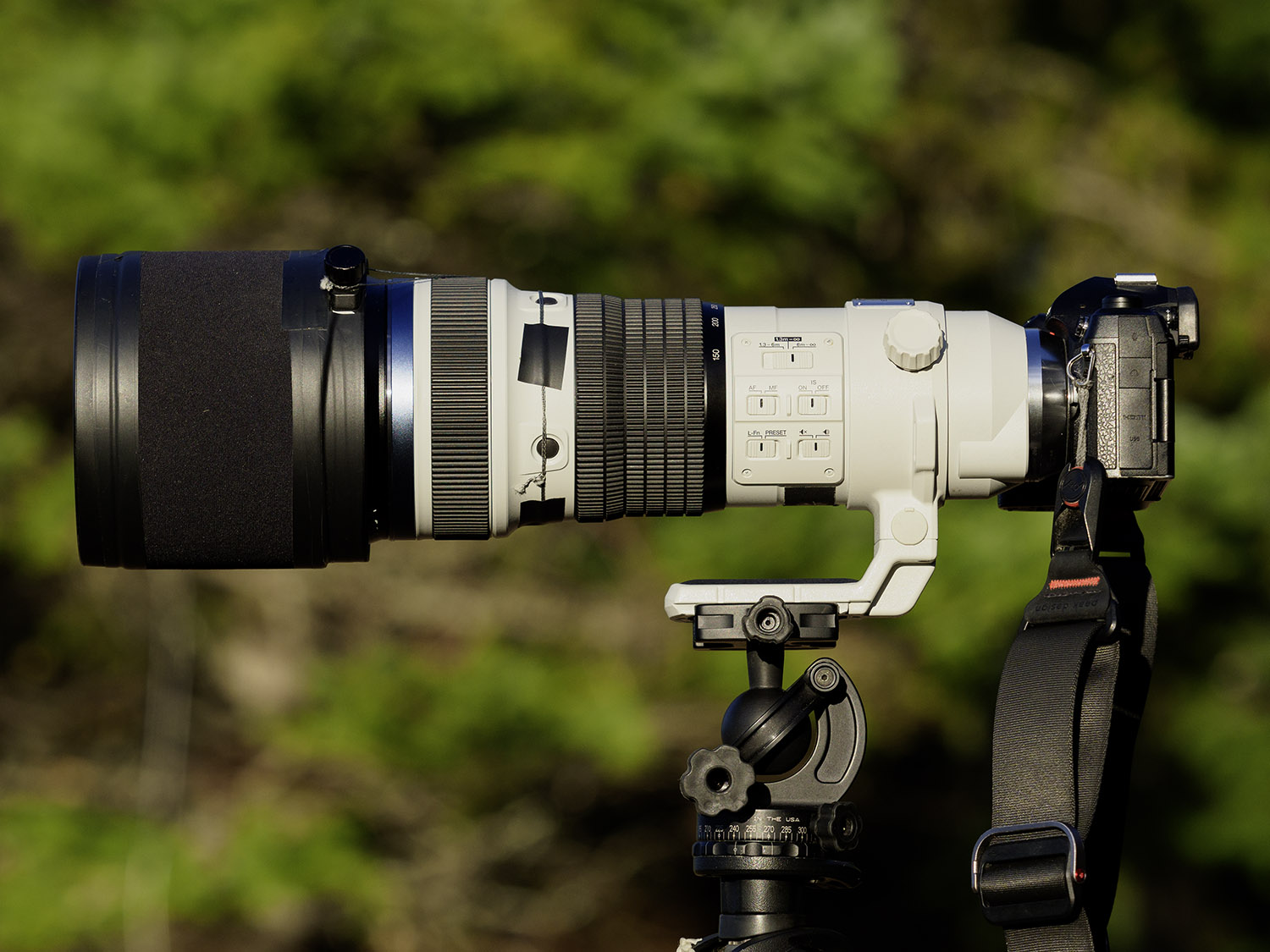
I got this suggestion from Thomas Eisl's review of the 100-400mm Mkll. He mentioned that he added a white lens skin to his lens to cut down on thermal impact when out in the sun. I know that when I'm shooting in sunny conditions with the 100-400mm for very long, it gets hot as a pistol.
I don't know how much (if any) this might help -- but it certainly can't hurt -- and it does look pretty cool.
I got the 'Skin' kit from 'Life + Guard', and it is actually is designed for the Mkl version, so there are a couple small pieces I didn't apply. My only real complaint is that it came with zero instructions as to which pieces go where on the lens, but it's not terribly hard to figure it out.
That is pretty funny considering all the photographers that complain about certain lenses being white. Canon lenses are actually an off-white instead of a glaring-white like you chose.
Less-glaring choices can be off-white, grey, or any camo pattern, all of which cut down on heat reaching the lens. The material can be the thin skin type you used or even thicker neoprene.
Even black neoprene will cut down on the heat reaching the lens by a great amount. Just ask divers how well neoprene wetsuits insulate their bodies.
Not only will black neoprene keep your lens cooler in hot weather, it is much more comfortable to hold you lens in both hot weather and freezing weather.
I only applied black neoprene to my lens hood. I also have a safety cord (fishing line) attached to the hood in case it gets knocked off and gets damaged or lost. Would you believe a new lens hood would cost you $900US!
I don't care what my lens looks like, only how well it functions.
sum1sgrampa wrote:
That looks great Greg ! I've been thinking of doing the same thing. I hadn't heard of that company. TFS.
Gary
Thanks for the comment, Gary. As I mentioned the kit is actually designed for the Mkl lens, so you will end up applying more pieces than I did. There are a couple thin strips that have cutouts for the lettering on the lens that is different between the Mkl and Mkll, and I didn't want to cover that stuff up so left a couple of those strips off.
If you order one, delivery is pretty quick. I highly recommend having a pair of tweezers to aid in applying the small white pieces on the switches.
Imagemaster wrote:
That is pretty funny considering all the photographers that complain about certain lenses being white. Canon lenses are actually an off-white instead of a glaring-white like you chose.
Less-glaring choices can be off-white, grey, or any camo pattern, all of which cut down on heat reaching the lens. The material can be the thin skin type you used or even thicker neoprene.
Even black neoprene will cut down on the heat reaching the lens by a great amount. Just ask divers how well neoprene wetsuits insulate their bodies.
Not only will black neoprene keep your lens cooler in hot weather, it is much more comfortable to hold you lens in both hot weather and freezing weather.
I only applied black neoprene to my lens hood. I also have a safety cord (fishing line) attached to the hood in case it gets knocked off and gets damaged or lost. Would you believe a new lens hood would cost you $900US!
I don't care what my lens looks like, only how well it functions. ...Show more →
Tony, thanks for the comment.
I can't blame you for the fishing line hack -- it's crazy that a replacement hood would cost that much!
I went out shooting this morning and the sun was out. I can feel a dramatic temp difference between the black tripod collar and the white areas of my lens -- so I'm pleased. If I got serious enough to feel the need for full camo (which I won't), I'd deal with that down the road.
The skin that I used is not really a 'bright white' -- it is called 'Sand Paint White'.
Imagemaster wrote:
I only applied black neoprene to my lens hood. I also have a safety cord (fishing line) attached to the hood in case it gets knocked off and gets damaged or lost. Would you believe a new lens hood would cost you $900US!
I don't care what my lens looks like, only how well it functions.
Thanks for the response, and link.
While the video is helpful in terms of applying the skins, the issue I had was simply identifying which strip of skin was associated with which part of my specific lens. Some pieces are clearly identifiable, but others are not so easy. It would be helpful if the company could send a printed diagram of which strips go where for the specific lens.
This is not a deal breaker, just makes it more of a guessing game.
Imagemaster wrote:
That is pretty funny considering all the photographers that complain about certain lenses being white. Canon lenses are actually an off-white instead of a glaring-white like you chose.
Less-glaring choices can be off-white, grey, or any camo pattern, all of which cut down on heat reaching the lens. The material can be the thin skin type you used or even thicker neoprene.
Even black neoprene will cut down on the heat reaching the lens by a great amount. Just ask divers how well neoprene wetsuits insulate their bodies.
Not only will black neoprene keep your lens cooler in hot weather, it is much more comfortable to hold you lens in both hot weather and freezing weather.
I only applied black neoprene to my lens hood. I also have a safety cord (fishing line) attached to the hood in case it gets knocked off and gets damaged or lost. Would you believe a new lens hood would cost you $900US!
I don't care what my lens looks like, only how well it functions. ...Show more →
I'm going to sound like a wise guy, but using black neoprene is not a good idea for prolonged use in bright sunlight. Black of any material comes close to being a black body radiator - black absorbs heat (and is non reflective). So black neoprene would maintain the interior temp of the lens for a bit (neoprene is a closed cell material filled with nitrogen or air that acts as an insulator), but once the lens temperature reaches ambient, the black body effect would then cause the interior temperature to rise.It will feel cooler on the outside, since the surface has a low heat transfer coefficient (again, an insulator), but the temp on the inside would continue to rise. I would not use dark neoprene as a an outside layer.
crf59 wrote:
I'm going to sound like a wise guy, but using black neoprene is not a good idea for prolonged use in bright sunlight. Black of any material comes close to being a black body radiator - black absorbs heat (and is non reflective). So black neoprene would maintain the interior temp of the lens for a bit (neoprene is a closed cell material filled with nitrogen or air that acts as an insulator), but once the lens temperature reaches ambient, the black body effect would then cause the interior temperature to rise.It will feel cooler on the outside, since the surface has a low heat transfer coefficient (again, an insulator), but the temp on the inside would continue to rise. I would not use dark neoprene as a an outside layer....Show more →
No, you sound more like "The sky is falling!, The sky is falling!" kind of guy.
I am well aware of the black versus white regarding heat absorption. Two major factors are involved that make heat absorption from black neoprene of no concern to me. First is that the surface of black neoprene is nowhere close to absorbing the same amount of heat as black metal or plastic. Place a piece of black neoprene on the hood of a black vehicle. After an hour in bright sunlight on a hot day, place you hand on the neoprene surface then the metal surface and see which one burns your hand and which one just feels warm.
For the last hundred years, tens of thousands of black lenses from Canon and Nikon have been in use for hours in hot sunlight.
Second is that any color of neoprene is an insulator. Put a piece of black neoprene on a white lens, and I bet the surface under the neoprene gets hardly any hotter than the surface of the bare white lens.
Lastly look at the many, many species of wildlife that have evolved over millenniums in the hottest regions of the world that are black. As well, look at tribes that lived in the Sahara Desert for thousands of year and dress in black, not white.
Don't use black if it concerns you that much. I will continue to do so, and I will wear a black baseball cap, not a white one should I go hiking in Death Valley.
gmccroskery wrote:
The car wrap is pretty cool, but I'll just stick with my lens -- don't have the money, time, energy, nor inclination to do a car.
Greg
The car wraps are super cool and easily repaired if damaged. I was offered one (choice of close to a hundred) here in Shanghai (China) however we were happy to stick with the metallic grey, one of manufacturers colour options.
I've seen a few of those wraps here. They look great and you really can't tell if they are paint or a wrap. Not sure what happens to the original paint if removed though - I haven't bothered to investigate.
Imagemaster wrote:
No, you sound more like "The sky is falling!, The sky is falling!" kind of guy.
I am well aware of the black versus white regarding heat absorption. Two major factors are involved that make heat absorption from black neoprene of no concern to me. First is that the surface of black neoprene is nowhere close to absorbing the same amount of heat as black metal or plastic. Place a piece of black neoprene on the hood of a black vehicle. After an hour in bright sunlight on a hot day, place you hand on the neoprene surface then the metal surface and see which one burns your hand and which one just feels warm.
For the last hundred years, tens of thousands of black lenses from Canon and Nikon have been in use for hours in hot sunlight.
Second is that any color of neoprene is an insulator. Put a piece of black neoprene on a white lens, and I bet the surface under the neoprene gets hardly any hotter than the surface of the bare white lens.
Lastly look at the many, many species of wildlife that have evolved over millenniums in the hottest regions of the world that are black. As well, look at tribes that lived in the Sahara Desert for thousands of year and dress in black, not white.
Don't use black if it concerns you that much. I will continue to do so, and I will wear a black baseball cap, not a white one should I go hiking in Death Valley. ...Show more →
I never said it concerned me. Merely commented that black is almost always a worse color for heat rejection. No judgement there, so keep your shorts on. No need to get defensive. You can put pink on your lenses for all I care.
I said "IF" it concerned you, and you started off with, "I'm going to sound like a wise guy," and here you are taking your shorts off just because I posted examples of thousands of cases where black is not a problem instead of white.
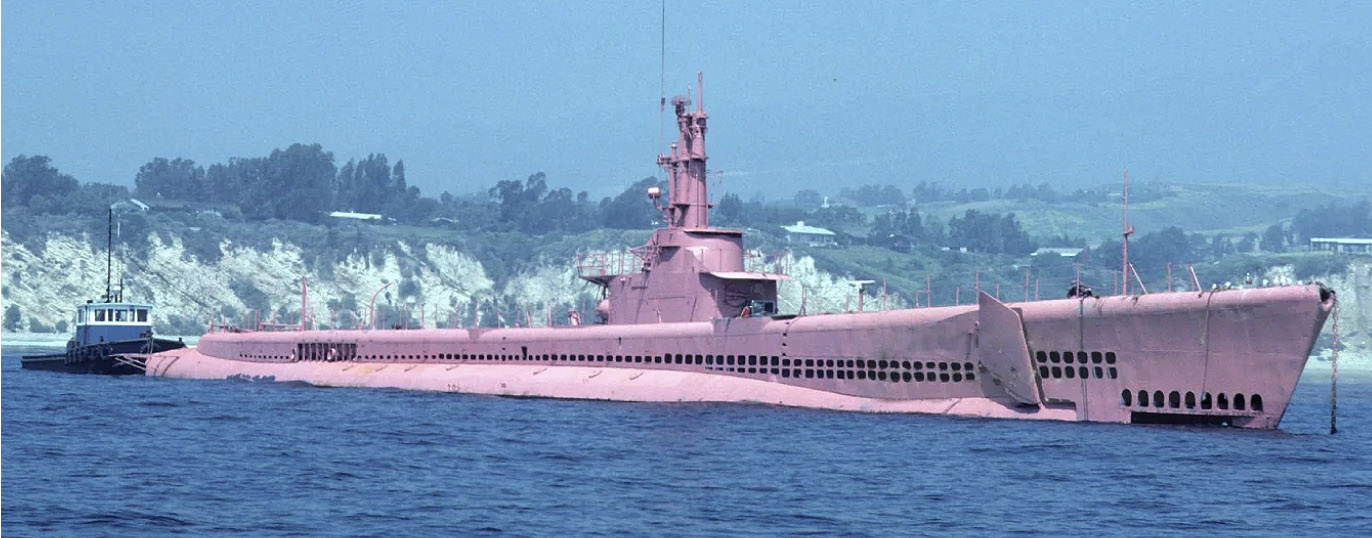
You could always advise the Amed Forces to change any of their gray or black weapons to white. A white submarine or pink destroyer might look good.
Merely commented that black is almost always a worse color for heat rejection.
I will just go up to the local rifle range and ask how many of the shooters would like to change their rifle barrels from black to white. If there any female shooters, I will suggest pink.:
You're just a guy with an attitude because someone posted a counter argument to your post. Get over it. Read some articles on it. Just Google the topic and see what you come up with.
"Cameras are often black for aesthetics, durability (carbon adds strength), reduced glare/reflections for the user, and cost, even though white reflects more solar heat, especially crucial for big lenses where expansion affects focus. While white is better at reflecting sun, black's heat absorption is managed by internal design (heat sinks, airflow) and many high-end lenses are white to prevent glass expansion in extreme sun. So, it's a trade-off between practical (black) and thermal (white) needs.
Why cameras are often black:
Reduced Glare: Black minimizes internal reflections, preventing light from bouncing onto the sensor, which improves image quality.
Aesthetics & Durability: Black plastic often uses carbon, making it stronger and less brittle than plain white plastic..
Cost: Black dye can be cheaper and easier for mass production than white.
Disguise: Black hides dirt, wear, and blends into professional environments better than white.
Why white cameras exist (especially lenses):
Thermal Performance: White reflects sunlight, keeping internal components cooler, reducing expansion that can affect glass focus.
High-End Pro Gear: You see white on large Canon telephoto lenses (like the L-series) for this exact reason—stability in heat.
Heat Management in Black Cameras:
Internal Design: Manufacturers use heat sinks, thermal paste, and ventilation to dissipate heat from processors.
Material Choice: Some black materials actually conduct heat away from internal parts better than lighter ones, since black can be an effective radiator in some case.
In essence, black is for performance and practicality in typical use, while white is a specialized feature for extreme heat, particularly for large optics."
Frogfish wrote:
I've seen a few of those wraps here. They look great and you really can't tell if they are paint or a wrap. Not sure what happens to the original paint if removed though - I haven't bothered to investigate.
I had a clear protective wrap on my last car, really to protect the paint from rock chips, etc.
They come off clean and with no damage to the original paint. There is a known problem with *some* installations if they didn't get all the soapy water out from under the wrap during installation. In bright and hot sun, a huge bubble resembling a balloon can form on the hood. If you Google it, I'm sure there are many examples.
crf59 wrote:
You're just a guy with an attitude because someone posted a counter argument to your post. Get over it. Read some articles on it. Just Google the topic and see what you come up with.
And aren't you the Google Genius? More blah, blah, black does this and white does this.
The fact is that over 99% of all camera lenses in existence are black and function perfectly in hot sunlight.
The white Canon lenses that fall into that remaining 1% are the high-priced super-telephoto lenses that contain synthetic fluorite crystals that are more susceptible to heat.
In essence, black is for performance and practicality in typical use, while white is a specialized feature for extreme heat, particularly for large optics."
No kidding? With your attitude you should be out selling white lenses to all those poor photographers using black lenses.
Version I of the Canon 100-400 is black, and version II is white because it contains 1 fluorite element.
Do you have any advice on what color submarines should be painted?