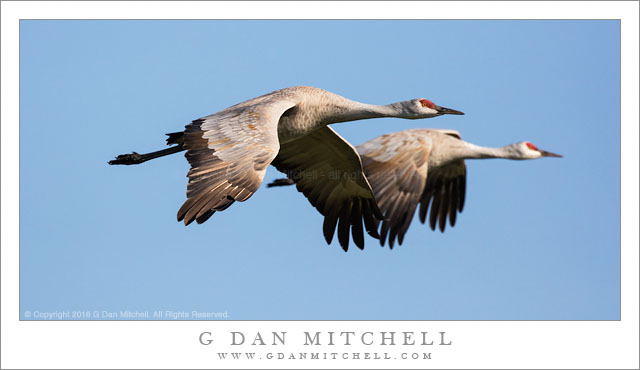
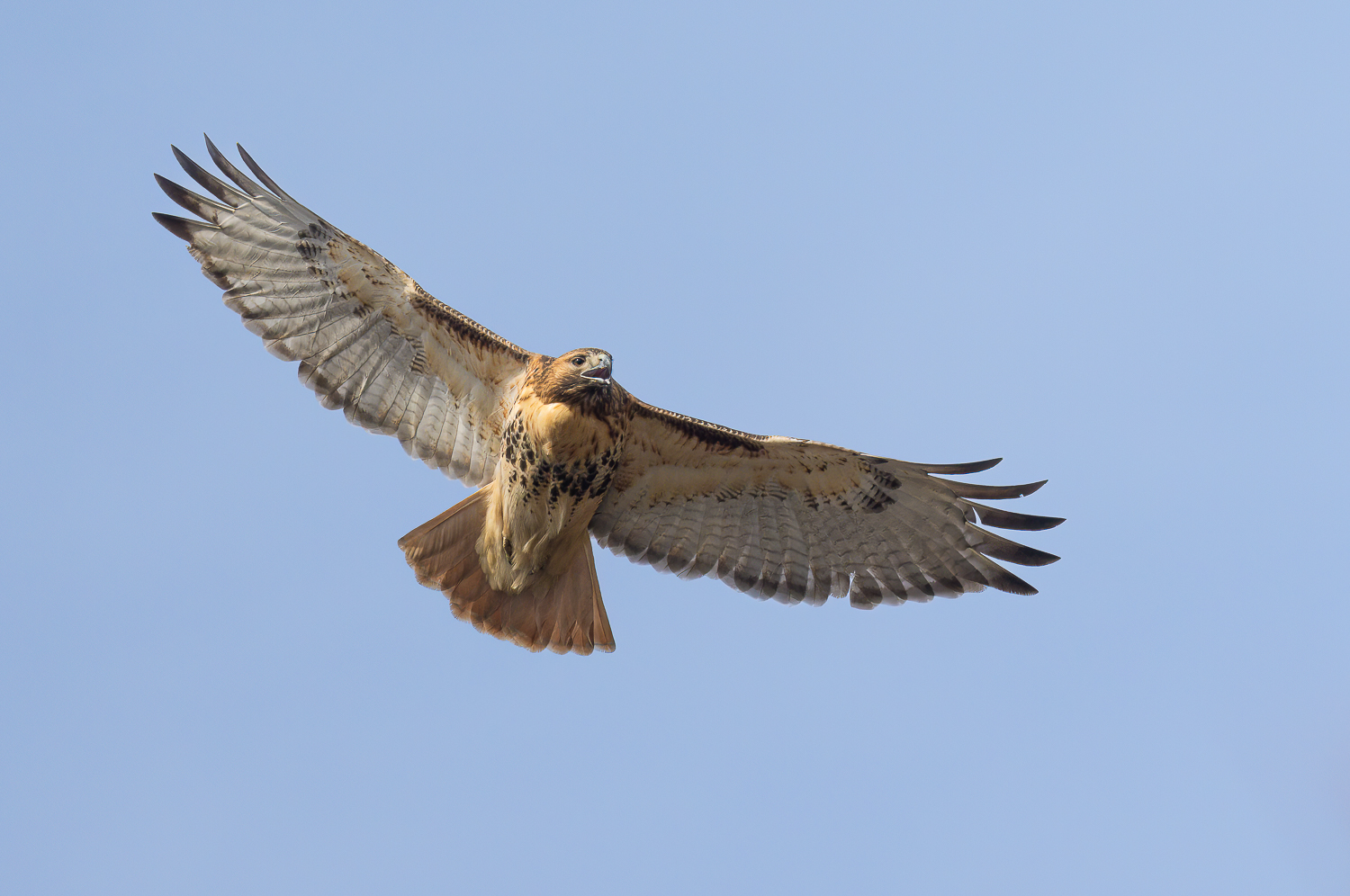
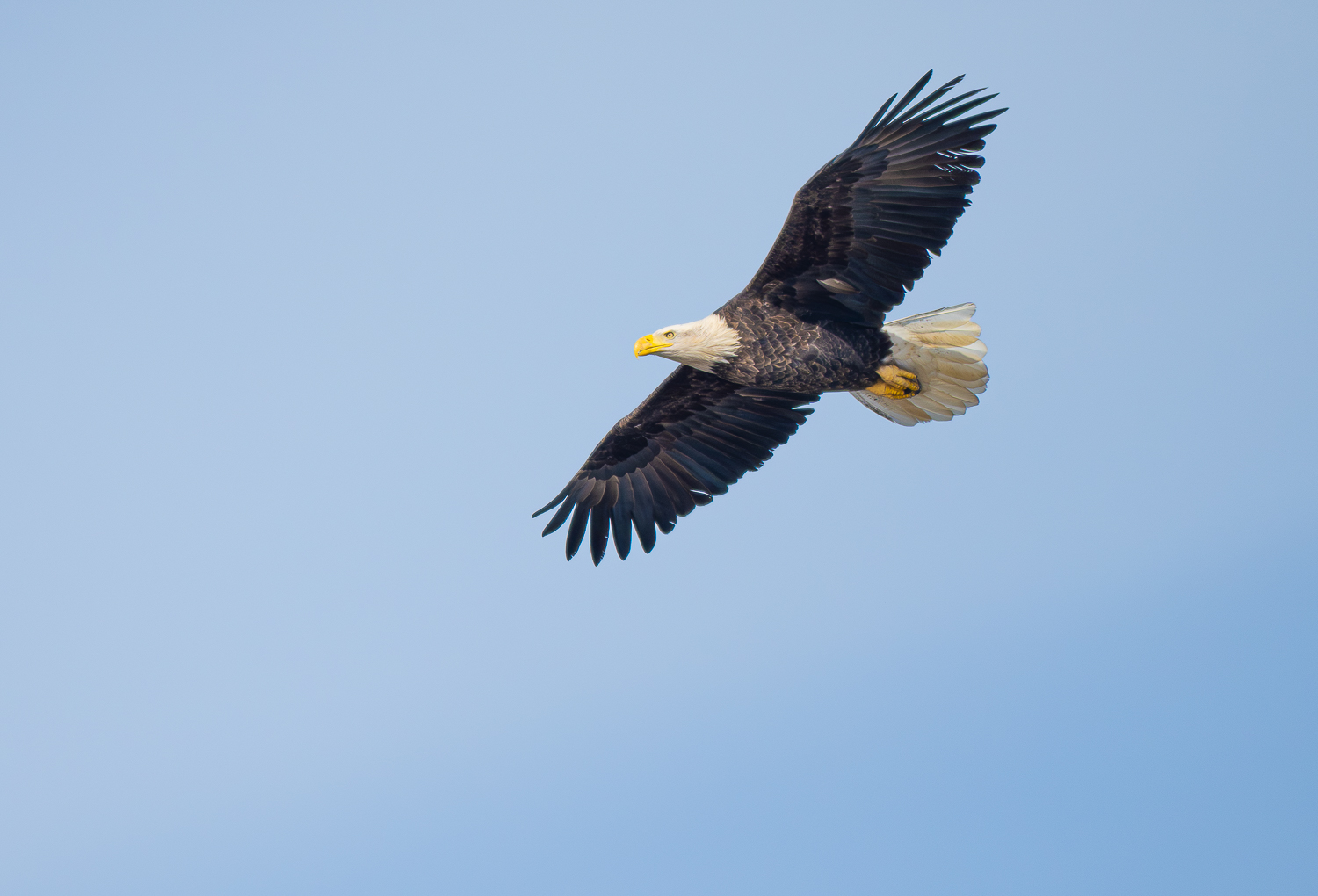
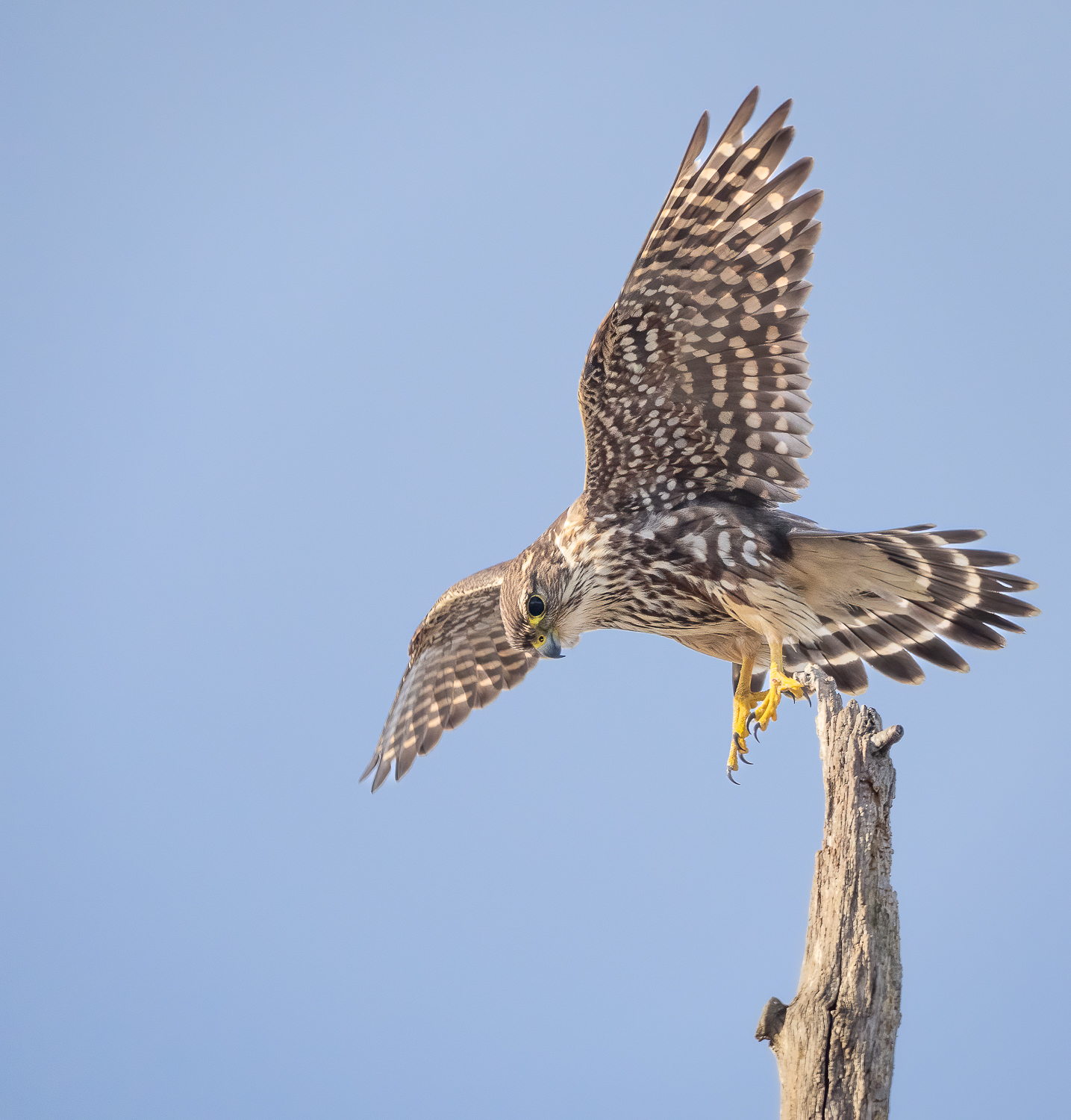
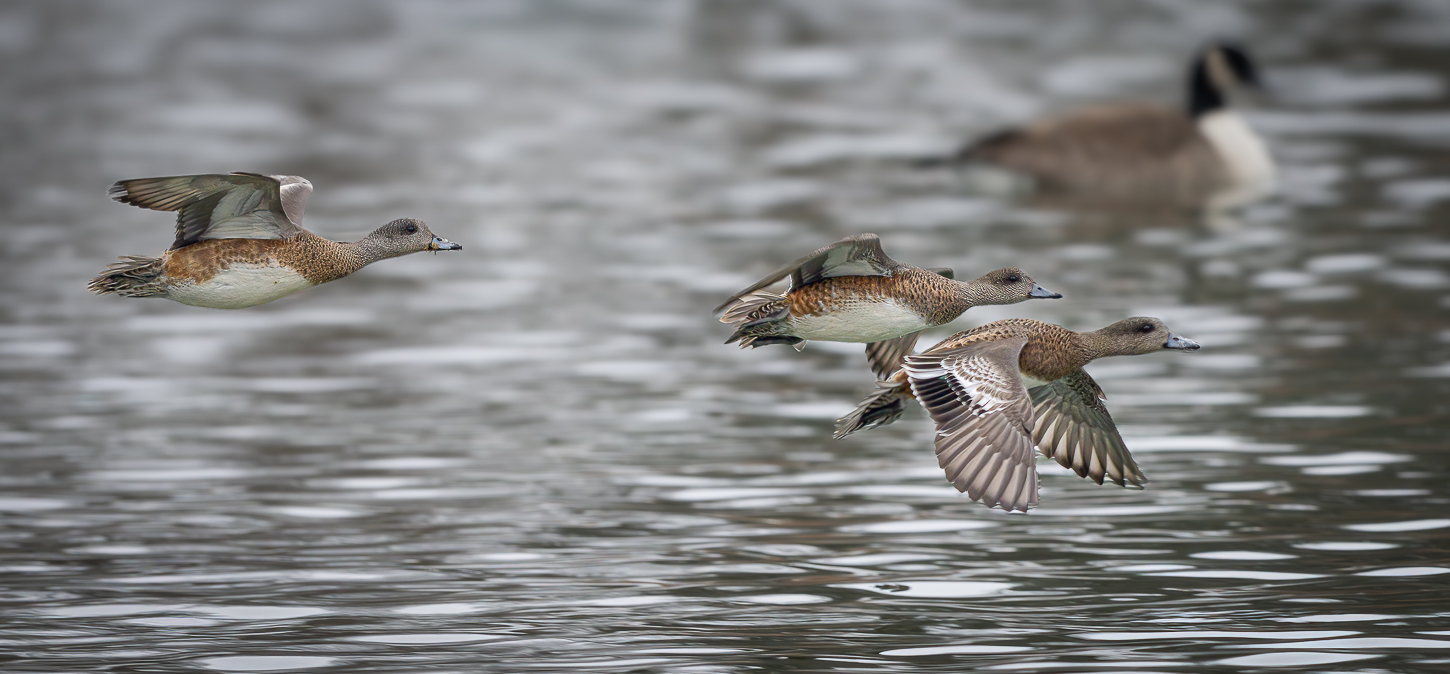
p.1 #1 · R5 + RF 200-800 birds in flight - expecting too much?
All - thanks for your help throughout the years. I appreciate it.
My question - I have an r5 and fairly recently bought a new 200-800, specifically for wildlife / birds. I recognize the limitations at f/9 but didn't think focus acquisition / speed was going to be as much of an issue as it's been for me.
I'm generally shooting hand held. Settings on the camera: AV, Servo focus with center initial detect point / animal detect / eye detect on, continuous focus off, electronic shutter, back button focus, case 1. Below is an example - I tracked this ibis for a bit - had it centered on multiple occasions and never got to focus lock. Got frustrated as the bird was now by me and took this, knowing that focus wasn't locked.
Am I expecting too much from this combination? The ibis seems to have enough contrast for the focusing mechanism to find it. I know I'm getting it in the center. I've tried other cases, enabling and disabling continuous focus, I've had more success using it like it's a DSLR and just enabling the center point.
p.1 #2 · R5 + RF 200-800 birds in flight - expecting too much?
I don’t. use the R5 nor do I use that lens, but I photograph similar birds frequently using an older system and a 100-400, often with a 1.4x TC.
Ibises in flight are harder than you might think for some reason that has puzzled me. I get a far lower hit rate with ibises than with, say, geese, cranes, herons. It may be, in part, because they often are flying a lower heights (as in your example) and are more likely to end up against a background that the camera AFs on rather than on the bird. (They also quite often tend to be flying away from the photographer, leading to lots of photos of ibis butts, but I digress…)
One challenge is that the situations in which a smaller focus zone (like your example photo) is ideal are often no more likely in which one where a larger zone (say, against the sky) would be better. So whichever you choose, sometimes it is going to be the wrong one. I think a tighter zone could have helped in the example.
Of course, that makes it even more challenging into keep the bird right under the AF area. That gets better with (lots of) practice. (I don’t know how new you are to this.)
There are a few other settings that you can experiment with. (I don’t have my camera with me as I write here in Manhattan, so I’ll describe generically rather than try to recall the correct names of the settings.) One setting determines the camera’s tendency to stick with an acquired subject rather than switching to a new one — sticking with the acquired subject is likely better with a bird if flight against (or behind!) complex distractions — with the caveat that it then becomes more important to accuarately acquire the critter initially.
There are differences of option about focus mode settings. I prefer to use continuous predictive focus (AI Servo on my camera), though some will say that a single shot AF can potentially be more accurate.
If you are somewhat new to photographing birds in flight (and apologies if not) it is worth practicing tracking objects in motion. This is a key challenge with BIF, and it is an acquired skill. When you are not around birds, you can practice on anything that movs, including traffic, etc.
p.1 #3 · R5 + RF 200-800 birds in flight - expecting too much?
Dan - thanks for the response. Prior to the R5, I was shooting with a 5diii, the 100-400 with a TC and got more keepers in AI Servo / center point.
I'm still fairly new to birds- about a year. So I know my technique still needs work. I'm the cause of plenty of misses and don't expect miracles out of the camera. But there are times that I think the camera should've focused and just didn't lock. I was wondering if others had experience with this combo and if they were able to get better results consistently.
I think the tracking sensitivity / switch tracked subjects is the function you mentioned - I've moved that all over the spectrum without much success - right now I have it set to the middle of the road. I'll try to move this toward the slower change and see if that works. It's more the initial acquisition that's been the issue. Once it locks it's generally good but getting it to pick the target is the issue. And I'm happy to blame myself and keep working. But I don't think it's 100% me.
Below is a picture I took about an hour after posting this morning. The eagle landed on an island in a lake. I was able to lock focus before it took off - getting shot #1. Then it quickly dove and lost focus (I thought it would go up, my fault). I released the focus and tried to re-acquire - resulting in the second image - this is the first of the burst. My expectations were that it would be able to focus on the bird, and not the bank behind it.
Thanks again - I'll keep working on technique and hope that others will provide their experience.
gdanmitchell wrote:
I don’t. use the R5 nor do I use that lens, but I photograph similar birds frequently using an older system and a 100-400, often with a 1.4x TC.
Ibises in flight are harder than you might think for some reason that has puzzled me. I get a far lower hit rate with ibises than with, say, geese, cranes, herons. It may be, in part, because they often are flying a lower heights (as in your example) and are more likely to end up against a background that the camera AFs on rather than on the bird. (They also quite often tend to be flying away from the photographer, leading to lots of photos of ibis butts, but I digress…)
One challenge is that the situations in which a smaller focus zone (like your example photo) is ideal are often no more likely in which one where a larger zone (say, against the sky) would be better. So whichever you choose, sometimes it is going to be the wrong one. I think a tighter zone could have helped in the example.
Of course, that makes it even more challenging into keep the bird right under the AF area. That gets better with (lots of) practice. (I don’t know how new you are to this.)
There are a few other settings that you can experiment with. (I don’t have my camera with me as I write here in Manhattan, so I’ll describe generically rather than try to recall the correct names of the settings.) One setting determines the camera’s tendency to stick with an acquired subject rather than switching to a new one — sticking with the acquired subject is likely better with a bird if flight against (or behind!) complex distractions — with the caveat that it then becomes more important to accuarately acquire the critter initially.
There are differences of option about focus mode settings. I prefer to use continuous predictive focus (AI Servo on my camera), though some will say that a single shot AF can potentially be more accurate.
If you are somewhat new to photographing birds in flight (and apologies if not) it is worth practicing tracking objects in motion. This is a key challenge with BIF, and it is an acquired skill. When you are not around birds, you can practice on anything that movs, including traffic, etc.
p.1 #4 · R5 + RF 200-800 birds in flight - expecting too much?
volyrat wrote:
All - thanks for your help throughout the years. I appreciate it.
My question - I have an r5 and fairly recently bought a new 200-800, specifically for wildlife / birds. I recognize the limitations at f/9 but didn't think focus acquisition / speed was going to be as much of an issue as it's been for me.
I'm generally shooting hand held. Settings on the camera: AV, Servo focus with center initial detect point / animal detect / eye detect on, continuous focus off, electronic shutter, back button focus, case 1. Below is an example - I tracked this ibis for a bit - had it centered on multiple occasions and never got to focus lock. Got frustrated as the bird was now by me and took this, knowing that focus wasn't locked.
Am I expecting too much from this combination? The ibis seems to have enough contrast for the focusing mechanism to find it. I know I'm getting it in the center. I've tried other cases, enabling and disabling continuous focus, I've had more success using it like it's a DSLR and just enabling the center point.
Your first image is going to be a bit of a challenge for a MILC because it will snap on to anything vertical very quickly and easily. Keep that in mind if you are shooting with a ton of vertical reeds in the background.
p.1 #6 · R5 + RF 200-800 birds in flight - expecting too much?
For the R5, zoom out for BIF to 500mm where the focus acquisition is faster. The R5ii has much faster and more reliable AF at 800mm on the RF 200-800mm, and I find it very acceptable. I prefer to use the RF 100-500mm on the R5 for BIF, which focusses very fast at 500mm on it, but I find the RF 200-800mm good enough at 500mm for even catching Puffins in flight.
p.1 #8 · R5 + RF 200-800 birds in flight - expecting too much?
Thanks- so once you get focus lock - do you then zoom to 800 while maintaining focus?
Will give it a try.
cpe1991 wrote:
For the R5, zoom out for BIF to 500mm where the focus acquisition is faster. The R5ii has much faster and more reliable AF at 800mm on the RF 200-800mm, and I find it very acceptable. I prefer to use the RF 100-500mm on the R5 for BIF, which focusses very fast at 500mm on it, but I find the RF 200-800mm good enough at 500mm for even catching Puffins in flight.
p.1 #9 · R5 + RF 200-800 birds in flight - expecting too much?
gdanmitchell wrote:
Ibises in flight are harder than you might think for some reason that has puzzled me. I get a far lower hit rate with ibises than with, say, geese, cranes, herons.
The bird that's in the OP's picture looks really low contrast. The main body is all white so the only thing the camera has to focus on is the wing which moves around a lot, or the feet. The sun is probably hurting more than helping as it's flat lighting everything. I think swans can fall into this same issue as well. The keeper rate would likely increase on both types of birds when they are facing you because there is plenty of contrast between the head and body.
p.1 #10 · R5 + RF 200-800 birds in flight - expecting too much?
volyrat wrote:
Thanks- so once you get focus lock - do you then zoom to 800 while maintaining focus?
Will give it a try.
No, I used to leave it at 500mm on the R5 when I had needed to zoom out in the first place. For far distant birds that were moving sufficiently slowly, 800mm would have worked anyway - it was for closer ones moving faster I needed to zoom out to 500mm.
p.1 #11 · R5 + RF 200-800 birds in flight - expecting too much?
artsupreme wrote:
Your first image is going to be a bit of a challenge for a MILC because it will snap on to anything vertical very quickly and easily. Keep that in mind if you are shooting with a ton of vertical reeds in the background.
I agree with your assessment, the vertical, high-contrast, highly detailed reeds in the background are giving such good focusing targets for the phase-detection system that it is not able to focus on the moving subject which has less contrasty vertical detail. The relatively small maximum aperture (f/9) of the lens also adds to the challenge for the camera. I think there are much better chances for a successful focus acquisition if you can photograph the subject against a more restful background. This is just a technological limitation and there is not much you can do about it. A smaller focus area can help to some degree if you can hold the area over the subject.
p.1 #12 · R5 + RF 200-800 birds in flight - expecting too much?
volyrat wrote:
All - thanks for your help throughout the years. I appreciate it.
My question - I have an r5 and fairly recently bought a new 200-800, specifically for wildlife / birds. I recognize the limitations at f/9 but didn't think focus acquisition / speed was going to be as much of an issue as it's been for me.
I'm generally shooting hand held. Settings on the camera: AV, Servo focus with center initial detect point / animal detect / eye detect on, continuous focus off, electronic shutter, back button focus, case 1. Below is an example - I tracked this ibis for a bit - had it centered on multiple occasions and never got to focus lock. Got frustrated as the bird was now by me and took this, knowing that focus wasn't locked.
Am I expecting too much from this combination? The ibis seems to have enough contrast for the focusing mechanism to find it. I know I'm getting it in the center. I've tried other cases, enabling and disabling continuous focus, I've had more success using it like it's a DSLR and just enabling the center point.
Thoughts? Thanks.
And it does focus pretty quickly / accurately when the subjects aren't moving...
I use the 200-800 and Canon R5 for birds but for birds in flight I start out at 500mm then zoom if possible. I use manual mode - higher shutter speed, AI servo - large zone and eye focus
.
Just this morning I took this wood stork pic in Florida with the 200-800 and R5
p.1 #13 · R5 + RF 200-800 birds in flight - expecting too much?
200-800, just shot with a guy for a month in Ecuador with that combo. It was a total disaster for him. The high ISO's and lack of shutter speed made it miserable for him. Not sure what this lens is good for. Definitely not a good all around birding lens.
He was also complaining about the R5 electronic shutter slow readout speed. He finally gave up. I was loaning him my lens so his trip was not a total waste of time and money for him.
p.1 #14 · R5 + RF 200-800 birds in flight - expecting too much?
Hi Bob ..... you will get this figured out
Is this your first long reach lens you have used other than 100-400 for BIF (birds in flight)?
There is a learning curve as you go longer on focal length and other factors that can at times contribute to missed opportunities, you just learn as you go ....but don't give up!
In your settings you describe you say CF (continuous focus) was OFF? That has to be on for the lens to continue to focus-track as you also follow the bird best you can to allow this to happen. Don't use a small focus area, use a zone, larger zone so that your camera does the work of keeping the focus on the bird and it is a lot less dependent on you trying to keep a small focus point where it needs to be.
I see you are in AV, what shutter speeds were you obtaining, I would suggest using Auto ISO with you selecting the shutter speed of 1/1600 or faster. Again we are working to eliminate variables that degrade you critical focus so movement is one of them. Sure there are times when slower flying birds like these large birds can be done much slower. If you are not yet used to Auto ISO then set up for TV and select the faster shutter speed as mentioned.
I have been for a long time shooting a Sony 200-600 and just recently went to their 400-800 f/8. No I don't think f/9 (only 1/3 stop slower than f/9) is a problem at all for BIF, it may be a limiting factor in lower light on what ISO you end up with but my good friend shoots the R5 with 100-500 f/7.1 (2/3 stop faster is all) with stunning results.
As suggested starting off wider @ 500 may help acquire subject in viewfinder quicker than you can zoom in while panning perhaps. Try just shooting the lens @ 600 and see your results, as you get more consistent satisfying focus results move out to 700-800.
The more reach you have the more variable that are in-between that can degrade your image, shooting over water at times or wet grass you can get atmospheric compression of moisture and soften the image, often happens in the Spring time, I have experienced it several times.
I too shoot handheld, proper improved setting on your camera are going to benefit you I believe, wider AF area, continuous focusing and faster shutter speeds.
I see in your Egret image the camera picked the wrong area for focus, I think in your eagle image likely a cropped example again either missed the subject or was not actively 'continuously focusing'. Also keep in mind, the smaller the subject in the viewfinder the less accurate the focus will be....... as you crop up which often we need to do, you increase the error that may have been there initially. Yes it is frustrating at times, you doubt the camera, the lens and yourself but slowly you get them all in sync and you get a big smile on your face and realize it can happen when all elements harmonize that need to
You got this Bob, just keep learning and applying what you learn!
Karl
Feel free to PM me if I can offer any other suggestions .... do not give up on your lens .... just improve your technique
p.1 #15 · R5 + RF 200-800 birds in flight - expecting too much?
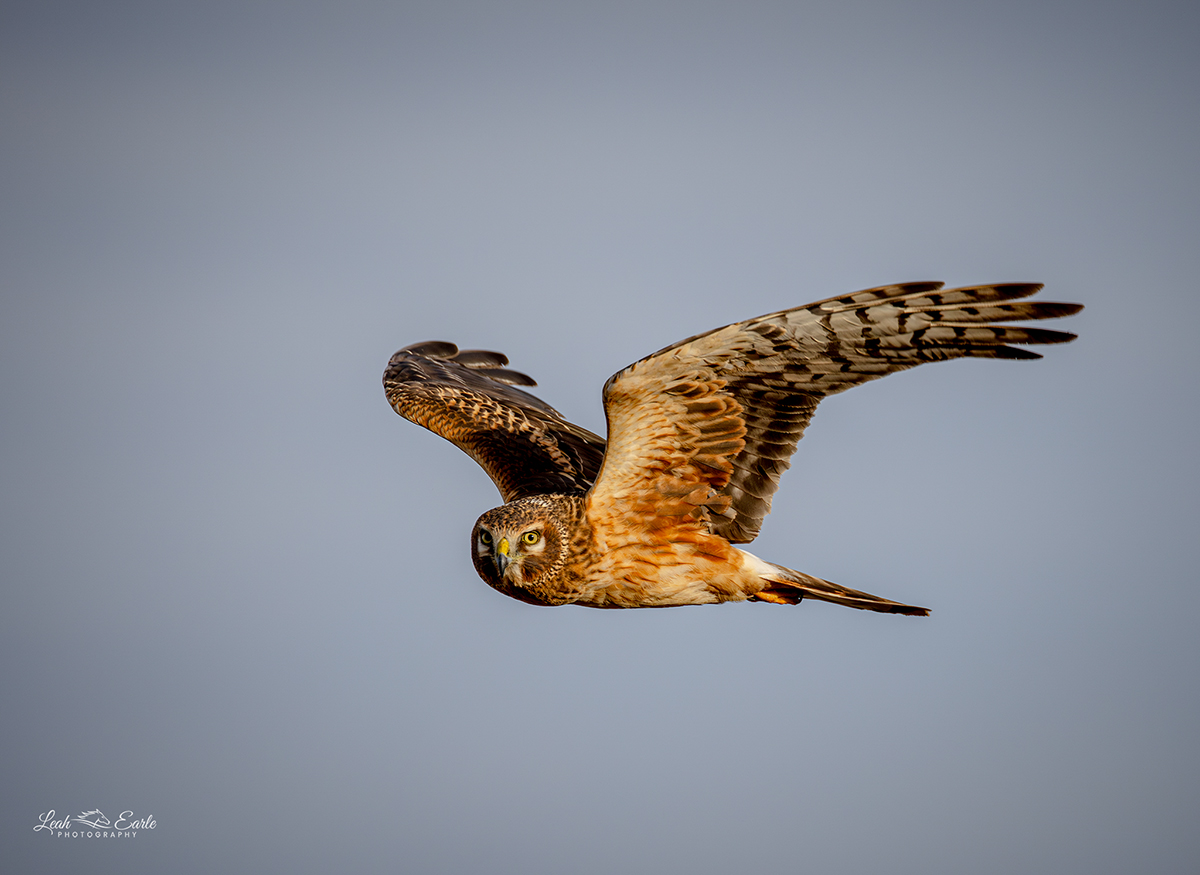
I use the R5, but I use the RF100-500 lens. Going with a longer focal length does have its own learning curve when shooting BIF. I was getting frustrated as well and was thinking I would never get it. What did work for me is changing to Case 2 with Tracking Sensitivity set to -2 and Accel/Decel tracking left at the default of 0. I also switched to a bigger autofocus area of Zone AF. My keeper rate went up and I am mostly happy with the results now. We have a local nature reserve that has a resident Northern Harrier that I have been practicing with. I need more practice with smaller birds though. This was shot with minimal practice sessions and cropped in. You'll get it even with the 200-800!
p.1 #16 · R5 + RF 200-800 birds in flight - expecting too much?
Karl - thanks for the response and the encouragement! I appreciate it greatly. And thanks for sharing the examples - they are fantastic!
Some answers:
It is my first long lens - longest was the 100-400 with a 1.4 TC. 800 is much different than 560 - early on it was hard to find the target, let alone focus on it. I've gotten better but there's always work to do.
This is the continuous auto focus I have set to off. My understanding is that the setting while on has the camera continue to hunt for something to focus on while not pressing the back button focus (or which ever button someone has selected to drive focus). I disabled it to reduce battery drain and didn't think having it hunt for focus while I'm carrying it was helpful. I could definitely be wrong here.
I did / do have it in Servo focus and am holding the back button focus throughout the attempt to lock focus. My understanding is that in servo mode the camera will continue to focus as long as I'm holding the focus button (in this case the back button focus) down. I will quickly release / re-engage the focus button if the camera struggles with finding the target.
Shutter speeds - good idea on using auto ISO in TV. I have been using AV but keep the ISO high (maybe too high). The pictures shared are at ISO 6400 and shutter speeds of 1/2000 and quicker.
Degraded images at distance - agreed. I had a lot of this shooting sports on artificial turf long ago when my kids were younger. More recently shooting dolphins breaching out of the water from the beach. Cool water and warm air make great atmospheric interference.
The eagle example is actually not cropped. And for those concerned - I did not approach the eagle to get close. It did the fly by on the way to its nest - which is about 1/4 mile from where the picture was taken. I was holding the focus button down but the camera couldn't find the bird.
Thanks again Karl - much appreciated!
Karl Witt wrote:
Hi Bob ..... you will get this figured out
Is this your first long reach lens you have used other than 100-400 for BIF (birds in flight)?
There is a learning curve as you go longer on focal length and other factors that can at times contribute to missed opportunities, you just learn as you go ....but don't give up!
In your settings you describe you say CF (continuous focus) was OFF? That has to be on for the lens to continue to focus-track as you also follow the bird best you can to allow this to happen. Don't use a small focus area, use a zone, larger zone so that your camera does the work of keeping the focus on the bird and it is a lot less dependent on you trying to keep a small focus point where it needs to be.
I see you are in AV, what shutter speeds were you obtaining, I would suggest using Auto ISO with you selecting the shutter speed of 1/1600 or faster. Again we are working to eliminate variables that degrade you critical focus so movement is one of them. Sure there are times when slower flying birds like these large birds can be done much slower. If you are not yet used to Auto ISO then set up for TV and select the faster shutter speed as mentioned.
I have been for a long time shooting a Sony 200-600 and just recently went to their 400-800 f/8. No I don't think f/9 (only 1/3 stop slower than f/9) is a problem at all for BIF, it may be a limiting factor in lower light on what ISO you end up with but my good friend shoots the R5 with 100-500 f/7.1 (2/3 stop faster is all) with stunning results.
As suggested starting off wider @ 500 may help acquire subject in viewfinder quicker than you can zoom in while panning perhaps. Try just shooting the lens @ 600 and see your results, as you get more consistent satisfying focus results move out to 700-800.
The more reach you have the more variable that are in-between that can degrade your image, shooting over water at times or wet grass you can get atmospheric compression of moisture and soften the image, often happens in the Spring time, I have experienced it several times.
I too shoot handheld, proper improved setting on your camera are going to benefit you I believe, wider AF area, continuous focusing and faster shutter speeds.
I see in your Egret image the camera picked the wrong area for focus, I think in your eagle image likely a cropped example again either missed the subject or was not actively 'continuously focusing'. Also keep in mind, the smaller the subject in the viewfinder the less accurate the focus will be....... as you crop up which often we need to do, you increase the error that may have been there initially. Yes it is frustrating at times, you doubt the camera, the lens and yourself but slowly you get them all in sync and you get a big smile on your face and realize it can happen when all elements harmonize that need to
You got this Bob, just keep learning and applying what you learn!
Karl
Feel free to PM me if I can offer any other suggestions .... do not give up on your lens .... just improve your technique ...Show more →
p.1 #17 · R5 + RF 200-800 birds in flight - expecting too much?
Thank you for the response and great picture of the Harrier!
I'll give case 2 a try again.
And to be clear - on autofocus - do you have it set to a zone or expansion around the center point and leave animal detect on? I think if that's the setting the camera will try to find the animal but won't track as the animal moves through the frame? Is that correct?
Thanks again!
Bob.
learle wrote:
I use the R5, but I use the RF100-500 lens. Going with a longer focal length does have its own learning curve when shooting BIF. I was getting frustrated as well and was thinking I would never get it. What did work for me is changing to Case 2 with Tracking Sensitivity set to -2 and Accel/Decel tracking left at the default of 0. I also switched to a bigger autofocus area of Zone AF. My keeper rate went up and I am mostly happy with the results now. We have a local nature reserve that has a resident Northern Harrier that I have been practicing with. I need more practice with smaller birds though. This was shot with minimal practice sessions and cropped in. You'll get it even with the 200-800!...Show more →
p.1 #18 · R5 + RF 200-800 birds in flight - expecting too much?
I have it set to a zone not the expansion option and I have animal detect on. When you roll through the AF options it is called Zone AF. I have continuous AF off as I think it works like you are describing and decreases battery life. It seems to work for tracking unless they get into grass or something that is in front of them then it will lose focus.
volyrat wrote:
Thank you for the response and great picture of the Harrier!
I'll give case 2 a try again.
And to be clear - on autofocus - do you have it set to a zone or expansion around the center point and leave animal detect on? I think if that's the setting the camera will try to find the animal but won't track as the animal moves through the frame? Is that correct?
p.1 #20 · R5 + RF 200-800 birds in flight - expecting too much?
Looks like you are nailing them now👍🏼Some beautiful images!!
Nice application of suggestions and way to overcome your earlier doubts😁
Karl😎
volyrat wrote:
Thanks again for all of the suggestions. Showing some improvement using a larger zone with animal detect on. Still work to do but getting better!