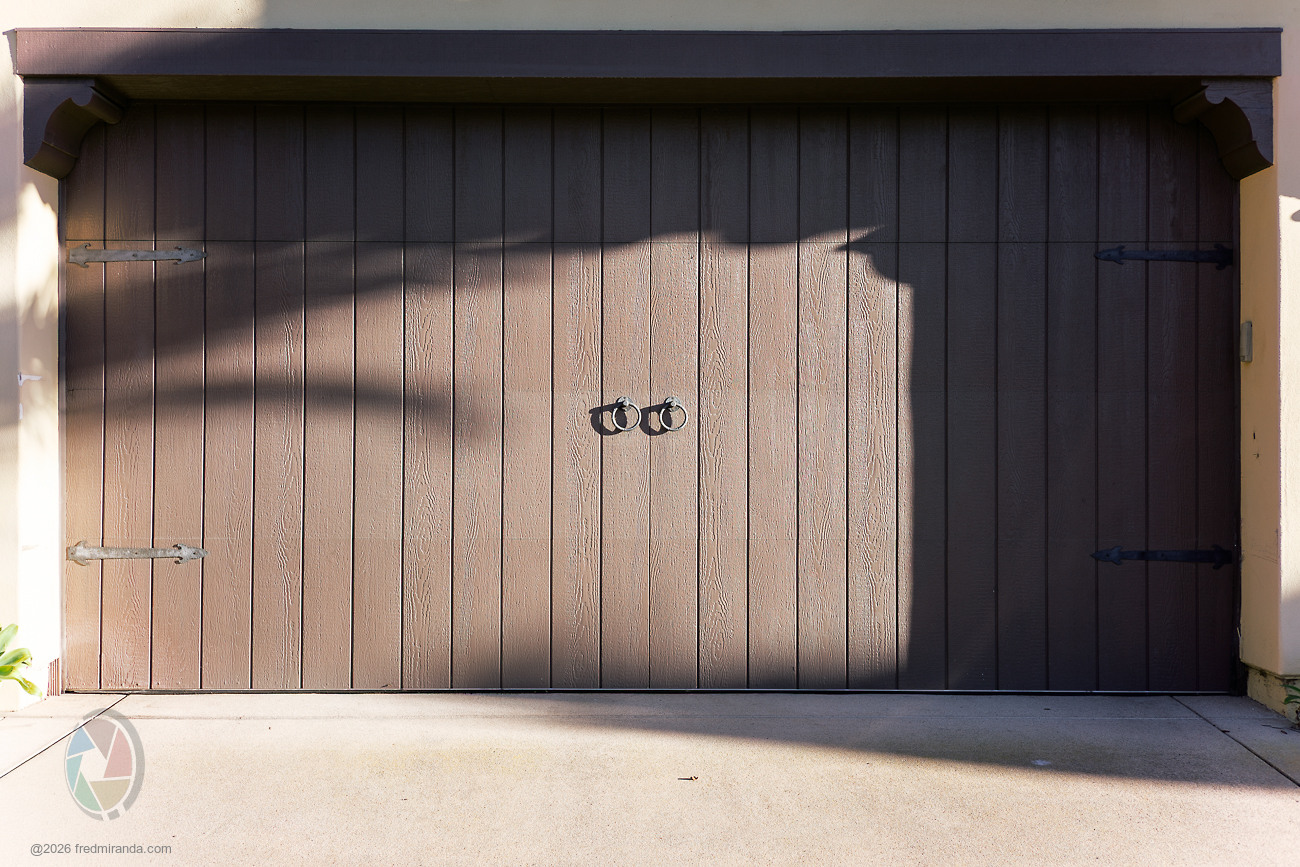
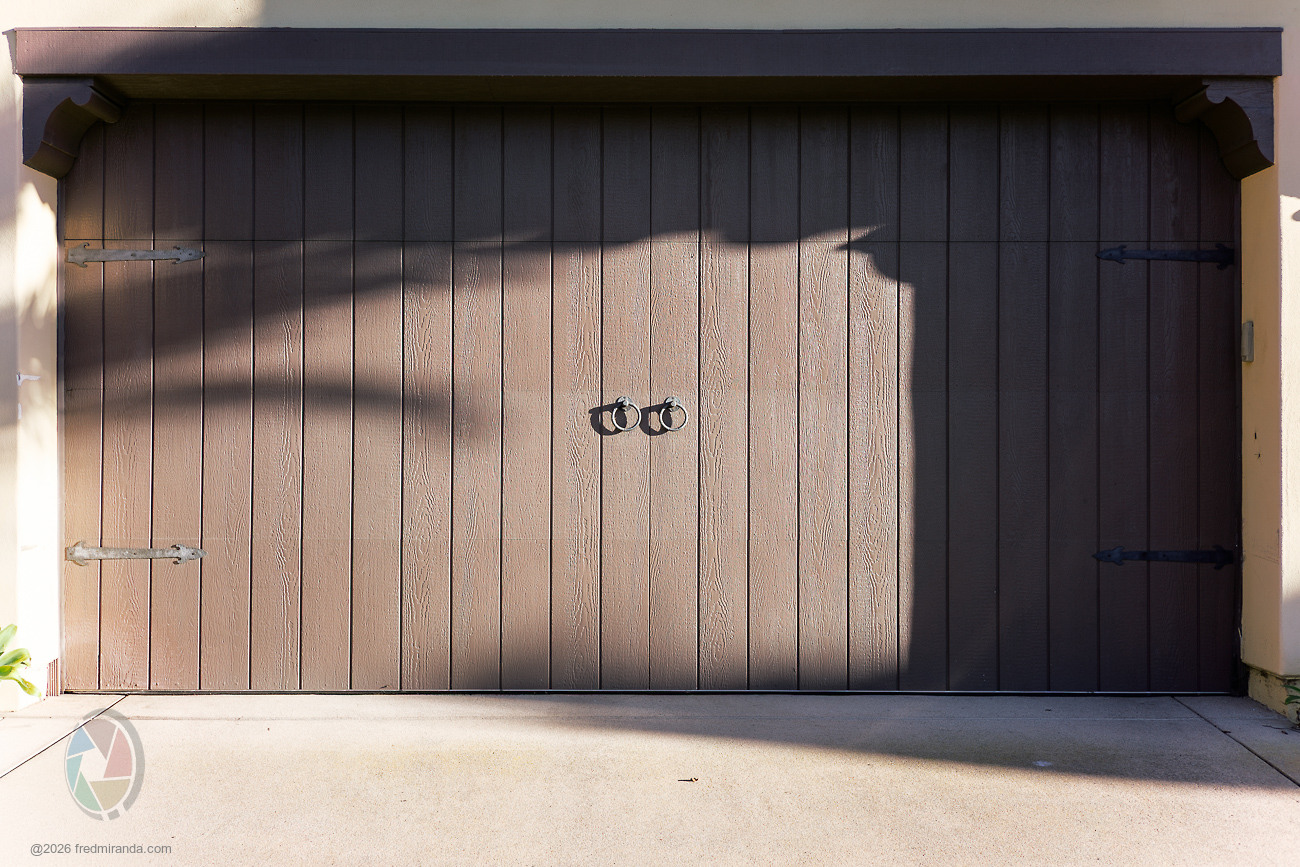
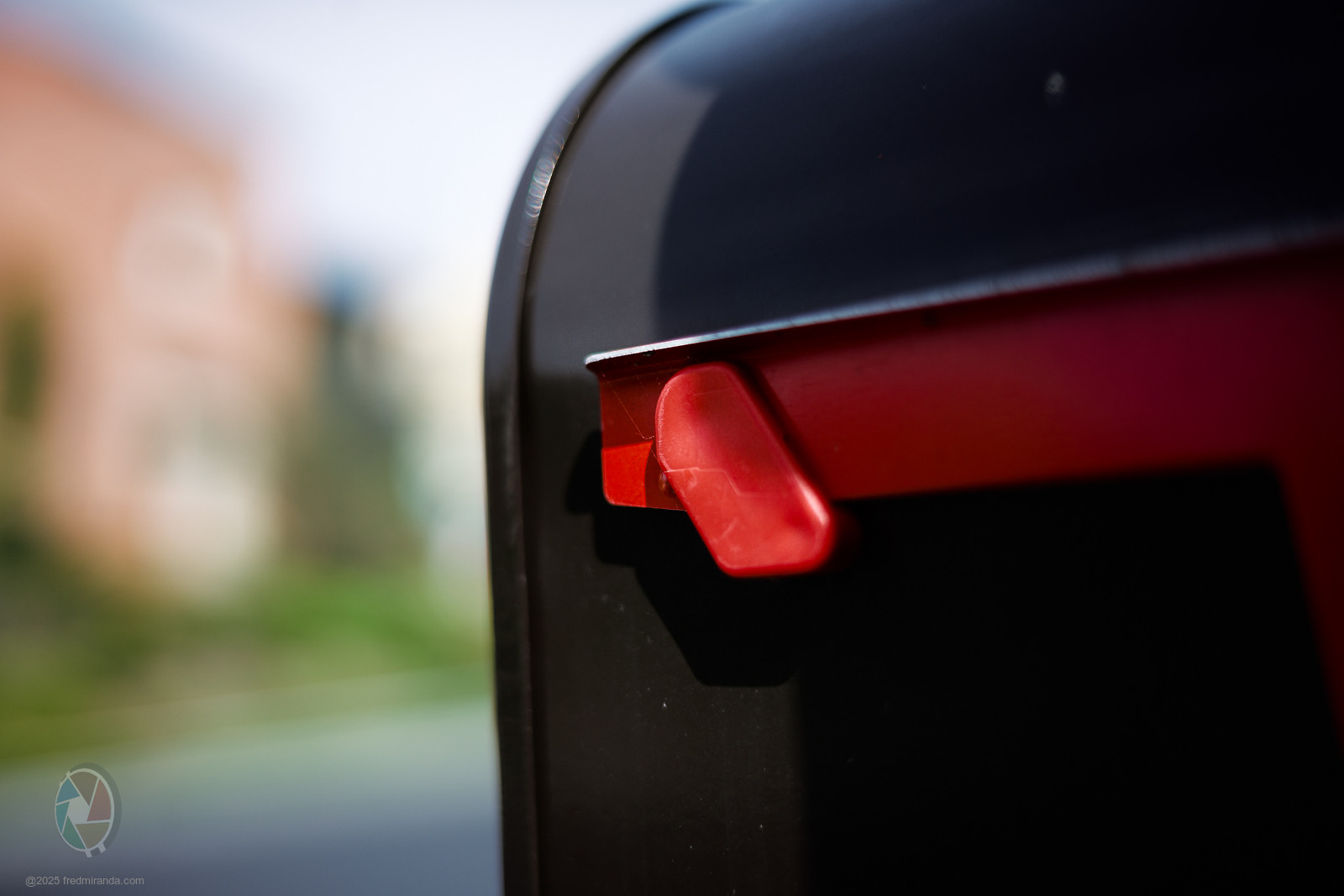
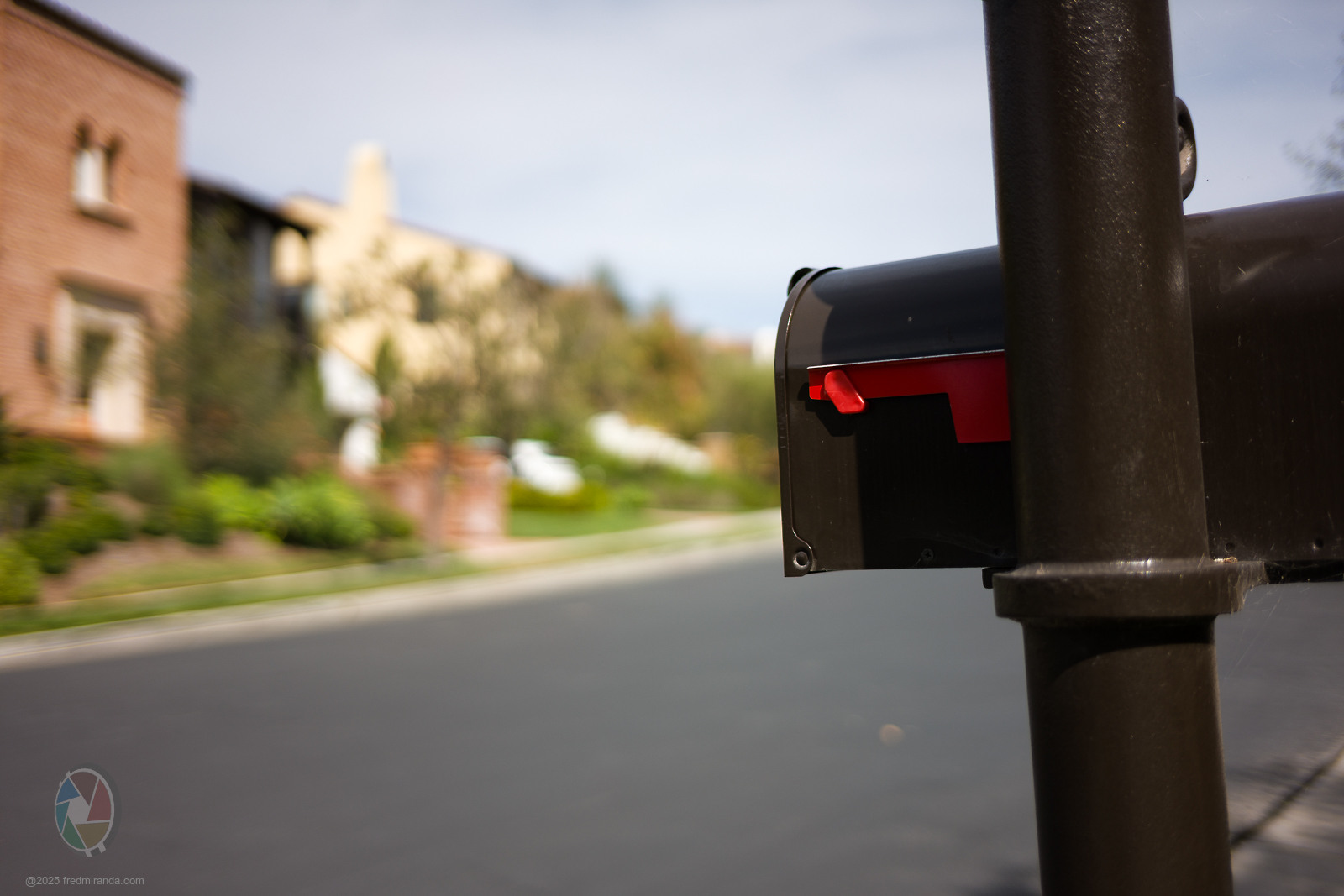
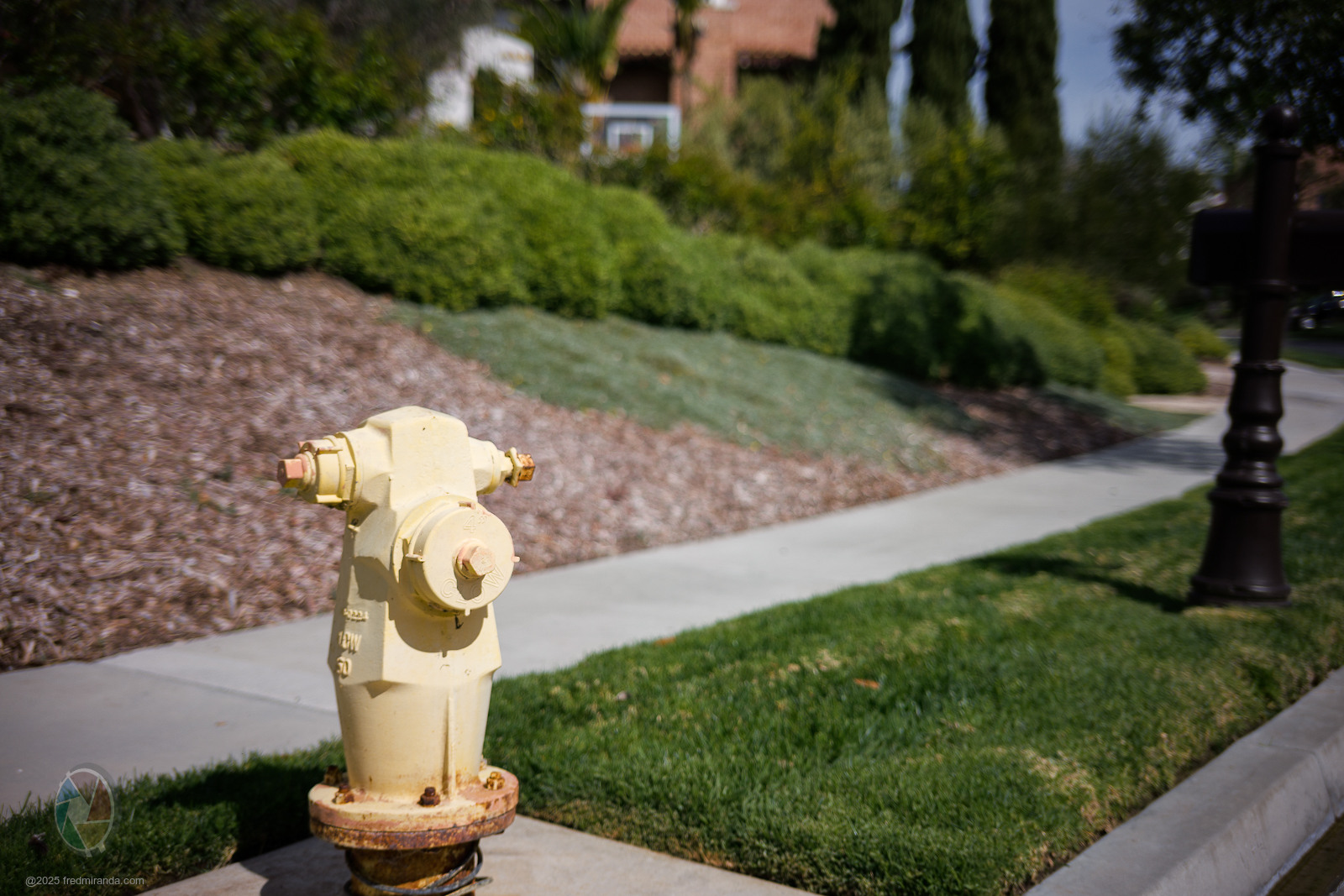
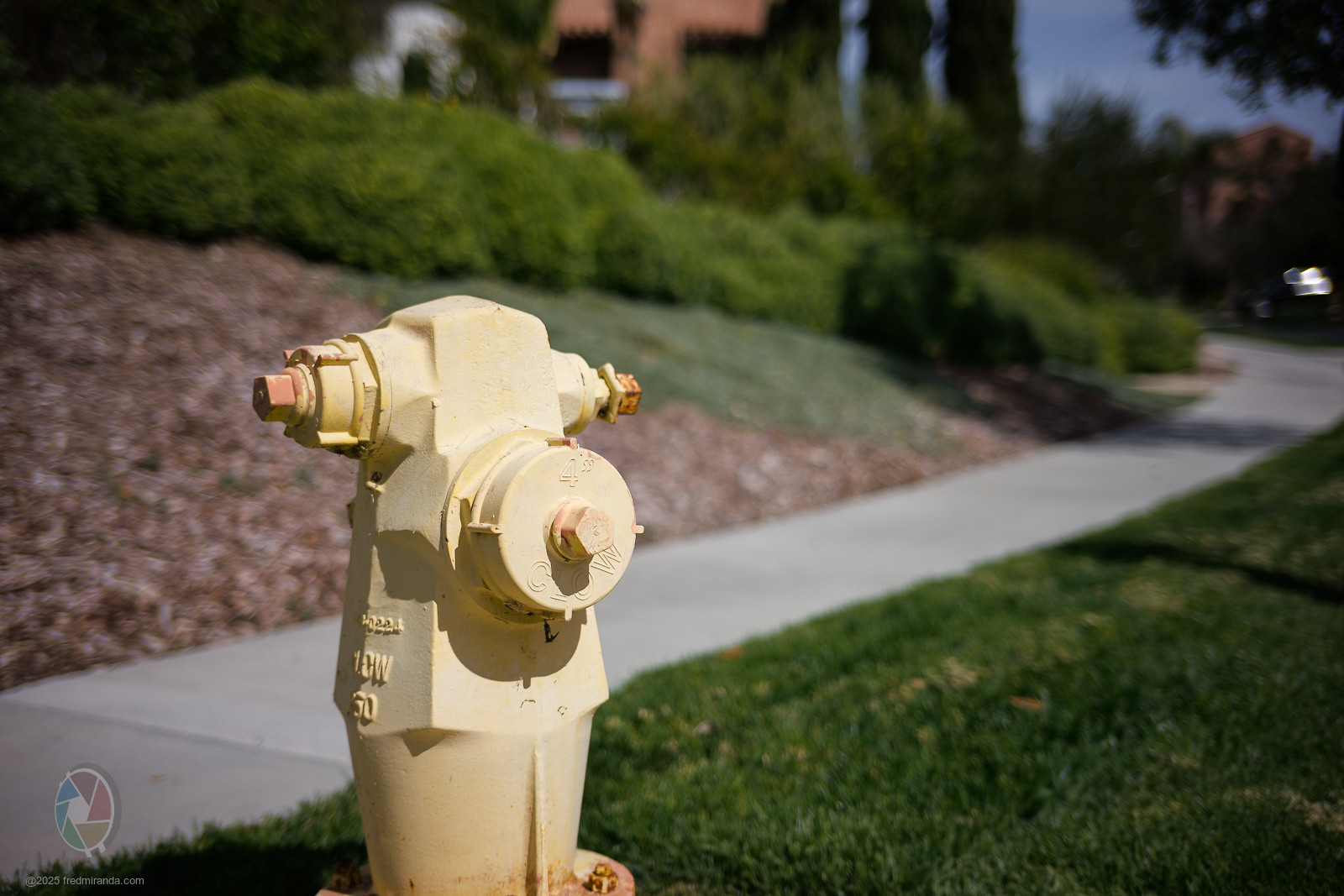
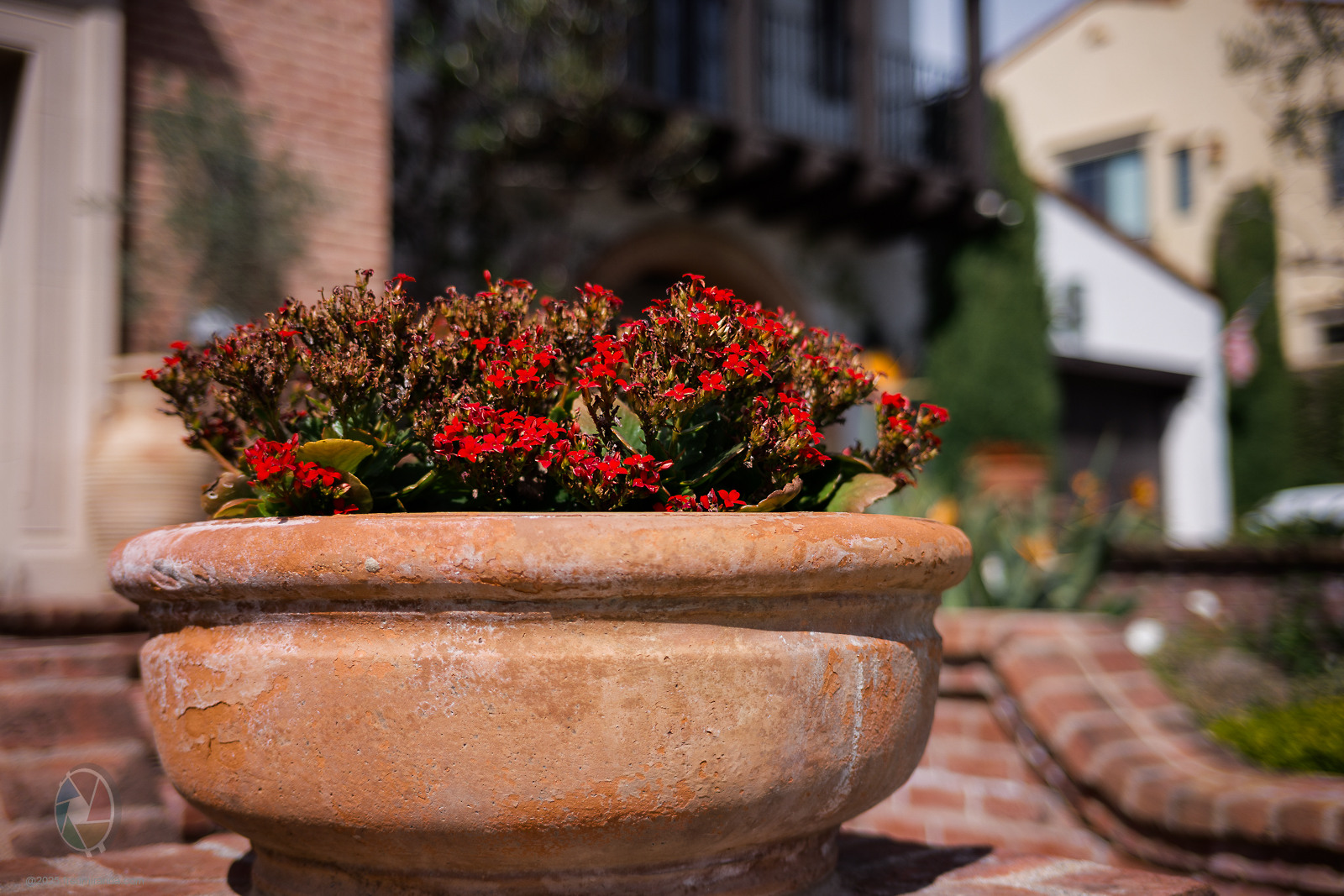
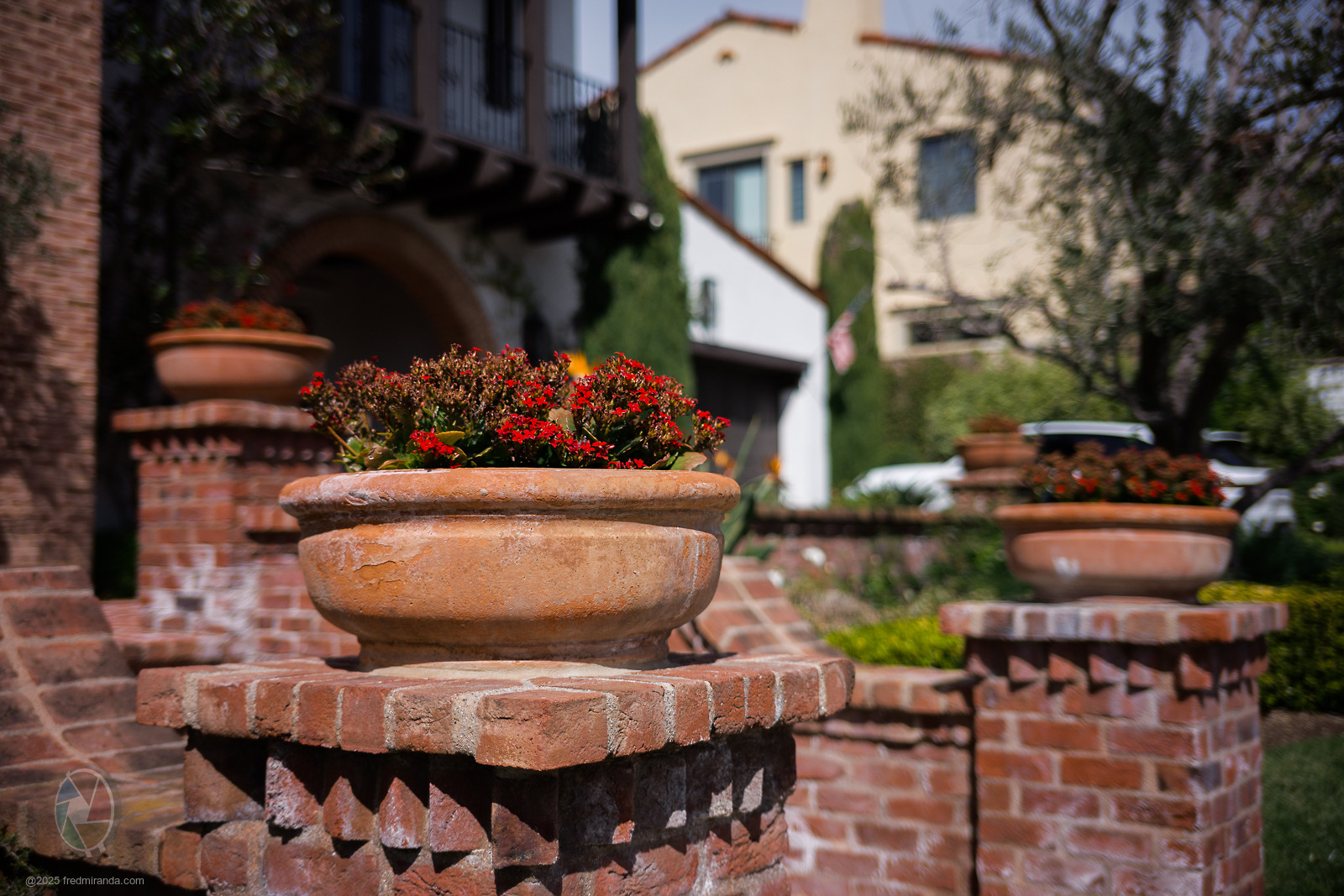
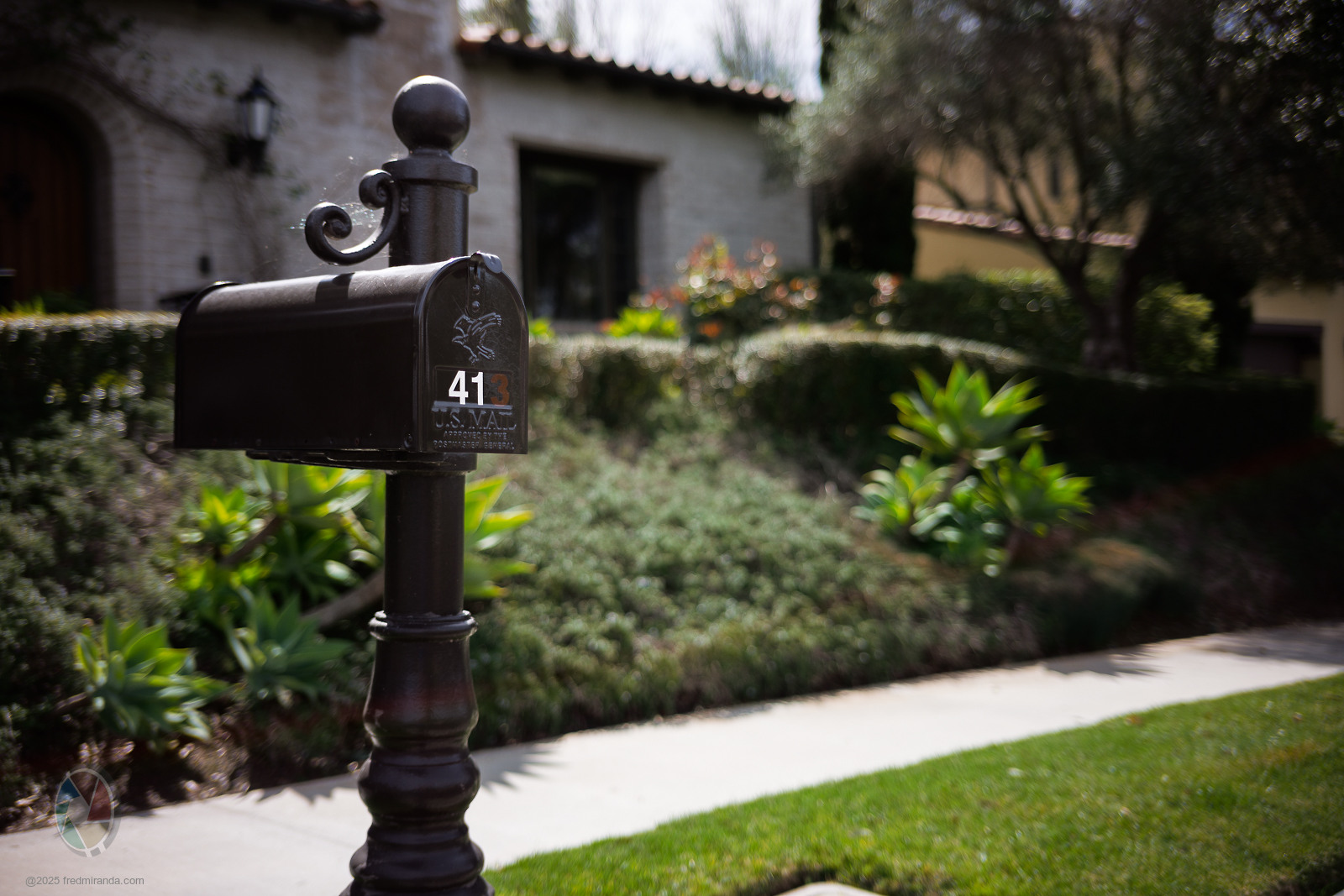
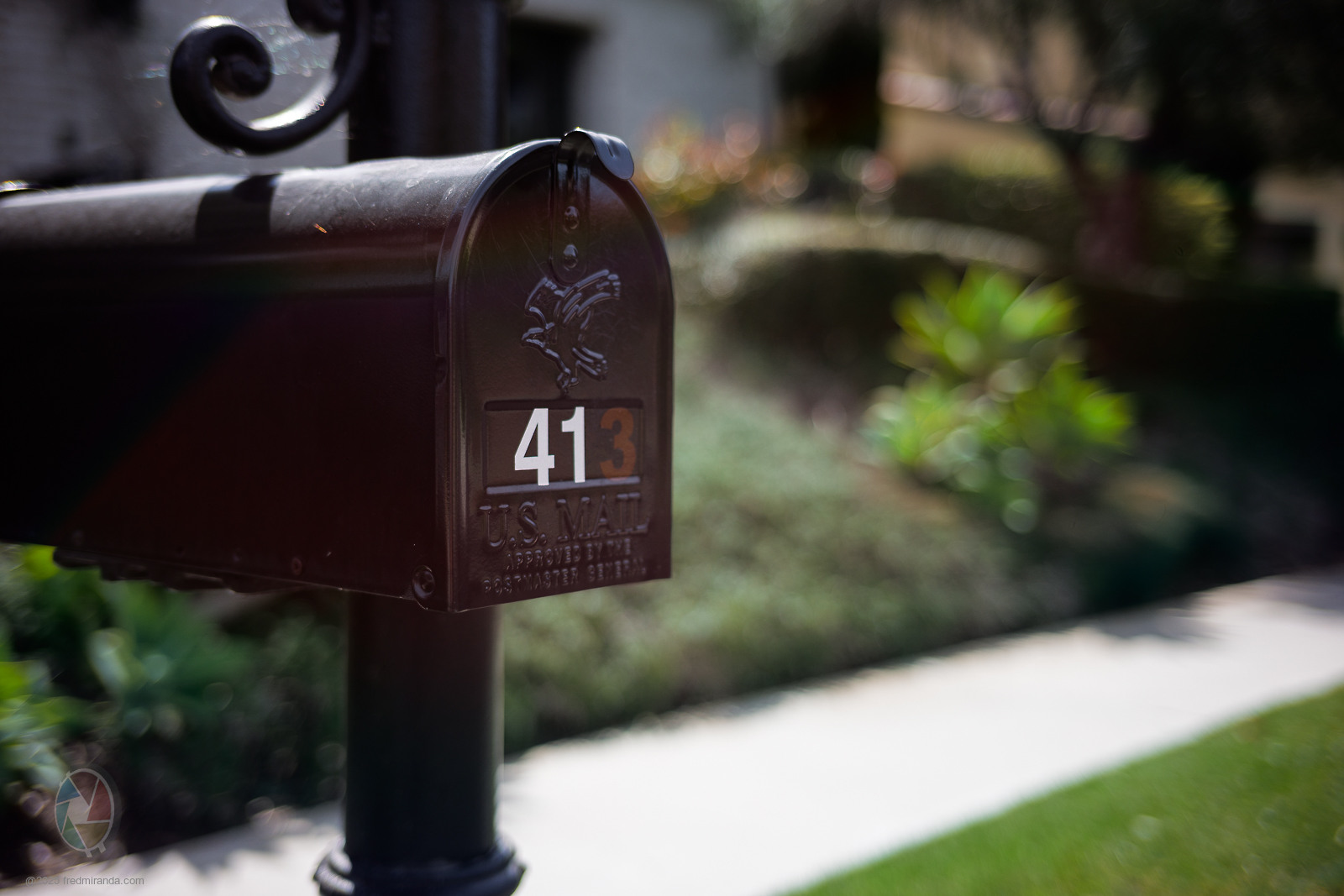
I wanted to test the Voigtlander 40mm f/2 Septon for distortion, since I hadn't noticed any in my initial shots. Today's test confirms it: this lens produces very low distortion. In Lightroom, you can apply a tiny "-1" pincushion adjustment if you want, but in real-world images, I would just leave it as is.
It is surprising that such a compact pancake lens, with its optical compromises, handles distortion so well. For comparison, most 35–40mm lenses usually show barrel distortion, and tele lenses usually show a bit of pincushion. The Voigtlander 40/2 Septon is an excellent choice for architecture, street photography, or anything that benefits from distortion-free images.
Below are sample images...first without any correction, then with a "-1" pincushion adjustment in Lightroom.
This lens is clearly not optimized for landscapes. Its compactness is appealing for environmental portraits, i.e. typical pictures taken by, lets say, a married couple exploring London together.
@Fred Miranda Have you had a chance to play with the Nikkor Z 40mm f/2 "muffin" lens? If yes, how does this Septon compare at medium focusing distance (5-15 feet) when the subject is within the DX area of a frame?
old-gregg wrote:
This lens is clearly not optimized for landscapes.
Did...did you think it was GOING to be?
The one thing that Fred's tests miss are the midline edges where you'd typically have a horizon on a landscape. The parts of these test images that are a mess (corners) are typically sky or bokeh'd out grass where these rendering deficiencies are less of a problem.
If it performs anything like the Ultron, F8 landscapes will be perfectly suitable. If you want more, get a APO-Lanthar.
RoamingScott wrote:
Did...did you think it was GOING to be?
The one thing that Fred's tests miss are the midline edges where you'd typically have a horizon on a landscape. The parts of these test images that are a mess (corners) are typically sky or bokeh'd out grass where these rendering deficiencies are less of a problem.
If it performs anything like the Ultron, F8 landscapes will be perfectly suitable. If you want more, get a APO-Lanthar.
But I already have the APO so my landscape use case is covered. Having swapped my Z8 for the ZF, I now wonder whether this Septon can be an improvement over the stock 40mm Nikkor for the type of photography I described.
old-gregg wrote:
But I already have the APO so my landscape use case is covered. Having swapped my Z8 for the ZF, I now wonder whether this Septon can be an improvement over the stock 40mm Nikkor for the type of photography I described.
old-gregg wrote:
This lens is clearly not optimized for landscapes. Its compactness is appealing for environmental portraits, i.e. typical pictures taken by, lets say, a married couple exploring London together.
@Fred Miranda@ Have you had a chance to play with the Nikkor Z 40mm f/2 "muffin" lens? If yes, how does this Septon compare at medium focusing distance (5-15 feet) when the subject is within the DX area of a frame?
Yes, the main strength of this lens is its size. To get it that compact, there are compromises, fewer elements and a simpler design, so it's not going to perform like lenses that are optimized purely for maximum optical performance rather than portability.
In that sense, the Voigtlander 40mm f/2 Septon follows the same philosophy as the Voigtlander 27mm f/2 pancake for X-mount, which gives you a 40mm full frame equivalent. They aim for solid performance in a tiny package, not record breaking resolution/contrast across the frame. You still get great results, especially at center, but with some character, including a bit of wavy field curvature.
Minimal Focus Distance performance and Focus Shift
The Voigtlander 40mm f/2 Septon Aspherical doesn't have a floating element, so its optical design is tuned for mid-range distances. Spherical aberration (SA) is well controlled, so at 0.7m wide open there's almost no glow, though at 0.3 m f/2 you'll see a slight SA. Resolution and contrast are very consistent wide open, but they reach their best at f/2.8 and beyond when shooting close up.
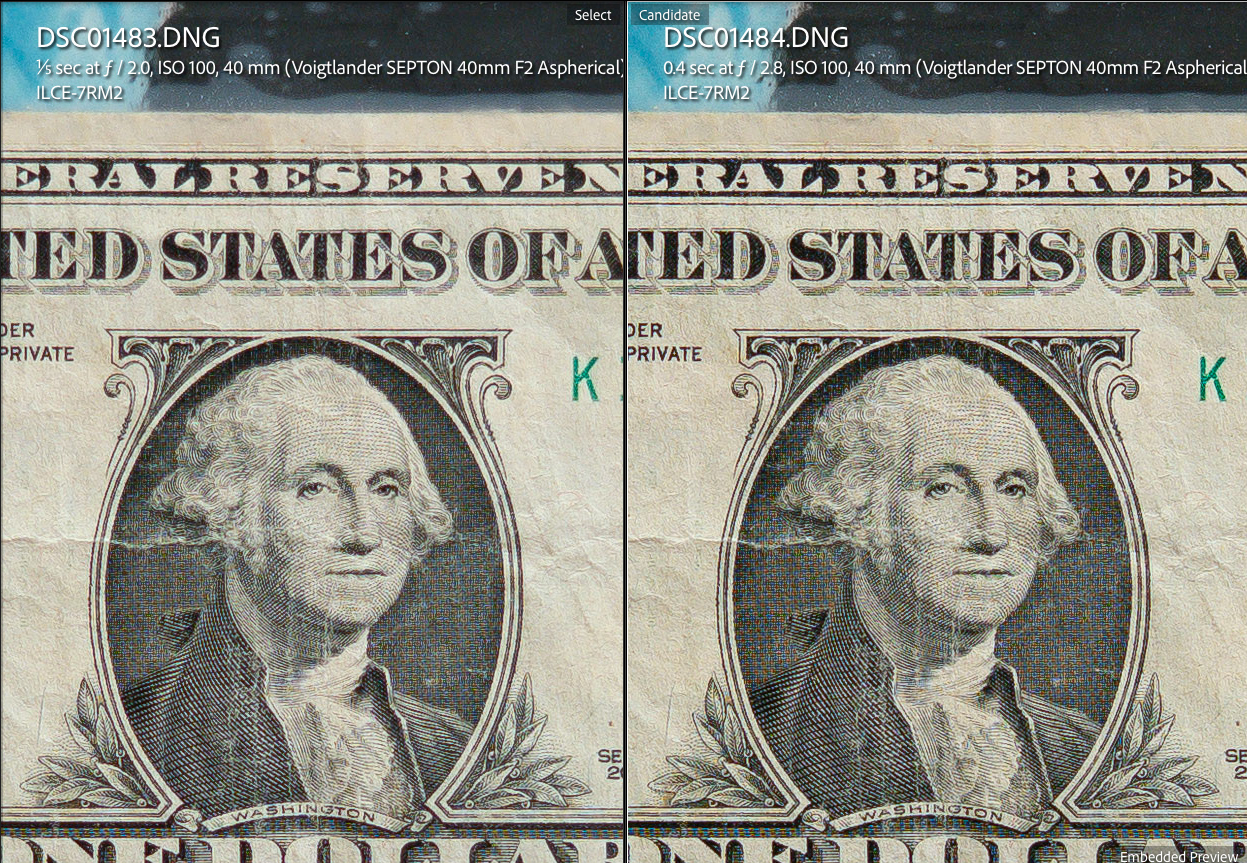
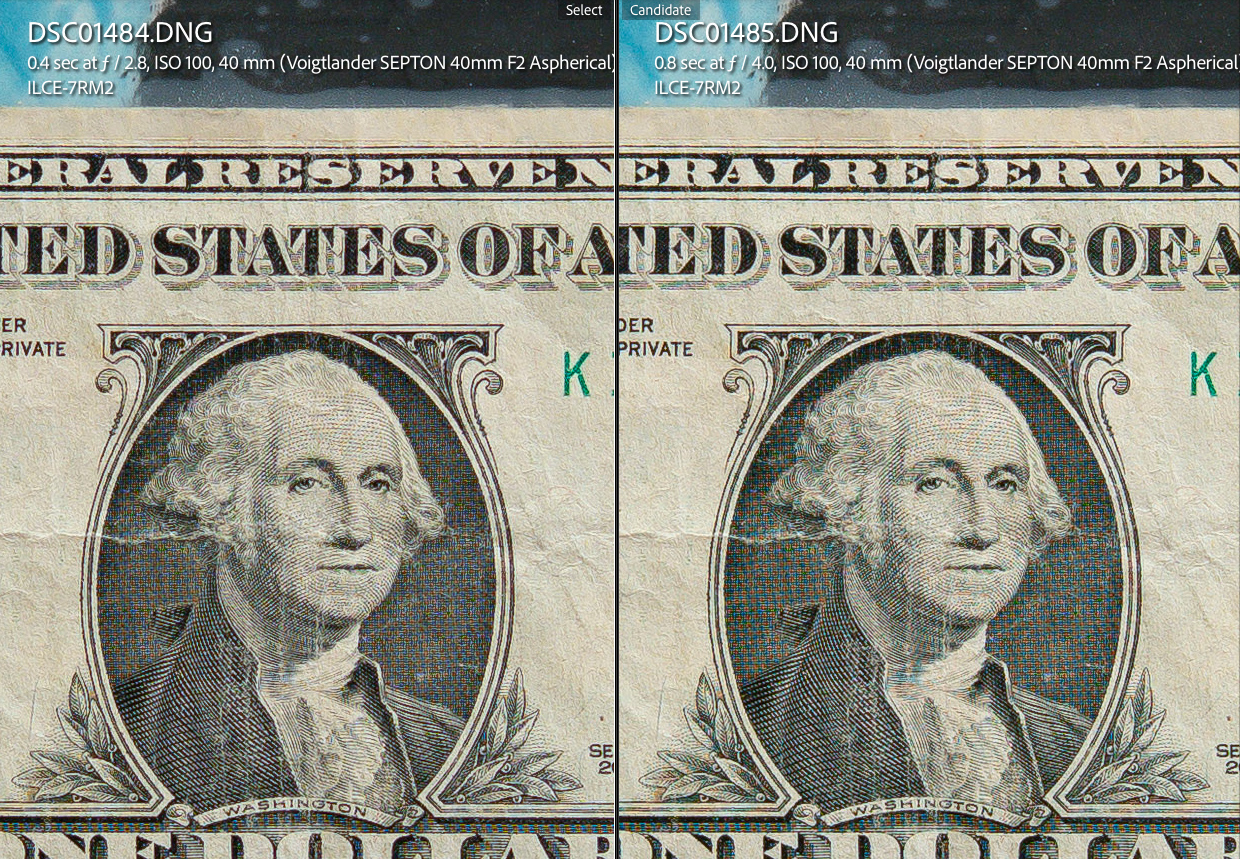
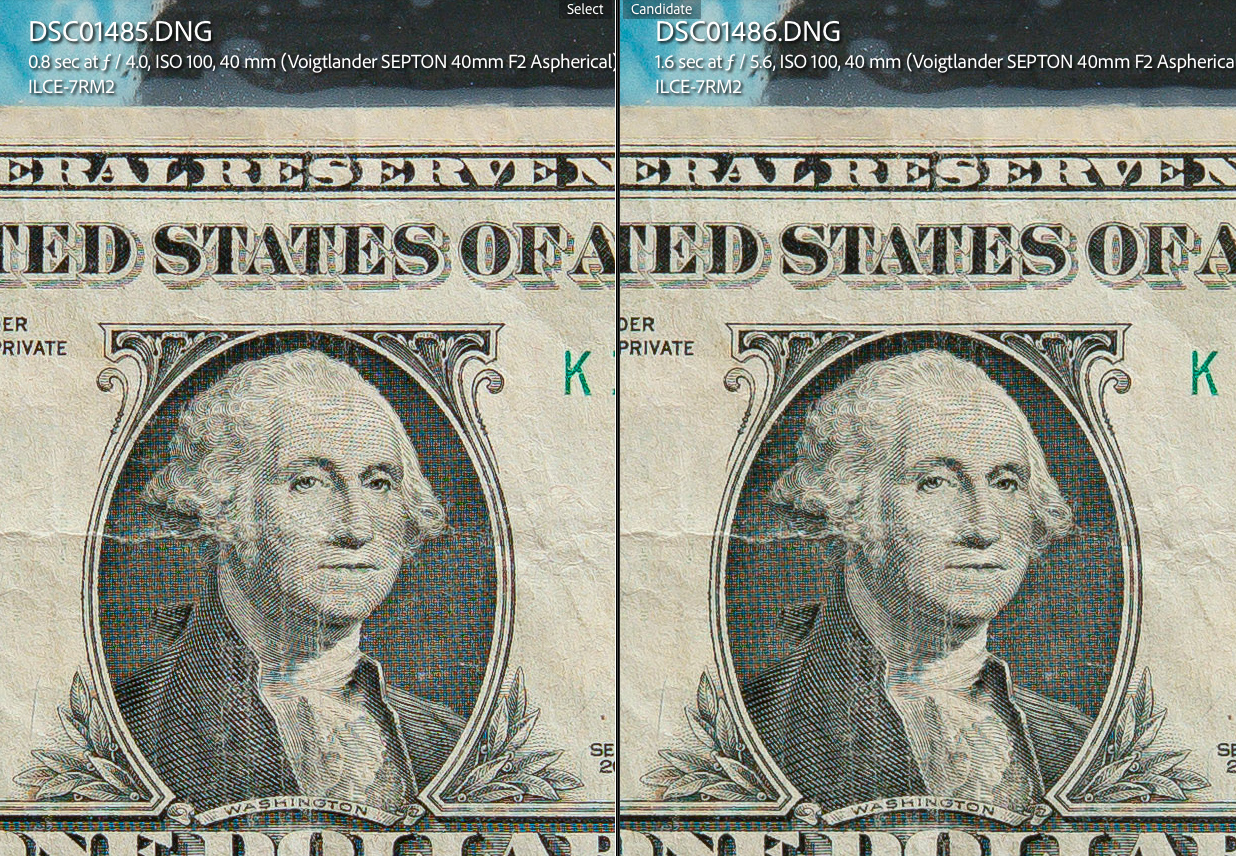
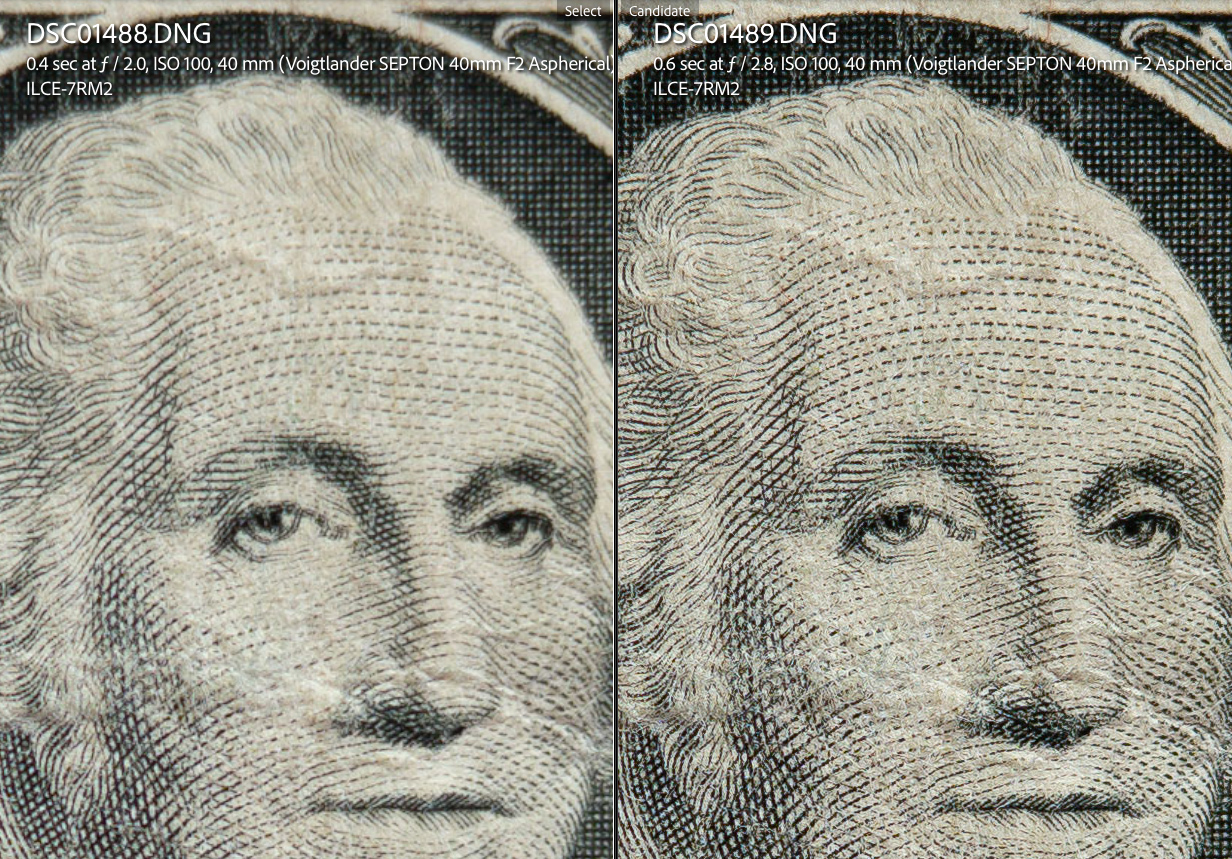
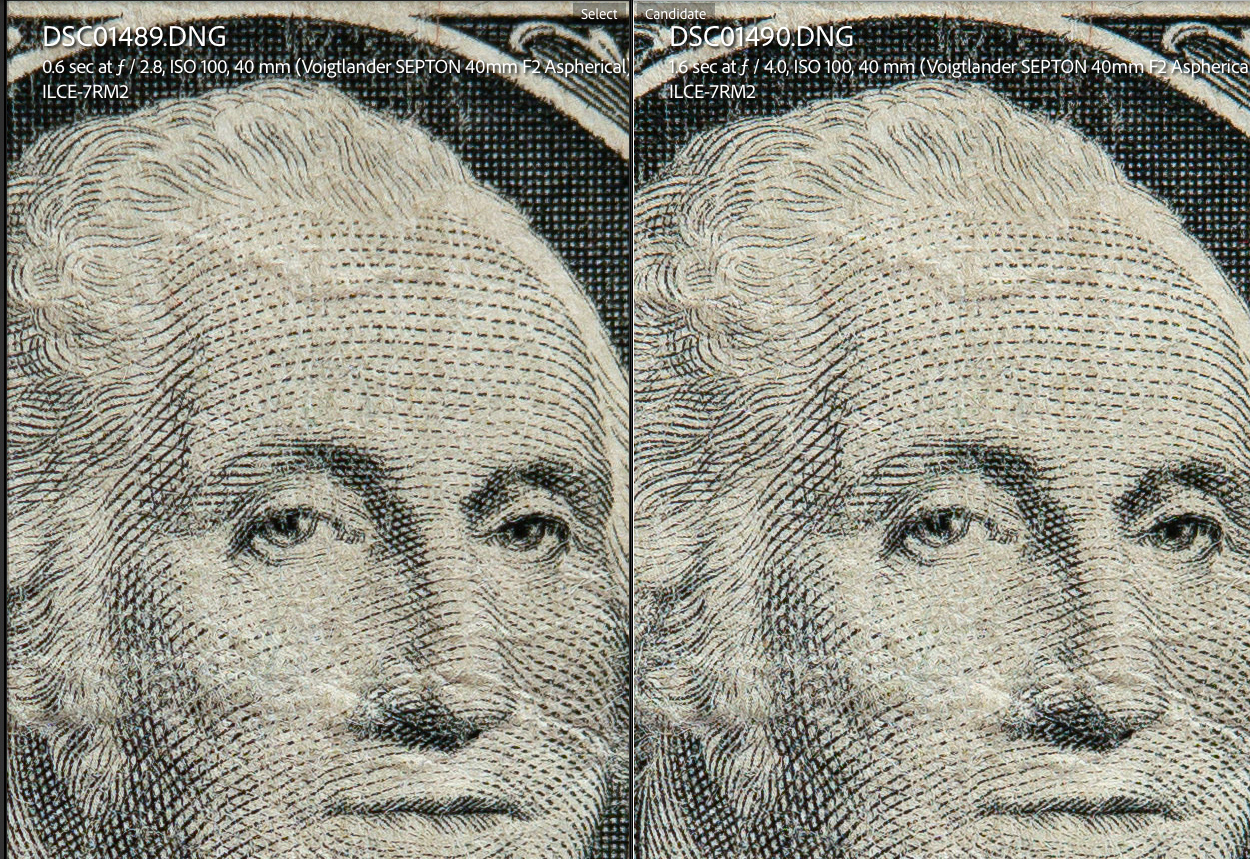
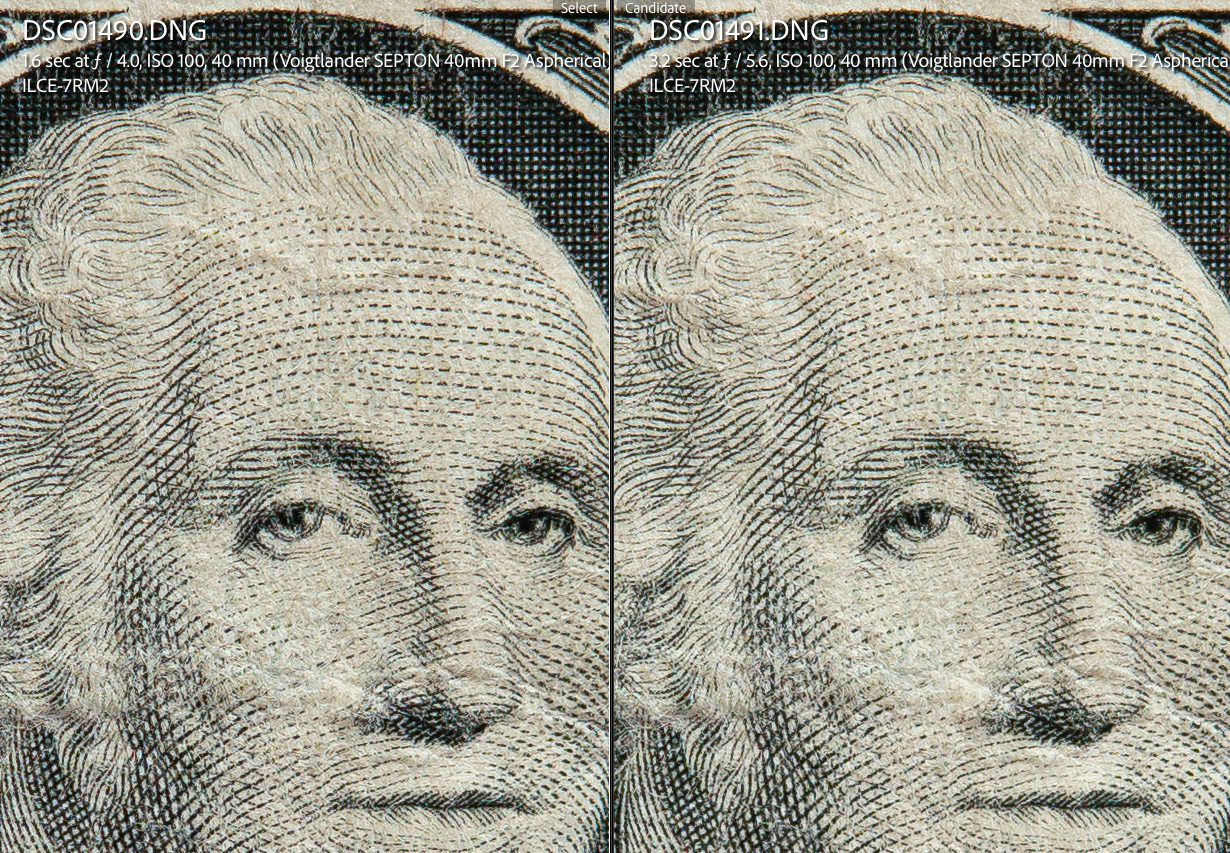
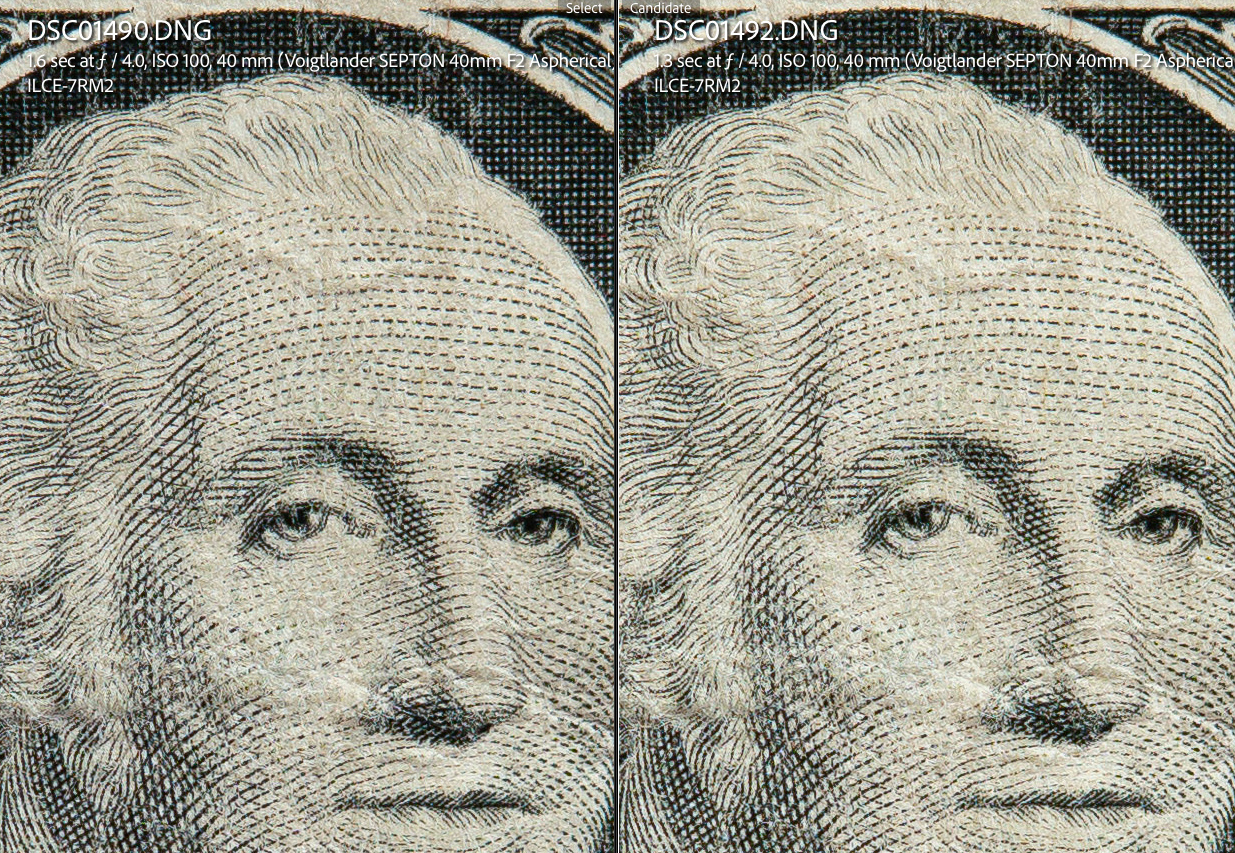
In the test crops below (pixel-level), you can see sharpness and contrast are already very good at f/2, and stopping down to f/2.8 makes them even crisper. I didn't detect any focus shift, whether shooting near minimum focus or at infinity which great if you like focusing at f/2 and then stopping down without refocusing.
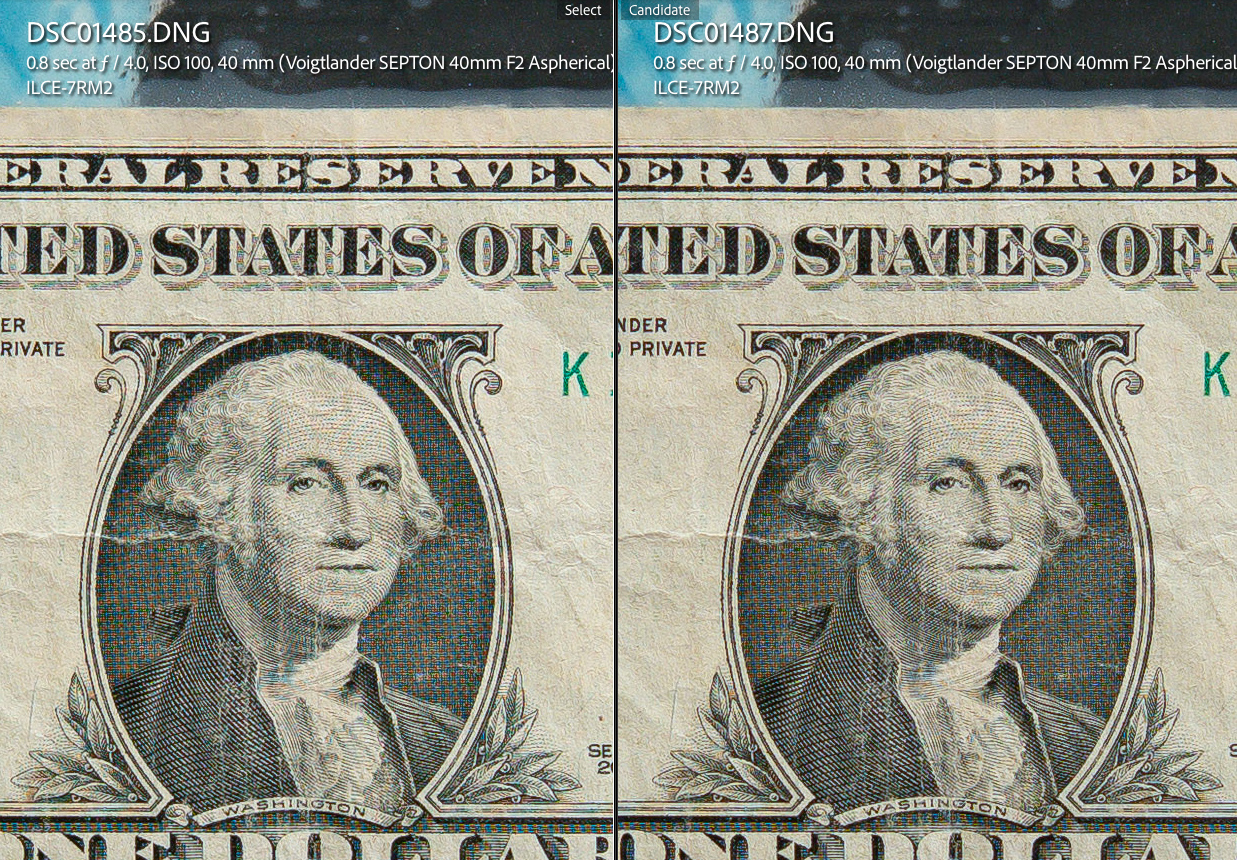
To illustrate, the first set of crops shows images shot at f/2, then stopped down to f/2.8, f/4, and f/5.6 without refocusing. The next set compares a crop refocused at f/4. There's no visible change in focus, confirming the lens has no detectable focus shift.
These crops cover both 0.7 m and 0.3 m distances. Performance is stronger at 0.7 m, with higher sharpness and more pronounced moiré, likely because the lens slightly out-resolves the 42MP sensor at this distance.
Samples 1: At various distances and lighting (Sony A7R II)
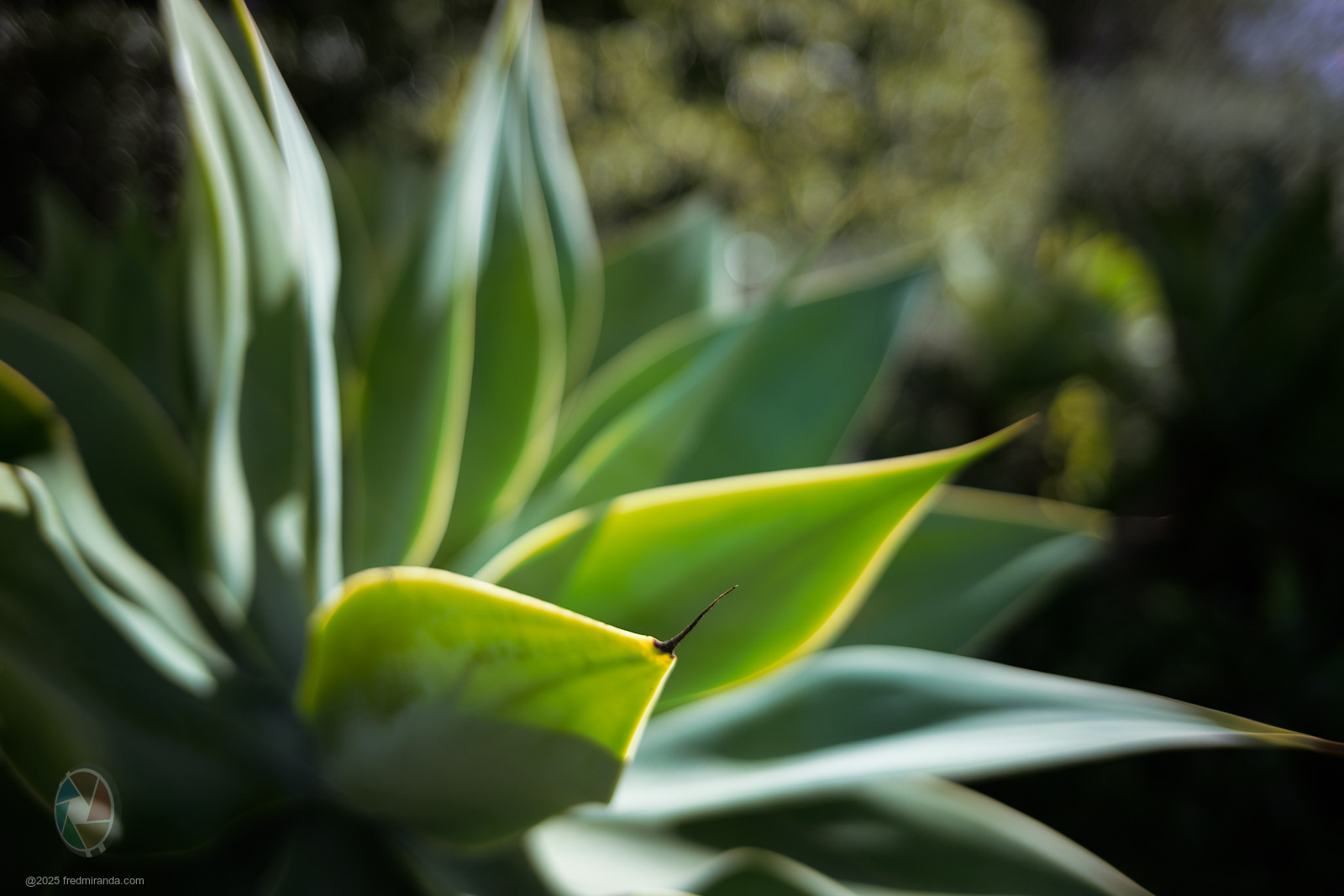
All images were taken wide open at f/2 under harsh lighting and at a mix of close and mid-range distances. I used the Sony A7R II for every shot in this set. This was just an initial walk around the neighborhood to get a feel for how the lens renders and performs wide open at both near focus and typical street distances.
At first glance, contrast and resolution are very good, and the rendering is quite pleasing. It is not overly smooth like many modern lenses, which suits my taste. Axial CA is well controlled, though vignetting is noticeable. The last image shows some veiling flare, but that was intentional to see how the lens reacts when pushed.
So far I am seeing very low distortion, low CA, minimal flare even when shooting directly into the sun, and great resolution and contrast throughout these images.
Vignetting and distortion were not corrected in any of the samples.
Fred Miranda wrote: Samples 1: At various distances and lighting (Sony A7R II)
All images were taken wide open at f/2 under harsh lighting and at a mix of close and mid-range distances. I used the Sony A7R II for every shot in this set. This was just an initial walk around the neighborhood to get a feel for how the lens renders and performs wide open at both near focus and typical street distances.
At first glance, contrast and resolution are very good, and the rendering is quite pleasing. It is not overly smooth like many modern lenses, which suits my taste. Axial CA is well controlled, though vignetting is noticeable. The last image shows some veiling flare, but that was intentional to see how the lens reacts when pushed.
So far I am seeing very low distortion, low CA, minimal flare even when shooting directly into the sun, and great resolution and contrast throughout these images.
Vignetting and distortion were not corrected in any of the samples....Show more →
Not as clean as the Ultron (also not surprised) but worlds cleaner than any Nok. Looks great. The only thing I'm not loving is the mid range bokeh where there's a lot of busy lines (the mulch). This is rendering you can dirty up very easily with negative clarity and grain when you want to and clean it up at other times.
My amateur interpretation, probably wrong: It looks like a Samyang with a lot of blacks and the tiny strong bubbles. Not watery like the 40 f1.2. I'd like something with bokeh between those two, rather than getting a lot of attention.
Fred Miranda wrote:
Yes, the main strength of this lens is its size. To get it that compact, there are compromises, fewer elements and a simpler design, so it's not going to perform like lenses that are optimized purely for maximum optical performance rather than portability.
In that sense, the Voigtlander 40mm f/2 Septon follows the same philosophy as the Voigtlander 27mm f/2 pancake for X-mount, which gives you a 40mm full frame equivalent. They aim for solid performance in a tiny package, not record breaking resolution/contrast across the frame. You still get great results, especially at center, but with some character, including a bit of wavy field curvature.