It's a different medium and a different process of photo taking itself (knowing you are not doing development and have a lab doing it, so I omit this part). Over time, the patience you will be learning when using the M6 will transfer into your digital photography. I can tell that I take digital photos more considerably since working with film and naturally now limit myself not too take more than one or two photos of the same composition in digital. It makes my digital PP so much easier.
This said, the M6 classic (non TTl version) was the first Leica M I got - and it is still my favorite M. And I own the M3, M4-2, and M7 film cameras, too. The M4-2 I purchased a few years ago as opportunity from a friend had its rangefinder patch upgraded to avoid the patch flare issue - wish my M6 had the same (but not worth the $$$ for me to upgrade my M6). I like the M4-2 in direct comparison to the M6 also, but I prefer to have an in-camera meter.
1bwana1 wrote:
As it happens, I have HP5+ 400 loaded in the camera now to compare to. Exploring to discover what lenses and films I prefer for what kind of film photography I want to do.
At least with the M6 I get consistent exposure and focus, so I am faster and more productive than I am with the Leica IIIf. Also, I think the images are just as authentic because in the end it is lenses and film that give the image it's character, not the body.
So much to learn about film.
A few suggestions from a film user. For many years my M6 was paired with a 35 Summicron ASPH. It's small, fast to focus, sharp, renders well and the 2.0 is fast enough for most situations. You may want to consider a yellow or orange filter to add a bit of contrast. Stay with the HP-5 but try bumping the ISO a stop to 800. The film can easily handle it and it gives you a bit of wiggle room. It's much better to build a base using a single film/ developer combination instead of chasing a look. If you want to try color, Fujicolor 200 or 400 is a bargain. Have the lab process it and scan it yourself.
The hybrid process makes adjustments easy but the goal is to start with a well processed negative that needs little or no adjustment.
Enjoy the journey!
Nice light today, this is an early 1950s 50 mm summicron with Thorium (radioactive) glass. This is a collapsible lens that was at that time often used with the newly developed M3. It renders colors in interesting way although most users would have used it for black and white. M11 EVI with the lens, location the end of my driveway, also my lens test site.
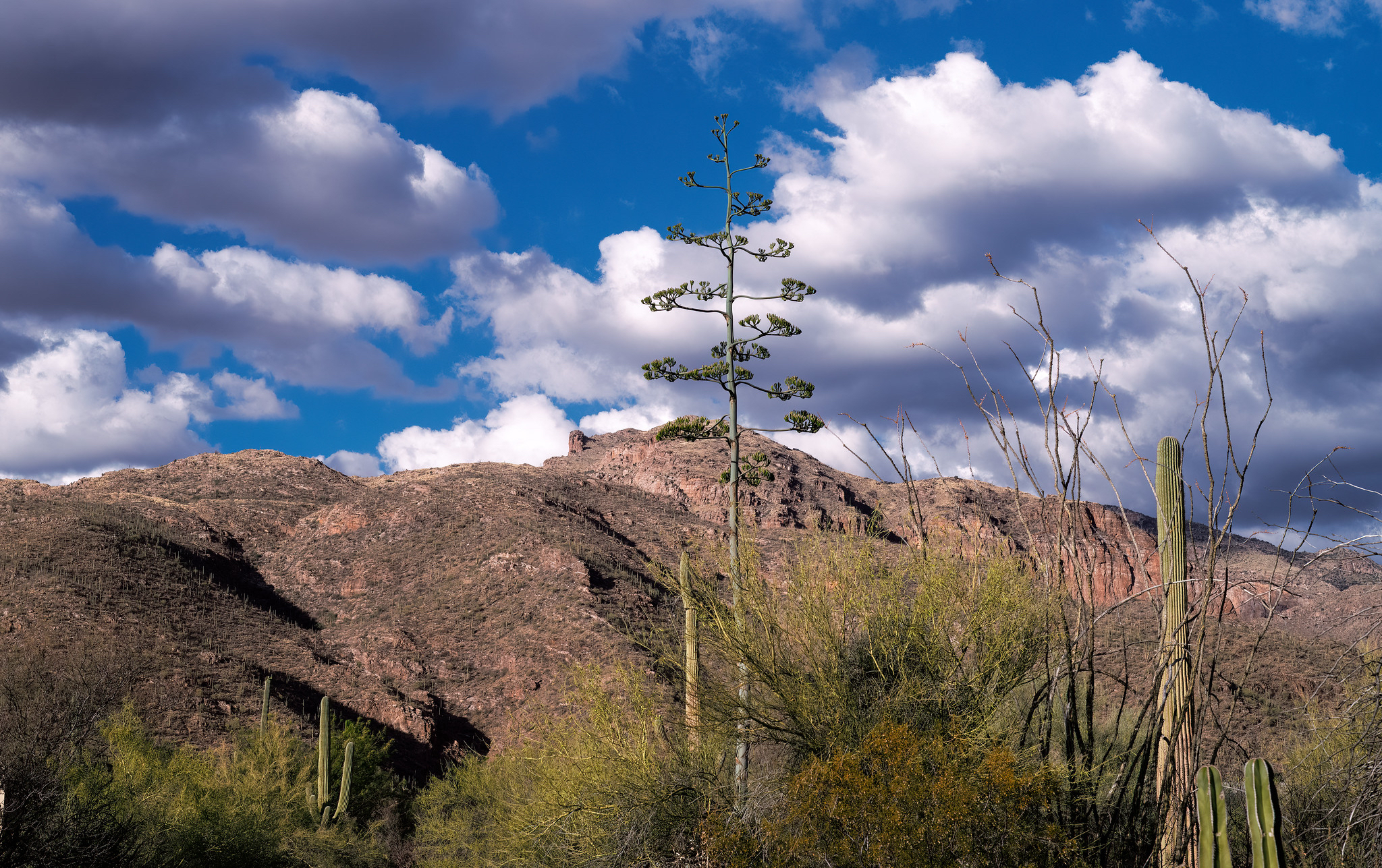
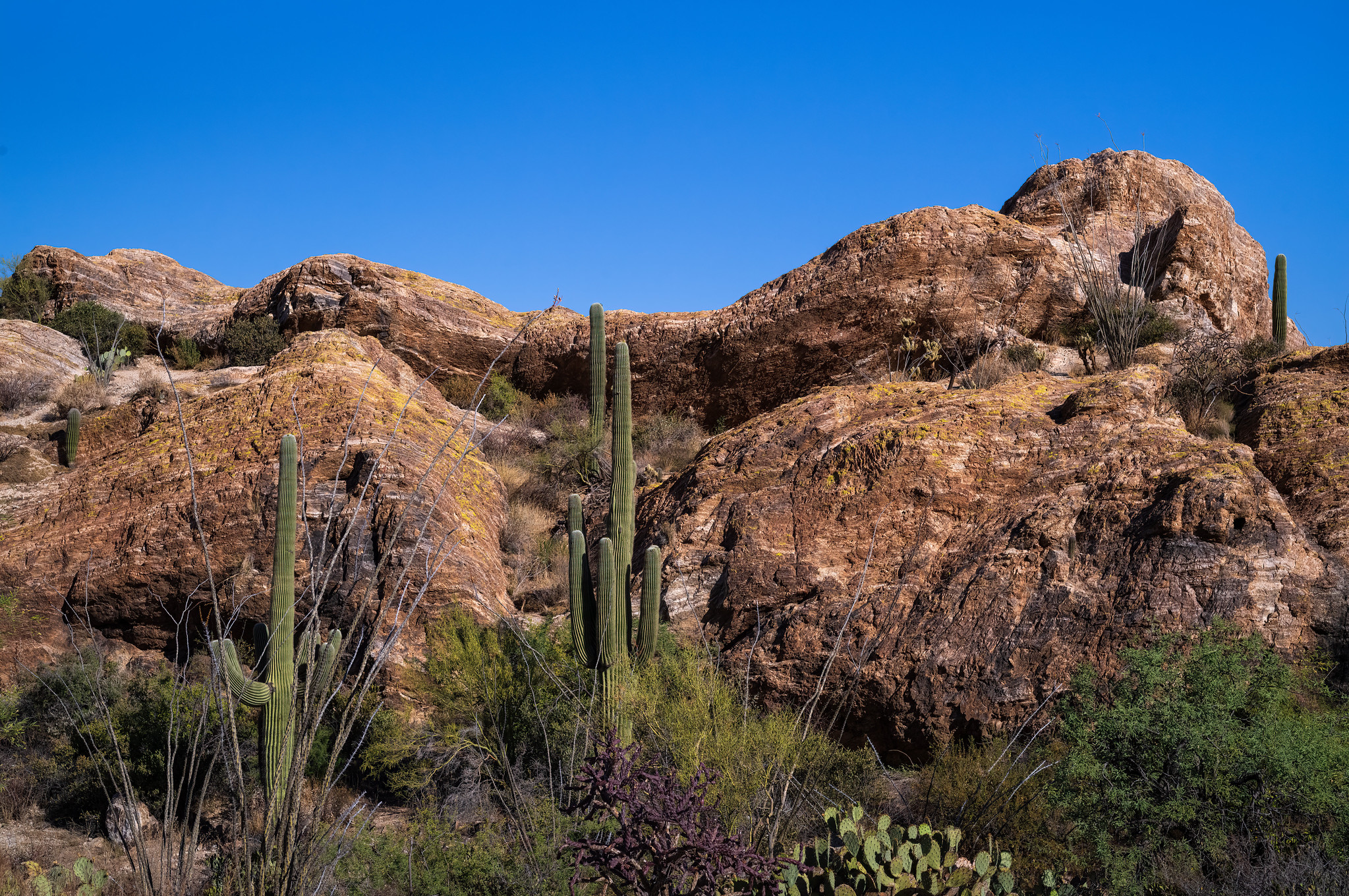
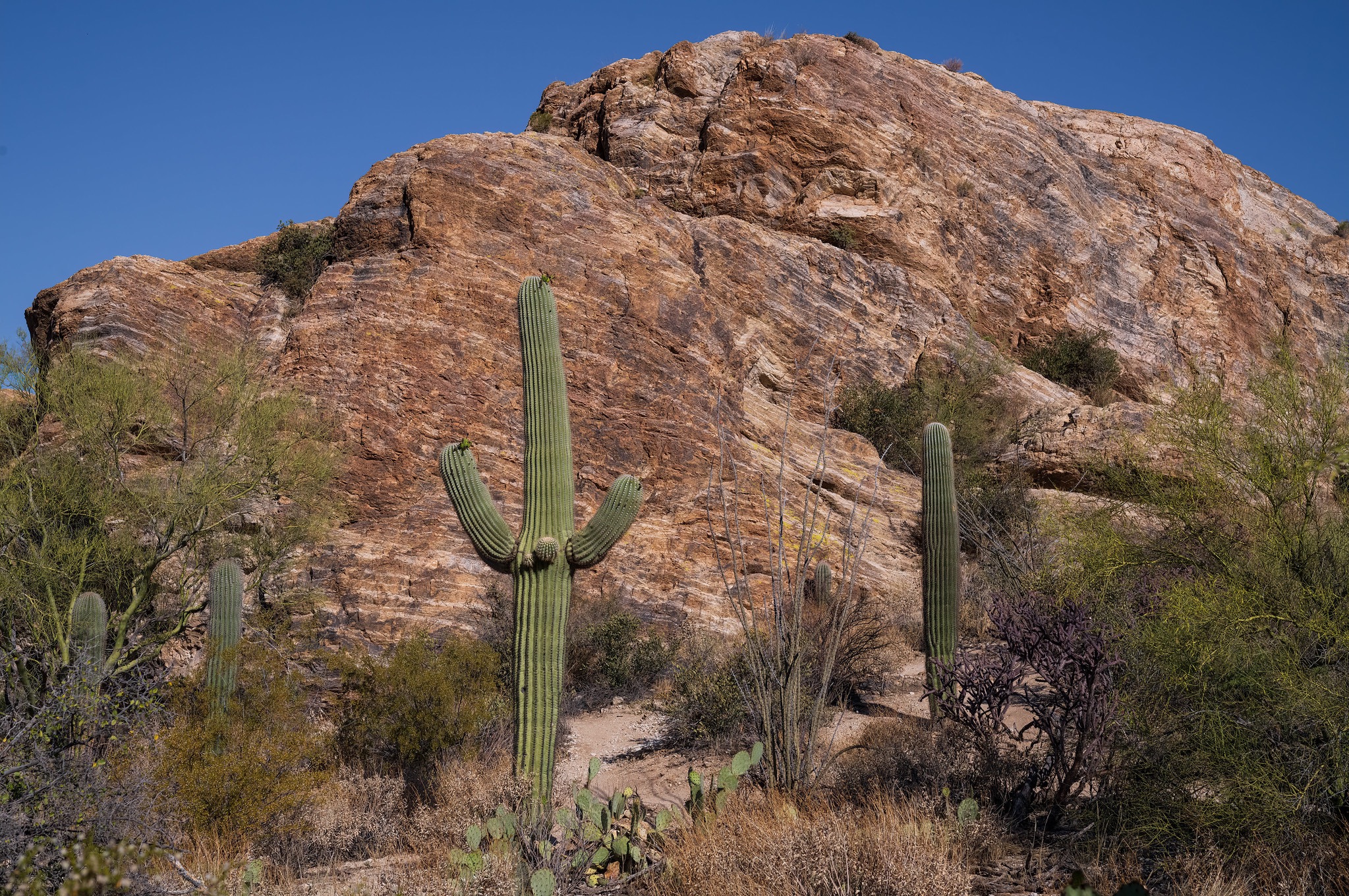
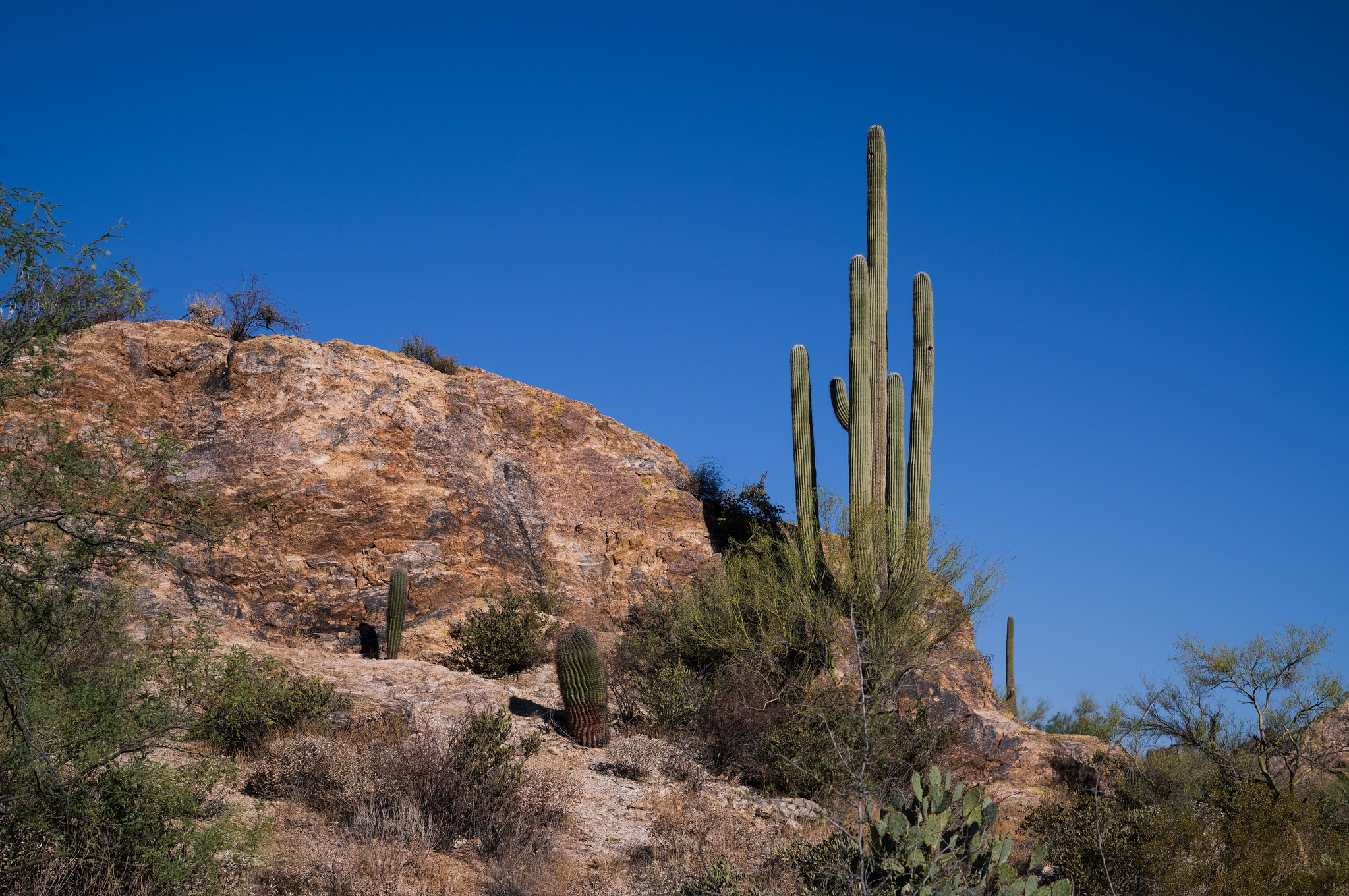
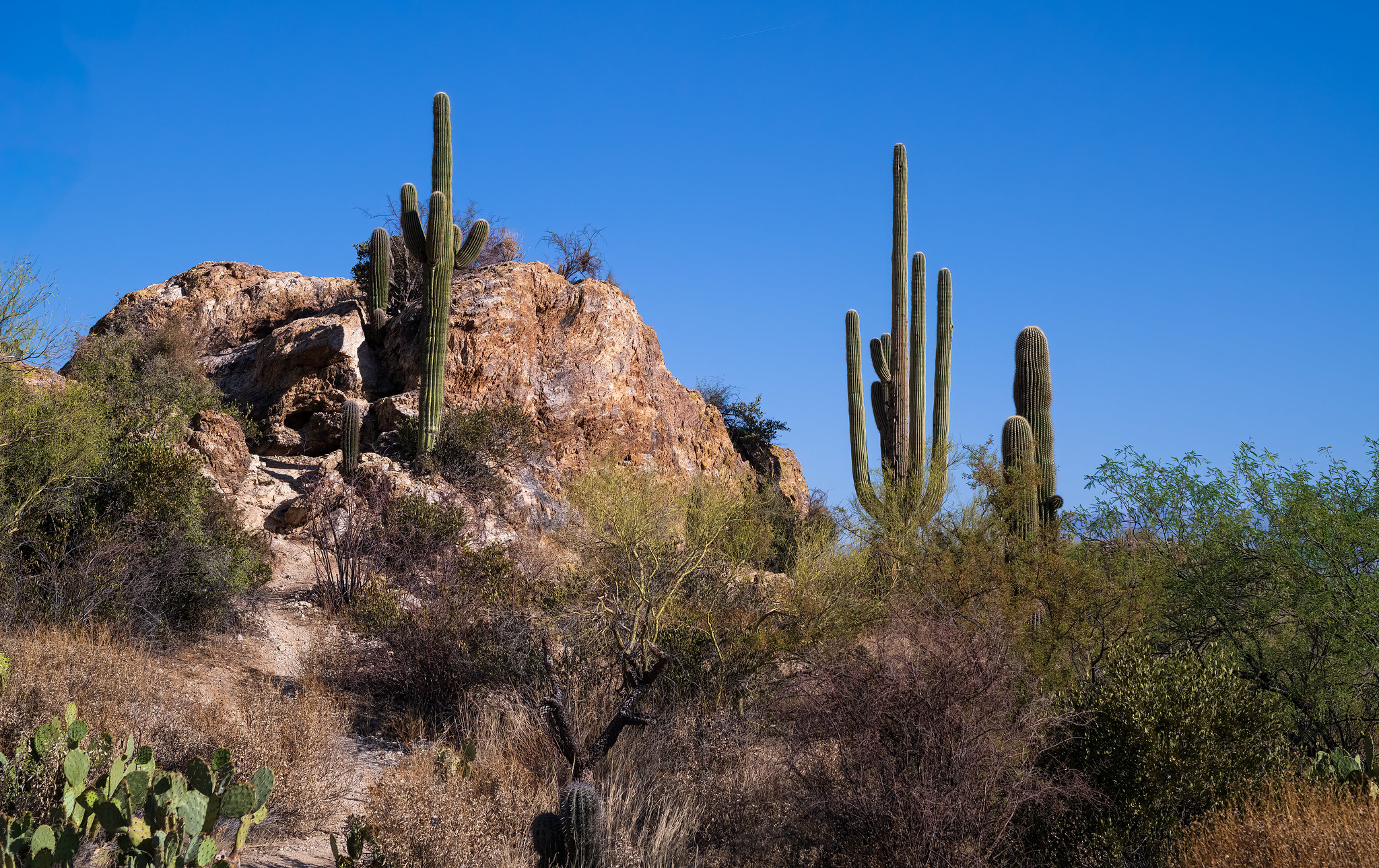
Javelina Rocks is a spot in Saguaro National Park, east. Often has people there because of its scenic beauty. But today a Monday morning no people, perfect weather, nice light, and a chance for scenics. Captured with a Leica M11 EV1 and a Leica 50 mm apo summicron which is one of if not the sharpest 50 mm ever made to capture the texture of the rocks and hillside.