Just got mine this evening. After testing it in the house I just had to go out. Nothing like testing out a 110mm as a walk around lens on foggy night. It was a struggle but this was my best shot. I wanted to go straighten this light And to make matters more challenging for myself I don't shoot street shots Tomorrow is another day.
Fred Miranda wrote:
Loxia lenses do not report distance and therefore only capable of 3-axis IBIS. Only the latest Voigtlander E-mount lenses have a distance encoder and it's a big plus.
Yes, that is correct-- thank you for correcting. I should have corrected that sooner. I had emailed Zeiss a few
years ago questioning them about a distance encoder in Loxia lenses:
"Dear Mike,
Thanks for your inquiry.
Loxia lenses report their exif data and a focusing signal (when the focusing ring is turned) to the camera body, but no distance information.
For details about the steady shot functionality (e.g. 3-axes or 5-axes) with MF type lenses on a certain A7RII type body with a certain camera firmware version, please contact the Sony support in your country directly.
With best regards
Bertram Hönlinger
_________________
Bertram Hönlinger
Kundensupport / Customer Support
Camera Lens Division
Carl Zeiss AG
Carl-Zeiss-Straße 22
73447 Oberkochen, Germany"
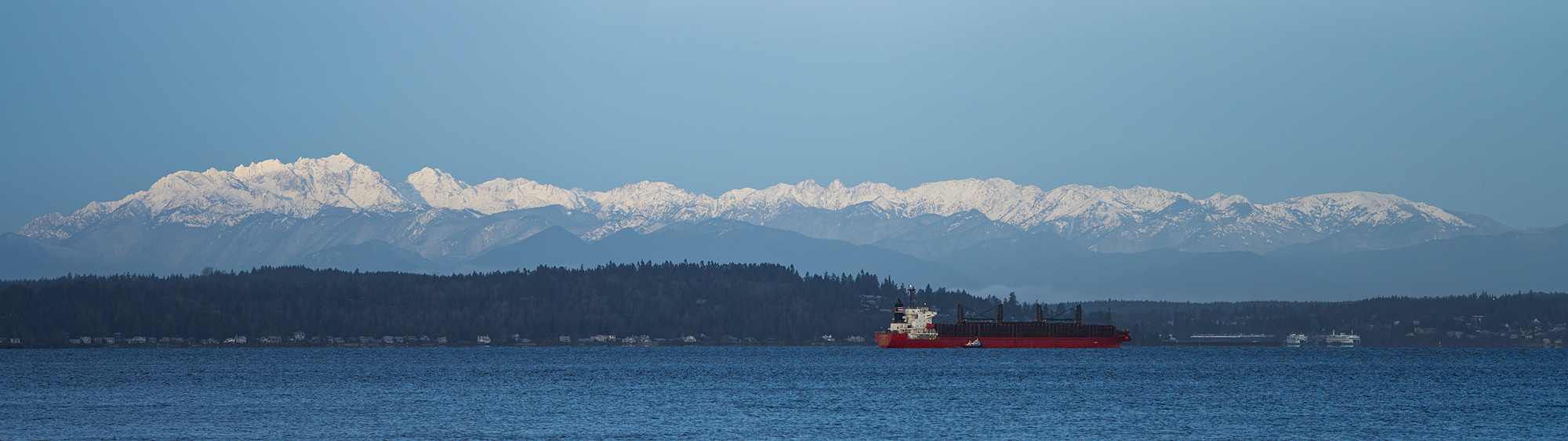
Not a lot of time to use this lens nor cooperative weather, but here's one.
Olympic Mtns with some fresh snow (though not enough).
This lens has no problems with sharpness, even wide open, at infinity.
EDIT: I used f/2.8 because I forgot to change it to f/4 or f/5.6, you don't need to do that at all other than to reduce the natural light fall-off into the corners, which ACR doesn't seem to automagically correct.
Did some more lens borrowing. Same shot S90 vs CV110, both wide open
This is not even 1:2 macro, but still, within the realm of where you want to use a lens that is macro optimized. At full magnification, the CV is just a bit cleaner on the edges of letters and other locations where you might find some LoCa.
elimoss wrote:
Did some more lens borrowing. Same shot S90 vs CV110, both wide open
This is not even 1:2 macro, but still, within the realm of where you want to use a lens that is macro optimized. At full magnification, the CV is just a bit cleaner on the edges of letters and other locations where you might find some LoCa.
The highly anticipated Voigtlander 110/2.5 APO Macro-Lanthar hits the market, and scores a win.
After putting the apochromatic telephoto (capable of 1:1 macro) under great scrutiny, it delivered exceptional macro performance while maintaining IQ at all distances. At infinity and f/4, it’s even slightly better than the Batis 135/2.8 APO - which is one of the top Sony E-mount lenses.
The 110/2.5 APO is a great all rounder. The lack of color aberration, high resolution/contrast and telephoto focal length, make it a solid option for macro, portraits and landscapes.
Pros:
APO performance. The best axial CA performance I’ve seen. Also, unnoticeable lateral CA.
Superb resolution from wide open across the field. The lens is optimal at f/4 showing only a slight improvement in resolution and contrast compared to wide open.
Smooth rendering except at mid-distance where the lack of color aberration contributes to a more structured bokeh.
Round bokeh balls with clean inner structure. (No onion ring pattern)
Outstanding macro performance. Effective floating group design delivers stunning images at all distances from 1:1 macro to infinity.
Great build quality with tight tolerance construction.
Long 7-inch working distance with the lens fully extended at 1:1 macro.
Distance encoder provides 5-axis IBIS.
Zero focus shift.
Well defined 10-pointed sunstars starting at f/3.5.
Precise manual focus and well damped focusing rotation.
Flare resistance is slightly above average for a lens in its class. It is more resistant to flare compared to the Batis 135/2.8 which already shows strong flare performance, especially veiling.
Cons:
Slight Field Curvature at infinity distance: I recommend focusing at mid-distance and stopping down to f/4 for optimal sharpness across the image field.
Optical vignetting renders "cat-eye" bokeh balls towards the corners.
Slight pincushion distortion.
A bit heavy at 763g.
Decagon specular highlights when aperture is stopped down. Noticeable starting at f/3.2.
Fred Miranda wrote:
The FE 90/2.8 Macro is "internal focus" and therefore focal length will be much reduced at MFD. Have you calculated the real FL at 1:1 magnification? It's different with the 110/2.5 APO as it extends to reach its maximum magnification.
What is the working distance with the FE 90? With the CV 110 at 1:1 macro, it's 7 inches. (without the hood)
The FL if the 90 is about 70mm at LifeSize. Don’t recall working distance off hand, I haven’t found it restrictive.
My test copy of 110 still hasn’t arrived, but I’m told its effective FL of the 110 is 90mm at 1:1 despite the extension (maybe die to complex element movements).
Still that’s longer than the 90; I certainly think effective FL and working distance, along with haptics and the last touch of chromatic correction, will be advantages for the 110.
DavidBM wrote:
The FL if the 90 is about 70mm at LifeSize. Don’t recall working distance off hand, I haven’t found it restrictive.
My test copy of 110 still hasn’t arrived, but I’m told its effective FL of the 110 is 90mm at 1:1 despite the extension (maybe die to complex element movements).
Still that’s longer than the 90; I certainly think effective FL and working distance, along with haptics and the last touch of chromatic correction, will be advantages for the 110.


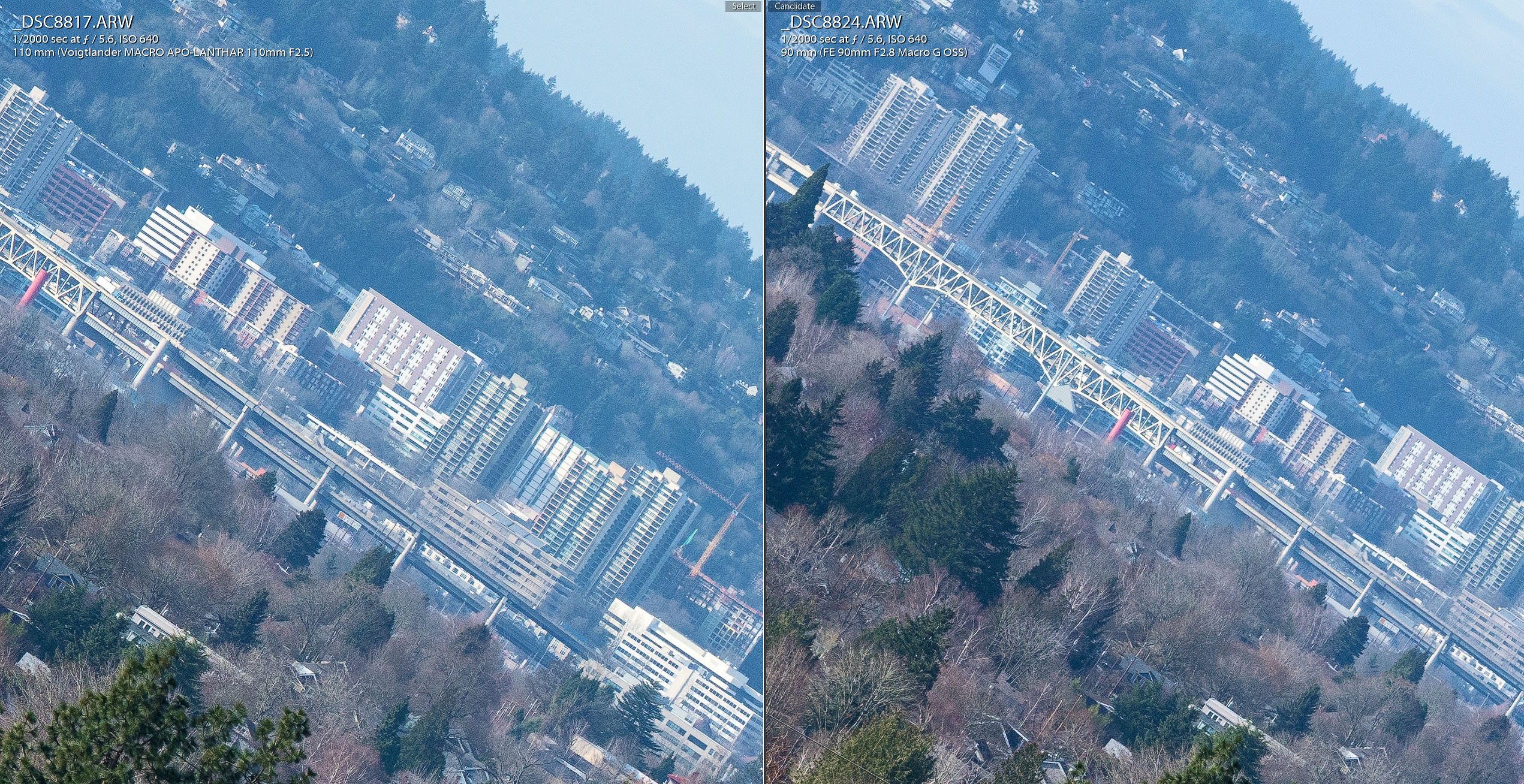
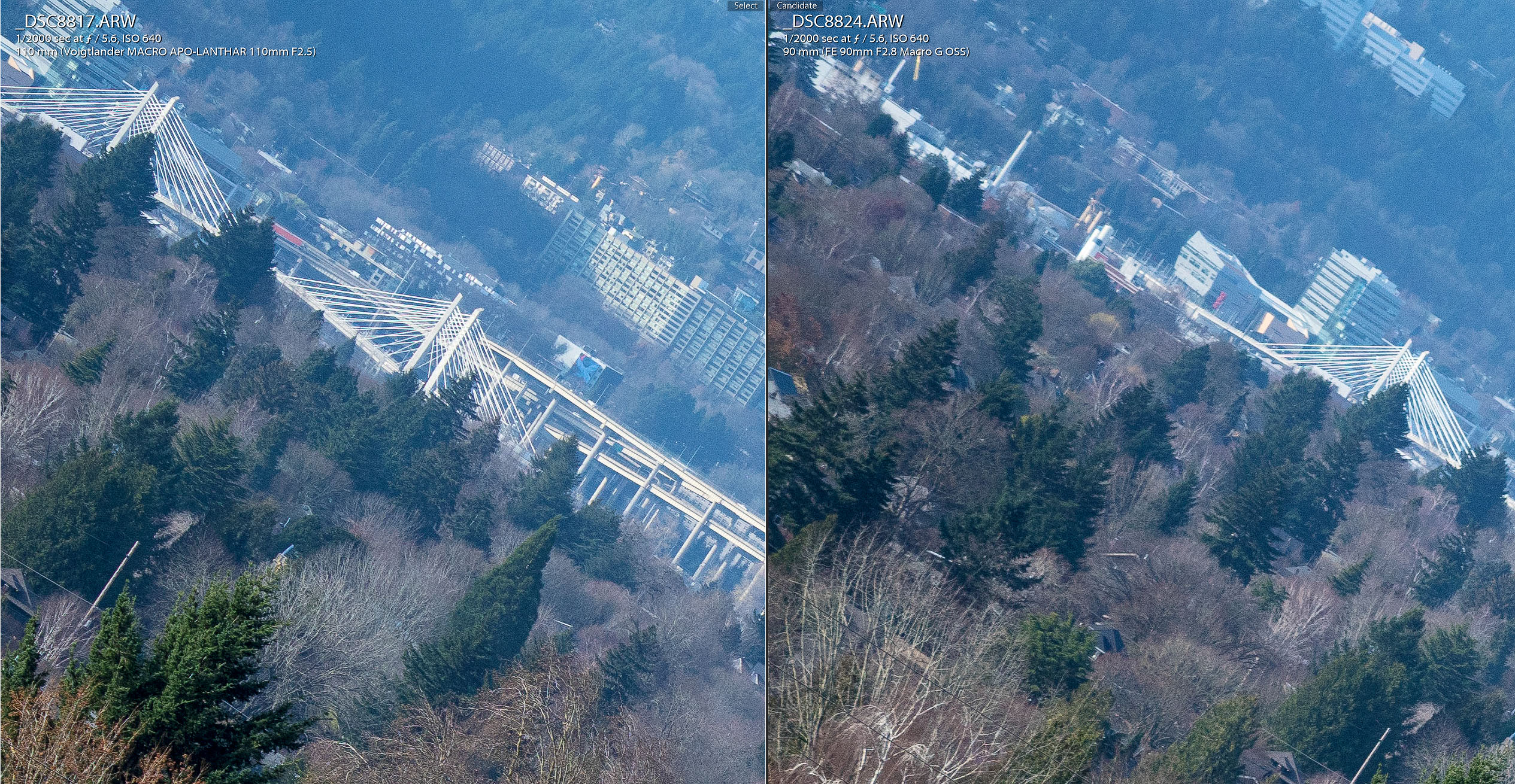
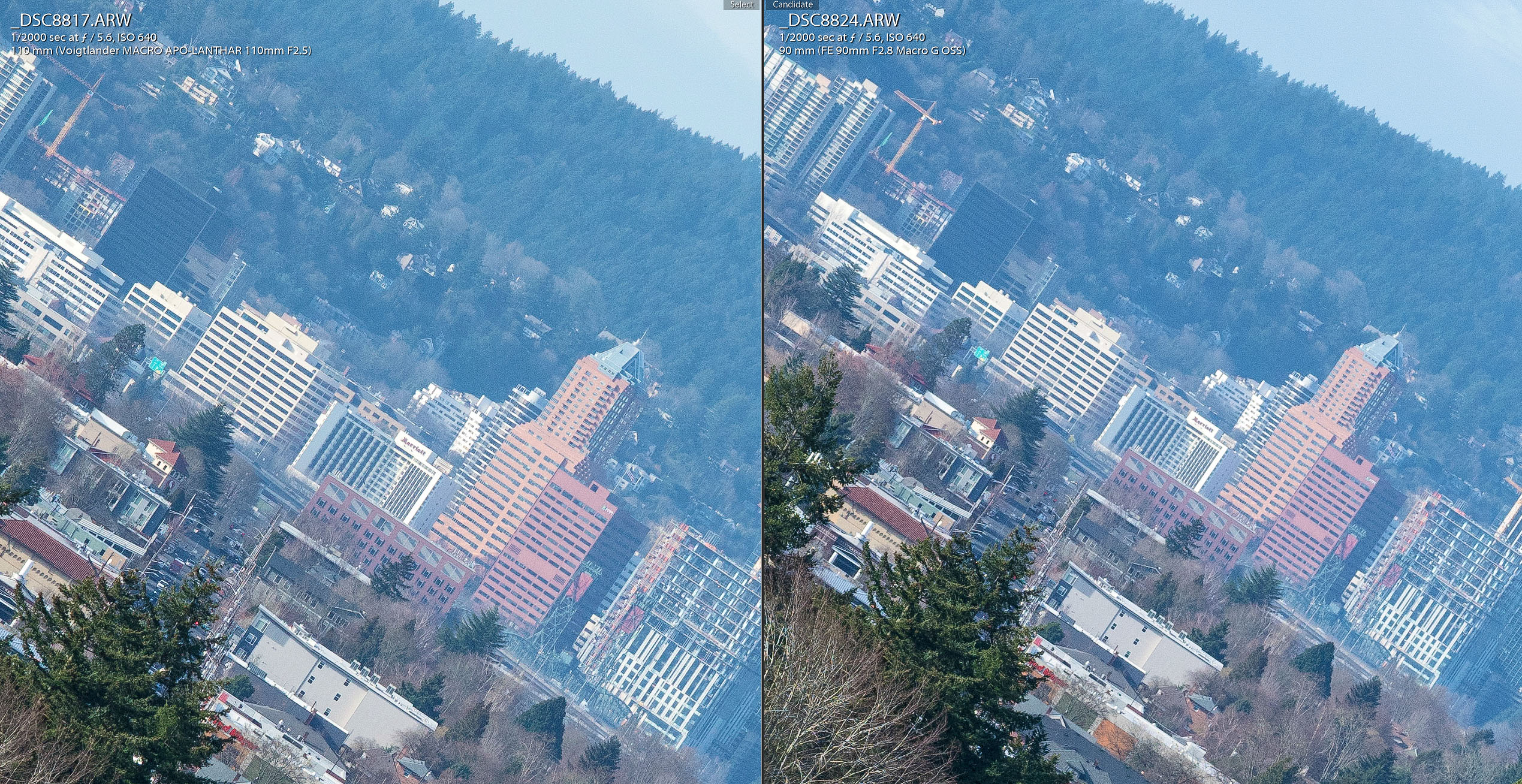
 Tomorrow is another day.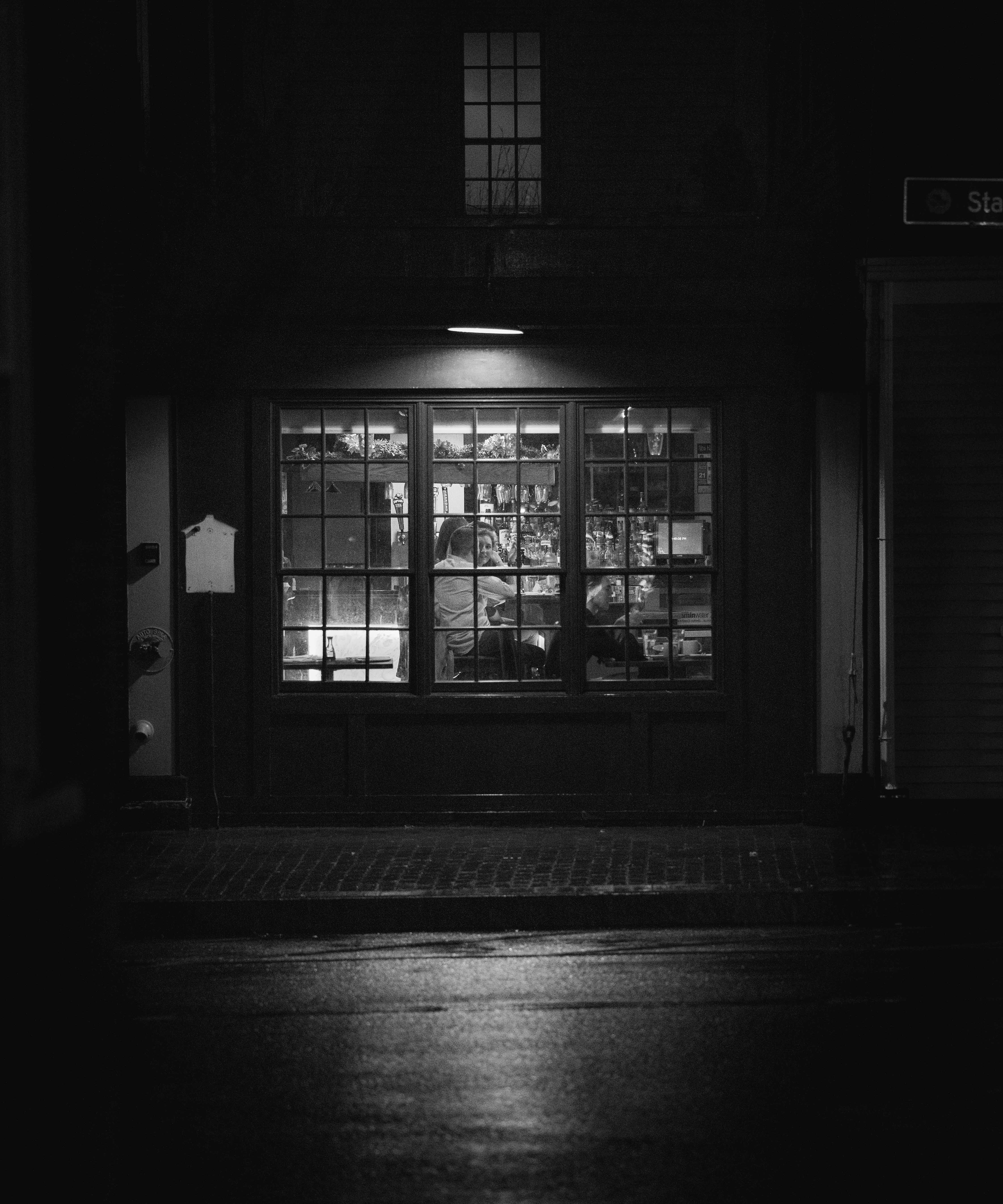


 me too!