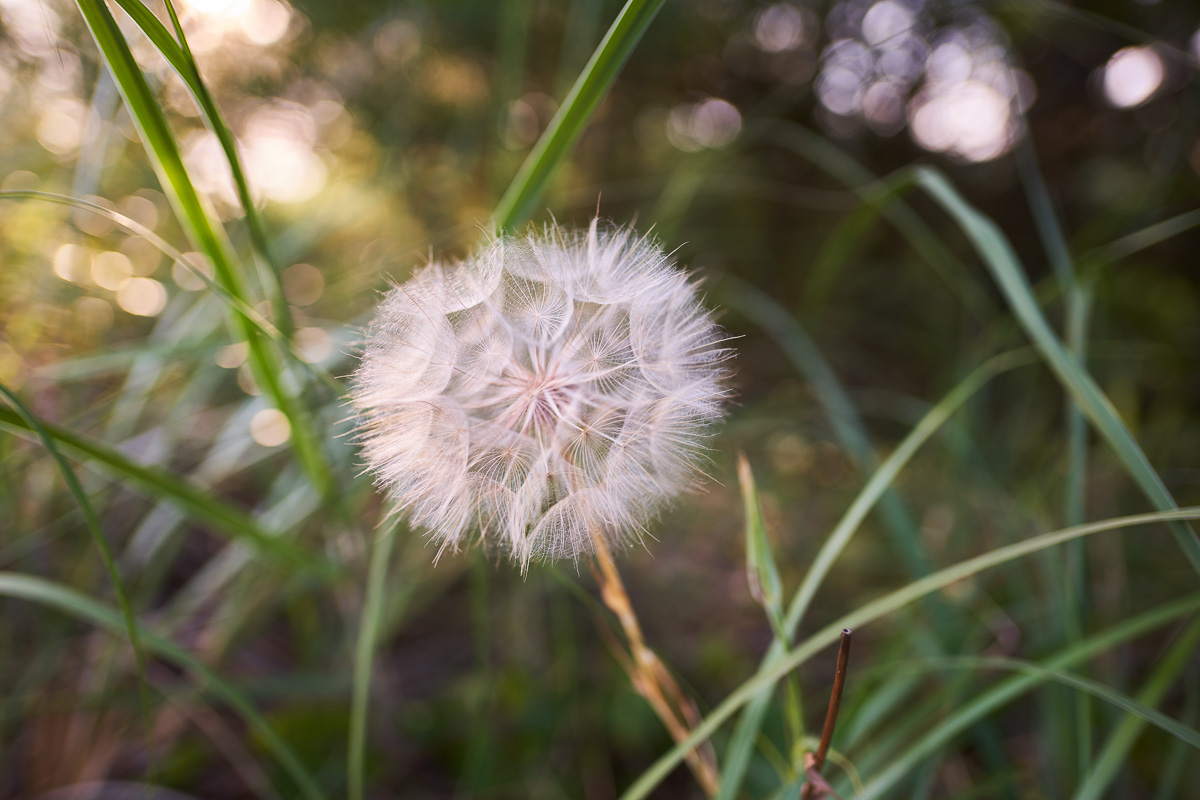
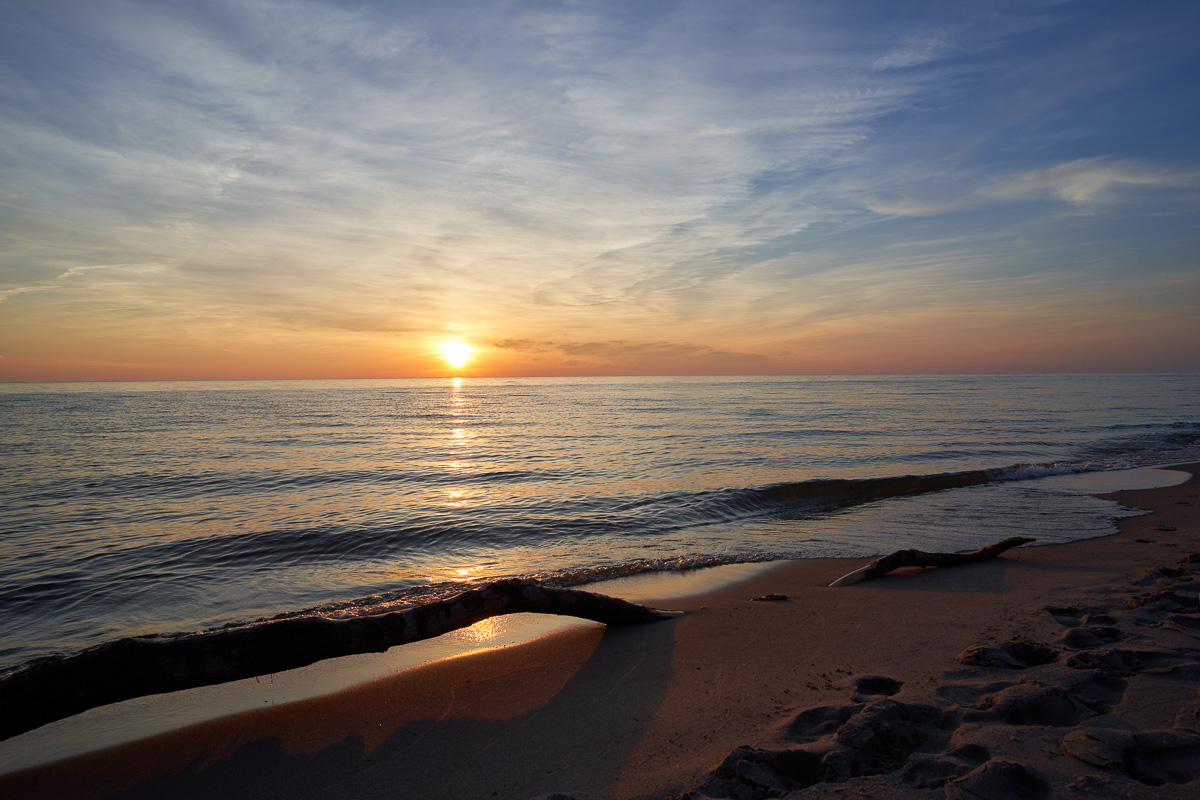
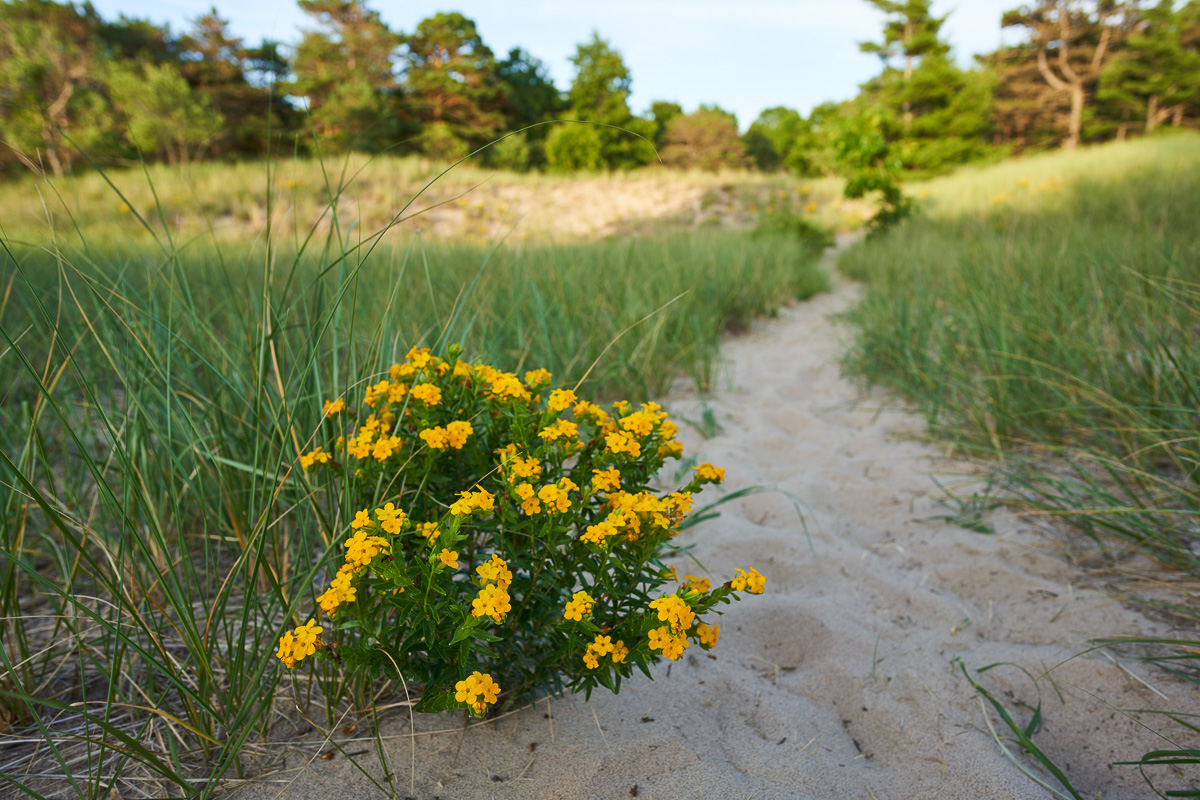
My 21mm arrived yesterday so I took it out for sunset over Lake Michigan. I have a ways to go mastering manual focus, but I had a fun evening with this lens and I love the way it renders.
This thread and the 40mm Nokton thread are costing me some money!
Went on a driving road trip with my wife. Did not shoot a lot but I’ll post something here. Just got back. Santa Fe, Vail, Steamboat Springs, Jackson Hole, Yellowstone, Bryce Canyon. Actually what turned me off to shoot was the Sigma 24-70 in my bag. For ME it’s not a road trip lens. Great work lens but having the CV15, this 21 and I wish I bought the new SE 35 before I left. Oh well
Certainly confirms I just don’t like zooms period.
Old dog and wants primes for non working.
I still need to test the CV15 and 21 on Big Bronco to confirm centered. Oh I cut the petals off the 15 . This is Choppy 3
Perhaps one of the most beautiful sunrises I've ever seen. Thank God I had the Voigtlander with me.
I already had a lot of wide angle lenses, but in my opinion nothing comes close to the Voigtlander at the moment.
HelBen85 wrote:
Perhaps one of the most beautiful sunrises I've ever seen. Thank God I had the Voigtlander with me.
I already had a lot of wide angle lenses, but in my opinion nothing comes close to the Voigtlander at the moment.
Voigtlander Nokton 21/1.4 - I like this lens very much.Really fast UWA,sharp at full aperture. Minimal aberrations and distortions. Not afraid of highlights or deep shadow. MFD only 25cm.Universal UWA lens.For anything from dim romanesque XIIth Century church interior to floral closeups.
An image that is only possible with this lens:
From a moving cable car, through half-clean plastic glass at night (moonlight). The image was brightened up in post-processing.
I find the image quality outstanding for these conditions.
Note the uniform sharpness.
Nihliuz wrote:
Hello! I really cant decide between the Sony 20mm 1.8 or the Voigtländer 21/1,4 or Sigma 14-24/2.8
I mostly shoot landscape photos and architecture and some abandoned houses. Would appreciate if someone could help me :P
First of all, I never had the Sony 20mm and the Sigma 14-24.
The Voigtlander 21mm Nokton is a fantastic lens, but it can be a diva due to the field curvature and focus shift. As with most Voigtlander lenses, you have to focus very very precisely, even the smallest rotation of the focus ring - sometimes I find it difficult to make such minimal movements - can result in small or large parts of the image not being as sharp as they could be. It is not even possible to assess this on site when taking landscape pictures. You definitely have to try out the best aperture in relation to the best exact focus setting at home in relation to your distance to the landscape to be photographed.
That means if I want to cut out objects, that's not a problem, I focus on the corresponding object. But regarding landscape shots, where I want the perfect sharpness evenly over the whole picture, focussing can be very tricky. After several hours of testing I have found a perfect focus position for the apertures 1.4 - 2.5, 2.8 - 5,6, 5,6-16 and a uniformly sharp image is not always possible at least up to f4.
Otherwise, the Voigtlander has what I think are the most beautiful sun stars of all lenses I've had so far and if everything works well, the Voigtlander is by far the best wide-angle lens I've ever had.
I would prefer the Sigma for architecture because it can be more wide-angle. In addition, in my opinion the Voigtländer is more of a 22mm lens than a 21mm.
The Sigma should be easier to use because of the smaller field curvature.
With the Sigma, it's more complicated to use filters, so it's not an option for me at the moment.
One last thought: autofocus is rather a disadvantage for me with these lenses, at least on a A7RII and a RIII, because I think the autofocus of these cameras is very unreliable against infinity. So I always focus manually for landscape shots and that works better with the manual lenses, of course.
Ok, thanks for the answer Yeah, thats the only problem with the Sigma for me that it complicated to use filters :/ But would the 16-35/2.8 GM be a better choise maby? I know its expensive but :P
My personal take would be the Sigma for architecture (wider, filter not so important) and the Sony (16-35) for landscapes (in my opinion 16-35 is just perfect for landscapes)
Fred Miranda wrote:
If you decide to make your own 6-bit code template from the JPEG file, just print it to Paper Size (US Letter) and use Scale (53%). Link to Original Article
I played with it today and was able to print a template that fits my M-lenses perfectly. I don't think you can use a sharpie anymore because Leica tweaked the 6-bit sensor with recent bodies. You may need to use a 'flat' black and white paint when using the template.
Fred
You only need to mark the black - you can skip the white. I just coded 3 lenses with a Posca paint marker. Water based so easy to clean up. I used the ultra fine tip, but you could probably get by with the fine. PC-1MR is the part number. After marking, I cleaned up the paint edges with a toothpick.
The Sharpie paint markers might also work, but they are not water based. They also dry with some gloss as opposed to the matte finish of the Posca.
HelBen85 wrote:
First of all, I never had the Sony 20mm and the Sigma 14-24.
The Voigtlander 21mm Nokton is a fantastic lens, but it can be a diva due to the field curvature and focus breathing. As with most Voigtlander lenses, you have to focus very very precisely, even the smallest rotation of the focus ring - sometimes I find it difficult to make such minimal movements - can result in small or large parts of the image not being as sharp as they could be. It is not even possible to assess this on site when taking landscape pictures. You definitely have to try out the best aperture in relation to the best exact focus setting at home in relation to your distance to the landscape to be photographed.
That means if I want to cut out objects, that's not a problem, I focus on the corresponding object. But regarding landscape shots, where I want the perfect sharpness evenly over the whole picture, focussing can be very tricky. After several hours of testing I have found a perfect focus position for the apertures 1.4 - 2.8, 2.8 - 4, 4- 8, 8-16 and a uniformly sharp image is not always possible at least up to f4.
Otherwise, the Voigtlander has what I think are the most beautiful sun stars of all lenses I've had so far and if everything works well, the Voigtlander is by far the best wide-angle lens I've ever had.
I would prefer the Sigma for architecture because it can be more wide-angle. In addition, in my opinion the Voigtländer is more of a 22mm lens than a 21mm.
The Sigma should be easier to use because of the smaller field curvature.
With the Sigma, it's more complicated to use filters, so it's not an option for me at the moment.
One last thought: autofocus is rather a disadvantage for me with these lenses, at least on a A7RII and a RIII, because I think the autofocus of these cameras is very unreliable against infinity. So I always focus manually for landscape shots and that works better with the manual lenses, of course....Show more →
'I have found a perfect focus position for the apertures'
I'd be interested to hear what those focal distances are, if you don't mind sharing
Petegh wrote:
I'd be interested to hear what those focal distances are, if you don't mind sharing
I always compare different copies before I keep one (for example centering quality, overall sharpness). If I decide to keep the best one, then I test it extensively and create my own test report, which I read again if I haven't used a lens for a long time. Unfortunately, the different Nokton 21mm lenses had different characteristics. The following applies to mine according to my current level of knowledge (is constantly being expanded / modified) from my Excel file:
- field curvature (center on the right edge of the picture + left corners <-> center is most affected),
- light focus breaking (at f1.4 infinity is further away from the hard stop than at f8)
- Best aperture for consistent image sharpness in landscape shots and masking the field curvature: f8
- best focus from f5,6-16: minimal (realy minimal!) before hard stop, if necessary also at hard stop from f8 on; Apertures between F2.8 - F4: two minimal rotations back from the hard stop, F2 and larger aperture: 3 small rotations back from the hard stop.
(Initially I thaught two minimal rotations back from the hard stop would be the best for landscapes from f5.6 because sharpness over at least 80 percent of the picture is at maximum, but I found out, that this focussing was leading to some unsharp spots within the picture and focussing one minmal step back from the hard stop results in an evenly sharp picture (almost 100% of the picture within the DOF) with sacrificing the last 2% of possible sharpness in some parts of the picture.)
- The IBIS can increase the effect of the field curvature, so switch it off if possible (causal relationship is unclear, but more often and more serious blurring when the IBIS is switched on)
- Electronic shutter (not silent), mechanical shutter significantly reduces sharpness, even at faster shutter speeds.
- Focus with highest possible magnification and JPEG picture Style Standard but Sharpness +3 even if you use RAWs for a better impression in the EVF.
-> At apertures smaller than f5.6, you have to make a decision, in some places there can be more or less noticeable blurring, see above under field curvature.
-> I practice the correct range of motion for a "rotation", it really is a minimal movement, as little as possible; So in the case of landscape shots at f1.4 three as small turns as possible back from the hard stop.
This works very well for me, but maybe you have a copy with different characteristics or a camera with different characteristics.
I have noticed that there are also frequent deviations in the cameras, so these explanations only apply to my Nokton on my A7RIII.
Sorry, meant are "minimal rotations", as small as possible.
For landscapes towards infinity my Nokton shows best results with
1 minimal rotation back from the hard stop-> f5,6 -f16
2 minimal rotations back from the hard stop-> f2,8-f4
3 minimal rotations back from the hard stop -> F1,4-f2




 Yeah, thats the only problem with the Sigma for me that it complicated to use filters :/ But would the 16-35/2.8 GM be a better choise maby? I know its expensive but :P