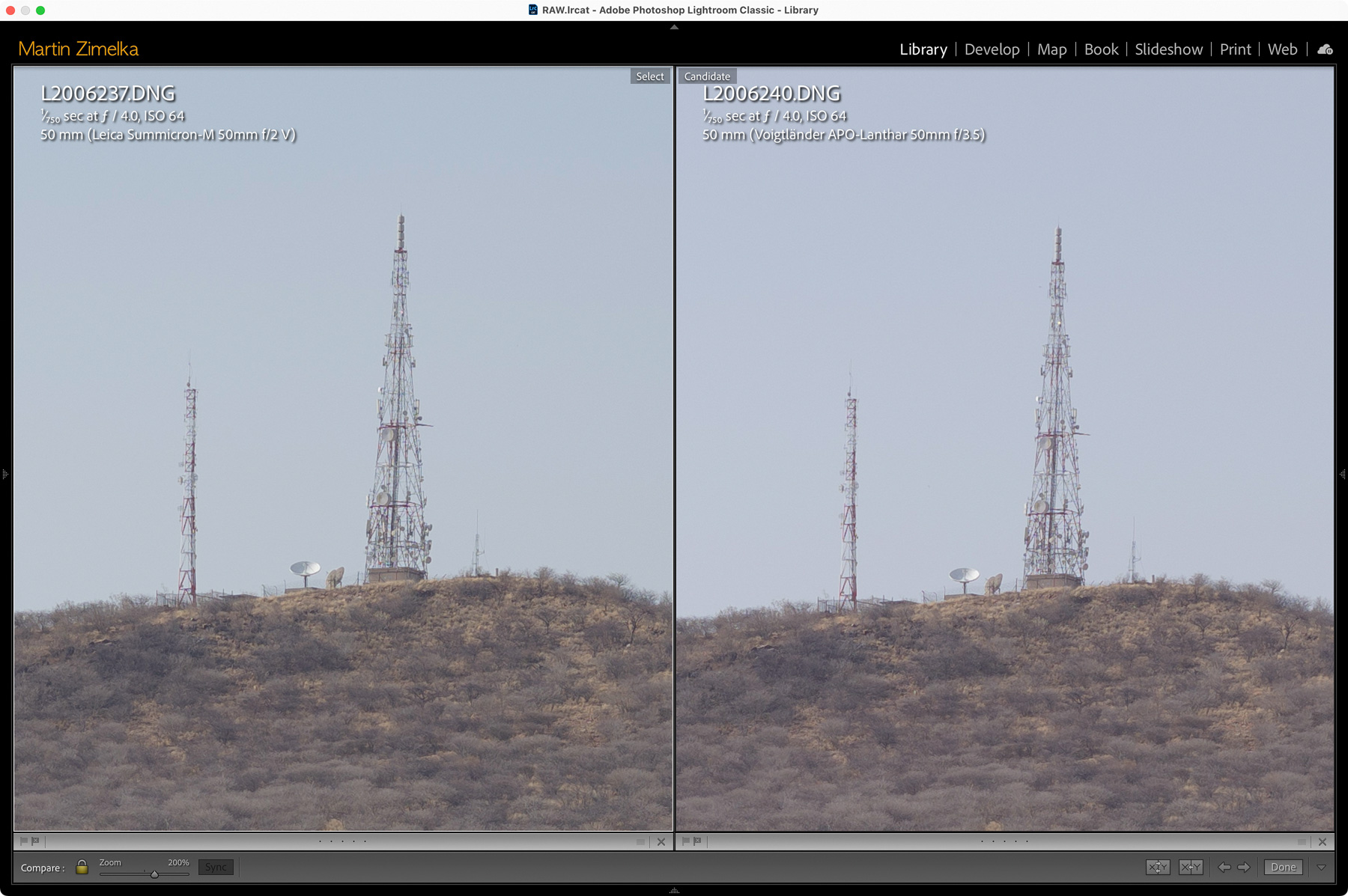
I've added some more samples to the link I previously posted; These are infinity comparisons between the APO 50/3.5 and the Cron 50mm V.
Anybody can come to their own conclusions. My preference is for my Summicron. It has slightly wavier moustache field curvature than the APO, but the latter isn't perfectly flat. And finder blockage with the Summicron is about zero.
As for CA correction, the Summicron is pretty decent at comparable apertures. I'll post better comparisons when I get the chance and provide the DNG files too.
The 50/2 Summicron is definitely a great lens. When stopped down almost two stops to f/3.5, even my 60-year-old Leica 50/2 Summicron Rigid version performs comparably to both the CV 50/2 APO and the CV 50/3.5 APO lenses at the center (The CV 50/3.5 APO is wide open though). In terms of longitudinal chromatic aberration, including purple fringing at the focus zone, the f/2 lenses perform well when stopped down. In fact, slower lenses are usually well corrected even without an apochromatic design, such as the CV 50/3.5 Heliar.
Regarding rendering smoothness at the transition, the focus transition typically smooths out when stopping a lens down a bit, so the f/2 lenses stopped to f/3.5 will have an advantage if that’s something you care about. The CV 50/3.5 APO-Lanthar is a more specialized lens and excels in certain aspects compared to the Leica, as I mentioned in my previous post.
Although I did compare the CV 50mm f/3.5 APO to the CV 50/2 APO, I feel it's not really a fair comparison due to their maximum aperture difference and being compared at f/3.5 where the CV 50/3.5 is wide open. I found the Heliar comparison more interesting, especially since their rendering is nearly the same.
Fred Miranda wrote:
Regarding rendering smoothness at the transition, the focus transition typically smooths out when stopping a lens down a bit, so the f/2 lenses stopped to f/3.5 will have an advantage if that’s something you care about. The CV 50/3.5 APO-Lanthar is a more specialized lens and excels in certain aspects compared to the Leica, as I mentioned in my previous post.
Although I did compare the CV 50mm f/3.5 APO to the CV 50/2 APO, I feel it's not really a fair comparison due to their maximum aperture difference and being compared at f/3.5 where the CV 50/3.5 is wide open. I found the Heliar comparison more interesting, especially since their rendering is nearly the same. ...Show more →
That is true and I would have to give more thought to how I would probably use the 50/3.5 APO most of the time. And I think that would be stopped down to f/5.6-f/8 for walk around snaps where the focus transition 'problem' I'm seeing likely won't be a frequent concern. Stopped down this much, as suggested, pretty much any 50 will be good. Perhaps this is why I'm a bit unhappy with what I see from it wide open, because wide open is actually a 'stopped down' aperture value I'd use with faster 50s. But given my likely use range, do I even need another 50? (This from someone who believes you can never have enough 50s. )
I guess the appeal with the 50/3.5 APO is size/weight, though it's also not *that* small. I could instead go with the new 50/2.2 that is shorter, less expensive and likely get similar stopped down performance (though I also don't like its wider open focus transition and background characteristics).
The 50/2.2 has a clearer value proposition to me – it's just size above all. The 50/3.5 APO seems like more of a compromise. Personally, I'm sticking with my 50/2 APO for now – other than the fact there are now smaller lenses available, there's not much it can't do for me.
I have Cron IV. I got it because it was smaller and lighter than version V. I like the rendering of the lens. But the flare and ghosting are no good at all in the Cron, at least in my opinion. I was thinking about changing to version V, for better coatings, but then I show this review, https://gear.vogelius.se/-reviews/leica-summicron-50/index.html and I knew they were comparable in their behavior. I am curious, about your real word comparisons if you include the sun in the frame.
hmzimelka wrote:
As for CA correction, the Summicron is pretty decent at comparable apertures. I'll post better comparisons when I get the chance and provide the DNG files too.
I'll see what I can do for comparisons, but any Voigtlander lens is going to be much better than the Cron with regard to flare. My observations over the last years with the Cron V is that it's not terrible when light sources are in-frame, but where it buckles is when strong light sources are outside of the frame.
My cron is very bad regarding any concentrated light spot: public lights, the sun, the moon... all of them a drama with this lens.
That is a reason maybe to prefer a much cheaper lens the APO-Lanthar.
hmzimelka wrote:
I'll see what I can do for comparisons, but any Voigtlander lens is going to be much better than the Cron with regard to flare. My observations over the last years with the Cron V is that it's not terrible when light sources are in-frame, but where it buckles is when strong light sources are outside of the frame.
hanay78 wrote:
My cron is very bad regarding any concentrated light spot: public lights, the sun, the moon... all of them a drama with this lens.
That is a reason maybe to prefer a much cheaper lens the APO-Lanthar.
That doesn't sound good. I find at least my cron quite usable when lights are in frame. Not nearly as good as Zeiss or Voigtlander. My gripes with my Cron V is these sneak-attack ghosts and flares from light sources outside the frame. They are unpredictable.
The example below is a mild example, but still enough to screw things up.
This flares I did not see with the Cron IV. I did show UFO shapes internal reflections for every public light in blue hour photographs. I even posted them here to see if this was caused by some problem of my own lens. I had it serviced too. The coatings are not the strength of these lenses, a fact, considering their prize, kind of difficult to shallow... Colors are nice though
hmzimelka wrote:
That doesn't sound good. I find at least my cron quite usable when lights are in frame. Not nearly as good as Zeiss or Voigtlander. My gripes with my Cron V is these sneak-attack ghosts and flares from light sources outside the frame. They are unpredictable.
The example below is a mild example, but still enough to screw things up.
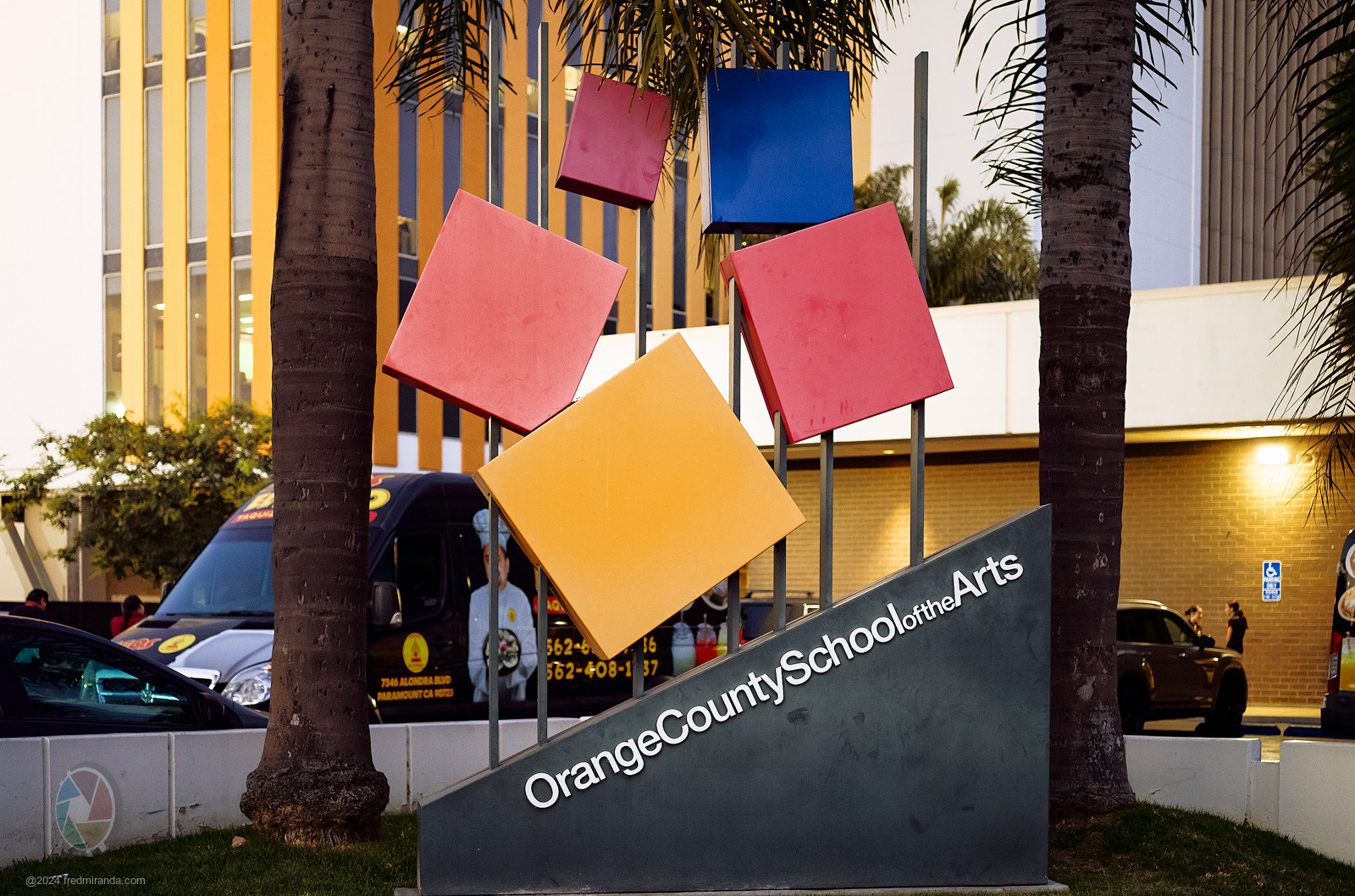
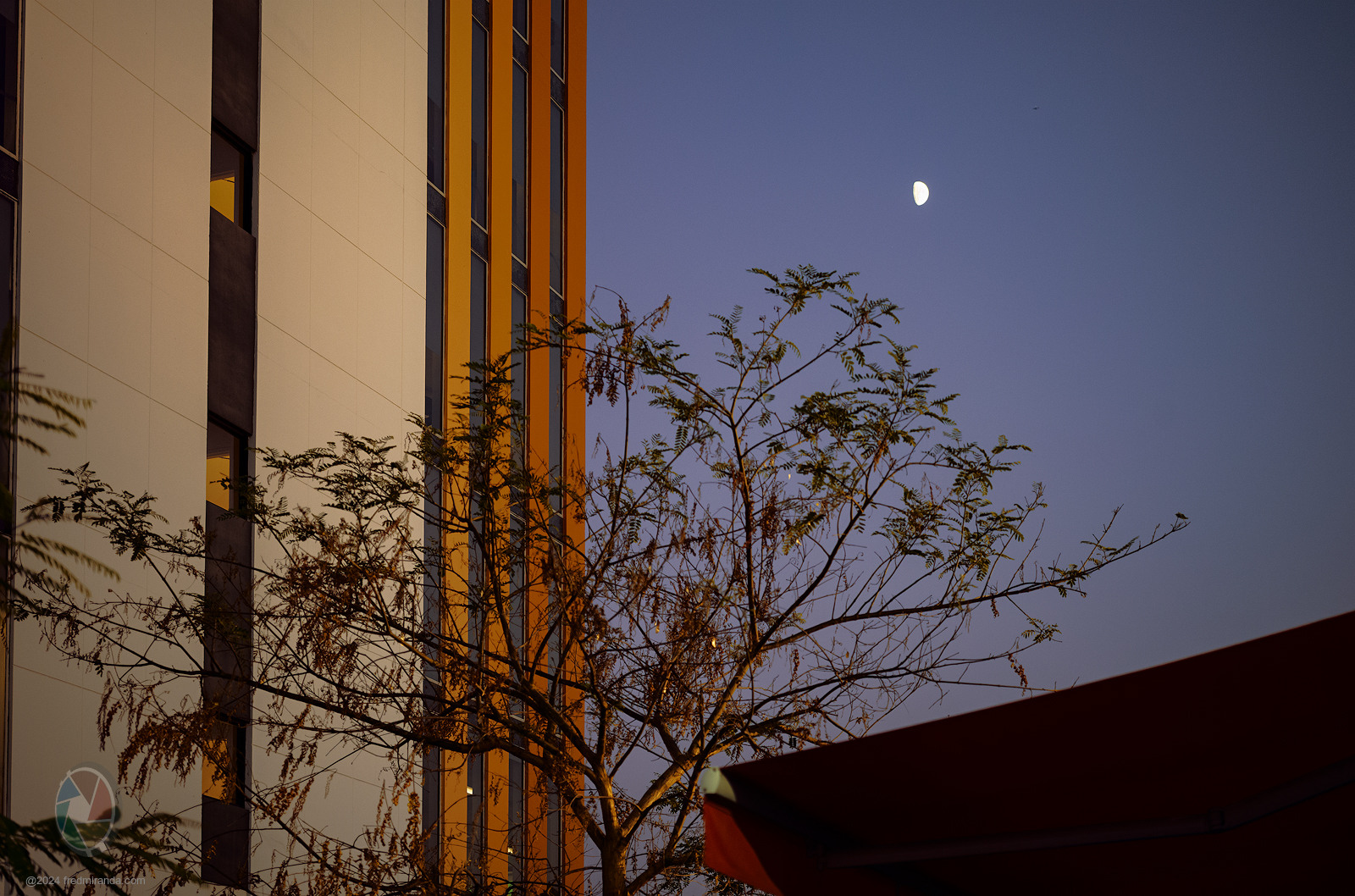
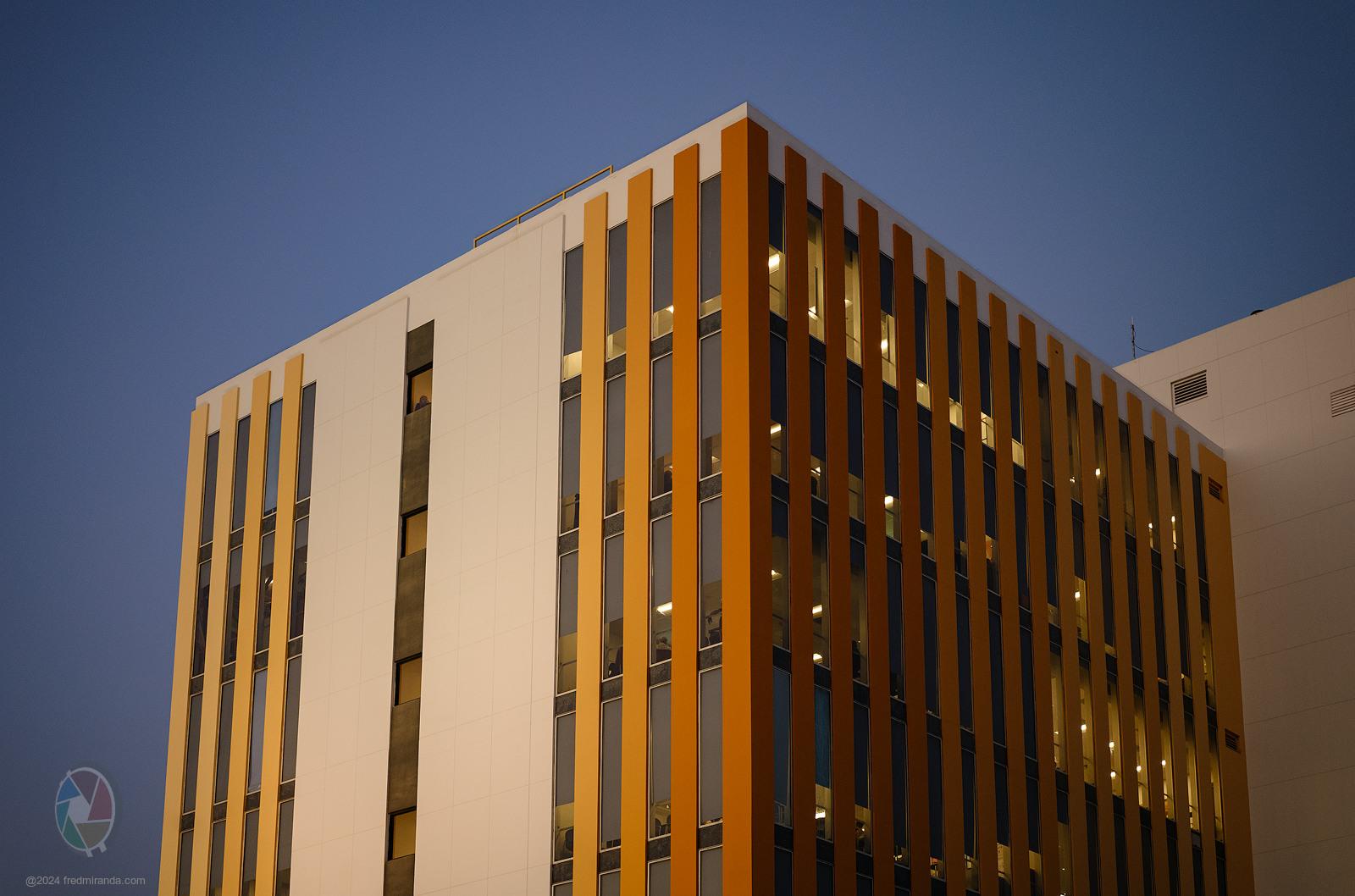
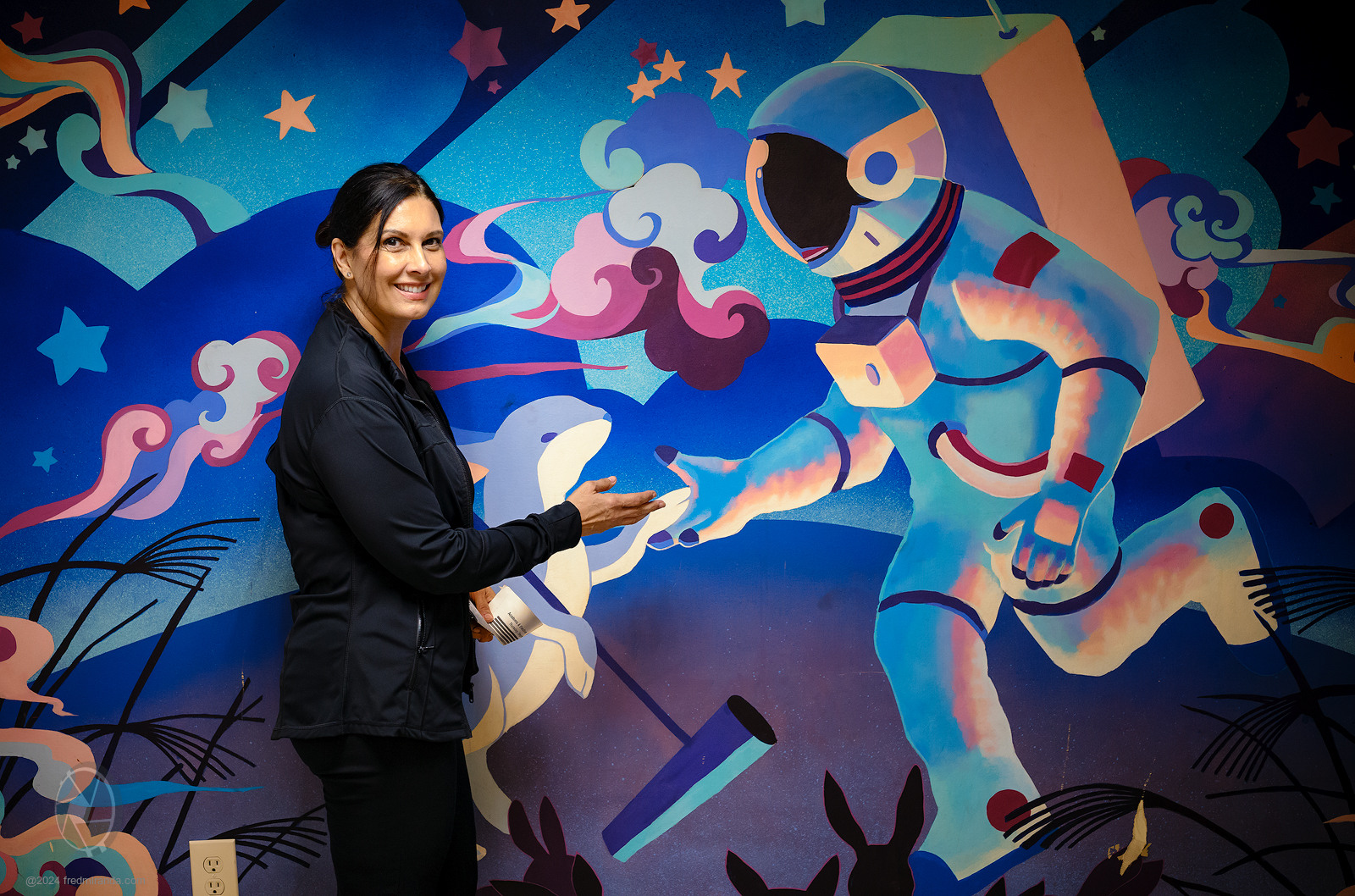
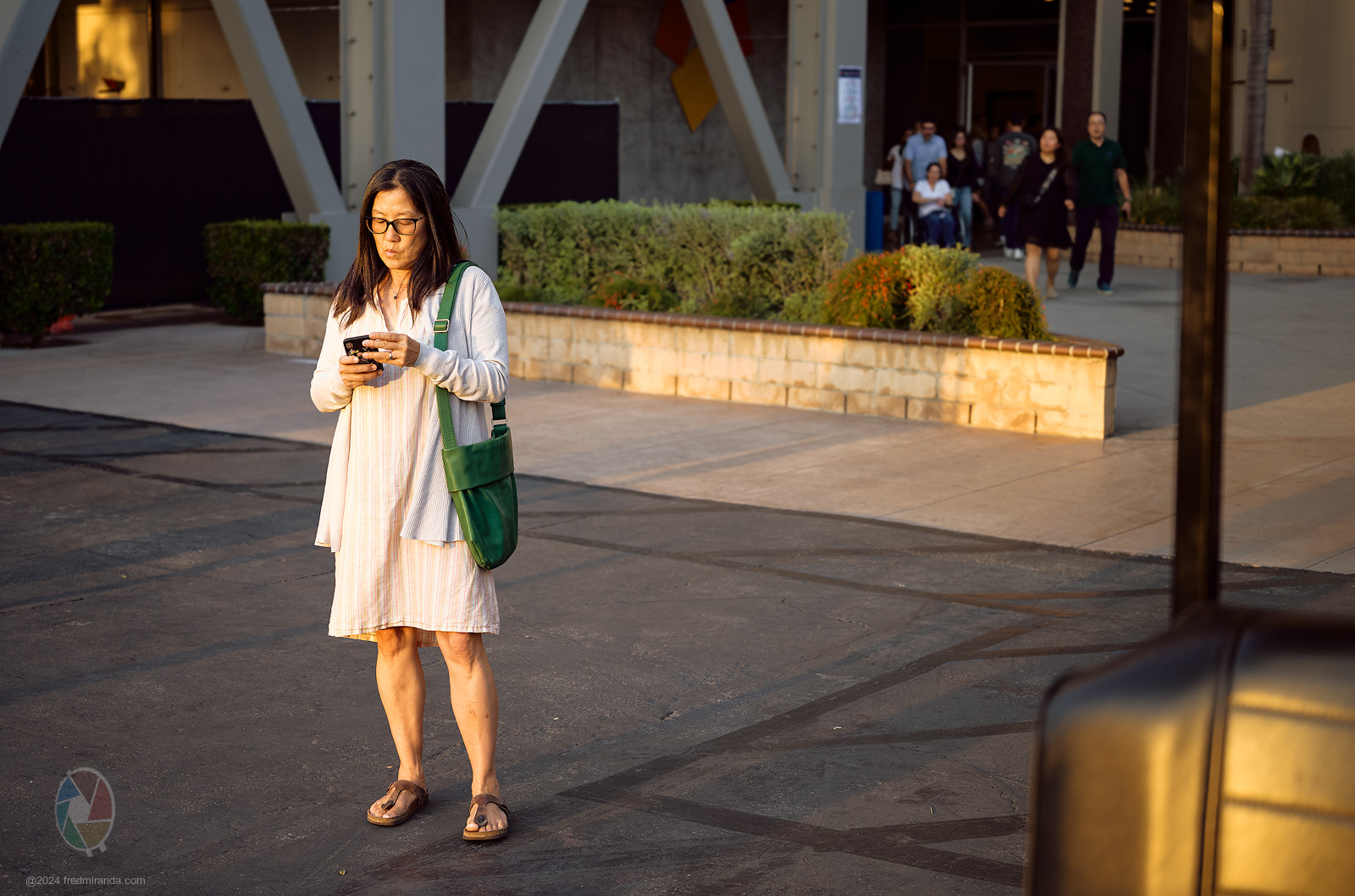
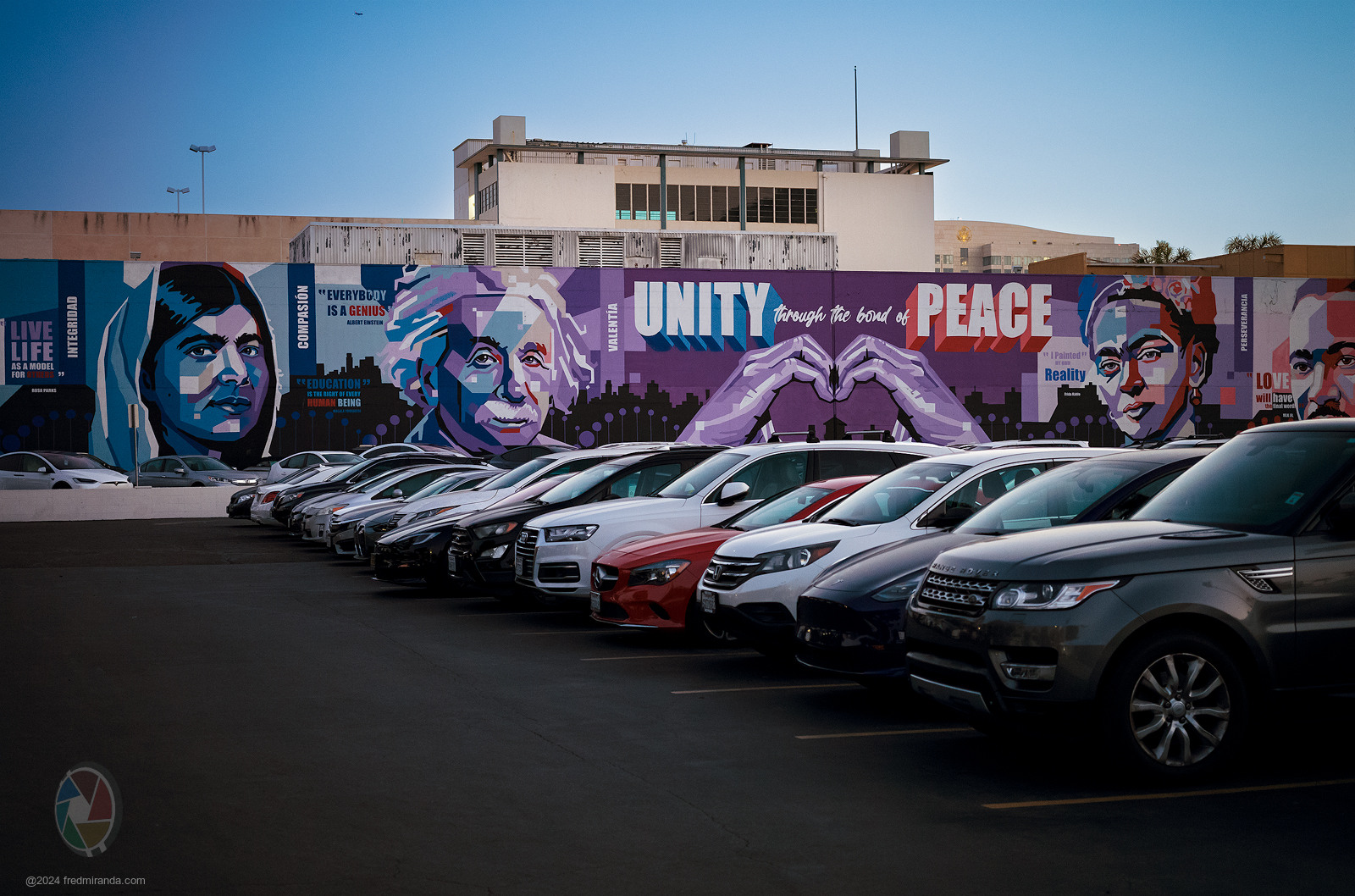
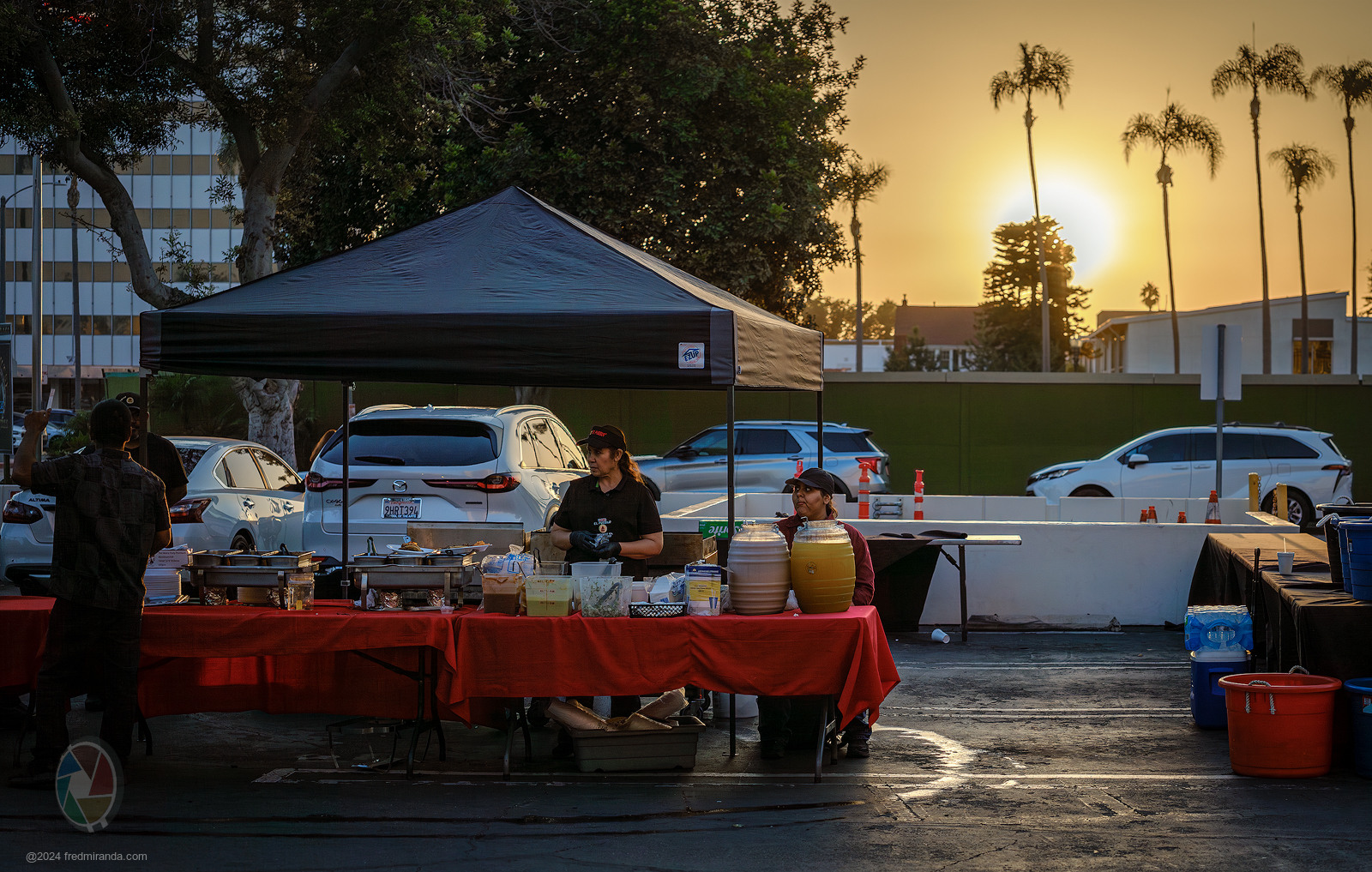
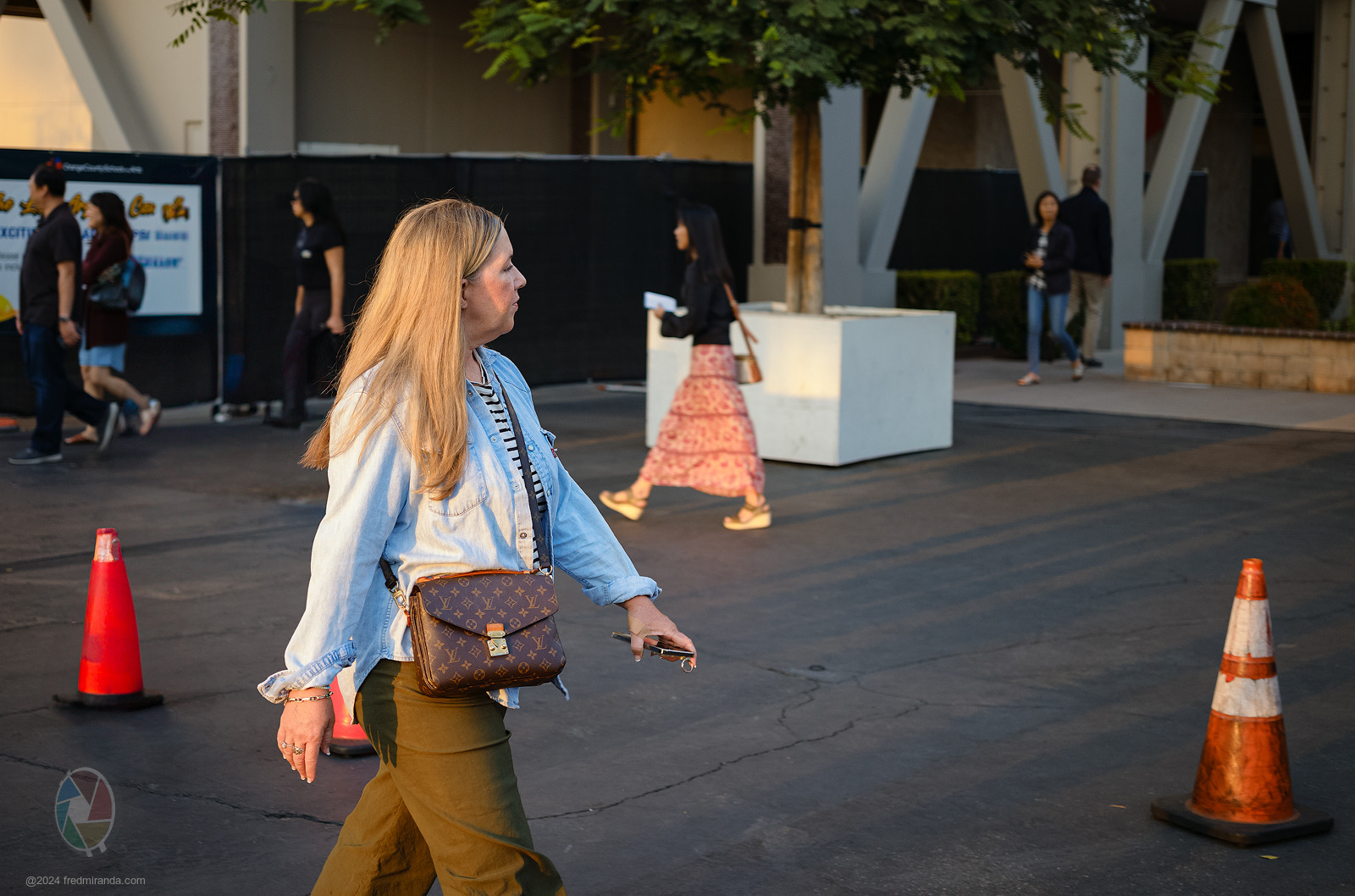
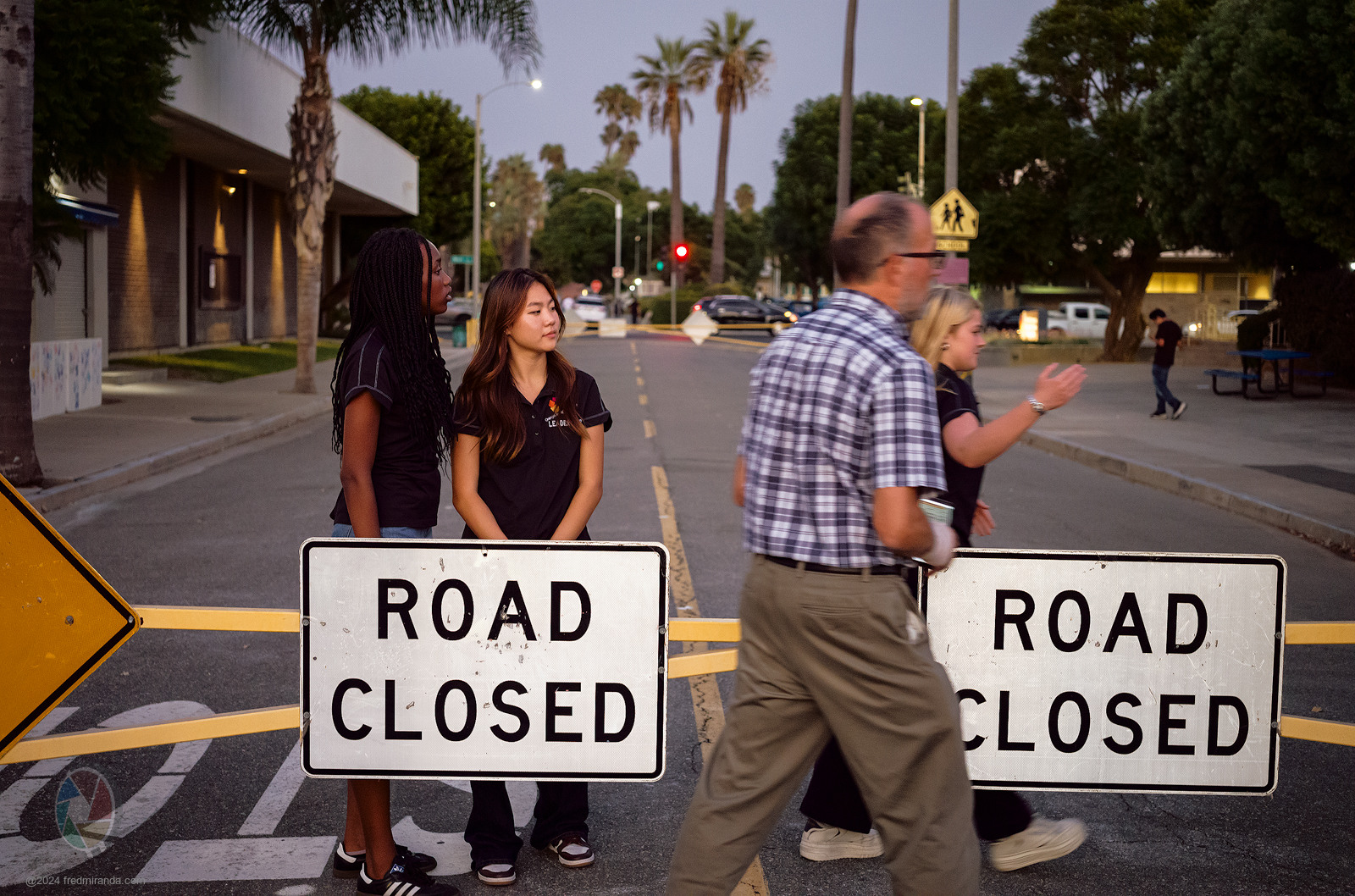
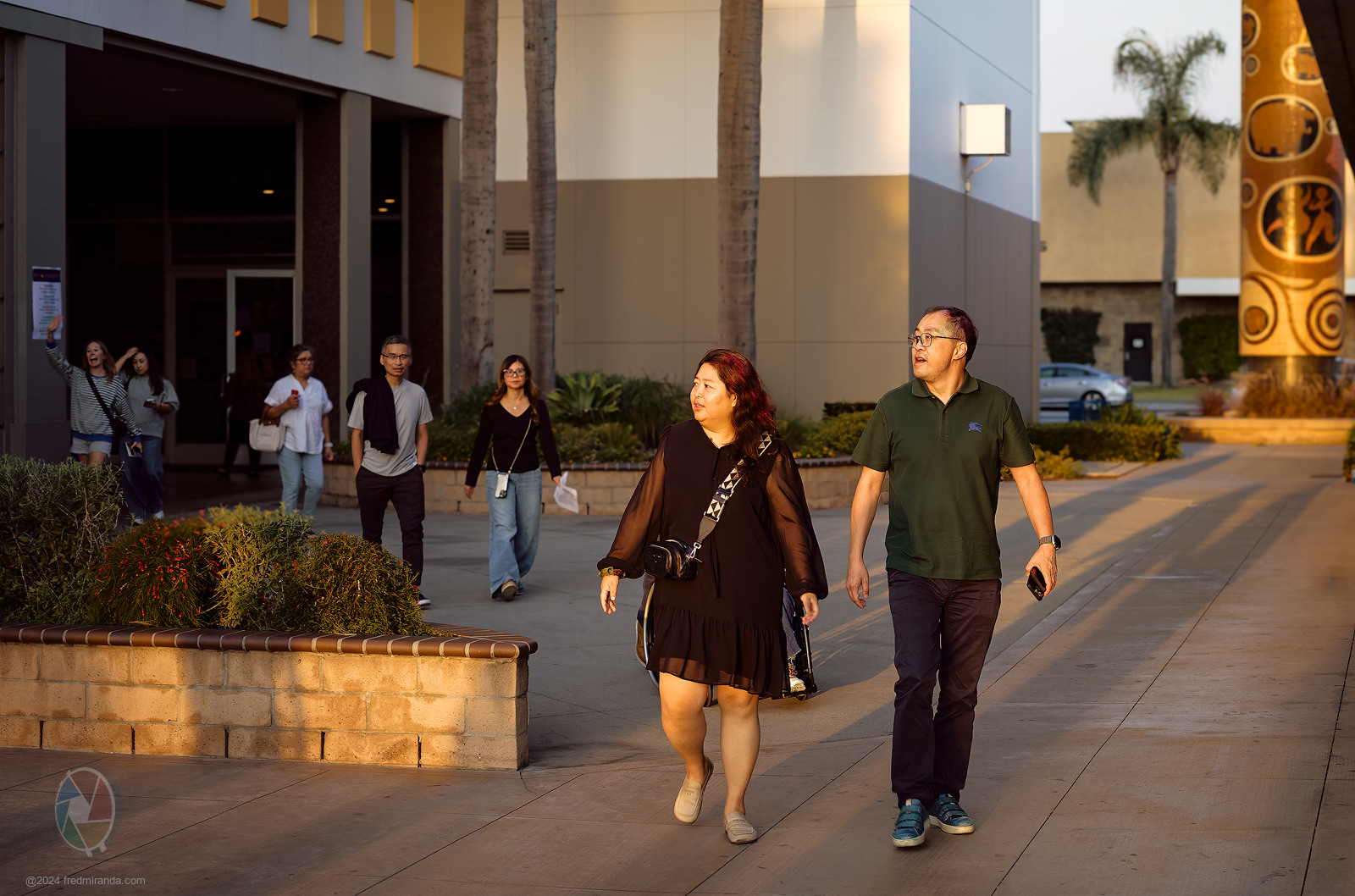
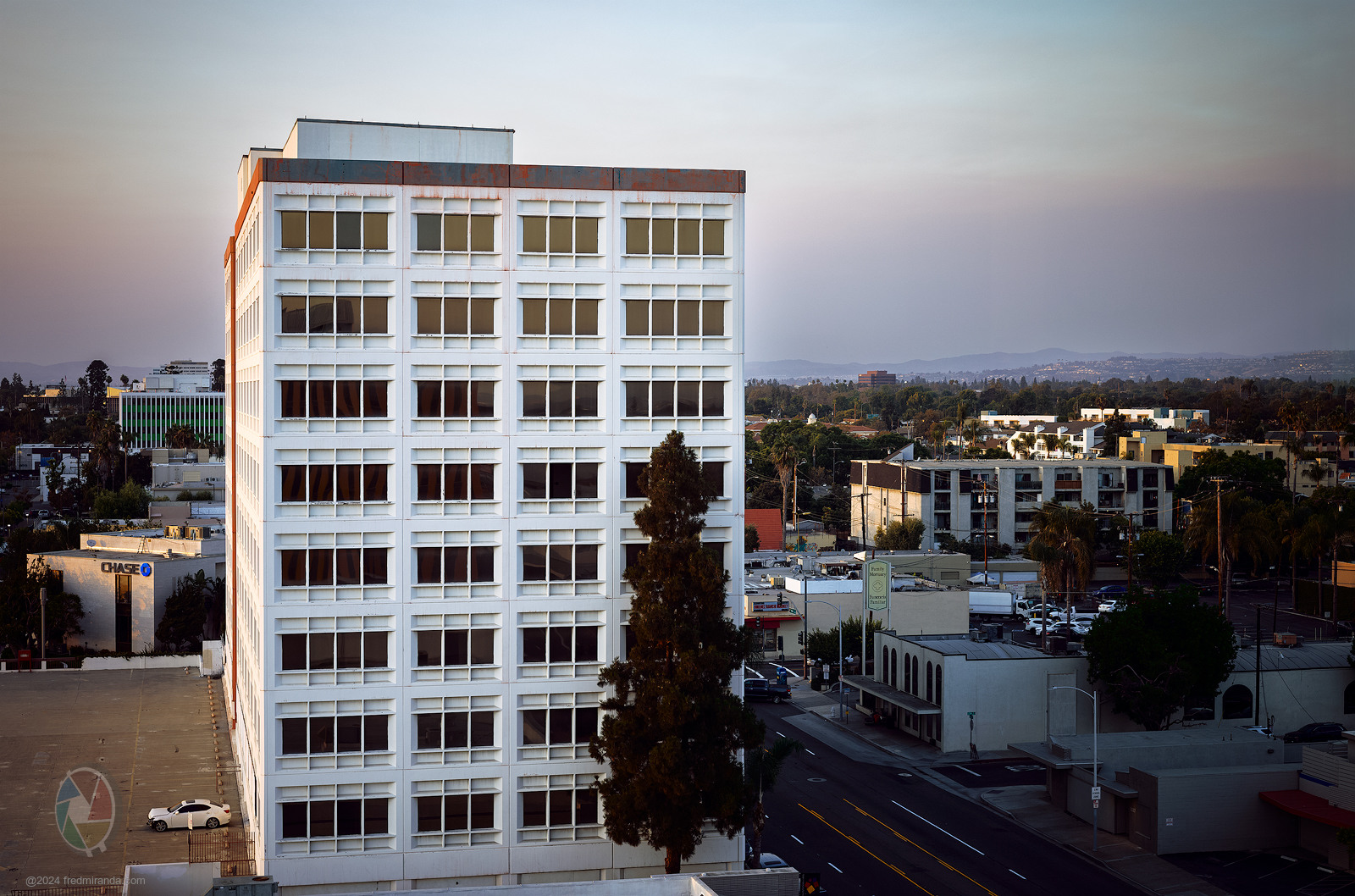
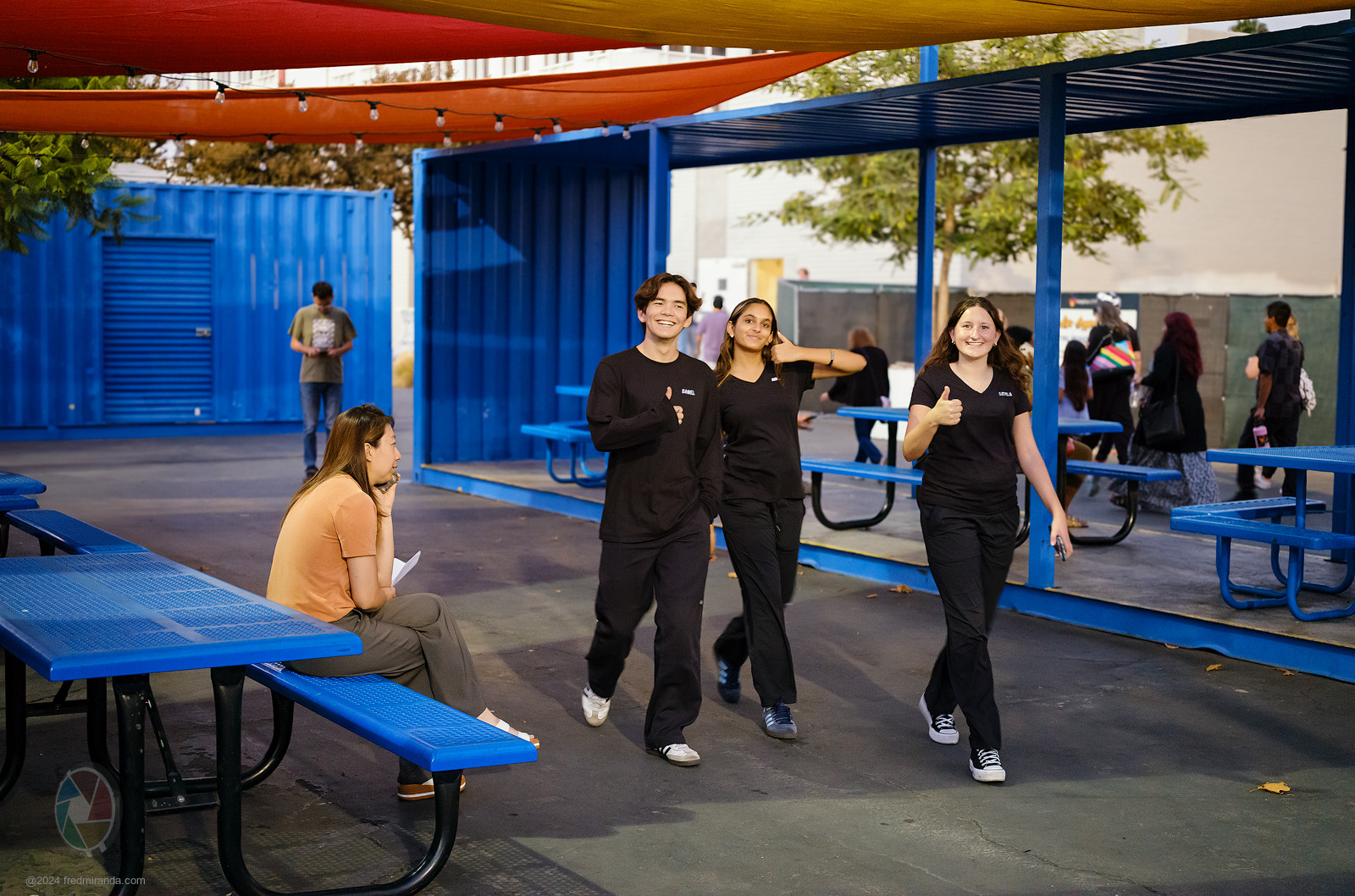
I went to my daughter's school open house yesterday and brought my M10-R and Voigtlander 50mm f/3.5 APO-Lanthar. Knowing it would be a low-light environment, I saw it as a great opportunity to test the lens's performance at f/3.5. Here are a few samples:
Voigtlander 50mm f/3.5 APO-Lanthar is an impressive lens : overall rendering and sharpness.
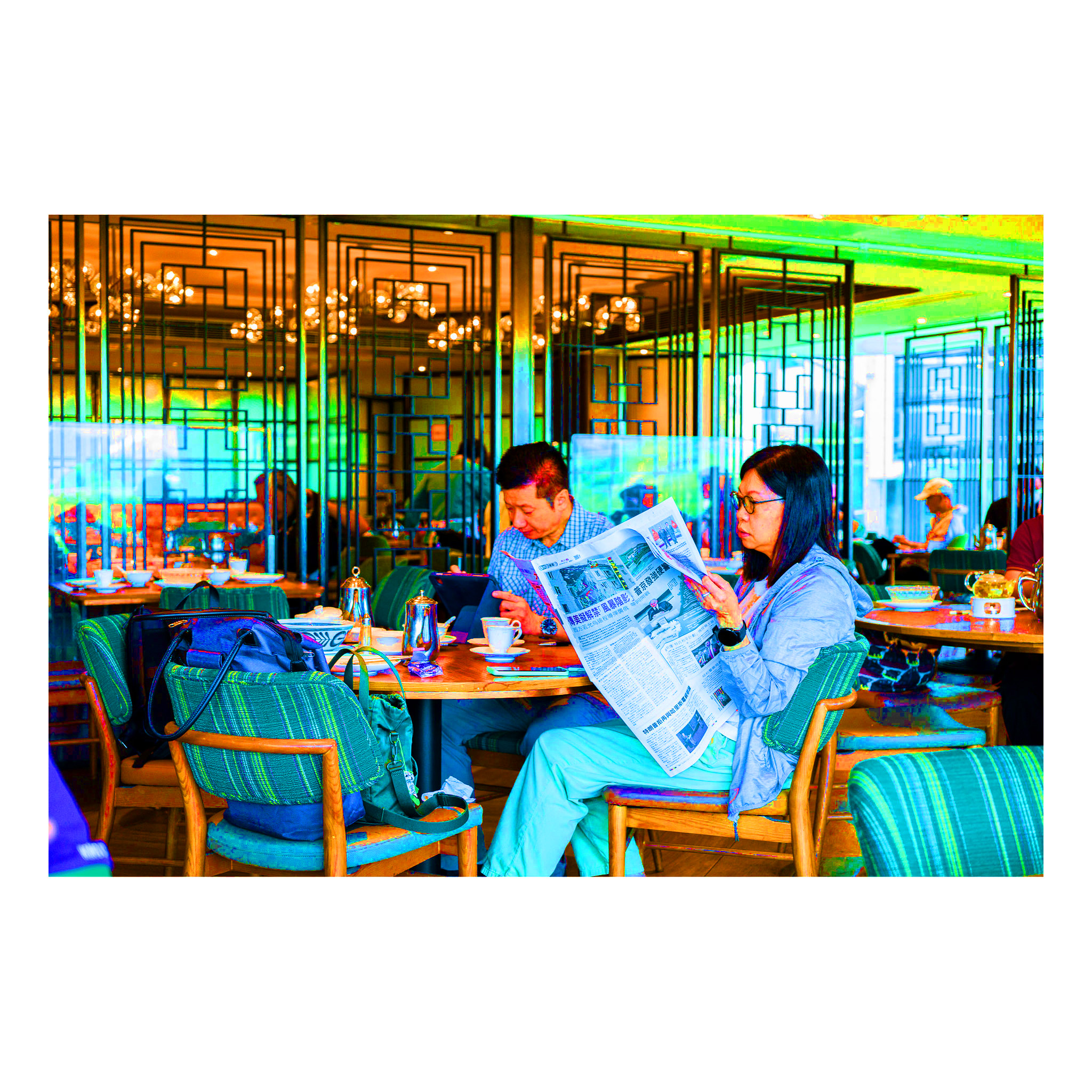
Mount it on M9 for dim sum breakfast this morning and take a few pictures. 99.9% good. 0.1% I have question: find the Chinese characters on newspaper some are in purple colour ( not within focus area ) and some are in black colour ( within focus area ). Inside the restaurant is not under contrasting light.
Luca101 wrote:
Voigtlander 50mm f/3.5 APO-Lanthar is an impressive lens : overall rendering and sharpness.
Mount it on M9 for dim sum breakfast this morning and take a few pictures. 99.9% good. 0.1% I have question: find the Chinese characters on newspaper some are in purple colour ( not within focus area ) and some are in black colour ( within focus area ). Inside the restaurant is not under contrasting light.
That purple lettering may not be a lens property ... it might be a lighting or AI=AR matter.
The newspaper has a bend in it and the purple lettering section is not in the same lighting as the other side. Also, look to the left at the backpack and there seems to be a slight WB diff from neutral. Look farther to the left corner and the LLC object color might be getting picked up by the AI=AR angle of the newspaper.
I say that because it is only in that section of the newspaper, whereas the section below it (different angle / bend) the lettering is still black, even though out of the focal plane. Every now and then, when lighting conditions are "transitioning" from warm > cool, there is a narrow overlap in transitional temp where sometimes that purple reveals itself.
Crank up the saturation to 100% and it can help reveal the lighting color nuances that are in play. Take note of the backpack again, and see the color of the backpack, and then the color of the backpack highlights. Likely, you are in a "mixed color" lighting environment, and you are seeing the effects of different color lighting being picked up from different angles, as well as the blending of warm / cool sources at given AI=AR.
Also, note the ornamental iron work in the background. See how much the color of the ironwork transitions through a color palette along the vertical metal. You know that the actual color of the metal is consist unto itself. However, it clearly transitions from cool to warm as you move upward. That must be a condition of the lighting as the mixed lighting blends, while the AI=AR transitions. Chair leg on the far left, etc.
It's possible that specific text on the page (the headline under the left photo) is actually printed in a different color than black. That is the only purple text I see and none of the other text around it is also purple. Nor do I see obvious LoCA in the chrome finish tea pots on the table, which IMO would be the most obvious sources for it.
Kent's point about angle of incidence/reflection is also relevant for the newspaper depending on the paper type. Traditional newsprint has a matte finish and the ink is absorbed into it, thus likely wouldn't be as reflective, but would still pick up some color from the surrounding reflected light/environment. Some newspapers use coated stock that has a sheen to it, and as a result, the ink does as well. This would be more likely to reflect the colors of the surrounding environment. And here it's possible that non-black text more readily reflects the color of the environment around it.
Fred Miranda wrote:
Here are a few more shots from my daughter's school open house two days ago:
I mostly shot at f/3.5. Using the rangefinder to capture moving subjects is much easier with a slower aperture and greater depth of field.
Hey Fred, great photos. I really like its rendering. A real mini version of the 50/2 apo. Also love your close-up shots. Very nice transition to out of focus.
Any idea when it will be released to CameraQuest or anywhere here for that matter?
Joe D
tunisia wrote:
Hey Fred, great photos. I really like its rendering. A real mini version of the 50/2 apo. Also love your close-up shots. Very nice transition to out of focus.
Any idea when it will be released to CameraQuest or anywhere here for that matter?
Joe D
I've heard that next Monday is the official release date in the US, and we'll also find out the price then.
Thank you to RustyBug and rscheffer for helping me to understand colour of light and characteristic of different materials. There are much to learn about colours.
Start appreciate APO-Lanthar 50mm f/3.5 and here is a picture I take this morning[url=]20240915-L1004695 by Vincent Lo, 於 Flickr[/url]
Fred Miranda wrote:
Here are a few more shots from my daughter's school open house two days ago:
I mostly shot at f/3.5. Using the rangefinder to capture moving subjects is much easier with a slower aperture and greater depth of field.
Even with the slower aperture, there's still a nice quality of transition / separation to the BG. I reckon it is in part to the APO that is similar to what Peter Karbe references in the video where he is discussing the SL APO Cron's compared to the M Lux transitions.



 )
)