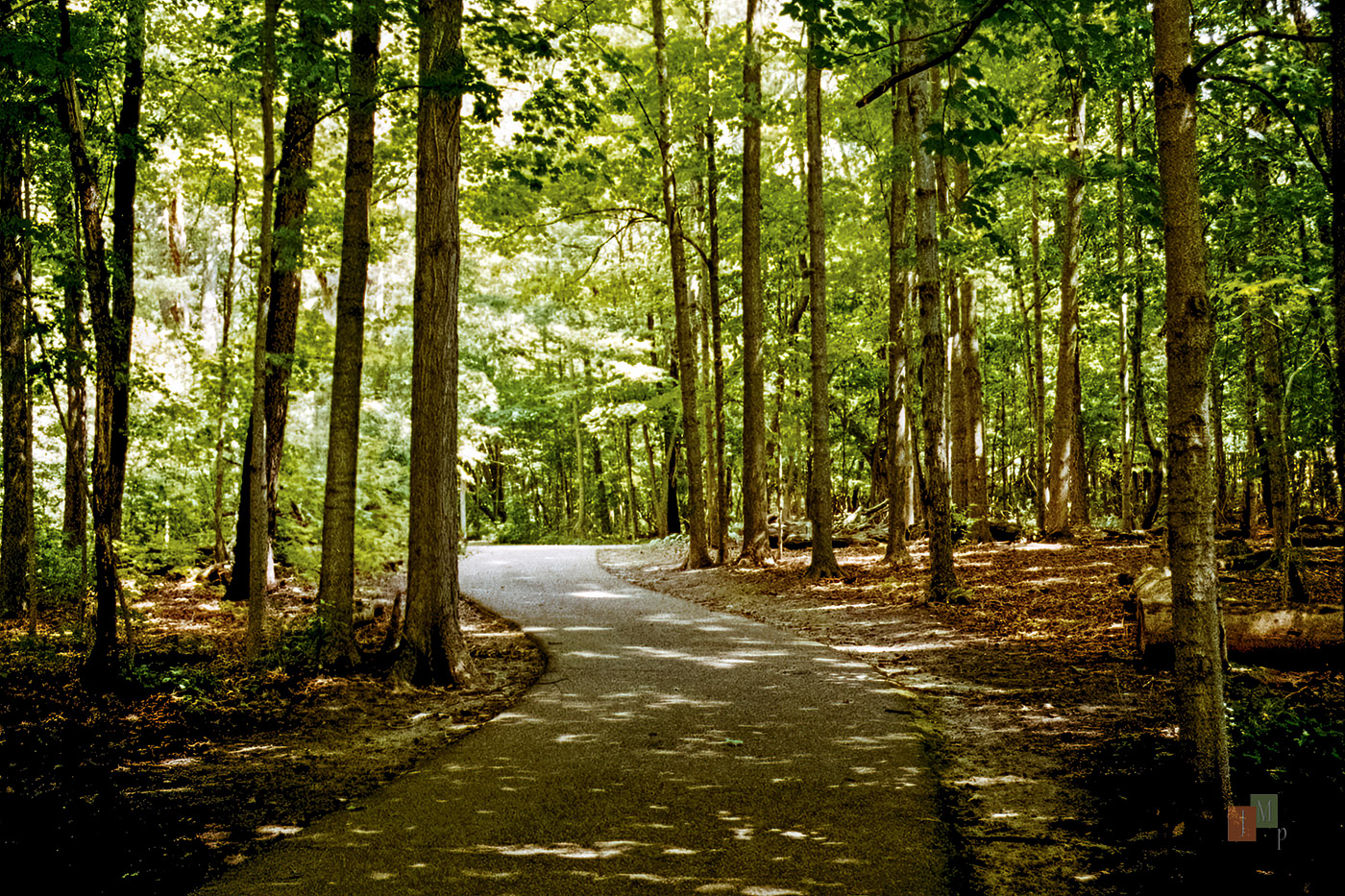
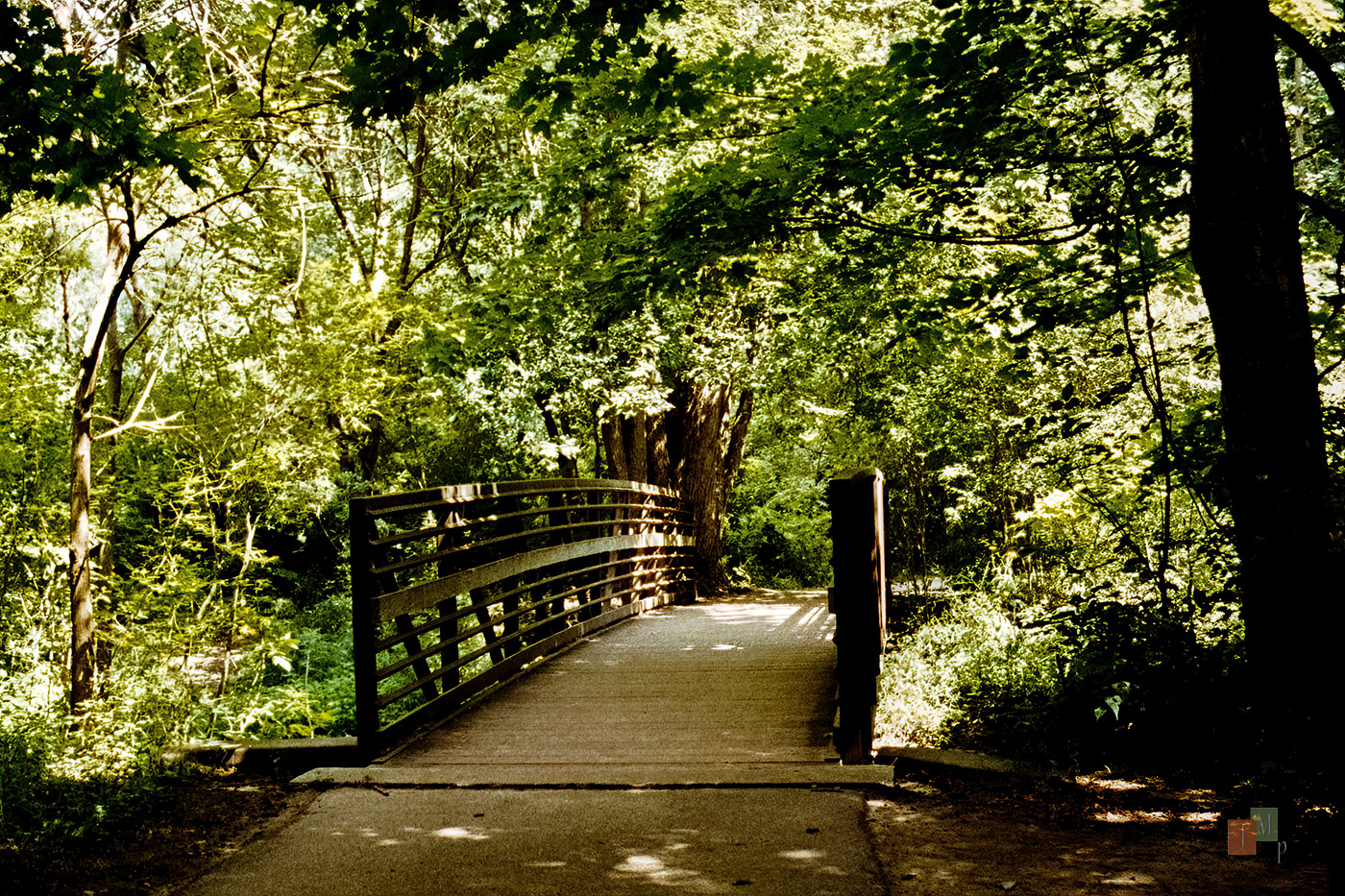
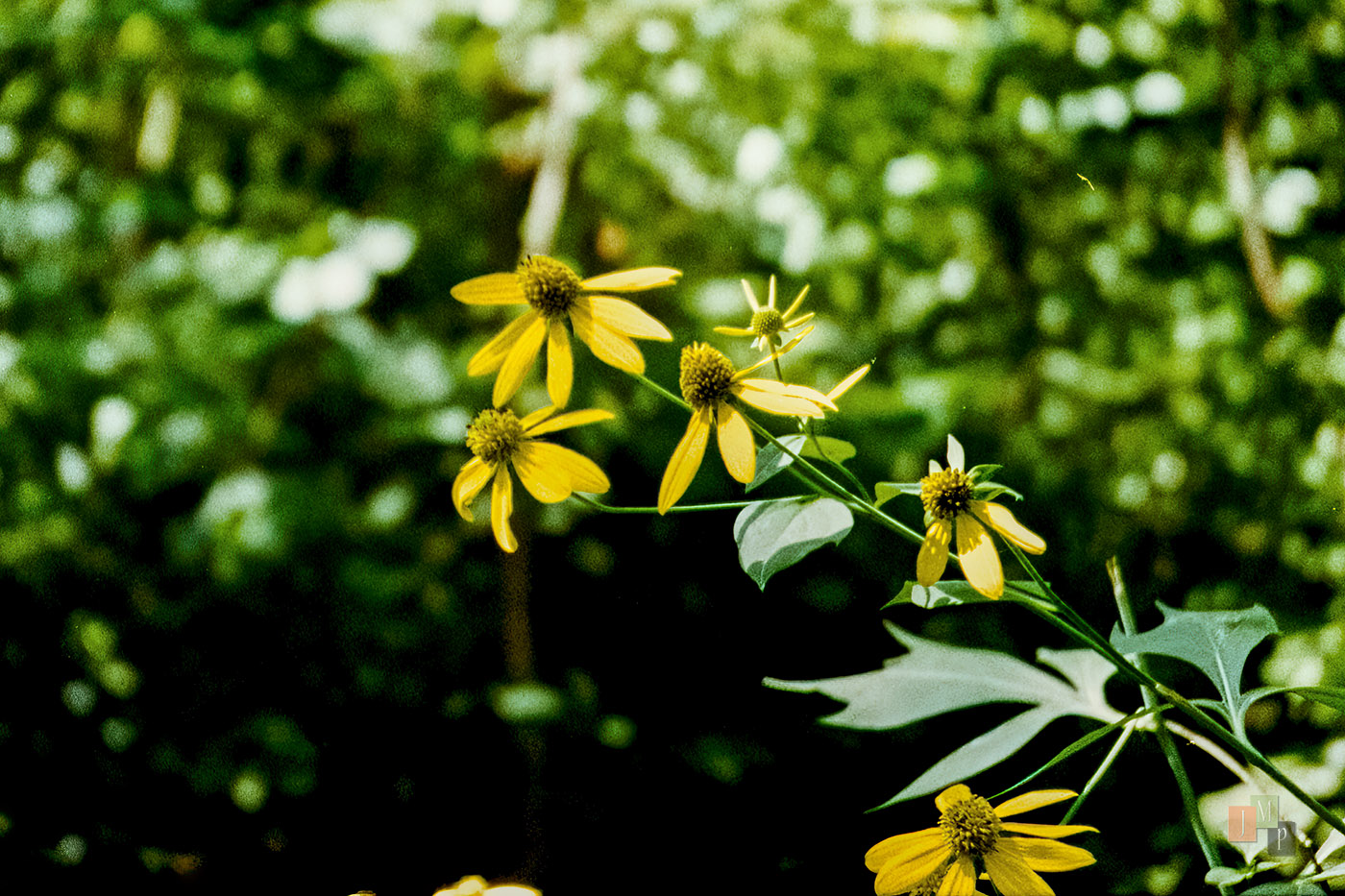
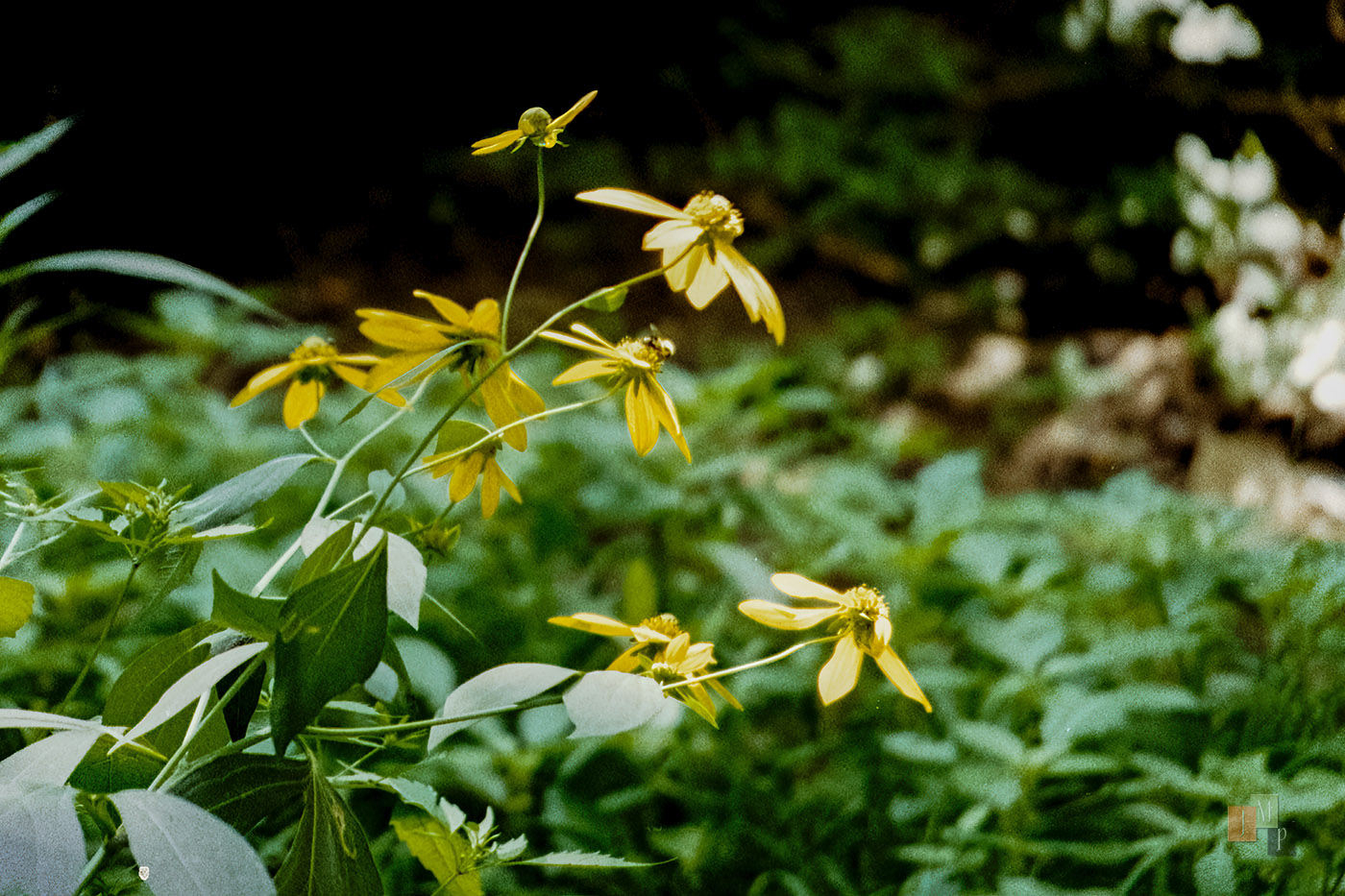
I've got LOTS of half-frame cameras (the original Olympus Pens are great as simple point and shoots)...The Pen F is my favorite, although the Fuji Half and the Canon Demi EE17 are also fantastic...There are some really quirky Ricoh Half frames that are incredibly small too and even a Yashica 14 with a f1.4 lens...All in all half-frame cameras shoot better images than most folks give them credit for, the lenses tend to be sharp and the form factor small...The Samurai is great too, but rather large for a half-frame
One of the rolls I souped was from the Pen FT. I wish I could see through the viewfinder better - I hear the F or FV are brighter. If I could get a split prism with a brighter view that would be perfect. Love the shutter sound of the FT Fuji 200 with the Zuiko 40mm f1.4 lens. I've adapted a 17mm f3.5 Tokina F-mount lens and it gives a much wider field of view. Hoping it is sharper than the 40mm.
James Markus wrote:
One of the rolls I souped was from the Pen FT. I wish I could see through the viewfinder better - I hear the F or FV are brighter. If I could get a split prism with a brighter view that would be perfect. Love the shutter sound of the FT Fuji 200 with the Zuiko 40mm f1.4 lens. I've adapted a 17mm f3.5 Tokina F-mount lens and it gives a much wider field of view. Hoping it is sharper than the 40mm.
Yeah, the shutter feel on the FT is something else! So crisp and instant.
Found an interesting resource - an exhaustive list of half frame cameras. I think there are 240+. Also found out Leica/Leitz made a few. Looked on line for them - major appreciation in value.
Those look really good. I have some questions about the demi. Is it only zone focusing? When in "auto" is it shutter priority or aperture priority? How is the viewfinder visibility? What should you lookout for in a used model?
James Markus wrote:
Those look really good. I have some questions about the demi. Is it only zone focusing? When in "auto" is it shutter priority or aperture priority? How is the viewfinder visibility? What should you lookout for in a used model?
Thanks, it's a wonderful camera. Faster lens than the Pentax 17, and a faster top shutter speed too.
It is indeed only zone/scale focus.
In auto exposure mode, it's shutter priority. You set the shutter speed and the camera sets the aperture.
Viewfinder visibility is great; I have no trouble composing even in dark situations, and the viewfinder is uncluttered.
But here are the downsides: 1) there's a cable to the light meter that is often corroded and detaches eventually, so the internal light meter stops working. 2) it was designed to take the old 625 mercury batteries so you have to use an MR-9 adapter and SR 73 batteries or a Wein cell, or one of the hearing-aid battery solutions that are less accurate. 3) the meter is always on, so you need to keep it in the dark when not using it to avoid battery drain. 4) top ISO with the light meter is 400, and I find the ISO selector dial on the bottom can be easily nudged by accident.
The light meter on mine gave up the ghost after three rolls, so now I use it in manual mode with a shoe-mount light meter. That slows me down a bit but not much, and eliminates the worries about batteries and the always-on meter. The aperture dial is on the front of the lens and there are no click stops, but I got used to it quickly.
Several models of the Demi were made; the EE17 is what I have and is generally the most highly recommended in reviews.
bjhurley wrote:
Thanks, it's a wonderful camera. Faster lens than the Pentax 17, and a faster top shutter speed too.
It is indeed only zone/scale focus.
In auto exposure mode, it's shutter priority. You set the shutter speed and the camera sets the aperture.
Viewfinder visibility is great; I have no trouble composing even in dark situations, and the viewfinder is uncluttered.
But here are the downsides: 1) there's a cable to the light meter that is often corroded and detaches eventually, so the internal light meter stops working. 2) it was designed to take the old 625 mercury batteries so you have to use an MR-9 adapter and SR 73 batteries or a Wein cell, or one of the hearing-aid battery solutions that are less accurate. 3) the meter is always on, so you need to keep it in the dark when not using it to avoid battery drain. 4) top ISO with the light meter is 400, and I find the ISO selector dial on the bottom can be easily nudged by accident.
The light meter on mine gave up the ghost after three rolls, so now I use it in manual mode with a shoe-mount light meter. That slows me down a bit but not much, and eliminates the worries about batteries and the always-on meter. The aperture dial is on the front of the lens and there are no click stops, but I got used to it quickly.
Several models of the Demi were made; the EE17 is what I have and is generally the most highly recommended in reviews....Show more →
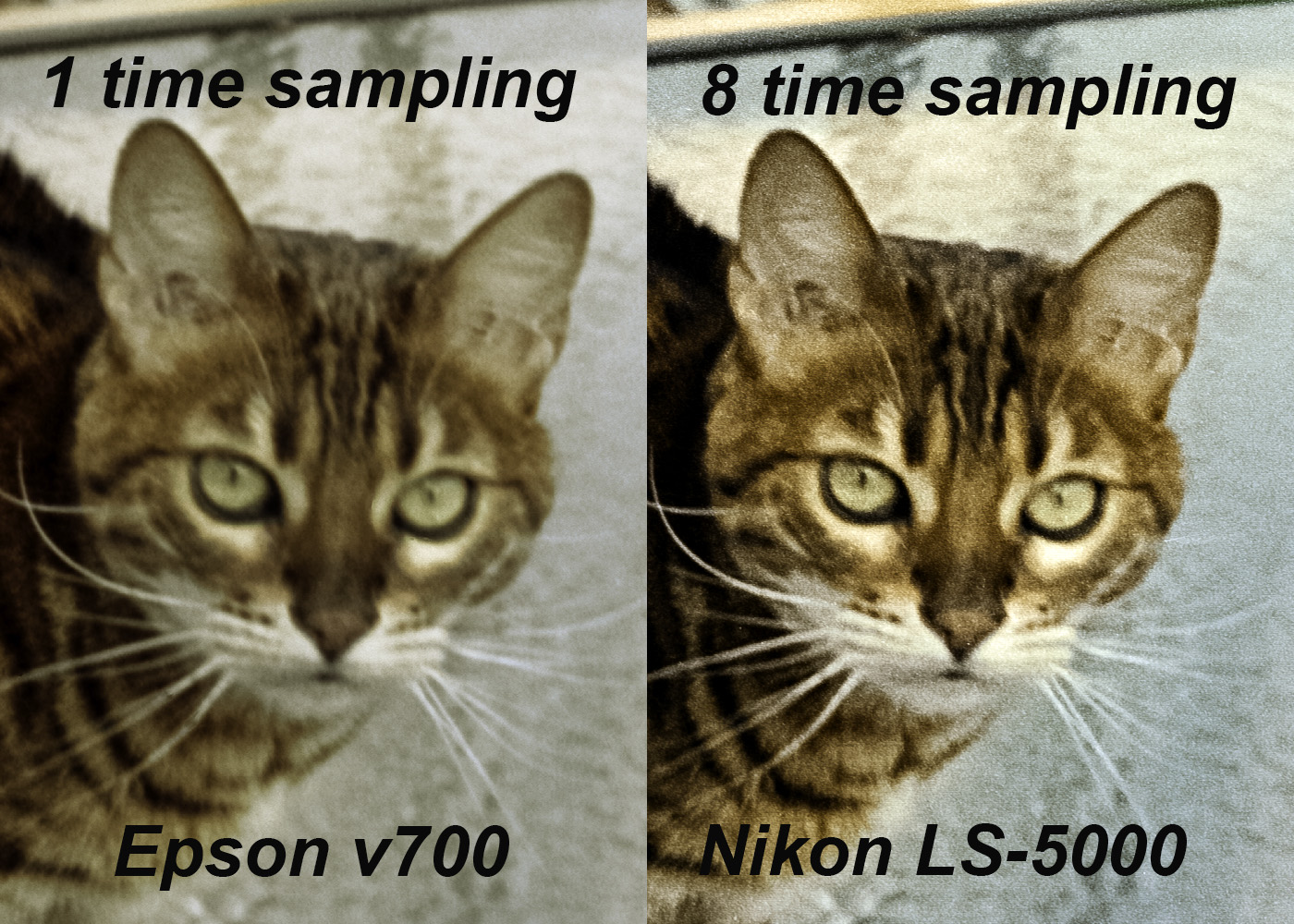
I thought I had my half frame process sorted out, but I am getting ready for some new arrivals. I double checked my Epson V700 scanning after reading about sampling rates. I had tested 1 time to 4 times and didn't see much difference other than it took much longer. The software goes up to 16 times. I also wish I could scan the half frames with Vuescan on the LS-5000 without doing two frames at a time. I've edited settings and ini files, but it resists scanning half frames only. So this is not only a 1x vs 8x sampling test, but a Epson v700 vs Nikon LS-5000 test and I am shocked at the difference.
HALF-FRAME_Kyocera_Samuria-X4_v700-vs-ls-5000 1x vs 8x sampling
Wow, I think I’m starting to understand why people get so obsessed with half frames! I originally started looking into them as a way to take more photos with the same roll of film, but there’s something much more charming and intimate about them. I love how even ordinary little moments suddenly feel like fragments of a memory or scenes from a movie. It's beautiful how the two frames interact!
shudder636 wrote:
Been wanting a half framer since I first learned about them! Which of the Oly Pens allow for manual exposure?
I think all the Pen F models allow for manual exposure but only one model (FT) has a light meter.
The original Pen F (the one with the gothic F on front) has a double-stroke film advance, a bright viewfinder, no light meter or timer.
The Pen FT has a dark viewfinder, a single-stroke film advance, and has a lightmeter and timer.
The Pen FV has a bright viewfinder, single-stroke film advance, no lightmeter but it does have a timer.
I think having a bright viewfinder is important, so I'd choose either the original F if you want the gothic F, or the FV if you want single-stroke and a timer but don't care about having an onboard light meter.
bjhurley wrote:
I think all the Pen F models allow for manual exposure but only one model (FT) has a light meter.
The original Pen F (the one with the gothic F on front) has a double-stroke film advance, a bright viewfinder, no light meter or timer.
The Pen FT has a dark viewfinder, a single-stroke film advance, and has a lightmeter and timer.
The Pen FV has a bright viewfinder, single-stroke film advance, no lightmeter but it does have a timer.
I think having a bright viewfinder is important, so I'd choose either the original F if you want the gothic F, or the FV if you want single-stroke and a timer but don't care about having an onboard light meter....Show more →