fredmiranda.com
Login

Moderated by: Fred Miranda
Username  

  New fredmiranda.com Mobile Site
  New Feature: SMS Notification alert
  New Feature: Buy & Sell Watchlist
  

FM Forums | Leica & Alternative Gear | Join Upload & Sell

       2       end
  

Light Lens Lab 75mm f/1.5 Z21 Review


Fred Miranda
Offline
Admin
Upload & Sell: On
p.1 #1 · Light Lens Lab 75mm f/1.5 Z21 Review


Pre-order the Light Lens Lab 75mm f/1.5 Z21 lens:

Lens Light Lab Store | Get a 5% discount when you use the FREDMIRANDA code at checkout.

________


Review Quick Links:

  1. Initial Impressions
  2. Infinity Resolution and Contrast compared to Light Lens Lab 75mm f/2 SPII
  3. Field Curvature
  4. Distortion
  5. Sunstar Rendering
  6. Minimum Focus Distance: Resolution, Contrast and Focus Shift
  7. Flare Resistance
  8. Rendering compared to Light Lens Lab 75mm f/2 SPII
  9. Optical Vignetting and Specular Highlights shape
  10. Chromatic Aberration (CA)

  11. Final Thoughts
  12. Samples 1: Late afternoon, first time with the lens


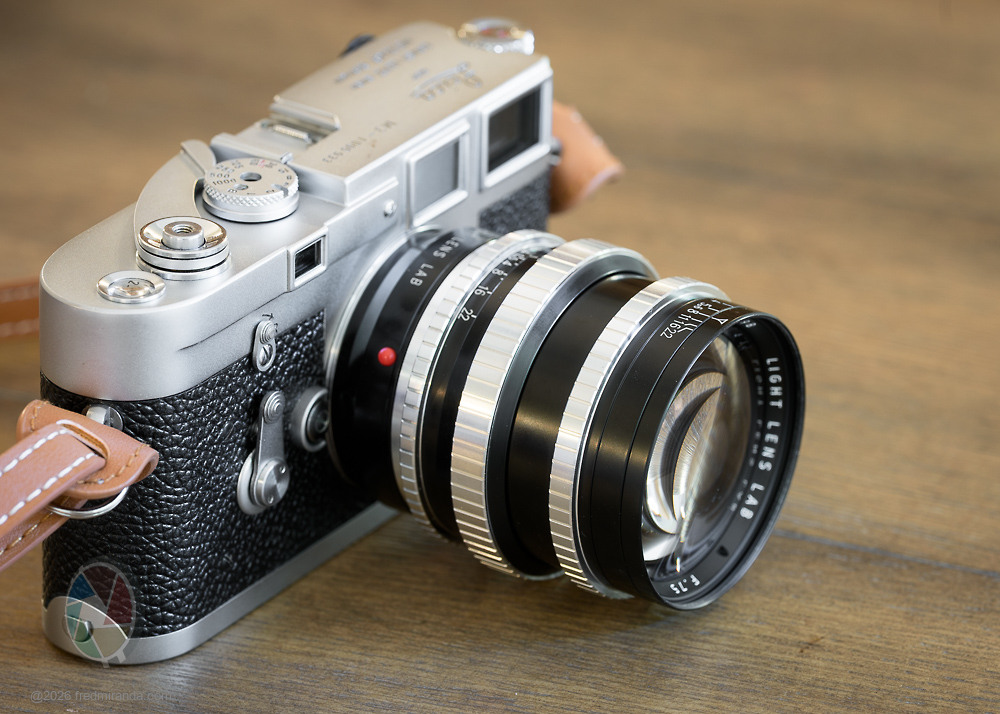
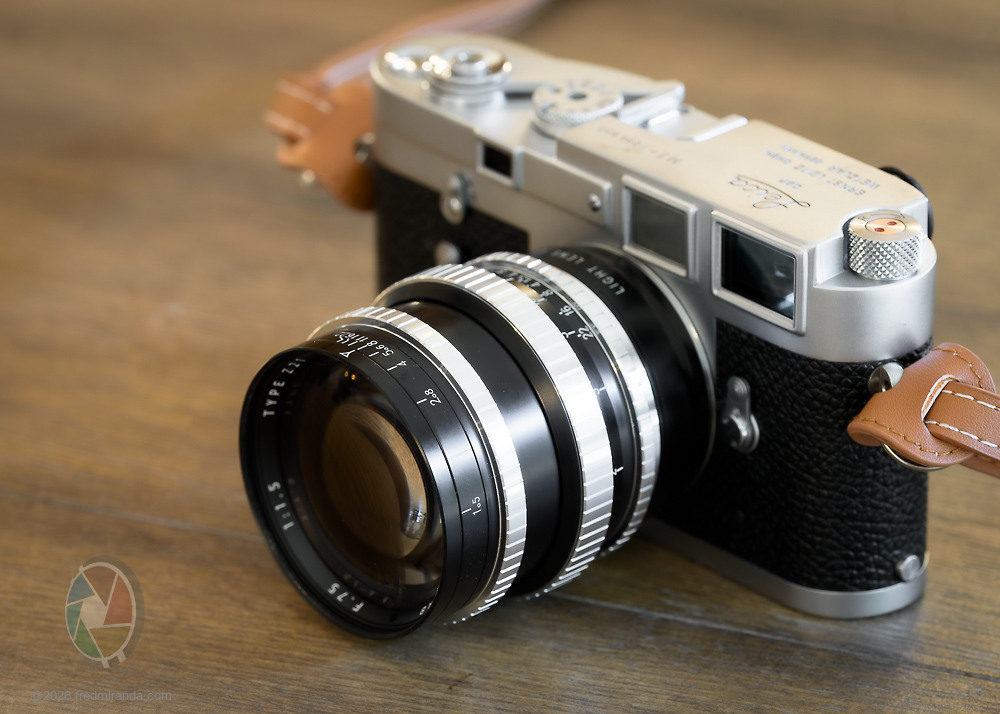
  Leica M3 paired with the Light Lens Lab 75mm f/1.5 Z21


Back to Quick Links


Initial impressions of the Light Lens Lab 75mm f/1.5 Z21 lens:


The Light Lens Lab M Z21 75mm f/1.5 has just arrived and extends the Z21 series into a longer focal length that a lot of people were expecting. It continues the same design direction as the 50mm f/1.5 Z21 (reviewed here), but with a tighter field of view and a stronger emphasis on subject separation and portrait use.

Like the rest of the Z21 family, the 75mm is not designed around modern aberration correction. Instead, it draws heavily from the rendering style associated with the rare 1950s Angenieux lenses, especially the 50mm f/1.5 Type S21, which became known for a very distinctive French rendering style.

That look is characterized by a gentle glow wide open, structured rendering from highlight outlining, and moderate optical vignetting that can lead to a swirl effect in the background. It is an imperfect rendering, but one that gives images a painterly quality and a distinctive character. It feels uncorrected in a way that is clearly intentional and central to this lens design.


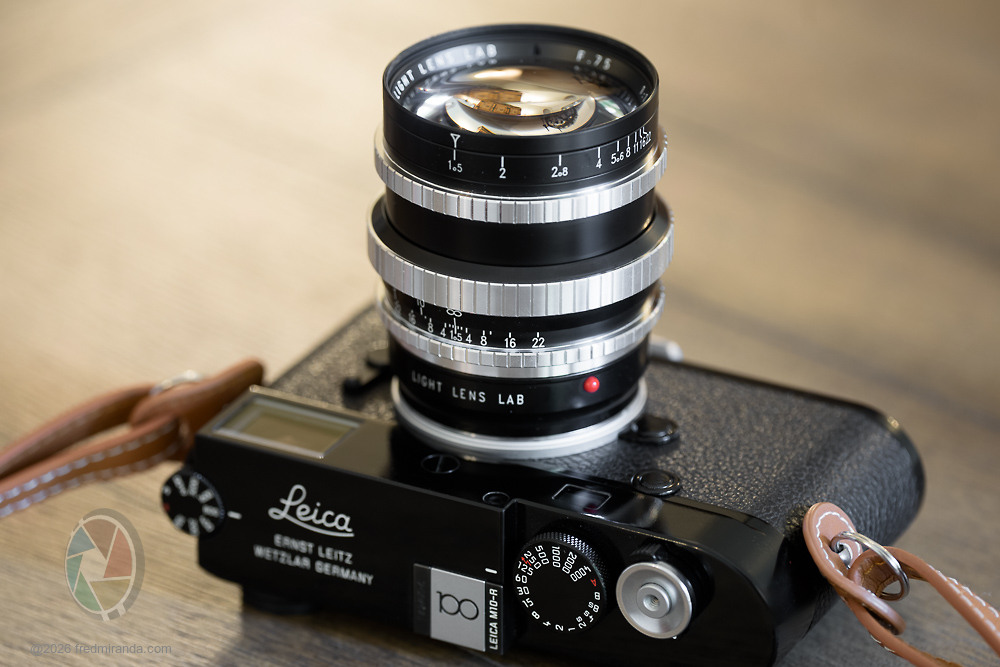
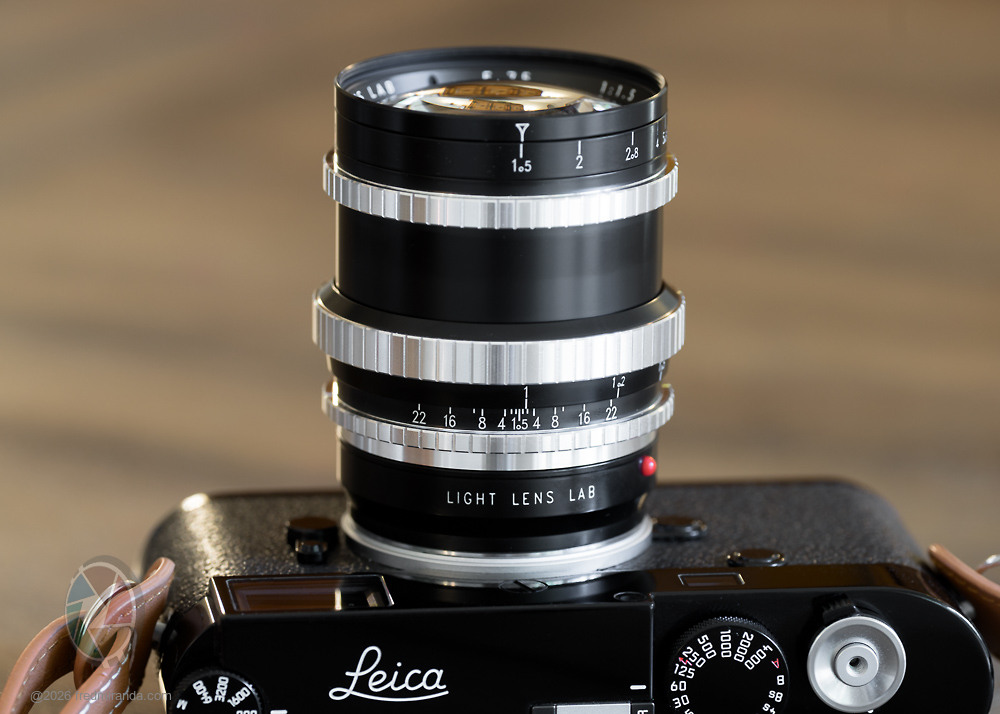
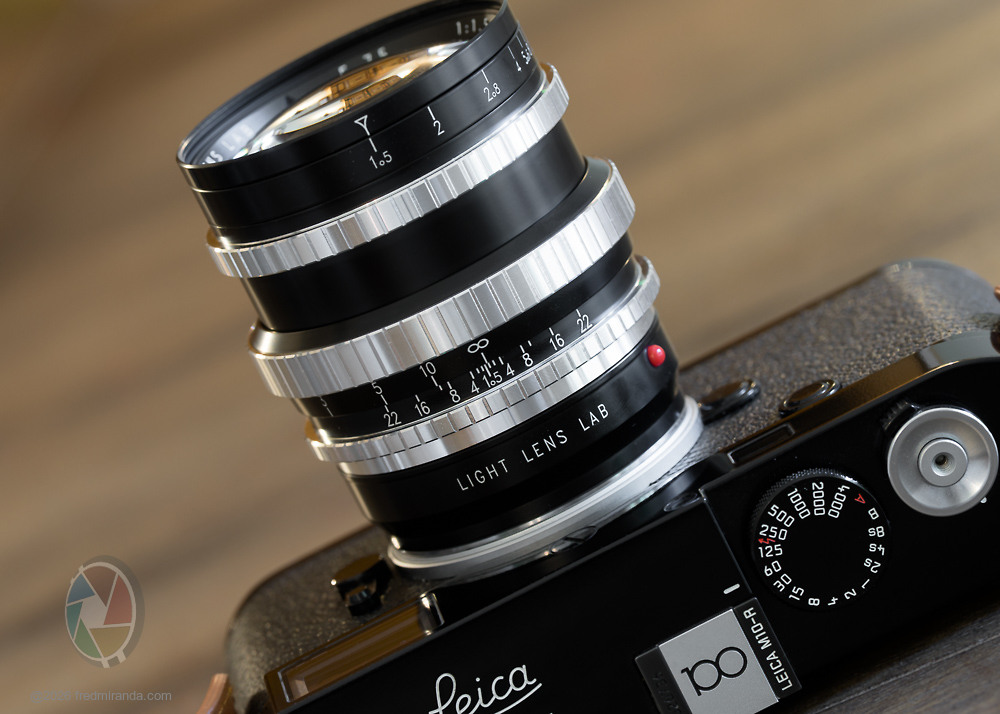
   Leica M10-R with Light Lens Lab 75mm f/1.5 Z21


Angenieux lenses from this period became well known because they combined fast apertures and a distinctive rendering style at a time when optical design was still limited by the materials, coatings, and correction methods available. Instead of being a purely stylistic choice, much of their character also came from the technical constraints of the era, where designers worked with what was achievable at the time while still optimizing for real world use. They were widely used in mid century European and Hollywood productions, particularly when faster lenses and a more expressive look was preferred.

Today, they remain popular because they produce an image character that feels organic and imperfect, with optical aberrations remaining intentionally less corrected in contrast to many modern lenses. It offers a combination of softness, gentle glow, and structured rendering that is difficult to replicate with today's computerized optical designs.


?ts=1780678957
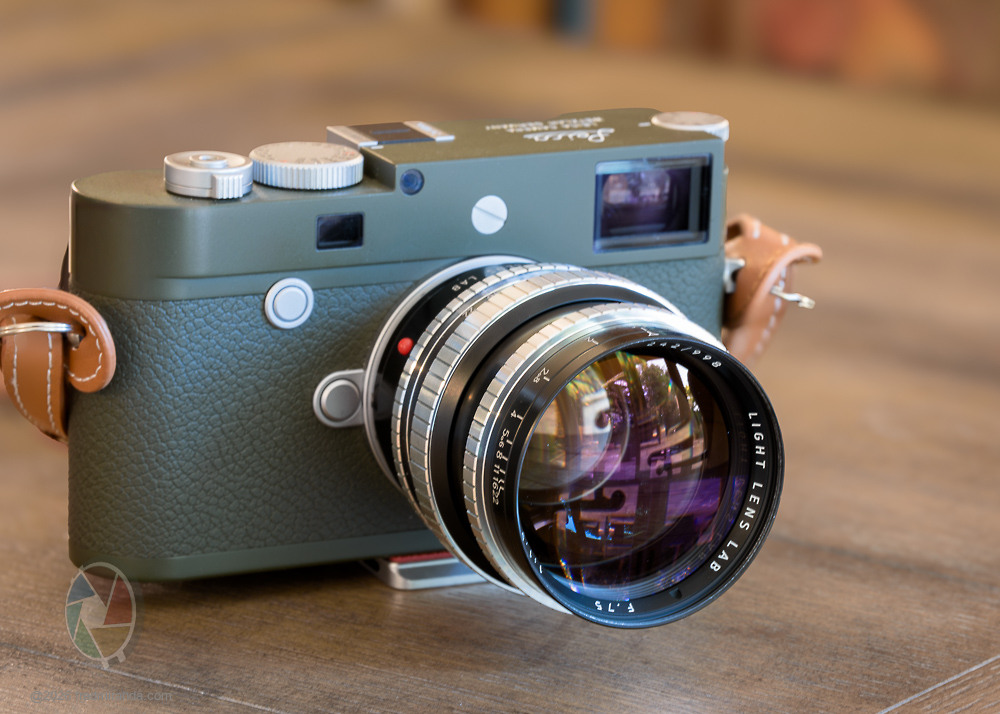
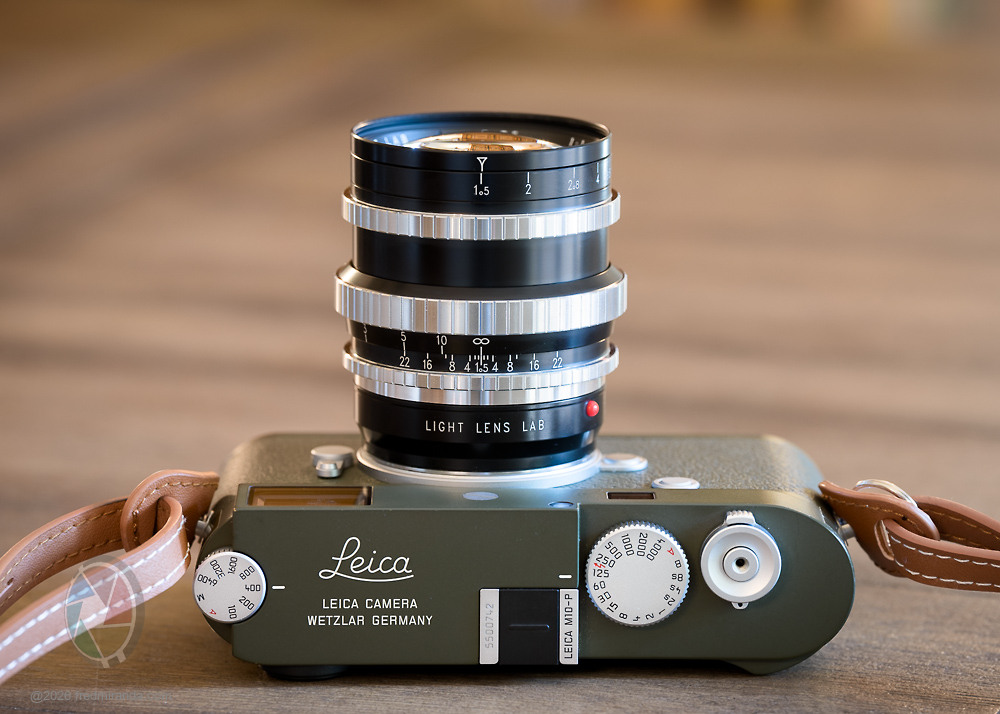
   Leica M10-P Safari with Light Lens Lab 75mm f/1.5 Z21


As part of the same Z21 family, the 75mm carries the same optical signature as the 50mm version, but it also stands more on its own as a short telephoto lens. Unlike some earlier Light Lens Lab projects based more directly on historical optical formulas, the 75mm f/1.5 Z21 is the company's first completely original optical design within the Z21 series, developed specifically around achieving the "Z21" rendering signature. There was never an original Angenieux "S21" 75mm f/1.5 equivalent, so this lens is less of a direct recreation and more of an original continuation of the same rendering philosophy.

It is also encouraging to know that Light Lens Lab plans to expand the Z21 lineup further, suggesting that more lenses sharing this unique rendering character may be on the horizon.


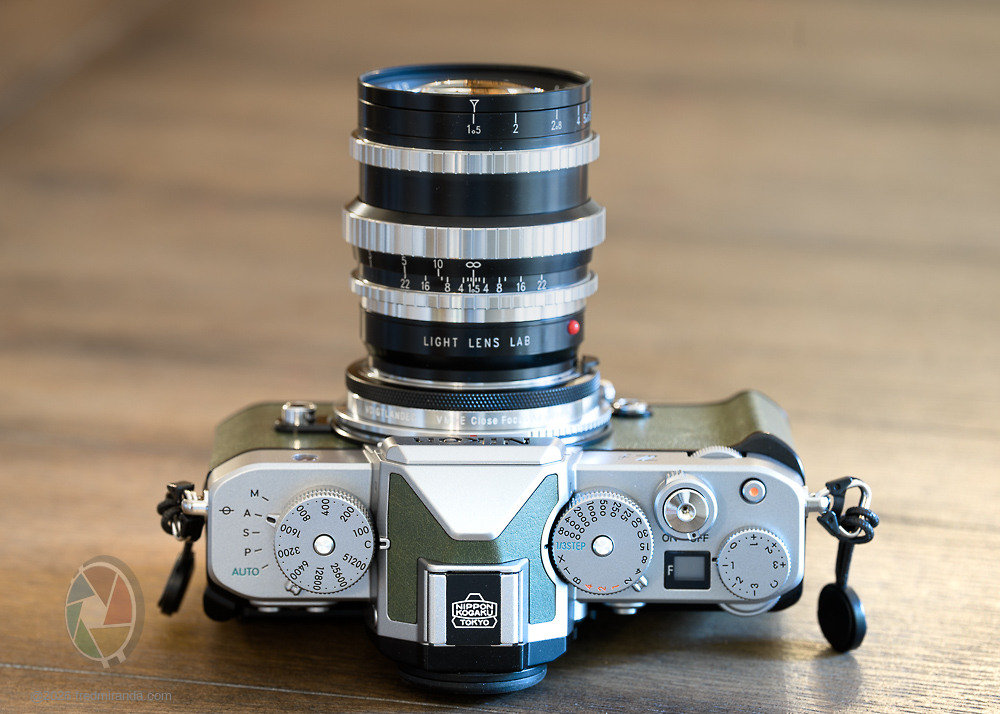
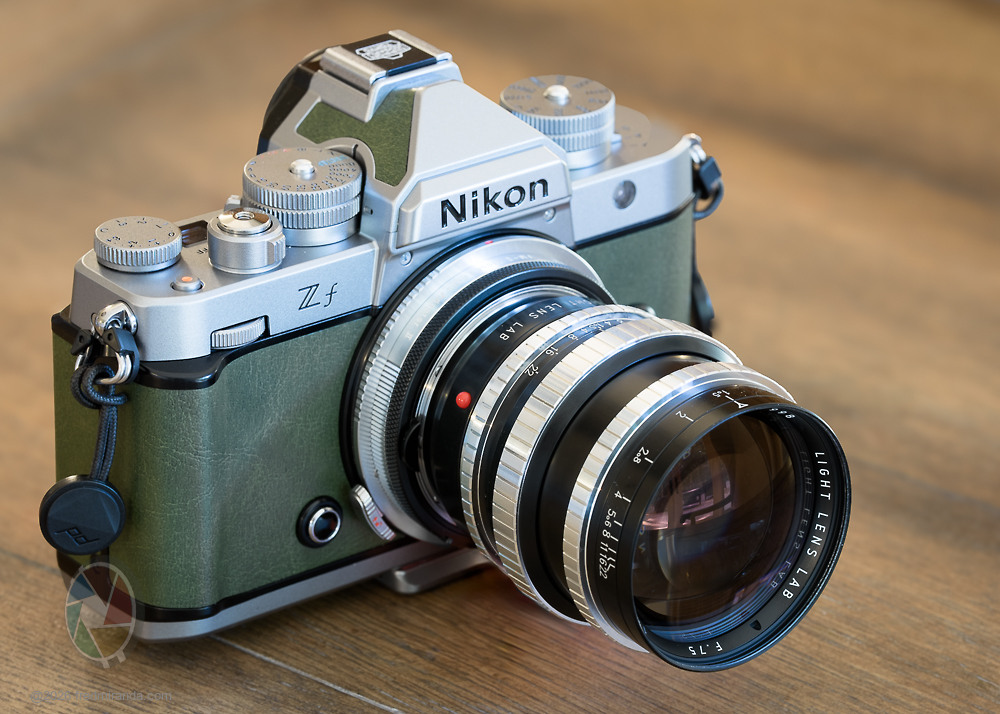
   Nikon Zf with the Light Lens Lab 75mm f/1.5 Z21 and a close focus adapter for improved close focusing


The goal is still to preserve that classic character while making it native to Leica M cameras. This includes slightly more resistant coatings, improved mechanical tolerance for rangefinder usage, improved corner sharpness compared to the 50mm f/1.5 Z21, and expanded sensor coverage while still preserving the rendering signature that defines the Z21 series. According to Light Lens Lab, coverage extends comfortably even across the full 44×33mm GFX sensor area.

The optical design is based around a classic double Gauss design reinterpreted specifically for this series. The lens uses 6 elements in 4 groups and incorporates lanthanide infused glass elements similar to those used in the 50mm Z21. Wide open at f/1.5, the lens produces unique flare aesthetics, avoiding the overly corrected look and overly smooth transitions common in many modern optics.


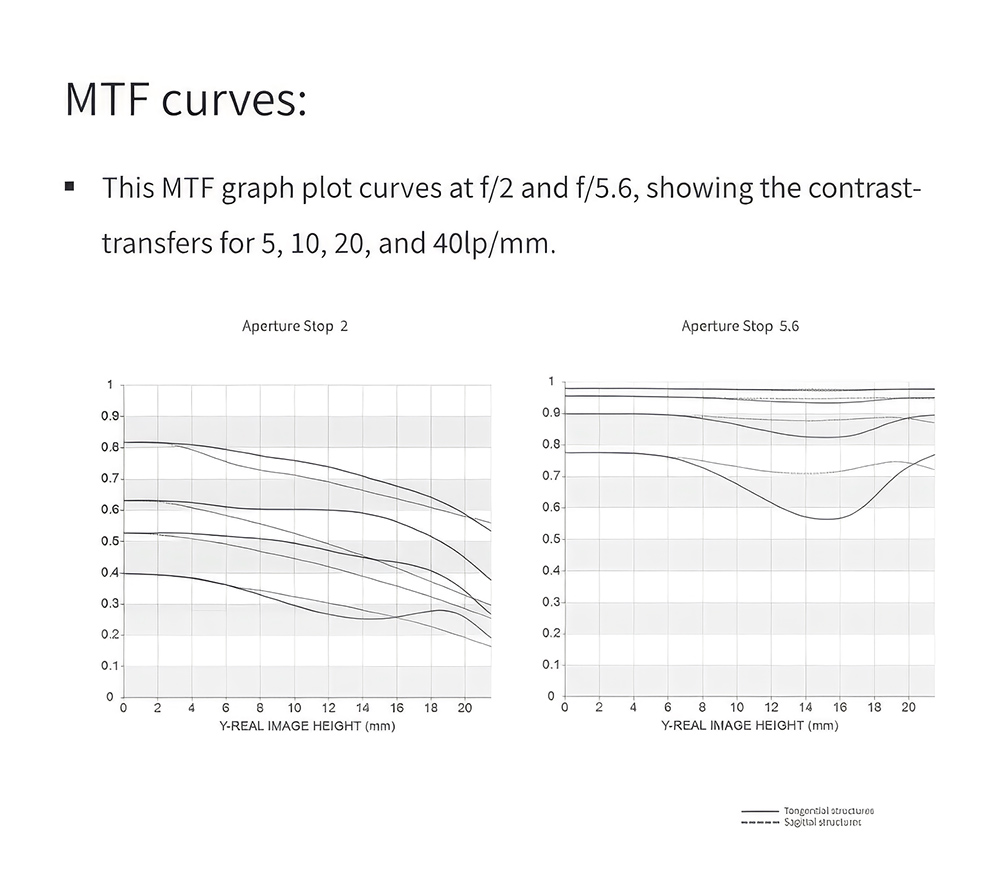
   The Light Lens Lab 75mm f/1.5 Z21 delivers more even MTF performance across the frame than the 50mm f/1.5 Z21


My initial impressions suggest the 75mm Z21 continues the same rendering signature established by the 50mm Z21.

It features native Leica M mount with rangefinder coupling, making it a good match for Leica M bodies as well as adaptable to other mirrorless systems. The focusing experience is smooth with well applied resistance for fine adjustments. The lens focuses down to 1 meter, remaining consistent with traditional lenses from that era, but I do wish it focused down to 0.7m for higher flexibility in composition. According to a LLL representative, the longer minimum focusing distance helps ensure tighter rangefinder calibration tolerances during production.

It features a 10 straight blade aperture mechanism ranging from f/1.5 to f/22 with full increment lock settings. The spacing is wider at larger apertures and becomes progressively tighter toward the smaller stops, in a way that feels inspired by cine lens behavior. The aperture ring feels smooth and full aperture clicks lock firmly in place.


   Light Lens Lab 75mm f/1.5 Z21, fully extended at its 1m minimum focusing distance


Build quality and barrel aesthetics follow the same standard as the 50mm f/1.5 Z21. The lightweight aluminum alloy construction helps balance well on M bodies while still maintaining a solid, reassuring feel. The lens measures 71mm in length, 63.5mm in diameter, and weighs 454g exactly measured. The lens does not come with a hood in the box. It uses an E55 filter thread.


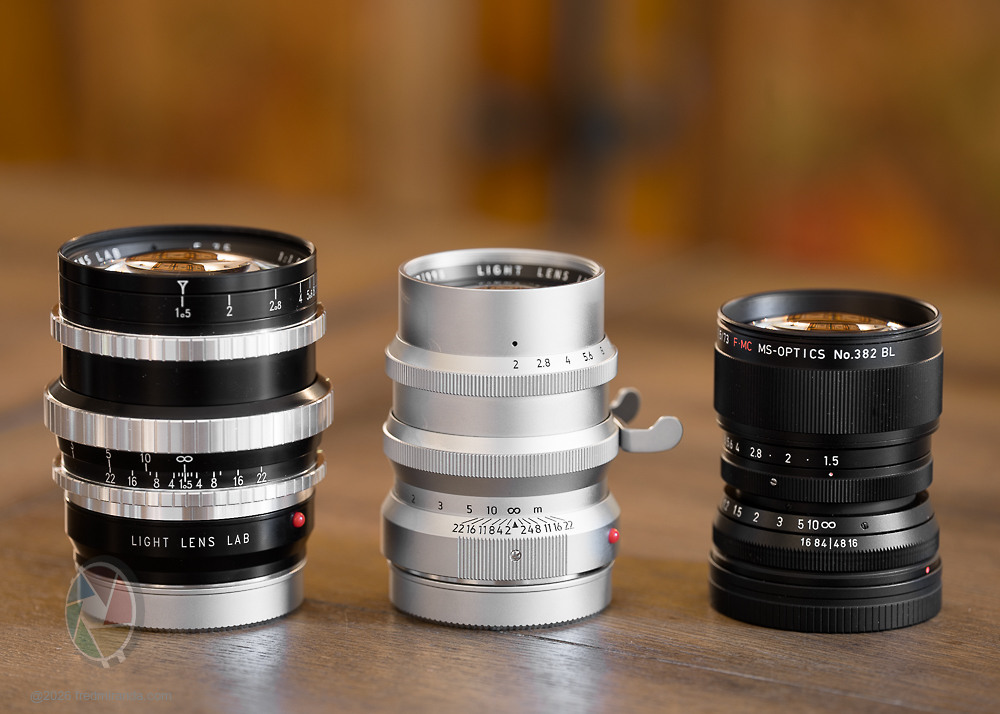
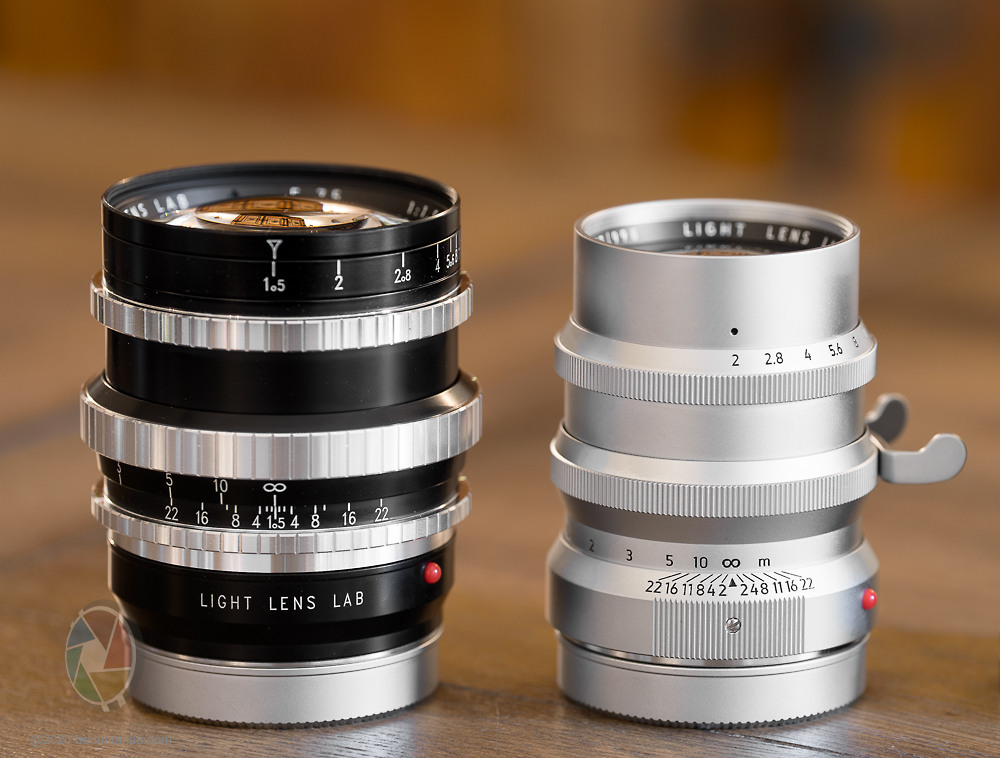
   Light Lens Lab 75mm f/1.5 Z21, Light Lens Lab 75mm f/2 SPII and MS Optics 73mm f/1.5 Sonnetar


Unlike the 50mm f/1.5 Z21, which uses a recessed front element to help shield against stray light, the telephoto design of the new 75mm f/1.5 Z21 required a different optical layout. To achieve the longer focal length, the entire 6 element, 4 group optical block has been pushed forward, placing the front element nearly flush with the filter thread rather than recessed within the barrel.


   Leica M10-R paired with the Light Lens Lab 75mm f/1.5 Z21


The increased focal length also needed larger front optics. The 3 front elements are noticeably larger in diameter, resulting in an increase in filter size from 52mm to 55mm. Since there was never a historical 75mm f/1.5 S21 lens to reference, these design changes were developed entirely by LLL's engineering team. Despite adapting the original concept to a longer focal length, they were able to reduce astigmatism and distortion while improving off-axis resolution compared to the 50mm f/1.5 Z21.

The lens will be offered exclusively in a matte black finish with chrome accent rings, with no glossy black version planned. Personally, I much prefer this matte black finish to the glossy black 50mm f/1.5 Z21 that I reviewed previously.


   Leica M10-P Safari paired with the Light Lens Lab 75mm f/1.5 Z21


One thing that stands out for portrait work is that this lens is not trying to behave like a modern ultra high resolution optic. By design, it leans into character first. Wide open is where the personality shows most clearly, with softness, a subtle glow, and strong separation without turning the background into something overly smooth or sterile. Stopping down increases definition, but it never fully abandons its signature rendering style.

The 75mm Z21 feels like a natural extension of the series, but also a more focused tool in its own right. It takes the same Angenieux inspired rendering signature and applies it to a FL that is especially well suited for portraits, environmental portraiture, and low light work where compression and mood play a bigger role. It should sit naturally alongside the 50mm Z21 lineup, sharing a familiar barrel aesthetic, but with a more immersive look due to the longer focal length.


   Leica M10-R paired with the Light Lens Lab 75mm f/1.5 Z21


Features:

• Format Coverage: Full Frame, with reported extended image circle reaching medium format coverage (up to 44×33mm GFX range)
• Optical Construction: 6 elements in 4 groups
• Focus Range: 1.0m to infinity
• Aperture Range: f/1.5 to f/22
• Diaphragm Type: 10 straight blade aperture with full click stops
• Aperture Ring: Wider spacing at large apertures, progressively tighter toward smaller stops (cine inspired response)
• Lens Mount: M-Mount with rangefinder coupling
• Filter Size: E55
• Lens Hood: Not included in box
• Length: Approximately 71mm
• Diameter: Approximately 63.5mm
• Weight: 454g (measured, without accessories)
• Finish: Matte black with chrome rings (no glossy black version)


?ts=1780678957
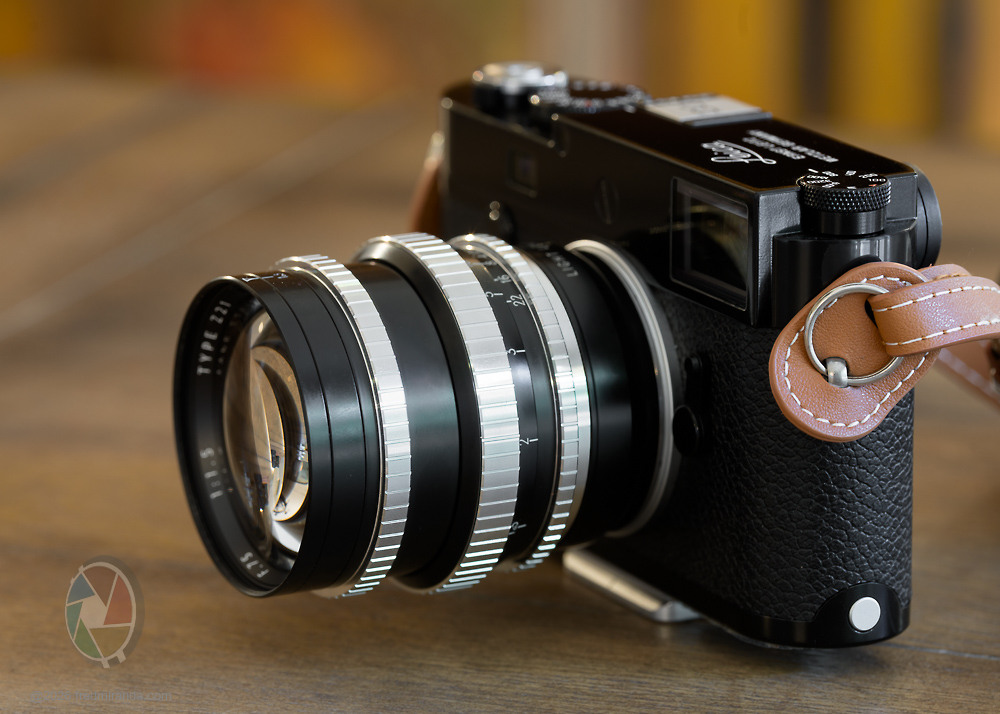
   Leica M3 paired with the Light Lens Lab 75mm f/1.5 Z21 lens


Would Pierre Angenieux be proud of this release? We will never know, but it’s fair to say he would probably recognize the intent behind it more than the execution details. And if anything, I think he would likely appreciate seeing his work and legacy still being discussed decades later, even if it's filtered through modern interpretations of optical character.

Either way, I'll do my best to lay out the strengths and weaknesses of this lens as clearly and meticulously as possible, keeping in mind that this is an artistic tool first rather than something designed around maximum technical correction. Now I'm just hoping for a Light Lens Lab 35mm f/1.5 Z21 to complete the set.


Jun 05, 2026 at 12:22 PM
HereIAm
Offline

Upload & Sell: Off
p.1 #2 · Light Lens Lab 75mm f/1.5 Z21 Review


Very interested in the images this produces


Jun 05, 2026 at 01:11 PM
Jorge Torralba
Offline
• • • •
Upload & Sell: On
p.1 #3 · Light Lens Lab 75mm f/1.5 Z21 Review


Well. I hope I don't insult anyone here. But, it needs to be said.

That is the most hideous looking monstrosity of a lens ever created.


Jun 05, 2026 at 01:26 PM
Jorge Torralba
Offline
• • • •
Upload & Sell: On
p.1 #4 · Light Lens Lab 75mm f/1.5 Z21 Review


Well. I hope I don't insult anyone here. But, it needs to be said.

That is the most hideous looking monstrosity of a lens ever created.


Jun 05, 2026 at 01:26 PM
Fred Miranda
Offline
Admin
Upload & Sell: On
p.1 #5 · Light Lens Lab 75mm f/1.5 Z21 Review


Your opinion is welcome and appreciated, Jorge, but you didn't have to say it twice.


Jun 05, 2026 at 01:32 PM
loudtiger
Offline
• • •
Upload & Sell: Off
p.1 #6 · Light Lens Lab 75mm f/1.5 Z21 Review


Is there a Nikon Z mount version, or does it need to be adapted?


Jun 05, 2026 at 02:08 PM
Jorge Torralba
Offline
• • • •
Upload & Sell: On
p.1 #7 · Light Lens Lab 75mm f/1.5 Z21 Review


Oops. Sorry about the double post.


Jun 05, 2026 at 02:17 PM
Fred Miranda
Offline
Admin
Upload & Sell: On
p.1 #8 · Light Lens Lab 75mm f/1.5 Z21 Review


HereIAm wrote:
Very interested in the images this produces


Back to Quick Links

Samples 1: Late afternoon, first time with the lens

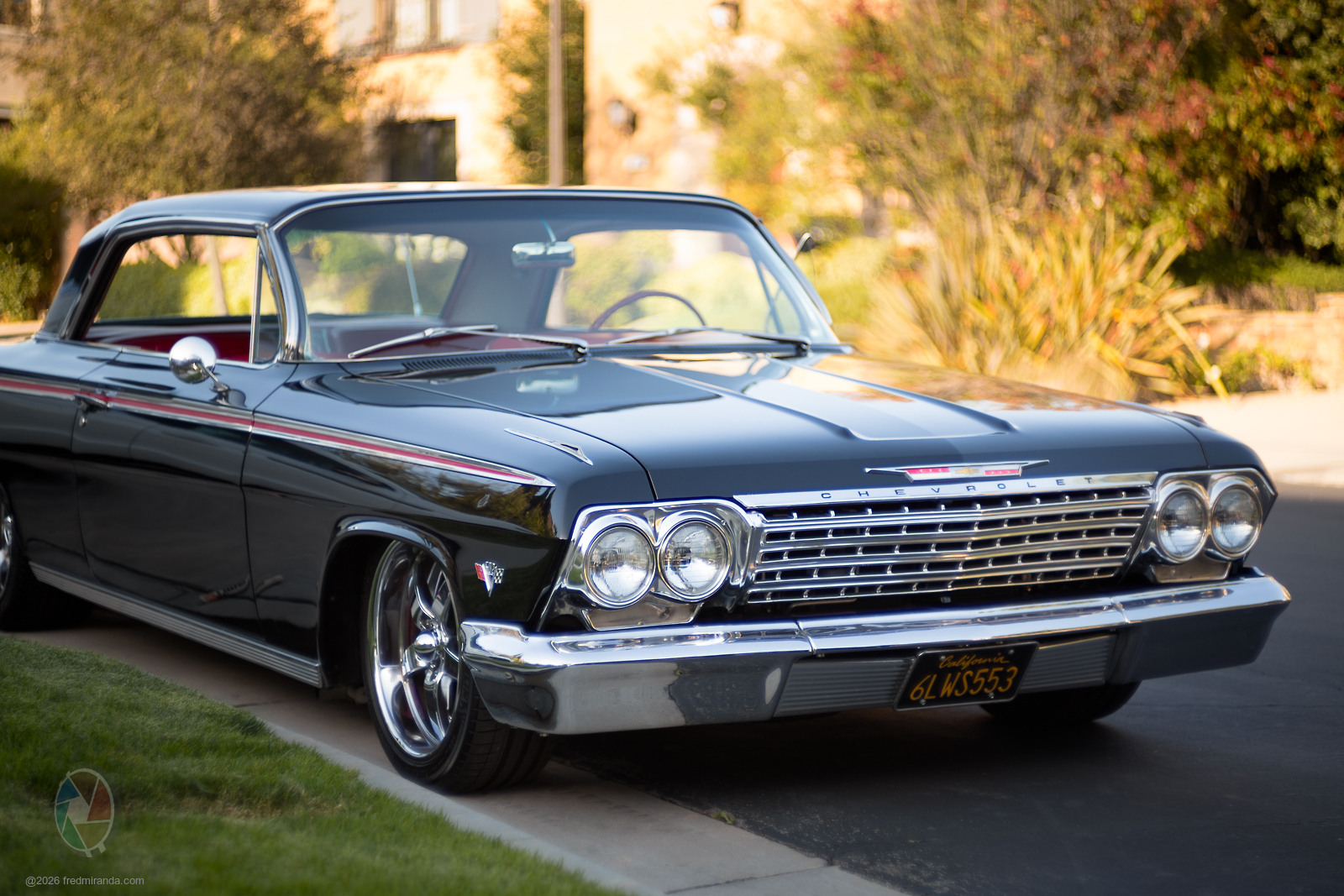
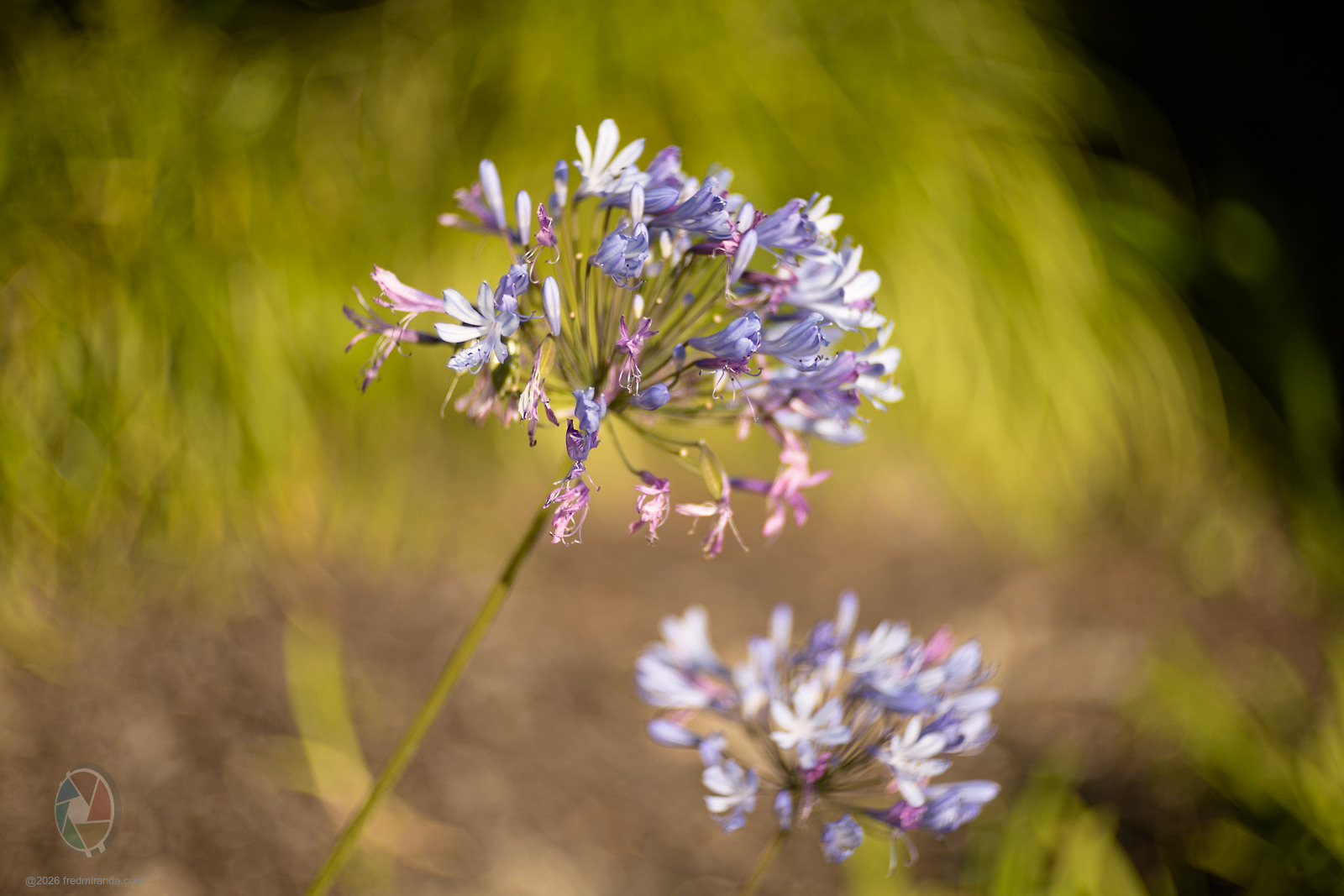
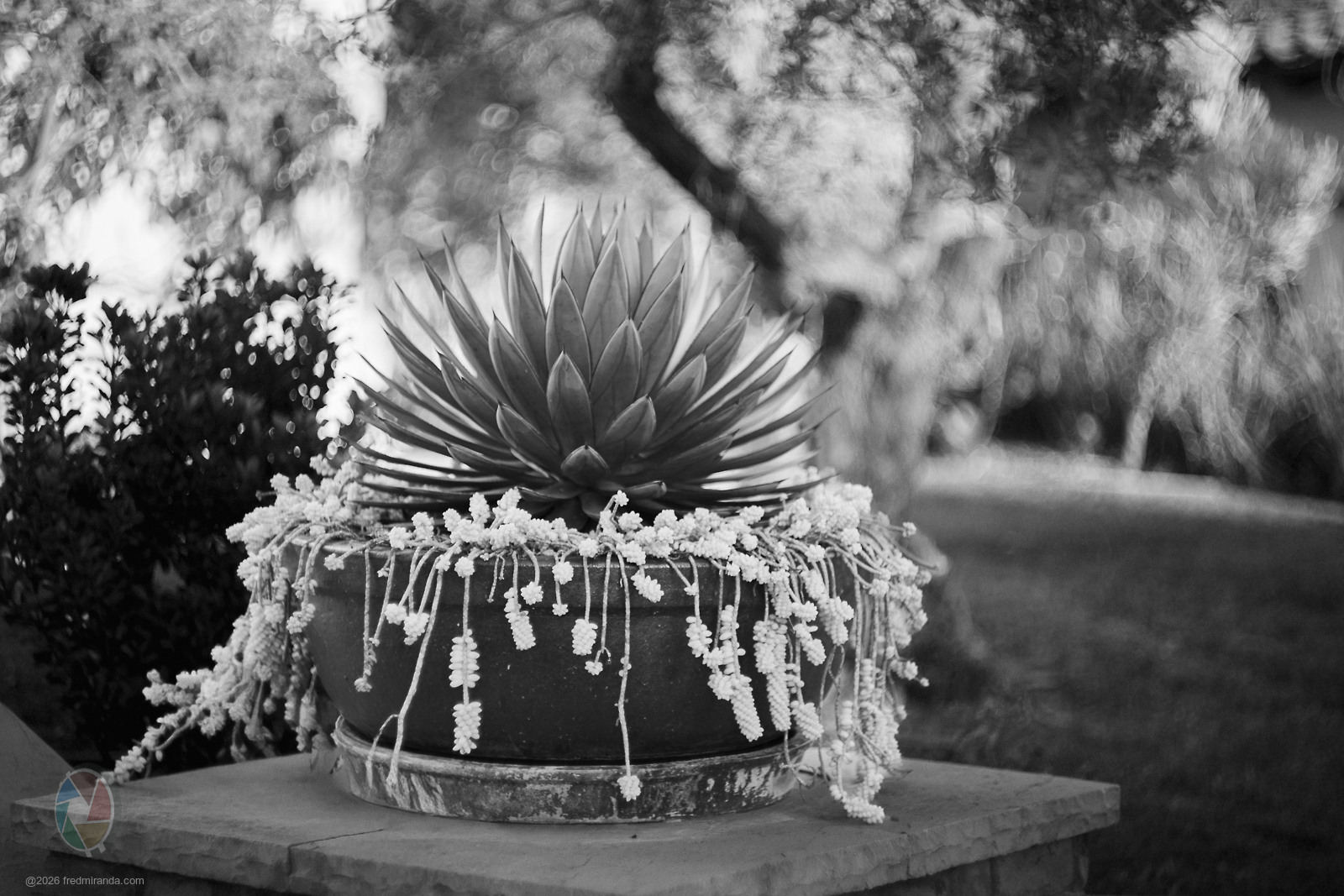
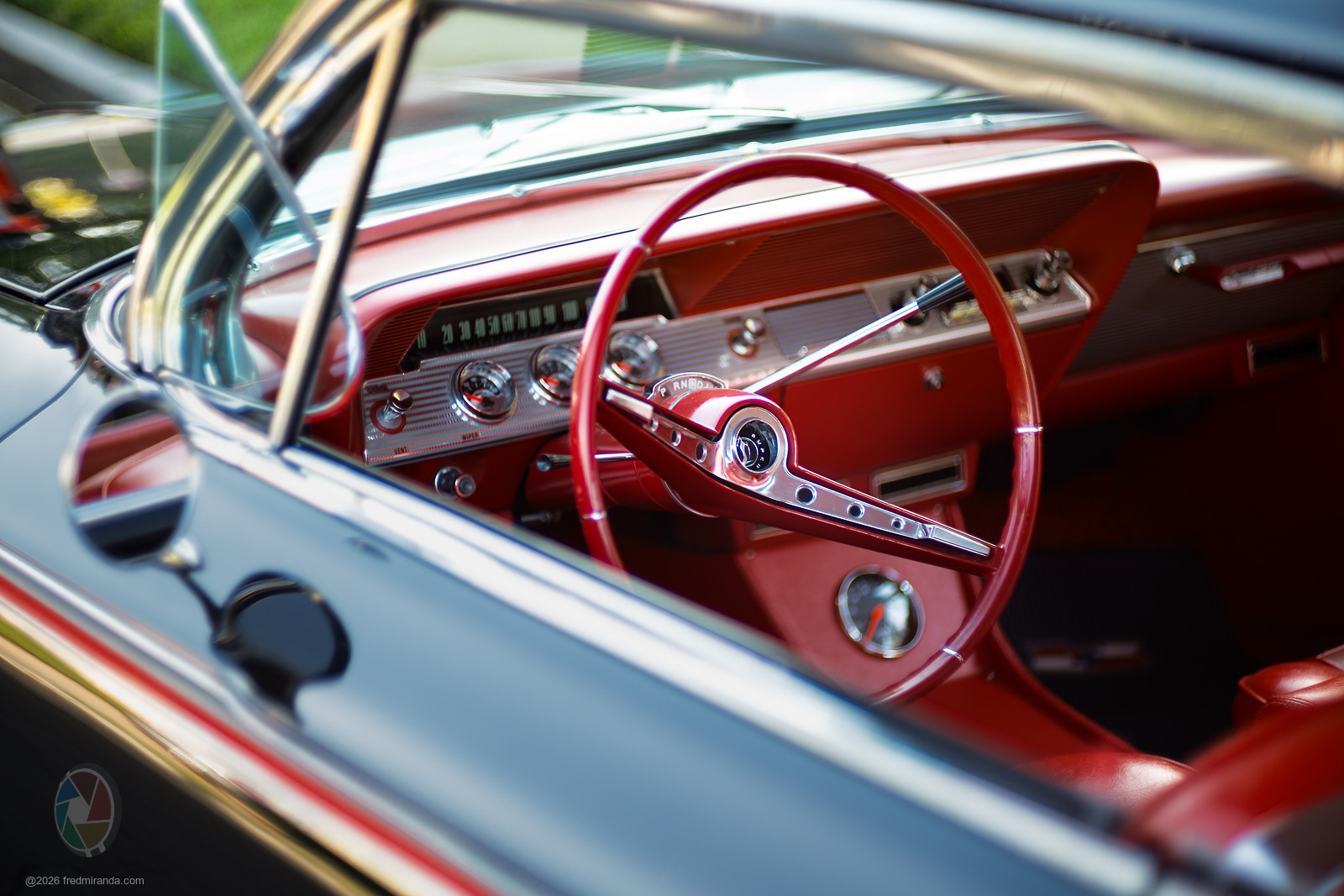
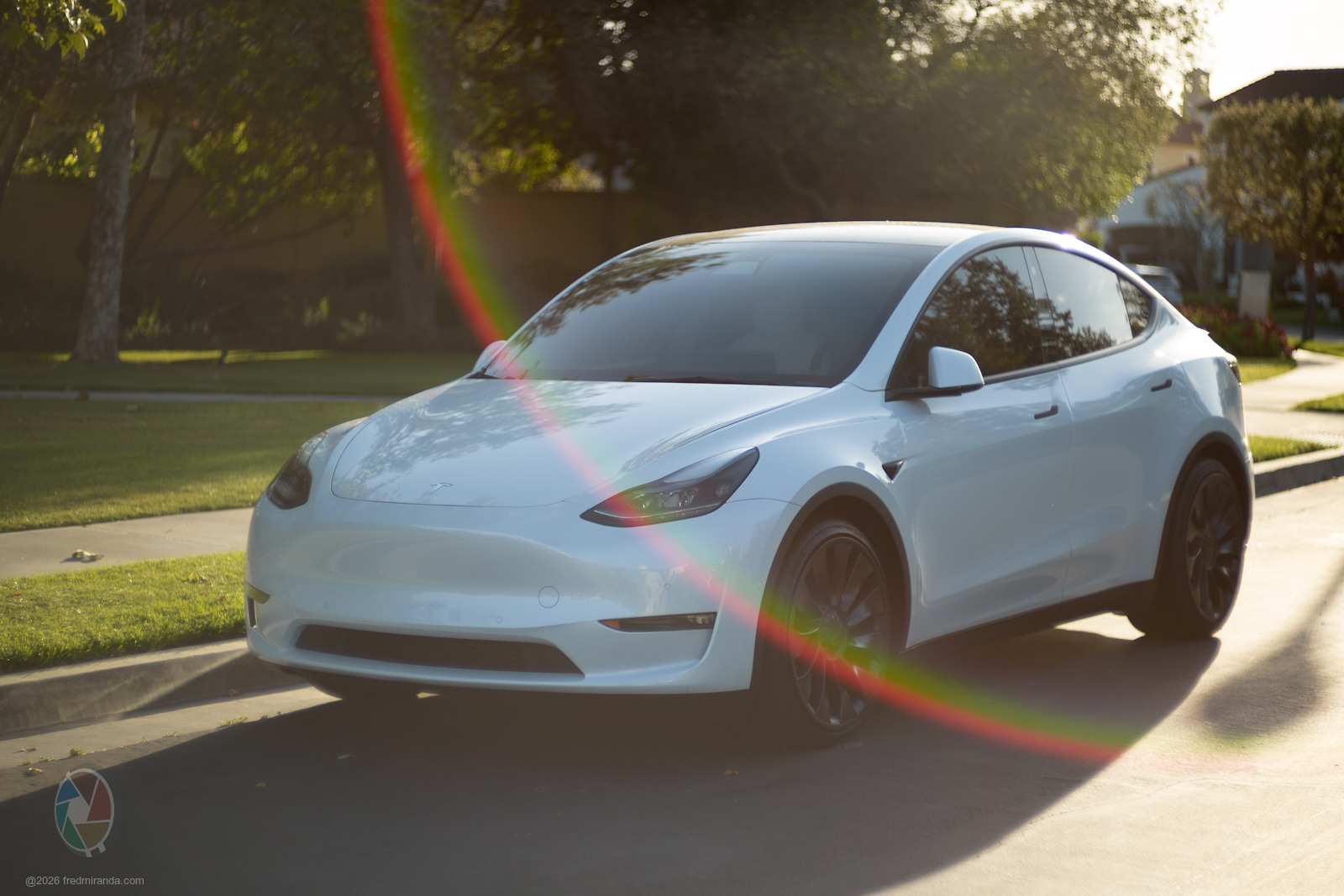
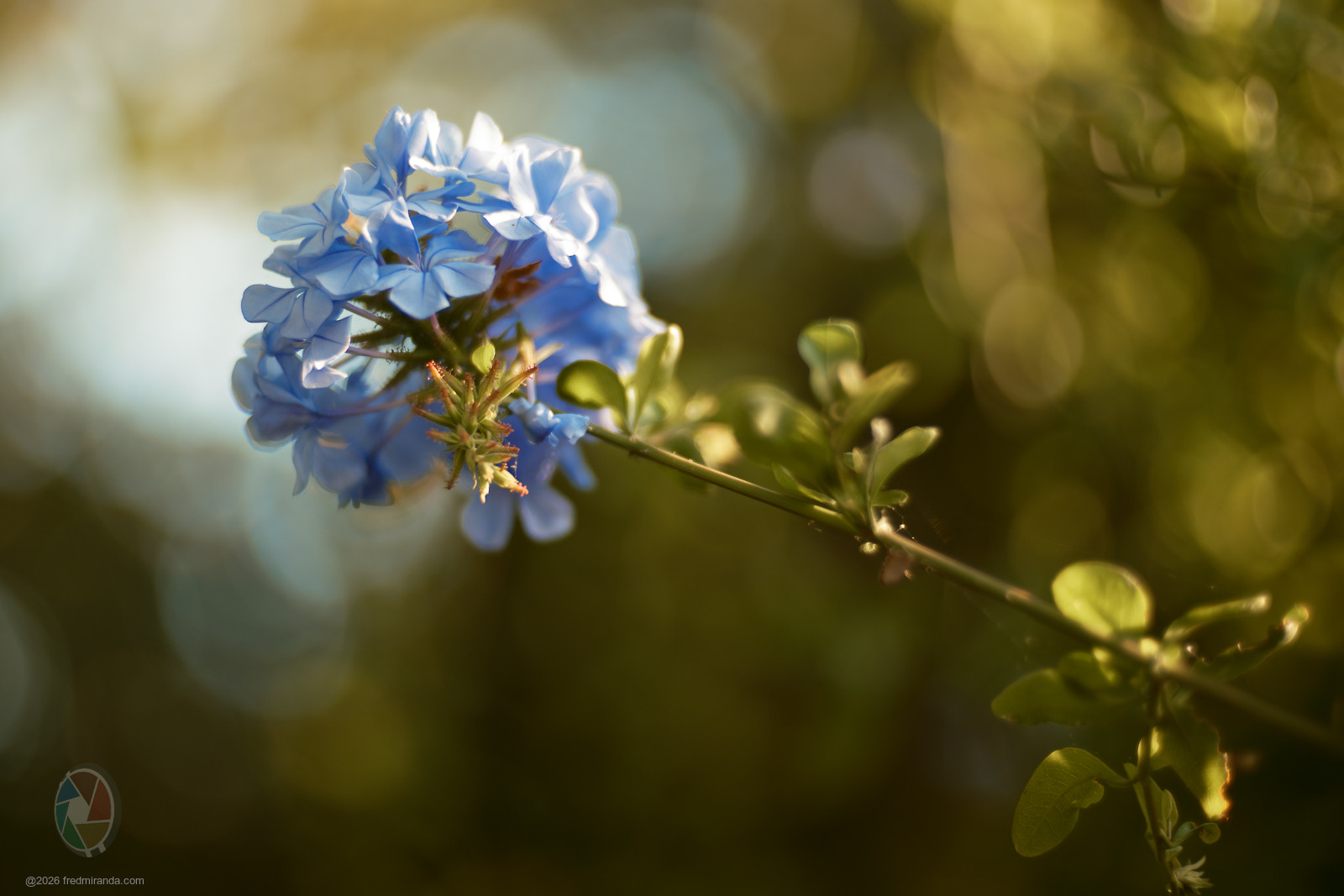
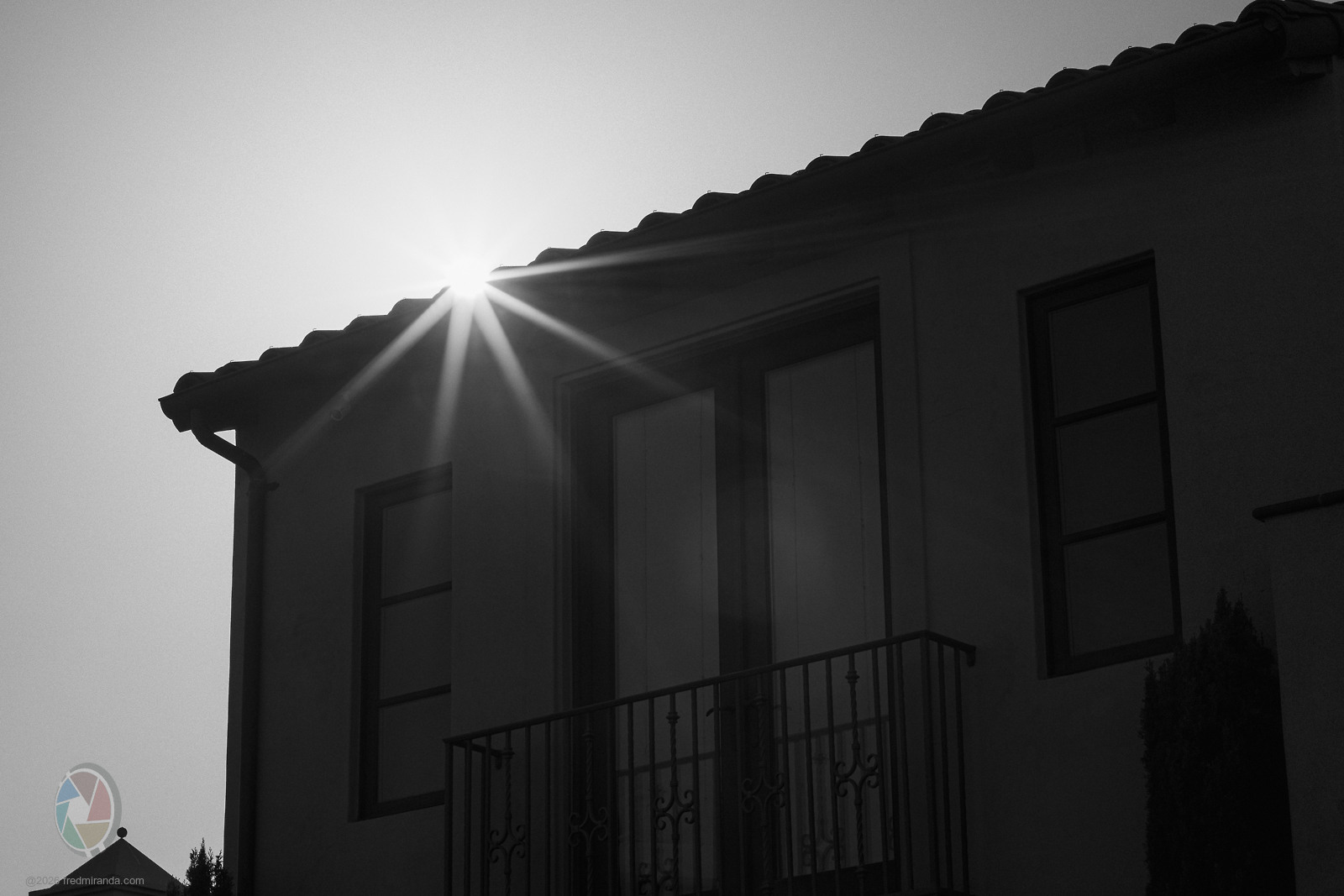
Most of the images were taken wide open at f/1.5 in late afternoon light, with subjects at varying distances.

Post processing was kept very light, with only minor sharpening and small exposure adjustments. I used Adobe Color or Monochrome profiles to let the lens natural color and tonal response come through.

The rendering is smooth and painterly, similar in spirit to the 50mm f/1.5 Z21, but with noticeably better off center performance. It still holds a strong character though, with clear veiling flare when shooting into light sources. No hood was used, and no corrections were applied for distortion, vignetting, or chromatic aberration.


Jun 05, 2026 at 03:33 PM
HereIAm
Offline

Upload & Sell: Off
p.1 #9 · Light Lens Lab 75mm f/1.5 Z21 Review


75mm is generally a lens I wouldn't carry around, but this seems like a good option for something different


Jun 05, 2026 at 04:22 PM
highdesertmesa
Offline
• • • • •
Upload & Sell: On
p.1 #10 · Light Lens Lab 75mm f/1.5 Z21 Review


Fred Miranda wrote:
Samples 1: Late afternoon, first time with the lens

Most of the images were taken wide open at f/1.5 in late afternoon light, with subjects at varying distances.

Post processing was kept very light, with only minor sharpening and small exposure adjustments. I used Adobe Color or Monochrome profiles to let the lens natural color and tonal response come through.

The rendering is smooth and painterly, similar in spirit to the 50mm f/1.5 Z21, but with noticeably better off center performance. It still holds a strong character though, with clear veiling flare when shooting into light sources. No hood was used, and
...Show more

I don’t think I’ve ever run off to purchase a lens as fast as I did after viewing these. I used your discount code, too, thanks.


Jun 05, 2026 at 04:48 PM


Search in Used Dept. 

Fred Miranda
Offline
Admin
Upload & Sell: On
p.1 #11 · Light Lens Lab 75mm f/1.5 Z21 Review


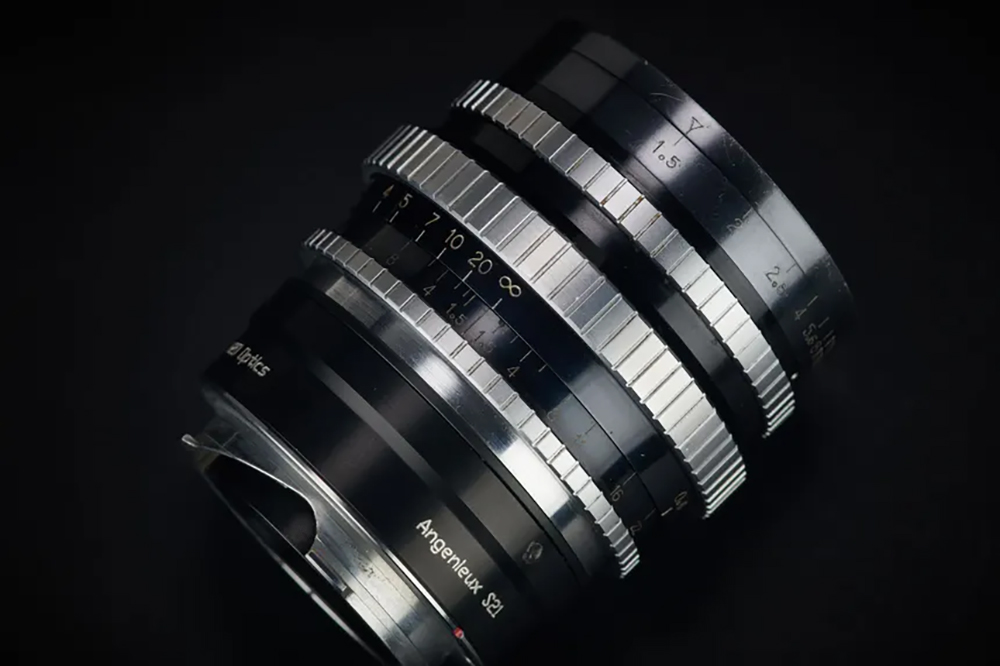
For those who never had the chance to see an original Angenieux S21, here it is. This famous lens served as the inspiration for the Z21 series.

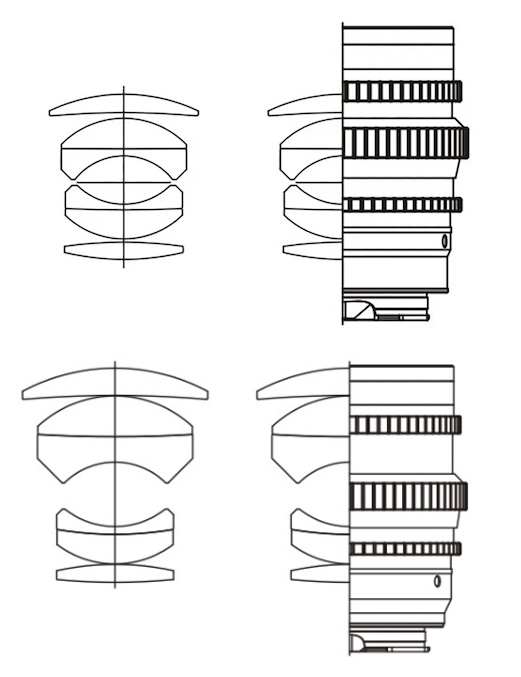
Also shown below is a comparison of the optical designs of the Light Lens Lab 50mm f/1.5 Z21 and the new 75mm f/1.5 Z21. Notice how the optical block of the 50mm is recessed within the barrel, while the optical block of the 75mm has been moved forward.

This is what I meant when I wrote:

"Unlike the 50mm f/1.5 Z21, which uses a recessed front element to help shield against stray light, the telephoto design of the new 75mm f/1.5 Z21 required a different optical layout. To achieve the longer focal length, the entire 6 element, 4 group optical block has been moved forward, placing the front element nearly flush with the filter thread rather than recessed within the barrel".


Original Angenieux S21


Comparison of the optical designs of the LLL 50mm f/1.5 Z21 (TOP) and the new 75mm f/1.5 Z21 (BOTTOM)


Jun 05, 2026 at 05:41 PM
SonnarGauss
Offline

Upload & Sell: Off
p.1 #12 · Light Lens Lab 75mm f/1.5 Z21 Review


I was genuinely really really happy when I saw the Tesla photo with the rainbow flare. This type of flare is one of the key features that make the Biotar 1.5/75 and Jupiter 1.5/85 so magical.

Fred Miranda wrote:
Samples 1: Late afternoon, first time with the lens

Most of the images were taken wide open at f/1.5 in late afternoon light, with subjects at varying distances.

Post processing was kept very light, with only minor sharpening and small exposure adjustments. I used Adobe Color or Monochrome profiles to let the lens natural color and tonal response come through.

The rendering is smooth and painterly, similar in spirit to the 50mm f/1.5 Z21, but with noticeably better off center performance. It still holds a strong character though, with clear veiling flare when shooting into light sources. No hood was used, and
...Show more


Jun 05, 2026 at 06:35 PM
Fred Miranda
Offline
Admin
Upload & Sell: On
p.1 #13 · Light Lens Lab 75mm f/1.5 Z21 Review


Back to Quick Links

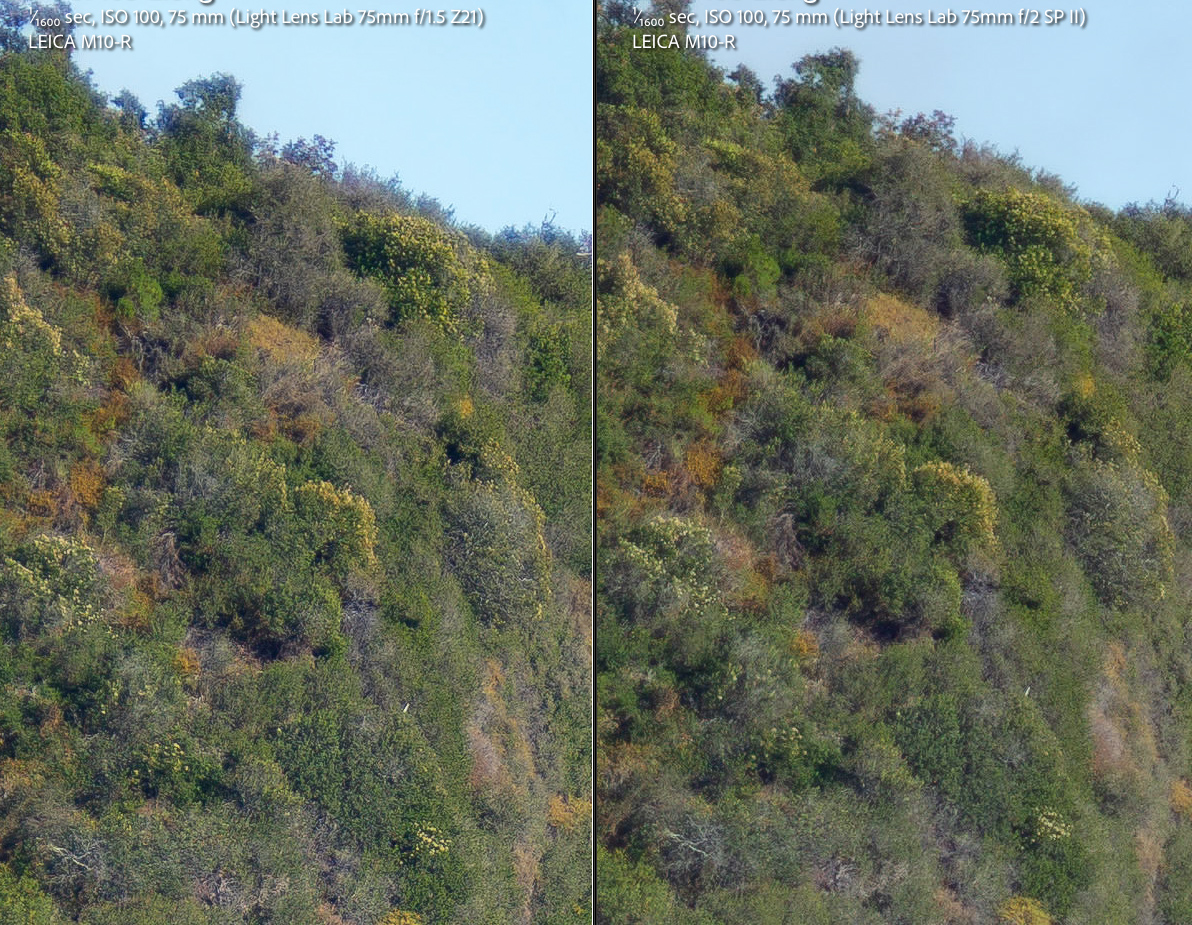
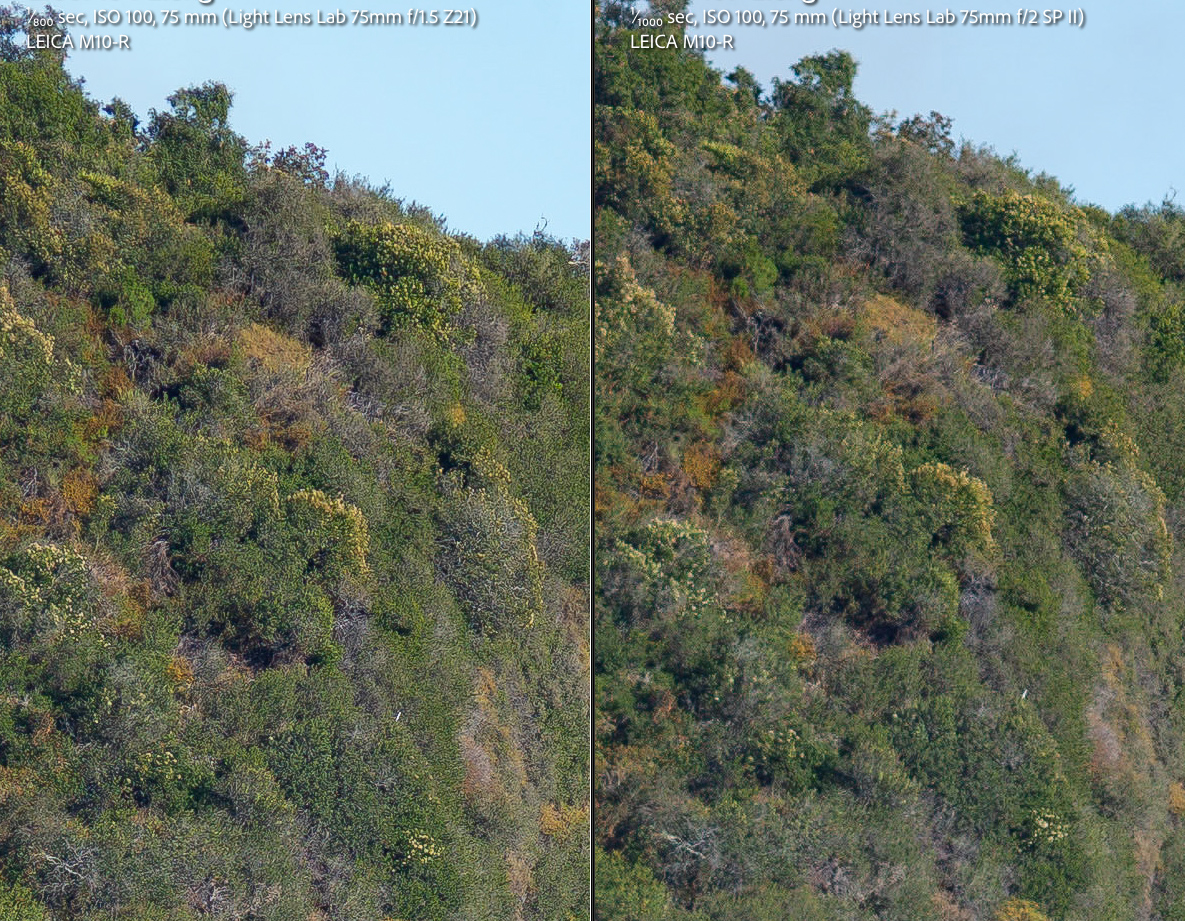
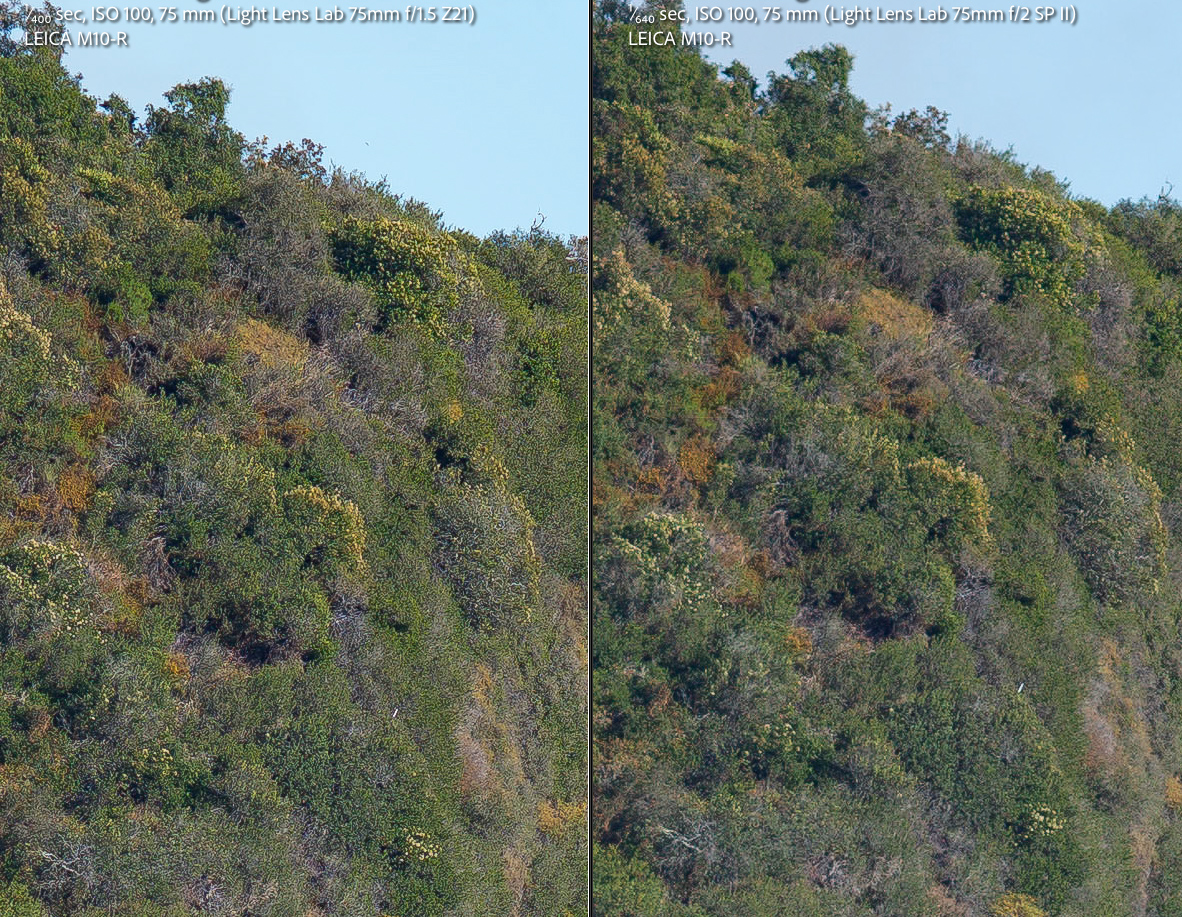
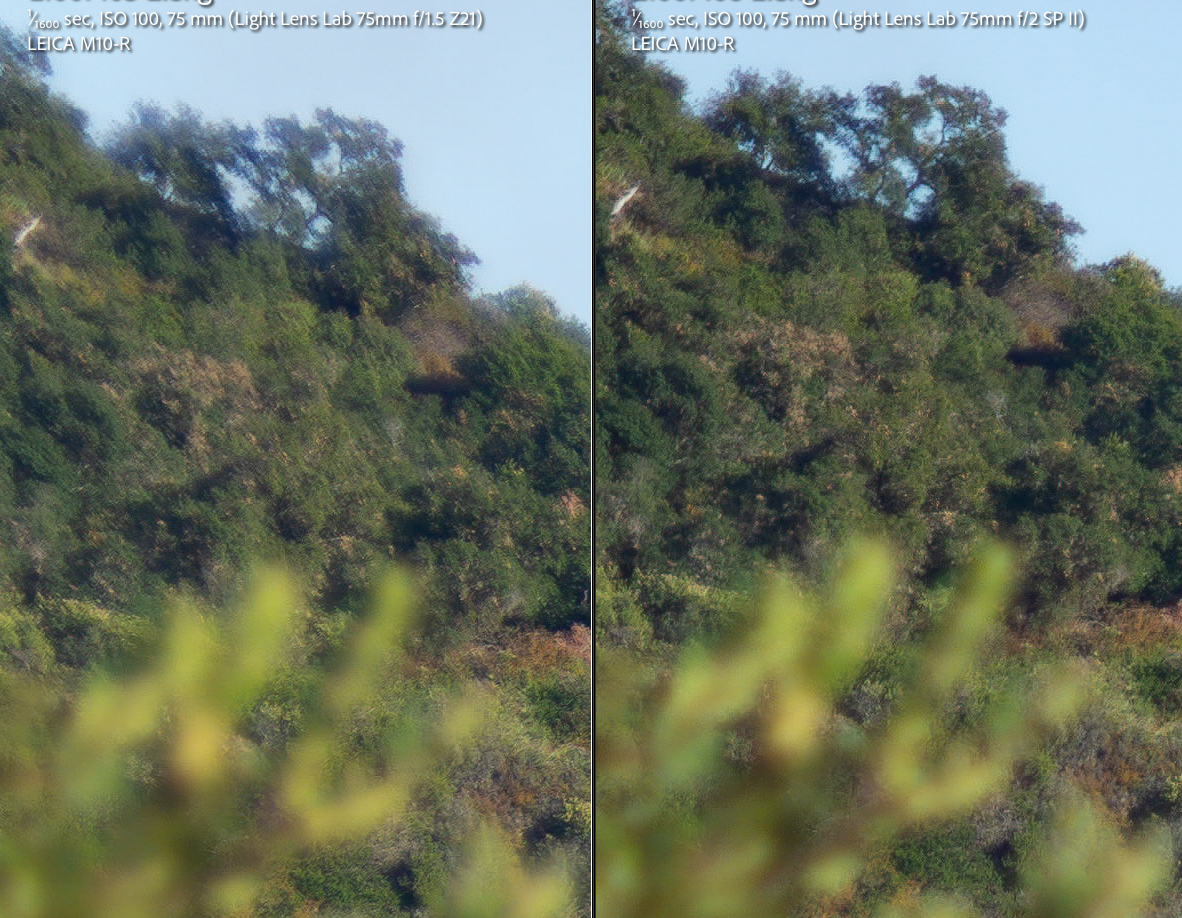
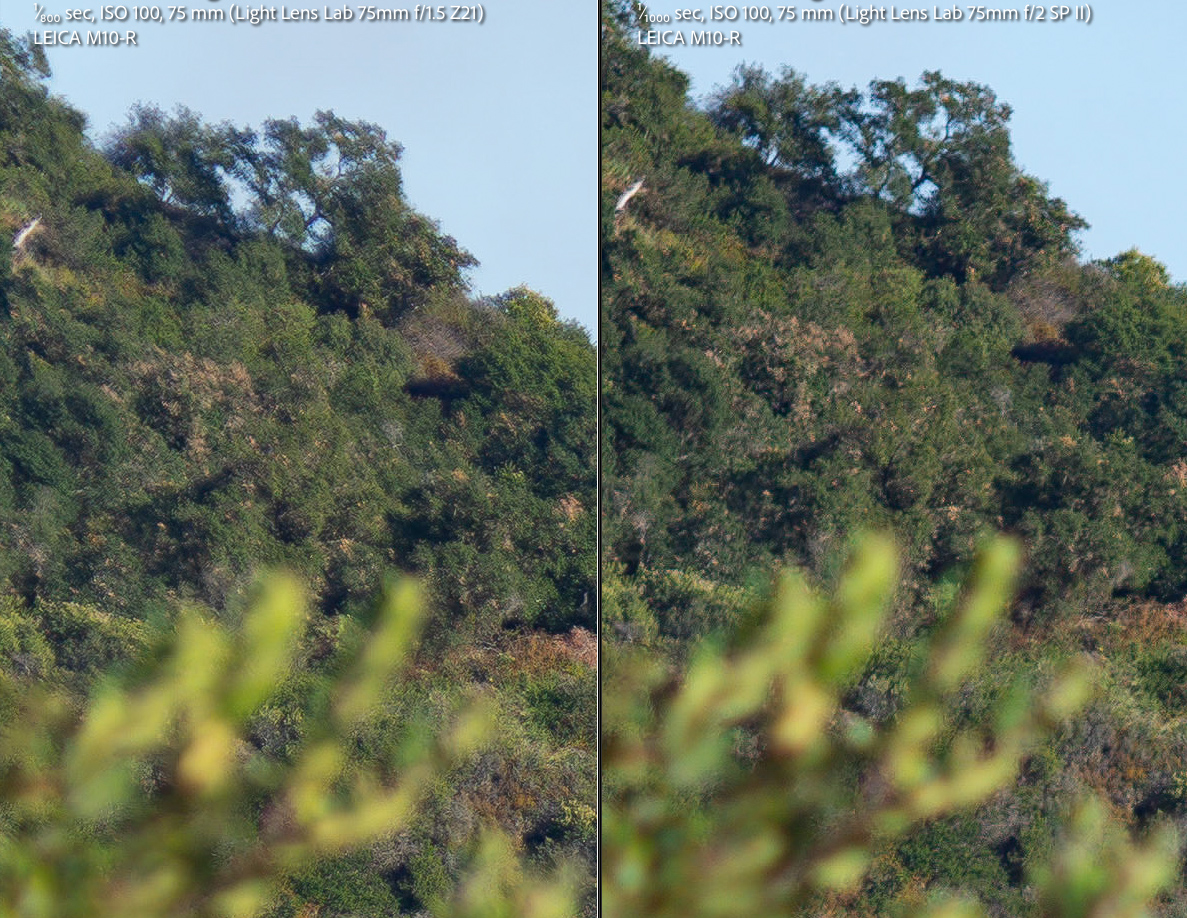
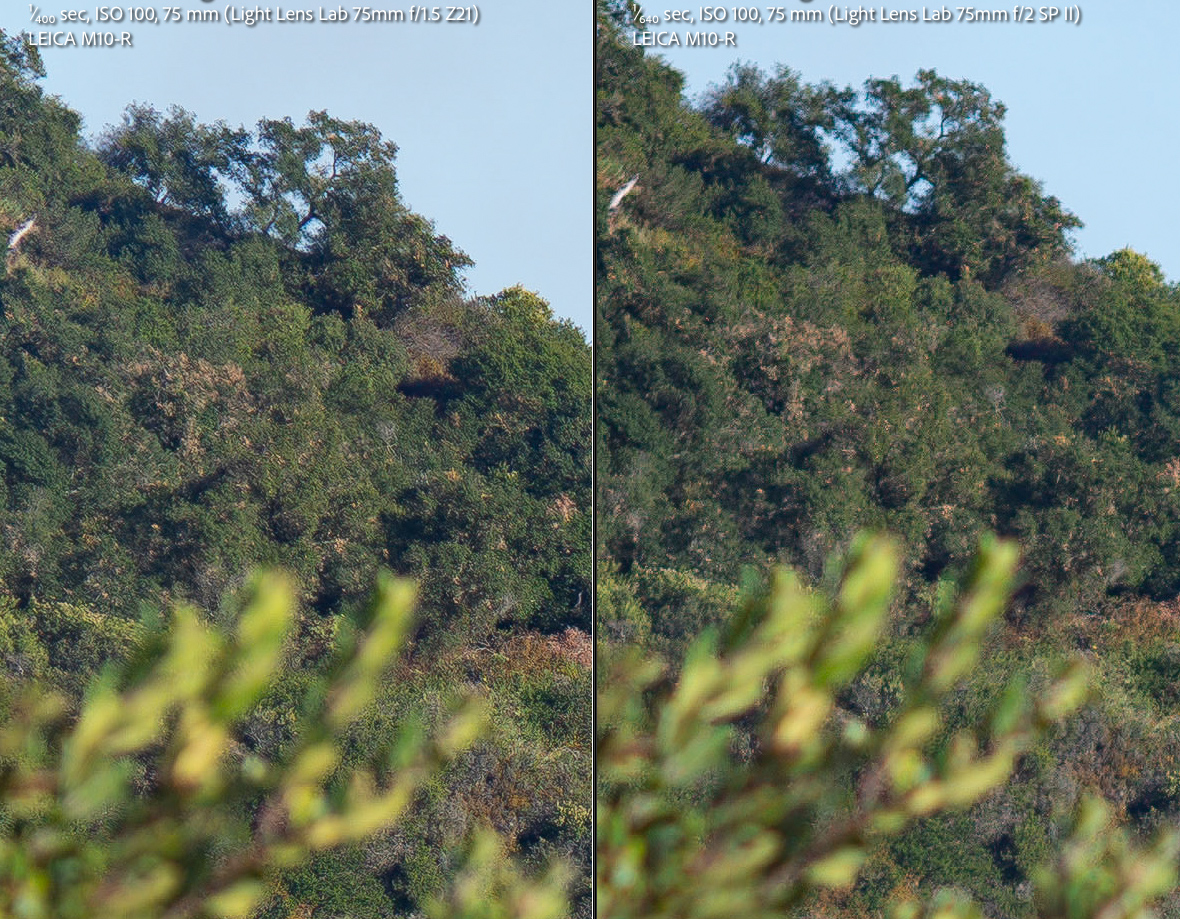
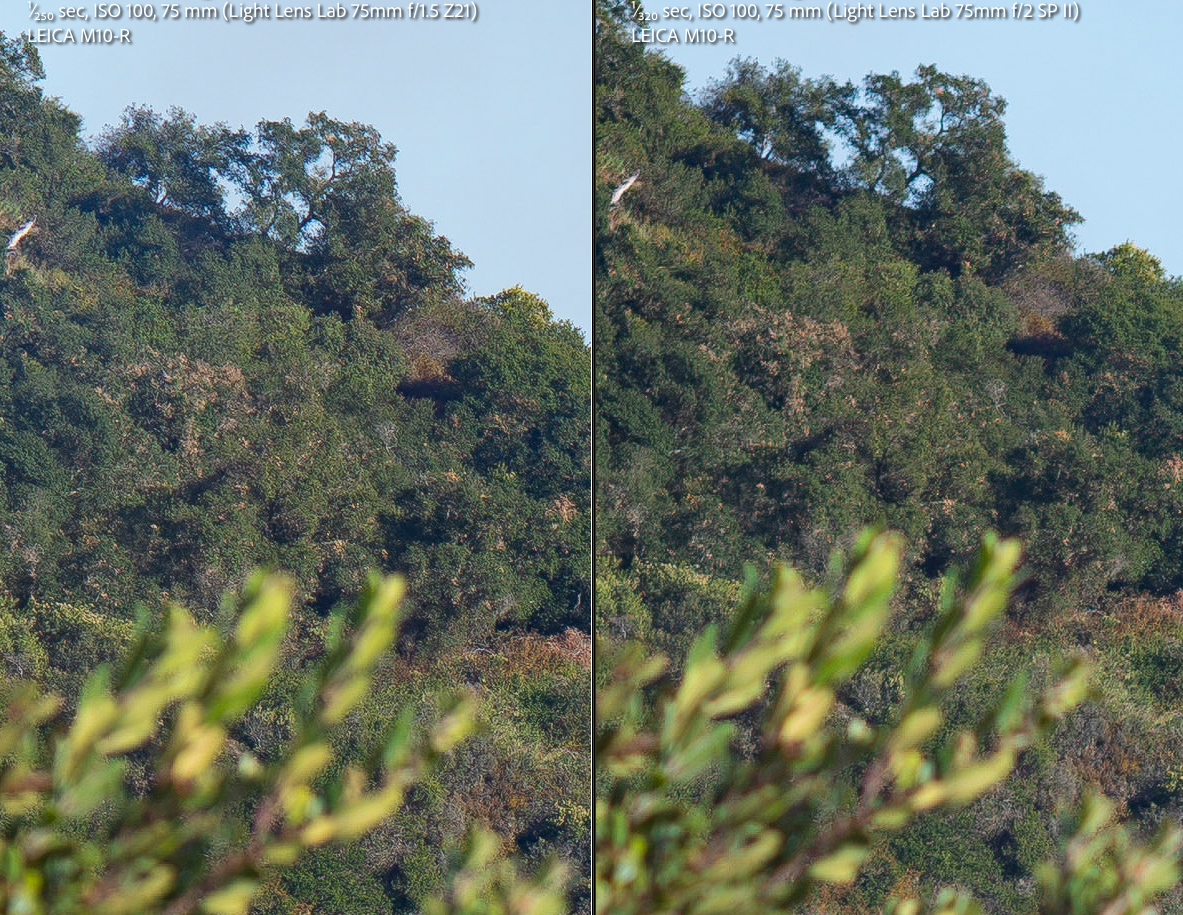
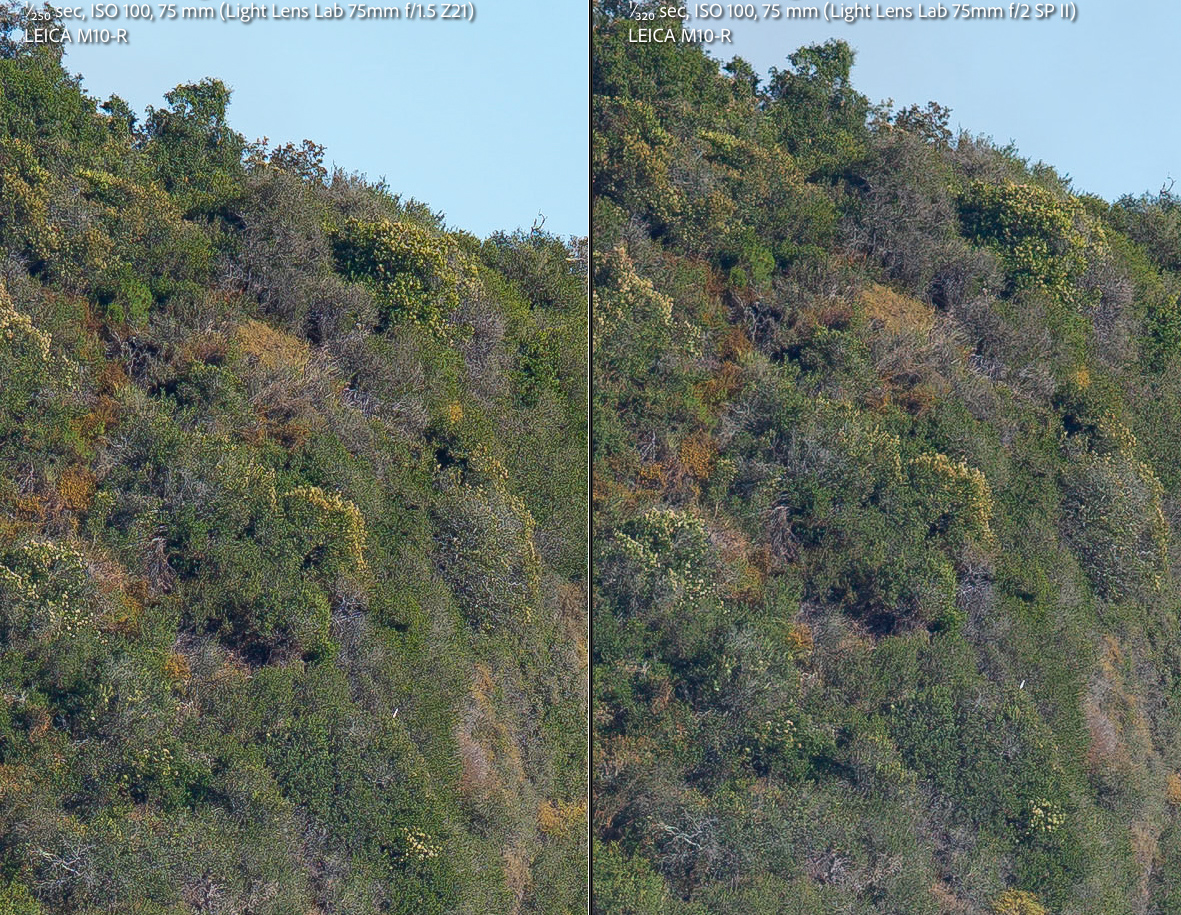
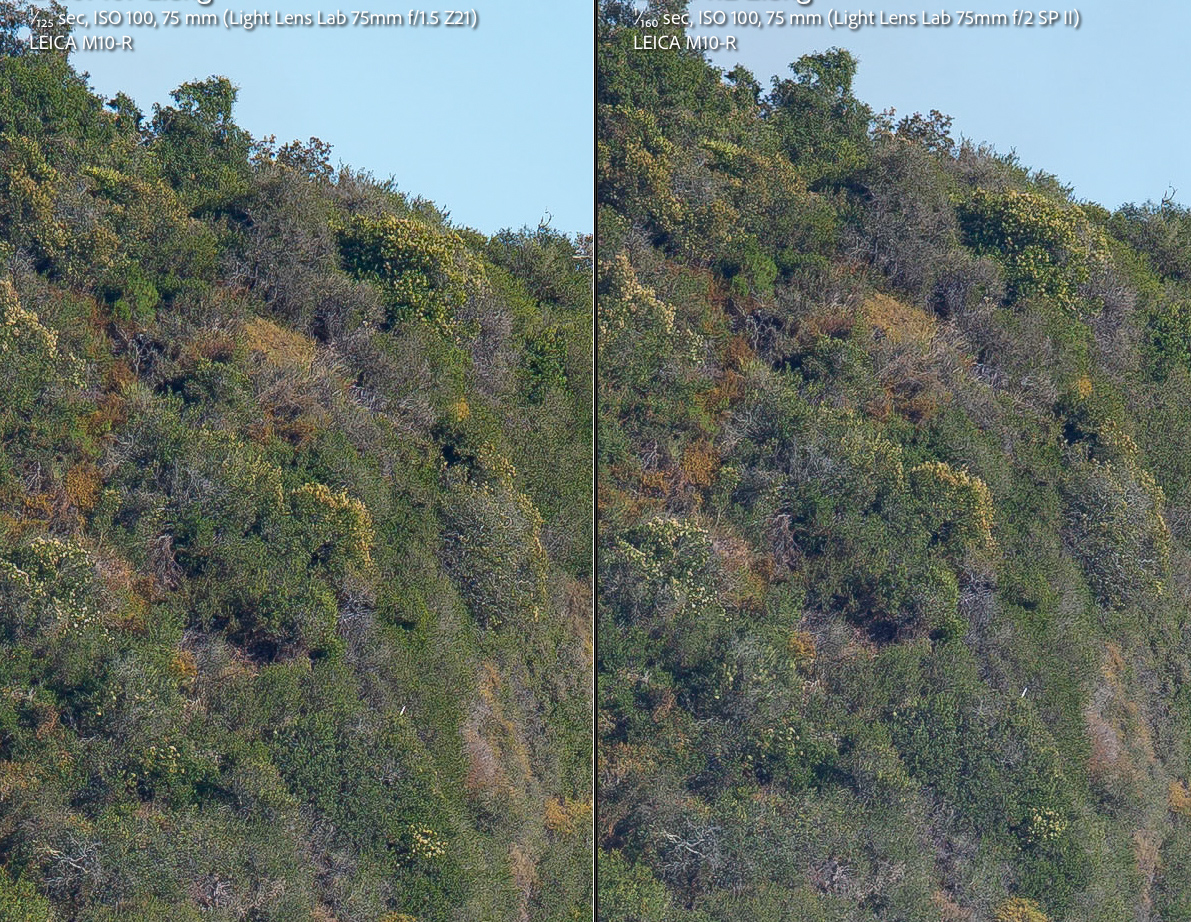
Infinity Resolution and Contrast compared to Light Lens Lab 75mm f/2 SPII (M10-R)

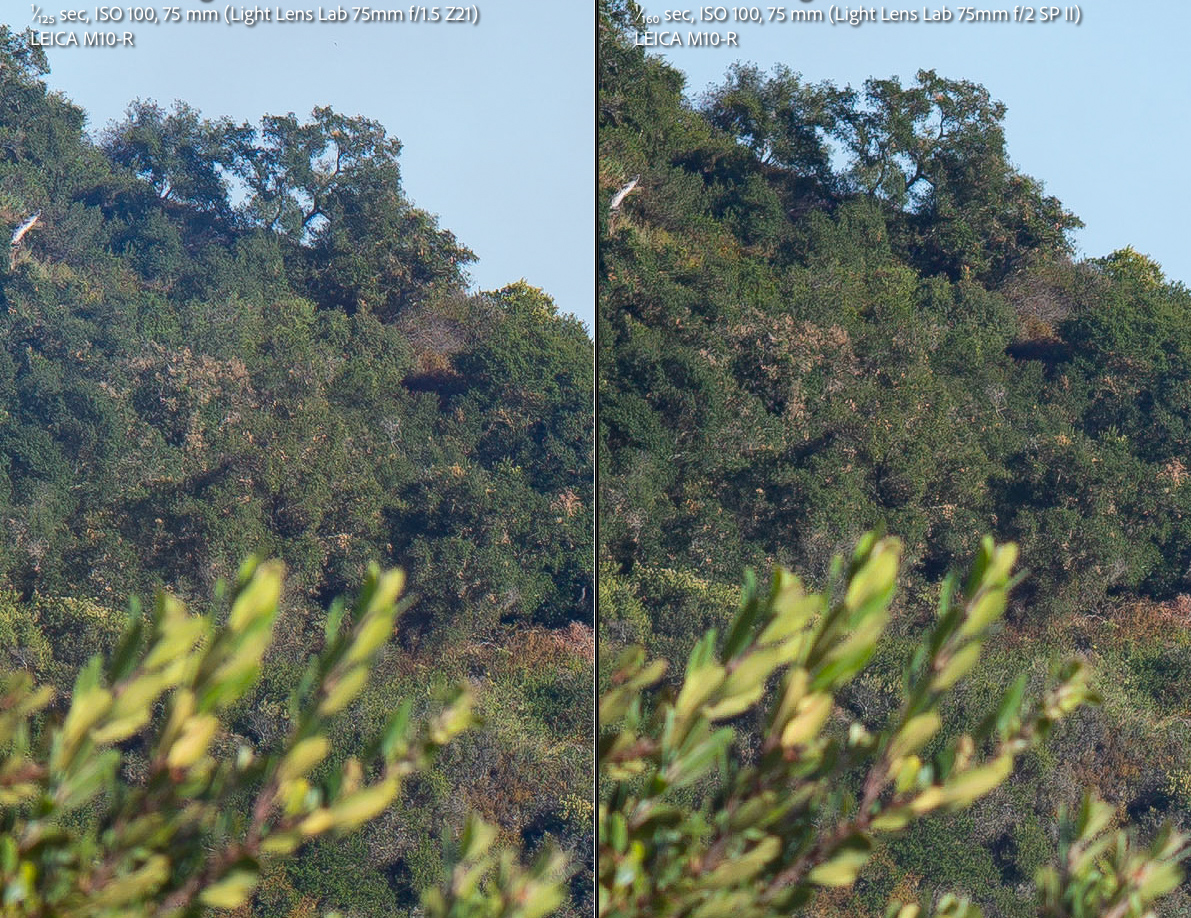
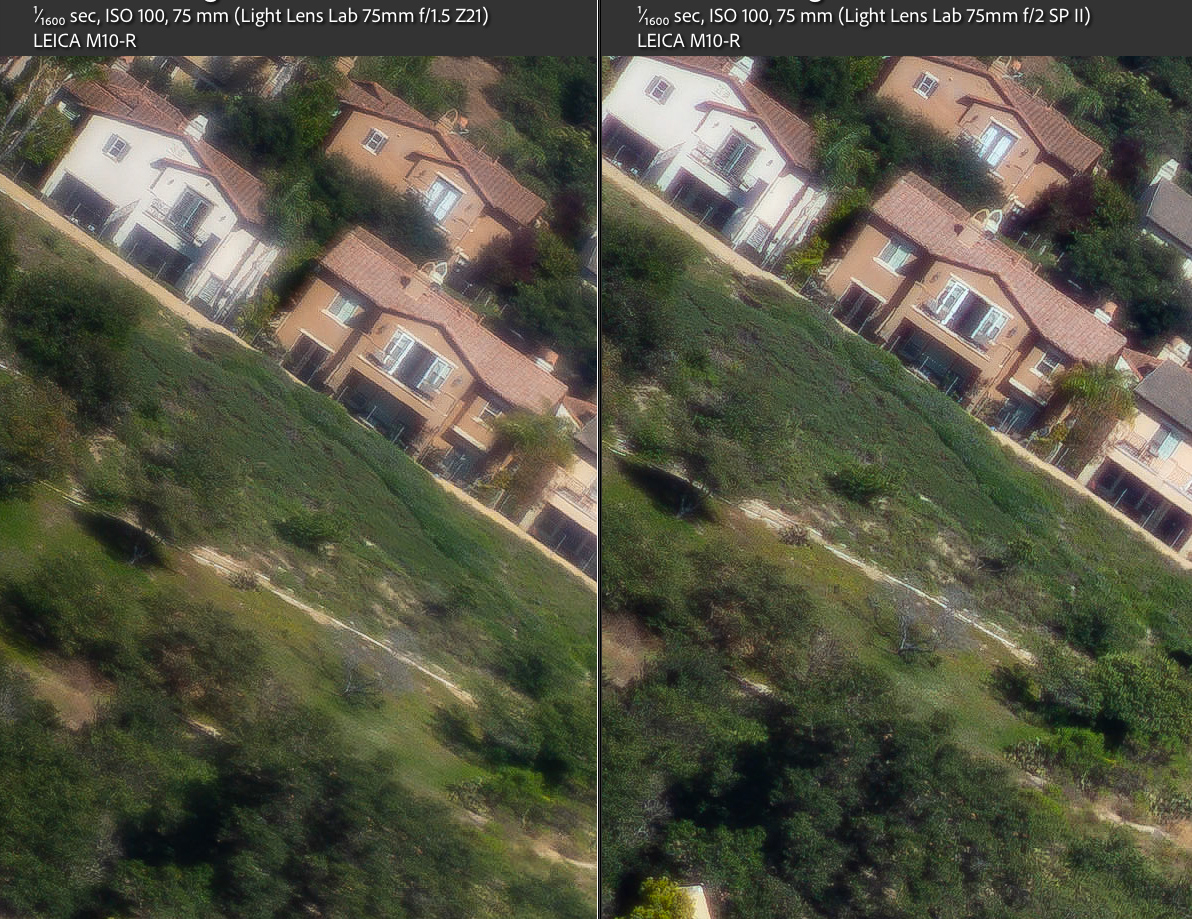
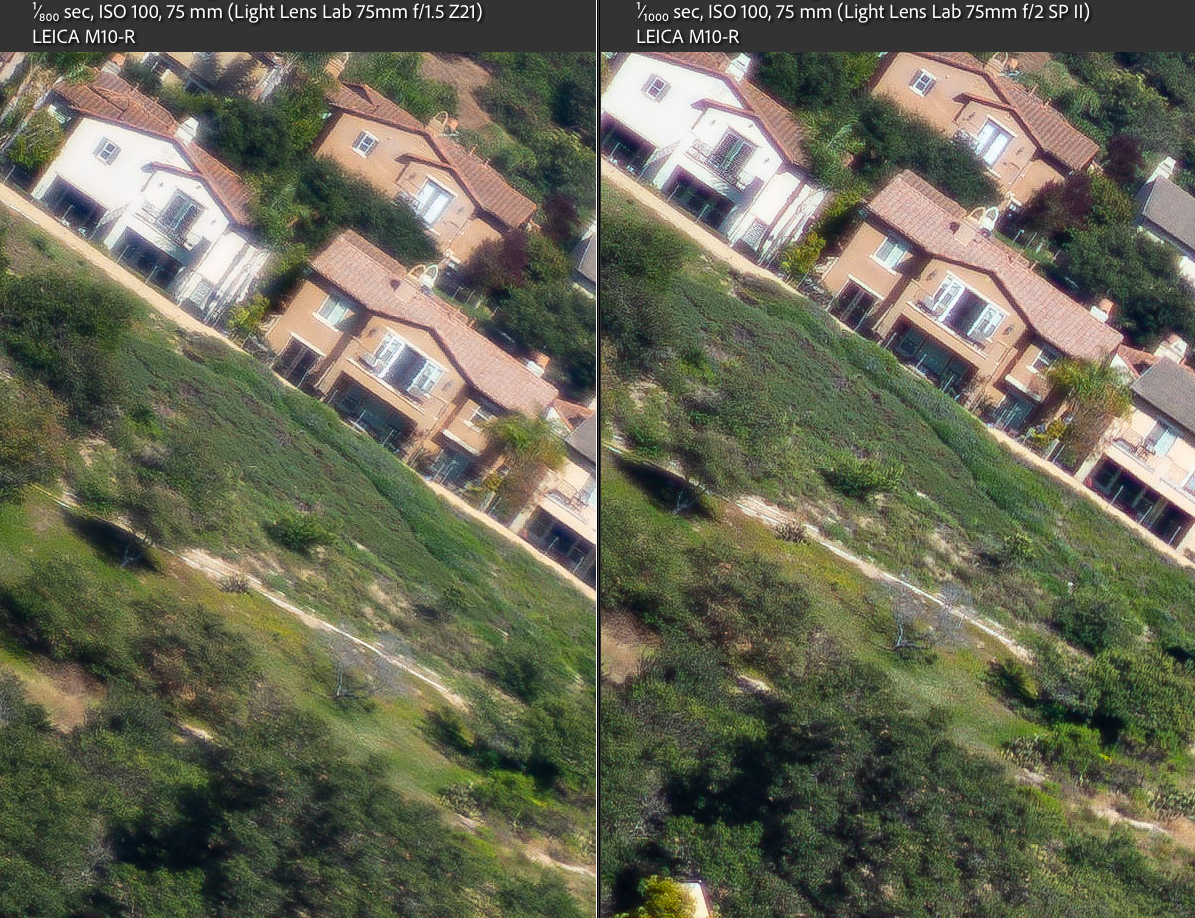
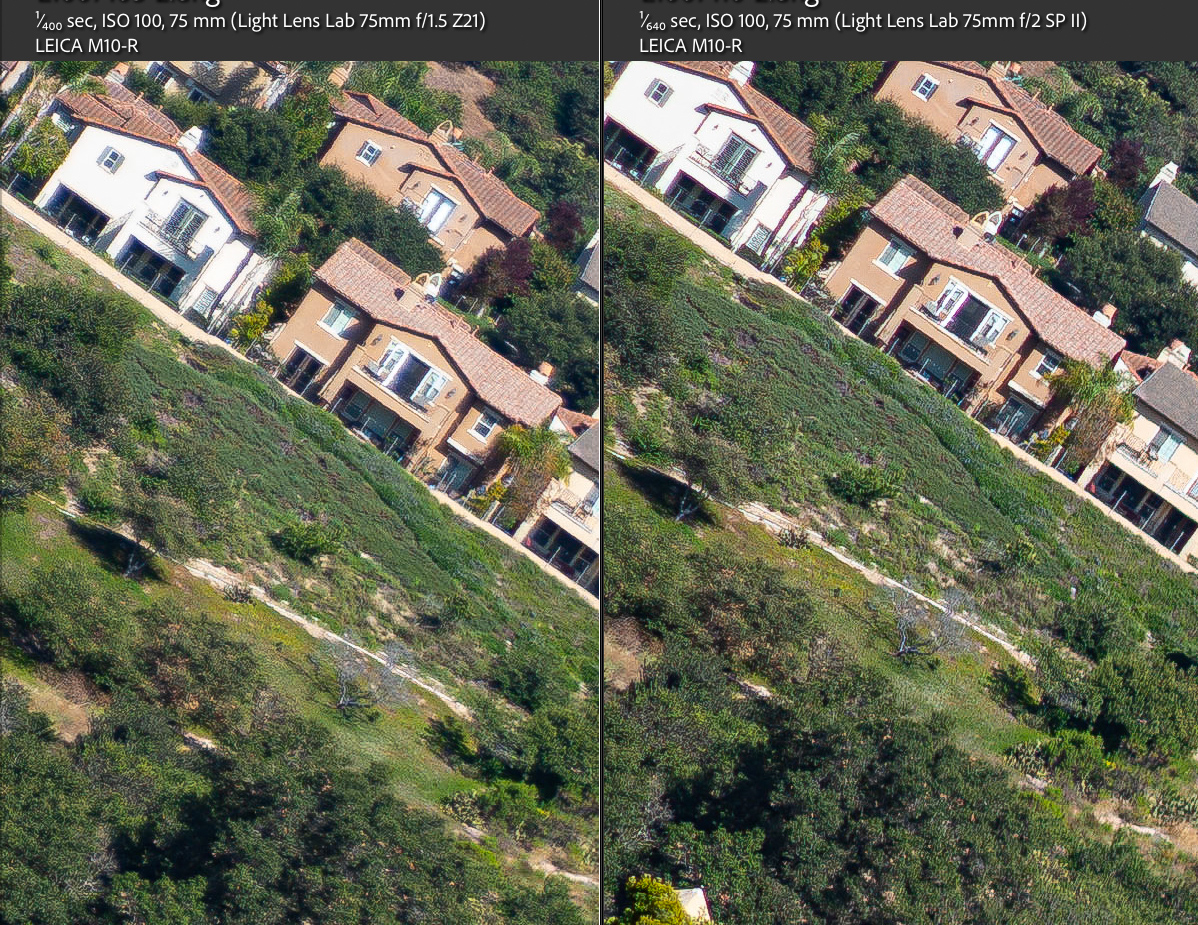
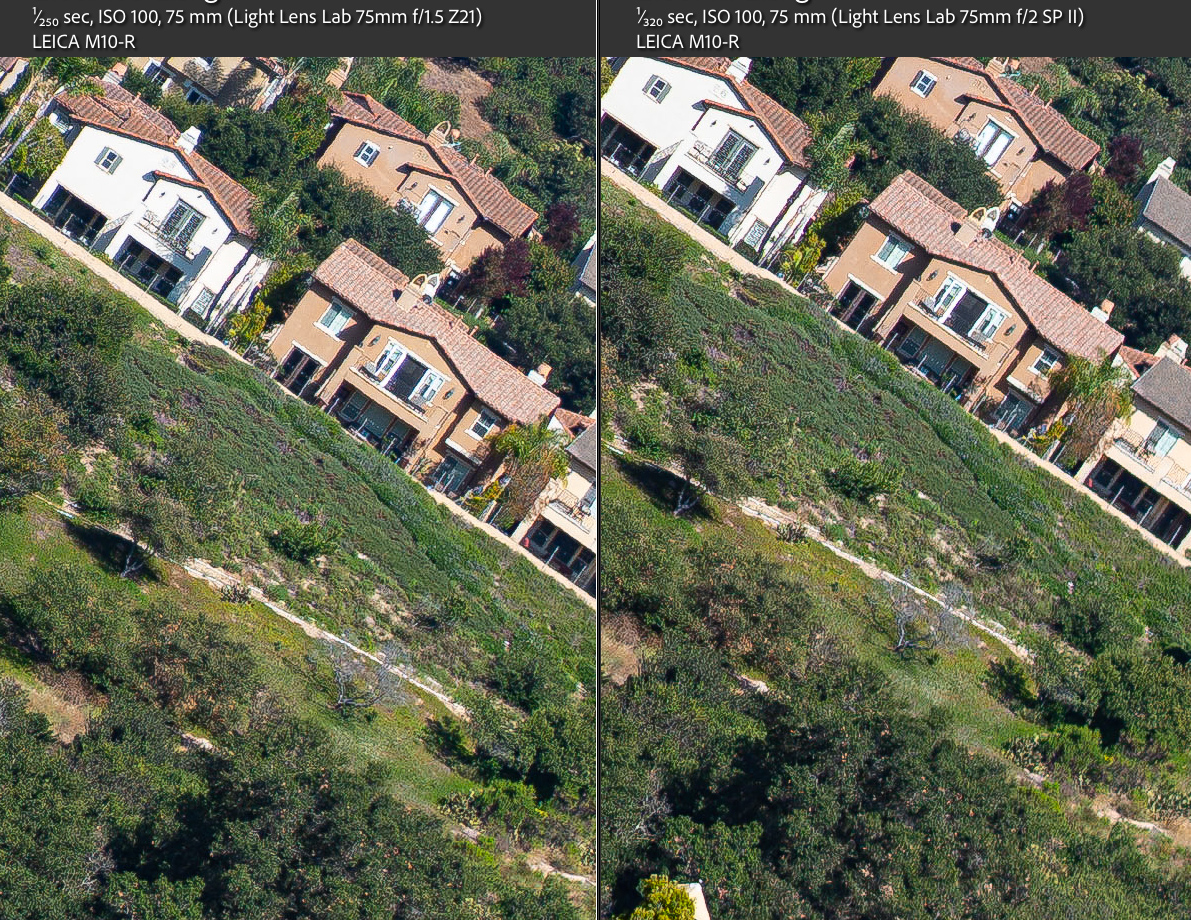
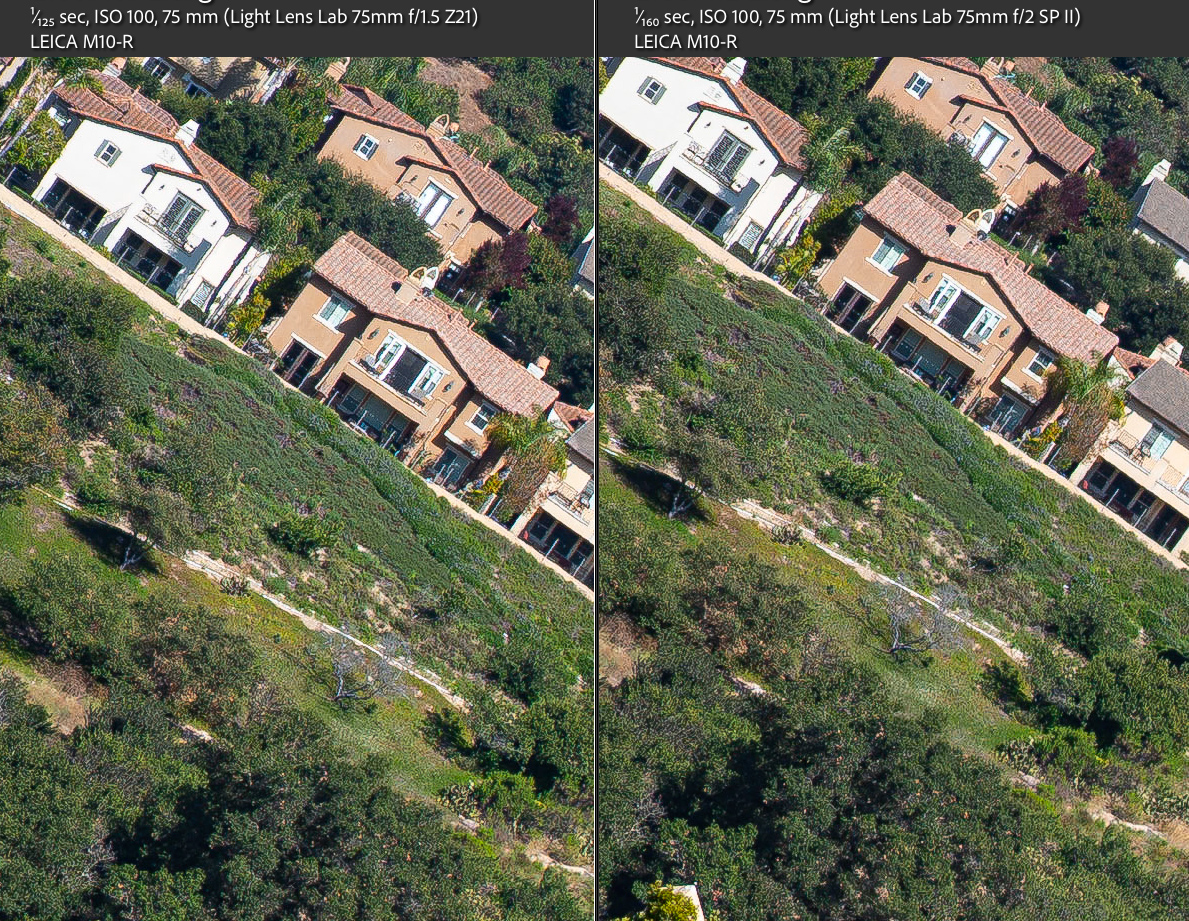
I never place too much emphasis on resolution and contrast tests when reviewing lenses of this type, since they were intentionally designed with different priorities in mind. However, such tests can still be useful when comparing two lenses that both embrace character and imperfections. For that reason, my first comparison is with the relatively new Light Lens Lab 75mm f/2 SP II.

Since the SP II has a maximum aperture of f/2, the Light Lens Lab 75mm f/1.5 Z21 is compared from f/2 onward instead of wide open at f/1.5.

At the center, the Z21 delivers higher resolution and contrast, which is not surprising. The SP II narrows the gap as both lenses are stopped down and comes remarkably close at the smaller apertures, although the Z21 remains the stronger performer throughout the aperture range.

In the mid-field region, the results are a bit different. Here, the SP II holds a slight advantage at f/2. By f/2.8, the two lenses are essentially equal, after which the Z21 pulls ahead and maintains the lead until approximately f/5.6.

The extreme corners show a similar pattern. The SP II performs slightly better at f/2, but the Z21 quickly catches up by f/2.8 and outperforms it at the smaller apertures. I would say that both lenses deliver very strong corner performance from f/4 onward across the image field.

What stands out most is how evenly the Light Lens Lab 75mm f/2 SP II performs across the frame, even wide open. This is largely due to its more neutral field curvature shape. The Z21, by comparison, shows a more complex and wavy field curvature shape. This characteristic is similar to what I saw with the Light Lens Lab 50mm f/1.5 Z21. At mid distances, the field curvature becomes noticeably wavy, then gradually flattens and even curves slightly inward toward infinity focus. This more complex field curvature profile influences the test results and helps explain some of the performance variations seen across the frame.


  1. Distance: Infinity
  2. Focus: Center - Best of three shots at maximum magnification
  3. White Balance: Daylight
  4. Both lenses are perfectly centered, as verified with my decentering test.
  5. Software used: Lightroom with FM Default Landscape Sharpening; all other settings are at default.

    PS: Vignetting, Chromatic Aberration (CA), and distortion were not corrected either in post-processing or in-camera.


    Center Resolution and Contrast
    Infinity Resolution and Contrast compared to Light Lens Lab 75mm f/2 SPII (M10-R)


    f/2


    f/2.8


    f/4


    f/5.6


    f/8


Jun 05, 2026 at 08:22 PM
Fred Miranda
Offline
Admin
Upload & Sell: On
p.1 #14 · Light Lens Lab 75mm f/1.5 Z21 Review


Mid-field Resolution and Contrast
Infinity Resolution and Contrast compared to Light Lens Lab 75mm f/2 SPII (M10-R)


f/2


f/2.8


f/4


f/5.6


f/8


Jun 05, 2026 at 08:23 PM
Fred Miranda
Offline
Admin
Upload & Sell: On
p.1 #15 · Light Lens Lab 75mm f/1.5 Z21 Review


Extreme Corner Resolution and Contrast
Infinity Resolution and Contrast compared to Light Lens Lab 75mm f/2 SPII (M10-R)


f/2


f/2.8


f/4


f/5.6


f/8


Jun 05, 2026 at 08:24 PM
Fred Miranda
Offline
Admin
Upload & Sell: On
p.1 #16 · Light Lens Lab 75mm f/1.5 Z21 Review


Back to Quick Links

Field Curvature

The Light Lens Lab 75mm f/1.5 Z21 features a complex field curvature profile that changes significantly with focusing distance, much like the earlier Light Lens Lab 50mm f/1.5 Z21. At close focusing distances, from minimum focus to roughly 2 meters, the field curvature bends strongly outward. As the lens is focused farther away, the curvature gradually changes shape, becoming increasingly wavy through the mid distance range. At longer distances, the field begins to flatten, and by infinity it actually curves slightly inward.

Because the shape of the field curvature changes throughout the focusing range, the lens behaves quite differently depending on subject distance. This makes it more challenging to predict than lenses with a simpler and more consistent field curvature profile.

The GIF animation below, created from a sequence of field curvature measurements, illustrates how the field shape evolves from minimum focusing distance all the way to infinity.


Jun 05, 2026 at 08:39 PM
Fred Miranda
Offline
Admin
Upload & Sell: On
p.1 #17 · Light Lens Lab 75mm f/1.5 Z21 Review


loudtiger wrote:
Is there a Nikon Z mount version, or does it need to be adapted?


The lens is available only in M-mount, but it adapts easily to Nikon Z and other mirrorless systems. In fact, when paired with a close focus adapter, it can focus significantly closer than its native 1 meter minimum focusing distance. (~0.5m).

Here it is adapted to the Nikon Zf:


Jun 05, 2026 at 10:17 PM
highdesertmesa
Offline
• • • • •
Upload & Sell: On
p.1 #18 · Light Lens Lab 75mm f/1.5 Z21 Review


Looks great on the Zf. I have an SL3 Reporter inbound and will also use a close focus adapter.

I wonder if the lens could be modified to focus closer since they said the 1m MFD design decision was to increase rangefinder focusing accuracy.


Jun 06, 2026 at 10:29 AM
Fred Miranda
Offline
Admin
Upload & Sell: On
p.1 #19 · Light Lens Lab 75mm f/1.5 Z21 Review


highdesertmesa wrote:
Looks great on the Zf. I have an SL3 Reporter inbound and will also use a close focus adapter.

I wonder if the lens could be modified to focus closer since they said the 1m MFD design decision was to increase rangefinder focusing accuracy.


I really like the Light Lens Lab macro adapter for the L-mount, and I think it will pair beautifully with both the lens and the SL3.

Good question about the 1m MFD. There is a hard stop, and I believe it could potentially be modified to allow focusing from 1m down to about 0.7m without having to alter the rangefinder cam, since there appears to be some remaining extension available.


Jun 06, 2026 at 03:36 PM
Fred Miranda
Offline
Admin
Upload & Sell: On
p.1 #20 · Light Lens Lab 75mm f/1.5 Z21 Review


Back to Quick Links

Distortion

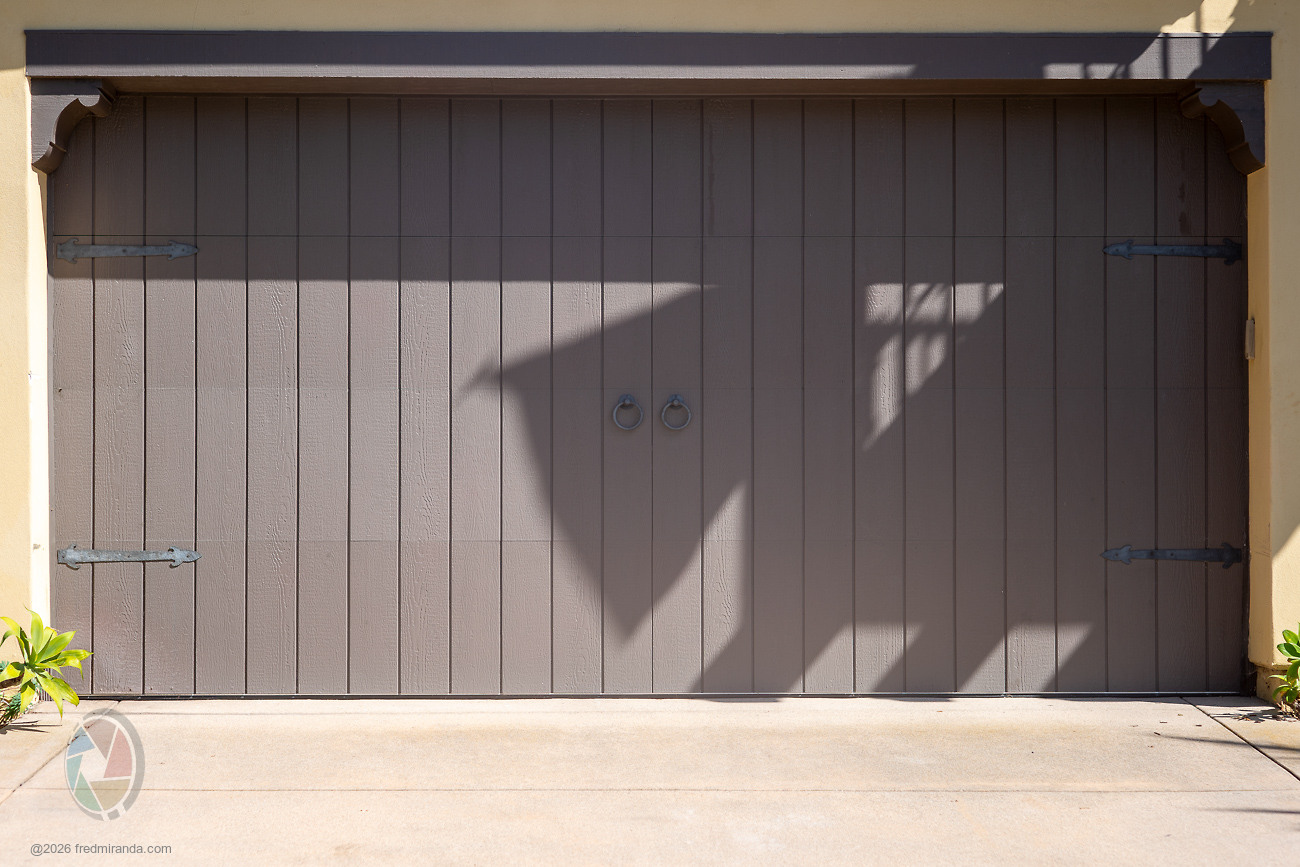
Like most 75mm lenses, the Light Lens Lab 75mm f/1.5 Z21 shows a small amount of pincushion distortion, a characteristic that largely depends on the optical design. In practice, the distortion is minimal and low enough that I rarely feel the need to correct it in post processing.

However, for photographers who require perfectly straight lines, a small Lightroom distortion correction of "-2" is sufficient to eliminate the remaining pincushion distortion.


Before pincushion correction


After LR pincushion correction (-2)


Jun 06, 2026 at 04:47 PM
       2       end


FM Forums | Leica & Alternative Gear | Join Upload & Sell
       2       end


You are not logged in. Login or Register