Fred Miranda wrote:
I really like the Light Lens Lab macro adapter for the L-mount, and I think it will pair beautifully with both the lens and the SL3.
Good question about the 1m MFD. There is a hard stop, and I believe it could potentially be modified to allow focusing from 1m down to about 0.7m without having to alter the rangefinder cam, since there appears to be some remaining extension available.
I forgot that LLL sells an M-to-L adapter. I have a Hawk's Factory macro adapter that I've been using since 2022, which initially leaked a bit of excess grease but never has again.
highdesertmesa wrote:
I forgot that LLL sells an M-to-L adapter. I have a Hawk's Factory macro adapter that I've been using since 2022, which initially leaked a bit of excess grease but never has again.
I am not sure if you can find it anywhere as I think it's discontinued but it's the best M-L adapter I've tried. The tolerances are very tight, my copy has zero play, and it rotates butter smooth.
i know 1k is a lot of money. but for an extra 1k, you can buy a good condition 75 apo 2 m which is probably one of the best 75's you can get on an m. and the bokeh is just gorgeous.
Jorge Torralba wrote:
i know 1k is a lot of money. but for an extra 1k, you can buy a good condition 75 apo 2 m which is probably one of the best 75's you can get on an m. and the bokeh is just gorgeous.
Fred Miranda wrote:
I am not sure if you can find it anywhere as I think it's discontinued but it's the best M-L adapter I've tried. The tolerances are very tight, my copy has zero play, and it rotates butter smooth.
I think they have it in stock on their site at the moment. The only thing that keeps me clinging to the Hawk's Factory is the adjustable infinity stop. With that, I can set infinity so that I can trust the hard stop on my M lenses, thereby using the SL like I would an M for infinity landscape. Having to tweak focus for infinity at max magnification every time I take a shot gets old (because it's easy to accidentally move focus between shots).
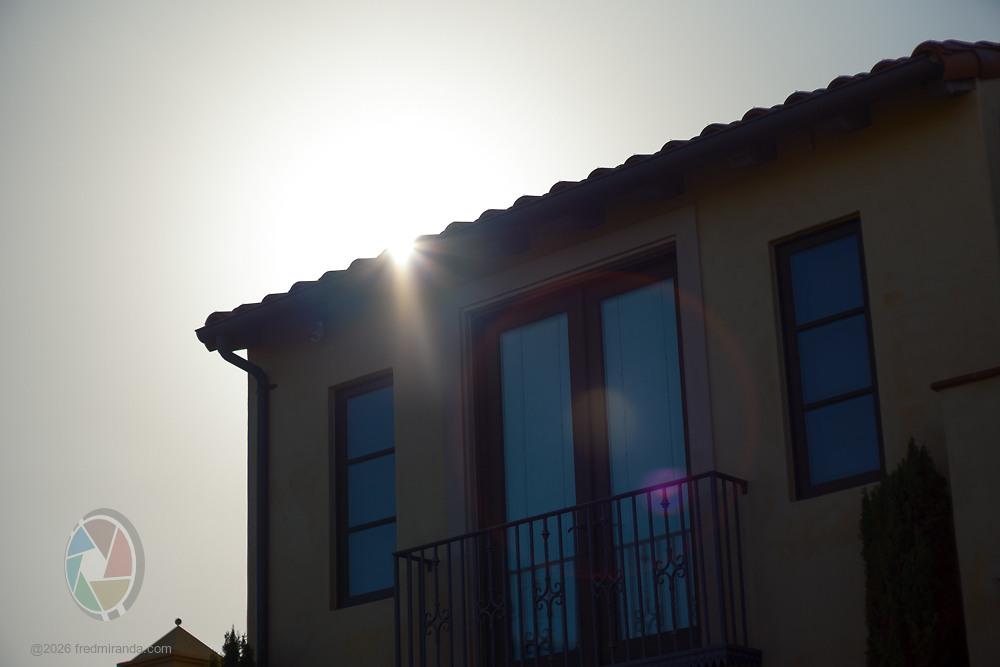
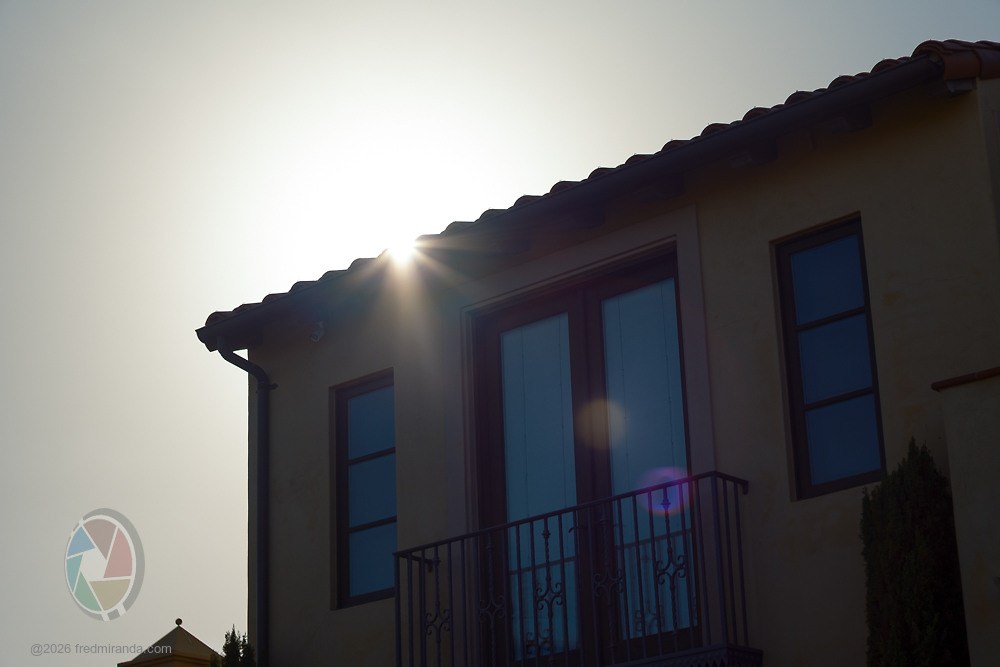
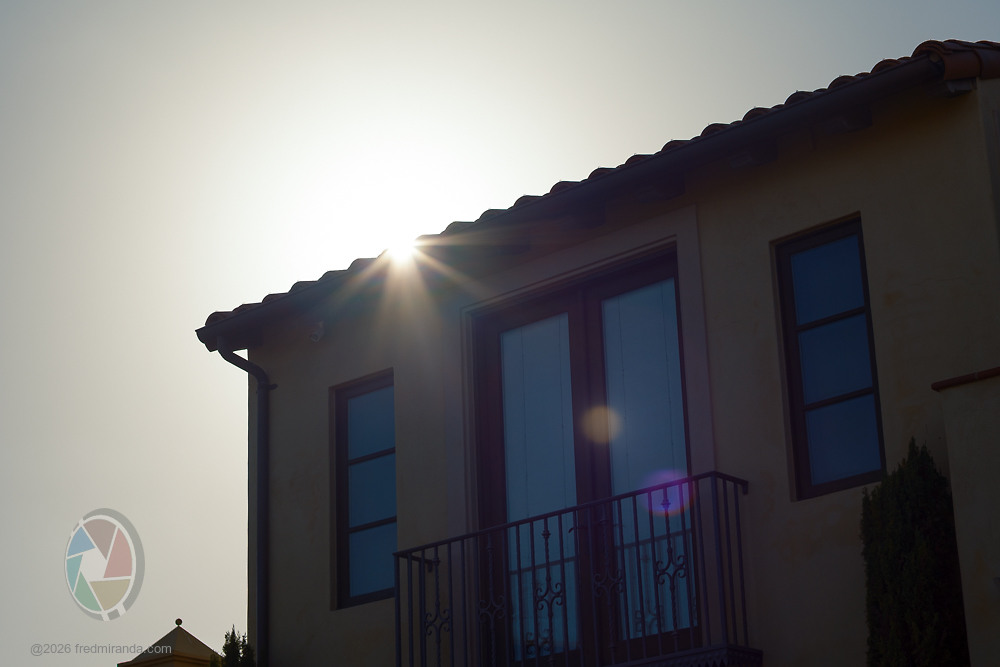
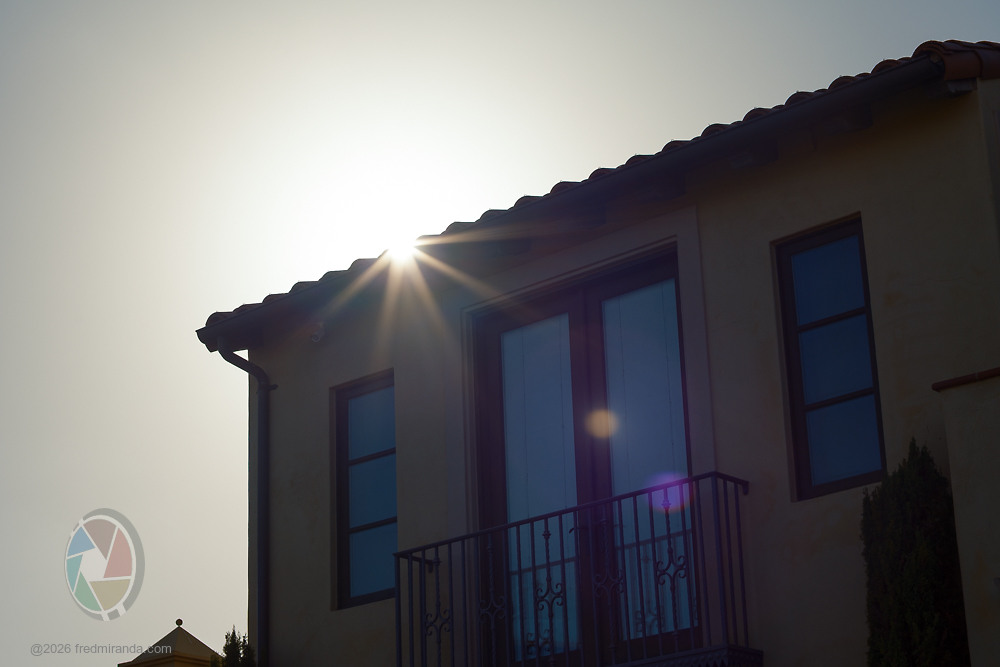
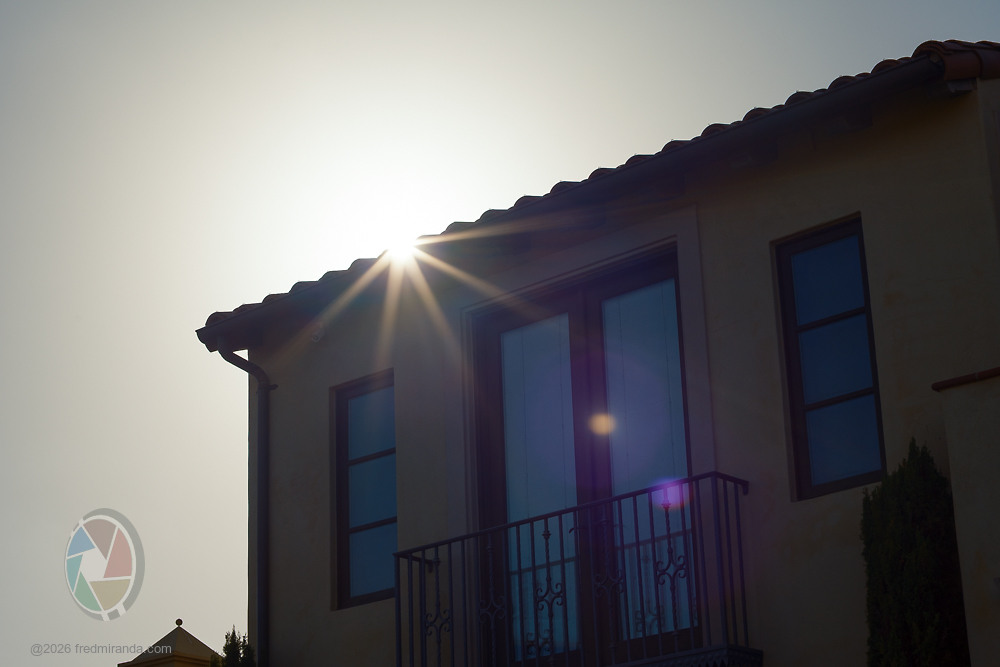
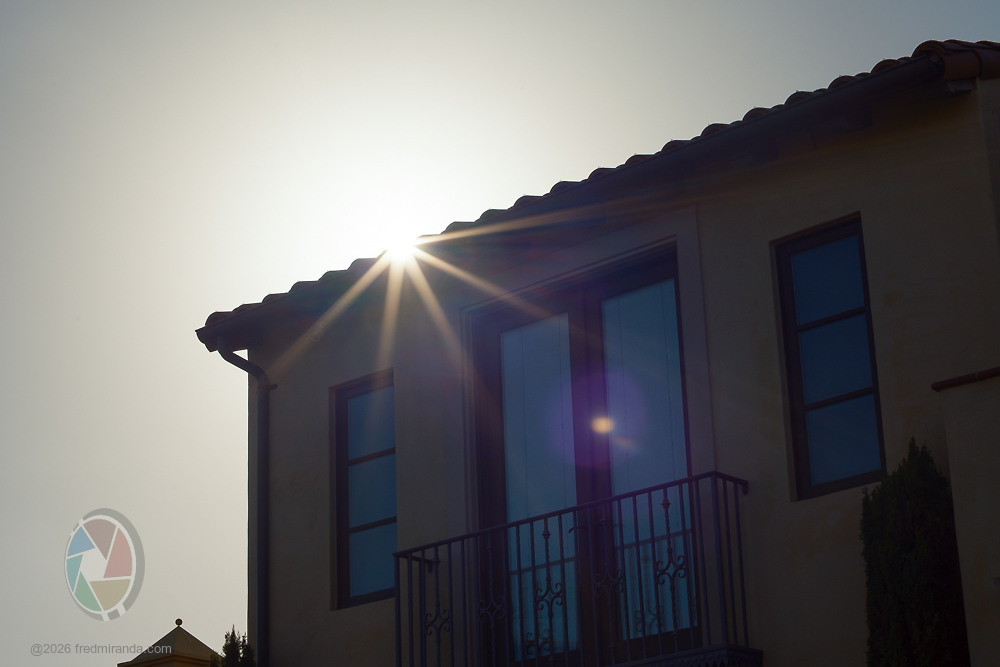
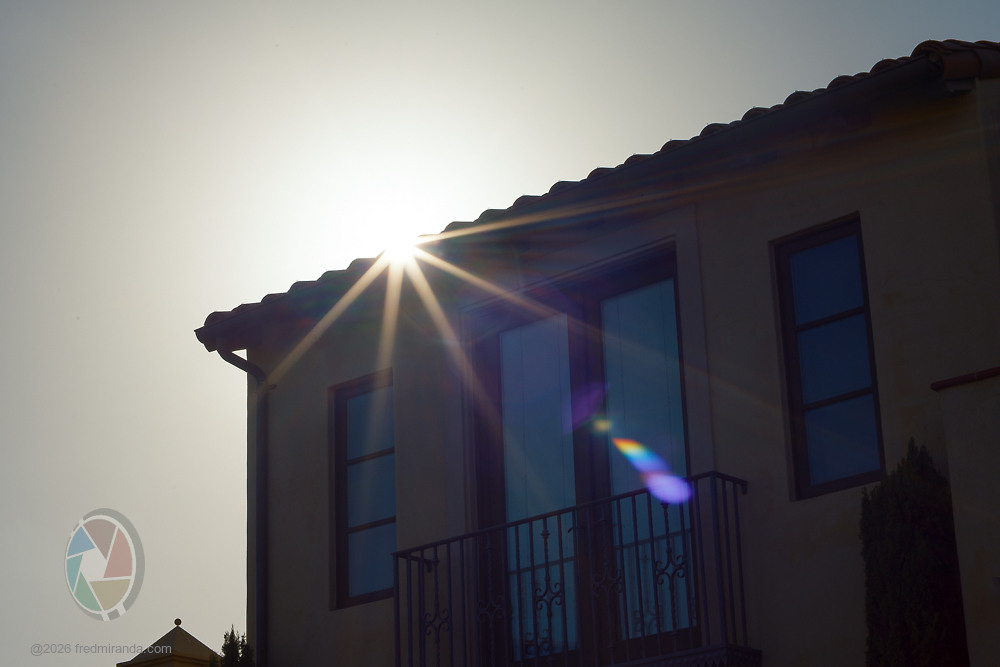
Photographers who appreciate well defined sunstars will find the Light Lens Lab 75mm f/1.5 Z21 particularly interesting. Like the Light Lens Lab 50mm f/1.5 Z21, the 75mm version features a 10 straight blade aperture mechanism. Sunstars begin to emerge at f/4 and become fully defined by f/5.6, remaining excellent through the smallest apertures. Even at f/22, the rays retain their shape and symmetry, which is uncommon for many lenses, especially telephoto designs. The evenly spaced, clean rays also suggest very tight manufacturing tolerances.
When the light source is within the frame, the lens shows some amber and violet ghosting even when the sun is partially obstructed, but constrained veiling flare, as shown in the samples below. As a result, this sunstar series also provides a good look at the lens's flare characteristics. Personally, I enjoy ghosting flare effects when they are pleasant and not excessive, and the rendering here strikes a nice balance.
From f/1.5 through f/2.8, the sunstar effect remains soft and diffuse, a look that many photographers actually prefer. While the rays are visible, they lack strong definition and produce a smoother, less defined appearance. In practical use, well defined sunstars do not fully appear until around f/4 or f/5.6, where the lens is already operating at its optimum aperture.
The sequence below illustrates the transition from f/2.8 to f/22 in full stop increments. Thanks to its 10 blade aperture design, the lens produces 10 pointed sunstars with excellent symmetry throughout the aperture range:
Minimum Focus Distance: Resolution, Contrast and Focus Shift
The original Angenieux 50mm f/1.5 S21 has a minimum focus distance (MFD) of 1 meter. One of the improvements I appreciated on the Light Lens Lab 50mm f/1.5 Z21 was the closer 0.7m MFD, which made the lens considerably more versatile in practical use.
As mentioned earlier, the Light Lens Lab 75mm f/1.5 Z21 is not a homage lens in the strict sense, since Angenieux never produced a 75mm f/1.5 S21. It is better described as a lens inspired by the rendering characteristics of the original 50mm f/1.5 S21. This time, however, Light Lens Lab chose to retain the original 1 meter MFD.
I was told this decision was made to allow tighter rangefinder calibration tolerances and ensure accurate alignment with the rangefinder mechanism, which becomes increasingly critical when focusing a fast telephoto lens. If that is indeed the reason, Light Lens Lab probably made the right engineering choice, although I would still have preferred a 0.7m MFD for additional flexibility.
The real question, however, is how the lens performs at its MFD...
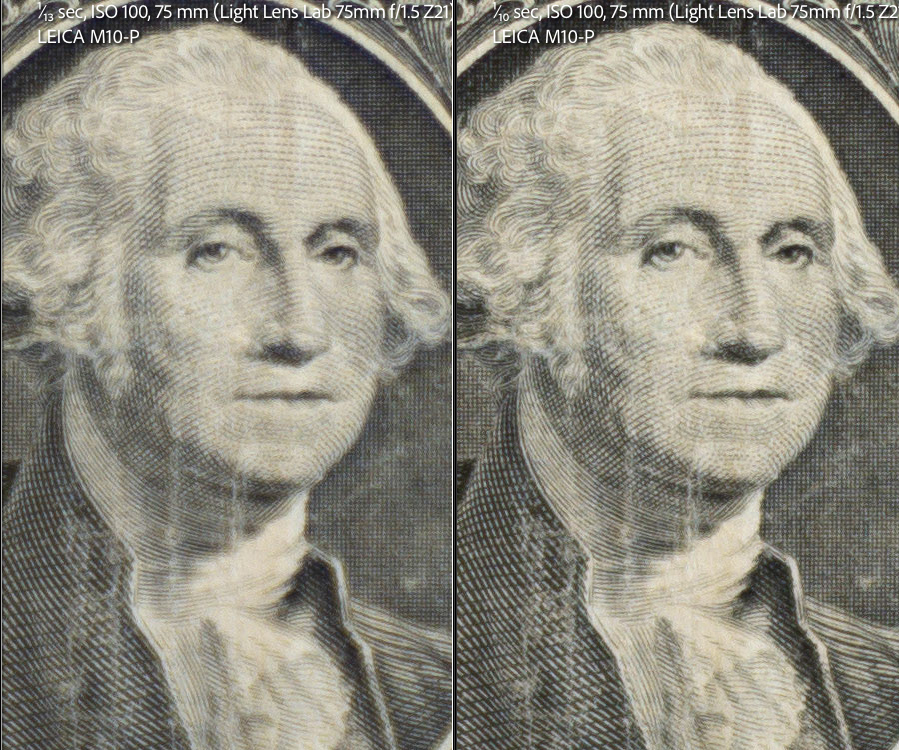
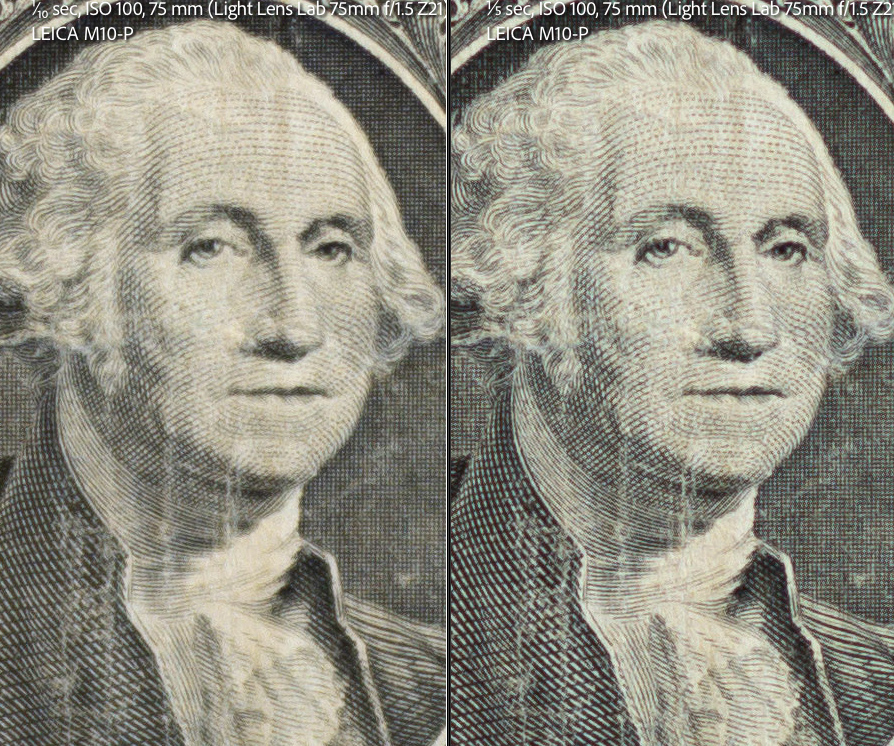
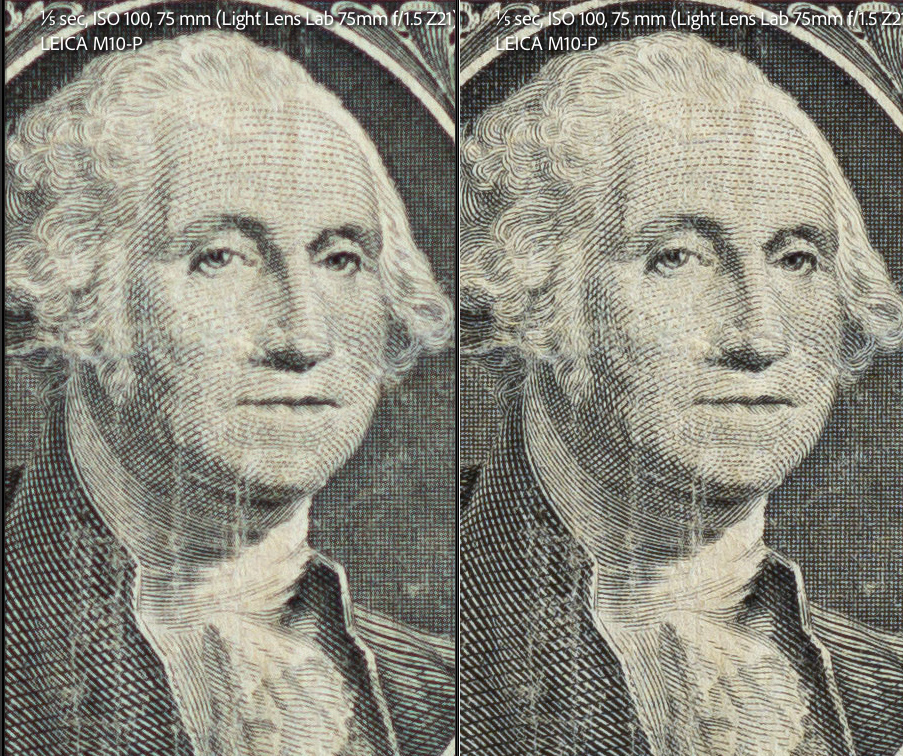
As expected, and similarly to the 50mm f/1.5 Z21, wide open performance at 1m shows visible spherical aberration (SA), resulting in lower contrast and reduced resolution. Stopping the lens down produces a substantial improvement. Since the lens is not equipped with a modern floating element design, some loss of sharpness at close range when used wide open is entirely expected.
The good news is that focus shift has been noticeably improved compared to the LLL 50mm f/1.5 Z21. When focusing at f/1.5 and stopping down without refocusing, image quality continues to improve at each aperture. This was not the case with the 50mm Z21, where focus shift could become severe enough by stopping down.
Focus shift is still present on the 75mm Z21, but it is much better controlled and no longer becomes problematic in real world shooting. This is great news for rangefinder shooters.
Pronounced focus shift appears to be an inherent characteristic of the original Angenieux 50mm f/1.5 S21 and was also evident in the Light Lens Lab 50mm f/1.5 Z21. I am pleased to report that Light Lens Lab's engineers have done a much better job controlling it in the 75mm Z21. Whether this improvement is related to the decision to maintain a 1m MFD instead of 0.7m is difficult to say, but the connection is certainly interesting.
Usually, when a lens shows moderate to strong focus shift, focusing wide open and then stopping down without refocusing often results in a softer image because the plane of focus moves away from the intended subject. In this case, despite the presence of a small amount of focus shift, IQ continues to improve as the lens is stopped down.
The following sequence shows 100% pixel-level crops captured at apertures from f/1.5 to f/4.