fredmiranda.com
Login

Moderated by: Fred Miranda
Username  

  New fredmiranda.com Mobile Site
  New Feature: SMS Notification alert
  New Feature: Buy & Sell Watchlist
  

FM Forums | Leica & Alternative Gear | Join Upload & Sell

1       2       3              112              114              137       138       end
  

which lens has the most 3D POP?


Nifty Fifty
Offline
• • •
Upload & Sell: Off
p.113 #1 · which lens has the most 3D POP?


Something completely different. What do you think? Do you believe that more three-dimensional representation always equates to a better image? I personally don't feel that way. While I always find it fascinating (except for 3D pop—I'd rather call it a cropping effect, which I find unnatural, even downright ugly), I often find photos that appear somewhat flatter much more appealing and visually striking. It's similar to sharpness, contrast, and resolution. Sometimes less is more. At least for me.


Mar 15, 2026 at 01:15 PM
1bwana1
Offline
• • • • • •
Upload & Sell: On
p.113 #2 · which lens has the most 3D POP?


gdanmitchell wrote:
You do know this painting, right?

As to "faulty logic," the evidence of dimensionality in paintings demonstrates that the quality is common and effective independent of any contribution of lenses.

While I and most others await and would accept proof that lens differences are significant contributors to this effect, convincing evidence of which is lacking, the means by which visual artists create such effects (and have done so for centuries) is abundant.

Romantic era painters were masters of the effect. See some examples here: https://artincontext.org/famous-romanticism-paintings/

Among the well-known examples on the page, a few stand out for "dimensionality":
Liberty Leading the People (1830)
...Show more

I gotta agree with you here Dan. Putting the responsibility for creating depth in an photographic image on the lens used is on the same level as putting the responsibility on creating dimensionality in a painting on the brush used.

I live in a city where all day I am surrounded by the works of the greatest painters in history. They were masters of story telling and using dimensionality to tell that story. This is also evident in the architecture here, it is amazing. It is not only a function of the bricks or stone that the city is made of. There dimensionality of the great musicians that lived here. Yes, there is dimensionality in music as well. Once again, it is not only a function of the instrument played.


Mar 15, 2026 at 01:15 PM
Nifty Fifty
Offline
• • •
Upload & Sell: Off
p.113 #3 · which lens has the most 3D POP?


Definitely not pop. But 3D?
1000024701 by Werner Wurst, on Flickr


Mar 15, 2026 at 01:24 PM
1bwana1
Offline
• • • • • •
Upload & Sell: On
p.113 #4 · which lens has the most 3D POP?


3D, pop or not pop, is worthless unless it helps tell the story of an image. But it does make for interesting thread discussions. But then all things that are so vague and personal that no agreement is possible makes for entertaining discussion.


Mar 15, 2026 at 01:28 PM
old-gregg
Offline
• • •
Upload & Sell: Off
p.113 #5 · which lens has the most 3D POP?


Nifty Fifty wrote:
Something completely different. What do you think? Do you believe that more three-dimensional representation always equates to a better image? I personally don't feel that way. While I always find it fascinating (except for 3D pop—I'd rather call it a cropping effect, which I find unnatural, even downright ugly), I often find photos that appear somewhat flatter much more appealing and visually striking. It's similar to sharpness, contrast, and resolution. Sometimes less is more. At least for me.


Agreed. This topic deserves a well written essay. There is something to be said about the sense of restraint. I think people are generally attracted to images that have "the one thing" about them. Not two or three. Most commonly "the one thing" is described as "telling a story" but IMO that's too specific. Sometimes it's the combination of colors. Sometimes it's a beauty of a well-isolated subject. Sometimes it's just a sense of symmetry. Whatever it is, it's singular. And I find that the convenience of digital editing leads us to ruining it. 80% of images posted on photo forums are victims of digital temptations: too much contrast, too much saturation, too much fake drama in the skies, shadows are too lifted, etc. None of this looks ordinary and therefore grabs attention, leading to your attention being scattered and unfocused, and the photo is no longer about "the one thing".

A couple of days ago Ross Martin posted a photo of a beach lit by the harsh mid-day sun. Sorry, can't find it right now, but it is what you'd expect: a bit washed out, blueish color temperature, slight marine haze, etc. A typical "digital photographer" would have immediately tweaked the white balance towards more warmth, cranked up that clarity/degaze slider. He didn't. And that's what made that photo work for me: it refocused my attention to what's acutally in the image.


Mar 15, 2026 at 01:45 PM
1bwana1
Offline
• • • • • •
Upload & Sell: On
p.113 #6 · which lens has the most 3D POP?


old-gregg wrote:
Agreed. This topic deserves a well written essay. There is something to be said about the sense of restraint. I think people are generally attracted to images that have "the one thing" about them. Not two or three. Most commonly "the one thing" is described as "telling a story" but IMO that's too specific. Sometimes it's the combination of colors. Sometimes it's a beauty of a well-isolated subject. Sometimes it's just a sense of symmetry. Whatever it is, it's singular. And I find that the convenience of digital editing leads us to ruining it. 80% of images posted on photo
...Show more

I think gallery sales, and general publications would not support your view of this. In fact the images I see offered in most "to the public" galleries have been tilted the opposite way to super high contrast, outrageous unrealistic color and HDR type contrast and sharpening. The photographers and gallery owners have been rewarded for this by increased sales to people who are "generally attracted" to this type of digital processing.

Making images that are attractive to other photographers is a sure path to economic failure most of the time.


Mar 15, 2026 at 03:13 PM
ruthenium
Offline
• • • •
Upload & Sell: On
p.113 #7 · which lens has the most 3D POP?


RustyBug wrote:
Yes, the matter of Trompe L'oeil is in play. Lens contribution is but one aspect of it. Understanding the physiological response of human perception is the root of how humans perceive such 3-D dimensionality in a 2D medium. It is that understanding that affords artists the ability to generate the perception. I'll not recant all that I've written on the matter throughout this thread ... but, that is the basis.

My main point is that the basis for physiological response is rooted in rates of change / transitions to yield the dimensional perception. Where those transitions are compositional, lighting, hue, contrast,
...Show more

Thank you for the reference! I am broadly familiar with the fundamentals, including Trompe L'oeil.
The article that you mentioned is reasonably balanced. The author does have a preference for some lenses, but the other important aspects are properly mentioned as well. There are one or two minor points that I don't necessarily agree with (e.g., the idea that faces should be smooth in portraits - I don't like the synthetic, baby-doll plasticky faces in model/wedding photography).
There is, however, something in the approach that is presented by the author that I find mildly disturbing. To oversimplify the ideas, to produce the "3-D pop" one need
1) A certain lens that has the right focal length (not too wide, not too long)
2) Position a subject (often a human subject) at an appropriate distance
3) Close (or open) the aperture to create a natural transition of sharpness from the subject toward a moderately blurred (but recognizable) background
4) Incorporate directional elements in the composition, such as lines converging to a vanishing point, or related elements that create the sense of depth.

My concern about the above is that this is what E. H. Gombrich calls a "schema" in Art and Illusion.
I see this schema applied in a number of examples of 3-D pop in this thread, some recent examples.
The problem with this (no doubt, successful) schema is the same as, e.g., with with the threads populated by highly successful bird photographers: at some point, after seeing more and more, e.g., raptors doing their usual raptoring, or swallows in flight, etc., these pictures become less interesting, less original. They become repetitive and predictable.

I see a challenge in breaking away from the above schema, particularly in creating the sense of 3-D space and image depth in a landscape, without an obvious central subject and without classical directional elements such as converging lines.
My personal challenge in this regard is that I see the world like my camera - through a single lens; I have no vision in the other eye. I am not sure if the normal (binocular) vision provides a superior depth perception. I do experience the illusion of three-dimensionality when looking at the classical examples, though - no problem with that.
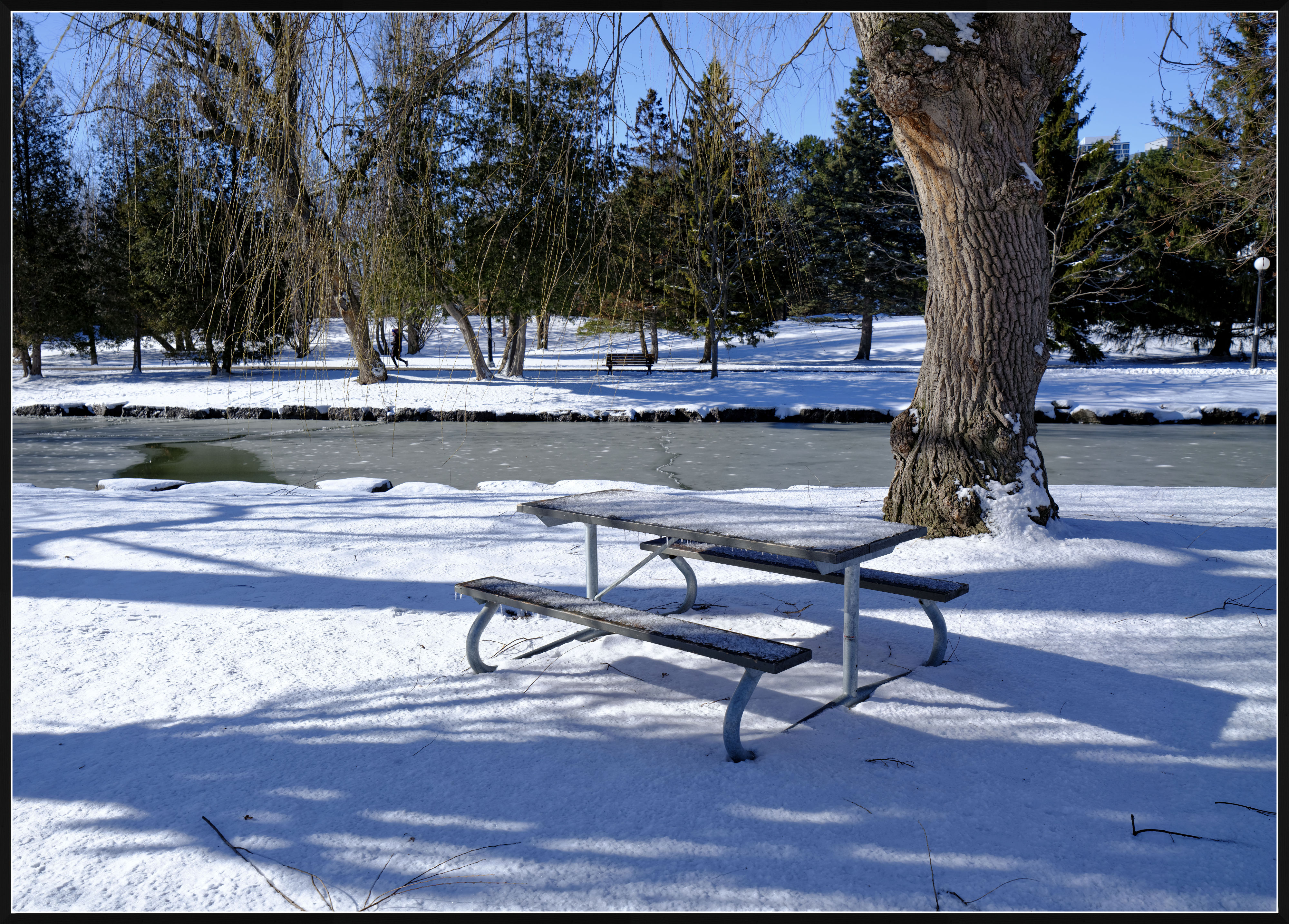
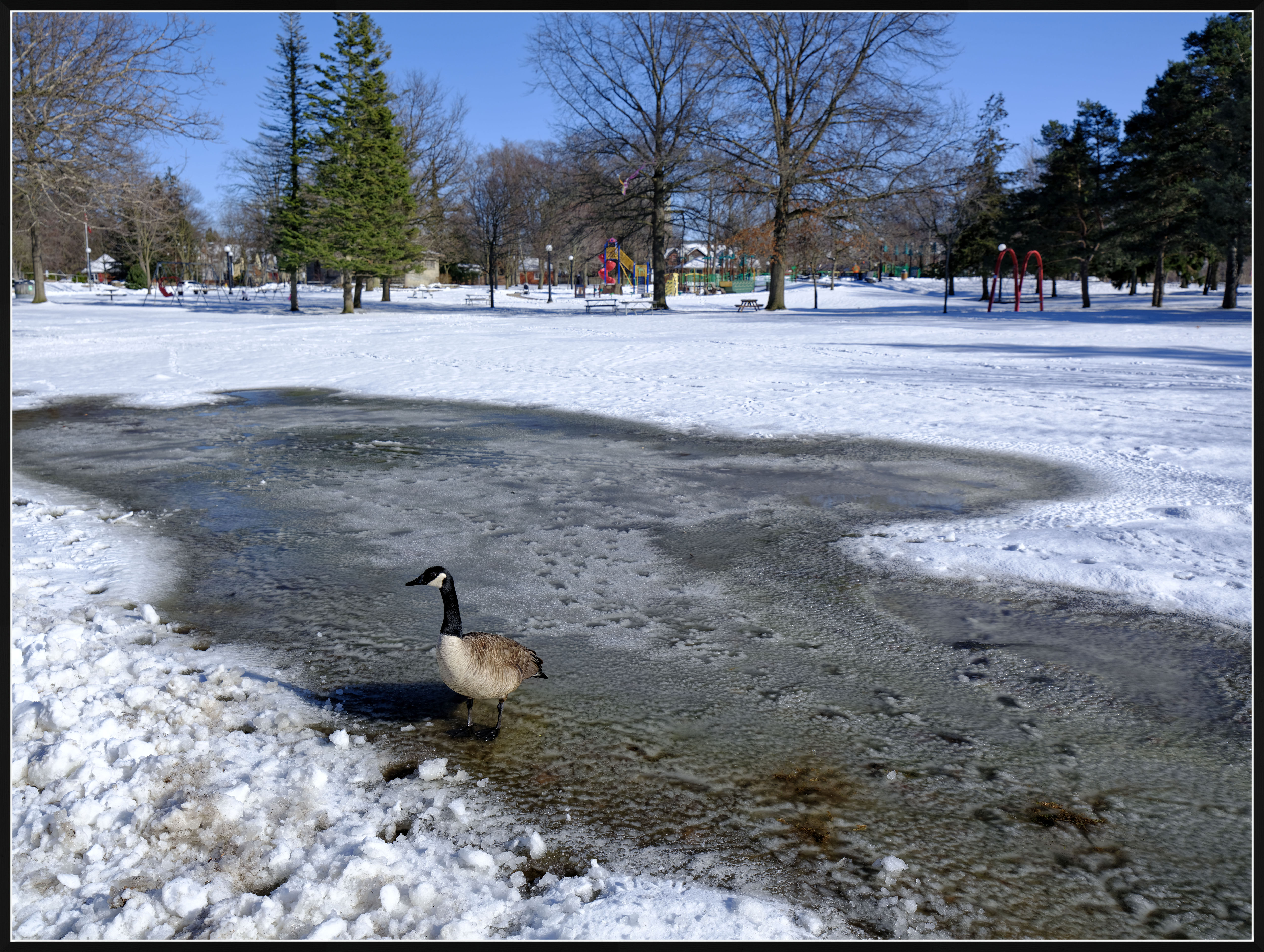
Here are two photos I took while walking in a nearby park.
I wonder if these create a sense of image depth (this is not exactly the same as 3-D pop).
The lens is Fujifilm GF20-35mm F4


Mar 15, 2026 at 03:22 PM
gdanmitchell
Offline
• • • • • • •
Upload & Sell: Off
p.113 #8 · which lens has the most 3D POP?


Garmadon wrote:
"The kiss" is a very good example for what I see as dimentionality.
Lets say it was a real scene the painter paint and it was lit that way . we both agree that the painter used cues to make this effect right?
Now , if a photographer took this image with 10 different lenses , your claim is that each and every one of them had the same pop?

I dont think so . These lenses will show different contrast and that is only one factor.


My claim would be that this thing we keep calling “pop” would be the result of composition, handling of light and color and focus, the position of the subjects individually and in the frame and relative to other elements in the scene, effects of atmospheric recession and similar, competent and imaginative post-processing (like Ansel said…),etc.

If you made 10 exposures of the scene with 10 different good lenses, one of which you regarded as the “best pop” lens, printed them up, presented them to a group of viewers and asked, “which has the most pop?”, there would be no agreement about the answer and the supposed best pop lens would fare not better than other fine lenses.

I have never claimed that there are no differences among lenses. I have claimed, with evidence I think, that this quality is almost completely the result of factors other than using some “best pop” lens, and that anyone striving to create this effect is best off learning about how to create photographs.

ruthenium wrote:
My concern about the above is that this is what E. H. Gombrich calls a "schema" in Art and Illusion.


That is an interesting and useful concept, and photographers (and others) who are trying to understand how to do effective and creative workhe often look form “schemas” or rules that they can apply to get there.

The classic is reference to a “rule of composition” like the “rule of thirds,” misapplied as if it is a rule that should be followed in all photographs.

Someone (sorry, I have lost the original reference) once said something to the effect that “The rules of composition are more effective tools for autopsies than for given birth.”

Rather than learning supposed “rules” for image making, it is far more useful to learn to understand the effects of different decisions on the resulting images, and to become adept and using the various possibilities to good effect. Simply following some “rule” usually leads to fairly undifferentiated and unimaginative work.

Even following a “rule of thirds” requires this sort of thinking. Placing a human subject’s head at, for example, the upper left 1/3 point (1/3 in from the right and 1/3 down from the top) reads differently depending on whether the subject is looking right, left, or straight ahead. It also matters a lot what else is in the frame relative to that subject. And obviously, it changes things if the subject is at the upper or lower third point.

Placing a subject dead center can create a sense of stability or balance. Sometimes that is precisely what you want to do in a photograph. Placing the horizon near the top edge of the frame has a very different effect than placing it in the middle or near the bottom. (At the top i can emphasize the solidity of the land below. At the bottom in could create a sense of immense sky and space.)

I could go on (as I usually do… ;-) ) but you get the point: it isn’t about following some rule, it is about understanding the effect of compositional and other decisions on the effect of the image. Unless you want all of your photographs to say the same thing, there will be good reasons for most of us to apply a range of solutions.

this is true of this “pop” thing, too. It isn’t simply using some lens all the time. It isn’t just using narrow DOF. it isn’t just considering perspective lines and other elements, It isn’t just color relationships. it isn’t just atmospheric recession. And on and on.


Mar 15, 2026 at 03:30 PM
chez
Offline
• • • • • • •
Upload & Sell: Off
p.113 #9 · which lens has the most 3D POP?


old-gregg wrote:
Agreed. This topic deserves a well written essay. There is something to be said about the sense of restraint. I think people are generally attracted to images that have "the one thing" about them. Not two or three. Most commonly "the one thing" is described as "telling a story" but IMO that's too specific. Sometimes it's the combination of colors. Sometimes it's a beauty of a well-isolated subject. Sometimes it's just a sense of symmetry. Whatever it is, it's singular. And I find that the convenience of digital editing leads us to ruining it. 80% of images posted on photo
...Show more

Really depends if the photographer is trying to capture what the eyes see or what the mind sees. For most here photography is an art and there are no rules how the final image looks. Sure, you may have a preference…but the guy next to you might have a totally different preference…that’s just how art goes.


Mar 15, 2026 at 04:13 PM
Nifty Fifty
Offline
• • •
Upload & Sell: Off
p.113 #10 · which lens has the most 3D POP?


chez wrote:
…that’s just how art goes.

Art? Did I just read "art" there? 😄


Mar 15, 2026 at 04:19 PM


Search in Used Dept. 

chez
Offline
• • • • • • •
Upload & Sell: Off
p.113 #11 · which lens has the most 3D POP?


Nifty Fifty wrote:
Art? Did I just read "art" there? 😄


You can call your snaps anything you want…but I have a lot of mine hanging in houses being displayed as art.


Mar 15, 2026 at 04:25 PM
Makten
Offline
• • • • •
Upload & Sell: On
p.113 #12 · which lens has the most 3D POP?


1bwana1 wrote:
3D, pop or not pop, is worthless unless it helps tell the story of an image.


Images do not have to "tell stories" to be good or interesting.


Mar 15, 2026 at 04:29 PM
Nifty Fifty
Offline
• • •
Upload & Sell: Off
p.113 #13 · which lens has the most 3D POP?


chez wrote:
You can call your snaps anything you want…but I have a lot of mine hanging in houses being displayed as art.

You don't have to tell me anything. I live in Berlin and know all too well how flexible the concept of art is. 😄


Mar 15, 2026 at 04:33 PM
chez
Offline
• • • • • • •
Upload & Sell: Off
p.113 #14 · which lens has the most 3D POP?


Nifty Fifty wrote:
You don't have to tell me anything. I live in Berlin and know all too well how flexible the concept of art is. 😄


Then why do you want to put a wall around photographic art?


Mar 15, 2026 at 04:36 PM
jojib
Offline
• • •
Upload & Sell: Off
p.113 #15 · which lens has the most 3D POP?


I wonder if Reinhard (the op) finally got his 3D pop lens? His original thread was Feb. 2011. If I was a member of this forum then I would have recommended him a lens (the EF 85/1.2 L II) at that time. 3D pop and bokeh was a heated topic on dpreview Canon forum at that time. I recall if there was a lens that you would shoot with and your subject is a few feet in front of a garbage dump---which one would you use? The overwhelming answer was the EF 200/2 L IS USM. Which camera sensor was more heated---a few believe that the 1D with the APS-H sensor delivers 3D images and of course the FF people think that is BS. I don't care, I just want to shoot :-)

Talking about the aforementioned 85L, here are some shots from April 2010. Looking at these images coincidentally it is also the 170th anniversary of Burberry--they were showcasing their iconic trench coat in a few images on their Instagram these past few days.

I miss this beautiful city. I got to go back there again maybe this time with the A7V and Sonnar 55/1.8. But in the meantime, take it away Tony! '...to be where little cable cars climb halfway to the stars.....

1DMKIII, 85LII
1/800 sec. f/2.5, ISO 400


1/2000 sec. f/1.6 ISO 200


1/1000 sec. f/3.5 ISO 400


1/2000 sec. f/1.6 ISO 200


Mar 15, 2026 at 04:45 PM
old-gregg
Offline
• • •
Upload & Sell: Off
p.113 #16 · which lens has the most 3D POP?


1bwana1 wrote:
Making images that are attractive to other photographers is a sure path to economic failure most of the time.


I think you got it the other way around. The over-saturated dramatic skies, excessively blurry OOF areas, garish sharpening, HDR-for-no-reason everywhere - that's what photographers appear to like, judging by what's shared on their social media. Do you have any interior designer friends? Show them FM image threads and watch their reaction.

P.S. Unfortunately I am not an exception. I go through alternating phases of film and digital. If you look at the thumbnails of my film or digital albums, you'll be able to tell them apart from a mile away. Even B&W. For some reason I end up with higher contrast when I shoot digital.


Mar 15, 2026 at 08:12 PM
1bwana1
Offline
• • • • • •
Upload & Sell: On
p.113 #17 · which lens has the most 3D POP?


Makten wrote:
Images do not have to "tell stories" to be good or interesting.


Depends on how you apply the word "story".


Mar 15, 2026 at 08:29 PM
RustyBug
Offline
• • • • • • •
Upload & Sell: On
p.113 #18 · which lens has the most 3D POP?


1bwana1 wrote:
Depends on how you apply the word "story".


One person may "see" the story in an image ... whereas another person may see random disconnect. The frame of reference of the viewer comes into play here, a bit as well. There will always be a subject element involved. Albeit, it is an interesting phenomenon that for some images, the story unveils itself readily to a vast array of folks and it is well heralded. Conversely, there are images that the story is so subtle or latent, that only a few realize its existence, and those images can likewise be well heralded for the depth required to discern it.


"I don't really think that the technique really determines the veracity of the image. It's what the image does to the viewer that determines whether it's right or wrong."
Roy DeCarava


Mar 15, 2026 at 08:33 PM
JohnDizzo15
Offline
• • •
Upload & Sell: Off
p.113 #19 · which lens has the most 3D POP?


rsrsrs wrote:
hi
which lens has the most 3D POP?

i guess a Zeiss, but which one?
did anybody compare the 4 zeiss 50ies (2x C/Y, N, ZE)?

Gruss
reinhard


This was all OP asked, and it somehow solicited the unsolicited diatribes of many over the last 15 years. Some great insight amongst some of the replies about how to achieve the perceived effect, but it doesn't change the fact that OP never asked about anything other than the lenses.

For those dogmatic and insistent fellas here that not only have not answered the OP's questions, but also persistently proselytized to the rest of us about how we shouldn't be concerned about the role of the lens in OP's question, I have a few questions for you.

1. Do you believe the effect exists?

2. Do you believe different lenses play any amount of a role at all (no matter how small) in aiding in the production of this effect?

3. If yes to Q1, which ones?

The purely broken down logic of some here in a nutshell:

OP - what version of A is best for helping me get to B?

Response - worrying about A is silly. You should be more concerned about C, D, E, and F.

or even worse

Variant response - B is a figment of your imagination and doesn't exist.

I've said it before, but I'll say it again as a mild attempt at getting us back to answering OP. Voigt 40/1.2, GM 24, and Sigma 35/1.2 for me. No, I haven’t compared all of those particular Zeiss 50s. But I have had the Makro Planar 50/2 and Sonnar 50/1.5 which were both pretty solid with regard to yielding some of the effect. I also still have the Zeiss Contax N 50/1.4 which I think doesn’t produce the effect at all.

Also, I don't see the effect in most of the posts that have shared recent images with longer lenses. Isolation is not the same as 3D IMO.


Mar 16, 2026 at 01:06 AM
gdanmitchell
Offline
• • • • • • •
Upload & Sell: Off
p.113 #20 · which lens has the most 3D POP?


1bwana1 wrote:
Depends on how you apply the word "story".


A well-regarded and successful photographer I know suggests that it isn’t so much a “telling a story” (a term that can be misinterpreted) as it is suggesting or evoking an emotional response.


Mar 16, 2026 at 09:00 AM
1       2       3              112              114              137       138       end


FM Forums | Leica & Alternative Gear | Join Upload & Sell

1       2       3              112              114              137       138       end


You are not logged in. Login or Register