fredmiranda.com
Login

Moderated by: Fred Miranda
Username  

  New fredmiranda.com Mobile Site
  New Feature: SMS Notification alert
  New Feature: Buy & Sell Watchlist
  

FM Forums | Leica & Alternative Gear | Join Upload & Sell

1       2       3              111              113              137       138       end
  

which lens has the most 3D POP?


jojib
Offline
• • •
Upload & Sell: Off
p.112 #1 · which lens has the most 3D POP?


Thanks Joji. I should also mention that you do a nice job with the backgrounds on the two pictures at the top of this page. I particularly like the first one that clearly indicates the winter environment. I have recognized a couple of West end locations in your shots as well. I don't live in Toronto any more but I visit 6 or 7 times a year, so I still like news about what locations work and don't work. It is too bad the Martin Goodman trail by the bridge is closed. I always like that location and it was easy to combine it with Humber Park just a bit West. We lived in a condo at Parklawn and Lake Shore when I took the shot on the bridge so it was only a pretty short walk to both locations. If you haven't shot in Humber Park, I would recommend it as a lovely place with lots of excellent views of the downtown.


Hi Steve, yes I've shot around Humber Park before. It's a huge area and definitely lots of photo ops!!

Here are a couple from over 11 years ago with my A6000 and the Zeiss Touit 32/1.8----man, I love that lens!


Hoping for more 3D pop in 2026!


Mar 13, 2026 at 01:34 PM
ruthenium
Offline
• • • •
Upload & Sell: On
p.112 #2 · which lens has the most 3D POP?


KarmaKramer wrote:
Step away from these argument boards for a while. You’ll all feel better.


Some of the recent posts in this thread have called attention to the composition, and I find this useful.
There are reasonably well-established techniques that create the illusion of 3-dimentionality in painted art.
These techniques are about proper composition and use of light and color. The same technical principles apply in photography.
I don't support attempts to sell some lenses and "what we might call 'Chinese bokeh'" as a substitute to compositional skills and to skillful post-processing.
This thread may become more interesting and more useful if it disconnects from lenses and develops into a discussion of how those photos that look 3-dimentional might have achieved this effect due to a particular interplay of composition-light-color.


Mar 13, 2026 at 01:40 PM
gdanmitchell
Offline
• • • • • • •
Upload & Sell: Off
p.112 #3 · which lens has the most 3D POP?


ruthenium wrote:
Some of the recent posts in this thread have called attention to the composition, and I find this useful.
There are reasonably well-established techniques that create the illusion of 3-dimentionality in painted art.
These techniques are about proper composition and use of light and color. The same technical principles apply in photography.
I don't support attempts to sell some lenses and "what we might call 'Chinese bokeh'" as a substitute to compositional skills and to skillful post-processing.
This thread may become more interesting and more useful if it disconnects from lenses and develops into a discussion of how those photos that look 3-dimentional
...Show more

On this point, I can agree. In fact, I’ve tried ot make that point several times in the thread. Whatever “3D effect is,” it isn’t about lenses, it is about technique.

I wonder if anyone is brave enough to start a “techniques for creating dimensionality in photos” thread?


Mar 13, 2026 at 03:35 PM
Nifty Fifty
Offline
• • •
Upload & Sell: Off
p.112 #4 · which lens has the most 3D POP?


philip_pj wrote:
it shows what we might call 'Chinese bokeh'. Lens brands from that country vary dependiong on their target audience, but there is a lot of commonality - a lack of agitation and twitchiness, coherence in dealing with challenging shapes of image motifs, and (happily for me) longitudinal correlation with distance from camera.

The blur encountered (it can feel like an encounter) in many Zeiss, Leica, Sony etc. images either aims to speed up to enter bokeh prematurely and with strangely disturbing transitions from in-focus to out-of-focus content; or you get a set of blobs (it's the only way to call them)
...Show more

What should one call such nonsense? Hmm, if I recall this older post...
philip_pj wrote:
If you know a little about mind control, repetition and message simplicity are all-important to achieving the goal. People can be convinced of almost anything, but you have to keep clear and straightforward information 'nuggets' for them to grasp - it's akin to the receptors in the human brain. 

Nuance and context (and of course alternative messaging) are anathema to the process, because doubt has to be expunged from the take up stage. Propaganda is a fascinating and complex field, if somewhat depressing for the unprepared. One big tell: layering of flowery prose extolling superiority with abstract ill-defined terms, to the
...Show more
... it's probably propaganda. Anyway. In any case, it's wrong, as anyone can see for themselves in the following direct comparison. Or does anyone actually see the outstanding bokeh on the Viltrox and the dreadful bokeh on the Sony? I don't.

DSC07815 Air 2.0 by Werner Wurst, on Flickr
Viltrox Air 2/50 @2.0


DSC07817 GM 2.0 by Werner Wurst, on Flickr
Sony 1.2/50 GM @2.0

For better image quality, check out the photos on Flickr!


Mar 13, 2026 at 04:12 PM
chez
Offline
• • • • • • •
Upload & Sell: Off
p.112 #5 · which lens has the most 3D POP?


ruthenium wrote:
This is a valid point. Indeed, there are two equally valid options: presenting the subject in the native environment, or fully disconnecting the subject by removing the environment (e.g., in a studio).
Including the native environment as the background makes sense when there is either an immediate and obvious to the viewer connection between the environment and the subject (e.g. a pilot against a flight deck), or when the photo has an informative caption (for interesting but less familiar environments or historical moments). In either case, the subject should be reasonably connected with the background. For a silly example, a baker
...Show more

I think blurring the background but still leaving it recognizable and having focus on the subject is a very good technique in capturing environmental images that still gives the viewer a glimpse into the environment. It leaves you guessing…which already is a win in a photo as your mind stays with the image trying to figure it out. A portrait with nothing recognizable behind it leaves zero room for your imagination and if you don’t know the subject…it’s just another picture. Including parts of the environment into the photo gives you so much more to ponder and come up with multiple scenarios…which you already have.


Mar 13, 2026 at 05:13 PM
RustyBug
Offline
• • • • • • •
Upload & Sell: On
p.112 #6 · which lens has the most 3D POP?


ruthenium wrote:
Some of the recent posts in this thread have called attention to the composition, and I find this useful.
There are reasonably well-established techniques that create the illusion of 3-dimentionality in painted art.
These techniques are about proper composition and use of light and color. The same technical principles apply in photography.
I don't support attempts to sell some lenses and "what we might call 'Chinese bokeh'" as a substitute to compositional skills and to skillful post-processing.
This thread may become more interesting and more useful if it disconnects from lenses and develops into a discussion of how those photos that look 3-dimentional
...Show more

Yes, the matter of Trompe L'oeil is in play. Lens contribution is but one aspect of it. Understanding the physiological response of human perception is the root of how humans perceive such 3-D dimensionality in a 2D medium. It is that understanding that affords artists the ability to generate the perception. I'll not recant all that I've written on the matter throughout this thread ... but, that is the basis.

My main point is that the basis for physiological response is rooted in rates of change / transitions to yield the dimensional perception. Where those transitions are compositional, lighting, hue, contrast, focus, modeling, etc. ... they all have the ability to contribute to faster / slower rates of change. Imo, if you are truly desiring to study this ... you are willing to study ALL of it. And, while that includes non-lens considerations, it also includes lens considerations. Simply stated, some lenses have faster transitions, while others have slower transitions (designers choice).

Study it all (and give credence to various aspects) ... which if one is being genuine, will allow it to include the optical contribution along with the other contributions. It cuts both ways, as the pieces all work together in concert.

Being ardently dismissive (not speaking of anyone specifically) of different pieces ... is being disingenuous (imo) to truly desiring to understand how it manifests.


From Wiki:

Trompe-l'œil (French for 'deceive the eye'; /trɒmpˈlɔɪ/ tromp-LOY; French: [tʁɔ̃p lœj] ⓘ is an artistic technique that creates a highly realistic optical illusion of three-dimensional space and objects on a two-dimensional surface.


Here's an interesting site that also mentions Trompe L'oeil ... and the point regarding "concordant" depth cues. So, while the author does have his favorites, he also acknowledges the interaction with other attributes, as well as a degree of dependency on the viewer's physiological response, is in play, too. The author seems to have a "full package" understanding of the pieces ... moreover than folks who want to be dismissive of optical contribution, or folks who refute the contribution of non-optical aspects.

Notice his use of the word "concordant". Pitting different cues against each other will minimize the effect. Combing cues will enhance the effect. Trying to argue a point that will reduce or eliminate the contribution(s) to a single thing (all lens vs. none lens, all lighting vs. none lighting, comp, subject distance, bg sep, dof, field curvature, flat, fast transition, slow transition, etc.) is a game that will never conclude. So does trying to dismiss a single (i.e. dismiss the lens) point, result in perpetuity of dissention.


Don’t see it sometimes, or any of the time? That's the observer dependency part of this phenomena. The more concordant depth cues that there are, the more powerful the 3D Pop effect becomes and the more people will agree that the illusion is tripped in them. If a photo has just a few depth cues, expect that it will still trigger the illusion in a few people but not many. Steve Robinson Pictures


Mar 14, 2026 at 12:01 AM
philip_pj
Offline
• • • • • •
Upload & Sell: On
p.112 #7 · which lens has the most 3D POP?


This technical APO 35/2 from Voigtlander produces very detailed images but like so many such lenses, it's touchy for light and compositions. Here is one to show its very poor longitudinal separation even as it does very well at detail rendition and color. Sadly for me, I really enjoy complex scenes that invite the viewing eye to wander around the frame, so image depth really matters. I lost many images using this one in poor light, so it has to go.

Virtually all the best 3D lenses use a lot of flint/crown doublets and minimise the use of ED and APD glasses while boosating the use of HRI glasses. Very few lens spec sheets even identify high refractive index (HRI) glass. Chinese makers are the exception here, and it's a big reason why they are doing so well in the marketplace.

People like the clarity and natural saturation levels, the highlight gradation and the greater resistance to UV, even if they can't identify these benefits. These makers are the natural heirs to what we had with last century's lenses, many of which were great at 3D. As an example, Viltrox's 50/1.4 PRO 15 element lens uses one aspherical, three ED and no fewer than eight HRI elements - so you can see what does the heavy optical lifting inside this important fast lens.


Mar 14, 2026 at 08:01 PM
Steve Spencer
Offline
• • • • • • •
Upload & Sell: On
p.112 #8 · which lens has the most 3D POP?


philip_pj wrote:
This technical APO 35/2 from Voigtlander produces very detailed images but like so many such lenses, it's touchy for light and compositions. Here is one to show its very poor longitudinal separation even as it does very well at detail rendition and color. Sadly for me, I really enjoy complex scenes that invite the viewing eye to wander around the frame, so image depth really matters. I lost many images using this one in poor light, so it has to go.

Virtually all the best 3D lenses use a lot of flint/crown doublets and minimise the use of ED and
...Show more

Philip,

I think there is really no evidence that ED or APD elements impede 3D at all. One lens that was clearly ahead of its time and for which I have seen numerous examples in which I see 3D is the Contax/Yashica mount Zeiss 21mm f/2.8. Yet in this post:

https://fredmiranda.com/forum/topic/1853321/2&year=2024#16728609

you describe how that lens was noted for its use of APD elements. I think that is just one of many lenses that can produce 3D despite having APD elements. Further although HRI glass is quite useful, I think its primary usefulness is doing more work with thinner elements allowing lenses to be smaller. That is a good thing, but I have not seen any evidence that it improves optical performance more than regular glass.

As far as I can tell, the APD/ED prevents 3D is a myth, and what the lens types do is pretty simple:

APD/ED glass primarily reduces chromatic aberrations
Aspherical glass primarily reduces spherical aberrations
High Refractive Index (HRI) glass primarily allows the glass to be thinner allowing lenses to be smaller.

All good things, but nothing magical that prevents or produces 3D.


Mar 14, 2026 at 08:30 PM
jojib
Offline
• • •
Upload & Sell: Off
p.112 #9 · which lens has the most 3D POP?


I'm not as technically astute as most people here. For me a 3D effect is as if the subject is trying to leap out from my monitor----that is good enough for me. I'm a buy and hold kinda guy and fortunate to still shoot with the Batis 85/1.8 and for Canon the EF 85/1.2 L II. Somewhat early adopters for both these lenses.

The 85s (well the first one is more like a 127mm :-) with the A6500 Batis shot at ISO 100 @ f/1.8, 1/320 sec.


EF 85/1.2 LII with R6MKII shot at f/1.2, 1/5000 sec. ISO 320


Mar 14, 2026 at 10:02 PM
gdanmitchell
Offline
• • • • • • •
Upload & Sell: Off
p.112 #10 · which lens has the most 3D POP?


Can a painting exhibit a so-called “3D quality?”


Mar 14, 2026 at 10:43 PM


Search in Used Dept. 

Nifty Fifty
Offline
• • •
Upload & Sell: Off
p.112 #11 · which lens has the most 3D POP?


Steve Spencer wrote:
I think there is really no evidence that ...

It's completely pointless to offer any meaningful response to posts from "Philips Optics Fairy Tale Hour." He lives in his own fantasy world and is clearly on a mission: to present his own unproven assumptions and conclusions, drawn from what he's seen, read, and heard, as facts through endless repetition in this forum, and to portray himself as an optics expert. Counterarguments are generally ignored; at best, there's a brief respite for the readers, but after a short time, these interminable, rambling "lectures" resume. But why am I telling you this? You probably already know it deep down. And I know how difficult it is to simply ignore all of this instead of constantly getting worked up about it. I hope I'll manage it someday. I'm just trying to tell myself that the internet is generally filled with nonsense, which I don't constantly get upset about anyway.


Mar 15, 2026 at 03:59 AM
Garmadon
Offline
• •
Upload & Sell: Off
p.112 #12 · which lens has the most 3D POP?


Of course.

gdanmitchell wrote:
Can a painting exhibit a so-called “3D quality?”


Mar 15, 2026 at 04:34 AM
Nifty Fifty
Offline
• • •
Upload & Sell: Off
p.112 #13 · which lens has the most 3D POP?


Garmadon wrote:
Of course.


But only if it is reproduced with a lens of Chinese origin.😄


Mar 15, 2026 at 04:36 AM
RustyBug
Offline
• • • • • • •
Upload & Sell: On
p.112 #14 · which lens has the most 3D POP?


gdanmitchell wrote:
Can a painting exhibit a so-called “3D quality?”


Trompe L'oeil

You already know the answer ... it has been previously stated as such.


Mar 15, 2026 at 07:40 AM
Garmadon
Offline
• •
Upload & Sell: Off
p.112 #15 · which lens has the most 3D POP?


I never had a chinese lens .
I do believe you can get a painting to have dimentionality ,aka get me to feel like it has some kind of depth.
You can also use the same tricks to manipulate a photo .you can enhance it in post .

You can also "kill" the dimentionality of a photo in post ,it is quite easy.

But lenses render differently , they can help to get this effect , or do the opposite.


Nifty Fifty wrote:
But only if it is reproduced with a lens of Chinese origin.😄


Mar 15, 2026 at 08:02 AM
RustyBug
Offline
• • • • • • •
Upload & Sell: On
p.112 #16 · which lens has the most 3D POP?


gdanmitchell wrote:
Can a painting exhibit a so-called “3D quality?”


A fellow member commented of an exhibit in New York

This exhibit was extensive, a cubist exhibit of paintings by Picasso, Braque, and Gris exploring a genre of painting called “Trompe L’oeil”.


And from a drawing artist (vs. painter).
https://www.jdhillberry.com/tromp_thumbpage.htm


Be sure and read the story at the bottom of page.


Mar 15, 2026 at 08:44 AM
gdanmitchell
Offline
• • • • • • •
Upload & Sell: Off
p.112 #17 · which lens has the most 3D POP?


It ain’t lenses, folks.


Mar 15, 2026 at 09:11 AM
RustyBug
Offline
• • • • • • •
Upload & Sell: On
p.112 #18 · which lens has the most 3D POP?


gdanmitchell wrote:
https://artincontext.org/wp-content/uploads/2022/02/Famous-Romanticism-Paintings.jpg

It ain’t lenses, folks.


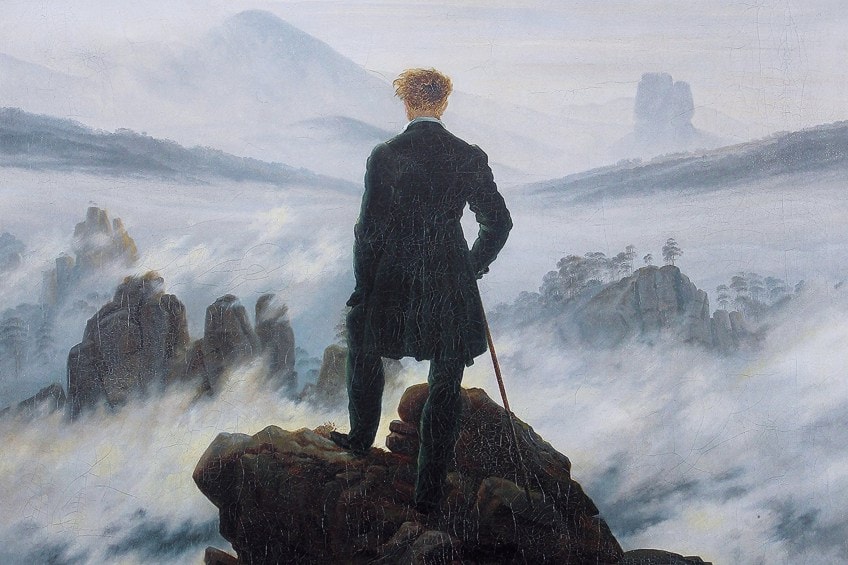
Flat as a pancake ... there's no modeling for dimensionality. There is tonal variance for near / distance ... but, it is actually inversely applied. Human perception perceives dark = distance, light = near. While there is a difference, it is inverse ... thus provides a degree of incongruity to the depth cues. Essentially a compression vs. an expansion.

The falloff of detail in distance vs. near isn't appreciably different. A different visual cue for depth (i.e. the rate of transition). Emulating that visual cue in drawing / painting / even PP sharpening manually is an exceptionally skilled task to do it in a way that is conducive to the perception. The graduation of transition rates in an optic provide a level of nuance that is difficult to emulate manually.

Again, there is a fallacy in presenting the painting as the "evidence" that different lenses don't contribute differently.

I gotta run ... but, faulty logic is faulty logic.


Mar 15, 2026 at 11:02 AM
gdanmitchell
Offline
• • • • • • •
Upload & Sell: Off
p.112 #19 · which lens has the most 3D POP?


You do know this painting, right?

As to "faulty logic," the evidence of dimensionality in paintings demonstrates that the quality is common and effective independent of any contribution of lenses.

While I and most others await and would accept proof that lens differences are significant contributors to this effect, convincing evidence of which is lacking, the means by which visual artists create such effects (and have done so for centuries) is abundant.

Romantic era painters were masters of the effect. See some examples here: https://artincontext.org/famous-romanticism-paintings/

Among the well-known examples on the page, a few stand out for "dimensionality":
Liberty Leading the People (1830) by Eugène Delacroix
The Titan’s Goblet (1833) by Thomas Cole
The Ninth Wave (1850) by Ivan Aivazovsky
The Kiss (1859) by Francesco Hayez

Photographers who are interested in learning how to create effects of depth, subject focus, and dimensionality would learn a lot about what really creates these effects from painting and then think about how to apply it to their photography by paying attention to subject placement, lighting, color relationships, effects such as vignetting, use of saturation, and more.


Mar 15, 2026 at 12:12 PM
Garmadon
Offline
• •
Upload & Sell: Off
p.112 #20 · which lens has the most 3D POP?


"The kiss" is a very good example for what I see as dimentionality.
Lets say it was a real scene the painter paint and it was lit that way . we both agree that the painter used cues to make this effect right?
Now , if a photographer took this image with 10 different lenses , your claim is that each and every one of them had the same pop?

I dont think so . These lenses will show different contrast and that is only one factor.

gdanmitchell wrote:
You do know this painting, right?

As to "faulty logic," the evidence of dimensionality in paintings demonstrates that the quality is common and effective independent of any contribution of lenses.

While I and most others await and would accept proof that lens differences are significant contributors to this effect, convincing evidence of which is lacking, the means by which visual artists create such effects (and have done so for centuries) is abundant.

Romantic era painters were masters of the effect. See some examples here: https://artincontext.org/famous-romanticism-paintings/

Among the well-known examples on the page, a few stand out for "dimensionality":
Liberty Leading the People (1830)
...Show more


Mar 15, 2026 at 12:57 PM
1       2       3              111              113              137       138       end


FM Forums | Leica & Alternative Gear | Join Upload & Sell

1       2       3              111              113              137       138       end


You are not logged in. Login or Register