Nifty Fifty wrote:
Simply a wrong aperture setting.
Lol. Yes. I tried them all, there was no correct aperture setting available. :-)
j4nu wrote:
POP
TOP!
3dpophunter wrote:
Jonas my Swedish friend. In my opinion it's a really nice image. Beautiful really! And it pops. But for me 3d pop is less about thin dof and more about extreme micro contrast
Hello my no-country stranger!
I get it. Thank you.
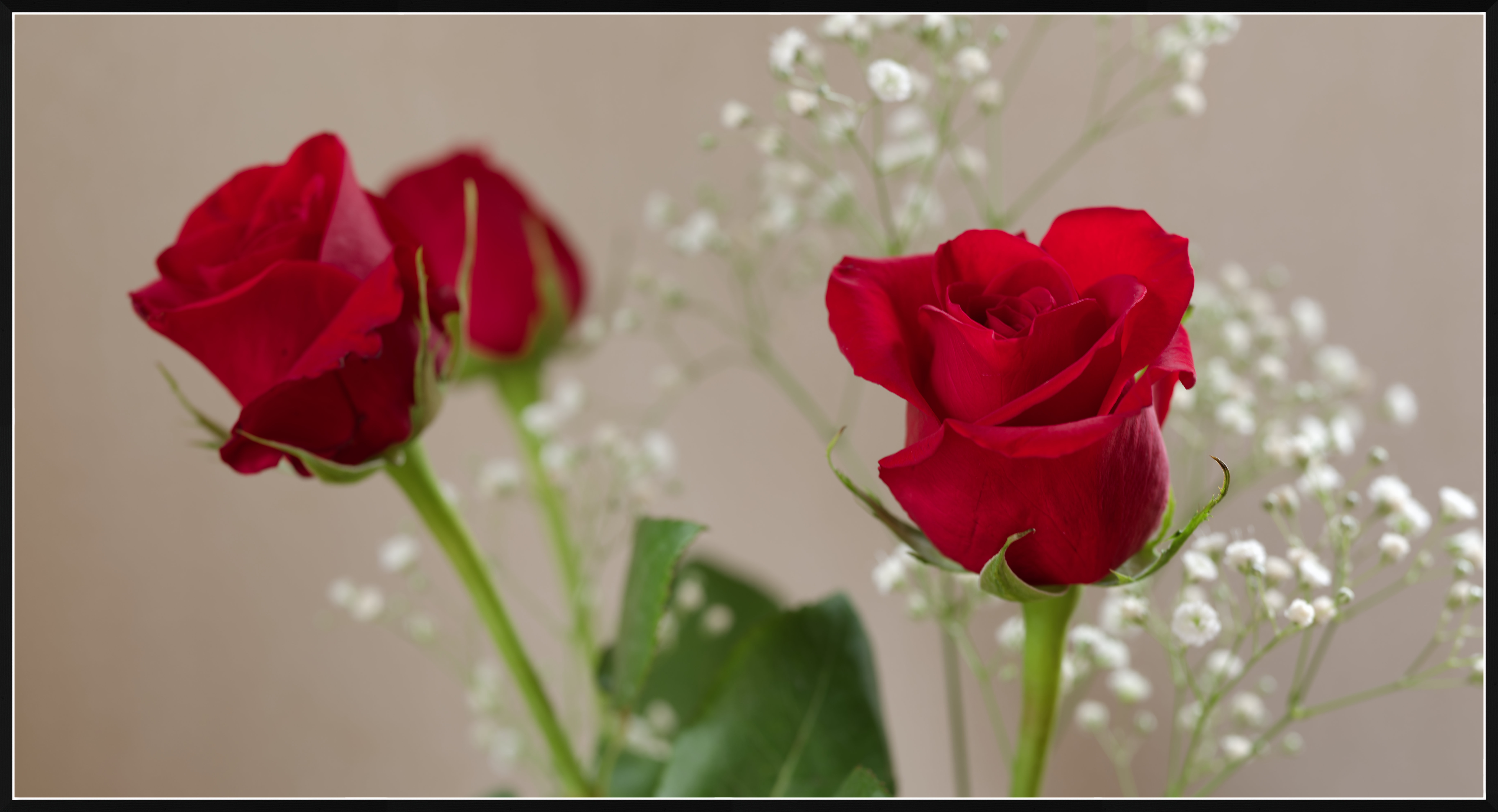
The microcontrast is an important part of the equation. The old Zuiko 50/2 doesn't offer a lot of micro contrast with todays measure. It just helps with nice images!
jcolwell wrote:
3D pop with thin DOF.
Thank you.
As you can see, it’s an old photo. I have mixed feelings about it when I look at it. Sometimes it’s just boring (wrong aperture setting :-)) and sometimes it’s actually quite nice, with the pistils popping up against me from the screen.
Here a high resolutin screen helps!
jojib wrote:
BTW Jonas, I would just imagine the difficulty in getting that image. On my 85/1.2 I've been trying a particular portrait for years. I've seen it either in Fortune or Time where they took portraits of several dignitaries. Wide open, I would guess it has to be an f/1.2 lens----only the eyes of the person are in focus. In my case most of the time I get one eye in focus but not two. In a Canon dpreview forum I asked how to get that kind of shot and his recommendation was to bracket by distance.
It wasn't that hard.The Panasonic G1 was the first MILC and the live view helped. As the lens is a macro lens the flower was within reach and I just had to move it around until it looked good on the screen. Double checking with enlarged view and at the second try or so I was happy.
People is another thing. The portrait style you mention is not to my taste. I want to see the face.
I have tried, with at least some success to focus manually: The camera set to 10 fps, turn the focusing ring slowly while pressing the shutter button, silent mode of course here... ;-) Small movements with the camera. Sometimes it works - but really, this pray and spray method is awful from a proud photographers point of view.
Jonas B wrote:
Lol. Yes. I tried them all, there was no correct aperture setting available. :-)
TOP!
Hello my no-country stranger!
I get it. Thank you.
The microcontrast is an important part of the equation. The old Zuiko 50/2 doesn't offer a lot of micro contrast with todays measure. It just helps with nice images!
Thank you.
As you can see, it’s an old photo. I have mixed feelings about it when I look at it. Sometimes it’s just boring (wrong aperture setting :-)) and sometimes it’s actually quite nice, with the pistils popping up against me from the screen.
Here a high resolutin screen helps!
It wasn't that hard.The Panasonic G1 was the first MILC and the live view helped. As the lens is a macro lens the flower was within reach and I just had to move it around until it looked good on the screen. Double checking with enlarged view and at the second try or so I was happy.
People is another thing. The portrait style you mention is not to my taste. I want to see the face.
I have tried, with at least some success to focus manually: The camera set to 10 fps, turn the focusing ring slowly while pressing the shutter button, silent mode of course here... ;-) Small movements with the camera. Sometimes it works - but really, this pray and spray method is awful from a proud photographers point of view.
Noted. Yes I want to see the full facial features too. So more often when using FF camera for headshots I often shoot in two apertures: F/5.6 and wide open. With my A6700, f/4.5 and wide open.
Image from jsherman999 on pentax forum but this has 3d pop on my computer. Probably the best example I've found since getting once again engaged in this thread😆
Following that line of thinking, one could say that only the fastest (brightest) lens produces this effect. However, in my experience, it depends more on the quality and amount of light used when working with the lens.
gdanmitchell wrote:
Putting aside your personal characterizations and borderline ad hominem for the moment, and instead considering the “that was not the question” idea:
Sometimes a question cannot be taken at face value, and pointing out the problem with the question is the most relevant and useful response when the question itself is flawed.
If someone asks, “What is the very best spoon for making soup?” and in the follow up there are answers claiming that some exotic spoon is the one that will greatly improve soup and that others fall short, the most useful response is — as mine and others has been — that getting some expensive, exotic spoon will make essentially no meaningful or objective improvement in the soup… and, sensing that the person posing the question really does want to make better soup, steering the discussion in a direction that might have that result....Show more →
I appreciate the effort toward the analogy ... but, the optic IS part of the light path / process. The spoon in your analogy is only a carrier.
That, and nobody suggested it needed to be exotic and expensive. You are clearly putting words in place to substantiate your continued desire to steer the thread, dismissively AWAY from the OPTICAL contribution ... which is very clearly that the request of the OP was to discuss the OPTIC.
There are plenty of folks who actually desire to discuss the optics, per the thread ... and yet, the interloping level to intentionally deride the conversation from the OPTICAL perspectives has been incessant.
I realize you think you are doing the FM community a giant favor by telling us how far askew we are to discuss the optics ...
Consider if you started a thread that specifically was to discuss non-Optical factors regarding their influence on the human physiological response of 3D-ish perception in a 2D medium.
Then everyone started talking about their favorite optic or how much the lens mattered. It would inconsiderate, rude and out of context with the intent of the original thread and you'd be in line to tell folks as much, asking them to stick to the topic (including the constraints / limits as requested). Which, btw ... maybe you should start such a thread. (Or, I could.).
It's not like we don't have drift in the discussions among members, we do. However, there is a difference between drift and something so overtly divisive, with so much incessant intent to REJECT the niche parameters of the OP. Being a perpetually divisive interloper is far different than natural conversational drift. Natural drift can / will "drift back" and return to the niche conversation when requested. You however, have ardently REFUSED to engage that aspect of the OP constraint to optical contribution, rather incessantly telling others they should be dismissive of its consideration, as well. In that regard, it isn't about your lack of understanding of light and composition ... it is about your lack of understanding about people.
Definitely a pop to that image. I also like Andere's image above. Those are medium format images---is there generally more 'pop' when you shoot with that format vs. full frame? I'm just curious because I've never shot with medium format.
I do not know about 3d pop or not , for me it is about photos that I can look into ,see into the distance. My mind is able to understand easily what is infront of what .
This thread makes me understand how subjective it is .
This might sound harsh, but to me this image has about the same kind of depth as a smartphone photo taken in portraitmode with the background blur effect set a little too high. Personally, it hurts my eyes.
Okay then prove it by creating a similar photo using a smart phone. I will wait.
Not sure what you are doing on here if you think that. My guess is that you have nothing better to do and just want to ragebait everyone.
Lens aberrations are best evaluated visually, so ask: what impact do they have on the picture quality the lens delivers? If you are image-priority this is the way to go, not focused more on lens purity. You need enough of the latter, and plenty of the delights that interest image-centered users.
CA almost never impedes my images. Back when I was learning the details of optics, it was natural to see independent reviewers, and industry figures and their acolytes in the review community, to see these people as expert in the field. So at first, CA? I better take that stuff seriously. But the truth is lenses have been put on a purity spiral here, with ever more ED and higher MTF necessarily being better. I'm not sure why you can take any satisfaction from knowing this, unless it delivers a positive, visible and tangible improvement to your images.
And why did so many not-so-corrected lenses get short shrift from these esteemed opinion leaders, when many such lenses were so obviously great imaging tools? They did not pass the checklist of lens quality, so they are not recommended! Wouldn't that make you think about it? Poor on my tests, but great images from it..
Anyway, I think it's possible to find lenses with a harmonious combination of these two paths - enough technical 'performance' to impart a real life experience to the image, but with pleasing naturalistic visuals. Certainly, it's a documentary style, which is where I need to be, as well as pursuing more interesting photography.
Peoples' love of the new is paradoxically taking them further away from deep image (3D) lenses at great speed, as they lose sight of the great 3D lenses before the recent modern era of high-tech lenses. I've read this lens from Sony is 'outdated' and 'outmoded' and other 'outs', I'm sure. I guess there is an industry to keep going, and your job is to consume more and more.
Another tell for 3D lenses is this: do they show the subject (if that is the aim of the composition, a nearby person say) as part of the scene of do they look like an overlay on top of the scene? This latter is why many refer to modern fast lenses as producing 'layers' in their images. But you can easily fool peoples' brains, but not their eyes. You may not process it mentally, but your eyes will see the telltale signs of focus fade at the edge of your subject in these compositions. Below see this effect in the hat fibres as they fade around the back.
Also want to add why the now embedded term '3D Pop' is fallacious and misleading. As there are two models of 3D, and the one being pushed by the industry features subjects 'popping' off the screen and detached from the reality lurking at the back of them. So this conventional model of 3D is actually helped by the term.
The other 3D model is the exact opposite because it values that contextual information is provided by the surroundings of the subject. That one is true 3D in that it portrays reality authentically, with naturalistic focus fade and subjects inside the scene. So the true 3D lenses should be referred to as 'deep image lenses' or 'highly dimensional lenses'. The term 'dimensionality' is never used by stills photographers, indicating the extent to which they have neglected the topic, or their lack of awareness of its value.
Yet, it is a commonplace expression in the more sophisticated cine world, which is obsessed with this characteristic, and rightly so. This situation is changing, through the vehicle of videography. But it will take time, in this slow-moving world of photography.


 ...
...