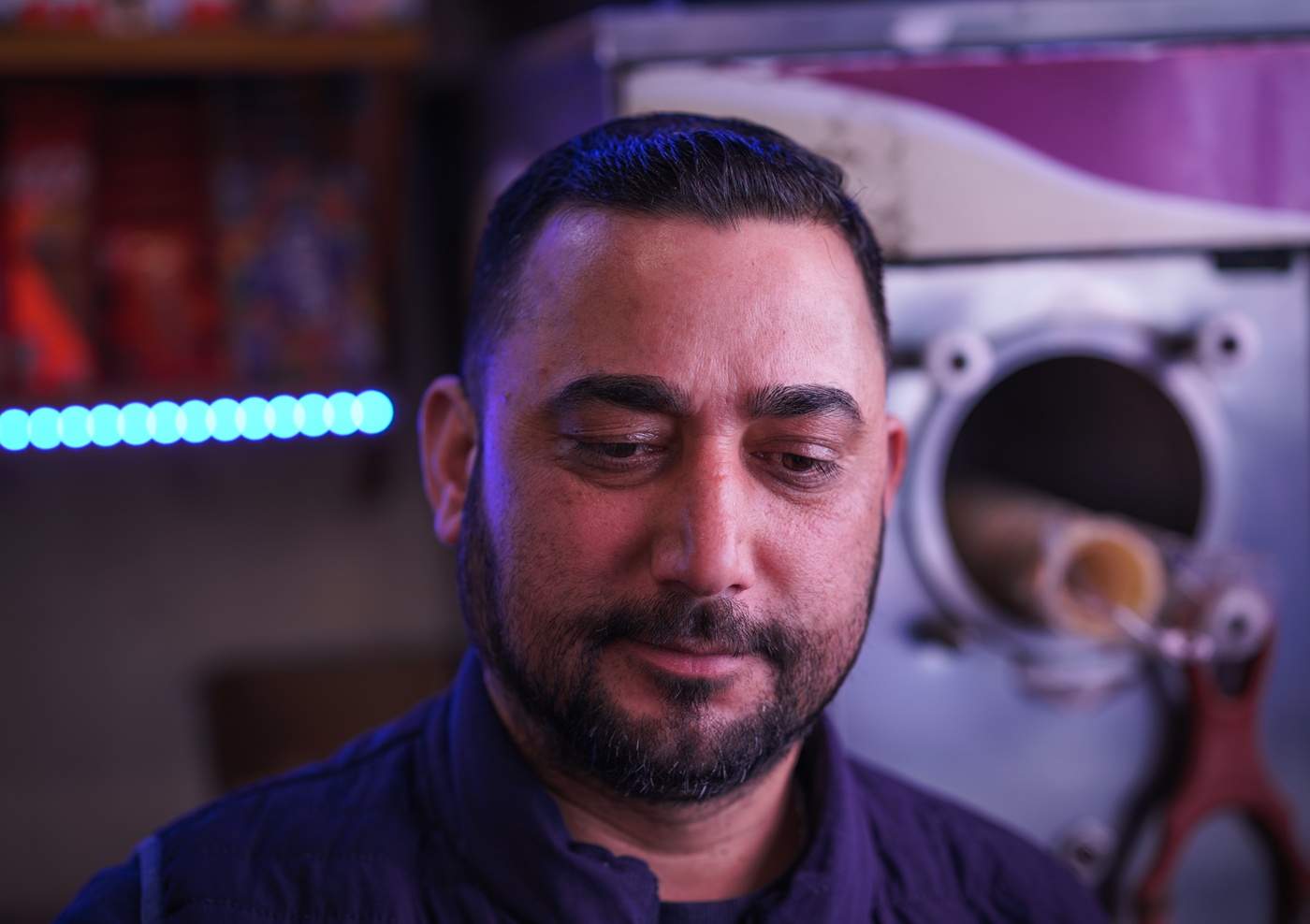
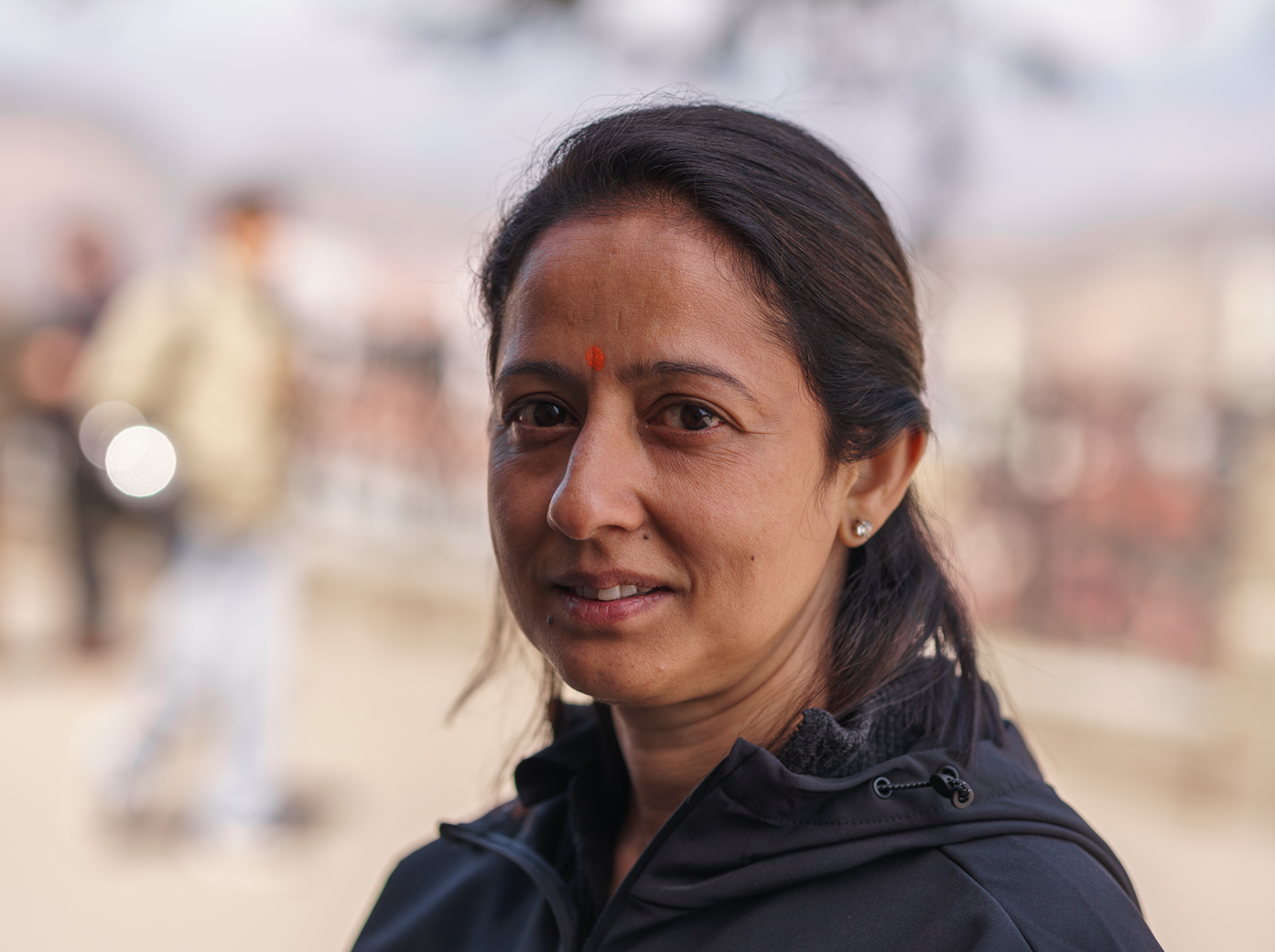
As far as the Sonnar 55/1.8 is concerned---I already belong to the 'choir'. I know that lens is capable of 3D pop and Philip your images reinforce that belief. The more I see your pictures the more I want to go to Central Asia.
I read a LOT of over-thinking and over-analysis in this thread.
My experience is simple. I've observed that some lenses that I use are more likely to produce a 3D effect than others. Keep things the same (same camera, same photographer, same limited composition skills), changes lenses, get some 3D. With some lenses I never get 3D. With others I get it more than occasionally.
darwinphoto wrote:
My experience is simple. I've observed that some lenses that I use are more likely to produce a 3D effect than others. Keep things the same (same camera, same photographer, same limited composition skills), changes lenses, get some 3D. With some lenses I never get 3D. With others I get it more than occasionally.
Yup, it's that simple for many folks.
Which, btw ... is the natural precursor to the organic / progressive question posed by the OP title.
In short, the Scientific Method begins with such observation and proceeds into the deeper waters of understanding, fueled by curiosity.
Includes some reference to our topic, the salient point being that it has aspects that are intentionally designed to be "opposite" in certain regard. Probably more in line with Philip's ideology than the maximum cutout / pop vibe, as the transition rates are different (by specific intent of design). Still ... acknowledges the influence of intentional lens design to render a perceptual effect.
RoamingScott wrote:
I remain convinced after all these years, and so many unconvincing examples later, that the lens has very little to do with inherent 3D-pop.
Andrew CD wrote:
Nicely illustrates that f/1.4 or faster isn’t really needed for decent bokeh. I realise that the APO-L’s rendering may not be everyone’s cup of tea, but I do like the way you’ve used it here — rather good 3D pop, in fact!
RoamingScott wrote:
I personally don't know what there is to complain about in the "rendering" and have never understood that argument against the APO-L line.
The importance of floating lens element (FLE) systems – it’s not a subject that attracts a great deal of attention, even in many reviews. Some fine lenses lack FLE, but not so many these days. This design feature will inevitably assume greater importance, as ever more lenses appear with closer minimum focus distances (MFDs) than seen in even the recent past.
Very few experts pay more than lip service to it, or explain why it matters to general photography – most mentions in a meta-analysis refer only to its role in macro photography. In most minds, it has quietly joined the other modern features in specification lists, along with aspherical surfaces, ‘special glass’ and (nowadays) de-click apertures. As an example, Zeiss new Otus ML 85mm carries a 300-word description that fails to mention its FLE.
It’s not a new idea. It’s widely believed that the first lens to use FLE was a Nikon 24/2.8, produced in 1967. Nikon’s terminology persists to the present day – they call their system ‘close range correction’ or CRC.
Research into design issues associated with our optical instruments is always informed by a look at what the cine world does, despite its heavy veil of secrecy. In this instance, high end prime lenses (Master Primes/Supremes) such as the ARRI/ZEISS Master Primes are known for using patented Dual Floating Elements technology to virtually eliminate breathing.
Many of the Zeiss Supreme Prime lenses utilize complex internal focusing systems to maintain high resolution. Leitz places a bet each way: the Summilux-C and Summicron-C ranges and perhaps some other recent additions (Hugo and Elsie) do use FLE, whereas the feature is not mentioned for the Thalia range.
So the industry leaders are devoting serious attention to the need for close focus performance at the design stage, with Zeiss using a system sufficiently original and effective that it was patentable. In passing, we note that FLE does much more than arrest lens breathing and deliver high resolution.
Its proliferation may have been retarded somewhat in the M-mount system by the inability of the rangefinder to reliably focus closer than 0.7 metres, but that’s speculation on my part. Below is a table of high-end stills photography portrait length, (mostly) manual focus lenses, showing their MFD and FLE status:
Lens - MFD - FLE Status
Leica Summilux-M 75/1.4 0.75m N
Leica APO-Summicron-M 75/2 0.7m Y
Leica APO-Summicron-SL 75/2 0.6m Y
Zeiss Milvus 85/1.4 0.8m Y
Zeiss Loxia 85/2.4 0.8m N (?)
Zeiss Otus 85/1.4 0.8m Y
Zeiss Otus ML 85/1.4 0.8m Y
Voigtlander Nokton 75/1.5 0.7m N
Thypoch Simera 75/1.4 0.6m Y
All M-mount Leica APO lenses use FLE, as do all Sony’s GM lenses. So we see it is very much a design imperative for many respected lens designs.
Most people think they merely get sharper results at close focus distances. But FLE is used to mitigate many other problems that arise in lens design. Before outlining these advantages, it should be understood that lenses are traditionally optimized for infinity focus, or near to it – this is their baseline.
For close focus imagery, FLE improves: lens contrast, sharpness, corner resolution in particular, field flatness, spherical aberration, chromatic aberration, distortion and focus shift. That’s quite a laundry list.
How does it work with respect to focus distances?
Many commentators assert that FLE is only really valuable at focus distances of approximately six metres, but they provide little in the way of proof for statements such as: ‘If you’ll be shooting things 20 feet away a floating element is probably not an advantage.’
Digging a little deeper, we find that floating lens element systems typically begin to move *as soon as the focus is adjusted away from infinity*. While a standard lens moves its entire optical block as a single unit, a floating system moves specific elements or groups independently and at different rates relative to the primary focusing group.
In most modern internal-focusing lenses, the floating group is linked to the focus mechanism and *begins its differential movement the moment you shift focus from the infinity position toward closer subjects*. That is clear enough.
In light of the above, it seems reasonable to expect that lens designers would set the ‘activation point’ for the FLE elements at the focus distance from which imaging performance would be improved. That point is just off infinity focus.
It is also to be expected that performance gains increase – perhaps in linear fashion – with closer focus as the lens approaches MFD. One result claims that, at medium distances (1–5 metres), floating elements continue to provide benefits, such as improved resolution for portraiture and documentary work.
For the past 20 years I have used lenses that lacked FLE, with one exception, Zeiss’s 21/2.8 Distagon. Recently, I started using
the Thypoch Simeras, all of which use FLE systems to enhance their close MFD capabilities. What a revelation they have made to my people photography, in particular I have noticed a great improvement in street portraits. This has been most noticeable in the 75/1.4 despite this lens not being great at distant work.
I don’t want to throw shade on my previous and other lenses here, but it seems FLE may be a large factor in the improvements. My modus operandi is to start up a chat with intended subjects, then ask to take their photo. I am already close to them, so close focus is established. It’s a tougher ask of the lens than half or full body shots, but 1.5-2m seems to be the most common distance.
What do I notice? Faces look very authentic, true to life. They have Their expressions are on full display, which works for me because these are regular people, not pouting would-be models doing a come-on look. They look so linear in the longitudinal direction, facial features are very well-shaped, as are skin tones. Image depth appears enhanced too, from the extra resolution and contrast, which must nevertheless be very carefully handled in the design.
I think in this case I have to eat humble pie, because I had not thought through the lack of these qualities in my other lenses used for this very challenging and fraught kind of photography. Now they simply appear flat and lacking in life, while still possessing their own style that I had bought them for. Here are a few from the Simera 75/1.4 to hopefully show what I am taking about.
For the past 20 years I have used lenses that lacked FLE, with one exception, Zeiss’s 21/2.8 Distagon. Recently, I started using
the Thypoch Simeras, all of which use FLE systems to enhance their close MFD capabilities. What a revelation they have made to my people photography, in particular I have noticed a great improvement in street portraits. This has been most noticeable in the 75/1.4 despite this lens not being great at distant work.
I don’t want to throw shade on my previous and other lenses here, but it seems FLE may be a large factor in the improvements. My modus operandi is to start up a chat with intended subjects, then ask to take their photo. I am already close to them, so close focus is established. It’s a tougher ask of the lens than half or full body shots, but 1.5-2m seems to be the most common distance.
What do I notice? Faces look very authentic, true to life. They have Their expressions are on full display, which works for me because these are regular people, not pouting would-be models doing a come-on look. They look so linear in the longitudinal direction, facial features are very well-shaped, as are skin tones. Image depth appears enhanced too, from the extra resolution and contrast, which must nevertheless be very carefully handled in the design.
I think in this case I have to eat humble pie, because I had not thought through the lack of these qualities in my other lenses used for this very challenging and fraught kind of photography. Now they simply appear flat and lacking in life, while still possessing their own style that I had bought them for. Here are a few from the Simera 75/1.4 to hopefully show what I am taking about. ...Show more →
Is the horrendous bokeh in the last image due to the floating element?
Nifty Fifty wrote:
Is the horrendous bokeh in the last image due to the floating element?
The images that poster shares to illustrate his posts about “pop” really make me wonder what he is seeing. To put it delicately, if we put those in a stack of prints of all sorts of similar photographs from other sources and asked observers to pick out those best exhibiting “pop,” I don’t think they would top the list.
After seeing so many beautiful images from various 40mm here that I narrowed my choices between a used Batis 40/2 and brand new Sony 40G. I'm an AF guy :-) I settled on the latter---it's my third G lens. My first one was the 85G that I sold when I went to Canon in 2004/2005. I also bought the Sony 15/1.4G for my A6600/A6700. And the 40G deserves the G label. Only from the Minds of Minolta :-)
I didn't claim the Voigts have 3D pop, nor that my images did, Andrew did. The APO-L line has excellent contrast, color and bokeh which all help to make the subject stand out. I don't think any of the 3 images in the post that you are desperately referencing show any level of what you all seem to think is "3D".
gdanmitchell wrote:
The images that poster shares to illustrate his posts about “pop” really make me wonder what he is seeing. To put it delicately, if we put those in a stack of prints of all sorts of similar photographs from other sources and asked observers to pick out those best exhibiting “pop,” I don’t think they would top the list.
Why don’t you post some of your own 3d images so we can all sit back and try picking them out. Lots of criticism without any images tells me a lot. Most critics in this thread talk a lot, say very little and show nothing…par for the course.
I think we will see a big difference if you will shoot head to head ,the 40 g and the 55mm you have.
jojib wrote:
After seeing so many beautiful images from various 40mm here that I narrowed my choices between a used Batis 40/2 and brand new Sony 40G. I'm an AF guy :-) I settled on the latter---it's my third G lens. My first one was the 85G that I sold when I went to Canon in 2004/2005. I also bought the Sony 15/1.4G for my A6600/A6700. And the 40G deserves the G label. Only from the Minds of Minolta :-)
Mom wrote:
Why don’t you post some of your own 3d images so we can all sit back and try picking them out. Lots of criticism without any images tells me a lot. Most critics in this thread talk a lot, say very little and show nothing…par for the course.
In part because I’ve been here long enough to know how that goes in these forums. Anyway, thousands of my images are online. A fair number are on people’s walls, corporate installations, and in books and magazines. :-)
Garmadon wrote:
I think we will see a big difference if you will shoot head to head ,the 40 g and the 55mm you have.
for sure Garmadon. The main reason why I bought the 40mm is for my upcoming Japan trip. I want to walk around with a model in the streets of Tokyo. I think the 55mm will be a bit long to best capture the environment. I have the Sigma 35/1.4 but it is bulky and heavy. I figure that the only 'weakness' of the 40G will be for full body portraits because it's only f/2.5. However, as I mentioned before I am not a purist so for my instagram photos I will apply the excellent Adobe lens blur filter to the full body shots.
The 40g is best for travel and if you attach a close up achromat to the weird tiny hood, then it makes for a very fast semi-macro setup that gets closer magnification than the Batis. I do like the Batis 40 CF the best due to overall rendering and lack of distortion. If you're going to Tokyo, you can pick up a mint copy there for under $500.