fredmiranda.com
Login

Moderated by: Fred Miranda
Username  

  New fredmiranda.com Mobile Site
  New Feature: SMS Notification alert
  New Feature: Buy & Sell Watchlist
  

FM Forums | Micro Four Thirds Forum | Join Upload & Sell

1       2       3       4              end
  

Sony Full-Frame vs. Olympus OM1 II?


Domako27
Offline

Upload & Sell: Off
p.5 #1 · Sony Full-Frame vs. Olympus OM1 II?


I’ve been following this discussion with interest. It seems like the consensus is that while Sony full-frame cameras excel in high ISO and raw dynamic range, the OM-1 II and other MFT bodies offer incredible stabilization, smaller lenses, and computational photography features that really enhance real-world usability. For travel, street, and documentary-style shooting, the weight and size advantages of the OM-1 II are huge, and its IQ is more than sufficient for most practical purposes—even for prints up to 20x30” or larger.

It really comes down to what you shoot: if you need ultimate cropping ability or extreme high ISO performance, full-frame still wins. But if you value portability, reach (thanks to the 2x crop), IBIS, and creative in-camera features, MFT is surprisingly capable and fun to shoot. The point about modern upscaling also means 20MP files can be stretched quite far without noticeable loss in quality, especially for web or social use.

In short: MFT isn’t just a compromise—it’s a highly practical, sometimes preferable option depending on your shooting style and gear portability needs.


Nov 11, 2025 at 10:46 AM
johnvanr
Offline
• • • • •
Upload & Sell: On
p.5 #2 · Sony Full-Frame vs. Olympus OM1 II?


Domako27 wrote:
I’ve been following this discussion with interest. It seems like the consensus is that while Sony full-frame cameras excel in high ISO and raw dynamic range, the OM-1 II and other MFT bodies offer incredible stabilization, smaller lenses, and computational photography features that really enhance real-world usability. For travel, street, and documentary-style shooting, the weight and size advantages of the OM-1 II are huge, and its IQ is more than sufficient for most practical purposes—even for prints up to 20x30” or larger.

It really comes down to what you shoot: if you need ultimate cropping ability or extreme high ISO performance,
...Show more

Good summary. I would add that Olympus/OM System is the only brand besides Leica that gives proven weather-sealing ratings, with actual IP ratings. There’s no other system I trust as much in inclement weather.


Nov 11, 2025 at 10:55 AM
ruthenium
Offline
• • • •
Upload & Sell: On
p.5 #3 · Sony Full-Frame vs. Olympus OM1 II?


Domako27 wrote:
I’ve been following this discussion with interest. It seems like the consensus is that while Sony full-frame cameras excel in high ISO and raw dynamic range, the OM-1 II and other MFT bodies offer incredible stabilization, smaller lenses, and computational photography features that really enhance real-world usability. For travel, street, and documentary-style shooting, the weight and size advantages of the OM-1 II are huge, and its IQ is more than sufficient for most practical purposes—even for prints up to 20x30” or larger.

It really comes down to what you shoot: if you need ultimate cropping ability or extreme high ISO performance,
...Show more

Here we go again ...
WRONG: "It seems like the consensus is that while Sony full-frame cameras excel in high ISO and raw dynamic range..."
(no, FF cameras don't excel in high ISO, and they excel in DR ONLY at or close to their base ISO 100)
WRONG: "if you need ... extreme high ISO performance, full-frame still wins"
(no, the FF Sony cameras don't have better performance vs. a m43 camera at extreme high ISO)


Nov 11, 2025 at 02:38 PM
Imagemaster
Offline
• • • • • • •
Upload & Sell: On
p.5 #4 · Sony Full-Frame vs. Olympus OM1 II?


Here we continue; X does this better than Y, or Y does that better than X, but those that spout those claims never post credible comparisons to prove those claims.


Nov 11, 2025 at 09:29 PM
Frogfish
Offline
• • • • •
Upload & Sell: Off
p.5 #5 · Sony Full-Frame vs. Olympus OM1 II?


Domako27 wrote:
OM-1 II and other MFT bodies offer incredible stabilization, smaller lenses, and computational photography features that really enhance real-world usability. For travel, street, and documentary-style shooting, the weight and size advantages of the OM-1 II are huge, and its IQ is more than sufficient for most practical purposes—even for prints up to 20x30” or larger.

It really comes down to what you shoot: if you need ultimate cropping ability full-frame still wins. But if you value portability, reach (thanks to the 2x crop), IBIS, and creative in-camera features, MFT is surprisingly capable and fun to shoot. The point about modern upscaling
...Show more

I completely agree on these points (edited out those I don't)

I'd add though that the point re. upscaling for Web or SM is redundant. Even a 2 mb files looks good on most monitors so looks great on a phone or iPad.

I upscaled (I think it was) 18 prints for an exhibition, they probably didn't need upscaling but I did it anyway to be sure the printer had more than enough file size to work with, for up to 60 x 80 cms. I could have printed MUCH larger. No-one could tell which were my non-upscaled Sony prints and which the upscaled OM prints.


Nov 11, 2025 at 11:34 PM
Frogfish
Offline
• • • • •
Upload & Sell: Off
p.5 #6 · Sony Full-Frame vs. Olympus OM1 II?


Imagemaster wrote:
Not everyone wants, needs, or can afford more than one system.

Apart from cost, for wildlife photography one should consider how much gear they want to lug around in the field. Do you want a versatile zoom lens that will allow you to use multiple focal-lengths for many reasons, or do you want to be stuck with one single focal-length unless you want to take the time and trouble to use two different TC's? On my walk this morning I took shots from 150mm to 500mm with the single 150-400mm lens. Not possible with the 300 f4 unless I used TC's
...Show more

To this I'd also add (to Tony's "Not everyone wants, needs, or can afford more than one system" comment) - do you ONLY use your gear for wildlife?

Most of us use our gear for far more (for me : travel, hiking, street, cityscapes and street portraits as well as now only occasionally for birds). In which case (esp. for plane travel and hiking) the size and weight become critical factors (OM-1 and 300/4 + x1.4 TC for travel birding). Virtually everything on my IG feed is from travel (either domestically in China or in London/Europe).
https://www.instagram.com/thedragonsfather/

Not a fan of the Sony 200-600 which I used on safari here (may not look good on a phone!) :
https://www.thedragonsfather.com/galleries-wildlife-icm-infra-red/south-african-safari-monwana

Having a (now much reduced) Sony kit in addition to my (now increasing!) OM kit I find I use the OM 95% of the time now. Just back from a 1 week trip (city) I took the OM-3 and Sony A7r5 (leaving the OM-1 at home). I didn't take one shot with the A7r5 (though I did also have a A6000 for IR which I used a couple of times).


Nov 11, 2025 at 11:51 PM
Imagemaster
Offline
• • • • • • •
Upload & Sell: On
p.5 #7 · Sony Full-Frame vs. Olympus OM1 II?


Frogfish wrote:
.........Sony A7r5 (leaving the OM-1 at home).


That makes you an ideal candidate to post side-by-side comparisons of the same subject with those two cameras.

Of course if you do, you know there will be critics that you did not do the comparisons correctly.


Nov 12, 2025 at 12:06 AM
Domako27
Offline

Upload & Sell: Off
p.5 #8 · Sony Full-Frame vs. Olympus OM1 II?


Absolutely, that makes total sense. At the end of the day, practical output is what really matters, and it sounds like your experience confirms just how far modern upscaling and sensor quality can take smaller formats like MFT. It’s impressive that the OM files held up so well next to full-frame prints—even at exhibition size. Definitely reinforces the point that MFT isn’t just a compromise; with IBIS, portability, and in-body creative tools, it can really stand on its own for serious work.


Nov 12, 2025 at 10:26 AM
Tom Reynolds
Offline
• • •
Upload & Sell: On
p.5 #9 · Sony Full-Frame vs. Olympus OM1 II?


I posted this on another forum of mostly Nikon users. However, I see no point of posting comparison shots because on the web you simply can't tell much. I viewed the images on a 32" 4K monitor.

-----------------------------------------------------------------

Looking at the pictures from four photographers spending 4 days at Laguna Seca Ranch I have developed some impressions.

1-From the low-cost version 1 100-400 to the 50-200 w/ TC. to the Z-8/180-600 to the $9,000 150-400 I personally found that sharpness was not really an issue. To quote Mike Lane, better but not much. I think that we make too much of sharpness. All shots cleaned up well in Photoshop and Topaz.

2-Reach does make a difference. When the reach of the 50-200 was not enough the shots suffered. This was also true to some extent between the 180-600 and the 150-400. When the additional reach was needed the longer 150-400 was better and cropping helped somewhat but did not seem to equalize.

3-The 180-600 did very well taking action shots without pre-capture. The photographer simply wasted a zillion shots to get the action. You would think that 50 f/s (50-200 and 150-400) would make a difference and occasionally it did. However, you would also think that the larger sensor would allow the zoom to back off a bit and have more time with the subject completely in the frame. Again, occasionally, it did but overall, the results seemed a wash.

Finally, anyone looking for a low-cost, lightweight setup should consider the old OM-1 mark 1 and the old version of the 100-400. In the hands of a novice making her first trip as a serious photographer, the lady did just fine. I think you can get out for $3000 for this rig.


Nov 12, 2025 at 12:22 PM
Frogfish
Offline
• • • • •
Upload & Sell: Off
p.5 #10 · Sony Full-Frame vs. Olympus OM1 II?


Tom Reynolds wrote:
I posted this on another forum of mostly Nikon users. However, I see no point of posting comparison shots because on the web you simply can't tell much. I viewed the images on a 32" 4K monitor.

-----------------------------------------------------------------

Looking at the pictures from four photographers spending 4 days at Laguna Seca Ranch I have developed some impressions.

1-From the low-cost version 1 100-400 to the 50-200 w/ TC. to the Z-8/180-600 to the $9,000 150-400 I personally found that sharpness was not really an issue. To quote Mike Lane, better but not much. I think that we make too much of sharpness.
...Show more

Interesting but not surprising Tom.

The only comment I'd make is that the OM1i and 100-400i was my (OM) birding kit before I bought the 300/4. As a birder with over 20 years photographing birds for me there's a night and day difference to me. The 100-400 is fine (very good even) at shorter distances (insects too), but once you need to shoot over say 7-8m the 300/4 is miles better.


Nov 13, 2025 at 01:26 AM


Search in Used Dept. 

Tom Reynolds
Offline
• • •
Upload & Sell: On
p.5 #11 · Sony Full-Frame vs. Olympus OM1 II?


I had a 300 f4 also, Better yes but "Night-and-day" is an overbid to me.


Nov 13, 2025 at 11:45 AM
Imagemaster
Offline
• • • • • • •
Upload & Sell: On
p.5 #12 · Sony Full-Frame vs. Olympus OM1 II?


I had a few copies of both the 300 f4 and 100-400 and most times could not tell the difference in image quality. Certainly not greatly noticeable. The prime certainly focused faster and more accurately.


Nov 13, 2025 at 12:07 PM
Frogfish
Offline
• • • • •
Upload & Sell: Off
p.5 #13 · Sony Full-Frame vs. Olympus OM1 II?


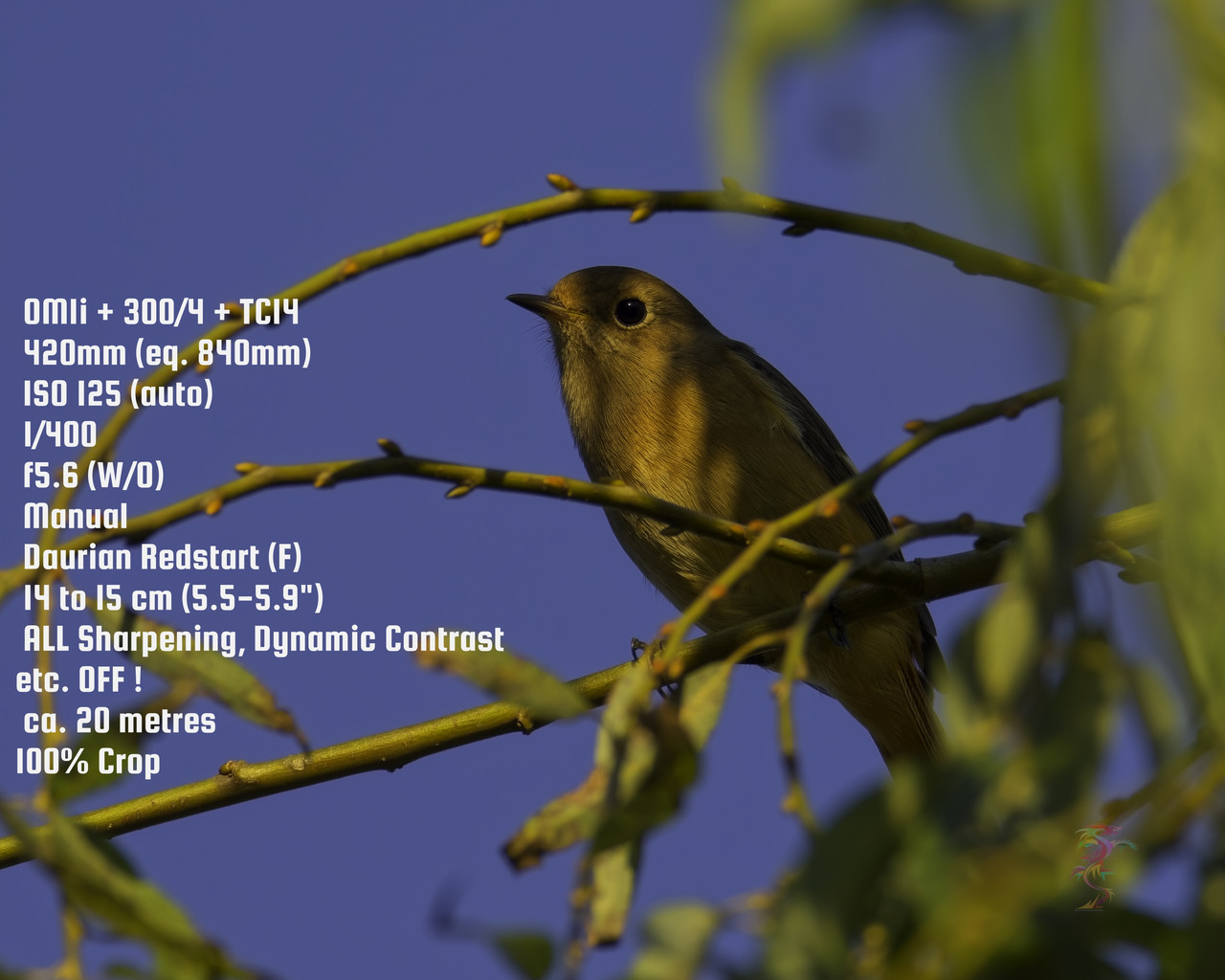
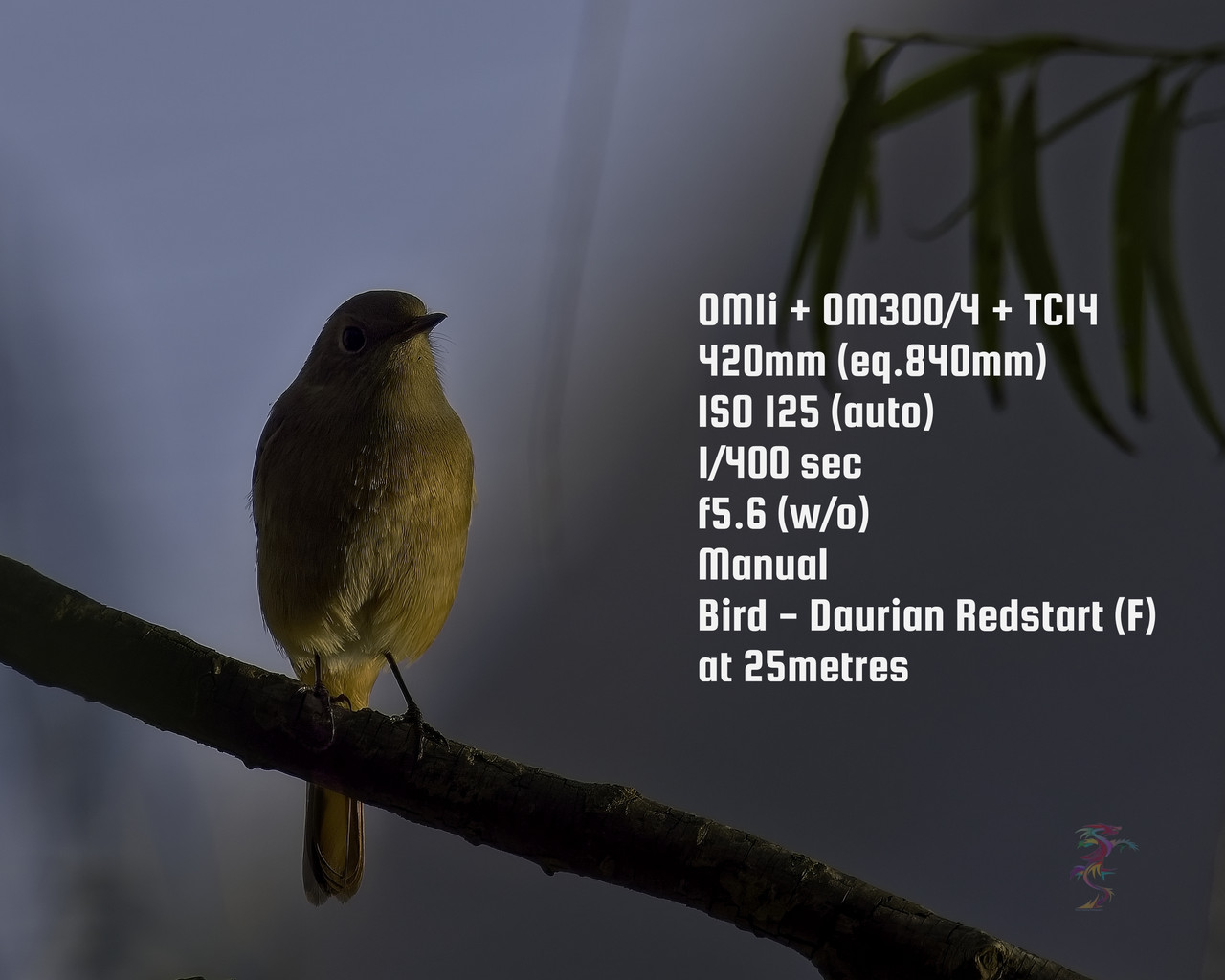
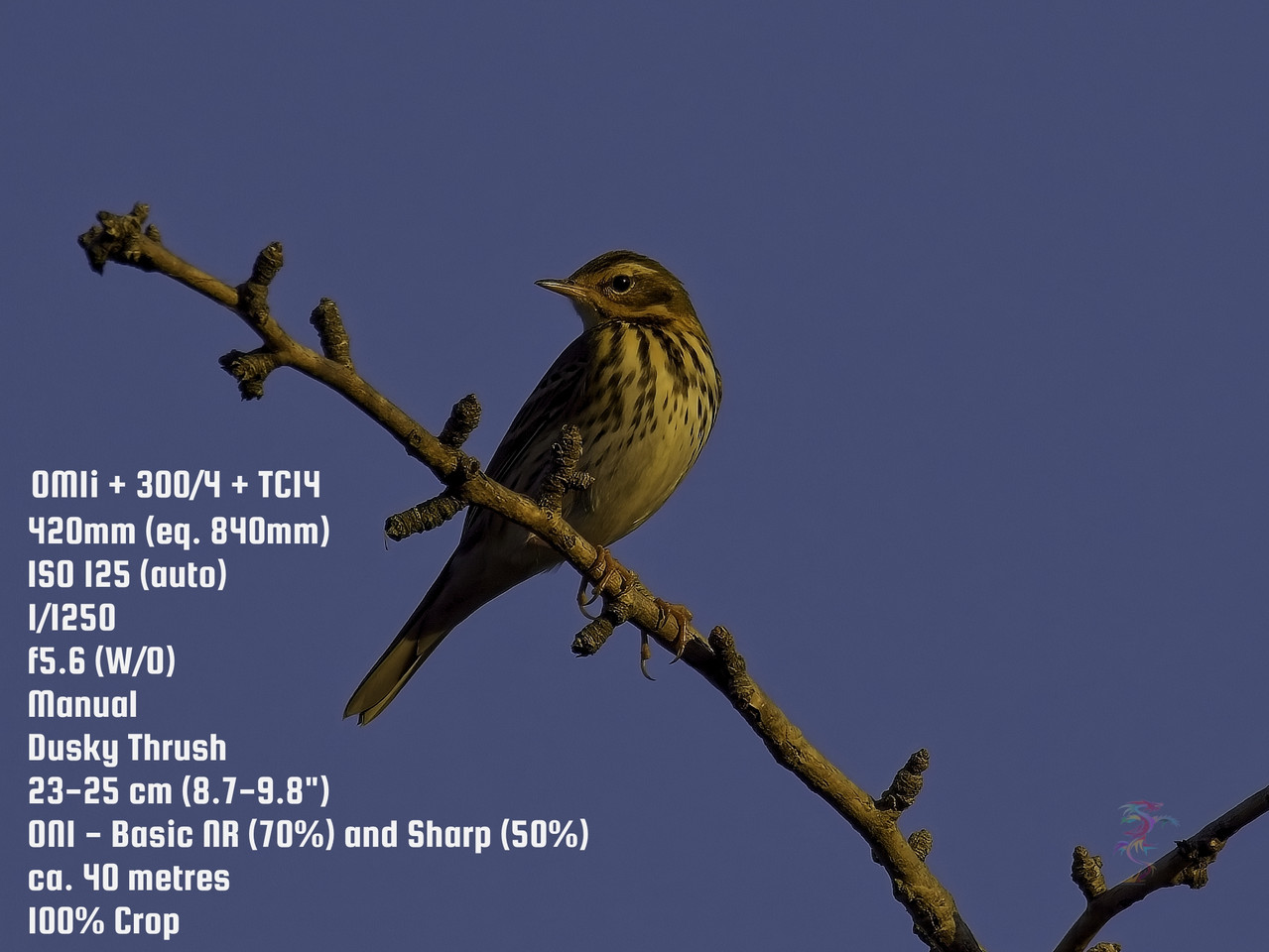
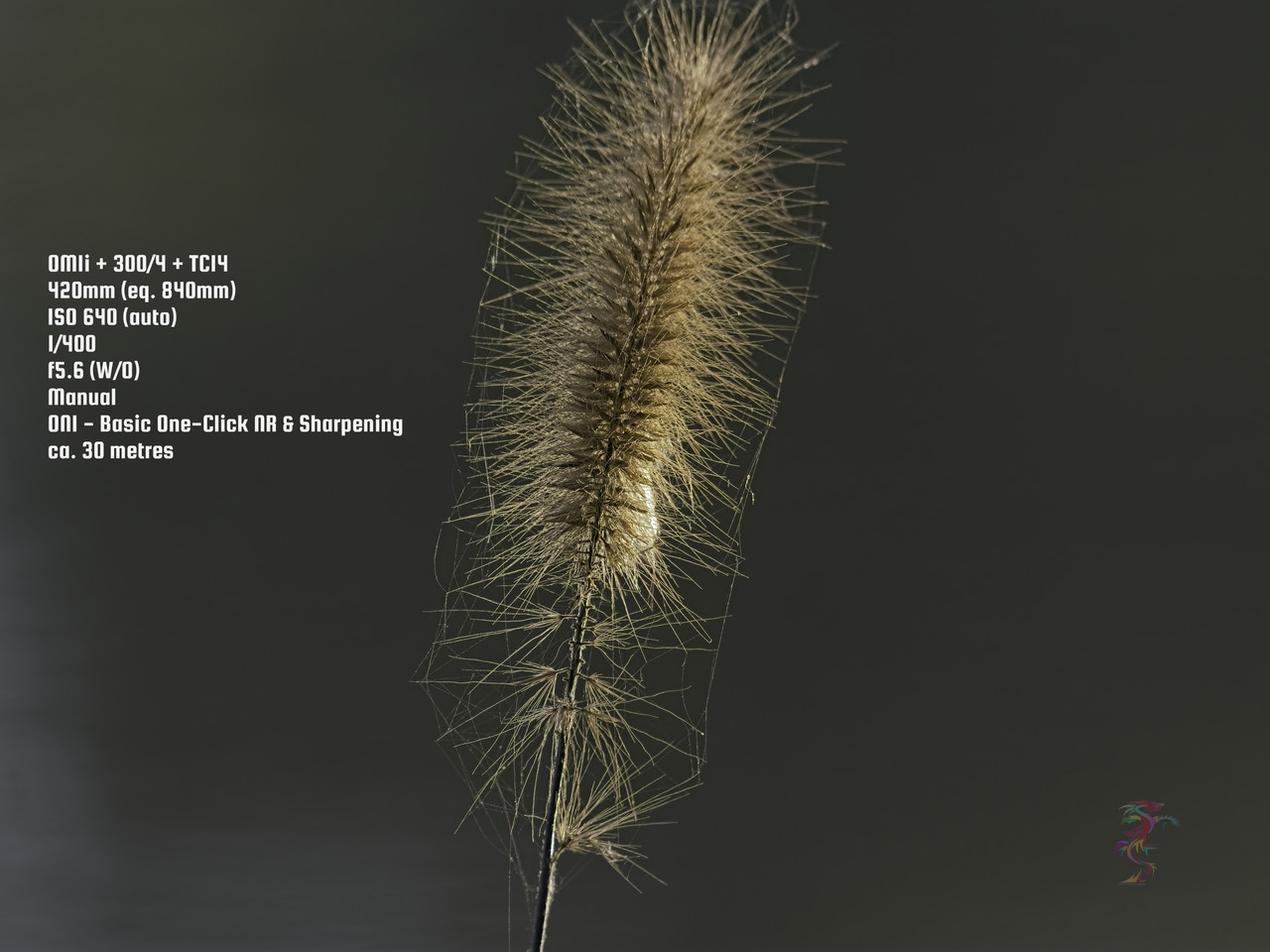
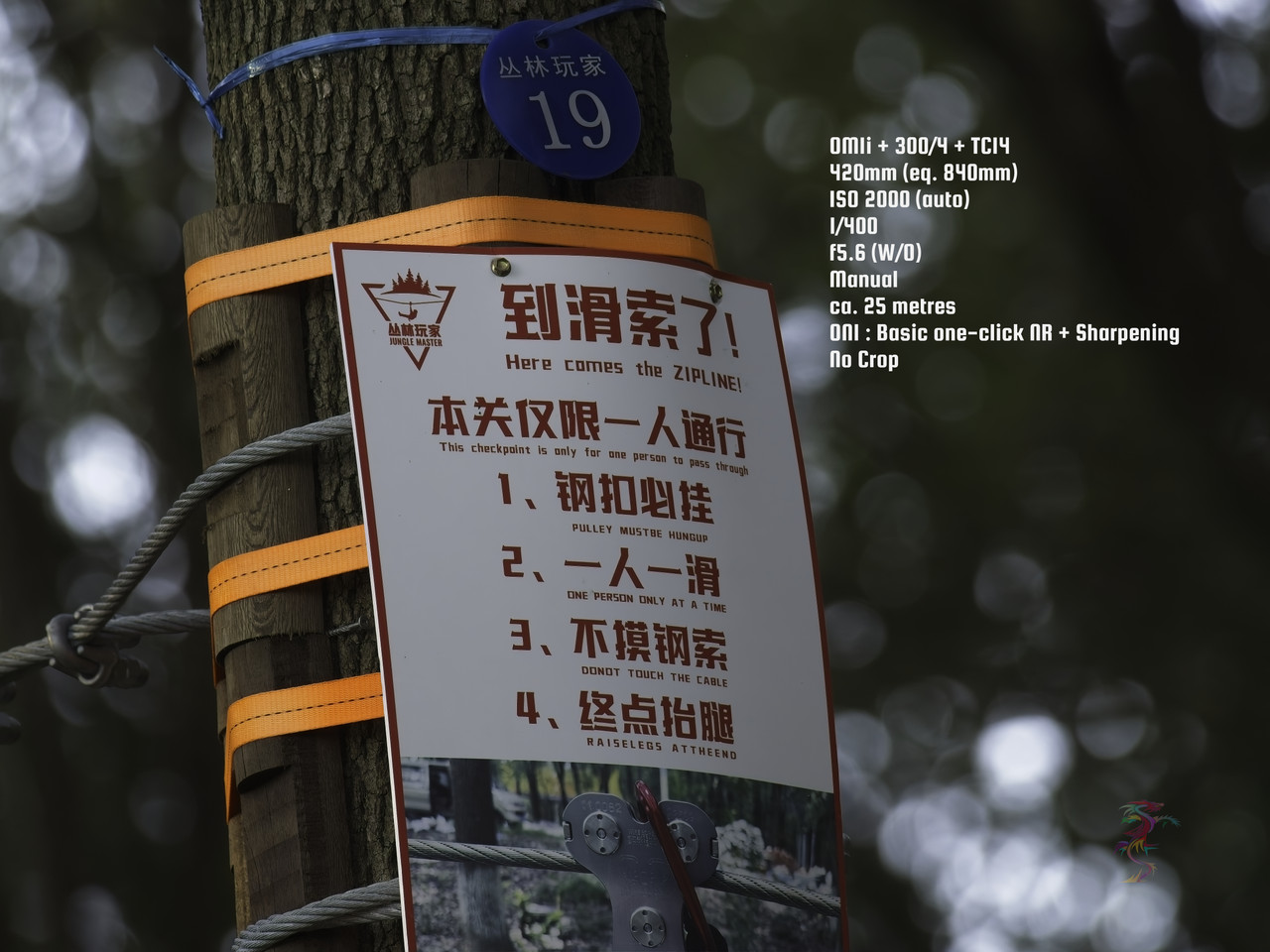
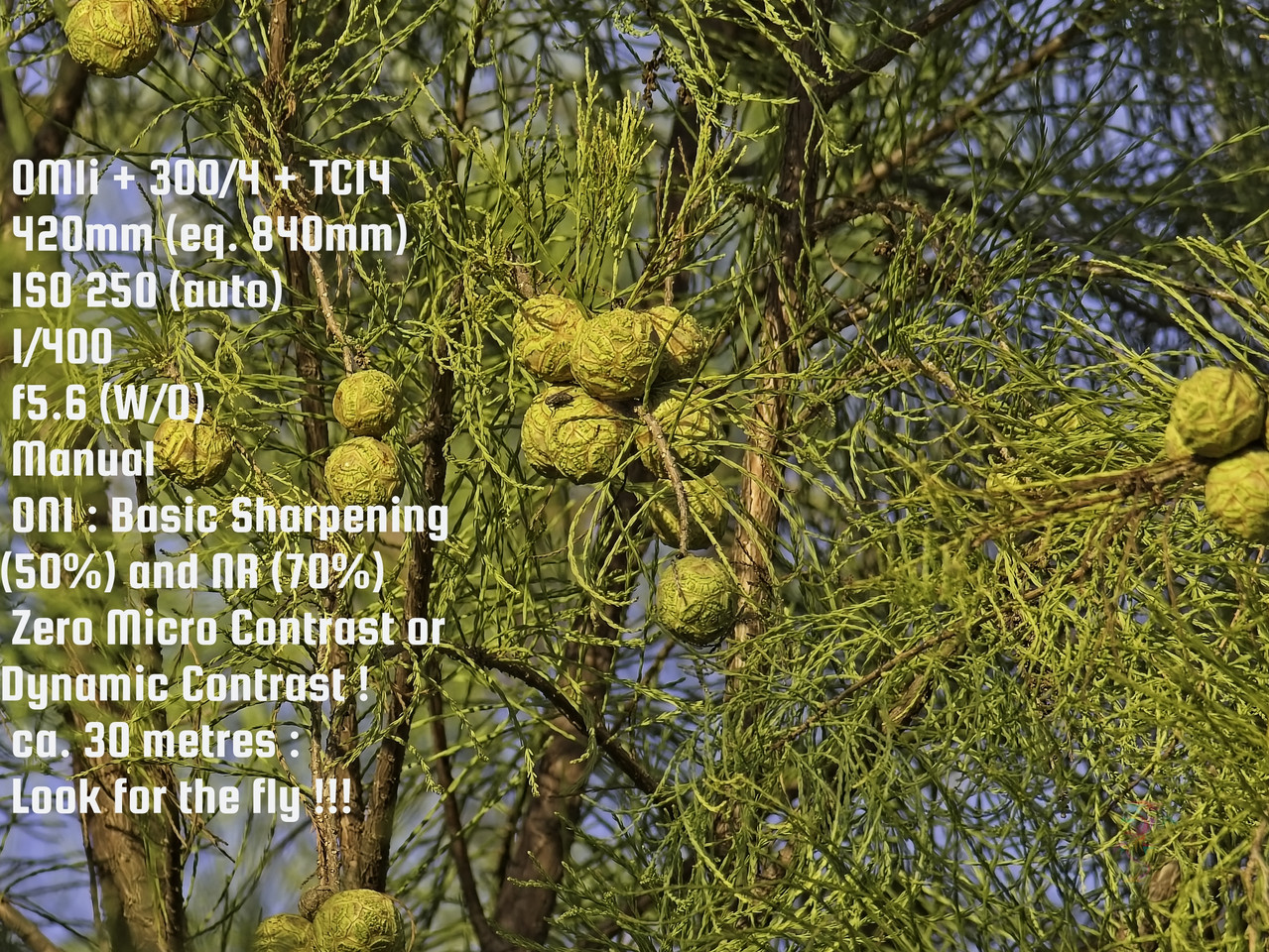
I went out yesterday, with the 300/4 and TC14, to give it a spin in the local park (as part of my daily steps)

I've got another set to post but these will do for now. Note the exceptional sharpness for small birds at distance (nothing close bar 3 buntings 2m away in dense undergrowth that utterly refused to show themselves) !

These were all at 20-40m. I've got another set shot at similar distances but high ISOs. Note that all are (minimally processed - details in the images) as I don't believe in posting RAWs or SOC since that isn't how they'll be presented and I want to see what the files can do.

Most are 100% crops - where stated. The files are very impressively sharp. Especially so when considering the distance shot at. Look at the fly on a tree seed pod at 20-25m ! What you are seeing here has gone through the Postimage website compression and then the FM compression algorithms.


Nov 14, 2025 at 10:34 AM
ruthenium
Offline
• • • •
Upload & Sell: On
p.5 #14 · Sony Full-Frame vs. Olympus OM1 II?


Thank you for posting!
What camera is OMIi with ISO 125 (Auto)?


Nov 14, 2025 at 01:06 PM
Frogfish
Offline
• • • • •
Upload & Sell: Off
p.5 #15 · Sony Full-Frame vs. Olympus OM1 II?


ruthenium wrote:
Thank you for posting!
What camera is OMIi with ISO 125 (Auto)?


Um the OM-1i? In M (with Auto ISO) if it's in danger of over-exposing it will go under the base 200 and drop to 160 or 125 even 80 if memory serves.


Nov 14, 2025 at 11:30 PM
Frogfish
Offline
• • • • •
Upload & Sell: Off
p.5 #16 · Sony Full-Frame vs. Olympus OM1 II?


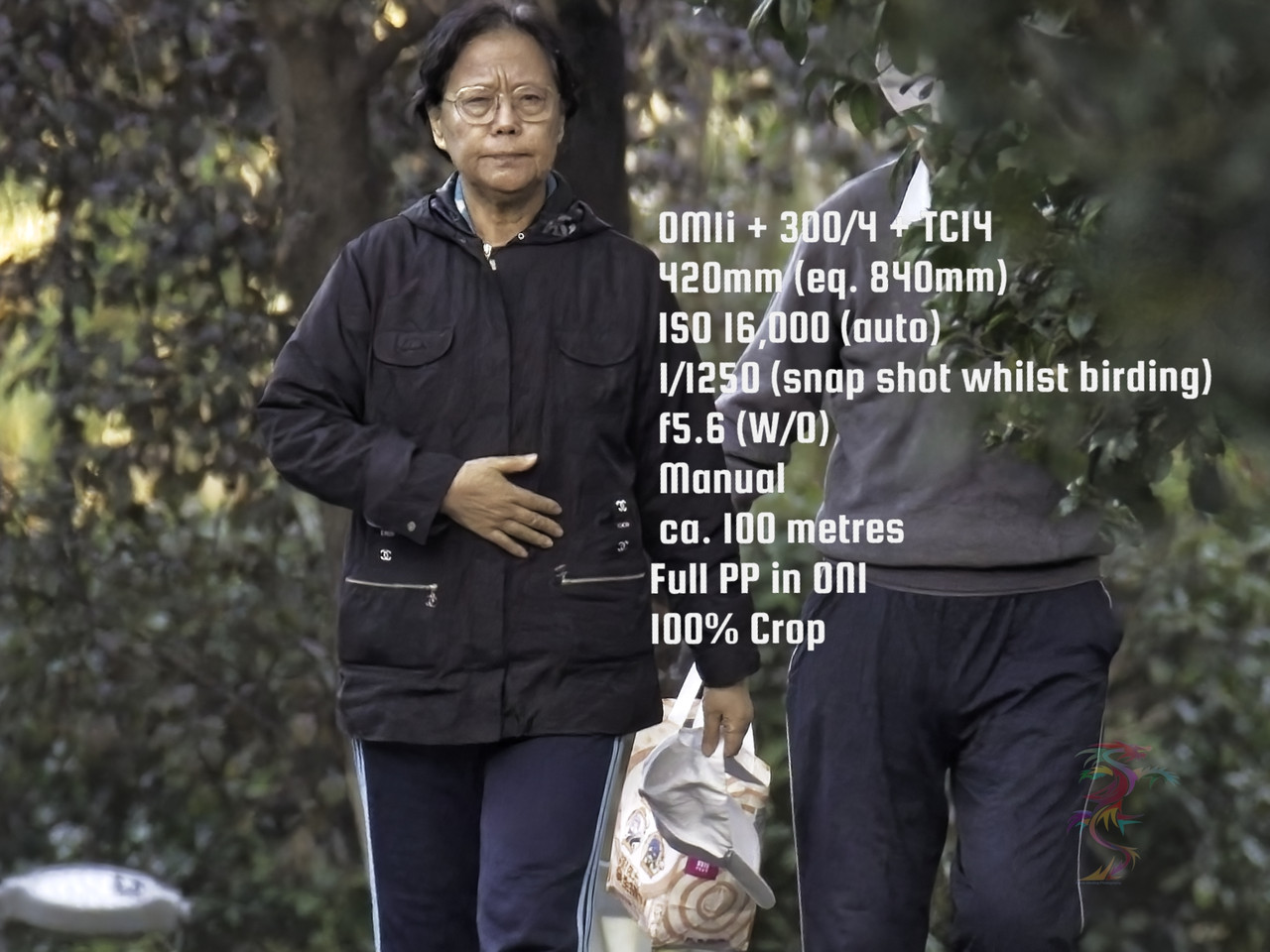
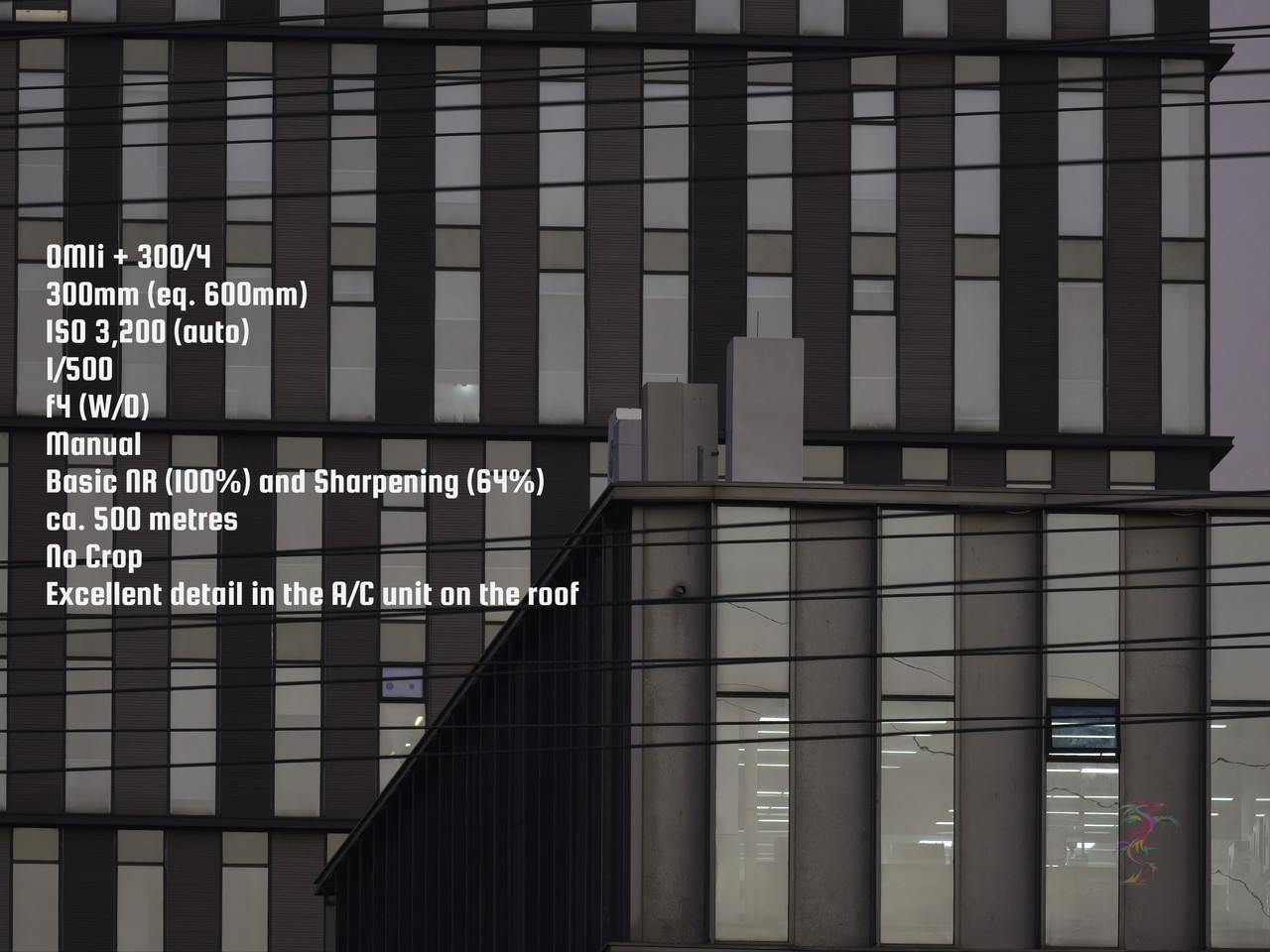
To complete the processing of images from my short birding excursion to the local park to run some tests on the 300/4 (w/wo the TC14).

As always bear in mind that on my computer these are even sharper than can be seen here. These were uploaded to Postimage (and compressed to 1280) and then subject to the FM site's compression.

This was a snapshot of a couple that came into view. High ISO and a long way away. I've tried to extract the most face detail I could so this is the only shot in these two posts that has been fully processed. Remember that it's a 100% crop at ISO 16,000 and taken at 100m !


Building detail at distance.


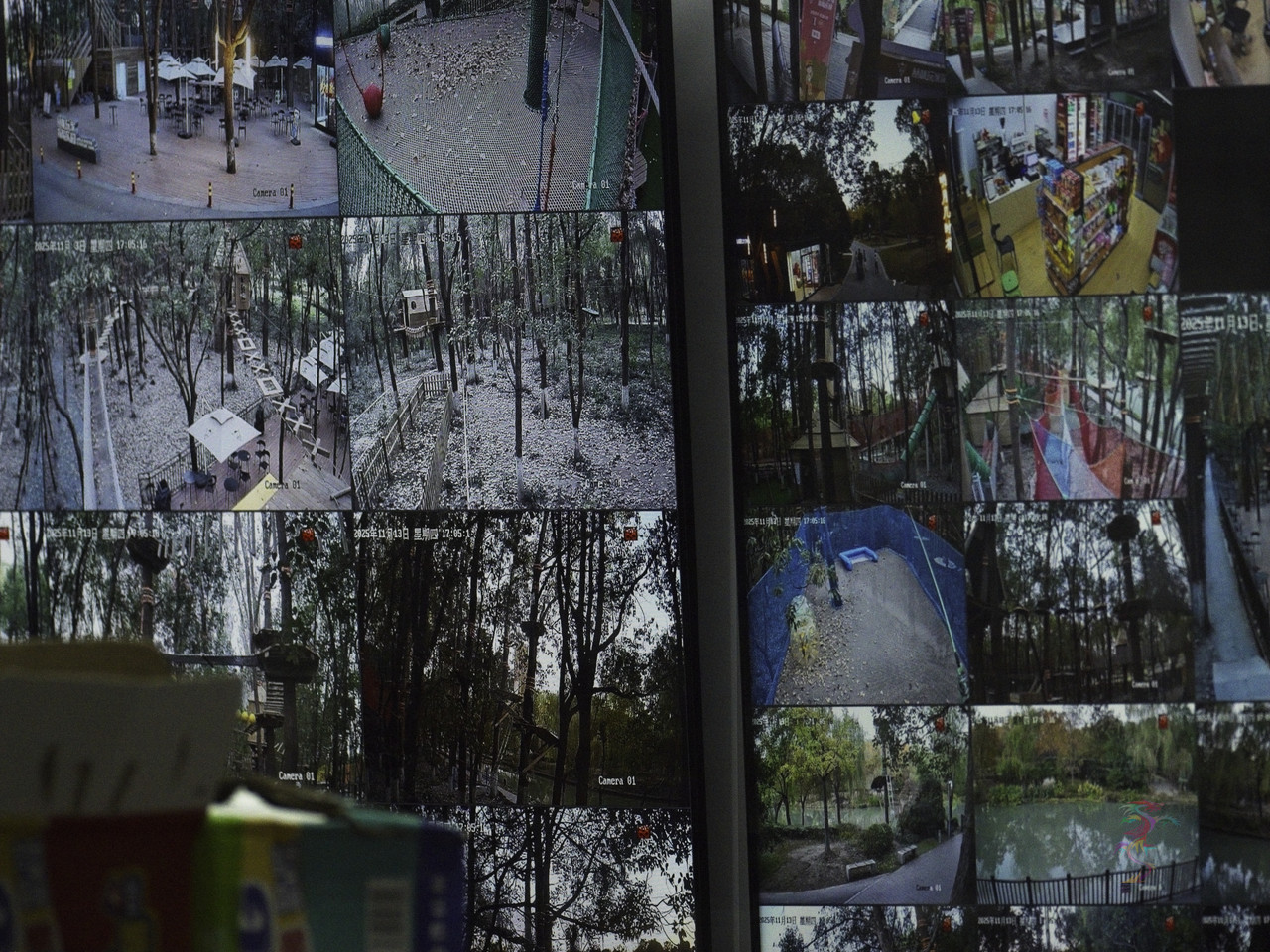
Just a FYI shot of part of the camera system protecting the park. About ⅓ of the cameras are shown here.


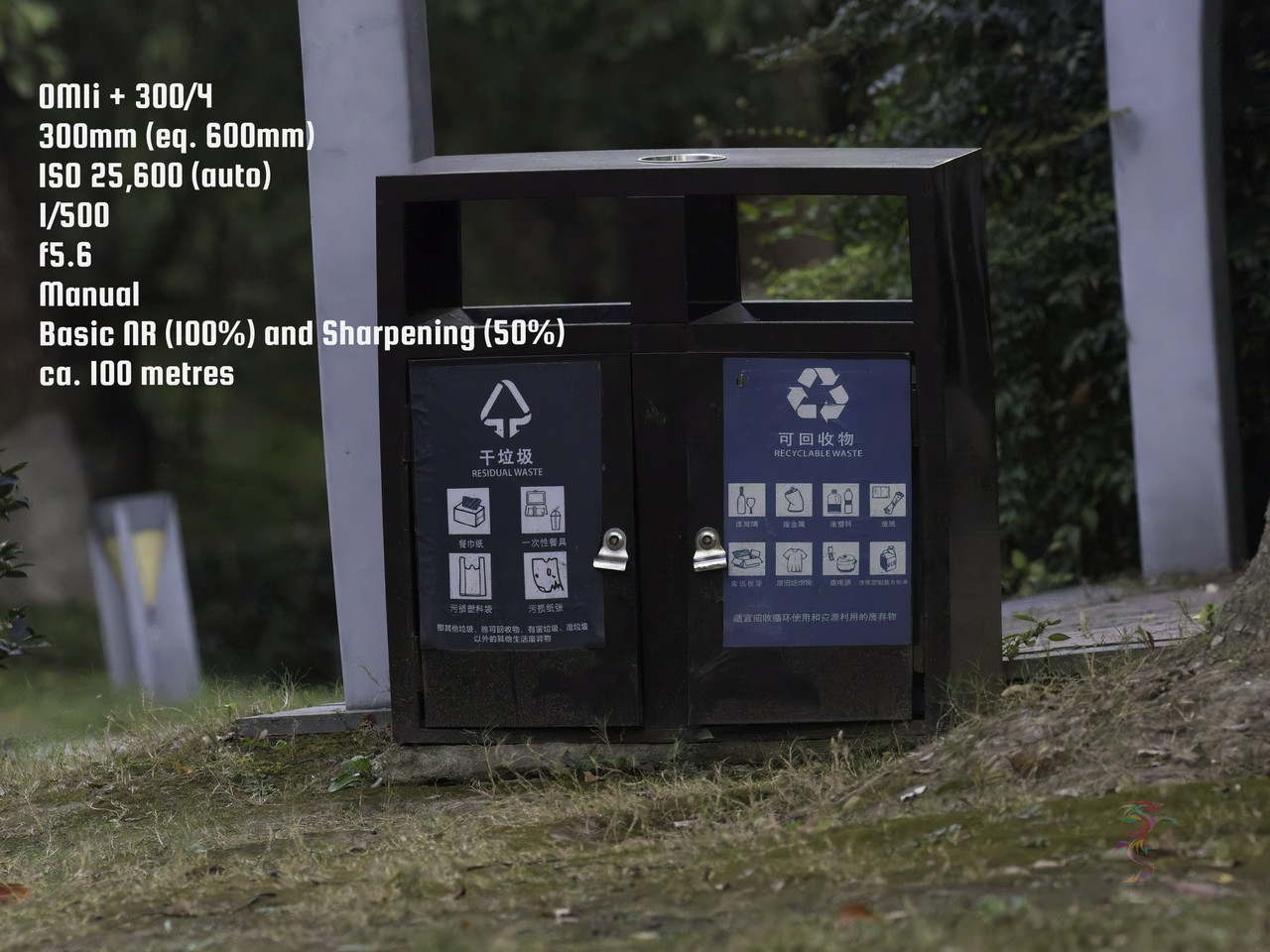
Detail in Rubbish bins at very high ISO at 100m


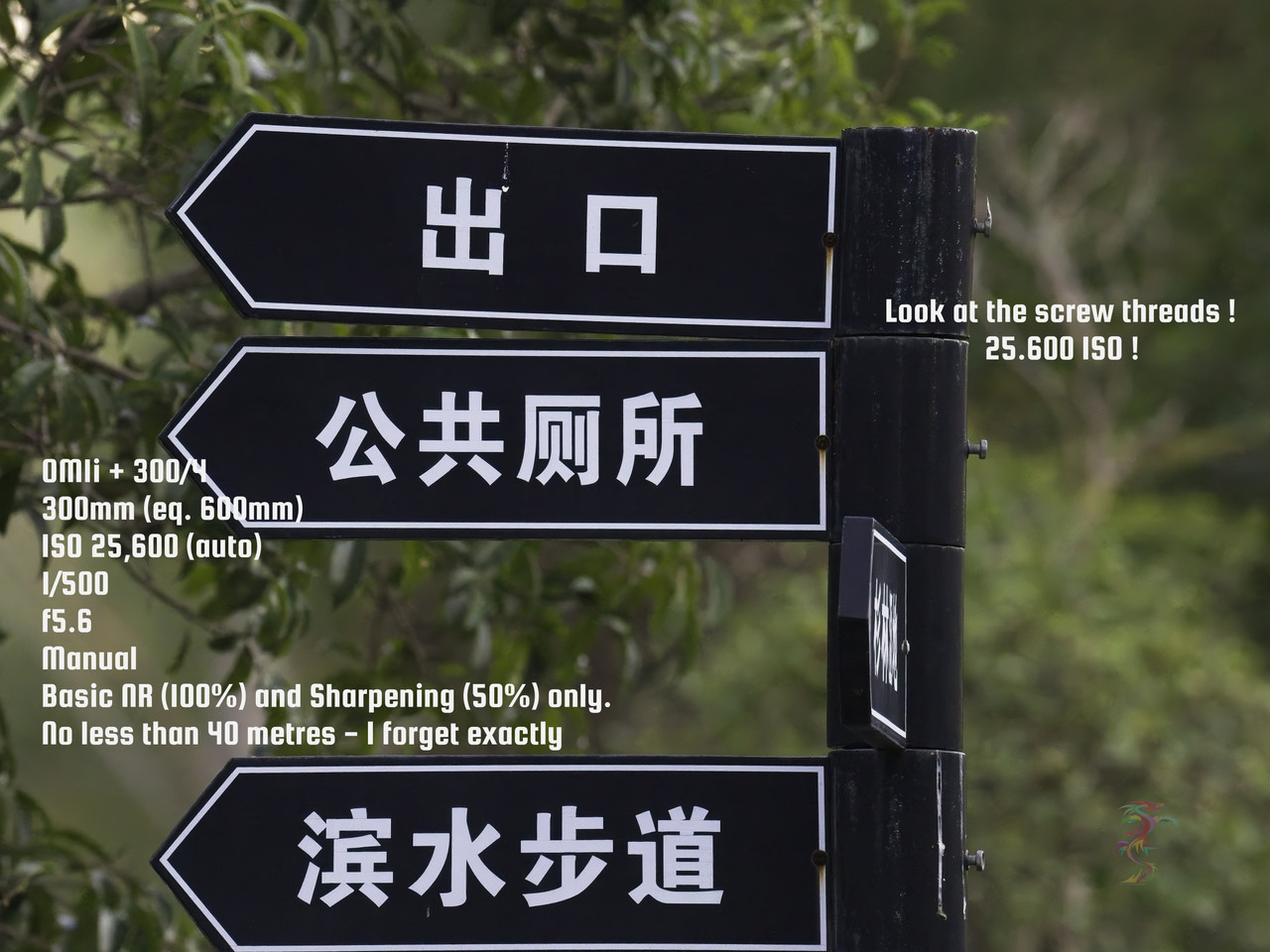
Amazing detail at high ISO at ca. 40-50m


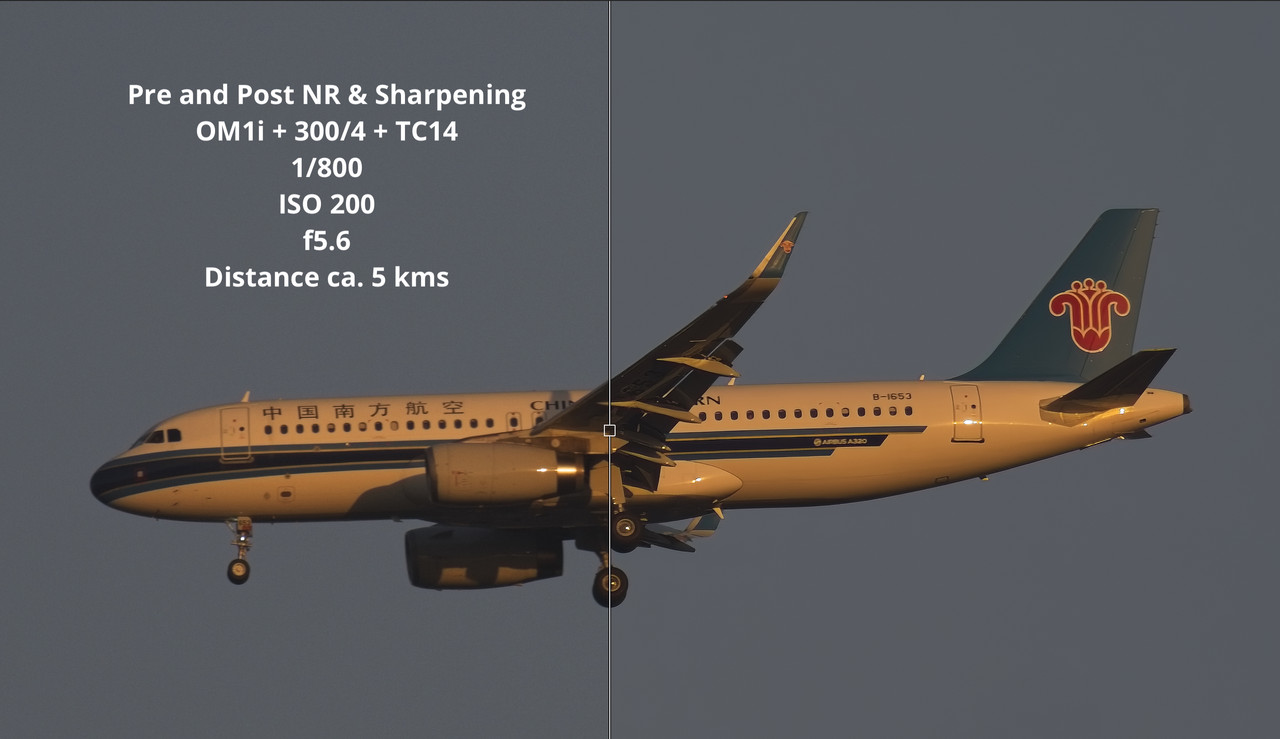
Before and after NR+Sharpening applied to a plane at ca. 5 kms (the distance to the flight path to one of Shanghai's airports. I know the flight path and distance to the airport because my home isn't far from it. Screenshot !


Nov 15, 2025 at 02:06 AM
ruthenium
Offline
• • • •
Upload & Sell: On
p.5 #17 · Sony Full-Frame vs. Olympus OM1 II?


Frogfish wrote:
Um the OM-1i? In M (with Auto ISO) if it's in danger of over-exposing it will go under the base 200 and drop to 160 or 125 even 80 if memory serves.


This doesn't sound right.
"In danger of over-exposing" suggests you want to protect the highlights.
The effect of the extended low ISO is the opposite - it works to reduce the highlights headroom.
More highlights will be blown out by changing ISO from the base to a fake extended low ISO setting.
The true base ISO, that is 200 on OM-1 and OM-1 II, corresponds to the "full-well capacity" of the sensor. The metering can be expected to be somewhat conservative, nevertheless when auto-ISO is at the base, then the sensor is close to saturation. When lowering ISO to a fake extended low ISO setting, the shutter speed becomes longer, and more light falls on the nearly saturated sensor. This is equivalent to adding exposure compensation. For example, changing from ISO 200 to extended ISO 100 is the same as setting exposure compensation to +1 (over-exposing by a stop), then digitally correcting in post. This gives you better shadows, yet blown out highlights. This is the same as the ETTR technique.
I wouldn't use the extended ISO, because it is misleading as it does exactly the opposite to what we expect when lowering ISO: it doesn't protect highlights but results in more blown out highlights.
For ETTR, when this is wanted (and when the highlights are relatively unimportant in a photo), it makes sense to use exposure compensation.
Having said the above, I don't mean to say that your use of extended ISO 125 did some real significant damage. My feeling is that the metering of OM-1 is somewhat conservative and there might be about 1/2 to 2/3 of a stop highlight headroom. In the last 4 months, I have been shooting my OM-1 with the exposure offset by +2/3 of a stop (in the settings). This systematic ETTR naturally can result in over-exposing in good light (but not in poor light), yet this is easy to correct in post, and I haven't so far run into real problems with the highlights. When I see them blown out, that typically (at least in my experience) hasn't been detrimental to the processed photos in Capture One.


Nov 15, 2025 at 09:50 AM
Frogfish
Offline
• • • • •
Upload & Sell: Off
p.5 #18 · Sony Full-Frame vs. Olympus OM1 II?


ruthenium wrote:
This doesn't sound right.
"In danger of over-exposing" suggests you want to protect the highlights.
The effect of the extended low ISO is the opposite - it works to reduce the highlights headroom.
More highlights will be blown out by changing ISO from the base to a fake extended low ISO setting.
The true base ISO, that is 200 on OM-1 and OM-1 II, corresponds to the "full-well capacity" of the sensor. The metering can be expected to be somewhat conservative, nevertheless when auto-ISO is at the base, then the sensor is close to saturation. When lowering ISO to a fake extended
...Show more

Interesting. And it does seem to explain why the OM1 drops ISO values in (and I think this is critical in hindlight) bright conditions however the subject was too small in the frame for the camera to know what the subject was (unless the bird eye AF transmits and influences the exposure).
Though in application it still seems to be lowering ISO values (since it can't control SS or Aperture) to compensate and control an over-exposed scene (of course ISO is applied post shot but that is the effect). In the shots above with an auto ISO value of 125 the sky may well have been overexposed with a value of 200 or 400 and the same SS and aperture, for example.

Note, since I was shooting in M, the camera could not extend the SS when it lowered the ISO to below base. I assumed it was lowering the ISO for the highlights in the scene, (I was using Matrix metering). I can see the camera changing the ISO values (sometimes to 80/125/160) when I meter the scene and this is always the case if I'm over-exposing a scene in M (I'll usually make adjustments based on those readings). So I don't understand how the assumption is now 'more highlights will be blown out'. That has not been my experience with sub-200 fake ISOs.

I almost always shoot with -0.3 to -0.7 EC and have no problem raising shadows, it's not enough to cause any issues at all and goes some way to protecting highlights.


Nov 16, 2025 at 12:35 AM
ruthenium
Offline
• • • •
Upload & Sell: On
p.5 #19 · Sony Full-Frame vs. Olympus OM1 II?


Frogfish wrote:
Interesting. And it does seem to explain why the OM1 drops ISO values in (and I think this is critical in hindlight) bright conditions however the subject was too small in the frame for the camera to know what the subject was (unless the bird eye AF transmits and influences the exposure).
Though in application it still seems to be lowering ISO values (since it can't control SS or Aperture) to compensate and control an over-exposed scene (of course ISO is applied post shot but that is the effect). In the shots above with an auto ISO value of 125
...Show more

I didn't know you shoot in M. My usage is different (I shoot in A mode with auto ISO, with ISO-A Lowest S/S 2s in C1, 1/60s in C2, 1/500s in C3, and 1/3200s in C4). Thus, I change the SS by switching from C1 to C2, or C3, or C4, as needed.

When ISO is manually changed in the A or S mode, then OM-1 II responds by changing the SS (in A) or aperture (in S).
Changing the ISO is an indirect way of making changes in one of the two settings that directly control exposure (ISO does not directly affect exposure).

Your case is more complicated. Let's recall that the base ISO is the base, it cannot be lowered. The extended low ISO still works at the base ISO! (that must be confusing). For example, at the fake ISO 100 in the A or S mode, the camera works at ISO 200 but doubles the exposure by changing the SS or aperture, respectively (e.g. by doubling the SS). Then, the processed signal from the sensor is digitally scaled back by a stop. This is exactly what one can do directly, by deliberately overexposing an image by +1 stop, then adjusting the exposure by -1 stop in post.

With the understanding of the above, now we can understand what happens in the M mode. Now, the camera cannot change the SS or the aperture. Thus, at the fake ISO 100, it shoots at the base ISO 200, yet still adjusts the exposure by -1 stop and saves the raw file. You can see this for yourself: in the M mode, take one photo with ISO 200, then take the same with ISO 100 (without changing anything else), then review the results on the back screen of the camera. You should see that the second photo is darker than the first.

The bottom line, I cannot think of a practical use case when the extended ISO can be useful in the M mode.
The only reason to use the extended ISO is in either A or S mode, when one wants SOOC jpegs to be properly exposed while achieving the same effect as the ETTR: overexposed then digitally scaled back. The ETTR does only the overexposing, and it requires the photographer to adjust the exposure manually in post, that is, ETTR necessitates working with raw files. The fake extended ISO values mean that both overexposing (in A or S mode) and the digital scaling the exposure back both happen in-camera.


Nov 16, 2025 at 12:52 PM
Frogfish
Offline
• • • • •
Upload & Sell: Off
p.5 #20 · Sony Full-Frame vs. Olympus OM1 II?


ruthenium wrote:
I didn't know you shoot in M. My usage is different (I shoot in A mode with auto ISO, with ISO-A Lowest S/S 2s in C1, 1/60s in C2, 1/500s in C3, and 1/3200s in C4). Thus, I change the SS by switching from C1 to C2, or C3, or C4, as needed.

Actually M is listed on every image

I have assigned other uses to the custom C dials. To just change the SS it seems a bit of a waste and I'm not going to reprogram them for every shoot.

ruthenium wrote:
When ISO is manually changed in the A or S mode, then OM-1 II responds by changing the SS (in A) or aperture (in S).
Changing the ISO is an indirect way of making changes in one of the two settings that directly control exposure (ISO does not directly affect exposure).

Yes exactly. As I mentioned above.

ruthenium wrote:
Your case is more complicated. Let's recall that the base ISO is the base, it cannot be lowered. The extended low ISO still works at the base ISO! (that must be confusing). For example, at the fake ISO 100 in the A or S mode, the camera works at ISO 200 but doubles the exposure by changing the SS or aperture, respectively (e.g. by doubling the SS). Then, the processed signal from the sensor is digitally scaled back by a stop. This is exactly what one can do directly, by deliberately overexposing an image by +1 stop, then adjusting the
...Show more

Yes I am quite aware but by using Auto ISO I am taking the requirement to constantly manually change it, in a fast moving environment (dark trees one moment, sky the next) out of the equation and allowing the camera to handle it. I don't really care how it handles it if the result is what I'm looking for. As I shoot RAW and jpg then the jpgs will already have been processed.

ruthenium wrote:
With the understanding of the above, now we can understand what happens in the M mode. Now, the camera cannot change the SS or the aperture. Thus, at the fake ISO 100, it shoots at the base ISO 200, yet still adjusts the exposure by -1 stop and saves the raw file. You can see this for yourself: in the M mode, take one photo with ISO 200, then take the same with ISO 100 (without changing anything else), then review the results on the back screen of the camera. You should see that the second photo is darker than
...Show more
Yes. the whole purpose of using Auto ISO !

ruthenium wrote:
The bottom line, I cannot think of a practical use case when the extended ISO can be useful in the M mode.
The only reason to use the extended ISO is in either A or S mode, when one wants SOOC jpegs to be properly exposed while achieving the same effect as the ETTR: overexposed then digitally scaled back. The ETTR does only the overexposing, and it requires the photographer to adjust the exposure manually in post, that is, ETTR necessitates working with raw files. The fake extended ISO values mean that both overexposing (in A or S mode) and
...Show more
Can you control both A and SS when shooting in A or S mode? No. That is the whole purpose (and practical use case) of using Auto ISO in M. If the camera decides to use the extended range that is not my choice, it's one made by the camera that programming determines to be the best option (not that the camera always takes the best option, but mostly)! It is also the fastest and easiest way to change SS on the fly (static bird, BiF, any other situation requiring an instant change in SS without losing the moment) without affecting the set min. A.
A simple roll of the SS dial with my thumb one way or the other - it doesn't have to be exact and I don't need to look/check.

I generally want the SS to freeze the bird and the A set w/o. So the only other variable of the 'exposure triangle' that can vary (even if it's post capture) is the ISO (moving from shooting into dark trees one moment to a bright sky the next).
Any bird photographer can tell you this (and I've been photographing birds for 20 years). Mostly all my birding associates shoot in M the majority of the time (for the reasons given above). The only time I switch to A + ISO 200 is when the conditions are static and I know the SS will not dip below my minimum (that I can control by setting a range).


Nov 17, 2025 at 01:06 AM
1       2       3       4              end


FM Forums | Micro Four Thirds Forum | Join Upload & Sell

1       2       3       4              end


You are not logged in. Login or Register