Fred Miranda
Offline
Admin
Upload & Sell: On
|
 p.1 #1 · Thypoch Eureka 28mm f/2.8 Review p.1 #1 · Thypoch Eureka 28mm f/2.8 Review | |
Pre-order the Thypoch Eureka 28mm f/2.8 ASPH. Lens:
Thypoch Store (Use promo code: FREDMIRANDA for a 5% discount at checkout)
B&H Photo
_______________
___
Review Quick Links:
- Initial Impressions
- Resolution and Contrast at infinity: Leica M10-R vs Sony A7R II
- Resolution and Contrast compared to Voigtlander 28mm f/2.8 Color-Skopar
- Sunstar Rendering
- Field Curvature
- Distortion
- Minimal Focus Distance performance
- Rendering
- Optical Vignetting and Specular Highlights shape
- Chromatic Aberration (CA)
- Final Thoughts
- Samples 1: Mini-vacation: At various distances and lighting
- Samples 2: Mini vacation continued, various distances and lighting
Back to Quick Links
Initial impressions of the Thypoch Eureka 28mm f/2.8 ASPH. lens:
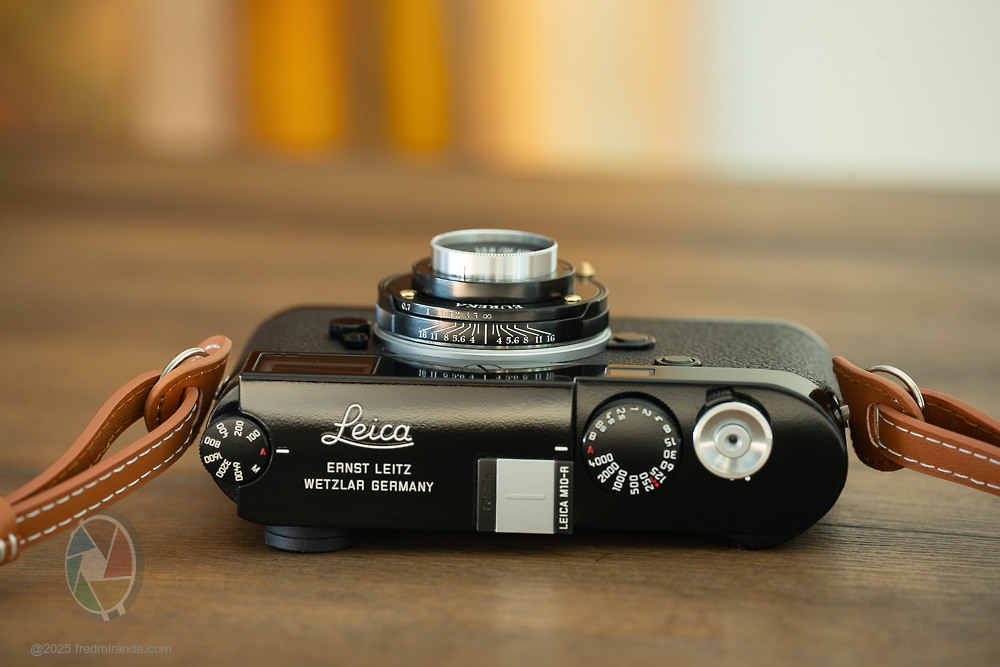
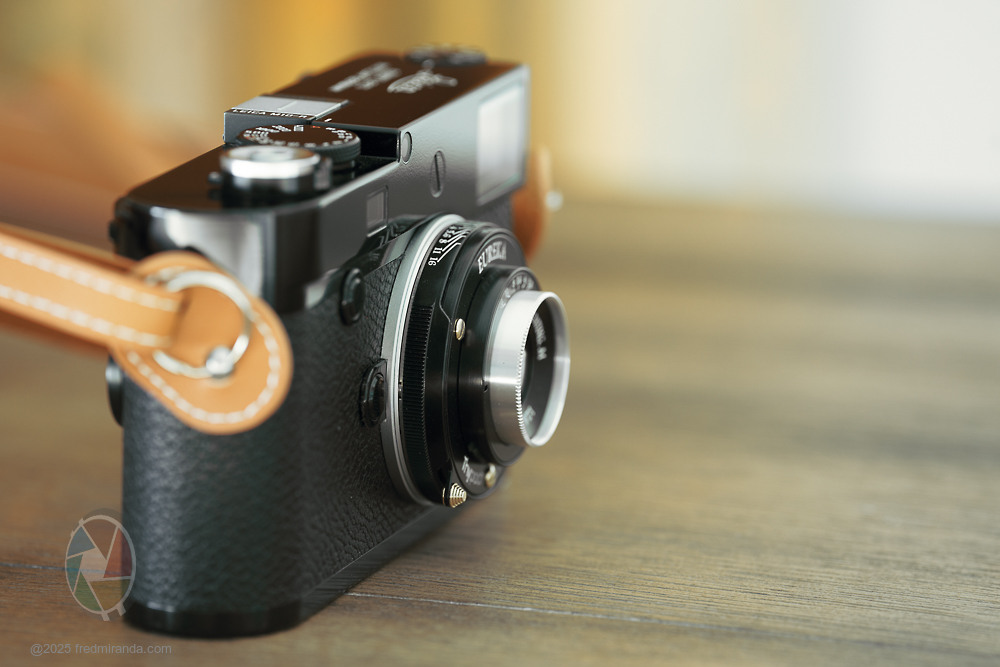
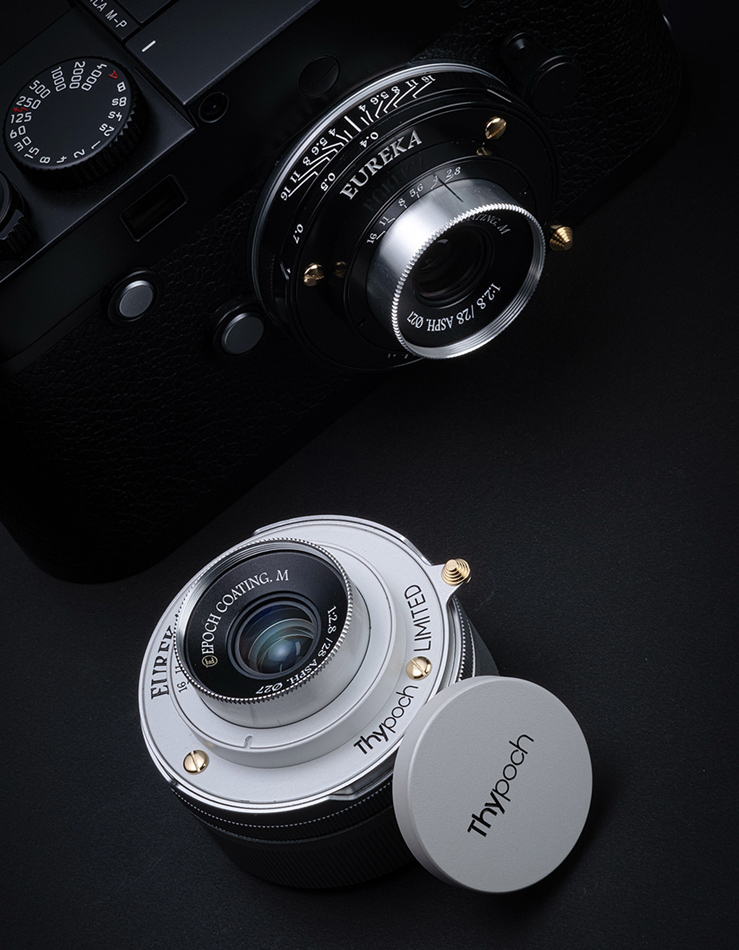
The newly released Thypoch Eureka 28mm f/2.8 ASPH. "Limited" arrived on my desk back in September. Since then, I've had a lot of time to shoot with it, and I'm excited to share my impressions, especially how it feels mounted on my Leica M10-R Black Paint and how it stacks up against other compact 28mm primes I own.
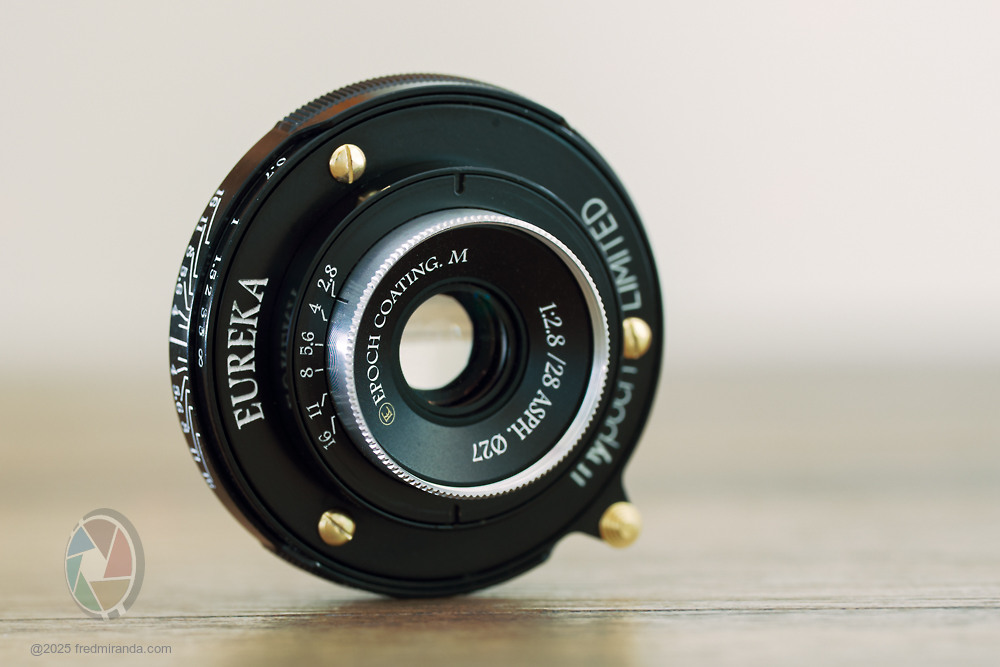
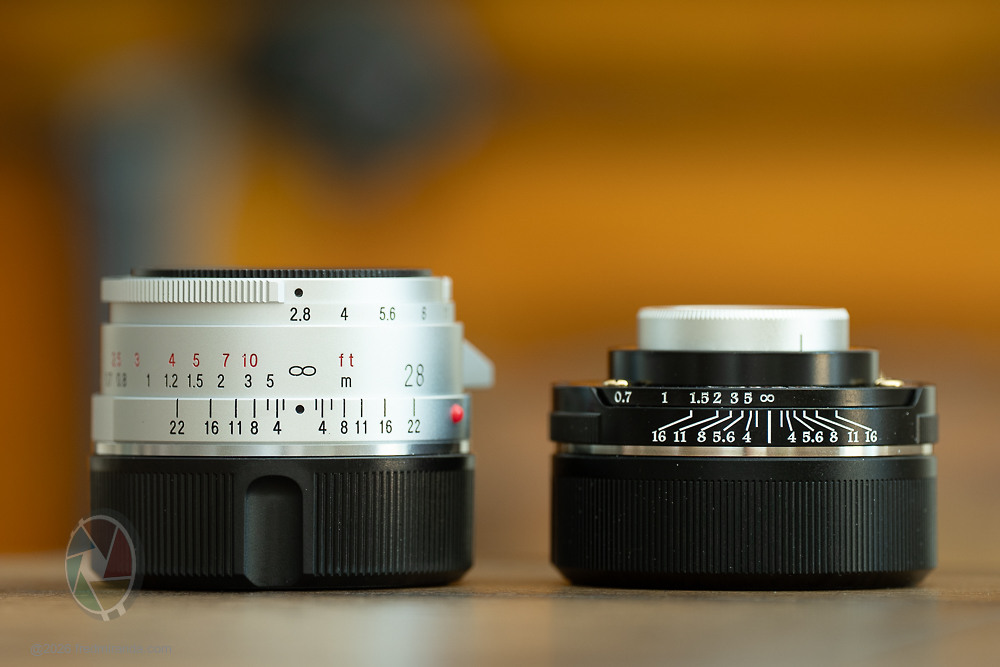
At first glance, my immediate reaction was: "This is tiny". And yet, despite its small size, the lens has serious heft. It's beautifully dense, made from brass, and weighs in at around 135 grams. That combination of compactness and substance is rare, especially in such a vintage looking piece.
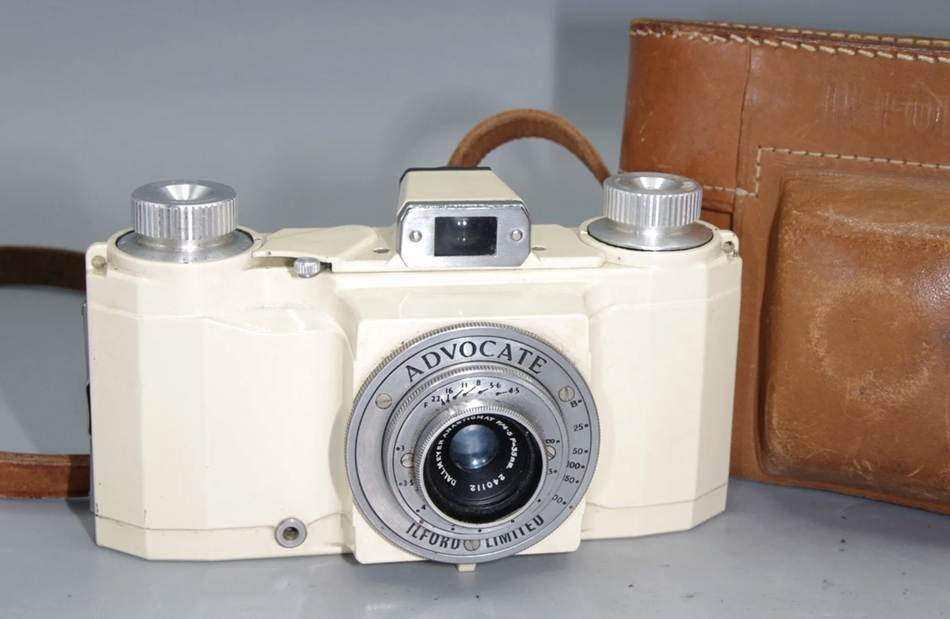
Stylistically, the Eureka is vintage through and through. It reminded me of classic lenses like the famous British-made Dallmeyer supplied with the Ilford Advocate 35 mm camera introduced in 1949. If you look at the photos (one below), you will see more than a passing resemblance between that old Dallmeyer 35 mm f/3.5 and this new Eureka 28mm f/2.8. The form factor, the metal construction, the restrained elegance...it all echoes that 1950's feel.
That said, the similarity is mostly in appearance. Optically, the Eureka is very much a modern lens. This is not a purely retro throwback in performance: expect sharpness, high contrast (especially in the center), and spherical aberration correction that leans toward contemporary rather than dreamy old-glass softness.
In this review, I put the lens through its paces by evaluating resolution, contrast, distortion, vignetting, chromatic aberrations, and, of course, how it stacks up against other 28mm f/2.8 lenses I’ve used. For comparison, I’m placing it alongside the Voigtlander 28mm f/2.8 Color-Skopar, another ultra compact modern design in the same class.
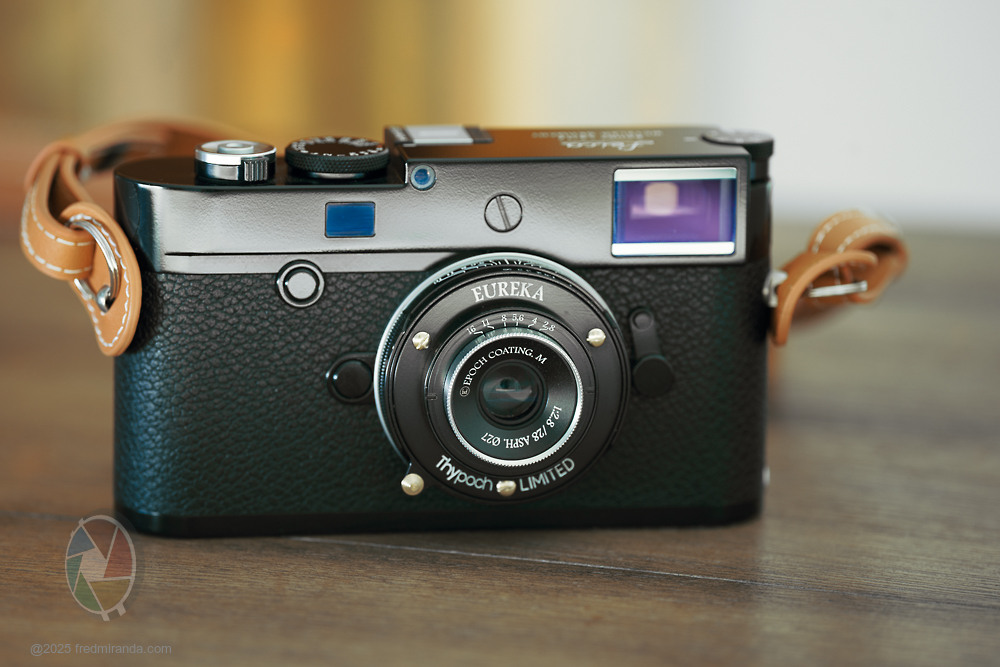
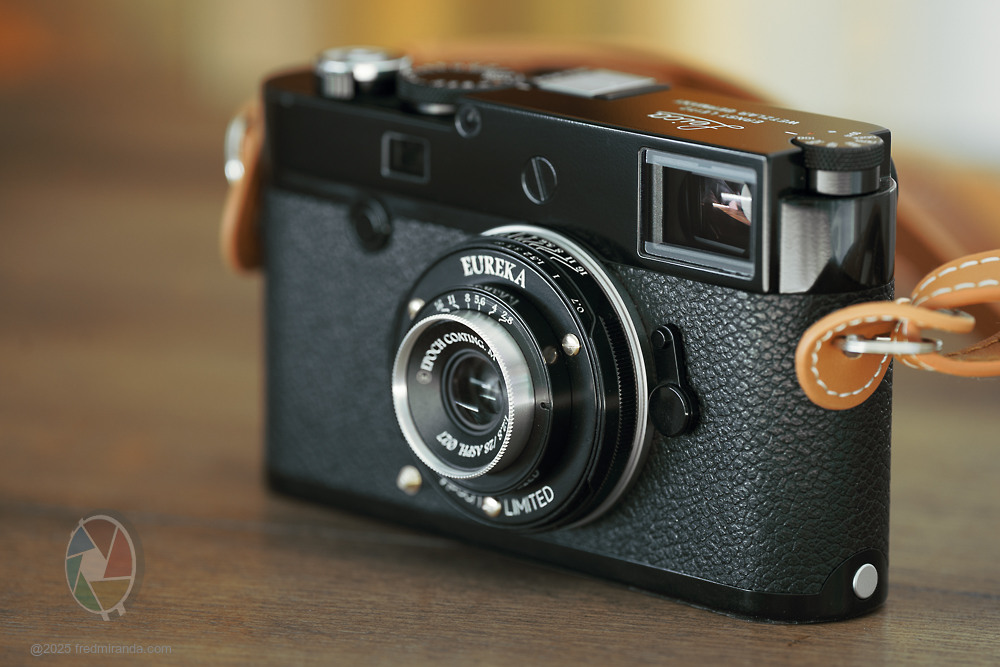
The copy I received is the limited black-paint version on brass, and I think it looks gorgeous...especially on the M10-R Black Paint. The finish matches so well that it almost looks like an original Leica accessory. Functionally, this copy is very solid: focus aligns well with the rangefinder, and the lens seems well centered. For testing purposes, that’s an optimally behaving sample.
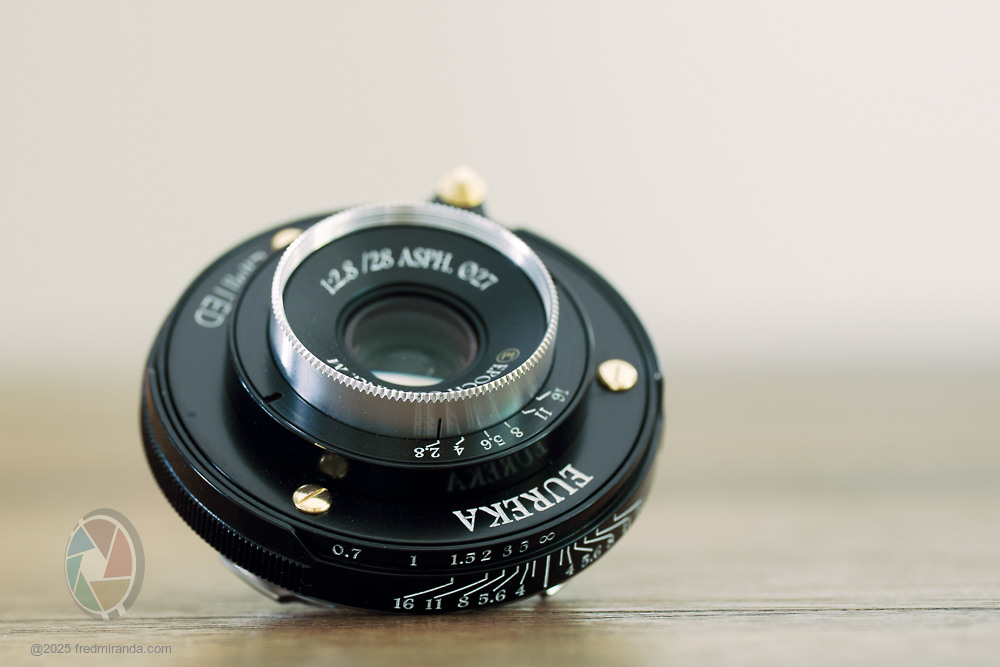
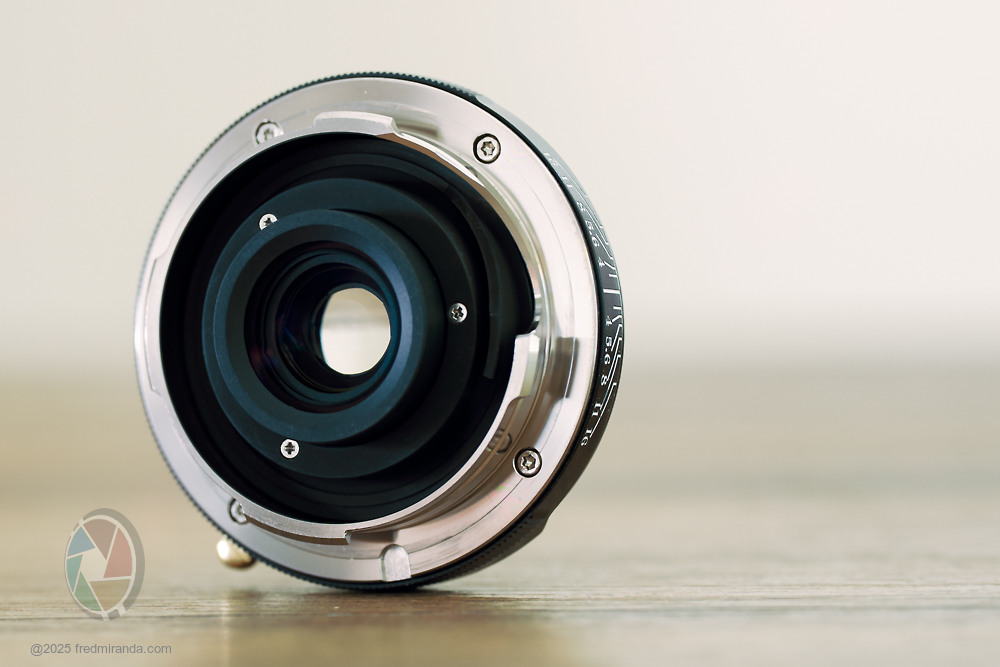
Handling is where things get interesting. The Eureka is compact, but the ergonomics take a little getting used to. Even mounting and unmounting the lens is a bit awkward at first, since there's no red dot or alignment mark anywhere. Instead, one of the three front screws functions as the mount indicator, and you have to remember that the "Eureka" engraving sits at the very top when the lens is properly aligned.
Once you are past that, the focusing setup is its own thing. There's no conventional focus ring or tab, just a small focus stick. It feels odd for the first few minutes, but the mechanism is smooth and well damped, and it lets you dial in focus precisely on the rangefinder. It's unconventional, but not frustrating, more like a deliberate design choice to keep the lens as tiny as possible.
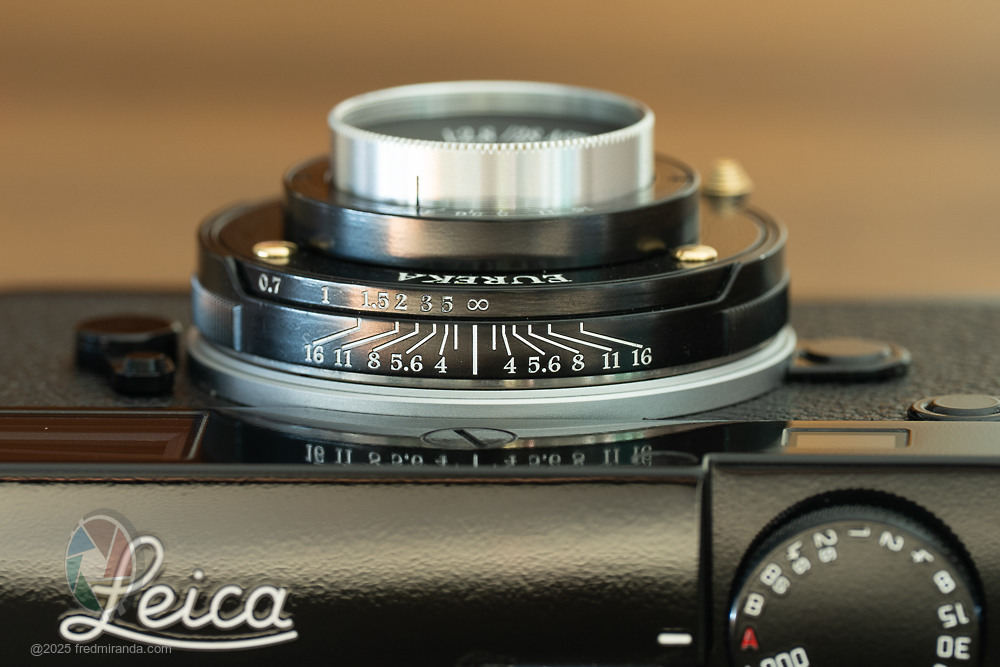
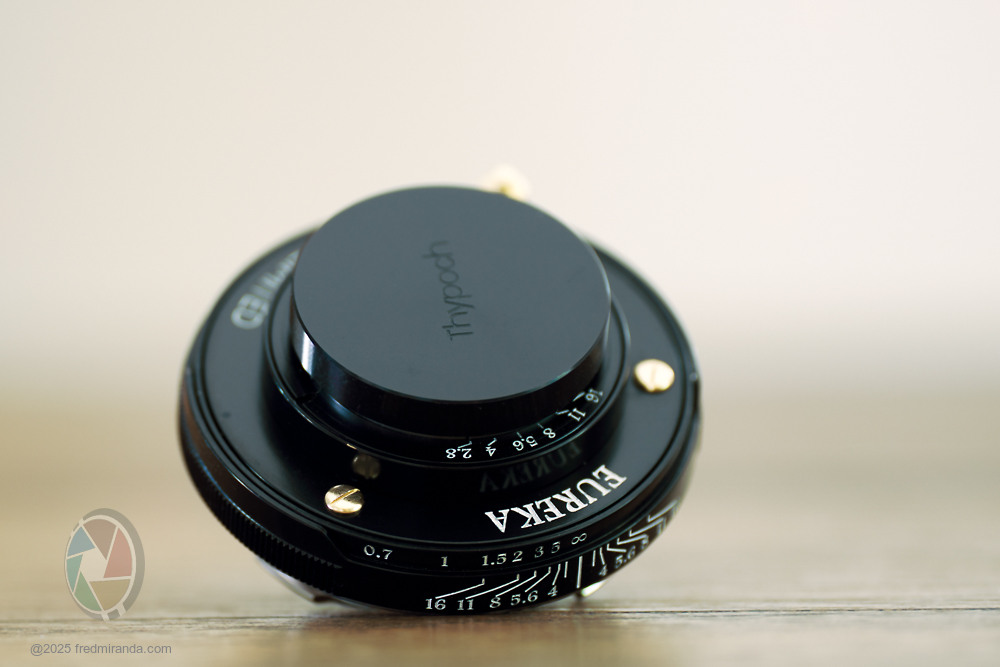
On the barrel, the lens comes with a metal cap. Remove that, and you will find a chrome ring that acts as the aperture control. The ring is click-less, and the aperture numbers are engraved on the front, not the top, which can feel counterintuitive. You don't get the usual little detents to feel the throw (going from f/2.8 to f/16) is a fairly short rotation. Because of this, you often need to glance at the front of the lens (and the little black selector line visible from the top) to know exactly where you are. It's not ideal, especially for quick changes, but since I primarily shot wide open or around f/5.6, I learned to approximate.
The aperture mechanism uses eight blades, although well-defined sunstars only appear once the lens is stopped down significantly.
One thing I really like, and that sets it apart, is that the aperture mechanism is separate from any focusing control. In some other ultra-compact lenses, aperture and focus share a ring, which makes life more complicated. Not so here, and that was a welcome relief.
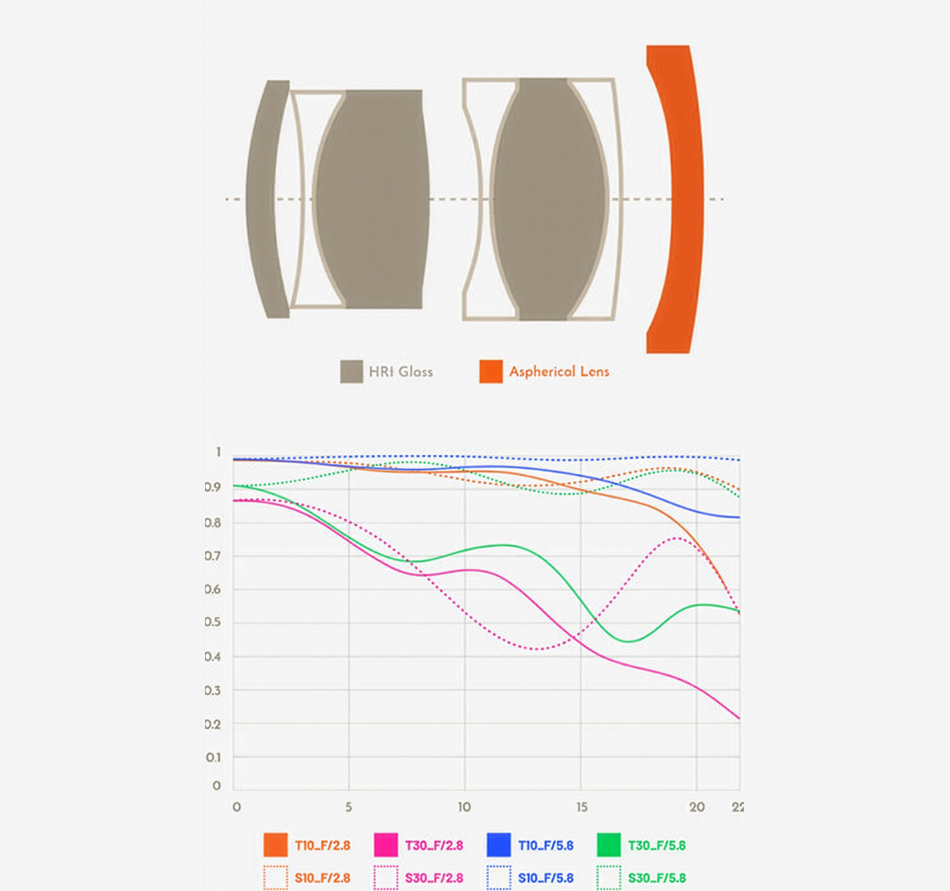
The Eureka 28mm f/2.8 ASPH. has an optical design of 7 elements, with the rear element being aspherical and the front plus two additional elements made of high refractive index (HRI) glass. Below, you can see the optical layout and its minimum focusing distance performance:
Another practical advantage worth calling out is the minimum focus distance. The Eureka can focus all the way down to 0.4m, with rangefinder coupling down to 0.7m. That close-focus ability is a big deal because most 28mm f/2.8 M-mount lenses stop at 0.7m. Having true 0.4m capability opens up a different look at near distances, especially for detail shots, environmental textures, and tighter street compositions. It makes the lens noticeably more versatile in real-world use and gives it an advantage over many of its competitors.
The lens accepts 27mm filters, which is a peculiar size and definitely not as commun as 39 or 46mm. But I checked around and they're still available, although somewhat niche. For my shooting, I didn't bother with a UV or protection filter.. I simply relied on the supplied cap when not in use.
A useful and practical feature: there is a distance scale for zone focusing. You can read it easily from the top, which helps when shooting street or candid work. Between that and the lightweight build, the Eureka has a strong argument as a compact "walk around" or "street" lens -- if you can tolerate the unconventional control layout.
In terms of style, for me the Eureka really wins. But, I understand some photographers may find the haptics a little off at first. The trade-offs are real but they are intentional and if you shoot street photography or landscapes with it where you usually don't change settings much, it's not much of a concern.
Now, the big question: how does it hold up against other 28mm f/2.8 competitors? For comparison, I tested it against the Voigtlander 28mm f/2.8 Color-Skopar, which is also compact but stylistically and a high performer optically.
One small note about availability: the Thypoch Eureka 28 mm f/2.8 ASPH will be offered in Matte Black and Pearl White.
|