RoamingScott wrote:
What aperture are the lenses at in the boat scene?
Sorry, f8.
I actually compared a second vintage 35mm in the same scene and both were a bit better. Not the end of the world and the TTA definitely has its advantages over them too.
I'm not the best at testing lenses, though I don't think I missed focus. I did a few other scenes and they were pretty close, TTA better towards the sides usually. It's just every now and then an incy bit dissappointed when I wasn't expecting to be but nothing to cry about. Still has a lot going for it.
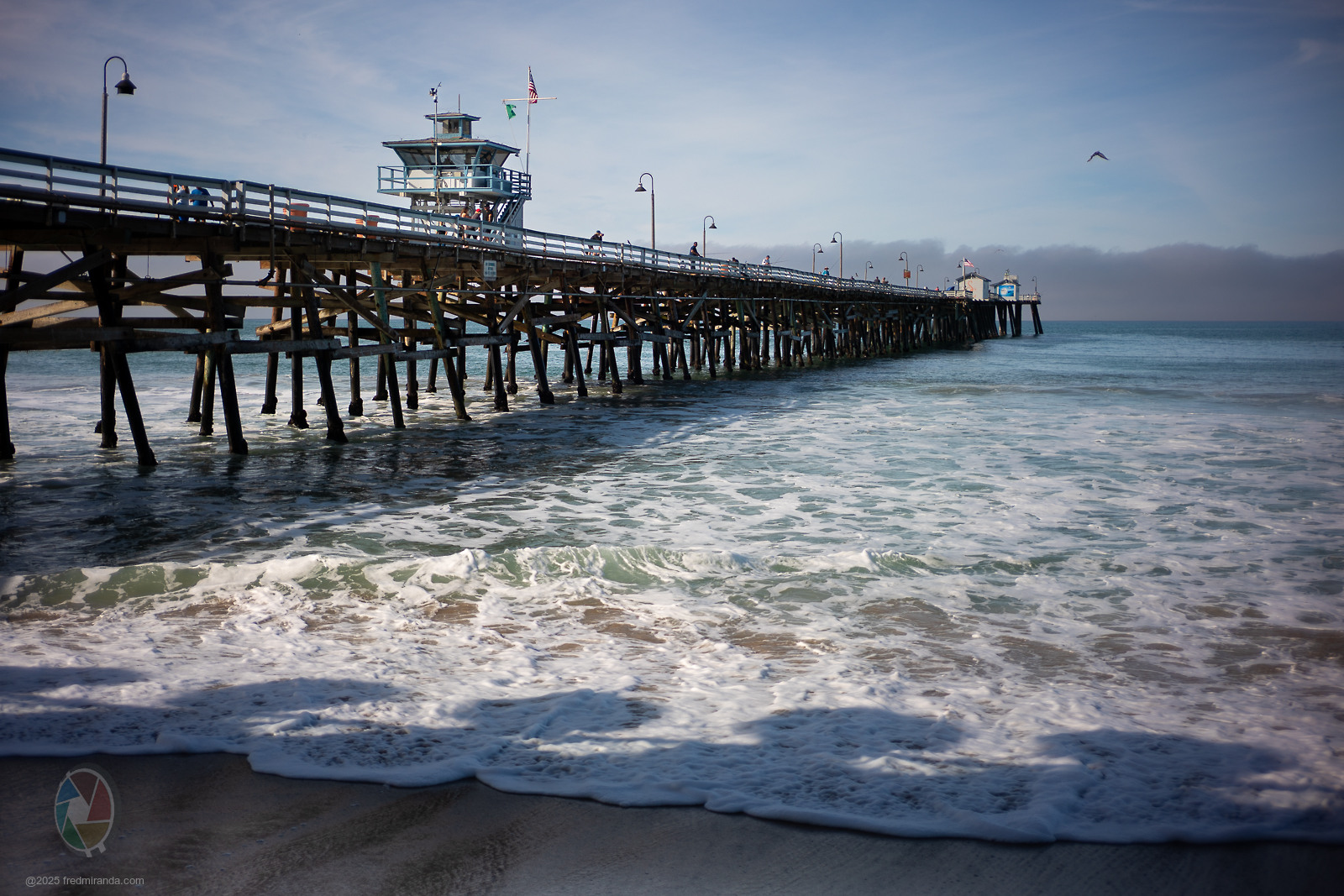
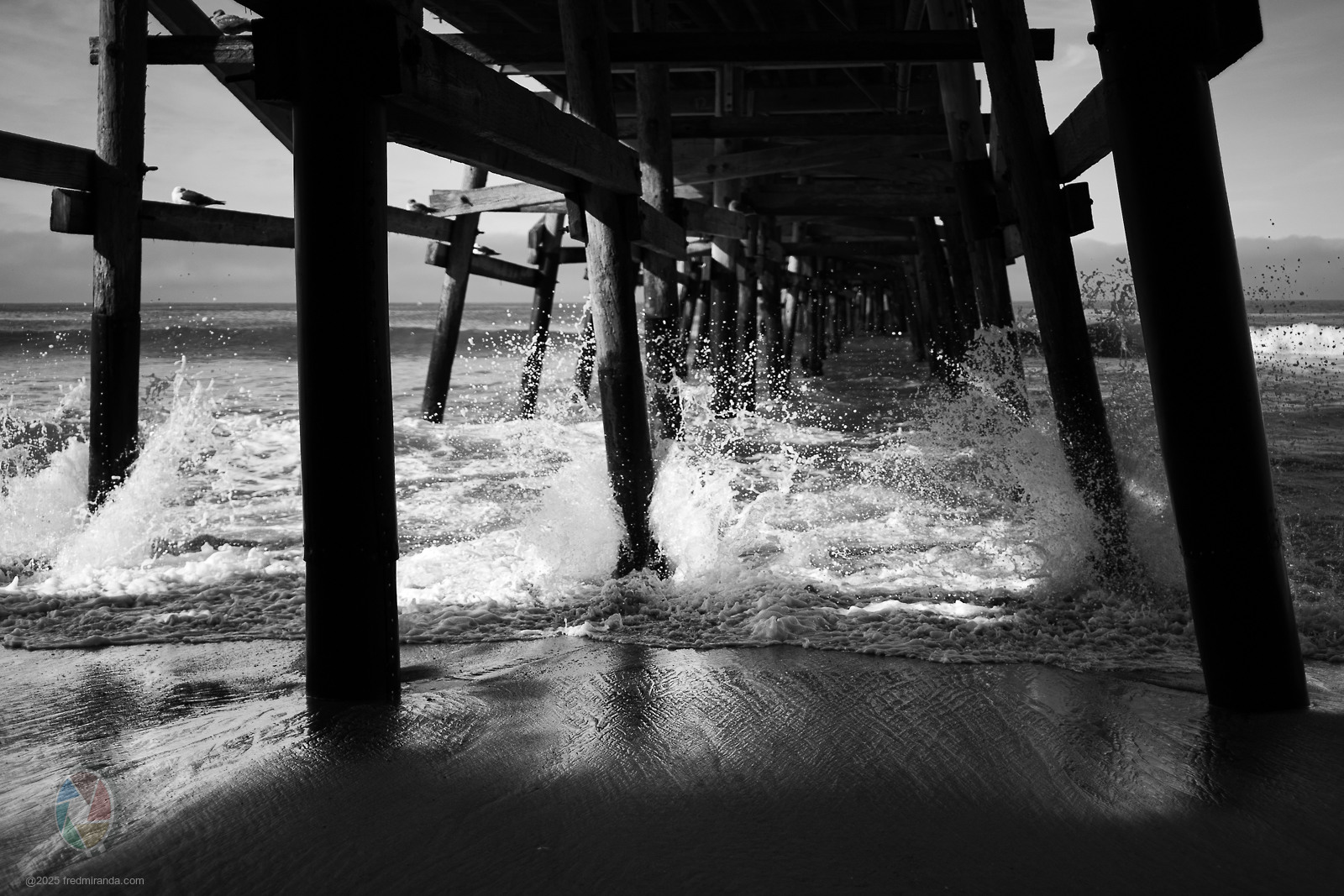
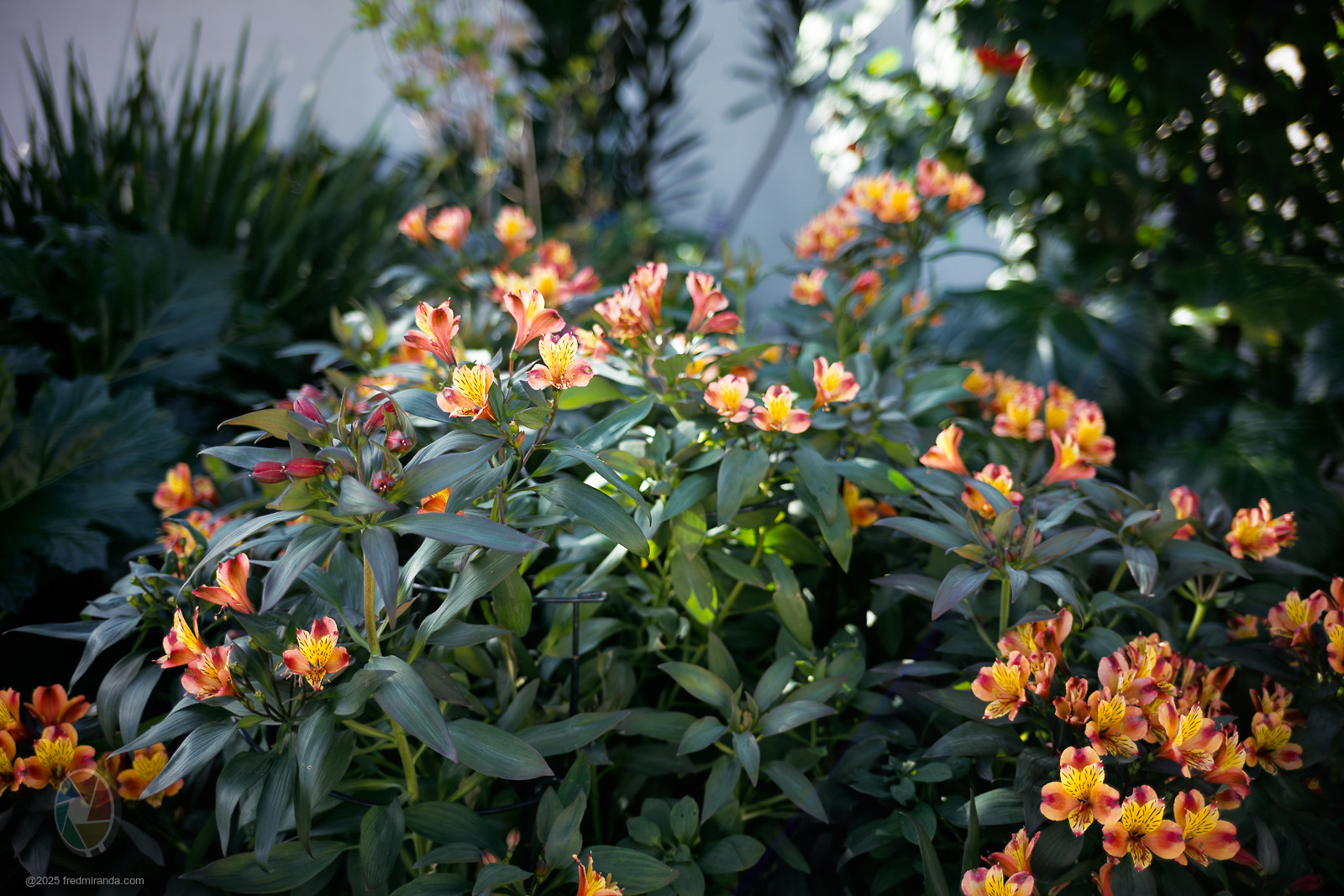
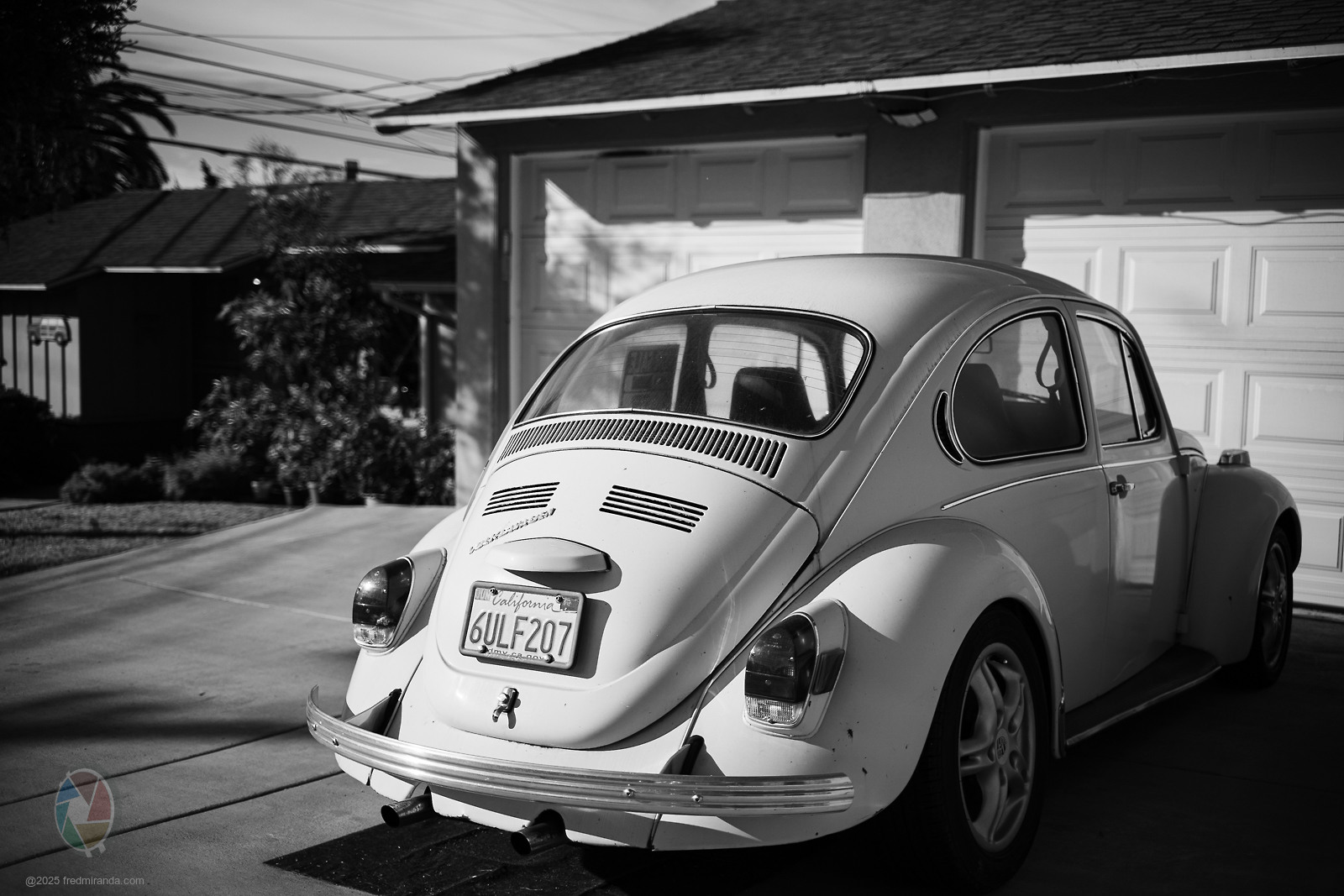
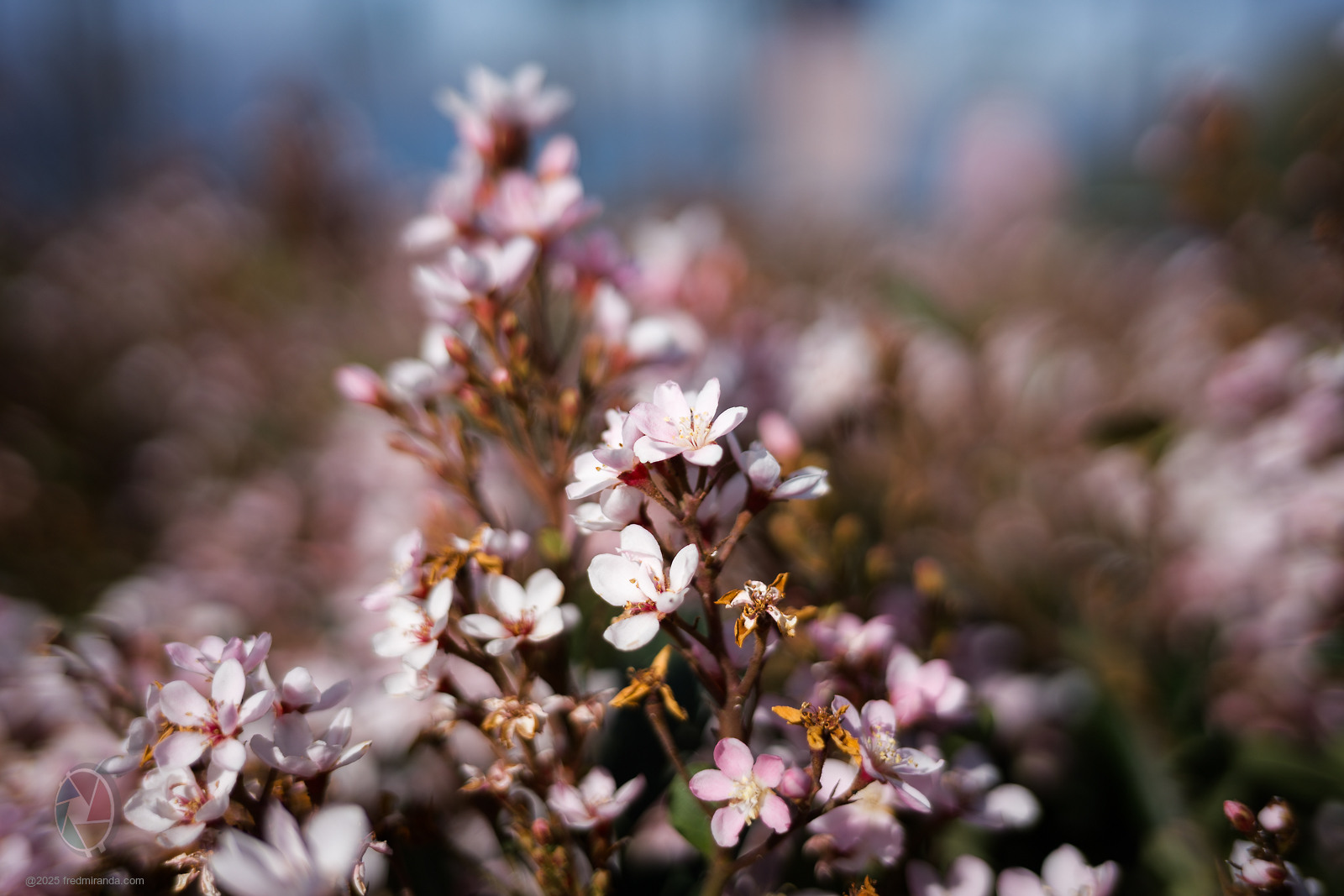
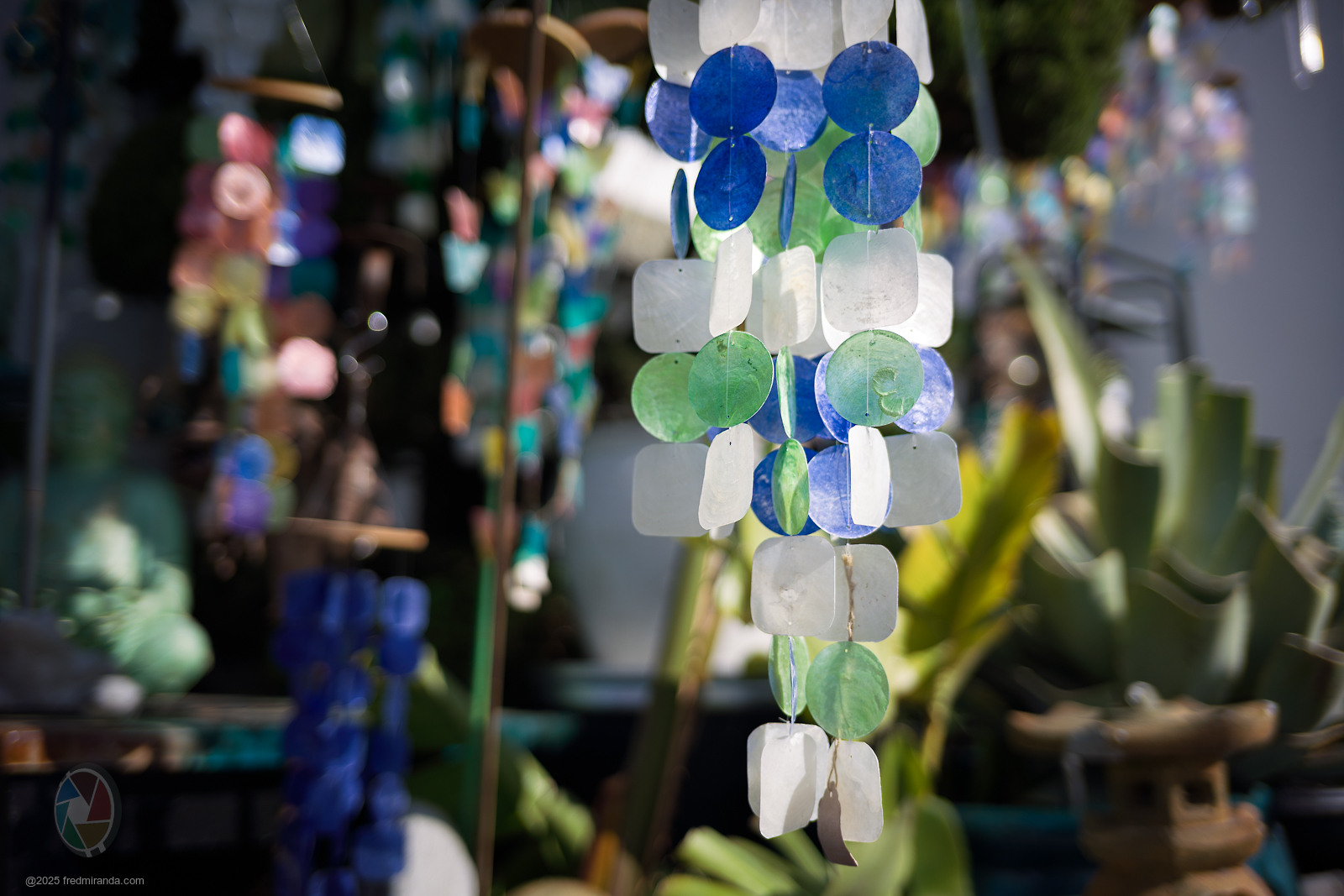
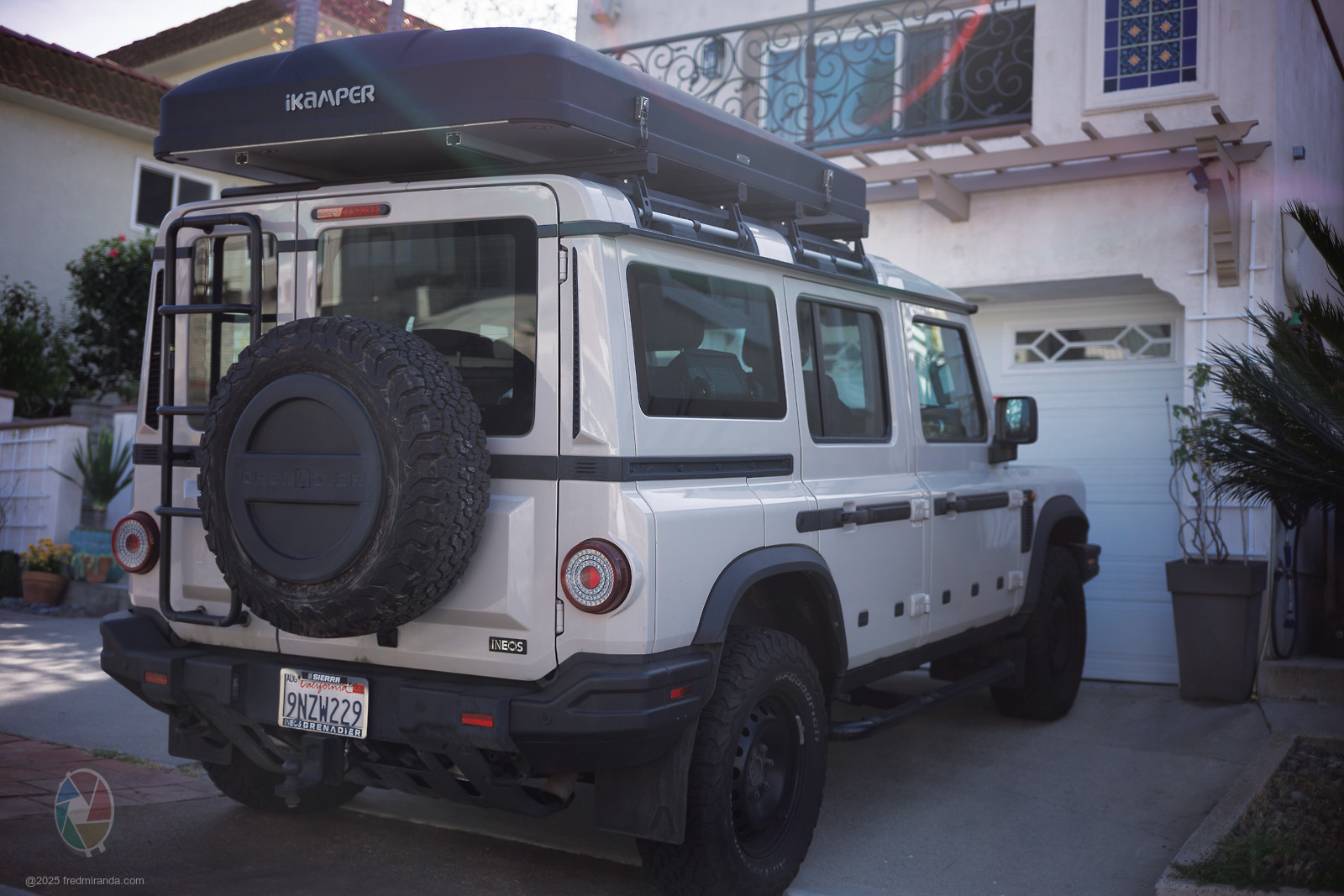
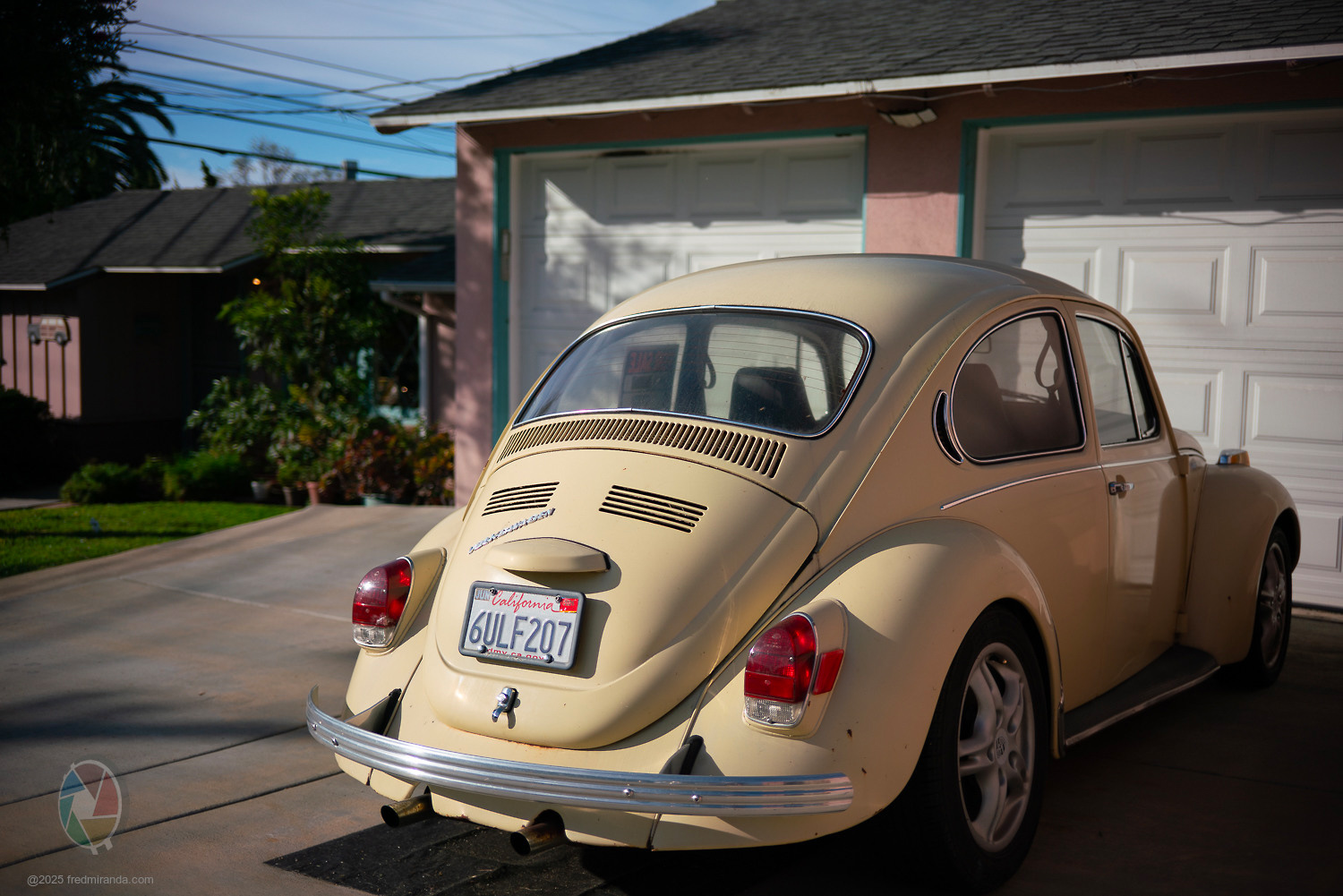
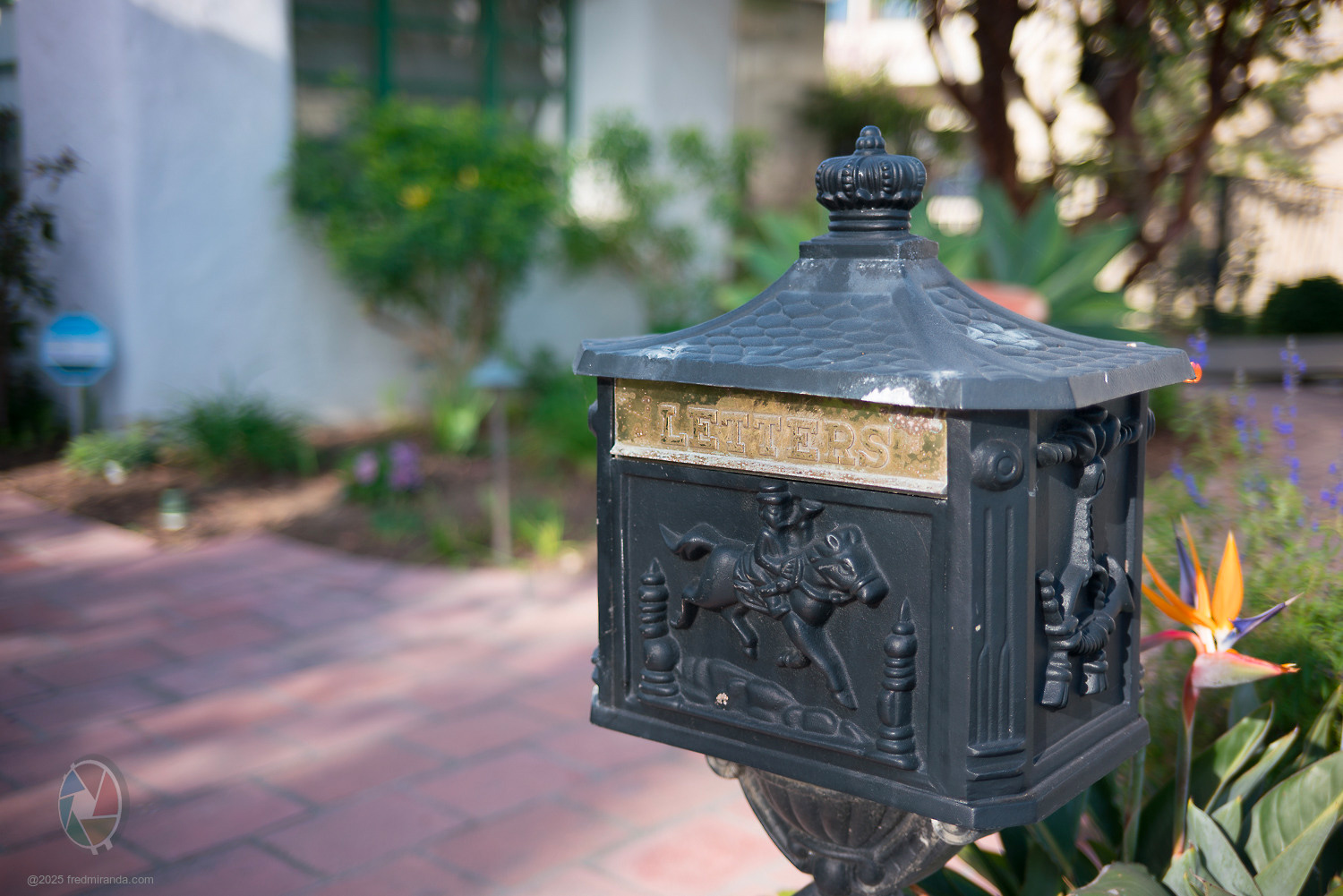
All images were taken wide open at f/2 unless noted, under morning light around 9am, at a mix of close and mid-range distances. Every shot in this set was taken with the Sony A7R II.
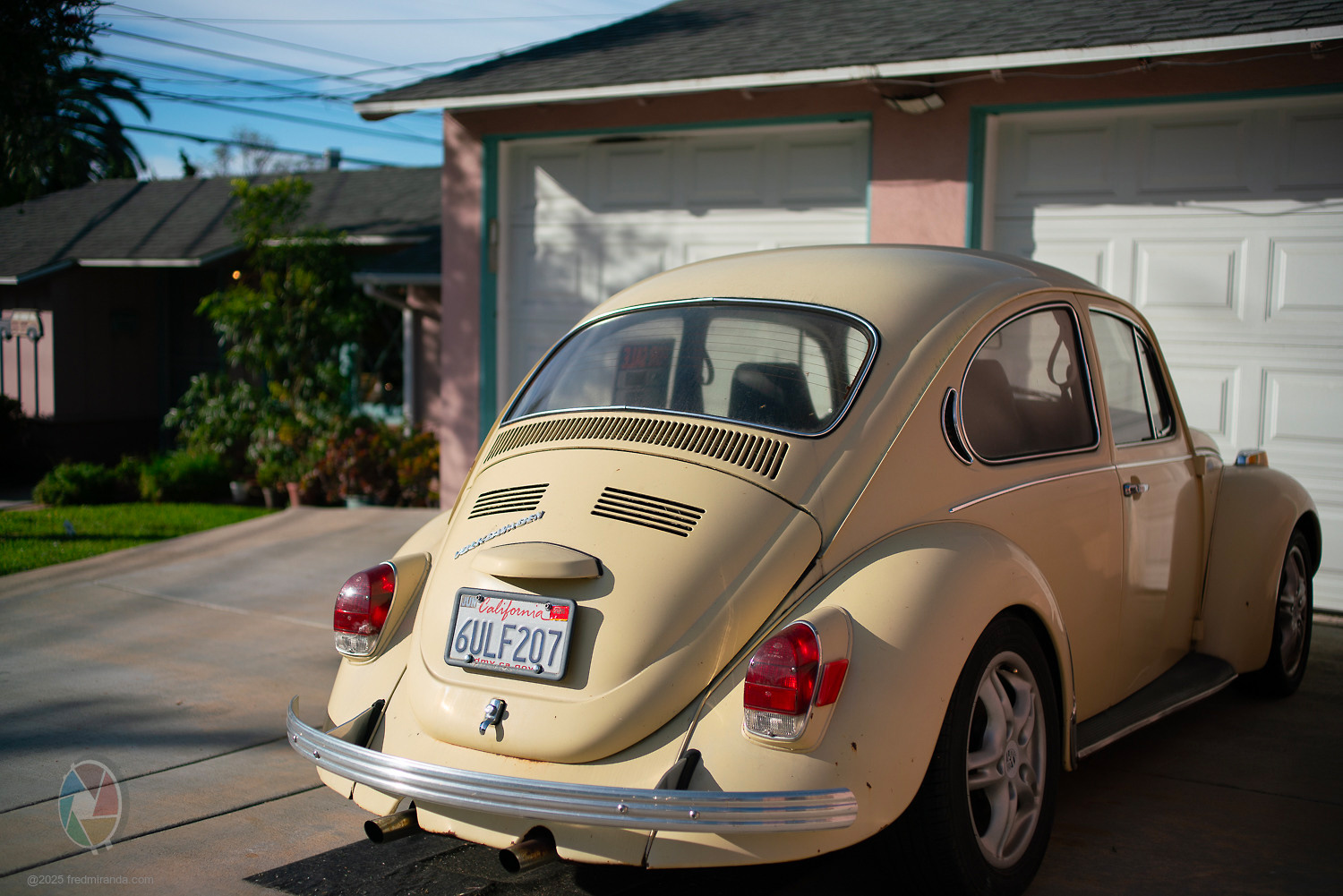
The Voigtlander 40mm f/2 Septon is more prone to veiling flare than many other Cosina lenses (even with included hood). This likely comes from the optical design rather than the coatings. As with any lens design, there are trade-offs, and veiling flare is part of the character of this lens. Some photographers may actually enjoy the look it produces. When the sun is inside the frame, flare is generally well controlled, but when strong light sits just outside the frame to the sides or above, some veiling can appear. You can see an example of this in the last image of the car from this set.
Vignetting and distortion were not corrected in any of the samples. Most images use either the Adobe Color, Adobe Standard or converted to monochrome.
Fred Miranda wrote:
several images
.
The flare we see in the last image... is that something that shows up every time the sun is either in the frame or a close to the frame?
It looks ... well, complicated.
It’s half Ultron red ring and half…something else.
Jonas B wrote:
The flare we see in the last image... is that something that shows up every time the sun is either in the frame or a close to the frame?
It looks ... well, complicated.
Rendering comparison to Voigtlander 40mm f/1.2 Nokton II at f/2
The Voigtlander 40mm f/1.2 Nokton is probably one of the most popular lenses Cosina has ever produced. Many photographers love the combination of its ultra fast speed and the 40mm focal length, which in practice feels slightly narrower, closer to about 42 or 43mm. That seems to be a sweet spot that many photographers really enjoy.
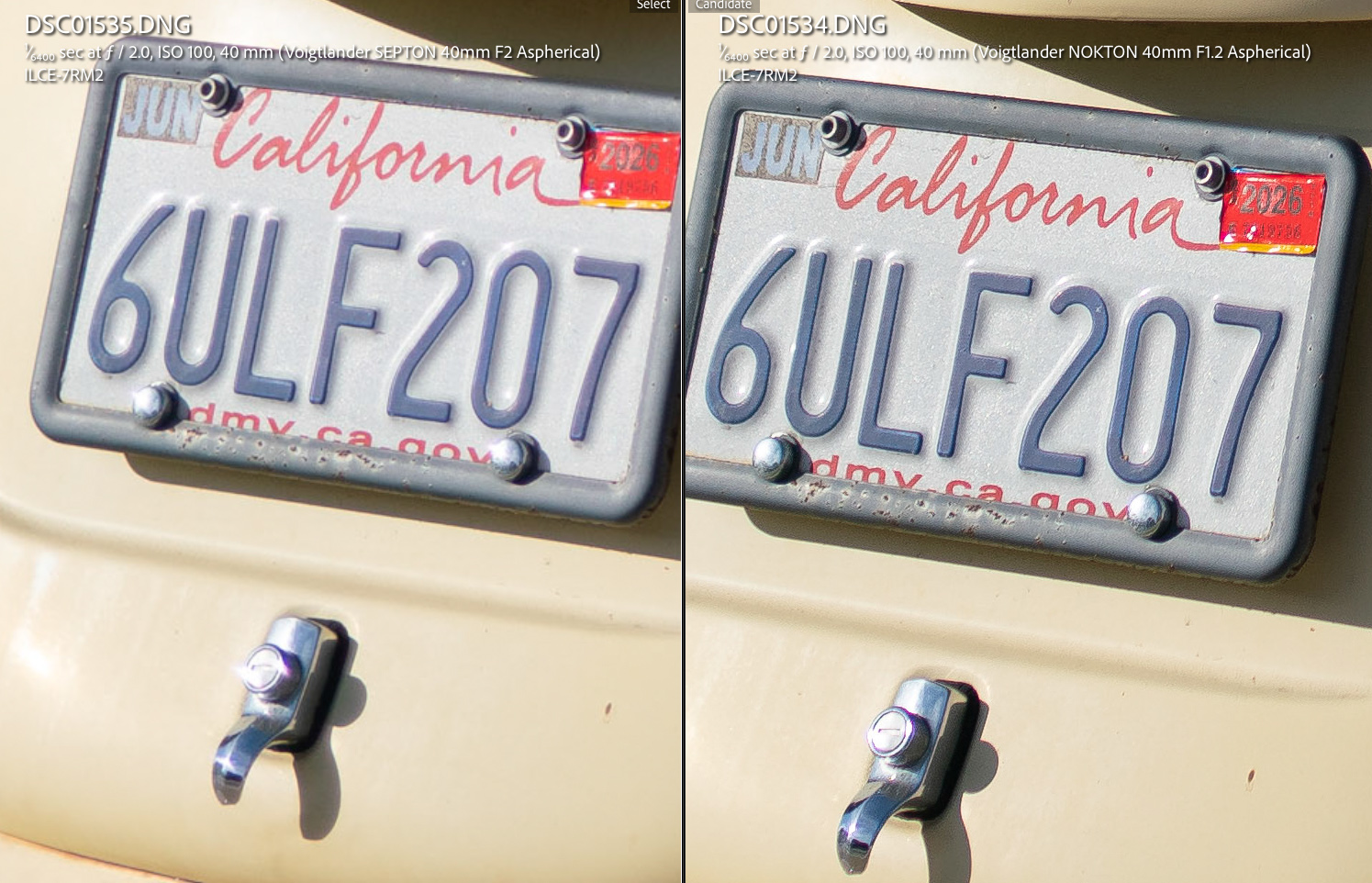
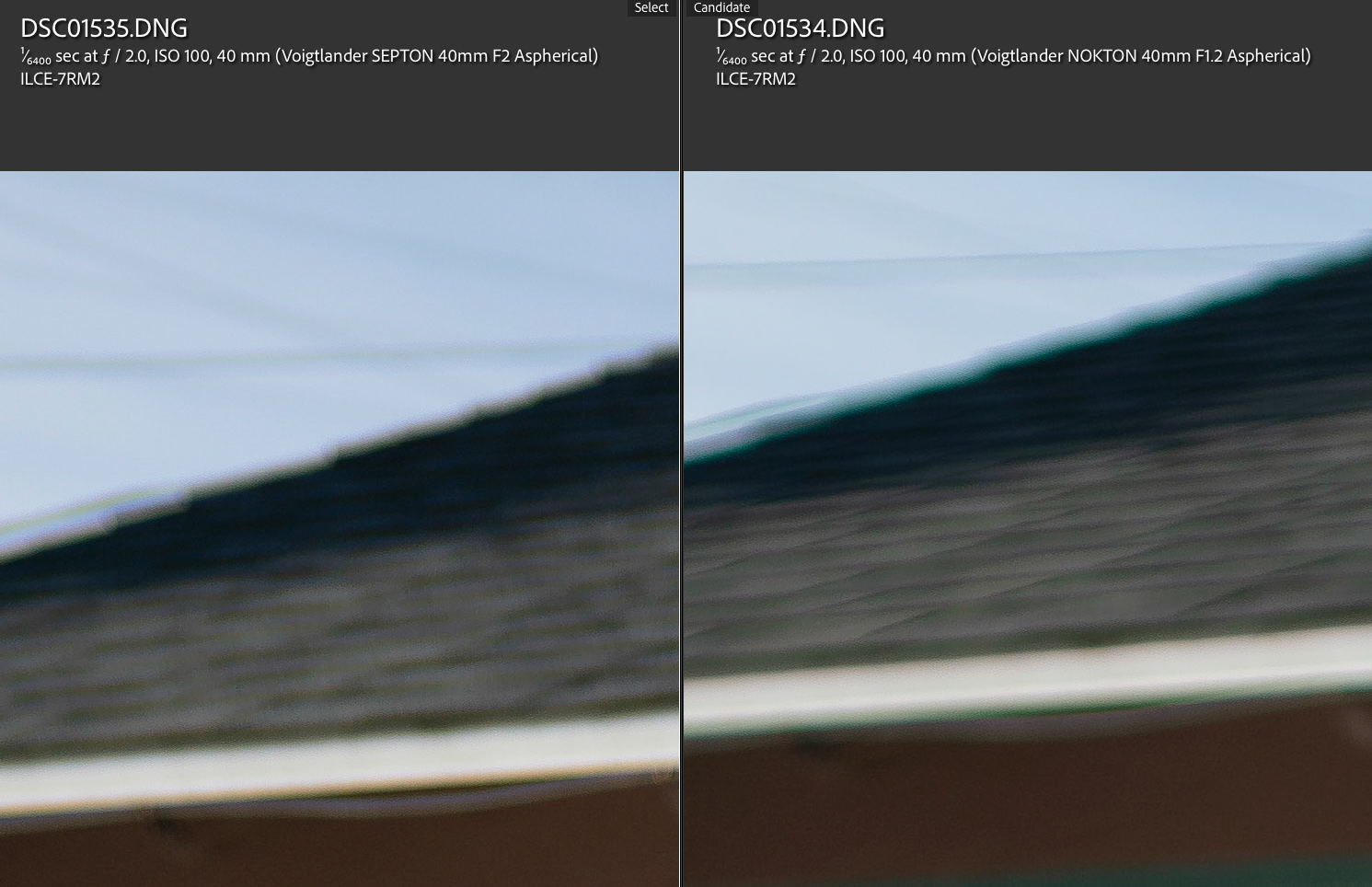
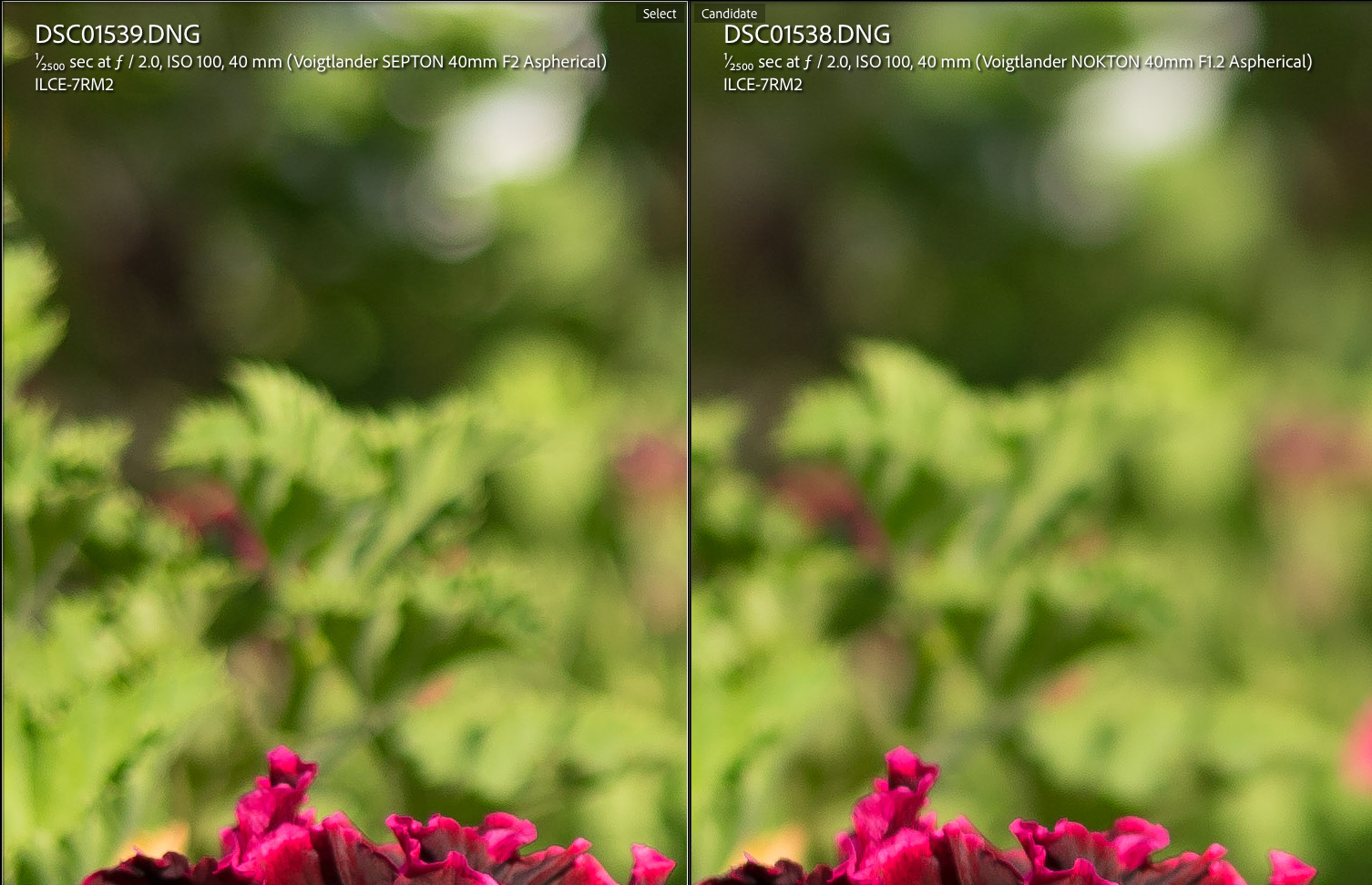
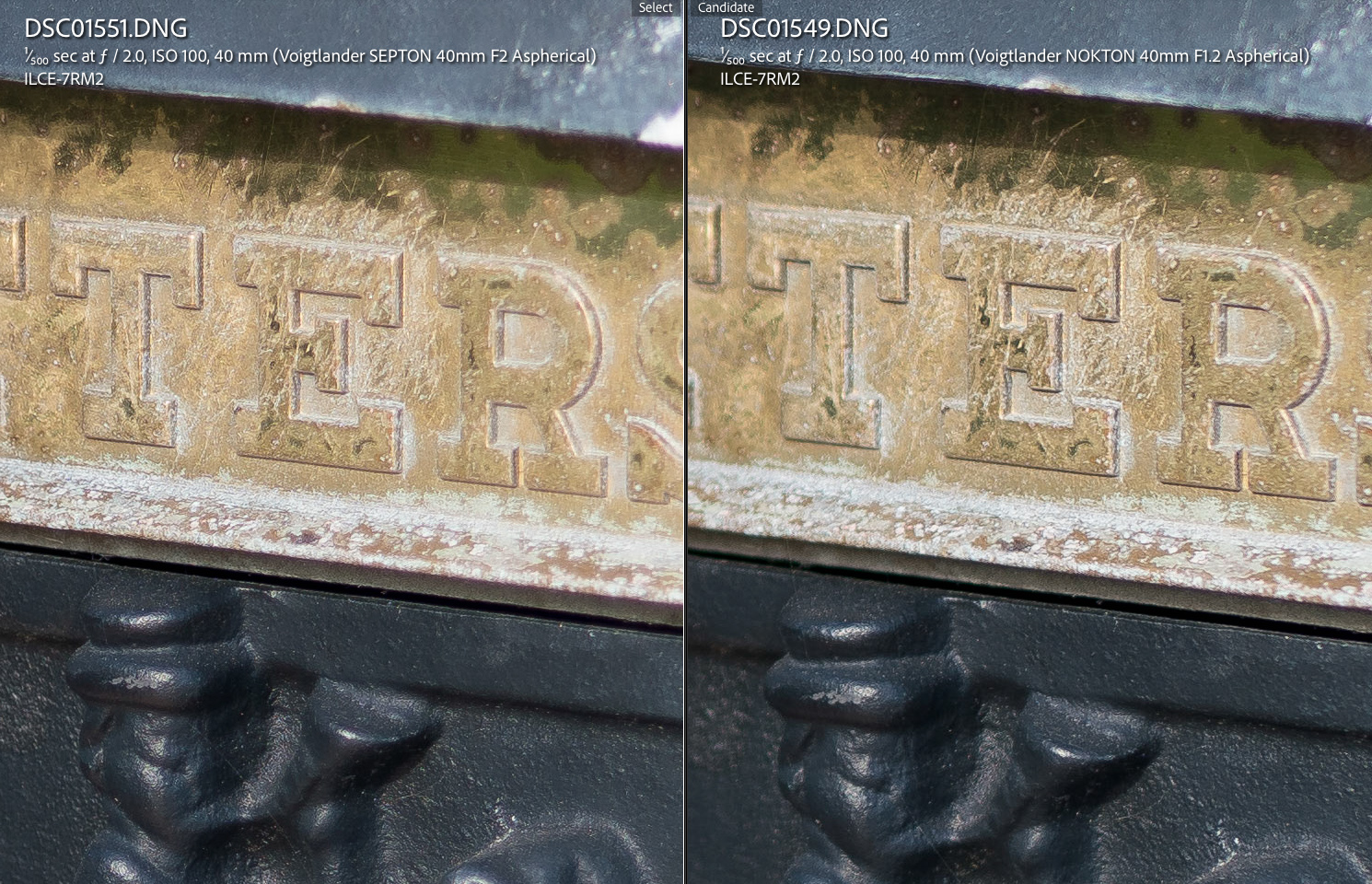
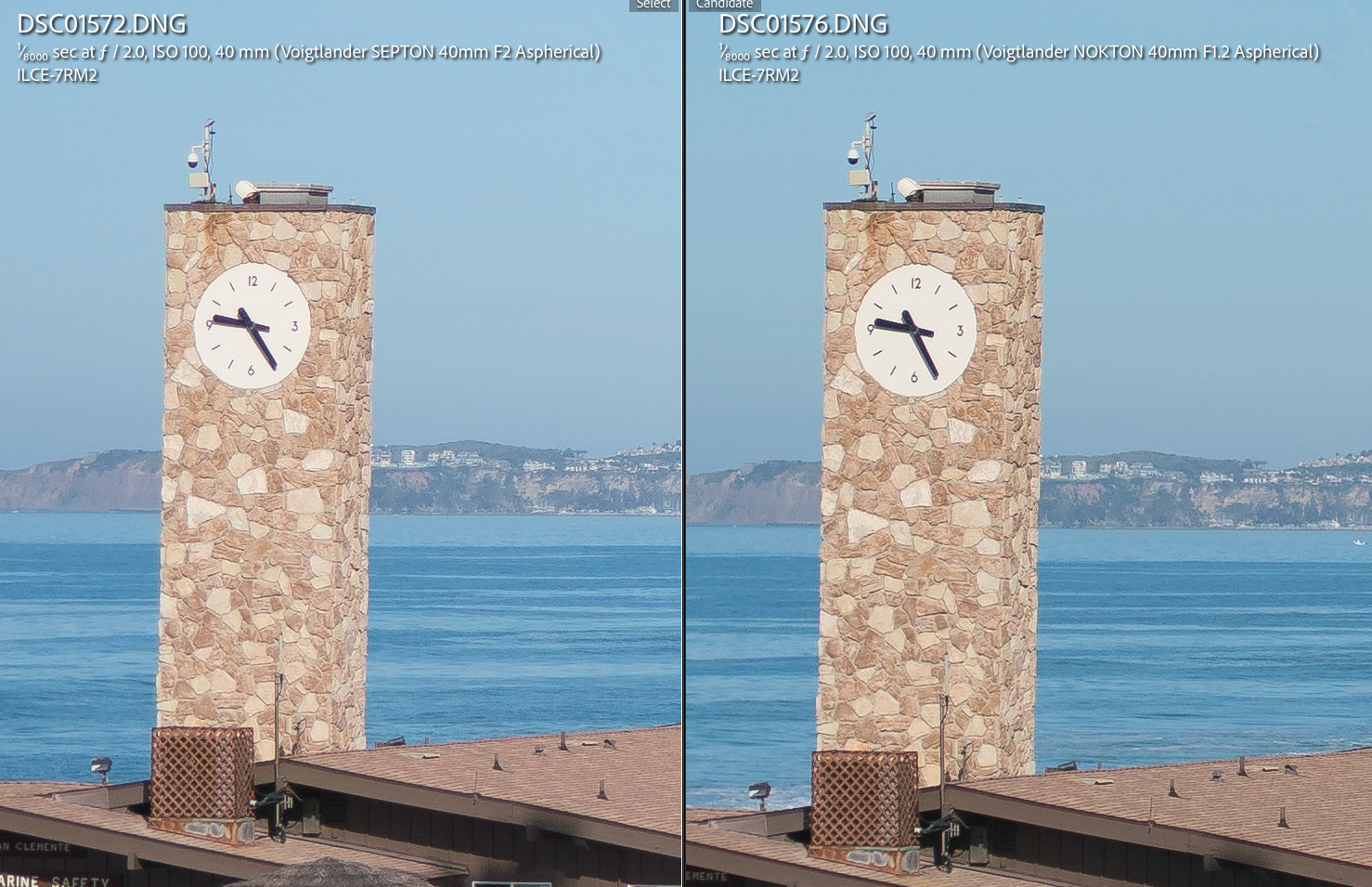
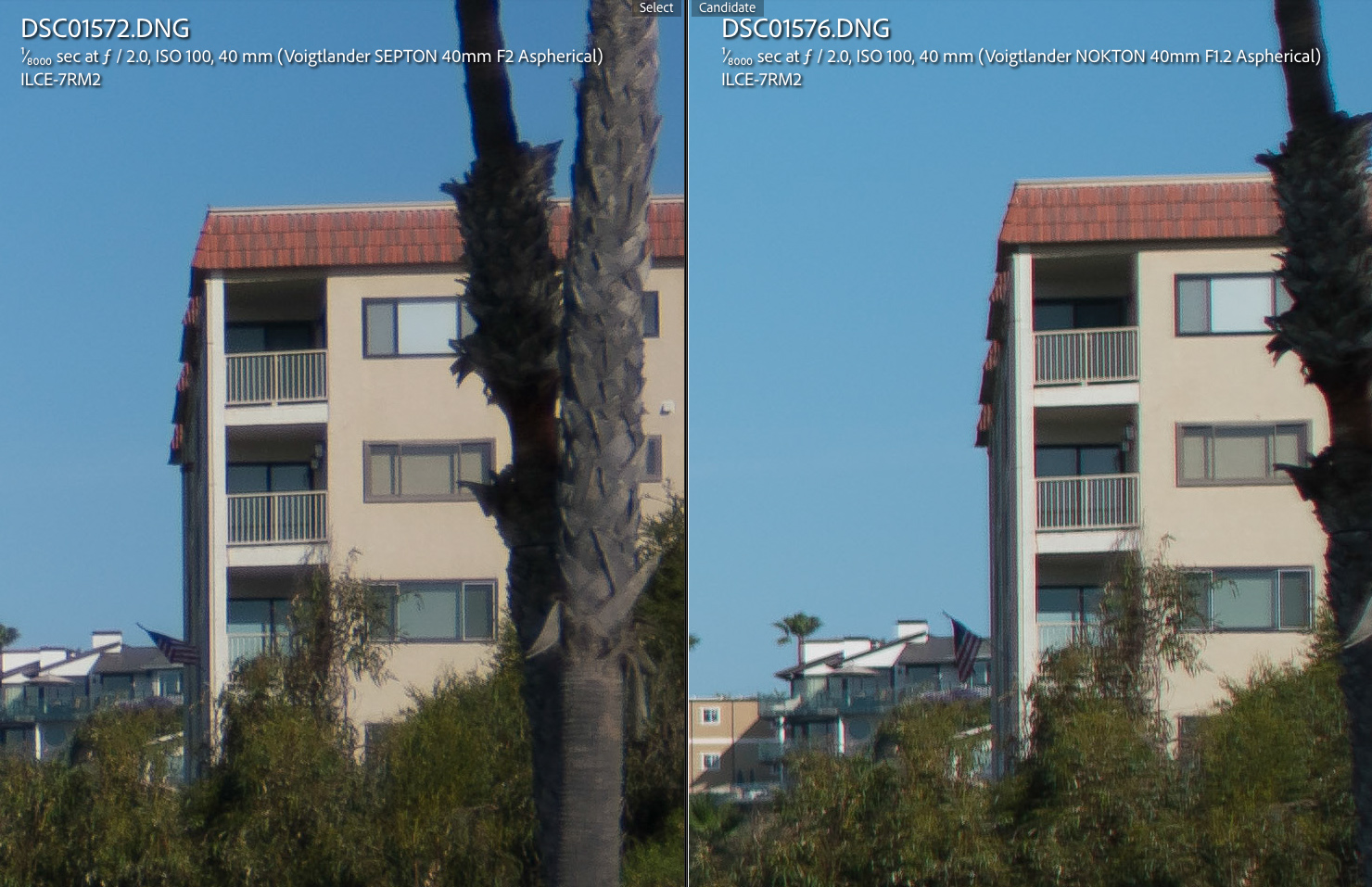
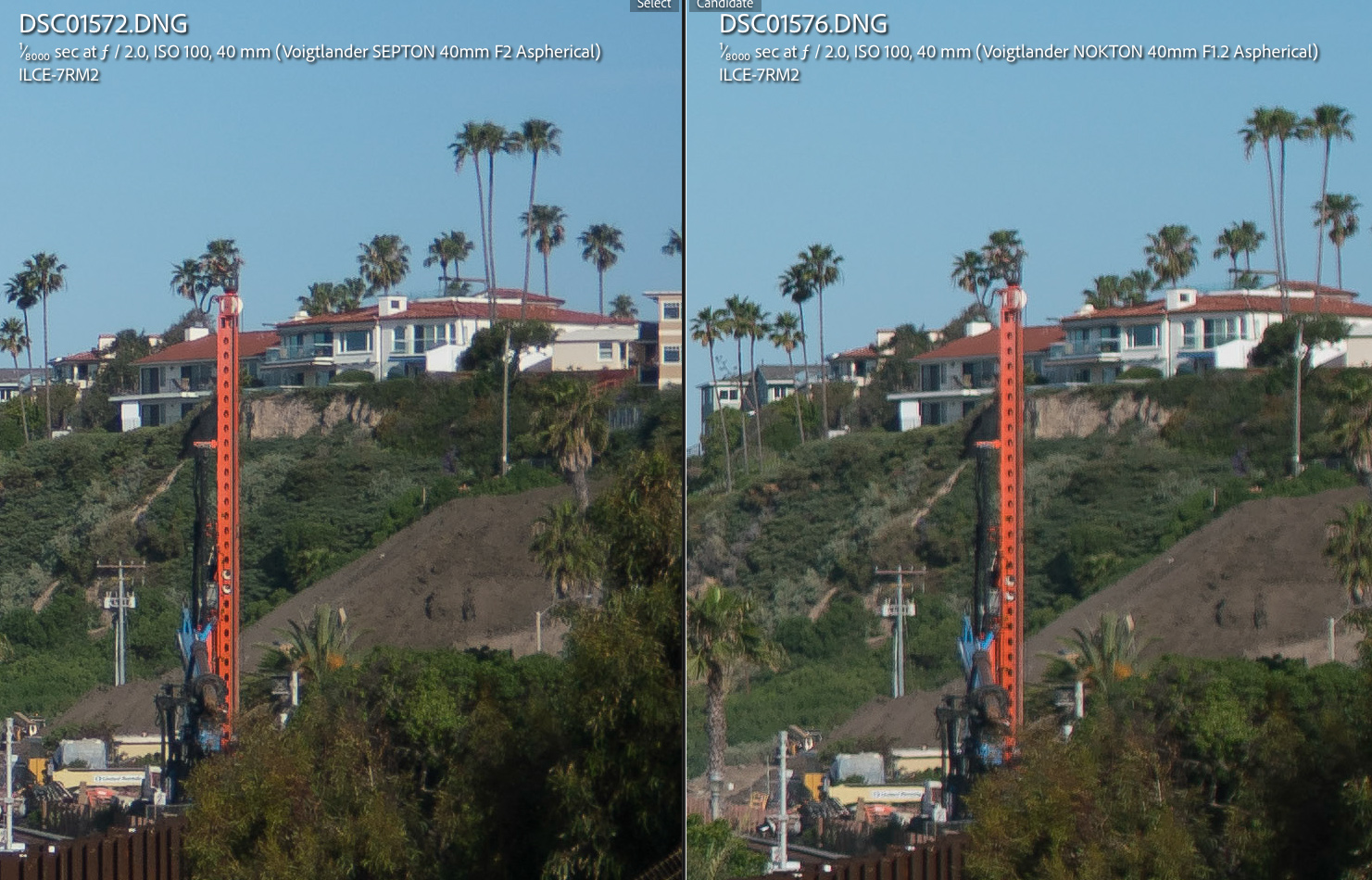
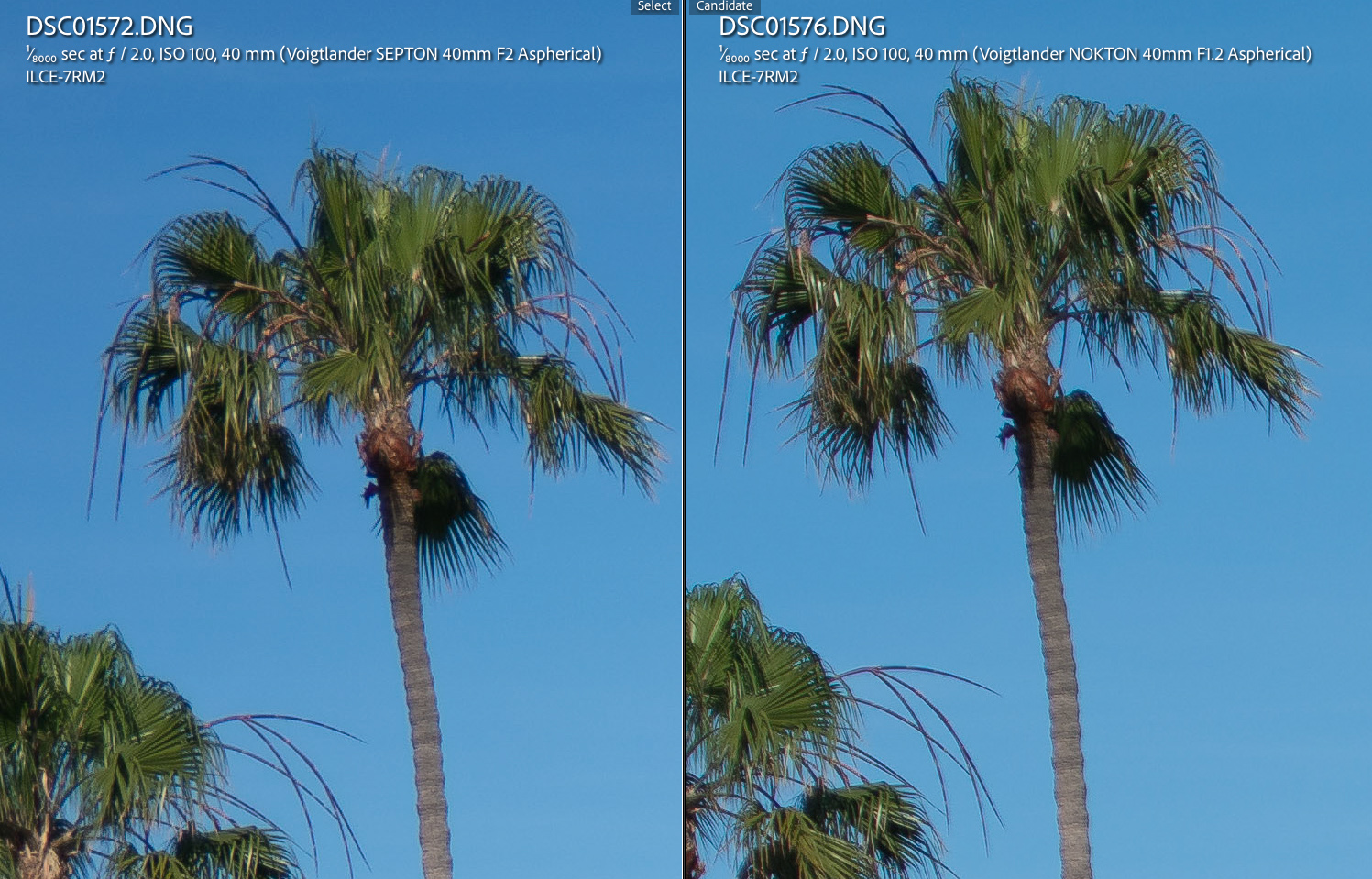
Stopping the Nokton down to f/2 and comparing it to the Voigtlander 40mm f/2 Septon wide open is not really a fair comparison, so I expected the Nokton to show higher resolution and contrast at the focus plane, and it does as you can see in these comparisons.
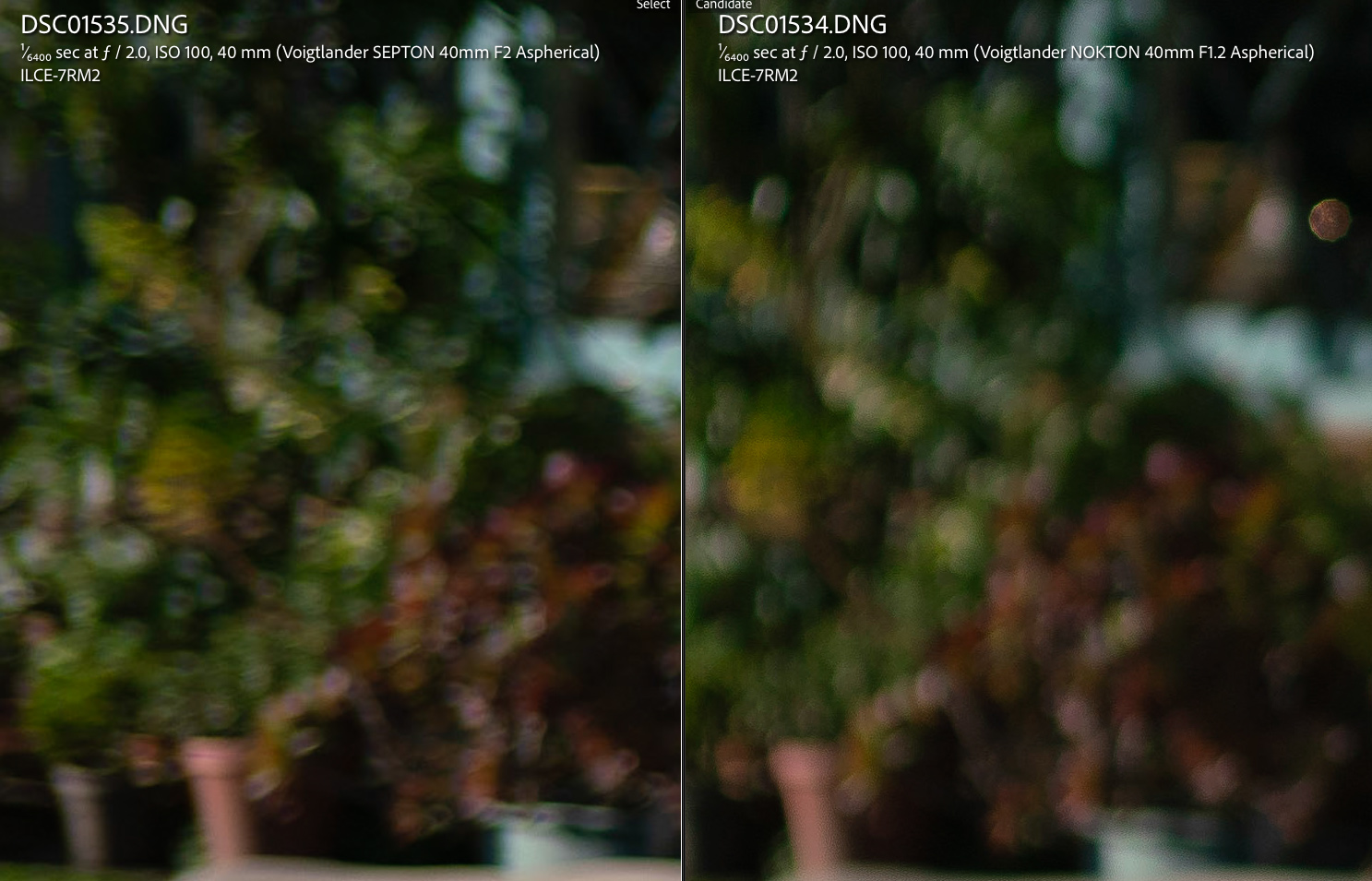
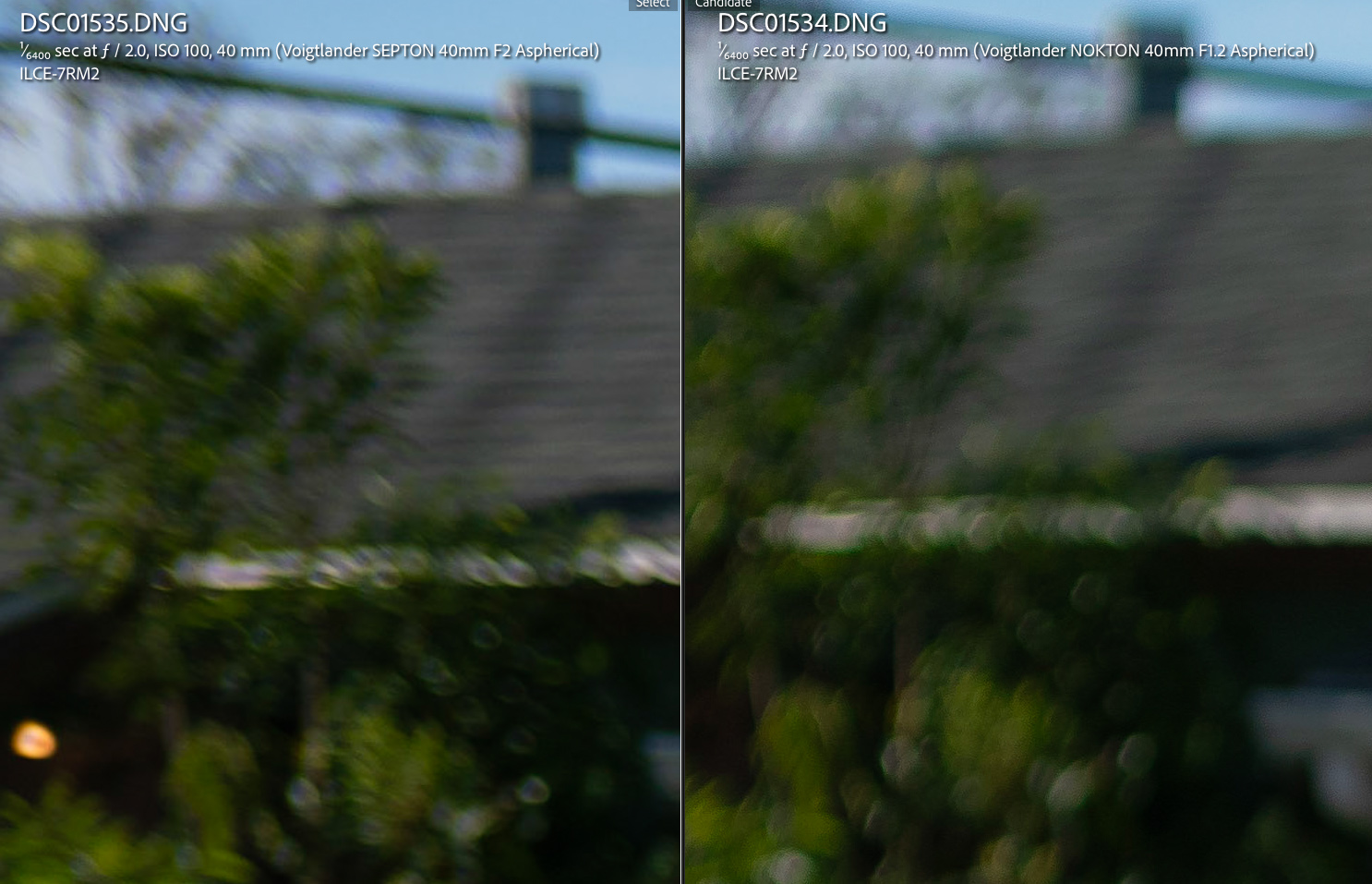
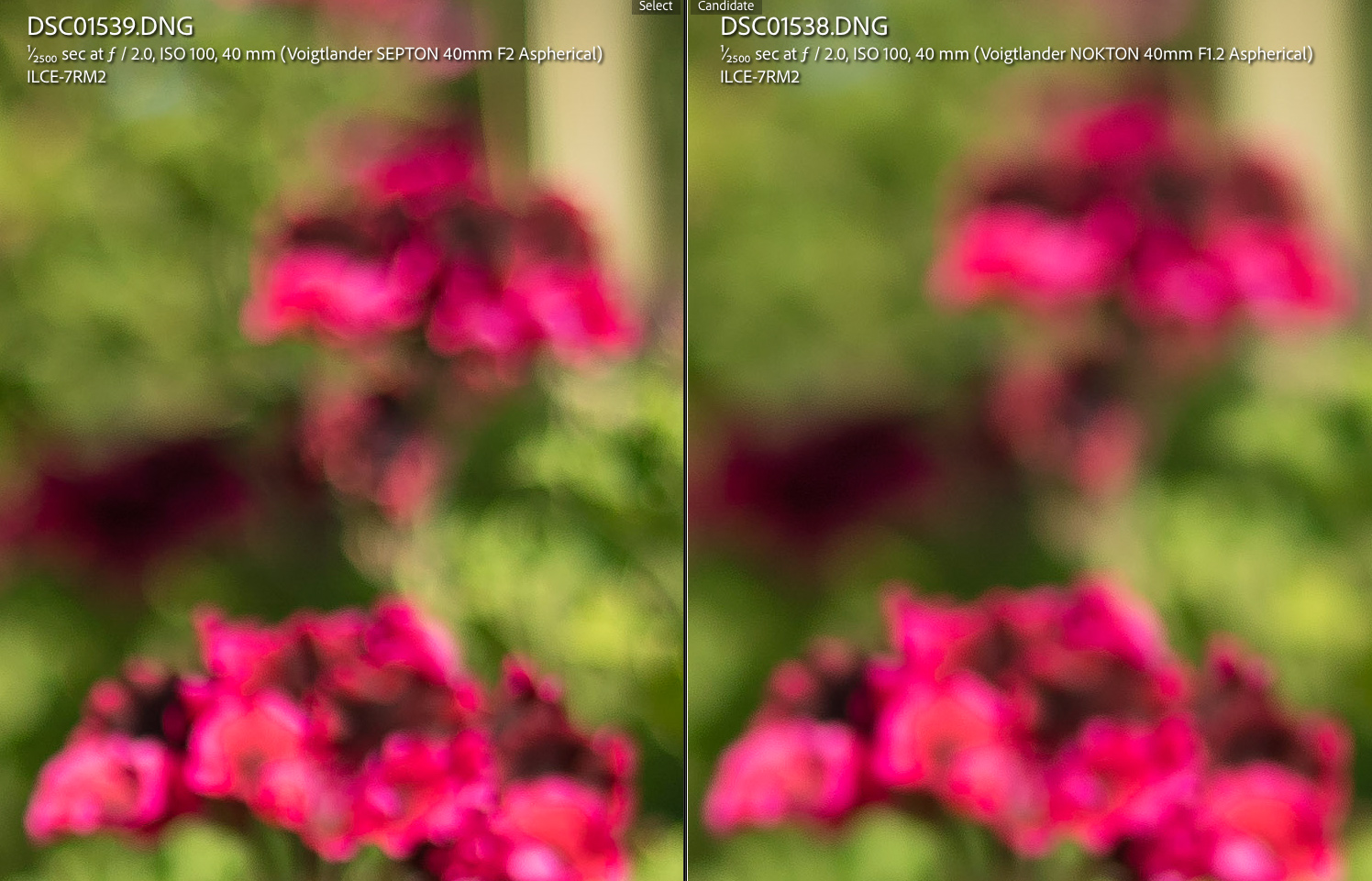
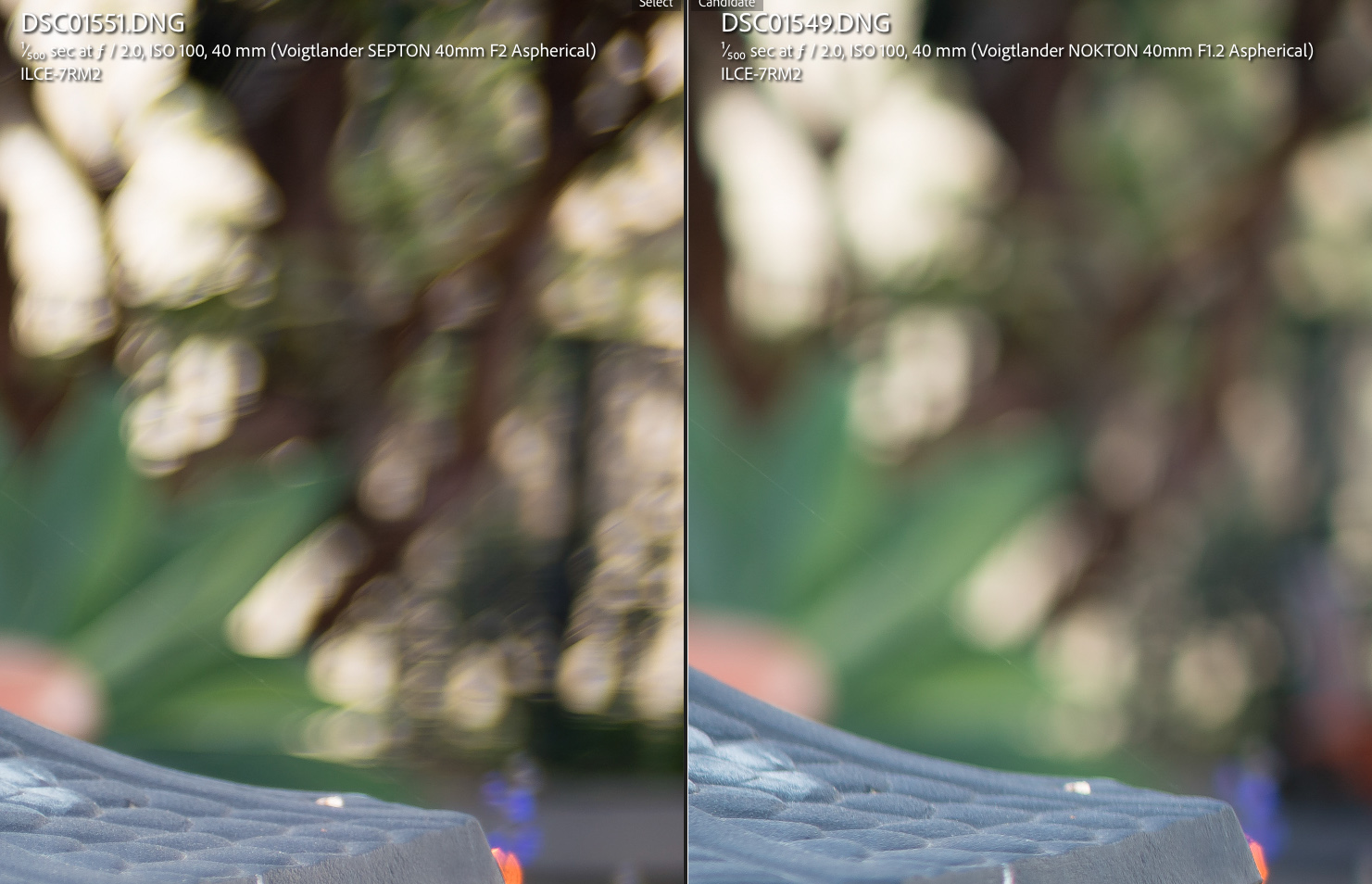
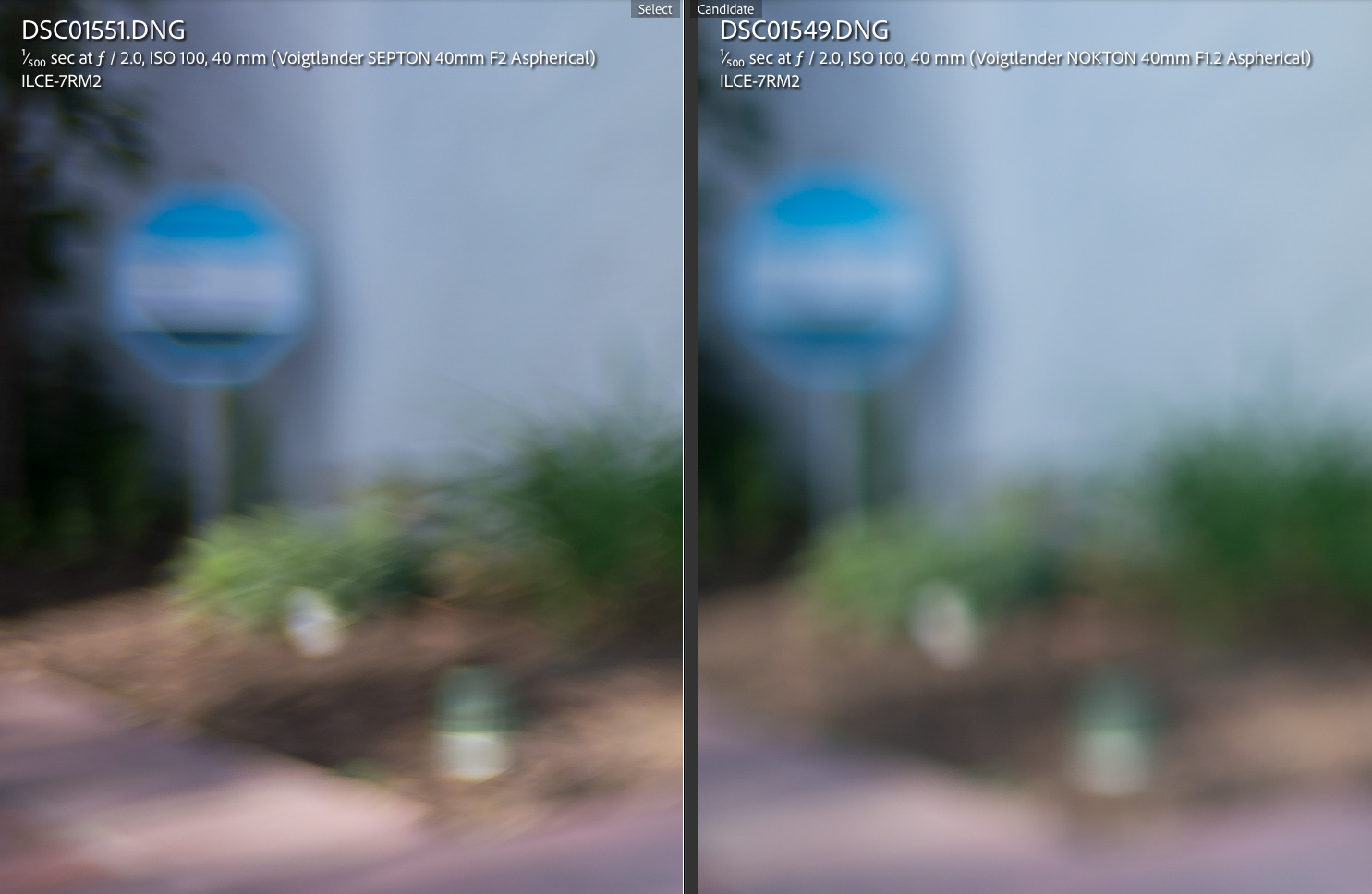
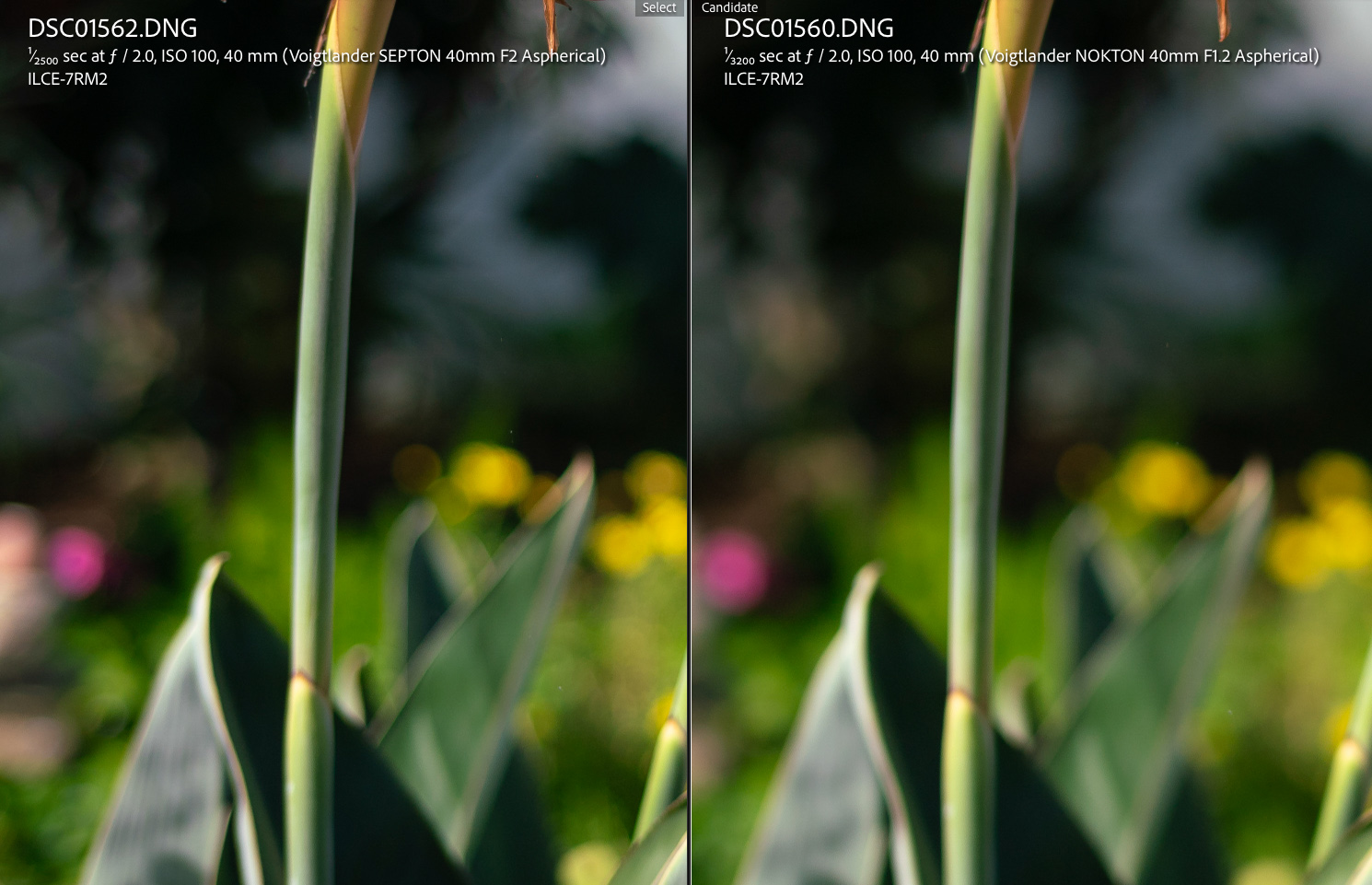
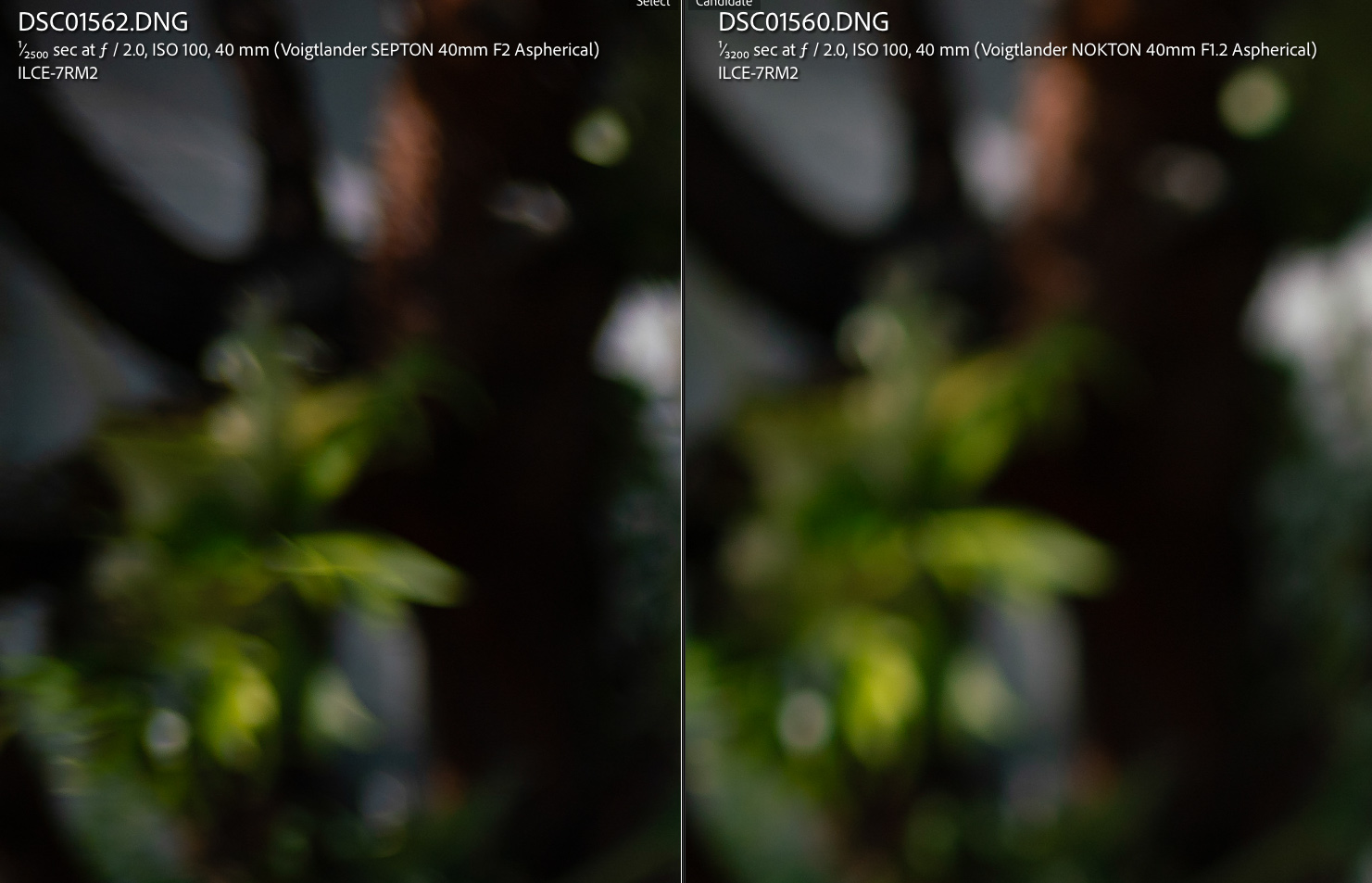
The rendering from the Nokton appears smoother, with more blur in the crops. This is likely due to two factors. First, the Nokton frames a bit tighter than the Septon, so when shooting from the same distance on a tripod, as I did, you would naturally expect more background blur from the slightly longer effective focal length. Second, the Nokton is an f/1.2 design, and ultra fast lenses often produce more blur even when stopped down to the same aperture as slower lenses.
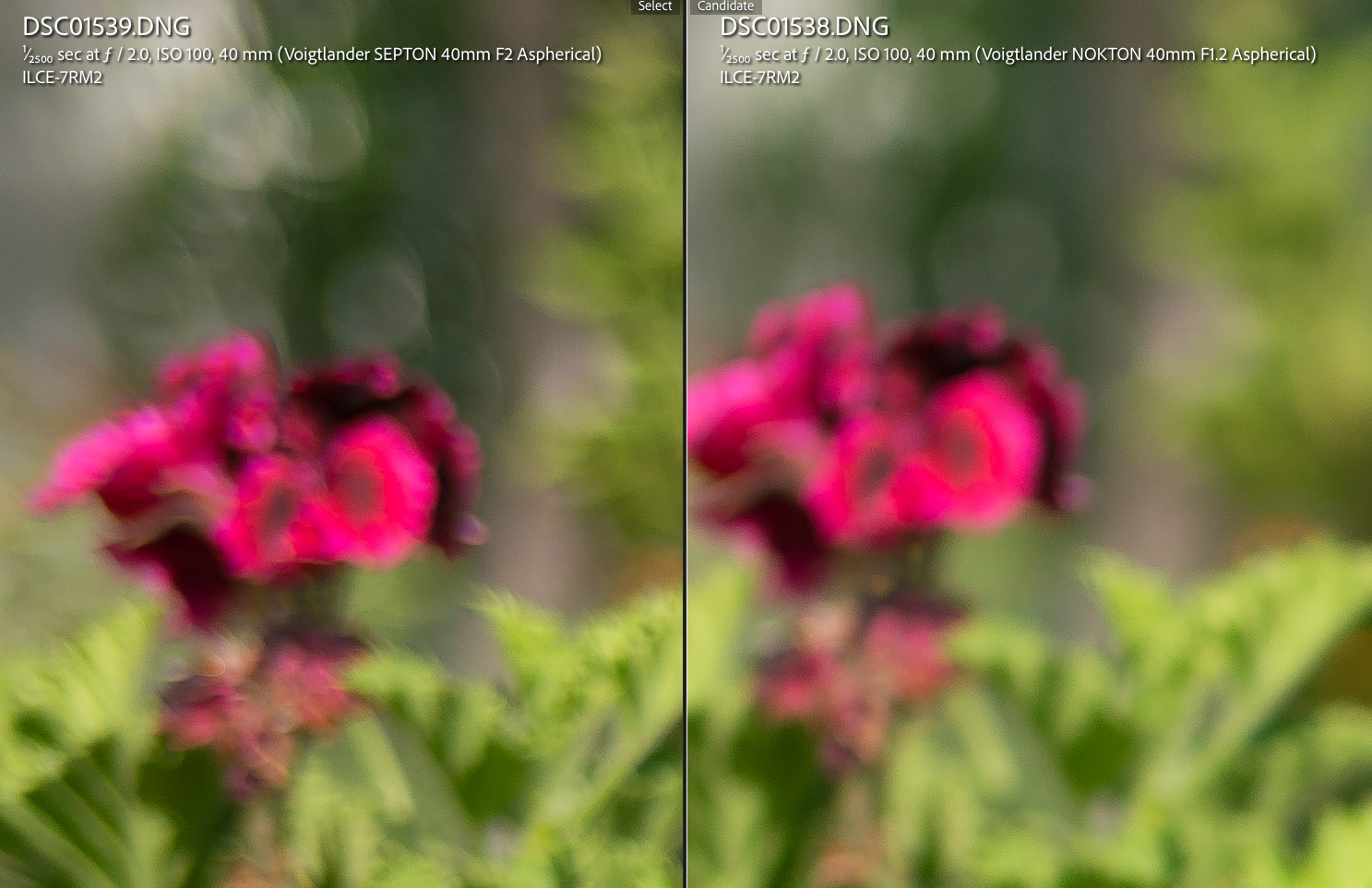
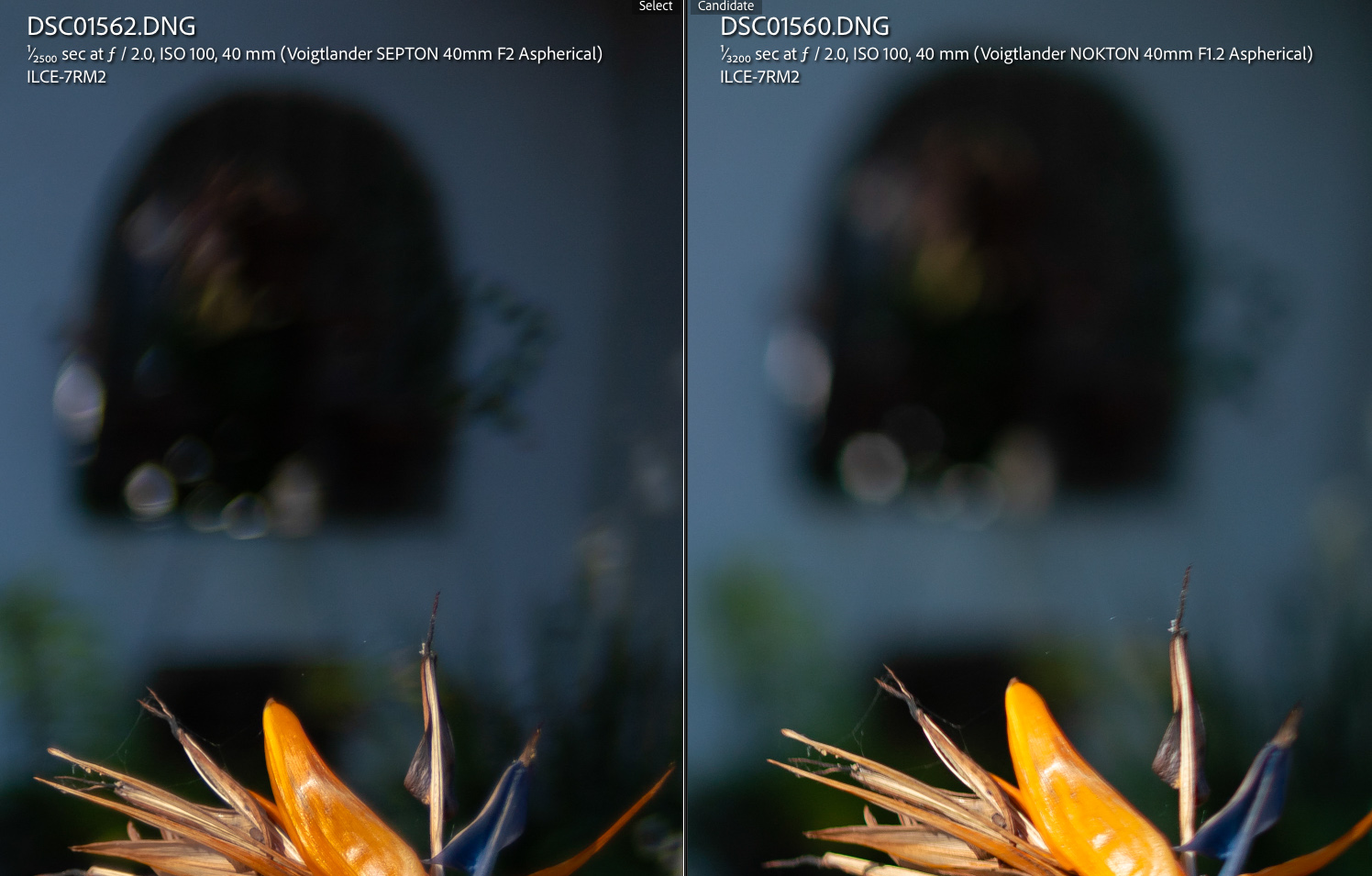
Putting the amount of blur aside, I do see a bit more rendering structure in the Septon samples, with more noticeable outlining and more pronounced coma off axis. The Nokton, even stopped down, also shows a bit more color fringing, particularly lateral CA.
All in all, I see two distinct but very characterful looks. The Septon is a much smaller lens with fewer elements, yet it holds its ground surprisingly well against the larger Nokton even when the latter is stopped down.
All images in this comparison received minimal post-processing, limited to sharpening, and were shot using the Adobe Color profile.
Here are some rendering comparisons at various distances.
Scene 1:
In this scene at around 2m, focus was placed on the car's right taillight. You will notice the slightly narrower angle of view from the Nokton, along with some subtle differences in rendering when examining the image at higher magnification. Overall both show a characterful look.
At 1m, performance is very similar. As mentioned before, the Nokton shows more blur, while the highlights in the Septon take on a conical shape, whereas the highlights in the Nokton reveal the stopped-down aperture blades. There is also a bit more structure in the Voigtlander 40mm f/2 Septon image.
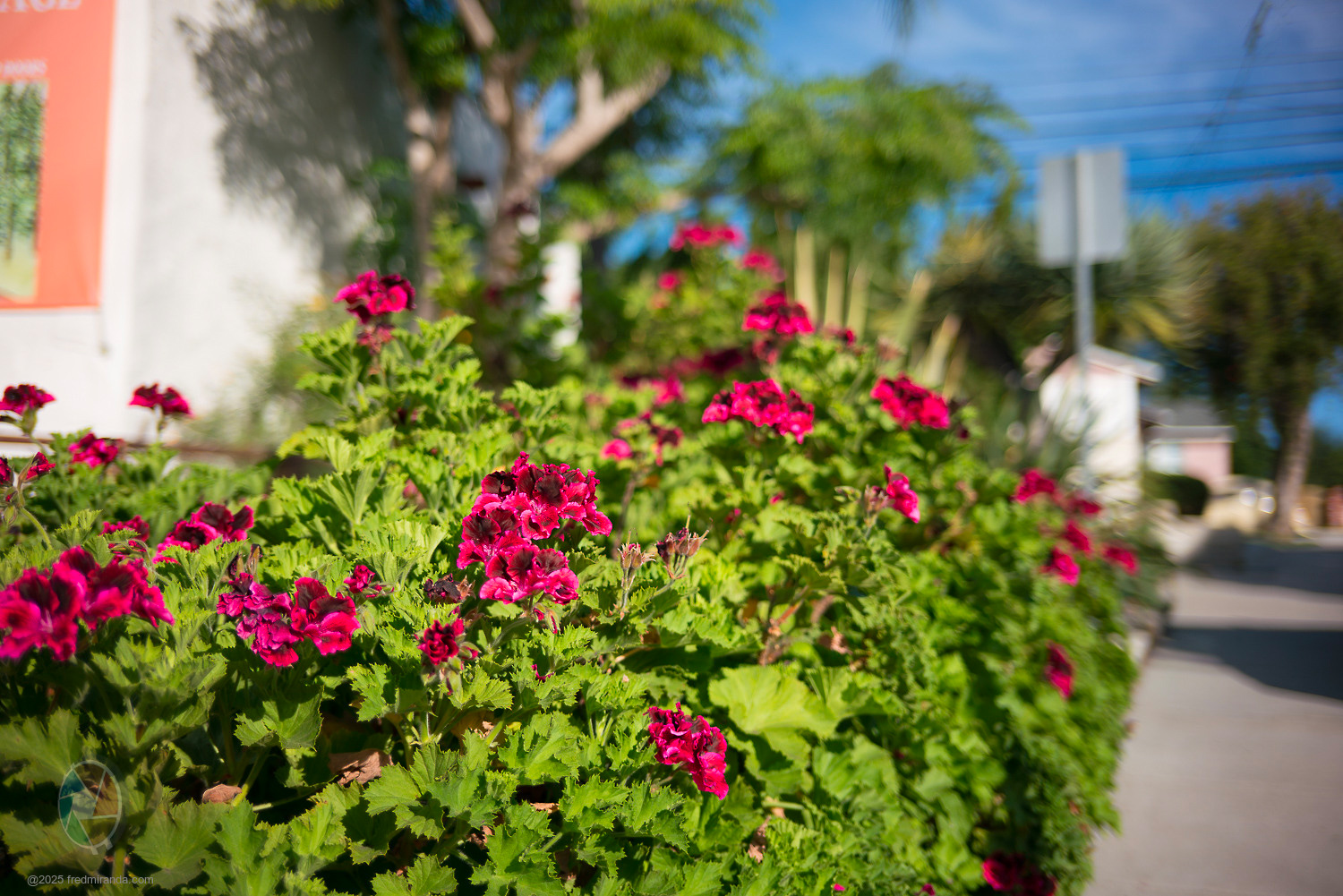
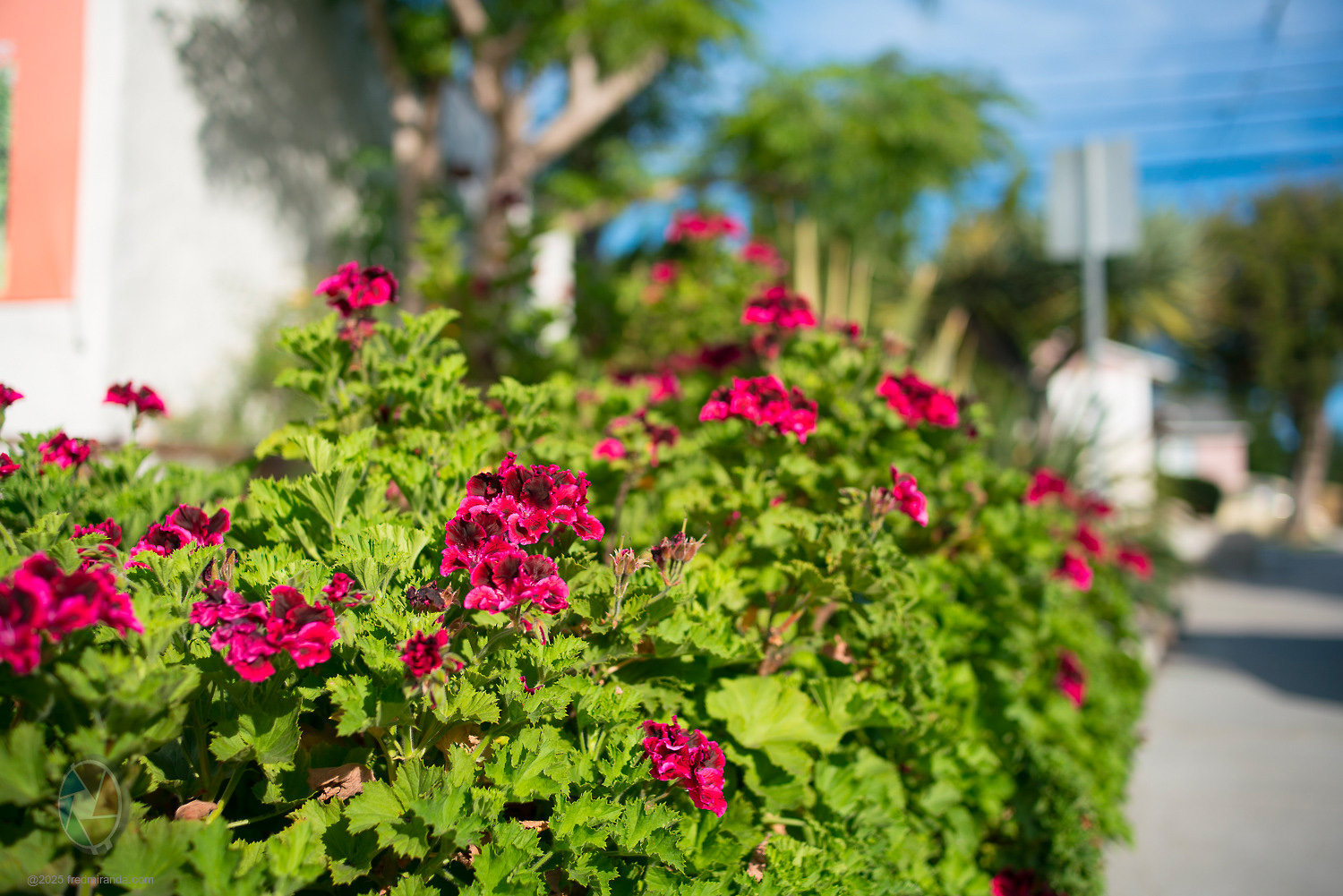
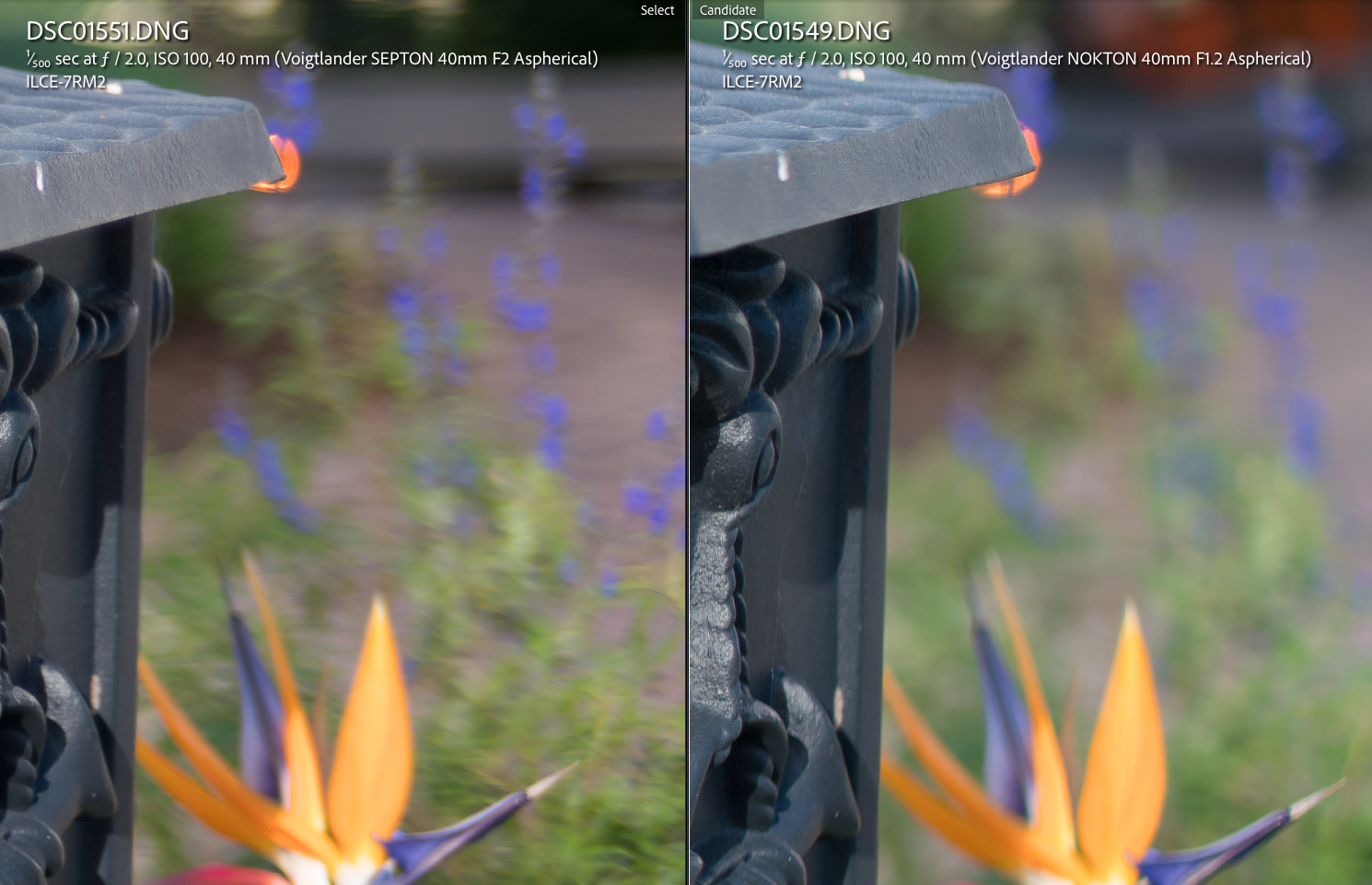
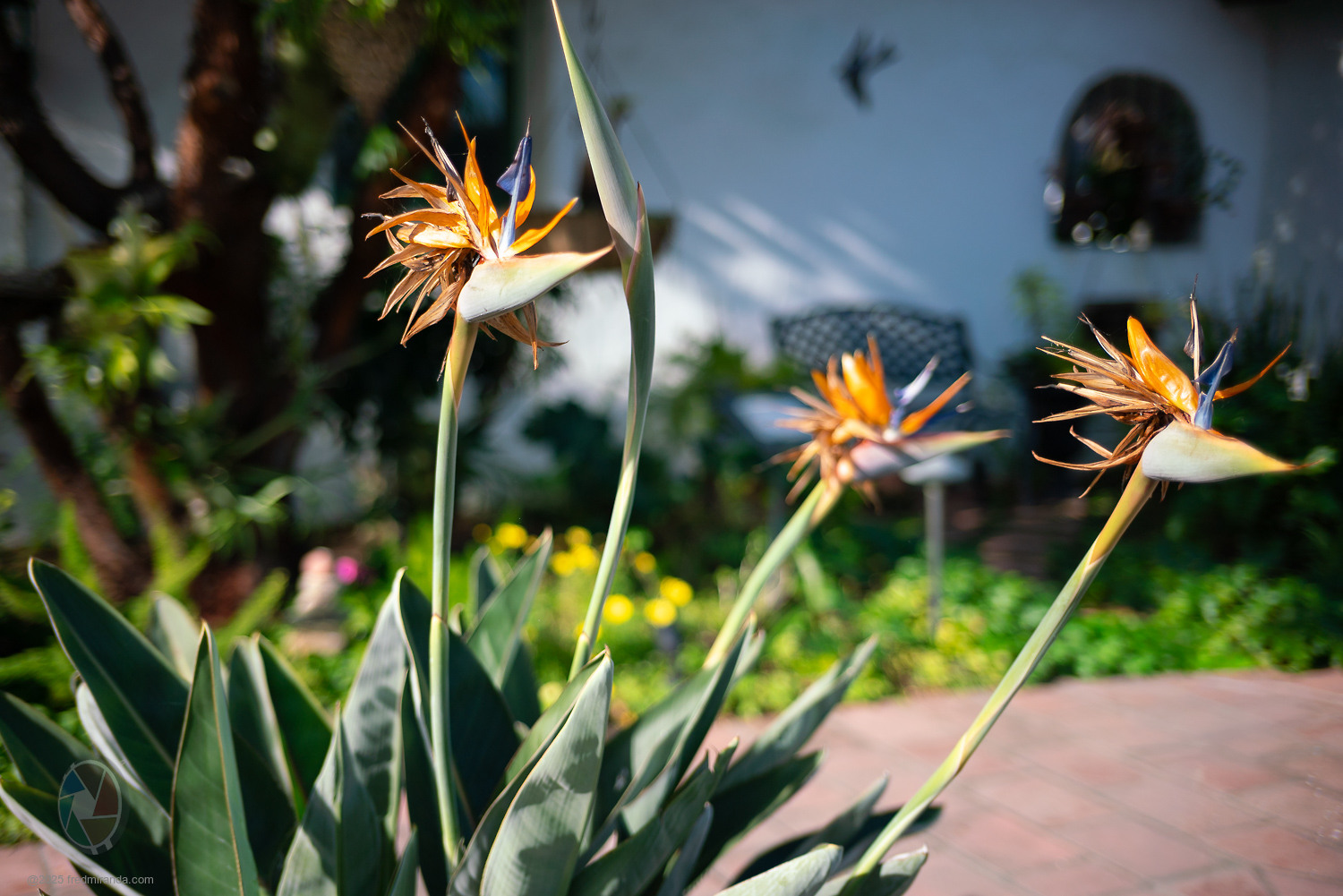
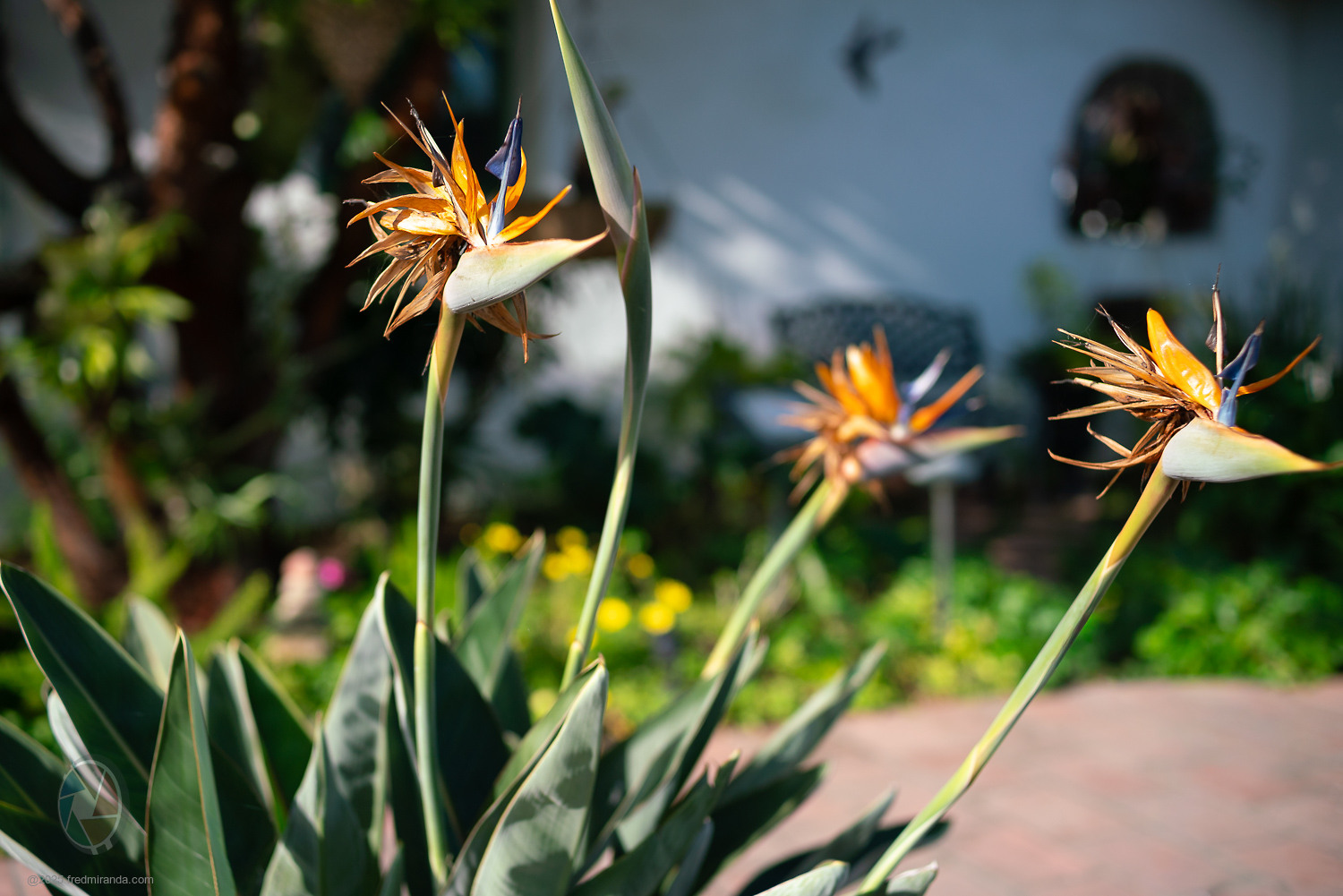
Subject focused at around 1.3m. Notice the more structured rendering from the Septon and the different shape of the off axis bokeh highlights between the two lenses. Also note the slightly narrower field of view from the Nokton.
They are quite similar in terms of resolution and contrast at this distance, although the Nokton still has a slight edge. The Septon tends to have the advantage at longer distances.
Subject focused at around 1.5m. Notice the more structured rendering from the Septon and the different shape of the off axis bokeh highlights between the two lenses. Also note the slightly narrower field of view from the Nokton.
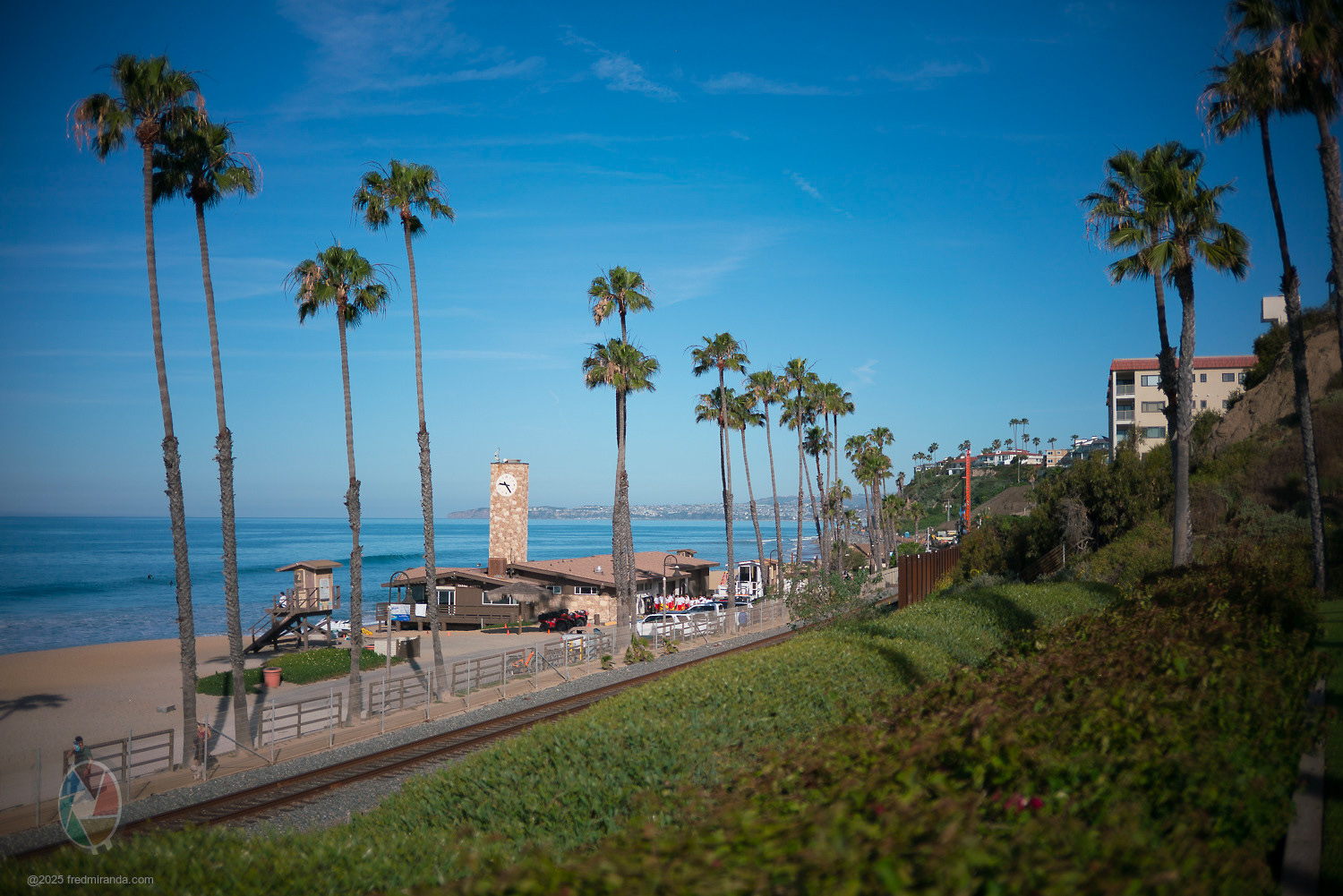
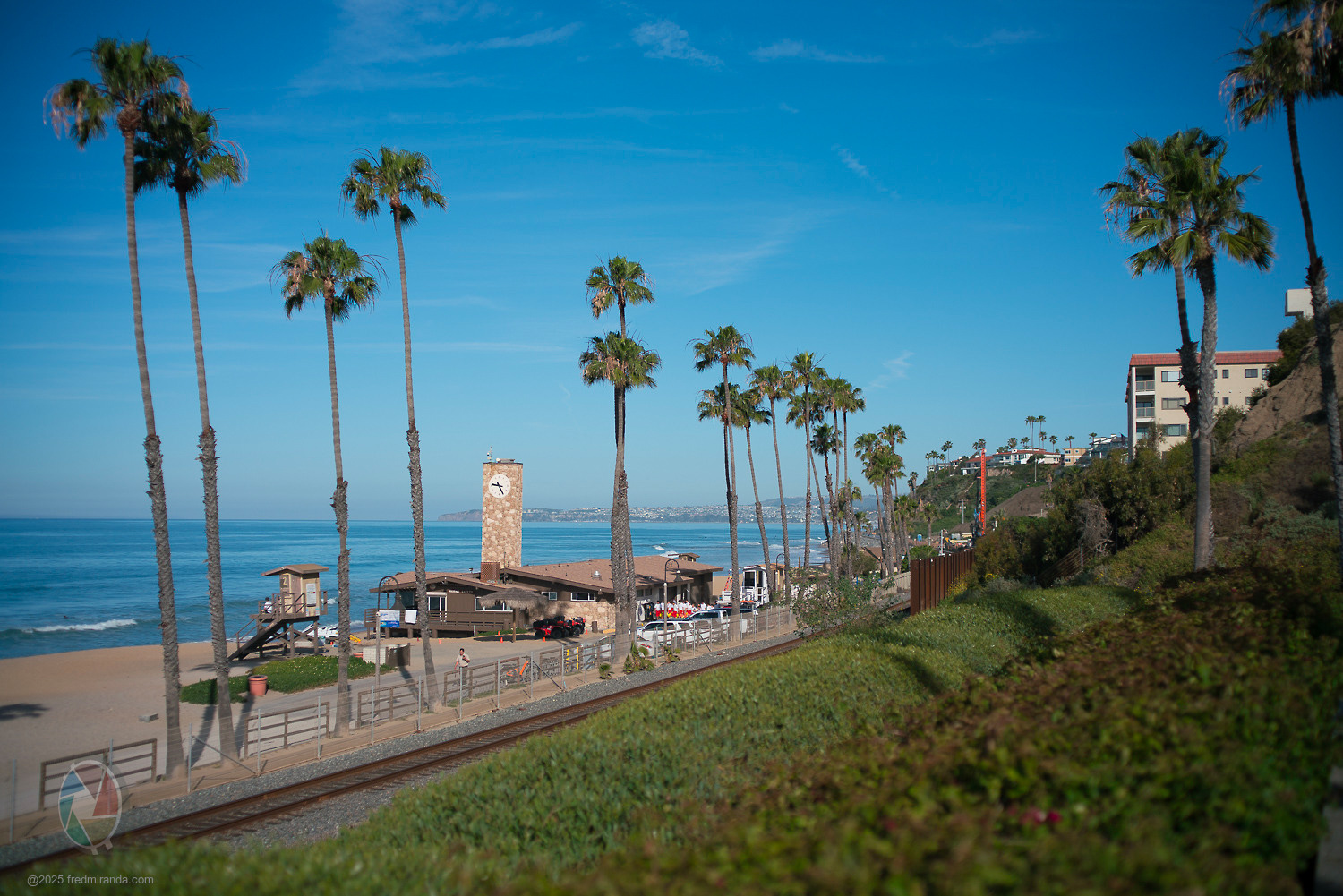
Here are both lenses wide open and focused at long distance. This scene does not show much foreground rendering, but it gives a good sense of how each lens performs at distance using real images rather than just the resolution tests shown earlier.
The Septon performs very well, pretty much matching the Nokton at this distance, especially considering it is wide open while the Nokton is stopped down. The CV 40/1.2 Nokton at f/2 does slightly better around the center area.
They could have made the oof/bokeh better. They are lens masters with years of experience and decided to compromise the rendering a bit. Compared to adapting an ultron, you get more sharpness and a more compact package, great contrast and saturation but worse bokeh and maybe a little less character.
Subject focused at around 1.5m. Notice the more structured rendering from the Septon and the different shape of the off axis bokeh highlights between the two lenses. Also note the slightly narrower field of view from the Nokton.
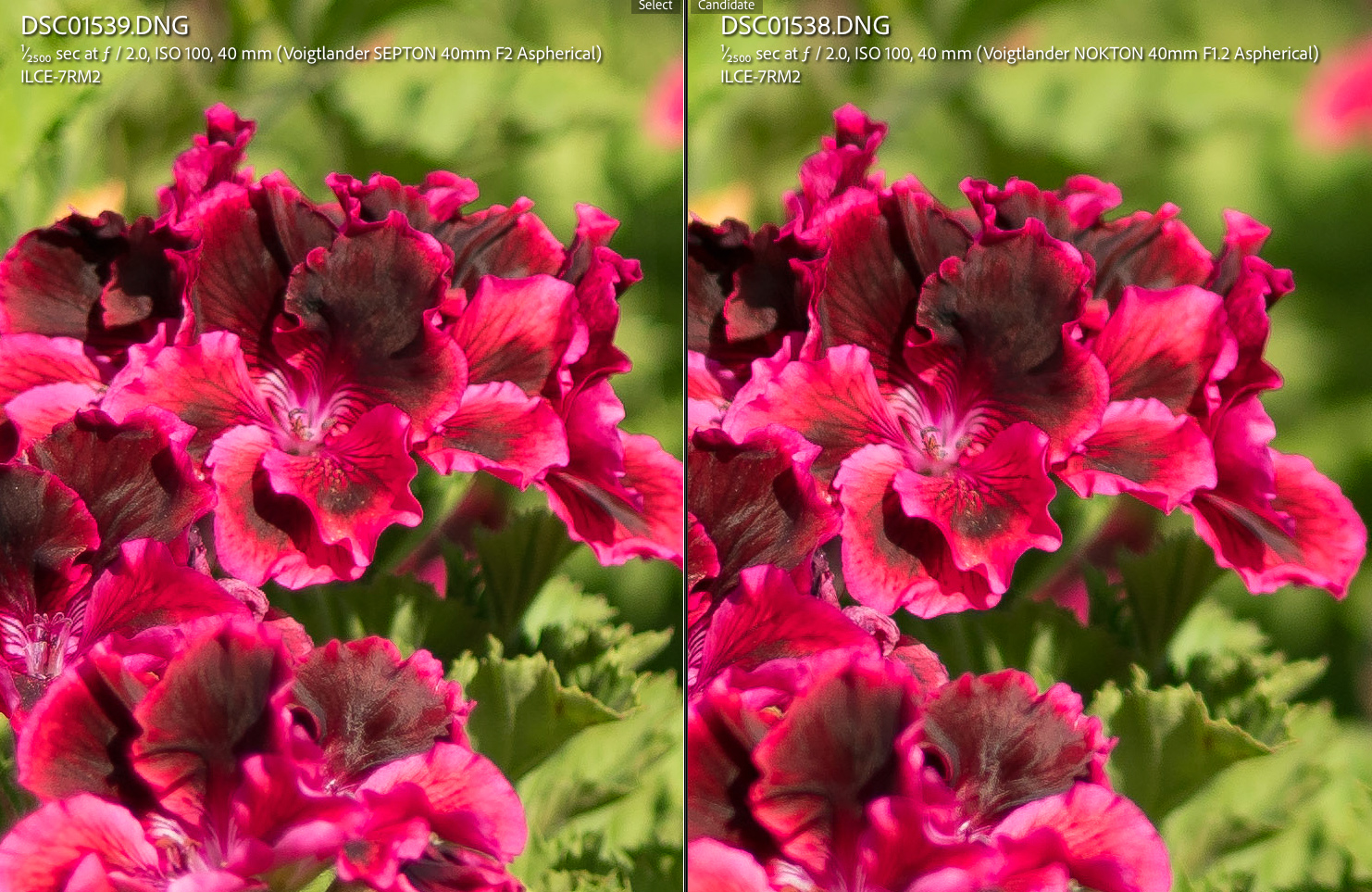
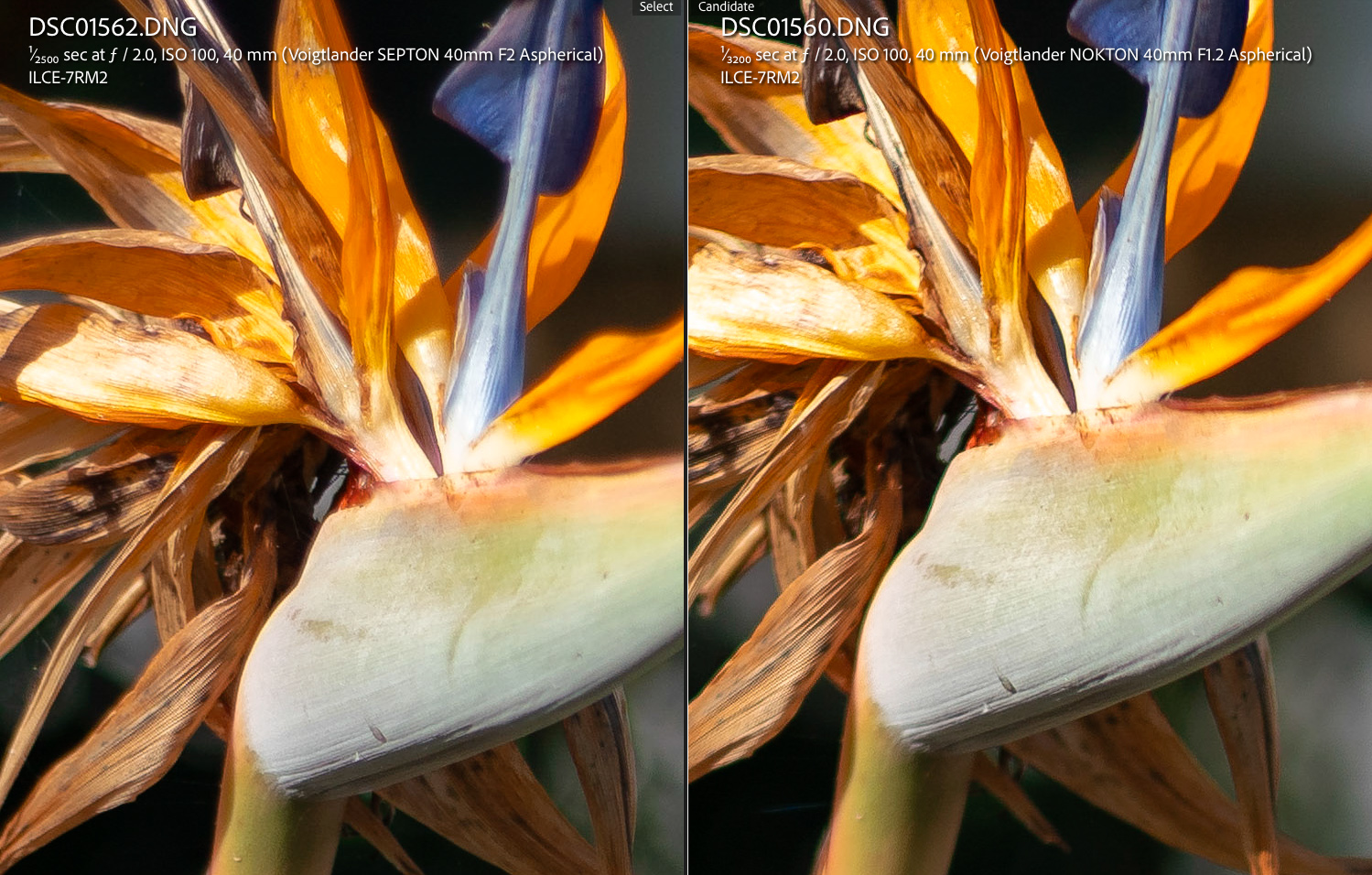
Looking at the first image, I see slightly more contrast, sharpness and saturation (deeper colors) from the Septon image vs the Nokton. And thats with the Septon wide open and the ultron stopped down to F2. The Nokton looks a bit soft at F2 compared to the Septon.
bijosn wrote:
Looking at the first image, I see slightly more contrast, sharpness and saturation from the Septon image vs the Nokton. And thats with the Septon wide open and the ultron stopped down to F2. The Nokton looks a bit soft at F2 compared to the Septon.
Isn't it funny, I see the right image (the Nokton, right?) as having more contrast and sharpness...
c.
Mar 17, 2026 at 10:12 AM
Steve Spencer Offline • • • • • • • Upload & Sell: On
bijosn wrote:
Looking at the first image, I see slightly more contrast, sharpness and saturation from the Septon image vs the Nokton. And thats with the Septon wide open and the ultron stopped down to F2. The Nokton looks a bit soft at F2 compared to the Septon.
In this scene, at 1.5M, which I think is where the Nokton is at it best, I see more find detail in the Nokton shot. Look at the pod holding the petals in the close up of the focus point and you should be able to see the better detail. There isn't a huge difference but it is there to my eyes.
Overall, I would say the lenses are similar in sharpness at f/2. The Nokton has the small advantage seen here in the center at closer distances. The Septon to my eyes had more sharpness at long distances in the midzone and corners at f/2. Neither difference was very large, however. The big difference is in the bokeh and that is not very similar. In my view size and preference for bokeh should be driving people's decisions a lot more than differences in sharpness which are small.
asekcsc5 wrote:
Isn't it funny, I see the right image (the Nokton, right?) as having more contrast and sharpness...
c.
It seems to be area-of-frame dependent, but overall these Nok samples do seem to have the better contrast in general, and they should, being stopped down. It's funny to still see the Nok exhibit more ghosting and LoCA than the Septon in some cases even being stopped down.